At a glance
- Base
- Amalfi is the easiest base for most, Positano for iconic views, Sorrento for value and connections.
- When
- May and September are ideal; April/Oct for walkers; avoid crowded, hot, expensive July/August.
- Getting there
- Naples International Airport (Capodichino) is closest; then ferry, train/bus, or private transfer.
- Getting around
- Ferries (seasonal), SITA Sud buses, private drivers/taxis. Car rental generally not recommended.
- Book ahead
- Book many months ahead for summer, especially for top-tier hotels.
- The price
- Season, view, and town choice (Positano vs. Sorrento/Minori/agriturismo) drive prices.
The Amalfi Coast is a short stretch of shoreline south of Naples where the mountains drop straight into the sea. Towns cling to the rock. One narrow road threads through all of them, ferries run below, and stairs connect nearly everything else. It is one of the most beautiful coastlines in Europe, and for a few months every summer it feels like most of the planet knows it.
That popularity is exactly why a little planning pays off. A great trip here usually comes down to three choices: which town you sleep in, which weeks you show up, and how you move around once you are there. This guide covers all three, plus the food, the walks, and the money questions, so you can build a trip that fits how you actually like to travel.
In this guide
Where to base: the coast town by town
The Amalfi Coast is not one place. It is a string of towns with different personalities, and the one you choose sets the tone for the whole trip. You can day-trip between them easily enough, so you are really picking where to wake up and where to have dinner. Here is how the main options actually feel.
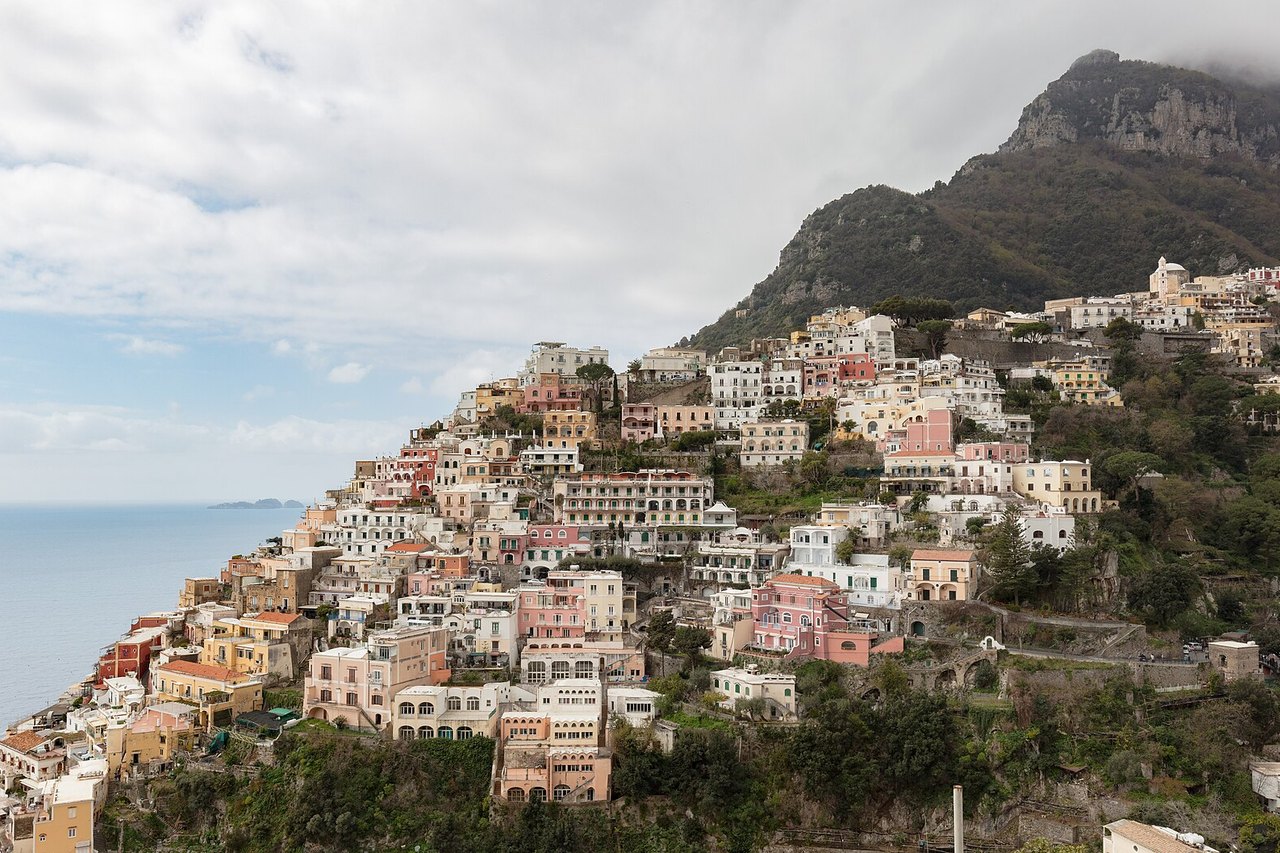
Positano is the town on the postcards. Pastel houses spill down a steep hillside to a small beach, and the view from the water is genuinely one of the best in Italy. It is also the most expensive, the most crowded, and the most vertical. Getting anywhere means stairs, sometimes hundreds of them. If it is your first visit, you want the iconic scene, and you do not mind paying for it, Positano delivers. Just go in with your eyes open about the climb and the crowds.
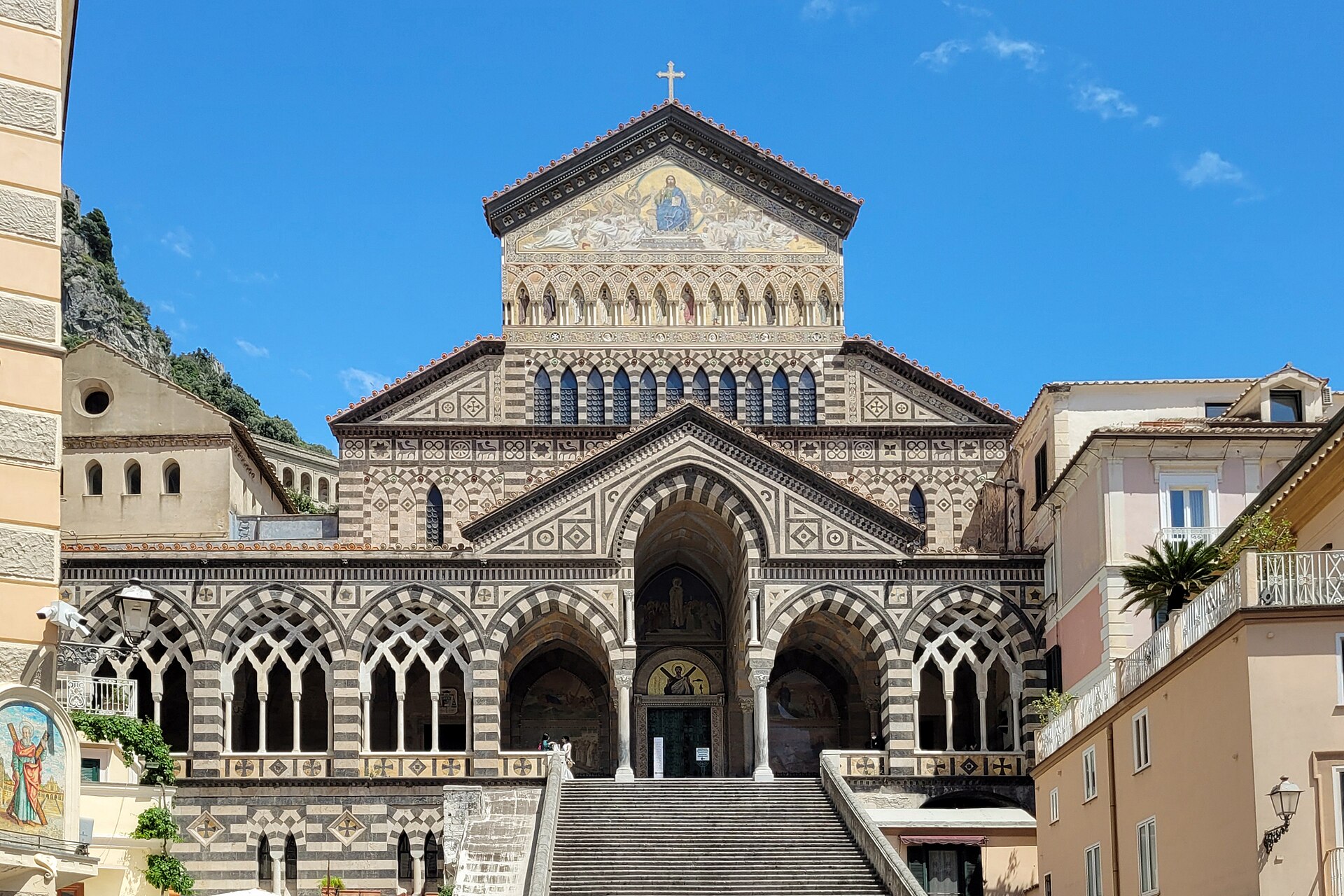
Amalfi sits at the midpoint of the coast and makes the easiest base. It is flatter than Positano, walkable, and has the best ferry connections anywhere on the shore, which means day trips to other towns and to Capri feel simple. The town is built around a grand cathedral and a working harbor. It draws big daytime crowds off the boats and buses, but it empties out in the evening. For most travelers who want to see a lot without arranging a driver every morning, Amalfi is the sensible pick.
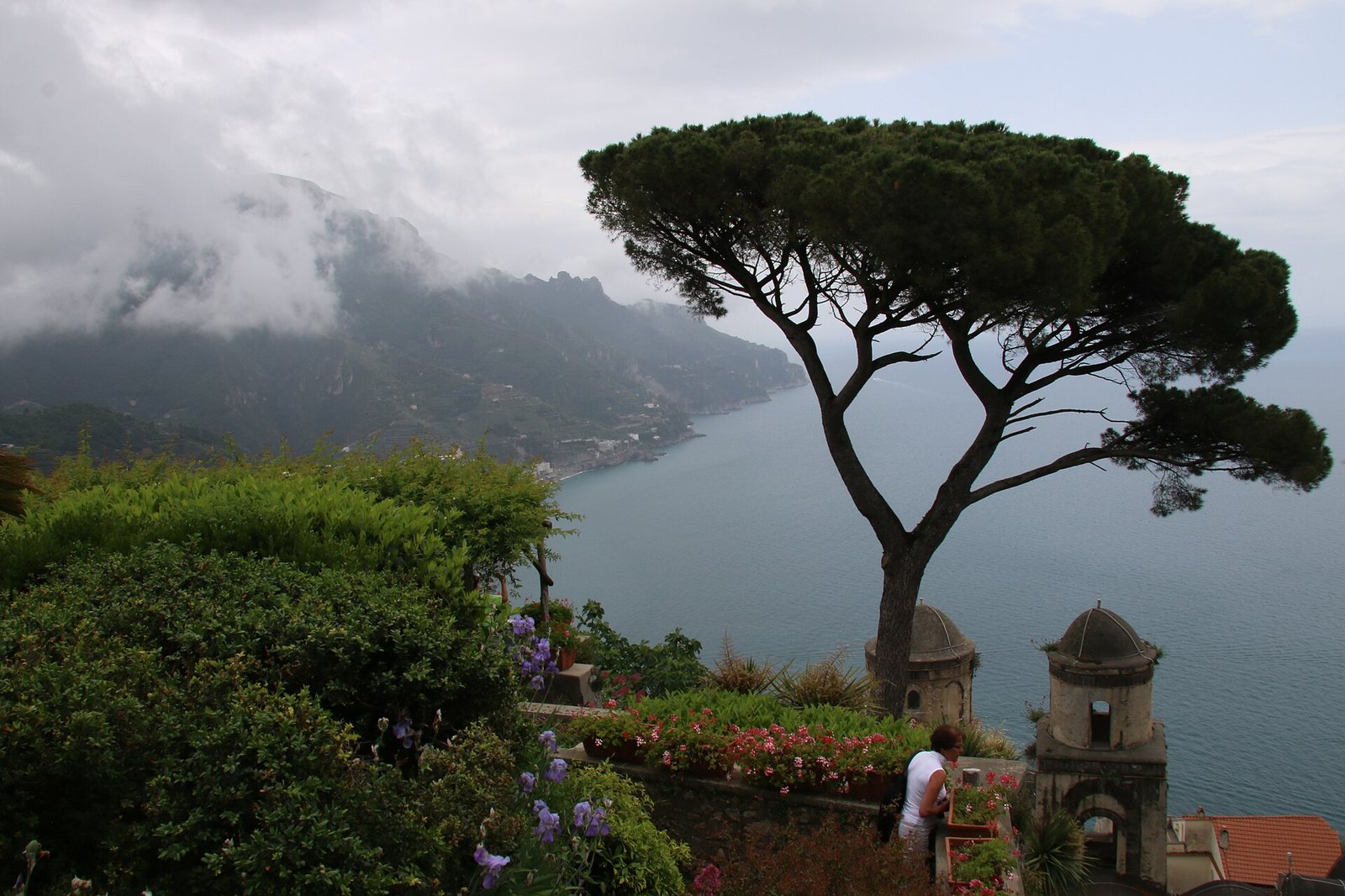
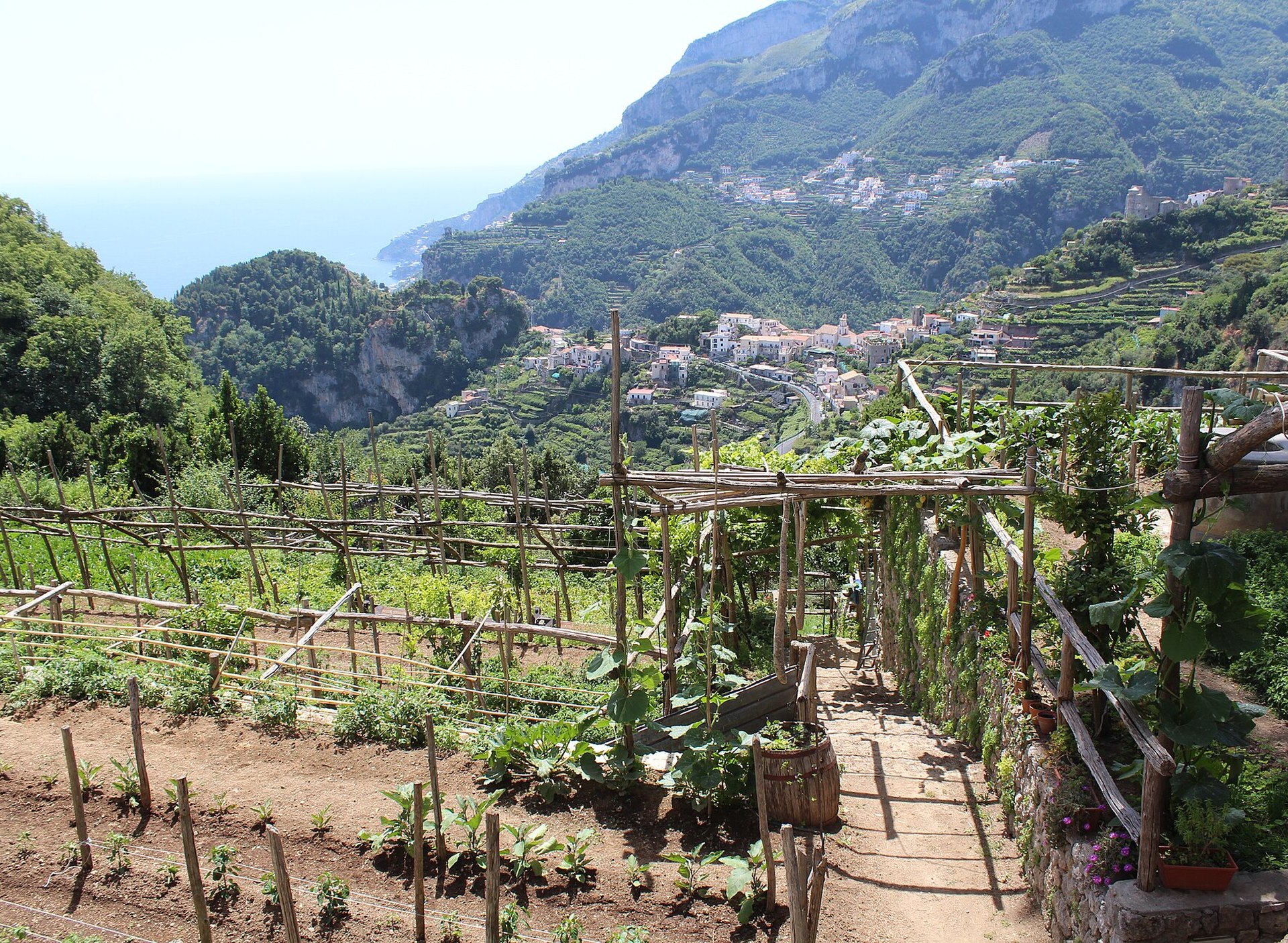
Ravello sits high above the coast, often cited at around 365 meters, on a ridge between two valleys. It is quieter, cooler in summer, and more refined than the towns below. There is no beach and no harbor. What Ravello has instead is two of the most famous gardens in Italy and a view that runs for miles. It suits couples, garden lovers, and anyone who would rather have a calm dinner and a long view than a night out. You trade convenience for peace; every trip to the water means a bus or a drive down the hill.
Praiano sits between Positano and Amalfi and gets a fraction of their crowds. It faces west, so it gets the sunsets, and it feels more like a real village where people live. It is spread out along the road, so you will use buses, taxis, or boats to get around, and it is not on the main ferry line the way Positano and Amalfi are. For a quieter base within easy reach of everything, it is a strong choice.
Sorrento is not technically on the Amalfi Coast. It sits on the other side of the peninsula, facing the Bay of Naples. But it makes a practical base, especially for a first trip or a longer one. It is bigger, flatter, and better connected than any coast town: a train line to Naples, ferries to Capri and Naples, and the point where the coast buses begin. Hotels tend to cost less than in Positano. The tradeoff is that you are staying near the Amalfi Coast rather than on it, and the daily bus ride over the pass can be slow in high season.
Two smaller towns are worth knowing. Atrani is a tiny fishing town a short walk around the headland from Amalfi, with the same convenience and a fraction of the noise. Minori and neighboring Maiori sit a little further east, are flatter and more residential, and tend to cost less.
Choose your town by how you want to spend your evenings, not by the photo you already have in your head.
- For the classic view and nightlife: Positano, if you accept the stairs, the crowds, and the cost.
- For the easiest day trips: Amalfi or nearby Atrani, thanks to the ferries and flat streets.
- For calm and gardens: Ravello, high above the water.
- For a quieter local feel: Praiano, Minori, or Maiori.
- For value and connections: a Sorrento base, with day trips over the hill.
| Town | Best for | Terrain | On the ferry line? |
|---|---|---|---|
| Positano | Iconic views, first-timers | Very steep, many stairs | Yes |
| Amalfi | Easy day trips, central base | Mostly flat | Yes, best connections |
| Ravello | Calm, gardens, romance | Hilltop, no beach | No, reached by road |
| Praiano | Quiet, sunsets | Spread along the road | Limited |
| Sorrento | Value, transport hub | Flat, off the coast | Yes, to Capri and Naples |
Duomo (Amalfi) 01 · Bernard Gagnon · CC BY 4.0 · cropped
The kinds of places you can stay
The coast grew its hotels out of what was already here: cliffside villas, old palaces, fishing houses, and farms on the terraces above. Knowing the types helps you match a stay to your budget and your mood, so here is the range from the water up to the hills.
Grand cliffside hotels. These are the places that made the coast famous. They hang off the rock with terraces over the sea, pools cut into the cliff, and service to match. In Positano, names often cited at the top of this tier include Le Sirenuse and Il San Pietro di Positano; in Amalfi, the converted convent that is now the Hotel Santa Caterina. Expect the highest prices on the coast, and book many months ahead for summer.
Converted palazzi and historic villas. Ravello in particular turned its old aristocratic houses into hotels, some of them centuries old, with formal gardens and long views. Palazzo Avino and the Belmond Hotel Caruso are the names most often mentioned. These trade beach access for quiet, height, and history, and they sit near the top of the market.
Family-run hotels and pensioni. This is the coast's middle, and it is large. Small hotels and guesthouses, often run by the same family for generations, fill the towns and the hillsides. Rooms with a sea view cost more; rooms facing the hill cost less. Many close for the winter. This tier is where most travelers actually stay, and it is where the coast feels most like itself.
Agriturismi in the hills. Above the coast road, on the terraces around Tramonti, Agerola, and the Lattari mountains, working farms rent rooms and cook what they grow. You give up the sea view and the easy stroll to a beach. You get lemon groves, vineyards, home cooking, cooler air, and far lower prices. If you have a car or do not mind buses, an agriturismo is the most grounded way to stay, and often the best value.
Rentals and apartments. Short-term apartments exist in every town and can work well for families or longer stays. Read the listing for the number of steps between the street and the door; on this coast, that detail matters more than almost anything else.
Church of Santa Maria Assunta, Positano 47 · Simon Burchell · CC BY-SA 4.0 · cropped
When to go: seasons and crowds
Timing changes this trip more than any other single decision. The coast has a short, intense high season and long, quiet shoulders on either side, and the shoulders are where most seasoned travelers aim.
May and September are the sweet spots. The weather is warm and mostly settled, the sea is swimmable by September, and the crowds are a fraction of midsummer. Prices ease off the peak. If you can only pick one month, one of these two is the safe answer.
June is lovely and warm, close to peak summer weather, and early June is noticeably calmer than late June once European schools break for the holidays. July and August are hot, expensive, and crowded, and August is the busiest of all, when Italy itself goes on vacation. The towns still work in high summer; you just share them with a lot of people and pay top rates to do it.
April and October are cooler and quieter, with a real chance of rain, but the coast is green and the light is soft. This is a good window for walkers, since the trails are far more comfortable without summer heat. Winter is the deep off-season. Many hotels, restaurants, and ferries close from roughly November into March, the coast goes local and sleepy, and you should only come if quiet is exactly what you want.
One more note on timing: the ferries that make getting around so easy generally run only from around April to October. If you come outside those months you are relying on the bus and the road, which changes how you plan.
Umbrella pine in the Villa Rufolo garden in Ravello · Sally V · CC BY-SA 4.0 · cropped
Getting there and getting around
Almost everyone arrives through Naples. Naples International Airport, still widely called Capodichino, is the closest airport and reportedly about an hour and a half from the coast by land, depending on traffic and your exact destination. From Naples you have a few ways in, and they suit different travelers.
By ferry. In season, the smoothest arrival is often by boat. Ferries run from Naples down to the coast, and once you are on the water you skip the mountain road entirely. This is the calmest option with luggage, and the views are a bonus. It only works from around April to October, and it depends on the weather.
By train and bus. The budget route is the Circumvesuviana train from Naples to Sorrento, then a coast bus from there. It is cheap and reliable, though the train is basic and can be crowded, so keep an eye on your bags. From Sorrento, the SITA Sud buses run the length of the coast.
By private driver or transfer. A pre-booked car from the airport is the easiest door-to-door option, and for a group it can be reasonable per person. It is the least stressful way to arrive with a lot of luggage or after a long flight.
Once you are on the coast, you have three main ways to move around:
- Ferries connect the main towns and Capri in season and are the most pleasant way to travel, weather permitting. They skip the road traffic entirely.
- SITA Sud buses run the coast road and reach places the ferries do not, including Ravello. Buy your ticket before boarding, usually at a tabaccheria or newsstand, since drivers often do not sell them. Buses get packed and slow in summer.
- Private drivers and taxis cost more but save time and stress, especially for Ravello, early starts, or getting home after dinner.
The road itself, the SS163 or Amalfi Drive, is famous for good reason. It is carved into the cliff, narrow, and endlessly winding, with drops straight to the sea and buses squeezing past each other on the curves. As a passenger it is thrilling. As a driver it is demanding, and in summer it is often jammed.
Good to know
Think hard before renting a car. Parking on the coast is scarce and expensive, the road is slow and stressful in high season, and most towns are built for walking, not driving. Unless you are staying at an agriturismo in the hills or traveling well off-season, you will usually do better with ferries, buses, and the occasional hired driver.
Amalfi Coast town of Ravello IMG 9835 · Deror_avi · CC BY-SA 4.0 · cropped
What to actually do
You could spend a week here doing nothing but eating and swimming, and it would be a fine week. But a handful of things are worth the effort, and they spread nicely across the coast.
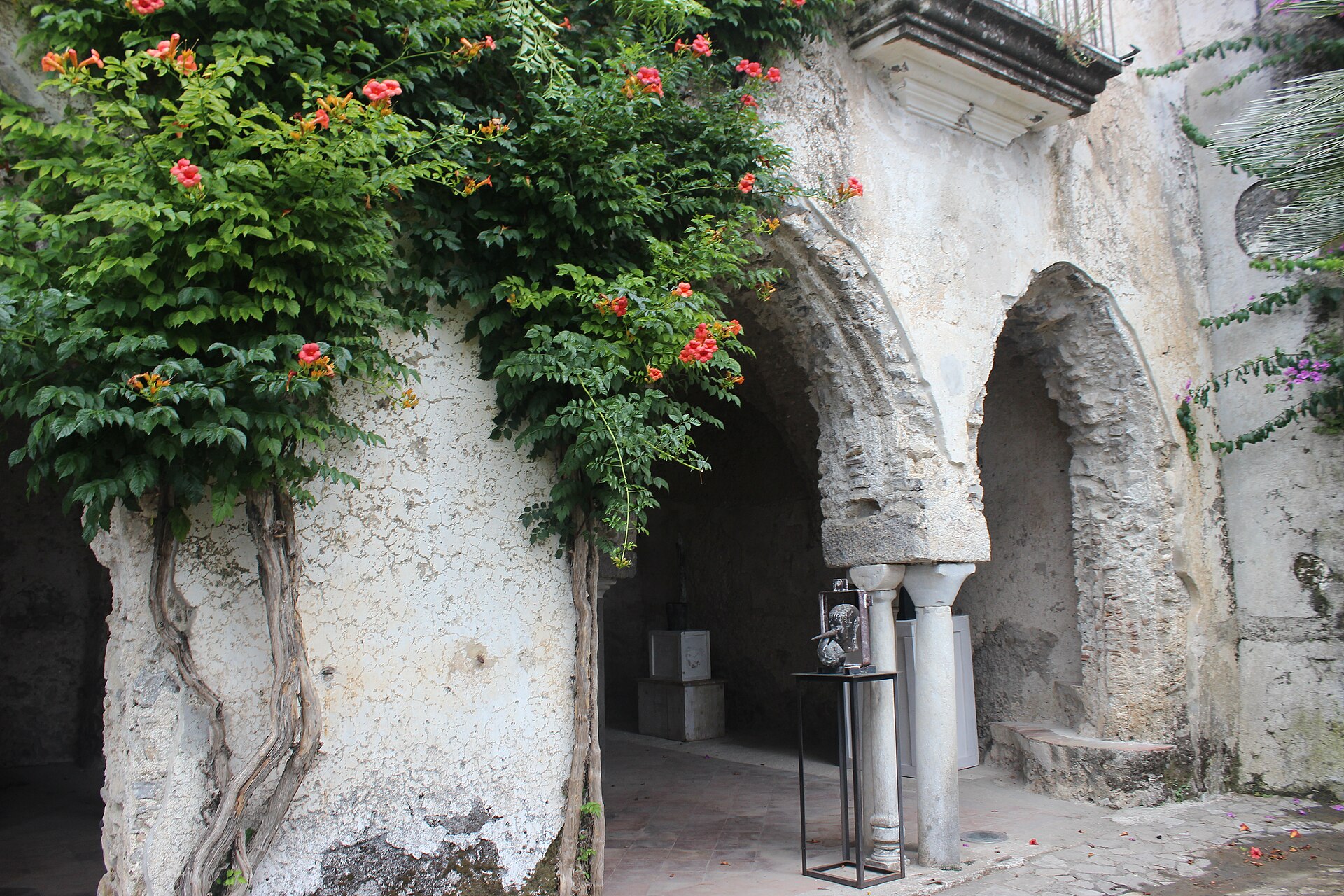
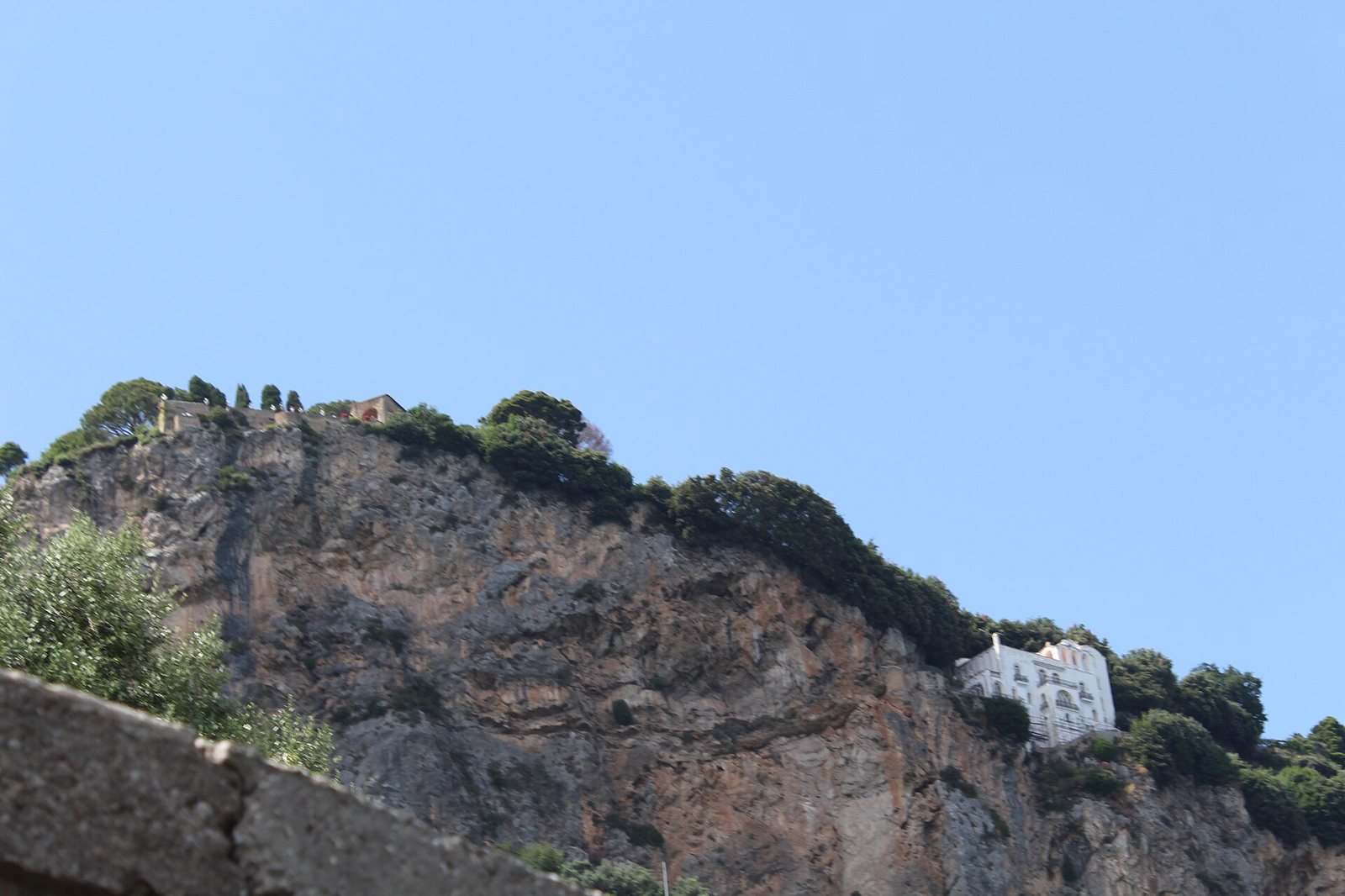
See the two villas in Ravello. Villa Rufolo, built in the 13th century, has terraced gardens that frame the classic Ravello view of the coast far below. Its gardens host the Ravello Festival, a classical music series that has run since 1953, with concerts on a stage that appears to hang over the sea. A short walk away, Villa Cimbrone ends at the Terrazza dell'Infinito, a terrace lined with marble busts and one of the most photographed viewpoints on the coast. Both are open to visit by day.
Climb to the Amalfi Cathedral. The Duomo di Sant'Andrea rises above Amalfi's main square at the top of a wide staircase of around 60 steps. The striped facade is the showpiece, but the quieter highlight is the Cloister of Paradise, a whitewashed courtyard of slim columns and interlacing arches built in the 1260s as a burial ground for the town's nobles. The bronze doors were cast in Constantinople in the 11th century, an early sign of how far Amalfi's merchants once traded.
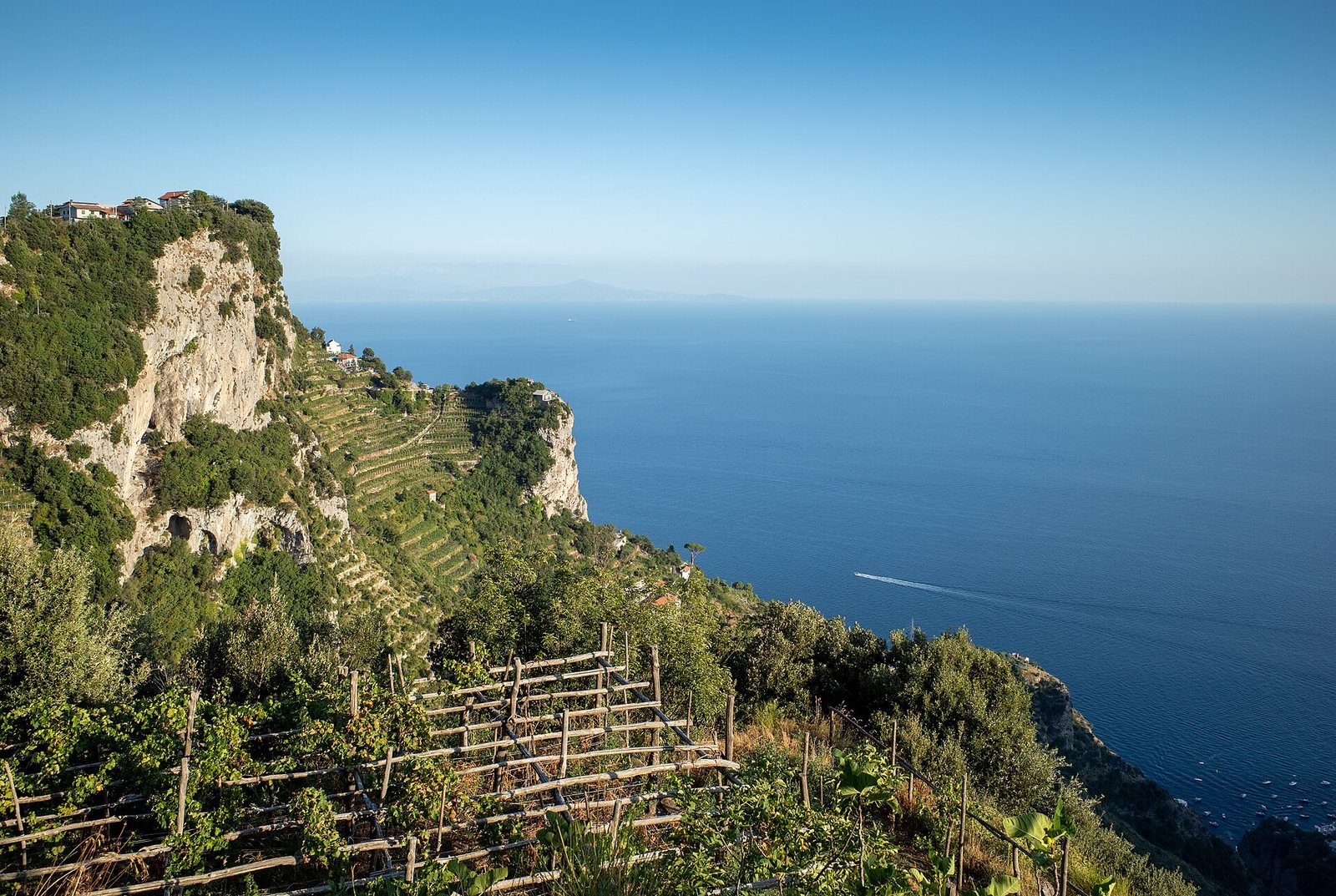
Walk the Path of the Gods. The Sentiero degli Dei is the coast's signature hike, a high trail of roughly eight kilometers that runs between the mountain village of Bomerano, above Agerola, and Nocelle, above Positano. It stays high on the ridge the whole way, with long views over the water toward Capri. Most walkers take two to three hours, plus the descent, and spring and fall are far more comfortable than summer.
Get on the water. A boat trip is the best way to understand this coast, because the towns were built to be seen from the sea. Options range from a scheduled ferry hop to a shared group tour to a private boat for the day. Many trips visit the Emerald Grotto at Conca dei Marini, a sea cave lit an odd green by light coming through the water, and pass the Li Galli islets, the little archipelago tied by legend to the sirens of the Odyssey.
Take a day for Capri. The island sits just offshore, an easy ferry ride from Amalfi, Positano, or Sorrento. It is busy and pricey, but the gardens and the chairlift up Monte Solaro earn the trip. Go early and you will beat the worst of the day-trip crush.
Slow down and browse. Beyond the marquee sights, the coast rewards wandering. Buy hand-painted ceramics in the town of Vietri sul Mare at the Salerno end, taste limoncello where it is made, and spend an afternoon on a beach with a rented lounger and a plate of fried fish.
Ravello. Villa Rufolo. 33 · Miguel Hermoso Cuesta · CC BY-SA 3.0 · cropped
What to eat and drink
The food here is built on a few local things done well: lemons, seafood, mountain produce, and the wine and cheese of Campania behind it all. You do not need a fancy restaurant to eat beautifully. You need to order what the coast actually makes.
The lemons come first. The sfusato amalfitano is the coast's own variety, big, fragrant, and protected by name, and it turns up everywhere. It becomes limoncello, the lemon liqueur served ice-cold after dinner, and delizia al limone, a domed lemon sponge cake filled with lemon cream that is worth ordering whenever you see it.
From the sea, look for scialatielli ai frutti di mare, a thick fresh pasta said to have originated in Amalfi, tossed with the day's shellfish. In the fishing town of Cetara, seek out colatura di alici, an amber anchovy sauce descended from the fish sauce of ancient Rome, used a few drops at a time to season pasta. Add the buffalo mozzarella of the Campanian plains and the simple tomato and seafood dishes of any good local kitchen, and you have the heart of the coast's table.
Where to eat well:
- Order the fish that is local and in season rather than the international menu; the kitchens here are best at what they know.
- Eat at least once up in the hills, at an agriturismo or a village restaurant, where the produce is grown a short walk away.
- Book ahead for dinner in summer, especially anywhere with a view, and be ready to eat later than you might at home.
- Finish with limoncello. It is offered almost everywhere, often on the house, and it is the right way to end the meal.
Cimbrone IMG 9872 · Deror_avi · CC BY-SA 4.0 · cropped
Money and practical notes
The Amalfi Coast is not a budget destination in summer, but it stretches across a wide range if you are flexible about where and when you go. A few practical points will save you money and grief.
Prices swing with the season and the view. The same room can cost far more in August than in May, and a sea view costs more than a hillside one in the same hotel. Moving your trip by a few weeks, or your bed a little uphill, is the biggest lever you have. Staying in Sorrento, Minori, or an agriturismo instead of central Positano is the next biggest.
Carry some cash. Cards work in hotels and larger restaurants, but small cafes, beach kiosks, bus tickets, and village shops often prefer or require euros in hand. Keep some on you.
Respect the stairs. Almost nothing here is flat. Pack light, use a bag you can carry rather than roll, and if you have trouble with steps, choose a flatter base like Amalfi, Sorrento, or Minori and check with your hotel how far it sits from the road. This one detail shapes daily life on the coast more than any other.
Build in slack. Buses run late, ferries cancel in wind, and the road backs up. Do not schedule a tight connection to your flight home on the day you leave the coast if you can avoid it. A last night near Naples or the airport before an early departure takes the pressure off.
Cliffside plantations nearby the Path of the Gods Trail, Ager… · Jules Verne Times Two · CC BY-SA 4.0 · cropped
By the numbers
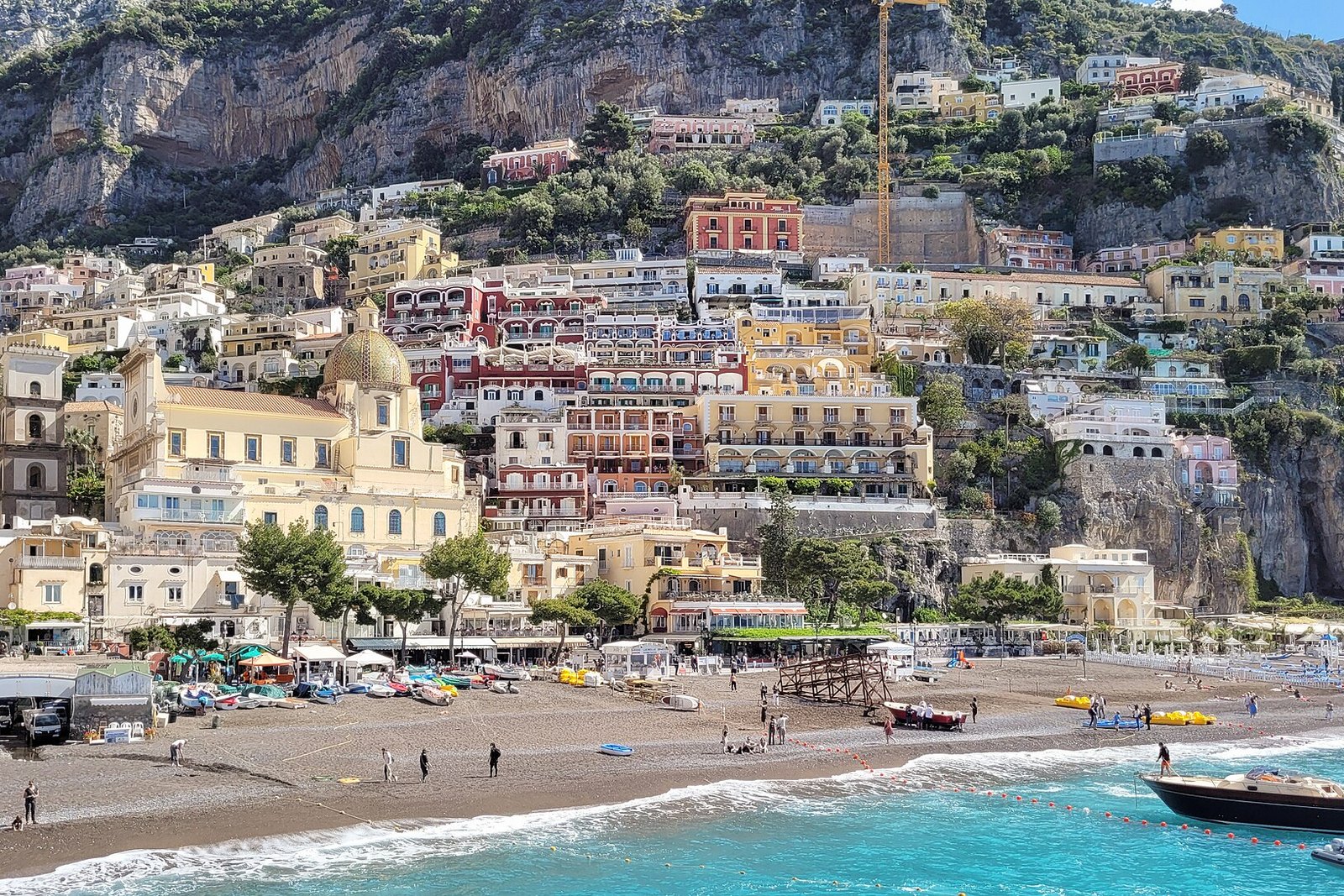
Positano (Italy) 02 · Bernard Gagnon · CC BY 4.0 · cropped
Common questions
Which town should I stay in for a first visit?
For most first-timers, Amalfi is the easiest base thanks to its flat streets and strong ferry links, while Positano is the choice if the famous view matters most and you accept the stairs and the cost. If you want value and connections, a Sorrento base works well.
How many days do I need?
Three full days let you settle into one town, take a boat trip, and see Ravello and Amalfi without rushing. Five to seven days let you add the Path of the Gods, a day on Capri, and time to do very little, which is part of the point.
Do I need a car?
Usually not, and often it is a liability. Ferries, SITA Sud buses, and the occasional private driver cover almost everything, and parking is scarce and expensive. A car mainly makes sense if you are staying at an agriturismo in the hills or traveling well outside high season.
When is the cheapest time to go?
Late fall through early spring is cheapest, but many hotels, restaurants, and ferries close then. For a balance of good weather, open businesses, and lower prices than midsummer, aim for May or late September into early October.
Is the Amalfi Coast good for families?
It can be, with the right base. Flatter towns like Amalfi and Minori, or a Sorrento base, are far easier with strollers and young children than steep Positano. Boat trips and beaches keep kids happy, and apartments give families more room than hotels.
Sources & further reading
- Lonely Planet — When to visit the Amalfi Coast
- Fodor's Travel — Best time to visit the Amalfi Coast
- Ravello Festival — official site
- SITA Sud — Campania bus operator
- Wikipedia — Amalfi Cathedral (Duomo di Sant'Andrea)
- Untold Italy — Naples to the Amalfi Coast
- U.S. News Travel — Best times to visit the Amalfi Coast