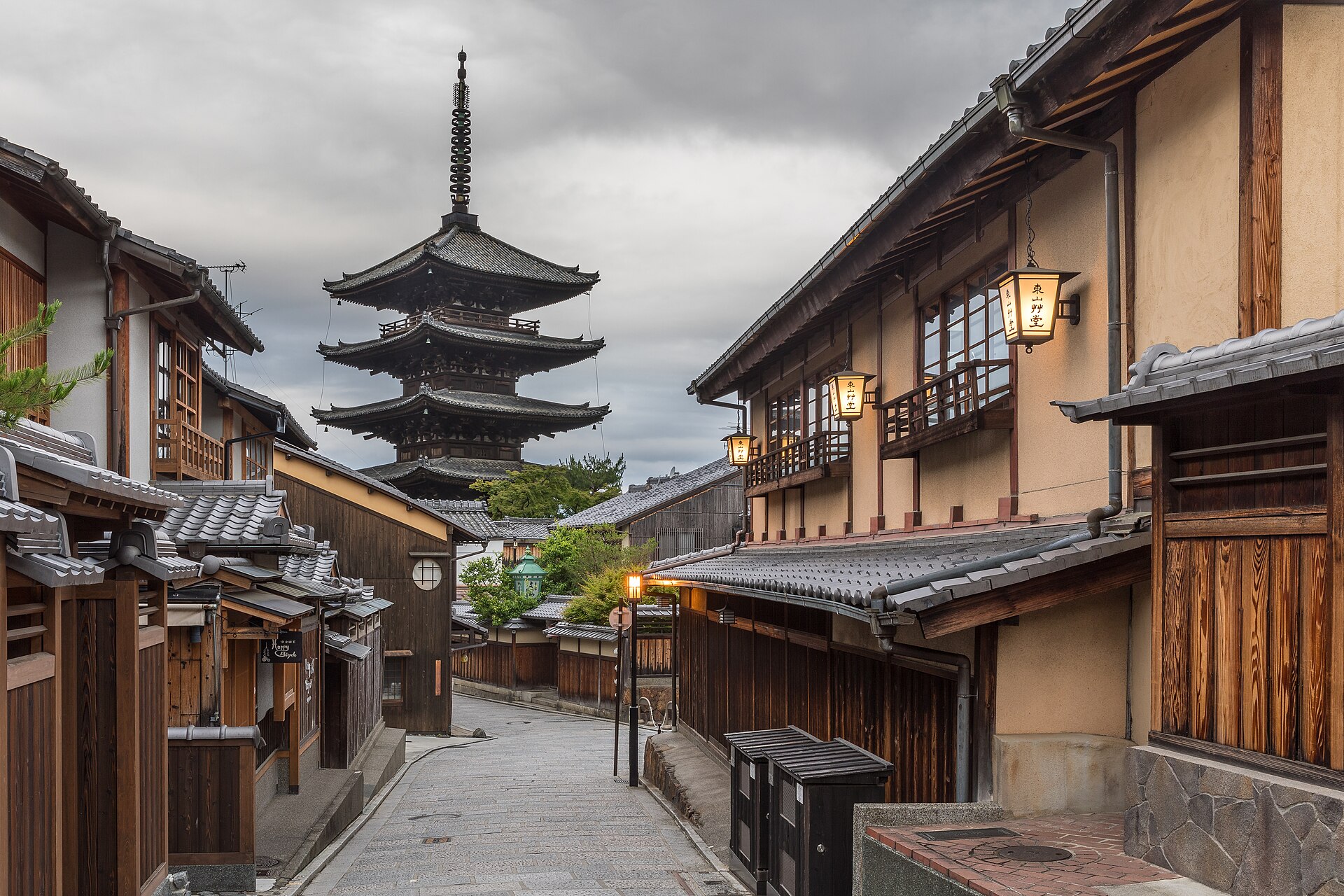
Kyoto does not reveal itself to people in a hurry. The city was Japan's capital for more than a thousand years, and it still moves at the pace of a place that has seen every kind of visitor come and go. The temples are quiet at seven in the morning and packed by noon. The best meals are booked weeks out. The finest inns have been run by the same families for generations. Kyoto rewards planning, early alarms, and a little restraint.
This guide is for the traveler deciding where to base and how to spend the days. It covers the neighborhoods and who each one suits, the three kinds of place to sleep and how to behave once you are inside a ryokan, when to come for cherry blossoms or fall color and when to stay away, how to get in from the airport or down from Tokyo, and what is worth your time once you arrive.
In this guide
Where to base yourself
Kyoto is more spread out than people expect. The city sits in a shallow valley ringed by mountains. Most of what you came to see clusters along the eastern and northwestern edges, with a busy modern center in the middle and the main station to the south. Where you sleep decides how much of your trip you spend on buses, so it is worth some thought.
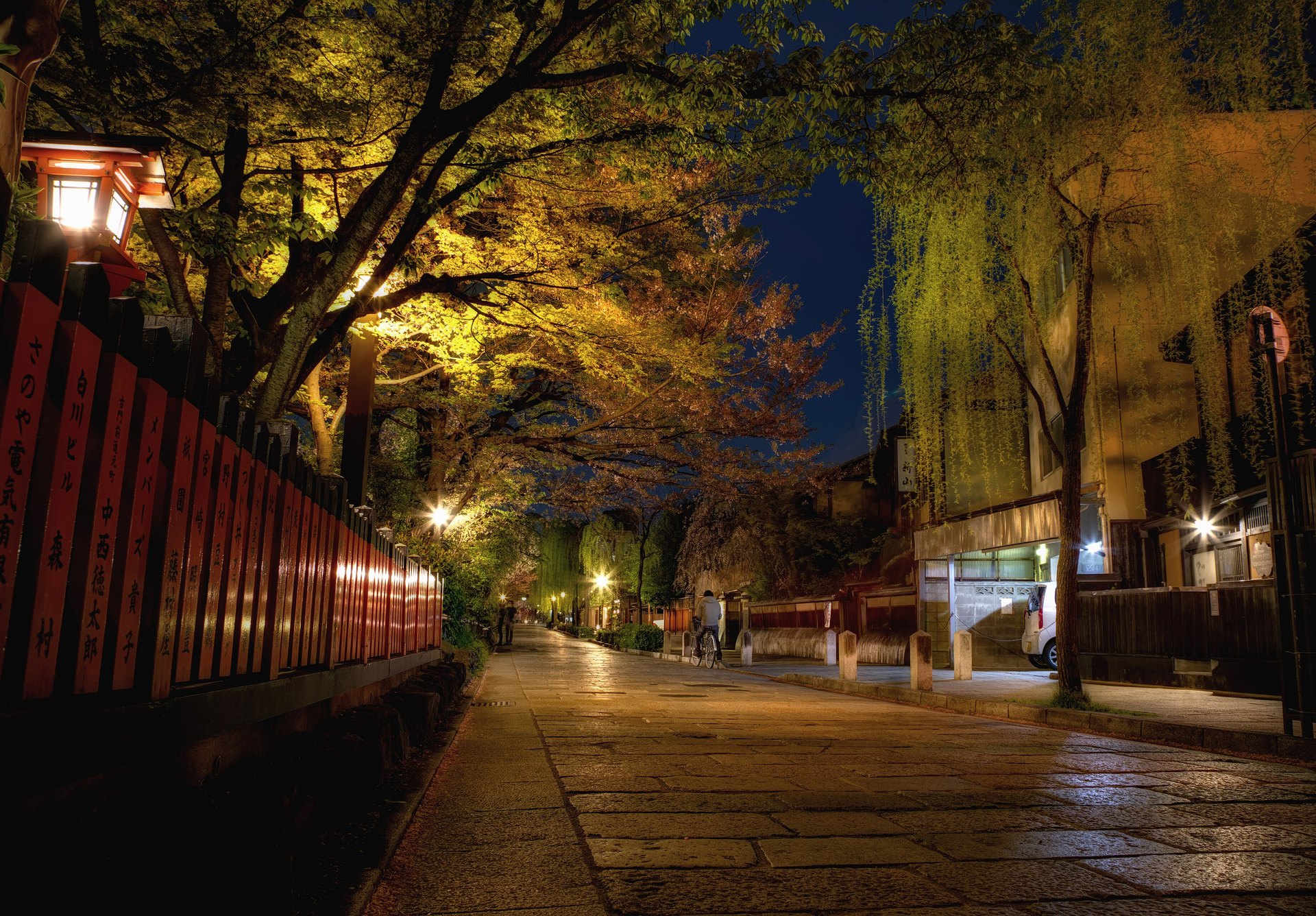
Higashiyama and Gion, on the eastern side, are the postcard Kyoto. This is the district of preserved wooden townhouses, stone lanes, teahouses, and more temples than you could see in a week. Gion is the old geisha quarter. You can walk to Kiyomizu-dera, Yasaka Shrine, and the lantern-lit streets without touching a bus. It suits first-timers who want atmosphere over convenience. The trade-offs are real: the area is hilly, it goes quiet at night, and there are fewer places to eat late.
Downtown, around Kawaramachi and Karasuma, is the practical all-rounder. This is where the restaurants, bars, department stores, and covered shopping arcades are, along with Nishiki Market and the riverside dining alley of Pontocho. You are on the subway, and you can walk across the Kamo River into Gion in ten or fifteen minutes. It is modern and a little busy, but for most travelers it is the easiest base.
Around Kyoto Station, to the south, is about logistics. The bullet train and the airport train both terminate here, the buses fan out from the front plaza, and the hotels tend to be larger and newer. It is the right call if you are arriving with heavy luggage, changing cities often, or using Kyoto as a hub for day trips to Nara and Osaka. It has the least neighborhood character of the four, and you will commute to almost everything.
Arashiyama, in the northwest, is the scenic option: the bamboo grove, the Hozu River, temple gardens, and mountains on every side. A few ryokan sit right on the water. It is beautiful, and it is genuinely quieter once the day-trippers leave in the late afternoon. The catch is distance. You are a train or a long bus ride from downtown, and evenings are sleepy.
| Area | Best for | The trade-off |
|---|---|---|
| Higashiyama & Gion | First-timers who want old Kyoto and temples on foot | Hilly, quiet at night, fewer late meals |
| Downtown (Kawaramachi/Karasuma) | Food, nightlife, the subway, walking to most things | Modern and busy, less historic character |
| Kyoto Station | Bullet train and airport access, luggage, day trips | Least atmosphere; you commute to the sights |
| Arashiyama | River-and-mountain scenery and quiet evenings | Far from the center; empties out after dark |
The three kinds of place to sleep
Kyoto gives you a genuine choice of what kind of night you want, and the decision matters more here than in most cities.
A ryokan is a traditional Japanese inn. You sleep on a futon laid out over tatami mats, you wear a cotton yukata robe around the building, and the room rate usually includes a multi-course kaiseki dinner and breakfast. The famous ones are institutions. Hiiragiya, founded in 1818, and Tawaraya, which has run for close to three centuries, are two of the most storied inns in the country, both downtown and both known for kaiseki served privately in your room. Gion Hatanaka sits in the geisha district and is a common pick for a first ryokan night. These places are expensive and book out far ahead; treat a night in one as the centerpiece of the trip, not a default.
A machiya is a restored wooden townhouse, the narrow lattice-fronted merchant homes Kyoto is known for. Renting one, or booking a small hotel built inside a cluster of them, gives you the old architecture with more privacy and often a kitchen. Maana Kiyomizu is a set of century-old machiya redone with a spare, design-minded touch, and Nol Kyoto Sanjo is a small hotel built into a former sake distillery near Nishiki Market. There are many machiya guesthouses in this vein across the center and Higashiyama.
Then there are the modern hotels. International and Japanese luxury names have arrived in force over the last several years, mostly downtown and near the station. The Ritz-Carlton Kyoto sits on the Kamo River, the Ace Hotel Kyoto occupies a converted 1920s telephone-exchange building downtown, and Aman Kyoto hides in a forest in the northern hills. These deliver reliable comfort, English-speaking front desks, and beds you can fall into after a long flight. If you want one traditional night and several easy ones, mix a ryokan stay with a hotel for the rest.
How a ryokan works
A ryokan runs on customs that are easy to respect once you know them, and easy to fumble if nobody tells you. A short primer.
- Shoes come off at the entrance. You will step up from the genkan, the sunken entry, into house slippers. On tatami, even the slippers come off; walk in socks or bare feet. There are separate slippers for the toilet, which stay in the toilet.
- Meals are events, at set times. Kaiseki dinner is a long sequence of small seasonal courses, often served in your room or a private dining room at a fixed hour. Tell the inn about allergies or dietary limits when you book, not on arrival.
- The futon appears while you eat. Staff lay out your bedding during dinner and put it away in the morning. This is normal; you are not expected to do it.
- The bath has rules. Many ryokan have a communal bath or an onsen fed by hot spring water. You wash and rinse completely at the shower stations first, then get into the tub already clean. No soap in the water, no swimsuits, and the small towel does not go in the bath. Baths are usually separated by gender.
- Tattoos can be an issue. Some baths still restrict visible tattoos. If you have them, ask ahead; a few places offer private baths or cover-up patches.
- Do not tip. Tipping is not part of Japanese hospitality and can cause confusion. A sincere thank-you is the right currency.
Book early, especially for the celebrated inns and for blossom and fall dates. Check-in tends to be earlier than a Western hotel, often mid-afternoon, because dinner service is built into the evening.
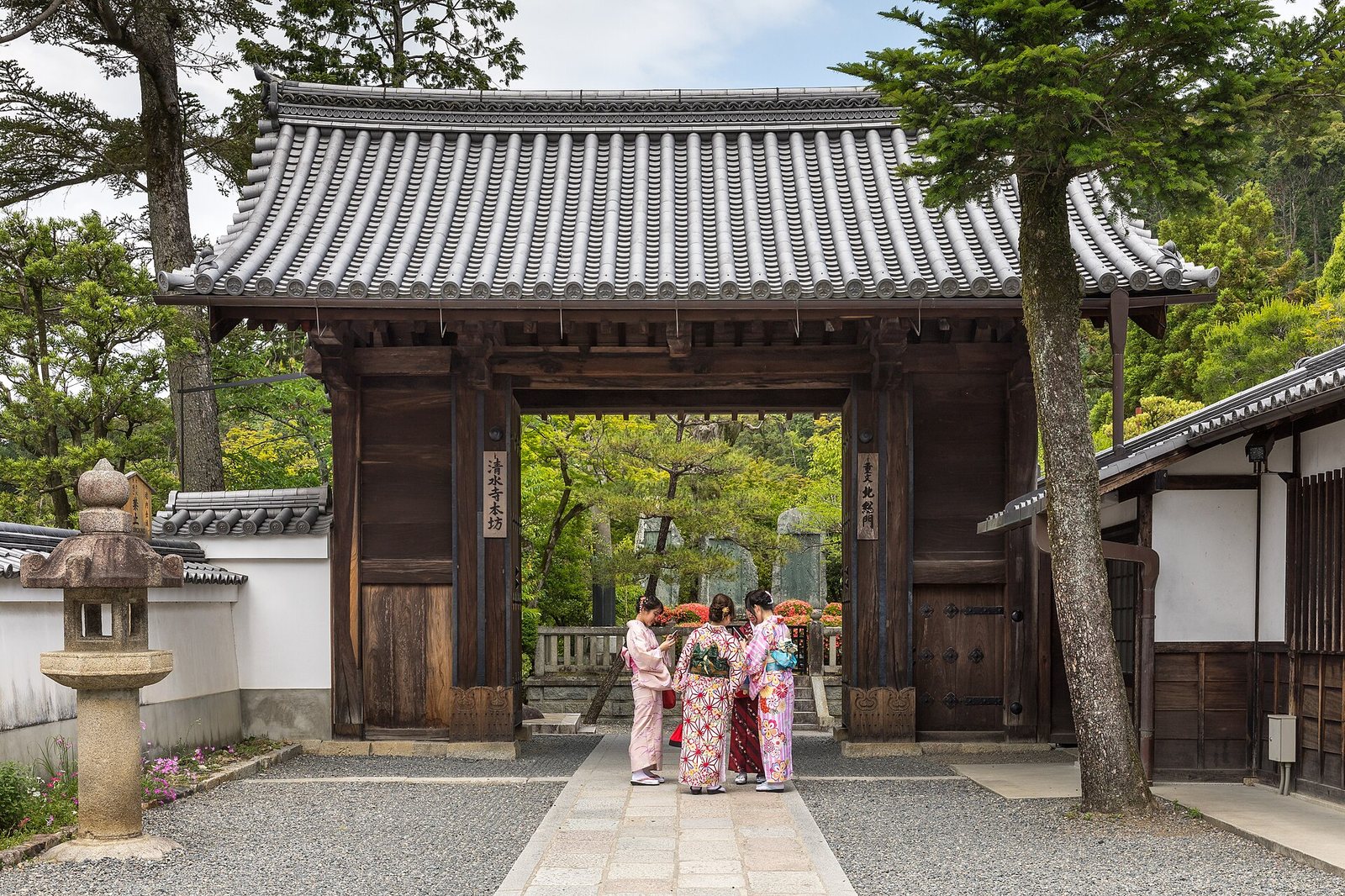
Four ladies wearing a yukata in front of the North Gate of Ki… · Basile Morin · CC BY-SA 4.0 · cropped
When to go
Two seasons draw the crowds, and both earn it. Cherry blossom season in Kyoto usually runs from the last week of March through the first half of April. In an average year the bloom peaks around the first days of April, but the exact timing shifts a week either way with the weather, so watch the forecasts rather than booking to a fixed date. The city is at its most beautiful and its most crowded at once, and the best ryokan sell out months ahead.
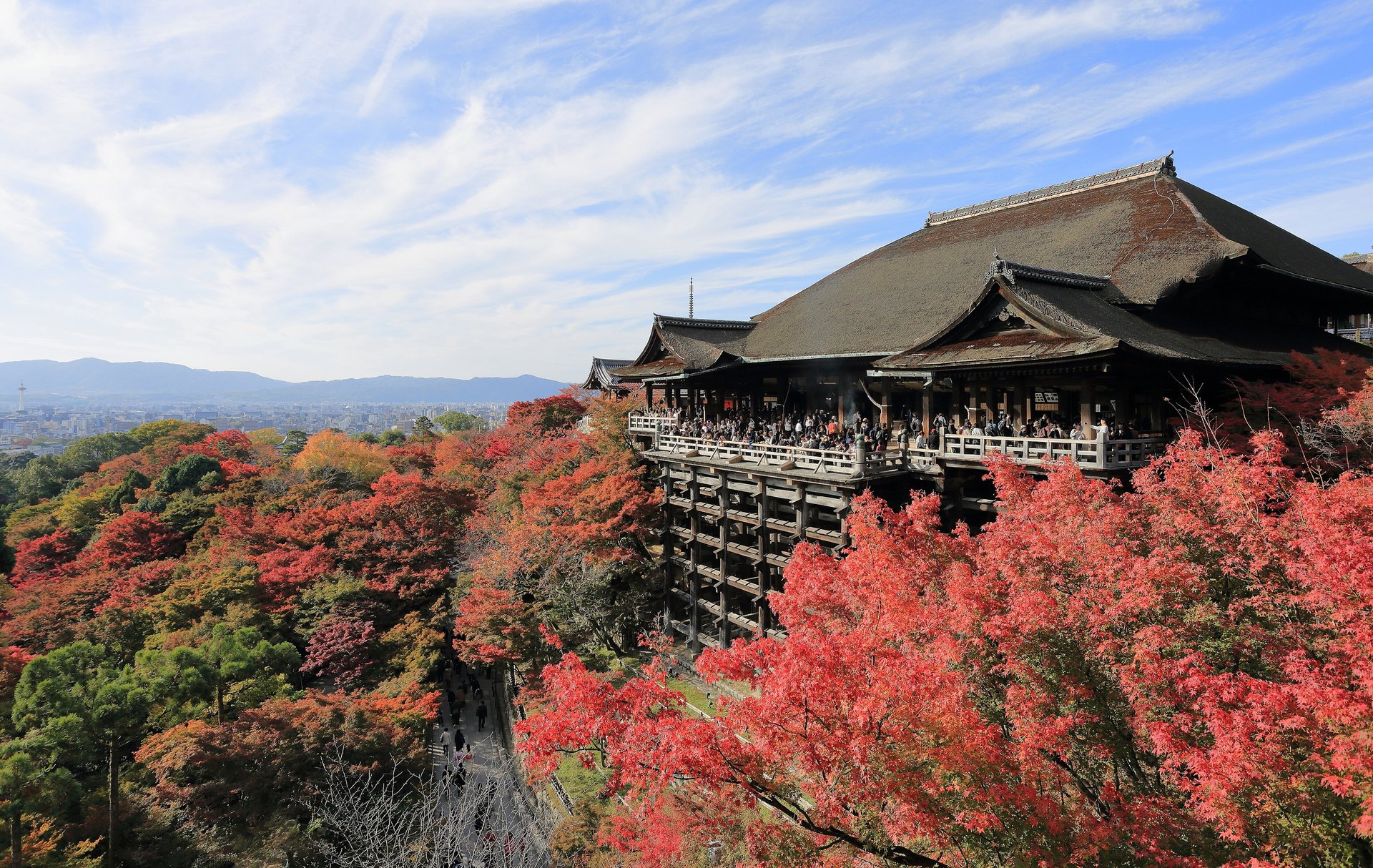
Fall color, called koyo, is the other peak. The maples generally turn from mid-November into early December, with late November the safest bet in most years. Temples like Tofuku-ji, Eikan-do, and Kiyomizu-dera are famous for it, and they are correspondingly busy. As with the blossoms, aim for early mornings and weekdays.
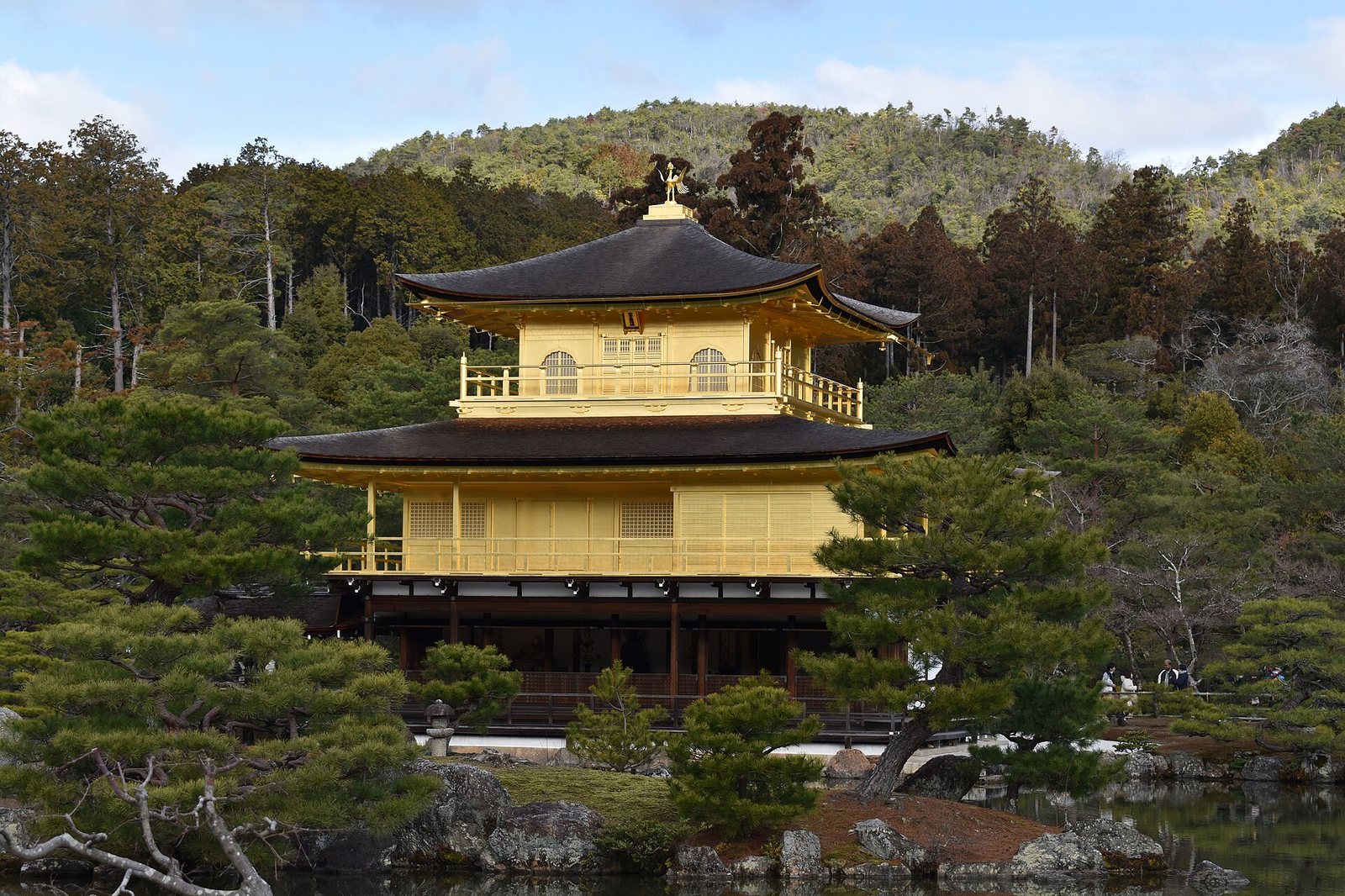
Summer is hot and humid. June brings the rainy season, and July and August are genuinely muggy. There are reasons to come anyway: the Gion Matsuri, one of Japan's great festivals, fills July with processions and floats. Just pack for the heat and plan indoor breaks. Winter is cold, sometimes snowy, and by far the quietest and best value, with the added payoff of a dusting of snow on Kinkaku-ji. For mild weather and thinner crowds, the shoulder weeks of May, early June, and October are the quiet sweet spots.
Kiyomizu-dera, Kyoto, November 2016 -01 · Martin Falbisoner · CC BY-SA 4.0 · cropped
Getting there and getting around
Most international travelers fly into Kansai International Airport (KIX), on an artificial island in Osaka Bay. The simplest way into the city is the Haruka limited express, which runs direct to Kyoto Station in roughly 75 minutes and departs about every half hour. It is the only direct train, so it fills up; reserve a seat. Foreign passport holders can often buy a discounted Haruka ticket, sometimes bundled with an ICOCA transit card, but check the current terms before you travel. A limousine bus is the alternative and takes longer.
Coming from Tokyo, take the Shinkansen. The fastest service, the Nozomi, covers the run to Kyoto in a little over two hours and leaves every ten to fifteen minutes through the day. One thing to know: as of this writing the nationwide Japan Rail Pass does not cover the Nozomi without an extra fee, so if you are traveling on the pass, take the slightly slower Hikari instead.
Inside Kyoto, the network is a mix. City buses are the workhorse and reach nearly every temple, but they are slow and crowded at peak times. The subway has just two lines, the Karasuma line running north to south and the Tozai line east to west; where they go, they are faster and calmer than the bus. Get an IC card such as ICOCA or Suica and tap on and off buses, trains, and at convenience stores. Taxis are plentiful and reasonable for short hops or late nights. And walking is the real pleasure in Higashiyama and along the river.
Arashiyama-Bamboo-Grove-Sunset · Bjørn Christian Tørrissen · CC BY-SA 4.0 · cropped
What to do
Get up before the city does. In Kyoto the famous places belong to whoever arrives first, and the difference between a shrine at seven and the same shrine at ten is the difference between two different trips.
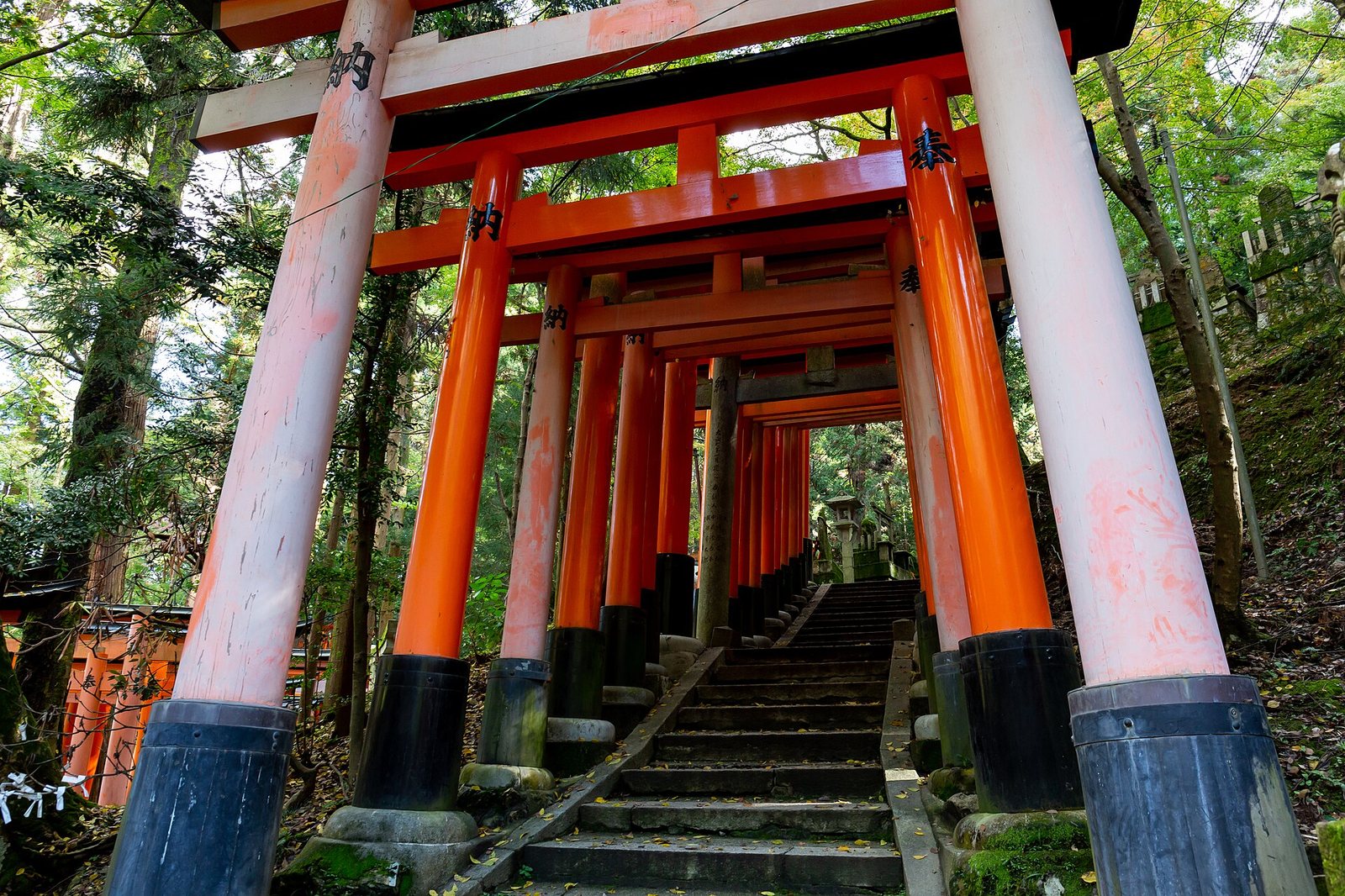
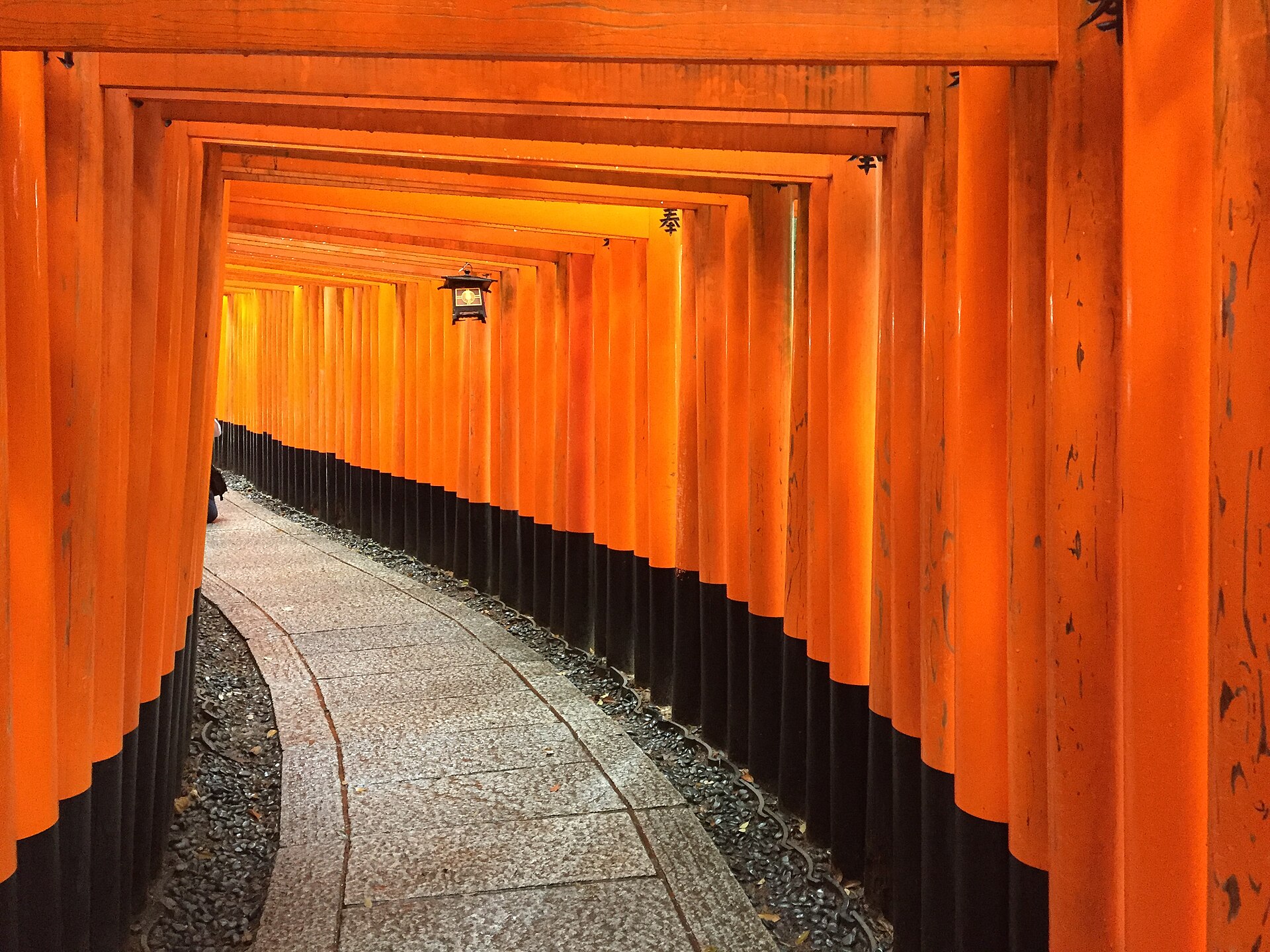
Start with Fushimi Inari Taisha, the shrine whose paths climb the mountain under thousands of vermilion torii gates. It is traditionally dated to the year 711, it is free, and it never closes, which is exactly why you should go at dawn. Arrive by seven and you can walk the lower tunnels of gates nearly alone; by mid-morning it is shoulder to shoulder. Kiyomizu-dera, the great wooden temple on the Higashiyama hillside, opens early too, around six, and the walk up through the old streets is best before the shops open.
The other headline sights spread across the city. Kinkaku-ji, the Golden Pavilion, is a short trip in the northwest, and pairs well with the raked rock garden at Ryoan-ji. Ginkaku-ji, the Silver Pavilion, anchors the eastern hills, connected to Nanzen-ji by the canal-side Philosopher's Path, a lovely walk in blossom or fall. Nijo Castle and the hall of a thousand Kannon statues at Sanjusangen-do are worth a half day downtown.
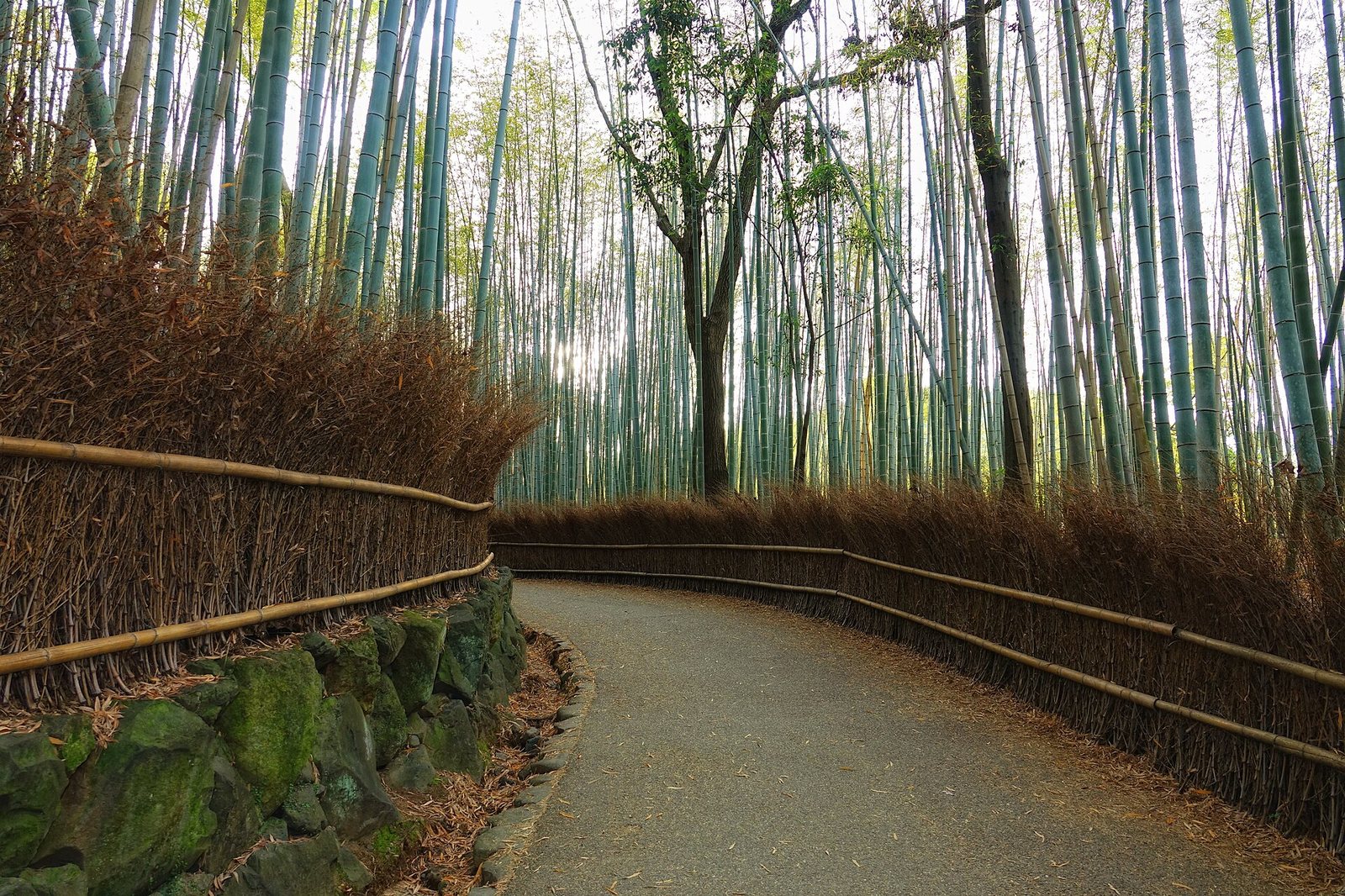
Save time for Arashiyama. The bamboo grove is the draw, and like Fushimi Inari it is a different place at dawn than at noon. While you are out there, see the temple garden at Tenryu-ji, the hillside villa of Okochi Sanso, and, if you like, the monkey park above the river. If you have a spare day, Uji to the south combines Japan's storied green-tea town with the phoenix hall of Byodo-in, and Nara, with its great bronze Buddha and bowing deer, is under an hour away.
2018 Senbon Torii path · PLBechly · CC BY-SA 4.0 · cropped
Eating in Kyoto, and tea
Kyoto's food is quieter and more seasonal than Osaka's, and worth planning around. Kaiseki is the formal high cuisine, a long procession of small courses built around what is in season; the good rooms need reservations, sometimes well ahead, and a hotel or ryokan can often book one for you. Obanzai is the home-style counterpart, everyday Kyoto cooking served at counters along Pontocho and the side streets of Gion. Look also for yudofu, a simple tofu hot pot that is a specialty near Nanzen-ji and in Arashiyama, and for yuba, the delicate skin of soy milk.
Nishiki Market, the covered arcade downtown sometimes called Kyoto's kitchen, runs several hundred meters between Teramachi and Karasuma with roughly a hundred and twenty stalls of pickles, sweets, tofu, skewers, and tea. It is a fine graze, with one local courtesy: eat what you buy at or beside the stall rather than walking and eating through the crowd.
Tea is part of the fabric here. Matcha turns up in everything from formal ceremonies to soft-serve, and Uji, just south, is the region most associated with fine Japanese green tea. If you want to sit through a proper tea ceremony, several teahouses and cultural centers run sessions for visitors; arrange it in advance rather than hoping to walk in.
Golden Pavilion Kinkaku-ji 2024 · Nacaru · CC BY-SA 4.0 · cropped
Money, manners, and small things
Japan is modernizing fast, but Kyoto still runs partly on cash. Plenty of small restaurants, temple entries, and market stalls take yen only, so carry some. The most reliable ATMs for foreign cards are at 7-Eleven and post offices. Beyond that, an IC card handles transit and convenience stores, and cards are fine at hotels and larger shops.
A few manners smooth the whole trip. Keep your voice down on trains and stay off the phone. Do not eat while walking. Do not tip. Take your shoes off where the floor steps up or where you see others do it. Public trash cans are scarce, a legacy of past security measures, so carry your garbage until you find one. Slurping your noodles is welcome, not rude. And book ahead for anything you truly want to eat; the best small places are not walk-in.
Good to know
The geisha of Gion are working professionals, not a photo op. On the private lanes around Hanamikoji, photography is reportedly prohibited, with posted signs warning of fines, after years of tourists crowding and chasing maiko and geiko on their way to appointments. Stick to the public streets, keep your distance, and never follow or photograph them without clear permission. Confirm the current rules with signage when you arrive.
Common questions
How many days do I need in Kyoto?
Three full days is enough for the major temples, Gion, and Arashiyama at a reasonable pace. Five lets you slow down, add a ryokan night, and take a day trip to Nara or Uji without rushing.
Is a ryokan worth it?
For at least one night, yes. The room, the kaiseki dinner, the bath, and the service together are the experience, not just a place to sleep. Book early, expect fixed meal times, and read the etiquette above before you go.
When exactly do the cherry blossoms bloom?
Roughly late March through mid-April, with the peak usually falling around the first few days of April in an average year. The timing moves with the weather, sometimes by a week or more, so follow the seasonal forecasts rather than committing to a single date far in advance.
Do I need to speak Japanese?
No. Stations, signs, and major sights are bilingual, and a translation app covers most small restaurants. A few polite words, arigato for thank you and sumimasen for excuse me, go a long way and are appreciated.
Should I buy a Japan Rail Pass?
Only if you are covering a lot of long-distance ground. For a single Tokyo-to-Kyoto round trip it usually is not worth it, and the pass does not cover the fastest Nozomi trains without a supplement. Add up your planned journeys and compare before you buy.
Sources & further reading
- Japan Guide: Kyoto Travel Guide
- Japan Guide: Fushimi Inari Taisha
- Inside Kyoto: When Do Cherry Blossoms Bloom in Kyoto?
- Lonely Planet: The Best Time to Visit Kyoto
- Kyoto Station: Traveling Between Kyoto and Kansai International Airport
- Hiiragiya Ryokan (official site)
- Time Out: Best Machiya Hotels and Guesthouses in Kyoto