At a glance
- Base
- Base in a Luberon village, or the cities of Avignon, Aix-en-Provence, or Arles. Farmhouses and village houses are also options.
- When
- Peak lavender is late June-July; July/Aug are hot/crowded. May, June, Sept offer warm days, markets, fewer crowds.
- Getting there
- Fly to Marseille Provence Airport (MRS) or take a TGV to Avignon from Paris (2.5-3 hrs).
- Getting around
- A car is essential for villages, lavender, wineries; public transport is thin. Rent at Marseille airport or Avignon TGV.
- Book ahead
- Book stays months ahead for June-August, especially for famous villages and lavender season.
- The price
- Gordes is pricier; car rental, fuel, and tolls are significant costs.
Provence is not one place. It is a handful of very different ones, most within an hour's drive of each other. You can spend a morning in a stone village of a few hundred people and the afternoon inside a Roman amphitheater. You can stand in a field of purple one week and find bare stubble the next. The whole art of a good trip here is knowing where to point yourself, and when.
This guide is for the reader deciding where to base and how to spend the days. It covers the Luberon hill villages, the three cities most people choose between, the farmhouse and village-house rentals the region runs on, the lavender calendar, the summer heat and the mistral, how to arrive, and what is worth your time once you have a car.
In this guide
- First decide: village or city
- The Luberon hill villages
- Avignon, Aix, and Arles
- The mas, the village house, and the design hotels
- Lavender, heat, and the mistral
- Getting there, and why you want a car
- Markets, wine, and the table
- Roman Arles, the Camargue, and the Alpilles
- Money and practical notes
- Common questions
First decide: village or city
Your first choice sets the tone of the whole trip. Base in a Luberon village and your days start slow: coffee in a square, a market, a drive to the next hill town, a long lunch. Base in a city and you trade some quiet for convenience, restaurants, and things to walk to at night. Neither is wrong. They are just different trips.
The good news is that the region is small. From a village like Bonnieux you can reach Avignon, Arles, the wine country around Châteauneuf-du-Pape, and the lavender plateaus on manageable day drives. So you do not have to find the one perfect spot. You have to pick one spot and stay put.
Provence rewards people who pick one base and drive out from it. The distances are short and the roads are pretty, so changing hotels every night mostly buys you packing time you could have spent at lunch.
The Luberon hill villages
The Luberon is a range of low mountains and a protected regional park, roughly an hour north of Marseille, spread across the Vaucluse. Its villages sit on hilltops, built from the same pale limestone, and several carry the official Les Plus Beaux Villages de France label. Here is how the best-known ones differ, so you can choose the right one to sleep in and treat the rest as day trips.
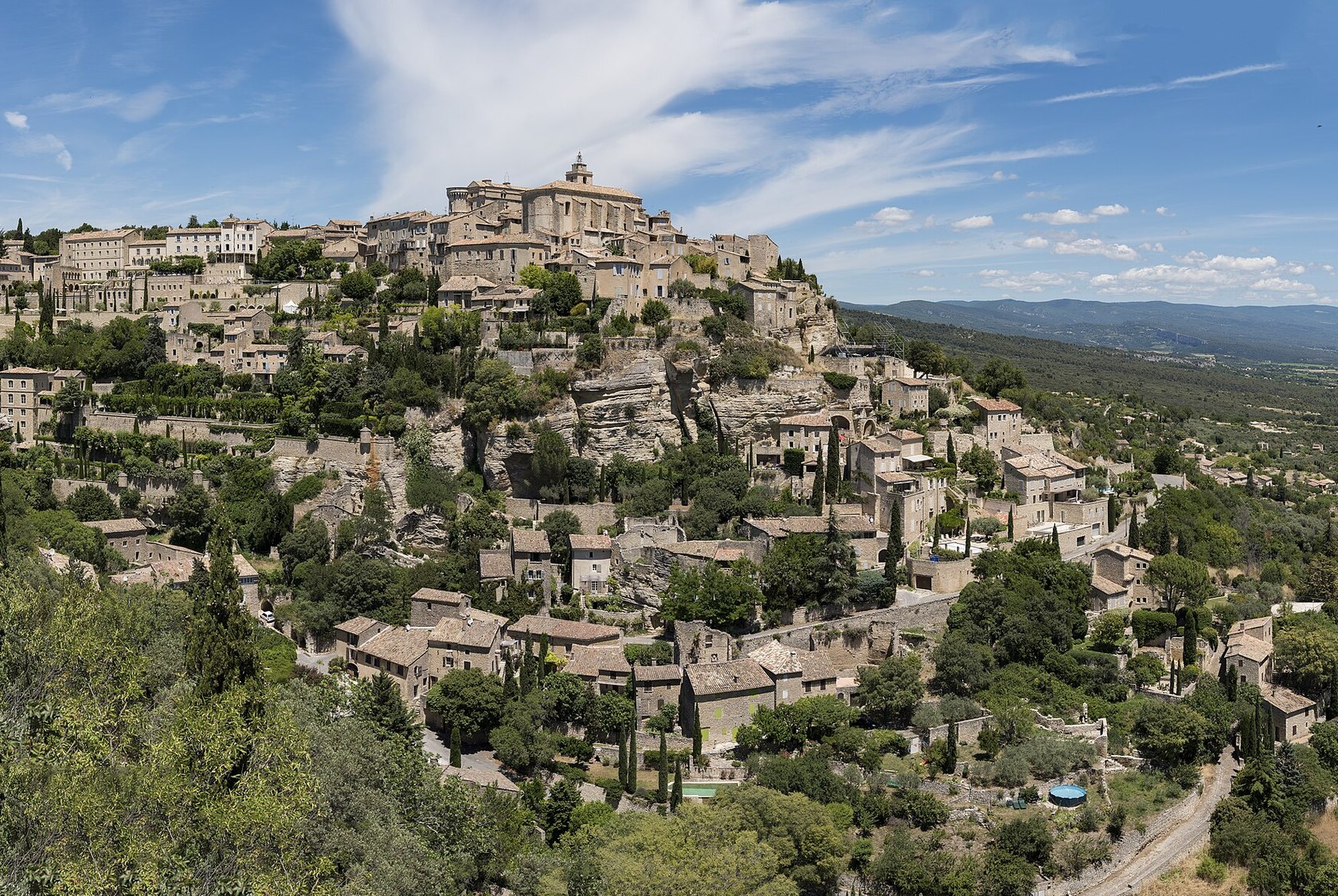
- Gordes is the postcard. Its houses stack up a rock face above the valley, and the view of the village from the road below is the one you have probably already seen. It is beautiful and it knows it, which means crowds and higher prices. Come for the view and for the nearby Abbaye de Sénanque, the Cistercian abbey with lavender rows out front that usually flower around late June into July.
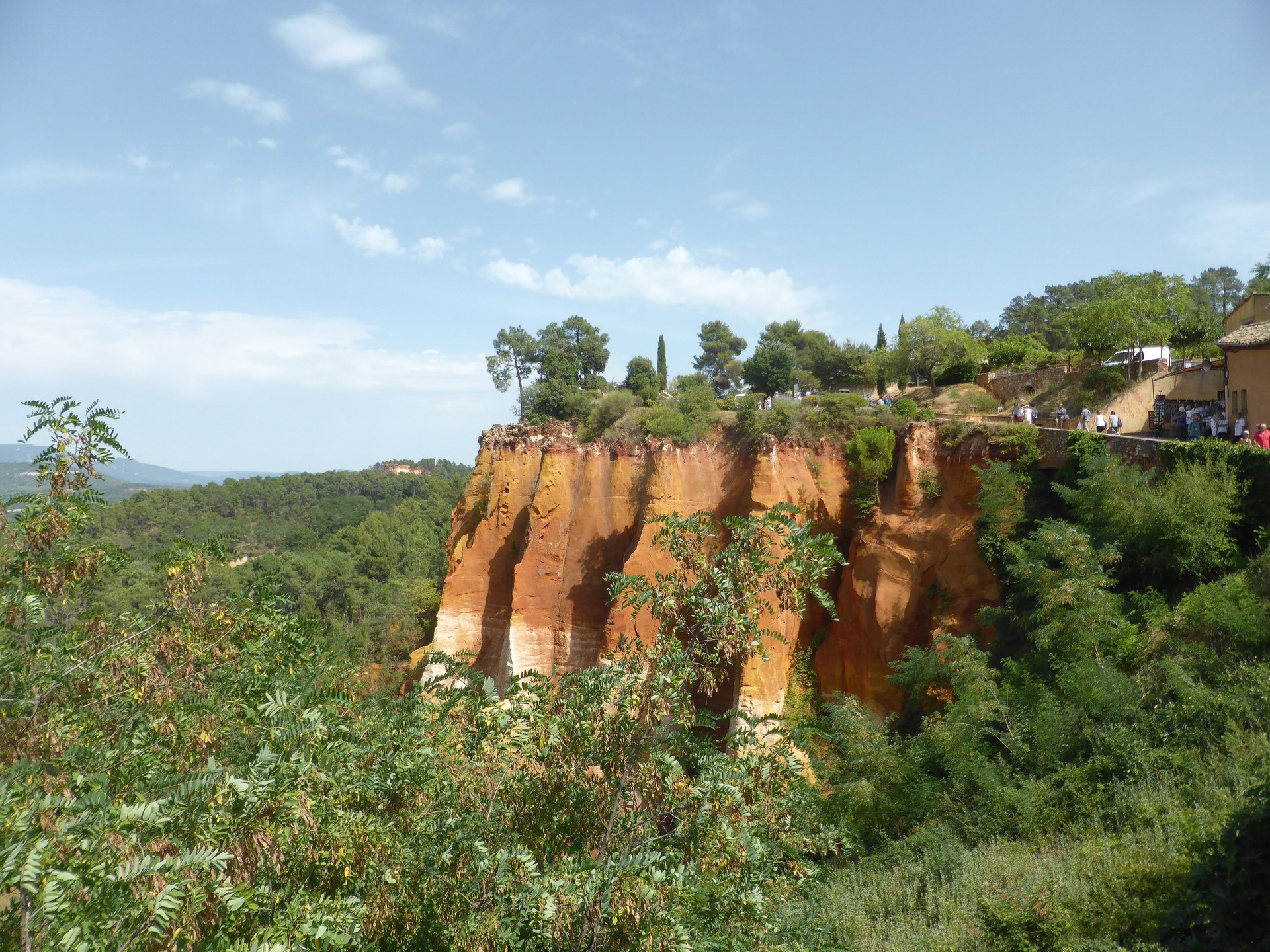
- Roussillon is built on ochre. The cliffs and many of the houses run red, orange, and gold, and you can walk the Sentier des Ocres, a short marked trail through the old pigment quarries. Wear shoes you do not mind staining.
- Ménerbes is quieter and low-key handsome, strung along a ridge. This is Peter Mayle country; his book A Year in Provence was set in this corner. Artists including Picasso spent time here.
- Bonnieux climbs a hillside in terraces, with an old church at the top and long views across to Lacoste. It has enough restaurants and rentals to make a comfortable base without feeling like a theme park.
- Lacoste, across the valley, is tiny and steep, crowned by the ruined castle once owned by the Marquis de Sade and now associated with the designer Pierre Cardin, who restored parts of it and runs a summer festival.
- Lourmarin, on the south side, is greener and a little more open, with a Renaissance château and a well-known Friday market.
You do not need to see all of them. Pick two or three a day, go early or late to dodge the tour buses, and leave the middle of the day for a long lunch or the pool.
Roussillon sentier ocres1 · Jacques Le Letty · CC BY-SA 4.0 · cropped
Avignon, Aix, and Arles
If you would rather have a city at your back, three come up again and again. They sit close together but they feel nothing alike.
- Avignon is the practical pick. It is a walled medieval city on the Rhône, home to the enormous Palais des Papes from the years the papacy sat here in the 14th century, and the famous half-bridge, the Pont Saint-Bénézet. It has the best train links of the three and sits central to the Luberon and the wine country. In July it fills up for the Festival d'Avignon, a major theater festival, which is either a draw or a reason to book elsewhere.
- Aix-en-Provence is the elegant one. Bigger and wealthier-feeling, full of students, cafés, and fountains, with the grand Cours Mirabeau down the middle and Cézanne's studio, the Atelier Cézanne, on the edge of town. It is the best base if you also want Marseille, but it is the farthest of the three from the Luberon.
- Arles is the one for history and art. It was a major Roman town, and its amphitheater and theater are still standing and still in use. Van Gogh spent about 14 months here and painted furiously; you can stand where several of the pictures were made. It is smaller and rougher around the edges than Aix, in a good way, and it is the gateway to the Camargue.
| Base | Best for | The feel | Keep in mind |
|---|---|---|---|
| Avignon | Trains, day trips, a first visit | Walled city, lively, central | You still drive for the villages |
| Aix-en-Provence | Cafés, shopping, Cézanne, Marseille | Polished, student energy, urban | Farthest from the Luberon |
| Arles | Roman ruins, Van Gogh, the Camargue | Artsy, handsome, unpretentious | Quieter after dark than Aix |
| A Luberon village | Slow mornings, markets, scenery | Small, quiet, car-dependent | Little nightlife; book stays early |
The mas, the village house, and the design hotels
Provence has a particular kind of lodging that a lot of people come for: the mas. A mas is a traditional Provençal farmhouse, thick-walled stone, usually with a courtyard, cypress trees, and now, very often, a pool. Many have been turned into rentals or small hotels, and a restored mas in the countryside is the classic Provence stay. You get quiet, space, and a base for cooking with what you buy at the markets.
Your three main options, in rough order of independence:
- A country mas or gîte. Rent the whole house or a wing. Best for families or groups who want a kitchen and a pool and do not mind driving to dinner. You will want a car, and it is worth checking exactly how far the nearest village is before you book.
- A village house. A tall, narrow stone house inside a village like Bonnieux or Ménerbes, so you can walk to bread and wine. Charming, but expect stairs, tight parking outside the walls, and thin air conditioning in some older houses.
- A small design-led hotel. The region is known for these: converted farmhouses and bastides turned into low-key luxury, often with a serious restaurant. They cluster around Gordes and Bonnieux in the Luberon, around Saint-Rémy-de-Provence and the Alpilles, and out in the Camargue. Names and rates change, so check current listings rather than trusting an old recommendation.
Whatever you pick, two practical notes. Air conditioning is not a given in old stone buildings, so confirm it if you are coming in summer. And the best places, especially in and around the famous villages, book months ahead for June through August.
Lavender, heat, and the mistral
Most people who plan around one thing plan around lavender, so start there. The bloom is real, but the timing is narrower and more variable than the photos suggest, and it moves with elevation and the weather.
- The Valensole plateau, lower and east of the Luberon, is the big one. It generally colors up in mid-to-late June and peaks from late June into the first part of July. In hot years, some fields are cut by mid-July.
- The Plateau de Sault, higher up near Mont Ventoux, runs later. It tends to peak in mid-to-late July and can hold color into August, with harvest usually around early-to-mid August, ahead of the Sault lavender festival in mid-August.
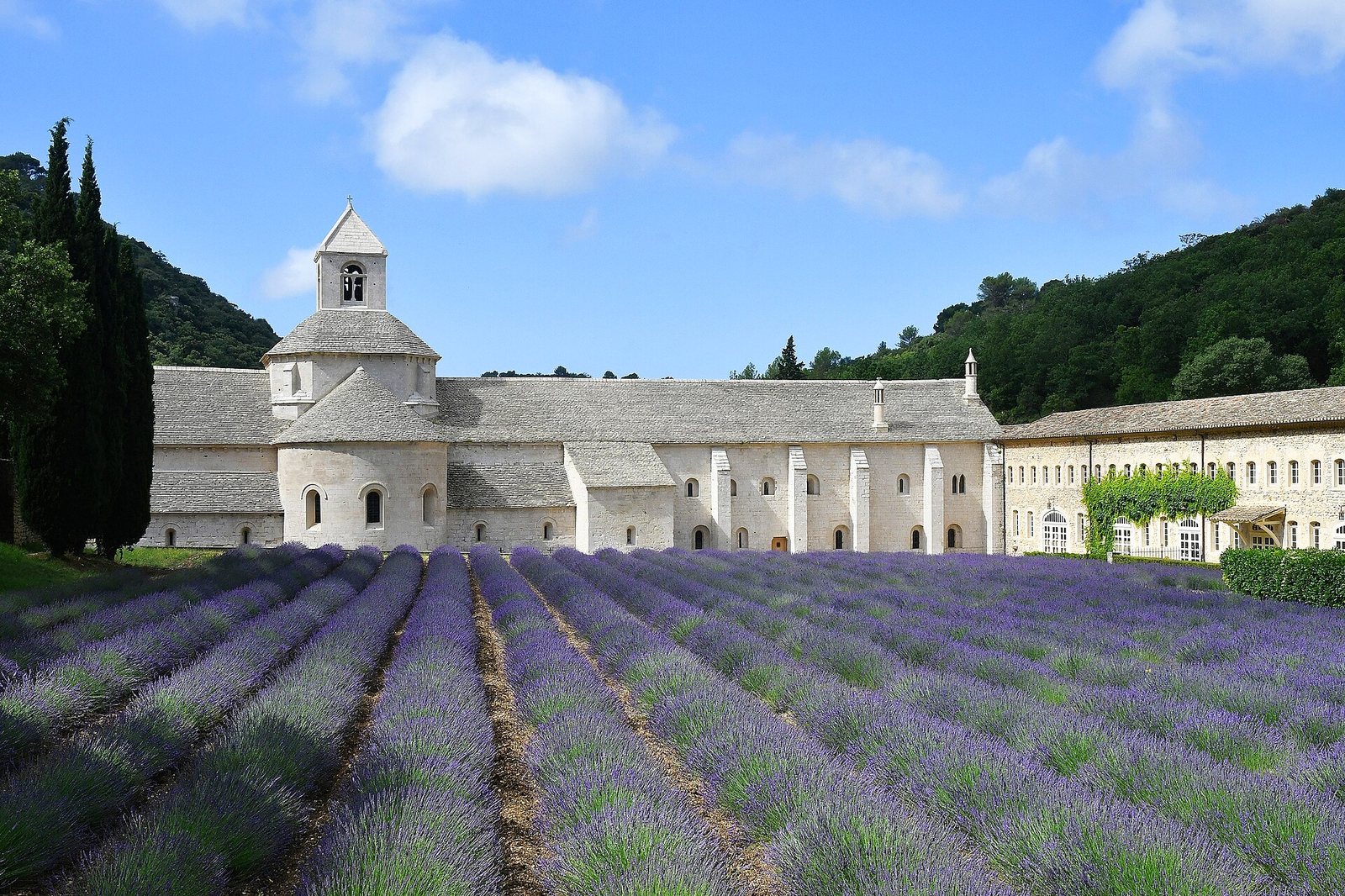
- The Abbaye de Sénanque near Gordes, the abbey shot everyone wants, usually flowers roughly late June into July.
The single most useful habit is to chase the bloom to where it actually is for your dates, not where a picture was taken. A recent run of very hot summers has pulled harvests forward, so check a current bloom report or call a local tourist office the week you travel.
Good to know
If lavender is the whole reason you are coming, the first two weeks of July are usually the safest single bet, because Valensole is often still holding while Sault is coming into its own. Treat that as a guide, not a certainty. A field that is glorious one morning can be stubble the next, and the dates shift year to year with the heat. Confirm locally before you lock in non-refundable plans.
Two other weather facts shape a trip. Summer is genuinely hot; July and August routinely reach the mid-30s Celsius, into the 90s Fahrenheit, and stone villages with little shade get punishing at midday. Then there is the mistral, the cold, dry wind that funnels down the Rhône valley from the north. It can blow hard for a few days at a stretch, mainly in winter and spring, sometimes gusting past 60 miles an hour. It is also why the skies here are so clear and the light so good; the painters did not come for nothing.
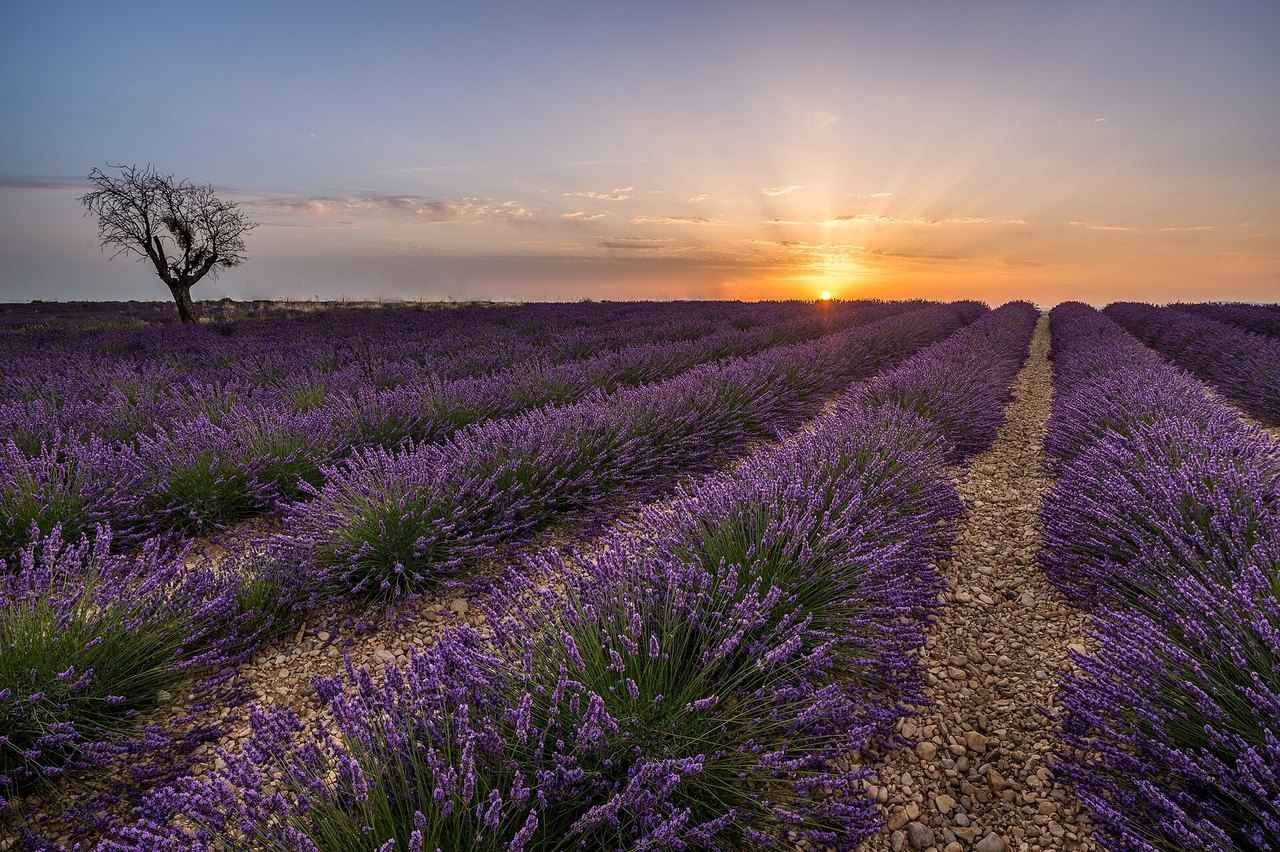
Lavender fileds in Valensole · Nuno Alves · CC BY-SA 4.0 · cropped
Getting there, and why you want a car
Two arrival points cover most trips.
- Marseille Provence Airport (MRS) is the main regional airport, well placed for Aix, Arles, and the Luberon, with connections around Europe.
- Avignon TGV station puts you on the high-speed line; direct trains from Paris take on the order of two and a half to three hours. From the Paris airports you can often stay on the rails most of the way. Arles and Aix also sit on the rail network, and local TER trains link the bigger towns.
Here is the part that matters most. To do the villages, the lavender plateaus, the wineries, and the markets, you want a car. Public transport between small villages is thin, and the whole point of the Luberon is the driving between towns. Rental desks sit right at Avignon TGV and at Marseille airport. A few honest cautions: village lanes are narrow, historic centers are often closed to cars, parking is usually outside the walls, and you will meet the occasional single-track road. Request an automatic transmission early if you do not drive stick, because manuals are the default here.
If you would rather not drive at all, it can be done, but plan a different trip: base in Avignon or Arles, stick to what you can reach by train and the odd guided day tour, and accept that the deep-village and lavender days are harder to pull off.
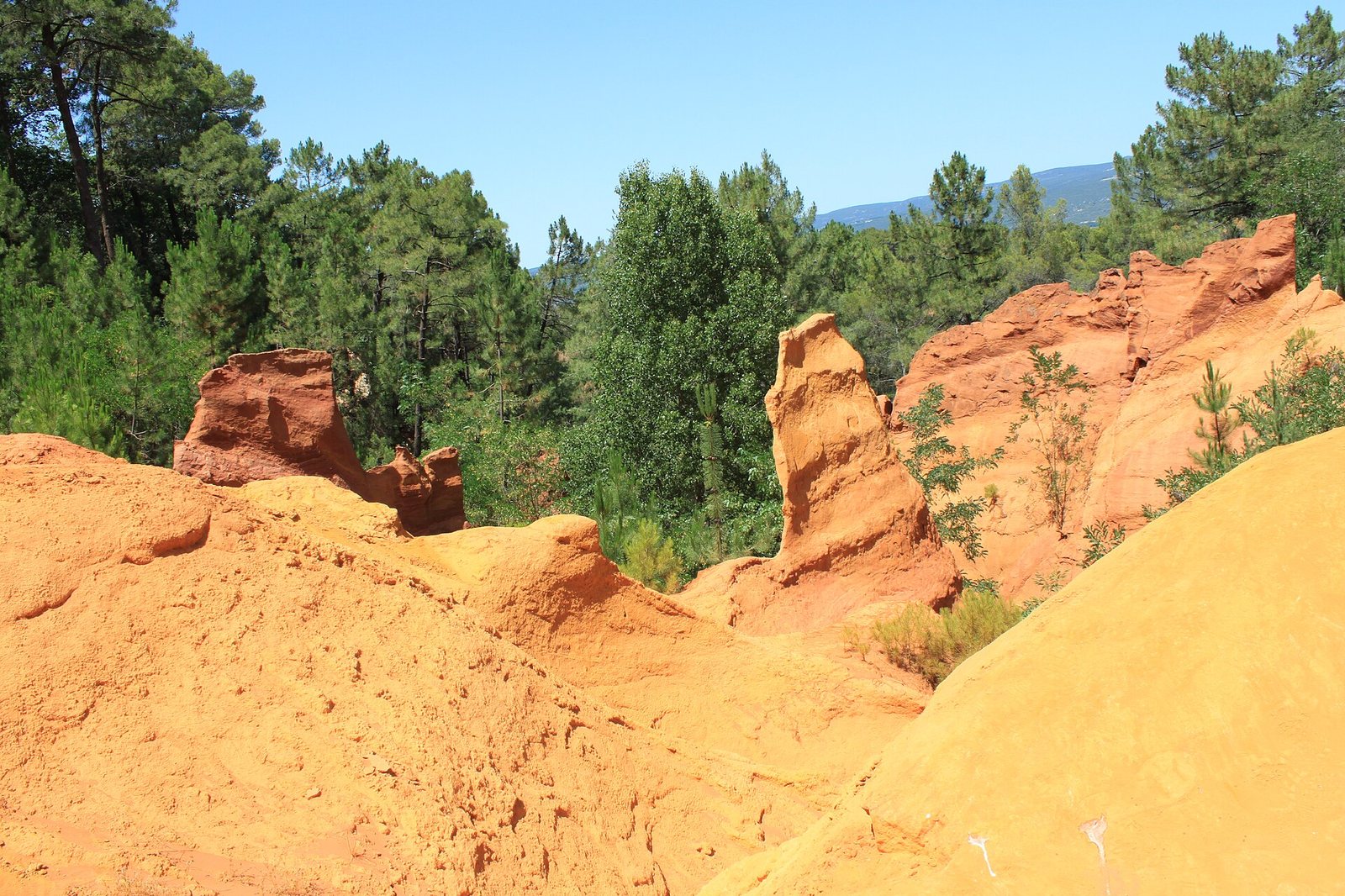
Roussillon - Sentier des Ocres 22 · Own work · CC BY-SA 3.0 · cropped
Markets, wine, and the table
Two things organize daily life here: the market in the morning and the table at the end of it.
Markets rotate by village and day, so check the schedule for the week you are there. The one to build a plan around is L'Isle-sur-la-Sorgue, a canal town often called the Venice of Provence, which holds its big market on Sundays, with a smaller one on Thursdays. It is also one of France's great antiques centers, with hundreds of dealers and a huge Sunday brocante, plus larger fairs around Easter and mid-August. Arles runs a large market on Wednesday and Saturday mornings. Smaller villages each keep their own day, so ask your host or check locally rather than trusting a fixed list.
For wine, the headline name is Châteauneuf-du-Pape, a village and appellation between Avignon and Orange in the southern Rhône. It was France's first official AOC, granted in 1936, and its reds are big, warm blends built mainly on Grenache, Syrah, and Mourvèdre. The village is full of tasting cellars and is an easy drive from Avignon. Around it sit other strong southern Rhône names worth a detour, like Gigondas and Vacqueyras, under the sawtooth ridge of the Dentelles de Montmirail. Further toward the coast and Aix you move into rosé country, the pale pink wine Provence is known for in summer.
On the plate, expect olive oil, garlic, tomatoes, eggplant, tapenade, goat cheese, and, in the Camargue, red rice and bull meat. Order the rosé cold, eat the melon in season, and do not overthink it.
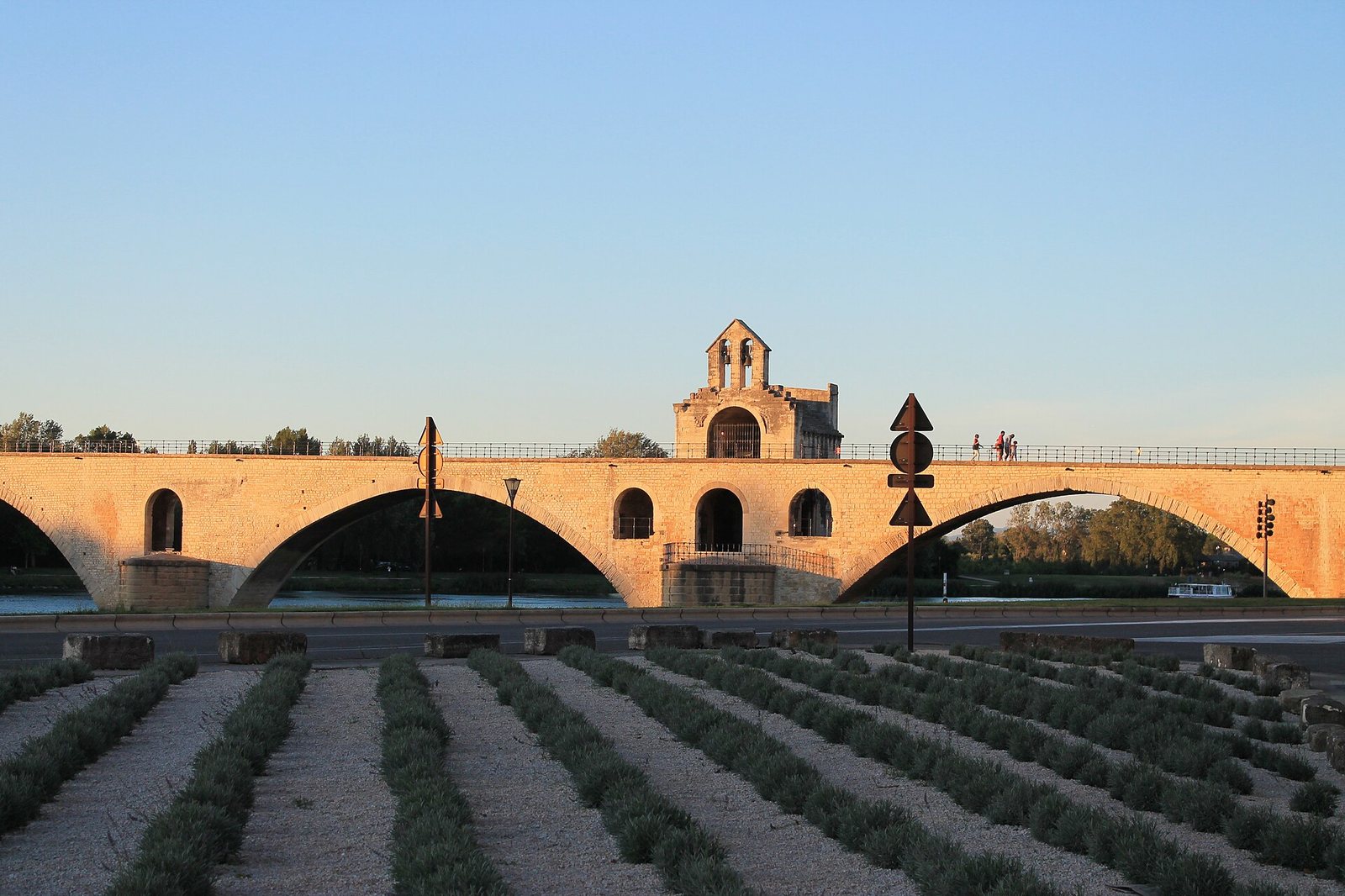
Pont Saint-Bénézet, Avignon 02 · John Samuel · CC BY-SA 4.0 · cropped
Roman Arles, the Camargue, and the Alpilles
Beyond villages and vineyards, three outings stand out.
Roman Arles. The Arles amphitheater, the Arènes, went up around the first century and once held some 20,000 people; it still hosts events today. Add the Roman theater, the Alyscamps necropolis that Van Gogh painted, and the underground Cryptoporticus, and you have a compact walk through the ancient city. The Roman and Romanesque monuments have been UNESCO-listed since 1981. For something modern, the LUMA Arles arts center, with its twisting Frank Gehry tower, sits in the old railyards.
The Camargue. South of Arles the Rhône fans out into a wide, flat delta of marsh, lagoon, salt pan, and rice field. It is known for three things: pink flamingos, white horses, and black bulls, the last two worked by local herdsmen called gardians. The Parc Ornithologique du Pont de Gau, near Saintes-Maries-de-la-Mer, is the reliable place to see flamingos up close from boardwalks. You can also ride horses across the marsh, cycle the sea-dike, or take a jeep tour of a working ranch. It feels like nowhere else in France.
The Alpilles. Between Arles and Avignon, this small chalk range holds two easy hits: Les Baux-de-Provence, a dramatic clifftop village with the immersive light show at the Carrières des Lumières in an old quarry, and Saint-Rémy-de-Provence, with its Roman site of Glanum and the monastery where Van Gogh spent a year. This is also prime mas-and-hotel country if you want a quieter, slightly upscale base near Arles.
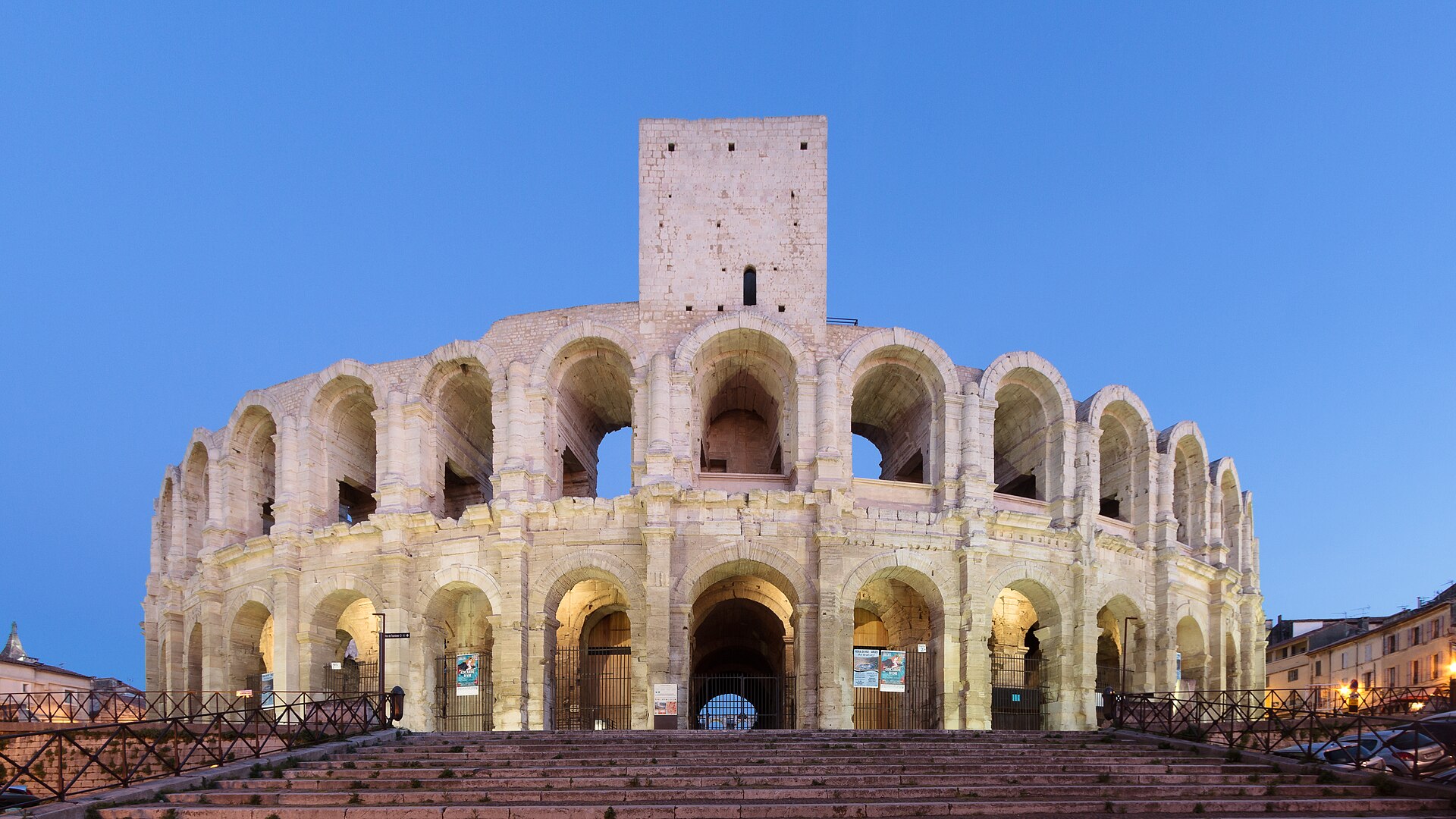
Arles - 2017-05-24 - Roman Amphitheatre - 3804 · PierreSelim · CC BY 3.0 · cropped
Money and practical notes
A few things that make the trip smoother, without quoting prices that go stale:
- Book stays early for summer. The good rentals and small hotels in and near the famous villages fill months ahead for June through August. If you are set on lavender season, treat it like booking a popular festival.
- Budget for the car and the fuel. A rental plus fuel plus the occasional toll is a real line item, but it is what unlocks the region. Reserve an automatic early if you need one.
- Bring some cash for markets. Many stalls and small producers still prefer it, even as cards spread.
- Plan around the heat. In midsummer, do villages and markets in the morning, rest or swim at midday, and head back out in the evening. Carry water and confirm your room has real air conditioning.
- Watch the calendar. Some restaurants and shops close one or two days a week, and hours shrink out of season. In the deep villages, do not assume dinner is available every night without checking.
- Shoulder season is a gift. May, June, and September give you warm days, working markets, and thinner crowds. You may miss peak lavender, but you gain almost everything else.
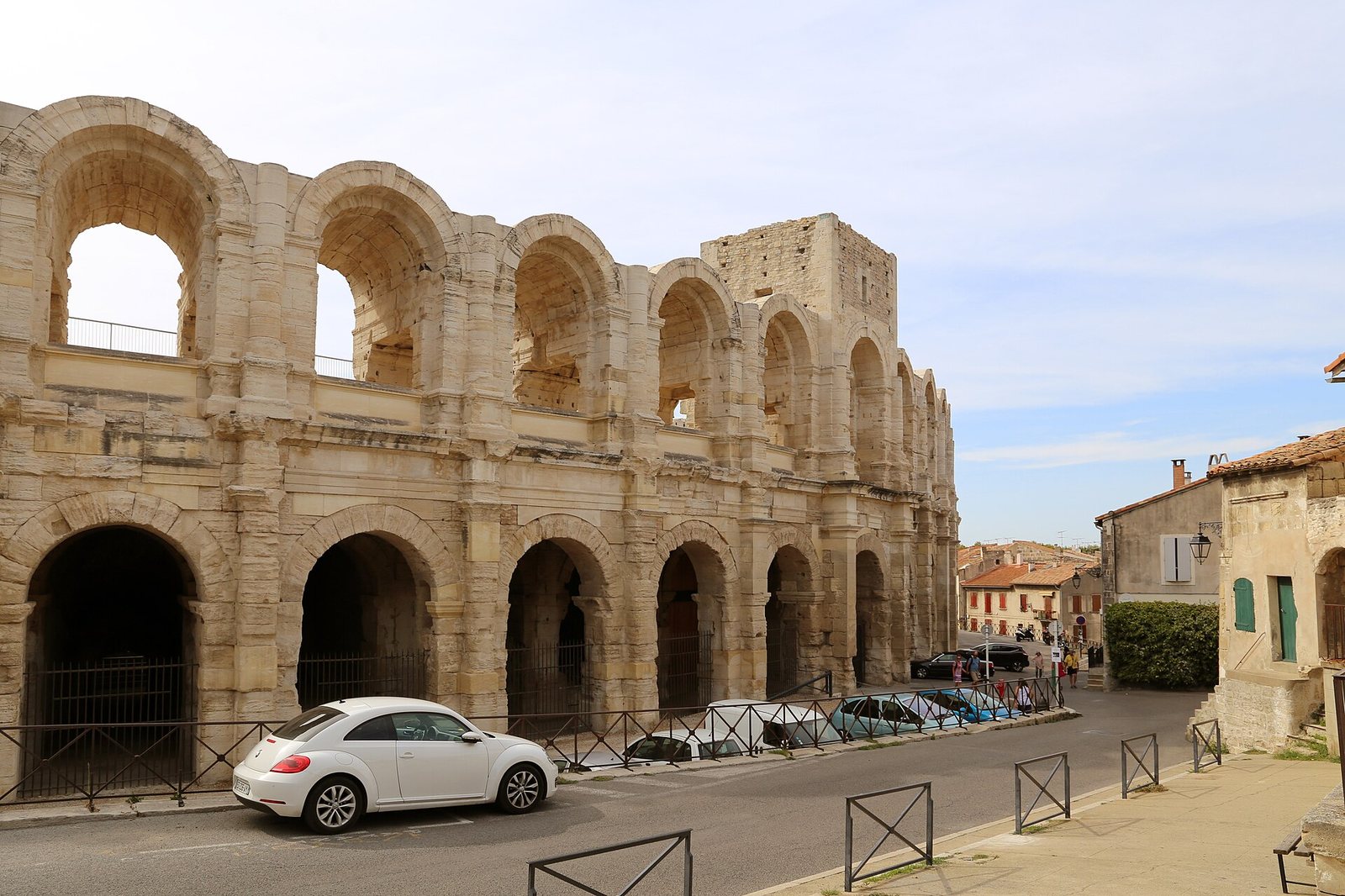
Arles, arena, 03 · Sailko · CC BY 3.0 · cropped
By the numbers
Common questions
How many days do I need?
Five to seven is a comfortable first trip: enough to base once, see the main villages, spend a day in Arles or Avignon, do a wine afternoon, and still keep a slow morning or two. Fewer than four and you will feel like you are only driving.
Do I really need a car?
For the villages, the lavender plateaus, and the wineries, effectively yes. Trains and buses connect the bigger towns but not the small hilltop ones. If you would rather not drive, base in Avignon or Arles, use trains and the occasional day tour, and accept a narrower trip.
When exactly does the lavender bloom?
Roughly late June through July, but it varies by place and year. Lower Valensole usually peaks late June into early July; the higher Sault plateau runs later and can hold into August. Hot summers pull harvests forward, so confirm a current bloom report before you commit to dates.
Is July too hot and crowded?
It is the hottest and busiest month, and it is also peak lavender, so it is a genuine trade-off. Expect heat in the mid-30s Celsius and full villages. If you can flex, late May, June, and September are cooler and calmer.
Which airport or station should I use?
Marseille Provence (MRS) is the closest airport for most of the region. If you are coming from Paris, the Avignon TGV is fast and drops you where the rental cars are. Either way, pick up the car and drive from there.