At a glance
- Base
- Seminyak, Canggu, Ubud, Uluwatu (Bukit), Sanur, Nusa Dua, Jimbaran; many split a trip between inland and coast.
- When
- Dry season (April-Oct) for sun, shoulder weeks (Apr-May, Sep-Oct) for balance. Avoid Nyepi (March).
- Getting there
- Fly to Ngurah Rai International Airport (DPS) near Kuta and Jimbaran; e-visa on arrival recommended.
- Getting around
- Car and driver is standard; ride-hailing apps (Grab, Gojek) for short hops; scooters are risky.
- Book ahead
- Best villas book months ahead for peak season (July, Aug, Christmas); plan around Nyepi (March).
- The price
- Location (clifftop, beachfront), private pool, views, staffing, and peak season (July, Aug, Christmas).
Bali is not one destination. It is a small island that has become a dozen different holidays, and the version you get depends almost entirely on which corner you sleep in. Base yourself among the surf breaks and cliff bars of the Bukit and you will barely register the rice-farming interior an hour north. Book a villa in the hills around Ubud and you may not see the sea for a week. The beach-club sprawl of Seminyak is a different trip again from the quiet, family-friendly coast at Sanur. So the first decision is not which hotel to book. It is which Bali you are booking.
This guide is built around that decision. We take the shape of the island, the main areas and who each suits, what you pay for in a private villa versus a resort, when to come, and the parts that trip visitors up: the traffic, the scooters, temple etiquette, and a tourist levy that is easy to miss. Bali rewards a little planning and punishes the assumption that everything is close together, because on these roads, almost nothing is.
In this guide
How to think about Bali
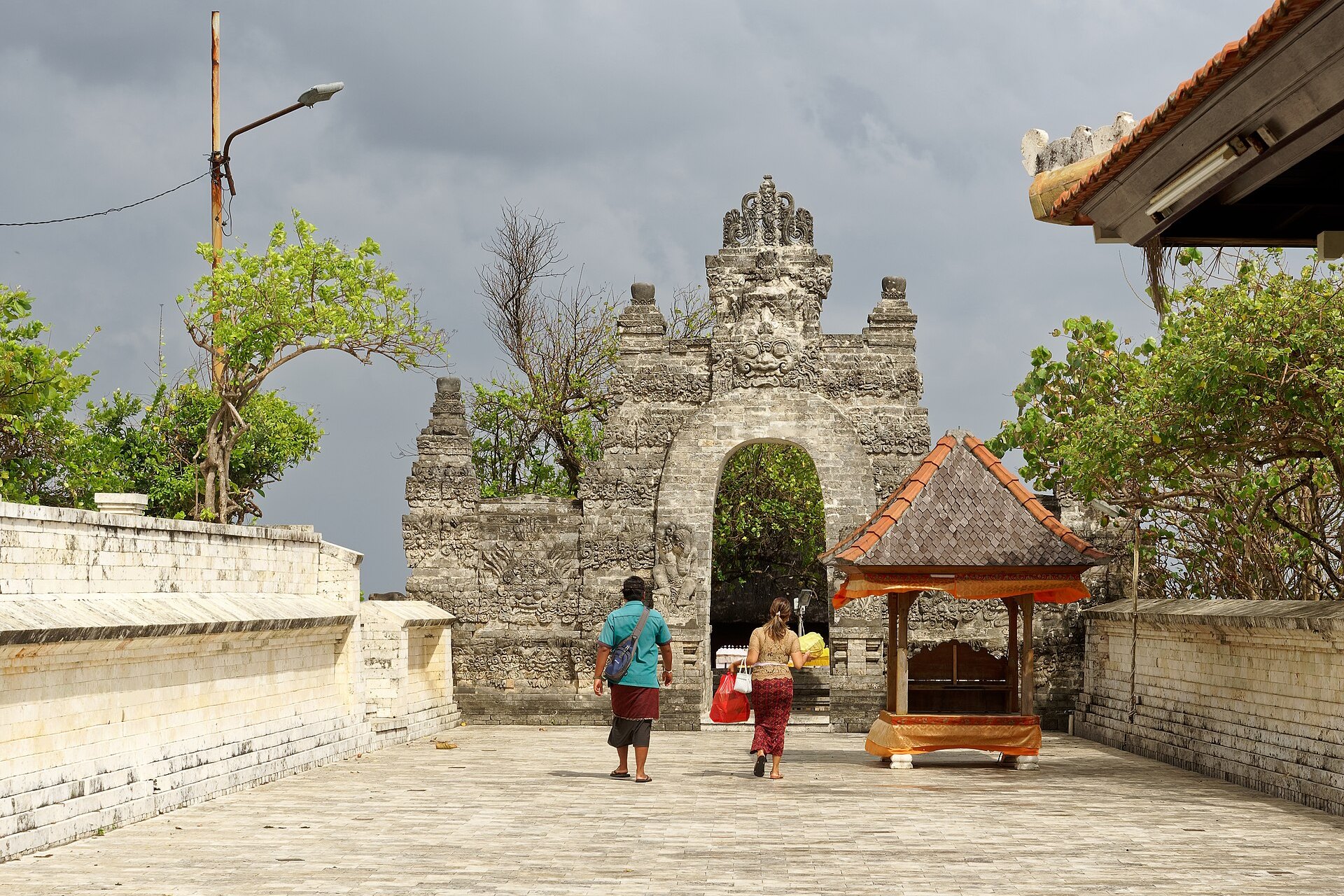
Bali is one island in the middle of Indonesia, a little smaller than most people picture, and predominantly Balinese Hindu in a country that is mostly Muslim. That religious life is visible everywhere, from the small palm-leaf offerings on doorsteps each morning to the temples on almost every headland. Nearly everything a first-time visitor books sits in the southern third of the island, within a couple of hours of the airport.
Picture five broad zones. The southwest beach strip runs up the west coast from Kuta and Legian through Seminyak to Canggu: dark volcanic sand, surf for beginners and improvers, and the island's densest run of restaurants, bars, beach clubs, and traffic. The Bukit Peninsula, the limestone tableland hanging off the far south below the airport, is drier and more rugged, with the clearest water, the best beaches, powerful reef surf, and the cliff-top temple at Uluwatu; Jimbaran and Nusa Dua sit on its shoulders. Ubud, inland in the centre, is the cultural heart: rice terraces, river gorges, art, and yoga, with no beach at all. The quieter east and north — Sanur, then further-out spots like Sidemen, Amed, and Lovina — trade nightlife for calm water and a slower pace. Offshore to the southeast lie the Nusa islands, a short fast-boat hop from Sanur.
Bali is also bigger on the road than it looks on the map. Distances that seem trivial can take two or three hours, because there are few fast roads, the main routes run through villages, and the south is congested. That is the real reason to choose your area with care: you will spend most of your time near wherever you sleep.
The main areas, and who each suits
Here are the bases most visitors choose, what each is like, and the honest trade-offs. You can always split a longer trip across two — a common pattern is a few nights in the Ubud hills, then a few on the coast.
- Seminyak is the polished end of the west-coast strip: design shops, a long roll-call of restaurants, spas, and the big beach clubs, with a dark-sand beach and reliable sunsets. It suits first-timers who want plenty within reach and do not mind that it is built-up and busy.
- Canggu is the younger, scruffier, more fashionable neighbour up the coast: surf breaks, cafe culture, co-working spaces, and a big community of remote workers. It suits surfers, remote workers, and casual nights out rather than resorts. The catch is growth: construction is everywhere and the narrow lanes seize up with traffic. The quieter fringe around Pererenan takes some of the overflow.
- Ubud, up in the interior, is for people who came for the culture and the green rather than the sea. You get rice fields, river valleys, temples, art markets, the Sacred Monkey Forest, dance performances, and a strong wellness scene. There is no beach, the central streets are congested and touristy, and it rains more than the coast. Stay a little outside the centre and the quiet comes back quickly.
- Uluwatu and the Bukit reward those who put beaches, surf, and cliff-top views over convenience. The water is clearest here and the sand is white, serious surfers come for the reef breaks, and many of the newer design-led villas and cliff bars have gone up. It is spread out and hilly, you rely on a driver or scooter for everything, and the swimming beaches sit at the foot of steep cliffs. The surf is largely for the experienced: reef, currents, and big days.
- Sanur, on the southeast coast, is the calm, low-rise, slightly old-fashioned option. Its reef-protected lagoon is flat and shallow, a long seafront path is good for walking and cycling, and it draws families and older travellers who want an easy pace. It is also the launch point for boats to the Nusa islands. The trade-off is that it is quiet at night.
- Nusa Dua and Jimbaran are the resort south. Nusa Dua is a planned, gated enclave of large five-star resorts on a manicured white-sand beach — orderly, secure, and a little sealed off from everyday Bali, which is exactly what some travellers want. Jimbaran, on the peninsula's west side near the airport, is mellower and mixed, known for its bay, its fish market, and the seafood grills that set tables on the sand at sunset.
Worth a mention: Kuta and Legian, the original tourist beaches, are cheap, central, and famous for nightlife, but also the most crowded and worn; most people after a nicer stay now start further up the coast or on the Bukit.
| Area | Feel | Beach & surf | Crowds | Best for |
|---|---|---|---|---|
| Seminyak | Polished, built-up | Dark sand; surf for most levels | High | Beach clubs, dining, an easy first trip |
| Canggu | Boho, cafe-and-surf | Dark-sand surf beaches; good for learning | High; heavy traffic | Surfers, remote workers |
| Ubud | Green, artsy, inland | No beach; rivers and rice fields | Busy in the centre | Culture, nature, wellness |
| Uluwatu (Bukit) | Clifftop, spread out | Best beaches; powerful reef surf | Lower but rising | Surfers, views, villas |
| Sanur | Calm, low-rise | Reef-protected and flat; little surf | Low | Families, a slower pace |
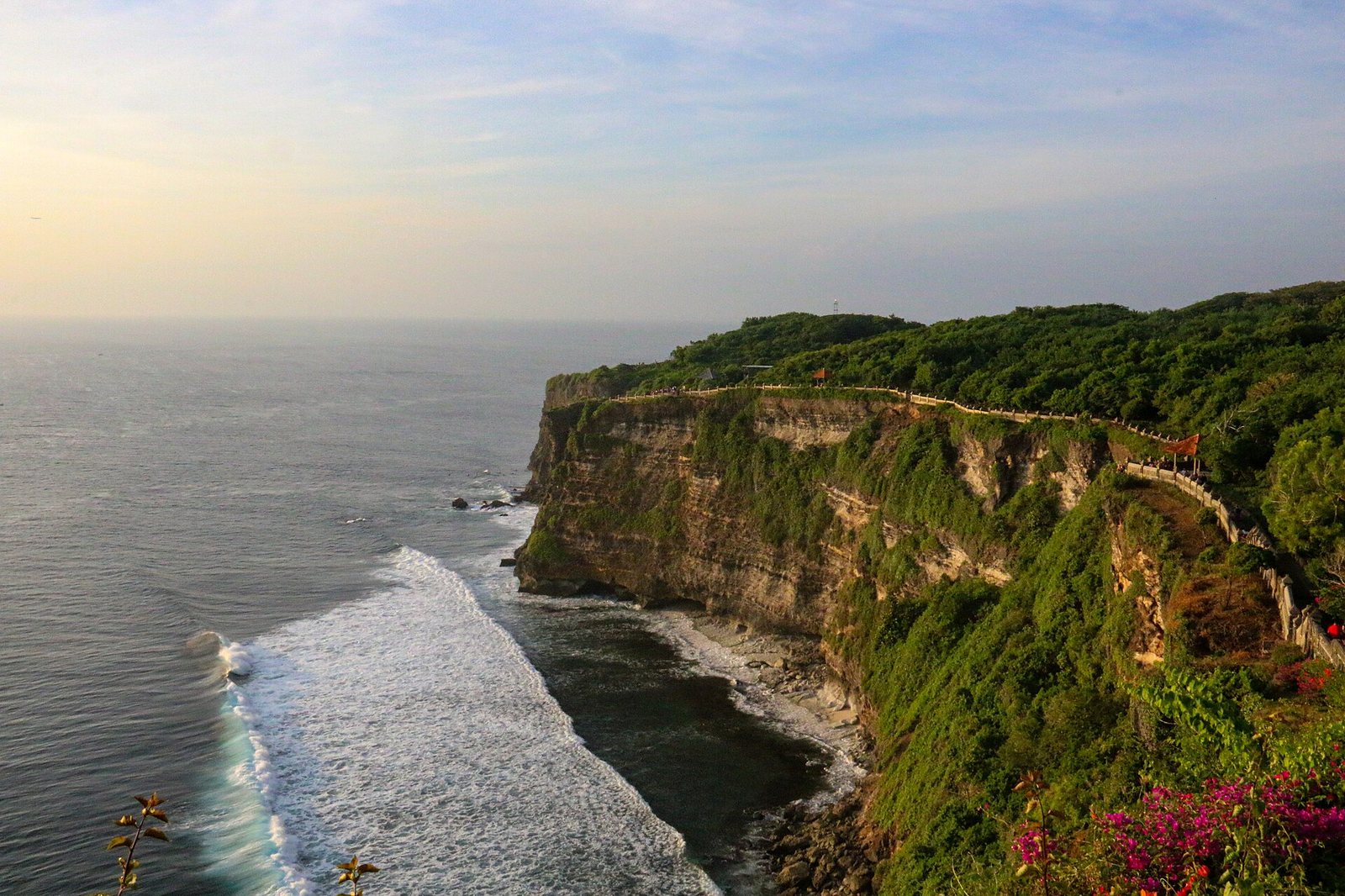
Cliff at Uluwatu temple, Bali · Emma THERY · CC BY-SA 4.0 · cropped
Villas, resorts, and what drives the price
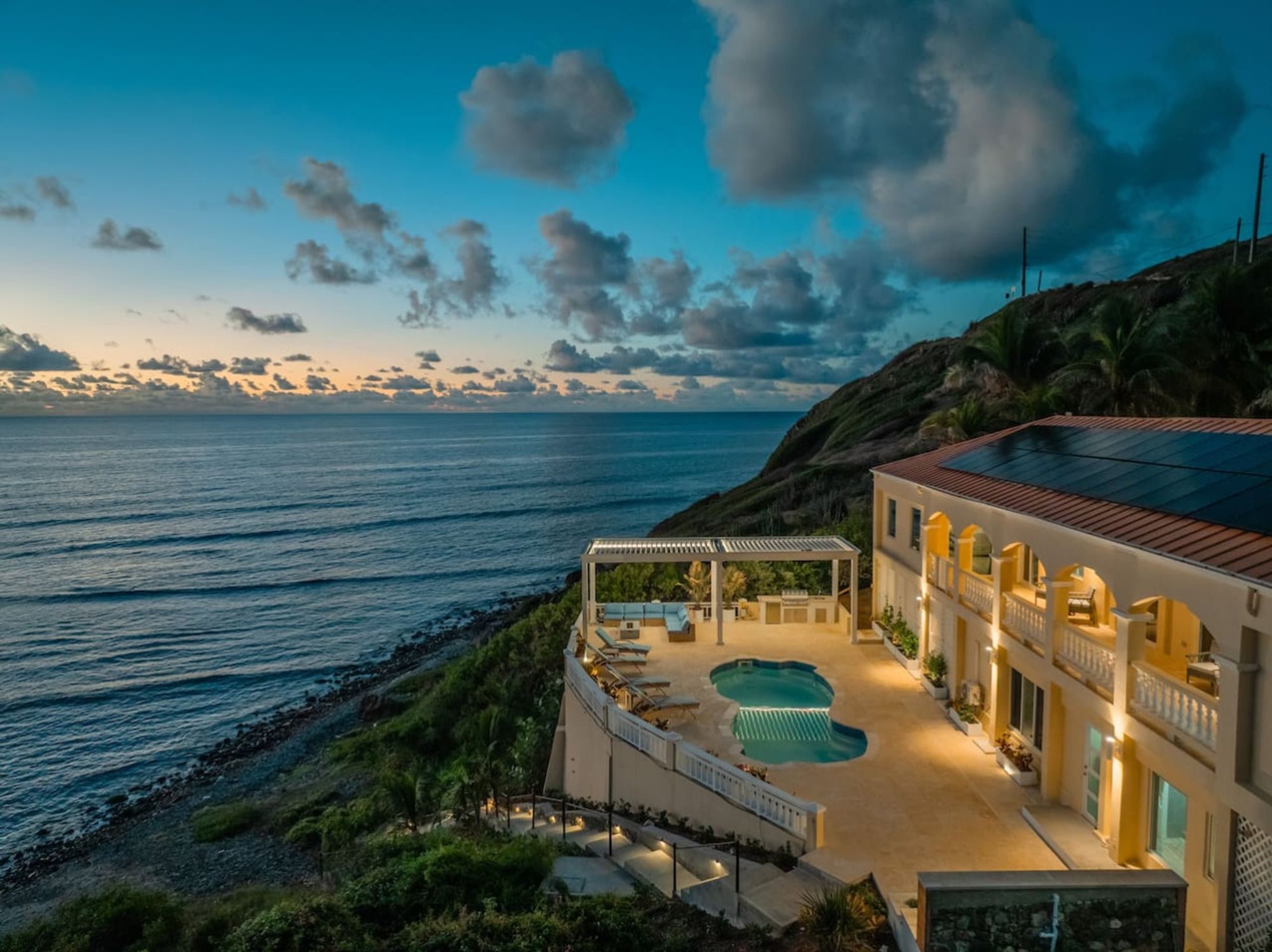
Bali's signature stay is the private villa with its own pool. Away from the big resorts, the island is full of walled villas — from a one-bedroom with a plunge pool to a multi-bedroom compound with a lawn — often rented with staff included. That staffing is the part visitors do not expect. Even mid-range villas commonly come with daily housekeeping, and many include a villa manager who can arrange a driver or tours, plus a cook who will make breakfast and, if you want, shop for and prepare other meals for the cost of the groceries and a modest fee.
The main alternatives are resorts and guesthouses. A resort buys you the beachfront, pools, kids' club, on-site restaurants, and a front desk that handles logistics — the easy option if you would rather not organise a driver every day. A guesthouse or homestay, common in Ubud and on the Bukit, is the budget end: a simple, often family-run room, sometimes with a shared pool and breakfast, and a warmer sense of the place.
What moves the price is fairly predictable. Location leads: a clifftop villa on the Bukit or a beachfront resort in Nusa Dua costs far more than an equivalent inland in Ubud or set back from the sand. A private pool costs more than a shared one, a sea or valley view more than a wall, and full staffing more than a self-catered rental. Season matters too — July, August, and the Christmas-to-New-Year stretch are the peak, and the best villas book out months ahead. One trade-off with a villa: it is often not walkable to dinner, so factor in a driver, whereas a resort or a central room puts you on foot.
When to go, and Nyepi
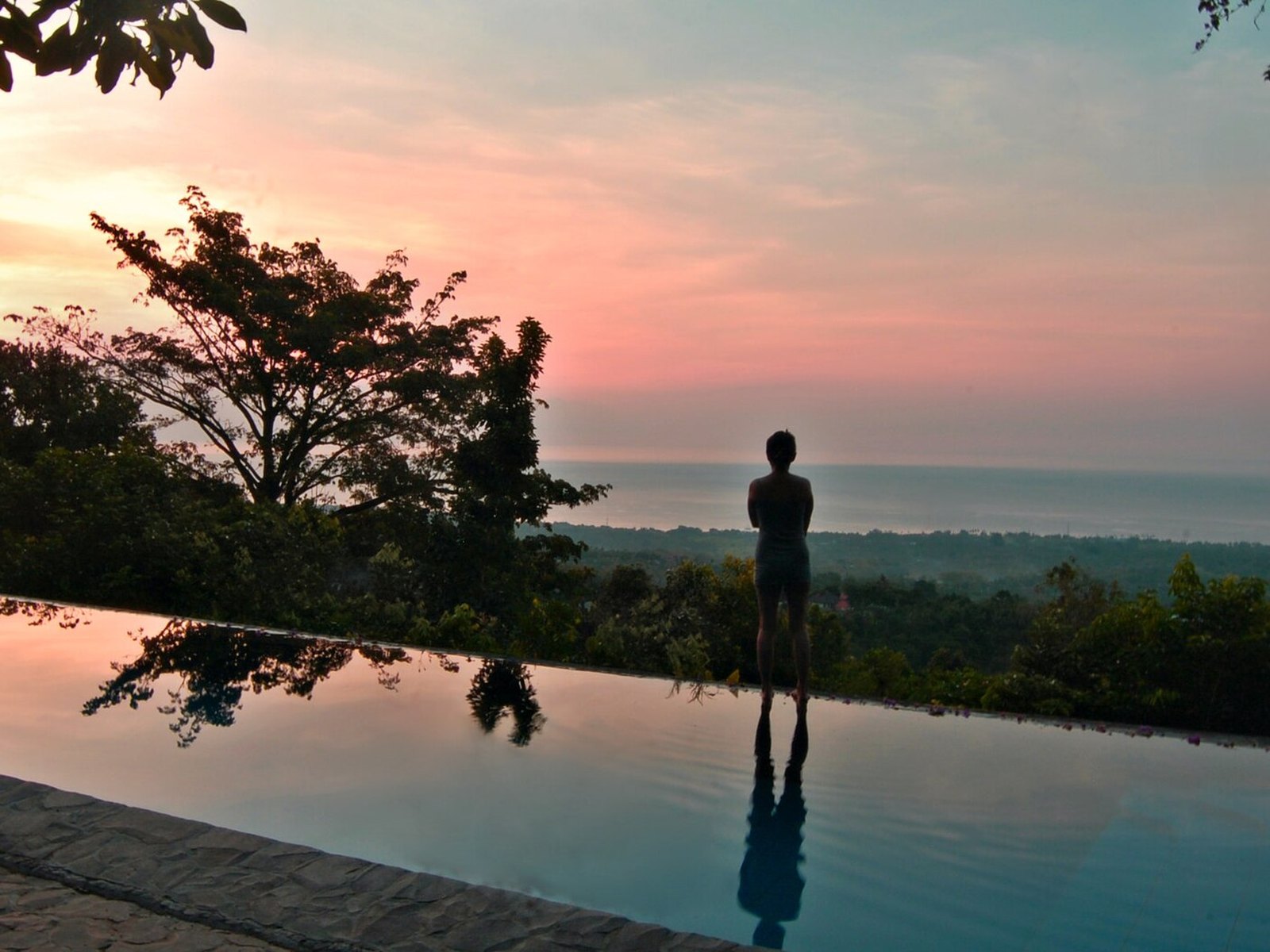
Bali has two seasons. The dry season, roughly April to October, is the popular stretch: warm days, lower humidity, and reliable sun. Within it, July and August are the busiest and priciest, along with the end-of-year holidays, while the shoulder weeks of April to May and September to October give the best balance of good weather, thinner crowds, and better rates. The wet season, roughly November to March, is hot and humid with more cloud and rain, heaviest around December and January.
Do not write off the wet season out of hand. The rain often comes as heavy afternoon downpours that pass rather than all-day grey, the landscape is at its greenest, and prices and crowds drop. There is also a surf logic to the seasons: the dry-season winds favour the west-coast and Bukit breaks around Uluwatu and Canggu, while in the wet season the east side — Nusa Dua, Sanur, and the Nusa islands — tends to be cleaner.
One date deserves special attention. Nyepi, the Balinese Day of Silence, marks the New Year in the Saka calendar and usually falls in March; in 2026 it is on 19 March. It is a genuine day of stillness: people stay indoors, lights are kept low, and the same rules extend to visitors, who are asked to stay on their hotel or villa grounds for the twenty-four hours. Even the airport closes, with no flights in or out. This is a religious observance, not a show for tourists, so plan around it — either come deliberately for the quiet and the ogoh-ogoh processions the night before, or avoid arriving or leaving on the day itself.
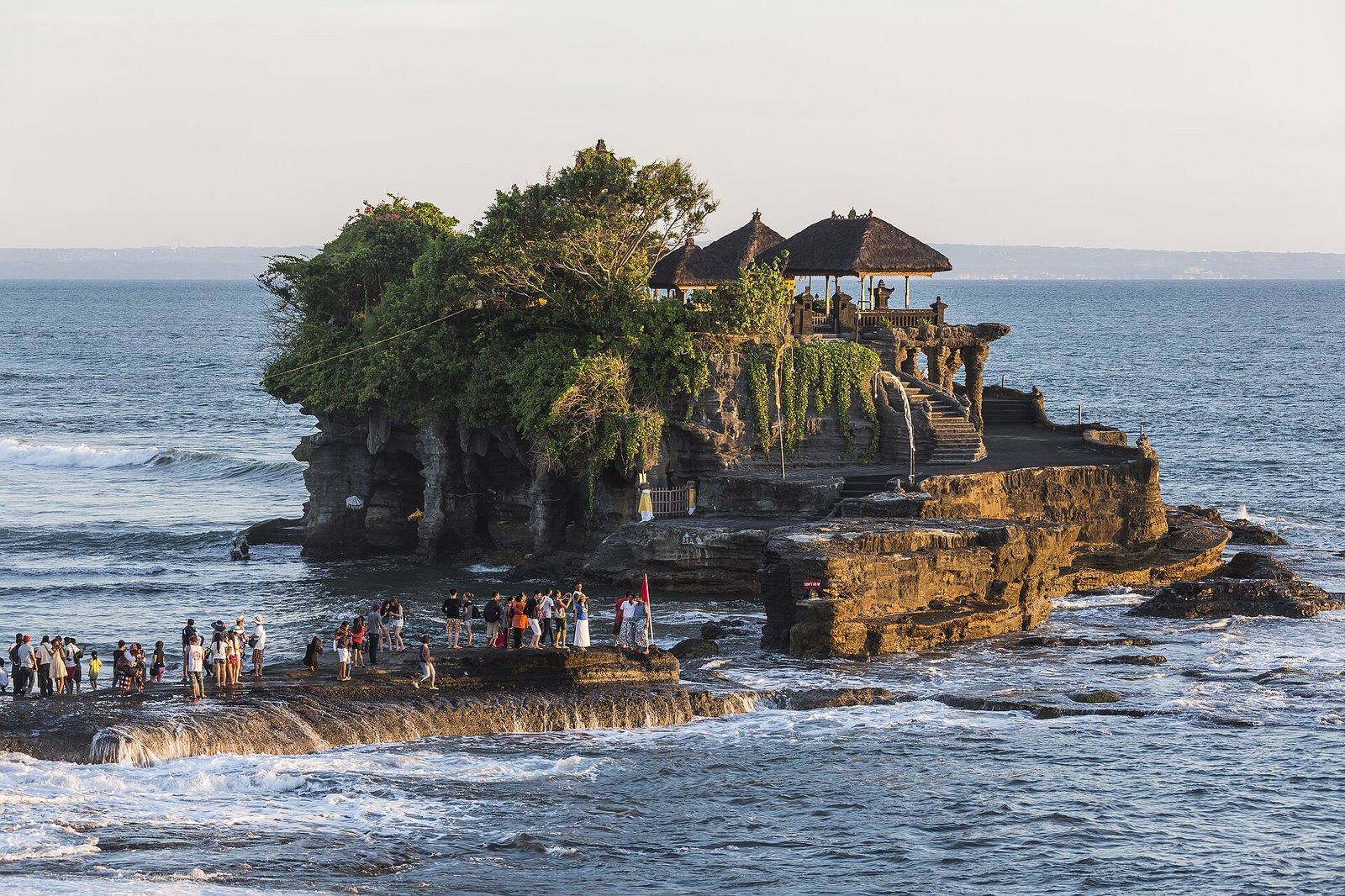
Tanah-Lot Bali Indonesia Pura-Tanah-Lot-01 · CEphoto, Uwe Aranas · CC BY-SA 3.0 · cropped
Getting there and getting around
You arrive at Ngurah Rai International Airport, code DPS for Denpasar, though it actually sits in the south near Kuta and Jimbaran, not in the city itself. Many nationalities can enter on a visa on arrival; buying the electronic version online before you fly is smoother and can let you use the automated gates. Check your own country's current terms first, as the rules change.
Getting around is where Bali tests people. There are no passenger trains, and the south — Canggu and Seminyak especially — can gridlock so badly that a few kilometres eats an hour. Your realistic options:
- Car and driver. Hiring a car with a driver by the day is the standard way to see the island, and for a couple or small group it is inexpensive, comfortable, and by far the least stressful way to handle temples, terraces, and long crossings. Your villa or hotel can arrange one, and a good driver doubles as a guide.
- Ride-hailing apps. Grab and Gojek work across much of the south for both cars and scooter-taxis and take the guesswork out of fares. In some areas local cooperatives restrict app pickups, so you may need to walk to a main road or use a hotel car.
- Scooters. The cheap, flexible, and genuinely risky option. Scooters are how much of Bali moves, but the traffic is chaotic and large numbers of tourists are injured every year, many who had never ridden before. If you ride, you are legally required to carry an International Driving Permit endorsed for motorcycles alongside your home licence; police checkpoints in tourist areas do stop foreigners and fine those without it. Wear the helmet, go slowly, and do not learn to ride here in heavy traffic.
The map lies. Two places a thumb's width apart can be two hours apart in traffic, so build each day around a single area rather than a checklist of far-flung sights, and let the driver, not the distance, set the pace.
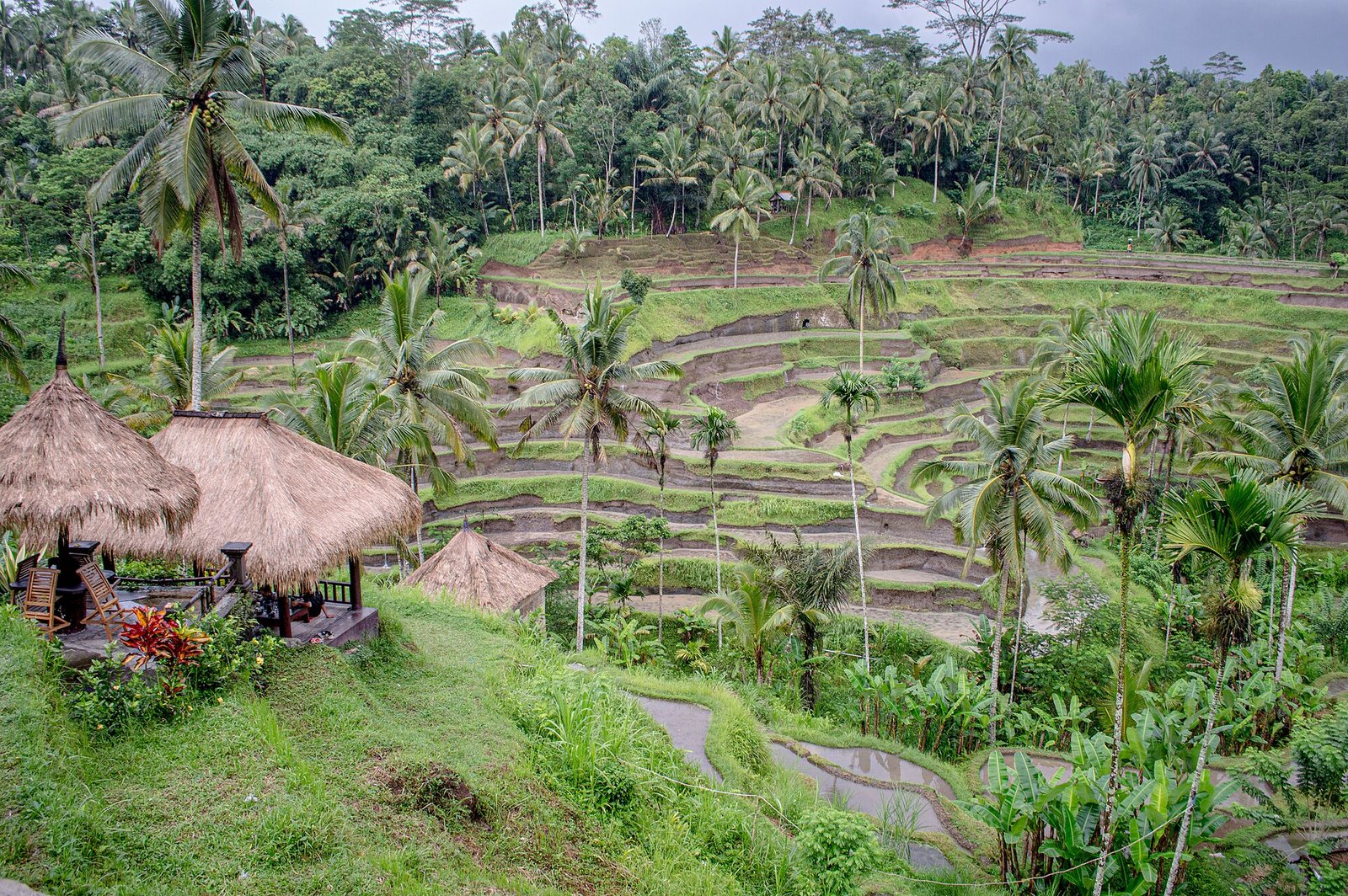
Tegallalang Rice Terraces Bali 1 · Philip Nalangan · CC BY 4.0 · cropped
Temples, rice terraces, and etiquette
Balinese Hinduism shapes daily life here, and a respectful traveller gets more from the island for paying attention to it. You will see canang sari, the small square offerings of flowers and incense, set out on the ground and on shrines every day; step around them, not on them. Temples are active places of worship, not attractions staged for visitors, so treat ceremonies, processions, and praying families as you would in any place of faith: keep your distance, lower your voice, and do not climb on shrines for a photograph.
Four temples draw most visitors. Uluwatu (Pura Luhur Uluwatu) stands on a cliff at the tip of the Bukit above the sea and is known for its sunset and the Kecak, a chanting fire dance performed in the open air as the light goes; the resident macaques are practised thieves, so keep hold of your sunglasses and phone. Tanah Lot sits on a rock just off the west coast and is the classic sunset silhouette, though it gets very crowded. Besakih, the largest and most important temple, spreads up the slopes of Mount Agung and is known as the Mother Temple. Tirta Empul, near Ubud, is a holy spring where Balinese come to bathe in a purification ritual; visitors may sometimes take part, but do so quietly and with the proper cloth and guidance, remembering it is a living rite.
At every temple the dress code is the same and it is enforced: shoulders and knees covered, with a sarong around the waist and a sash tied over it. You do not need to bring your own — most temples lend or rent them at the entrance for a small charge. As at many places of worship, women who are menstruating are traditionally asked not to enter the inner areas.
The rice terraces are the other signature sight, and they are working farms shaped by subak, a centuries-old cooperative system of water temples and irrigation recognised by UNESCO and rooted in the Balinese idea of Tri Hita Karana, harmony between people, nature, and the divine. Tegallalang, twenty minutes north of Ubud, is the most photographed and the easiest to reach, which makes it the busiest, with paid viewpoints, swings, and donation gates along the paths. Jatiluwih, further west in Tabanan, is far larger and quieter and forms part of the UNESCO listing; it takes longer to reach and rewards the effort.
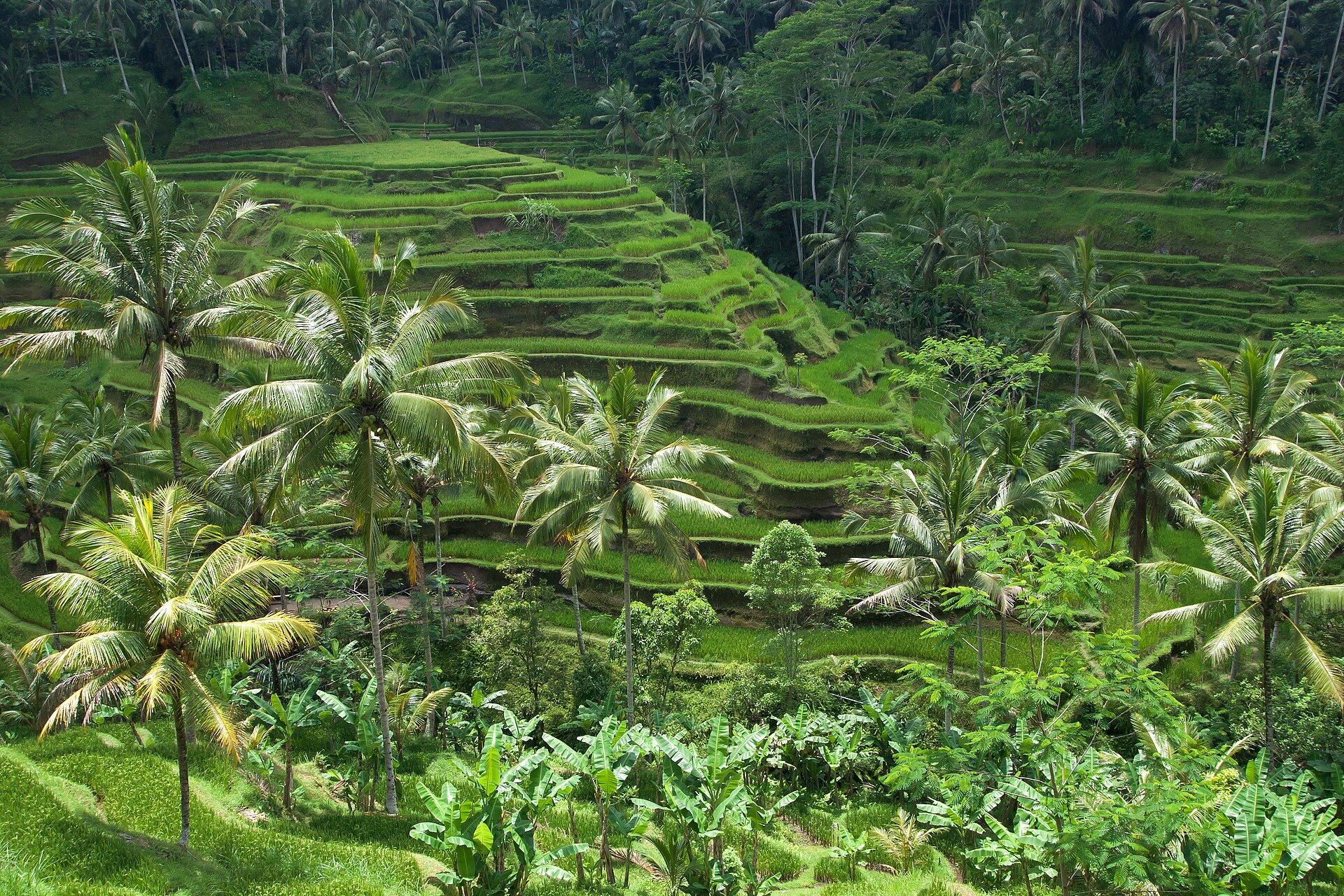
Rice terraces, Bali · Vyacheslav Argenberg · CC BY 4.0 · cropped
Beyond temples and terraces, the list runs to interior waterfalls, a sunrise trek up the Mount Batur volcano, cooking classes, and surf lessons at Canggu, Kuta, and Sanur.
The Nusa islands offshore
A short way off the southeast coast lie three islands that feel a step removed from the mainland: Nusa Penida, Nusa Lembongan, and Nusa Ceningan. Fast boats run from Sanur in roughly half an hour. Nusa Penida is the big, dramatic one, with sheer cliffs and the much-photographed Kelingking viewpoint, plus some of the best snorkelling and diving around, including seasonal manta rays. It is also rugged and only partly developed: the roads are rough and steep, and the famous photo spots get crowded. Lembongan and Ceningan, linked by a narrow yellow bridge, are smaller and more relaxed, good for a mellow day or two of snorkelling, mangroves, and beach time.
A word of realism: doing all three in one day trip is a rush, and Penida in particular is too big and its roads too slow to see properly between boats. Better to pick one, or stay a night or two rather than fight the day-tripper crowds at the viewpoints. Boats can be bumpy and are weather-dependent, so build in a little flexibility.
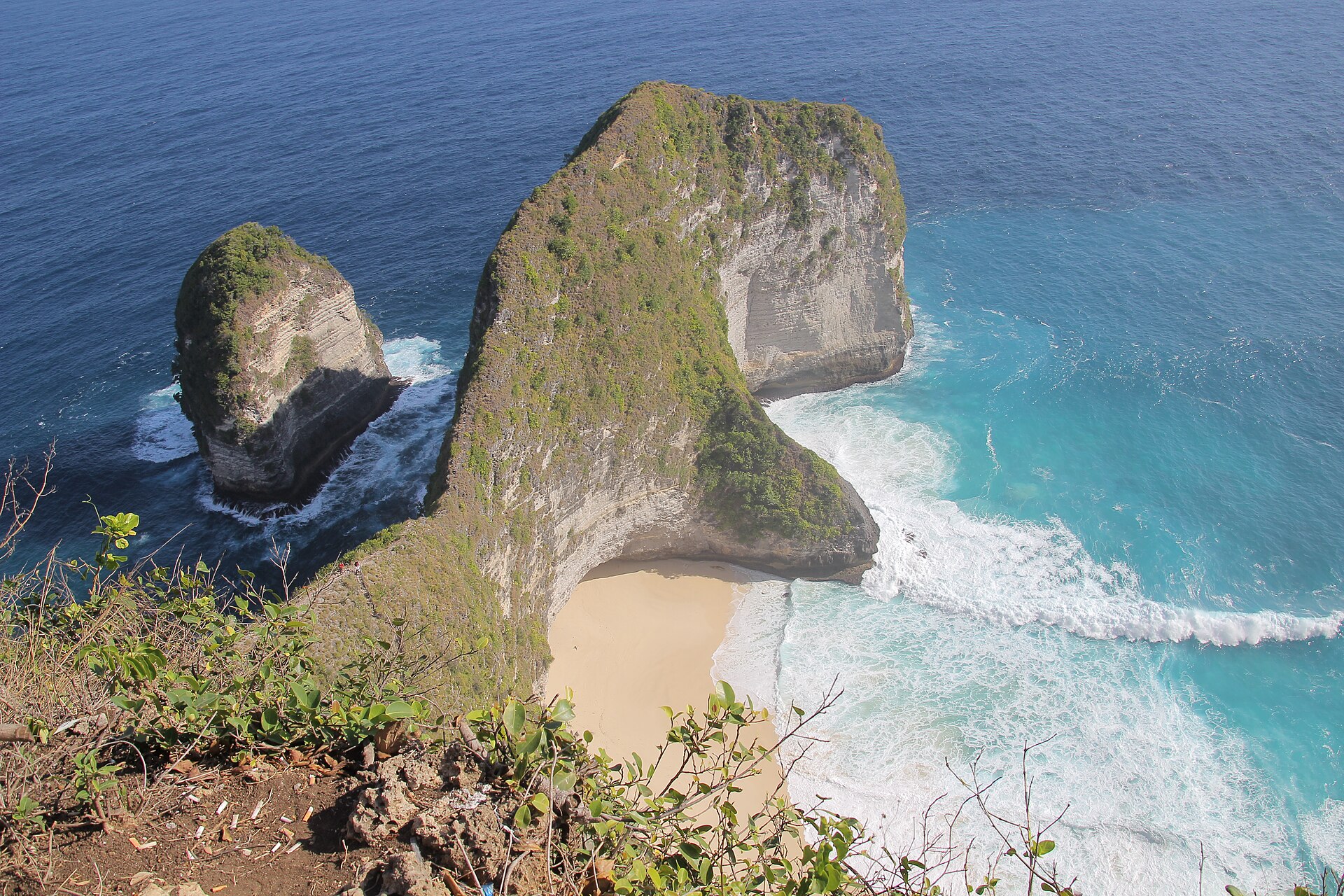
Pantai Kelingking, Nusa Penida · Kresnanta · CC BY-SA 4.0 · cropped
Where to eat and drink
Bali's food splits, very roughly, between the warung and the beach club, and the price gap between them is enormous. A warung is a small, often family-run local eatery, and it is where the value and much of the best everyday cooking are. Look for nasi campur (rice with a pick of small dishes), nasi and mie goreng (fried rice and noodles), grilled satay, and, because Bali is Hindu rather than Muslim, the island's celebrated babi guling, or spit-roast suckling pig. A cold Bintang beer is the standard accompaniment.
At the other end are the beach clubs and cliff bars — the day beds, pools, cocktails, and sunsets of Seminyak and the Bukit — where you pay for the setting as much as the plate. They are good fun for an afternoon; just know the mark-up is for the view. In Jimbaran, the seafood grills line the bay and cook the day's fish and prawns over coconut husk, with tables on the sand at sunset. Ubud, meanwhile, is full of health-focused and vegetarian cafes. Wherever you eat, stick to bottled or filtered water, which brings us to the practical notes.
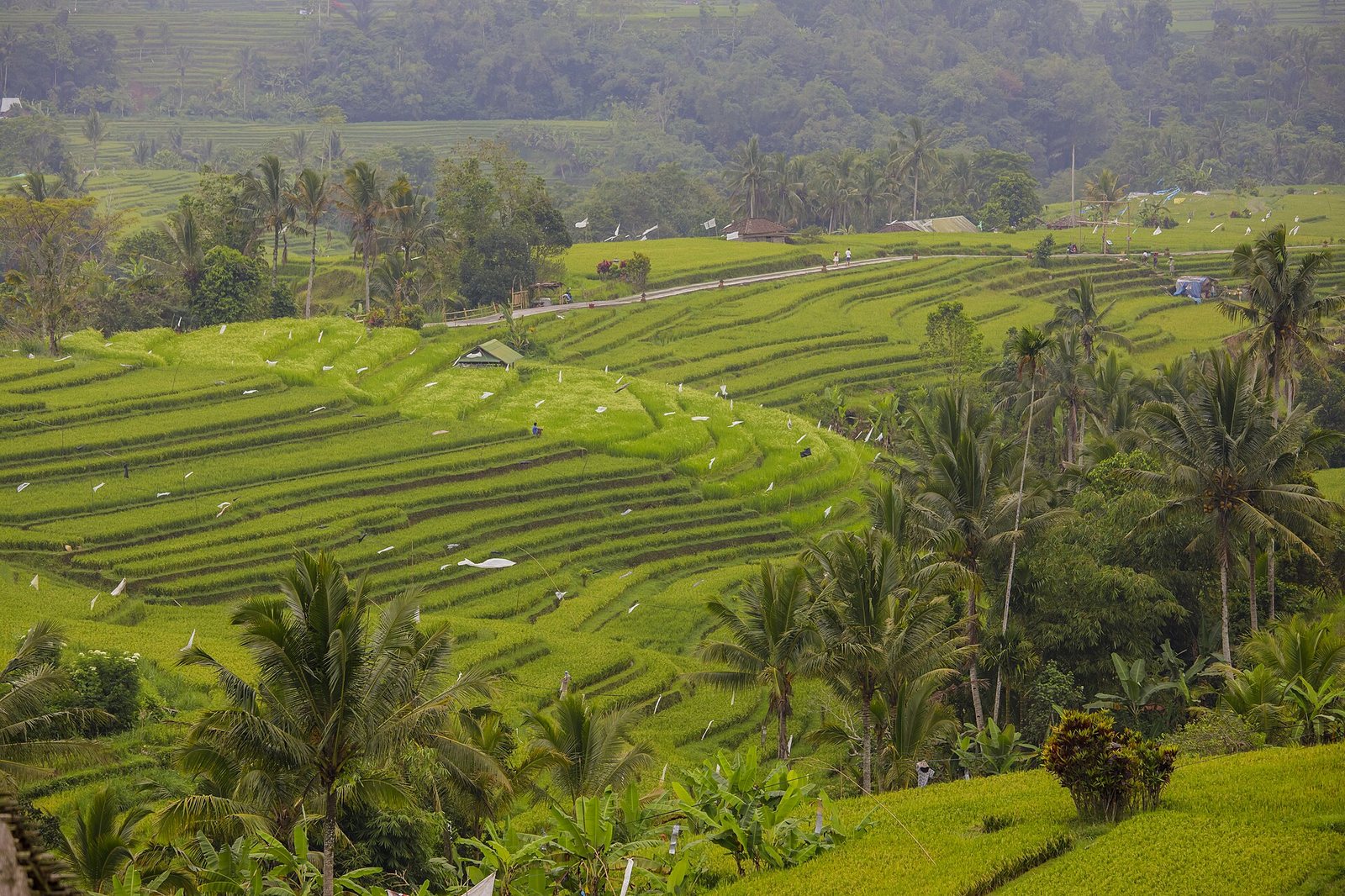
Rice terraces on Bali - Jatiluwih Rice Terraces - Indonesia 2 · Thomas Fuhrmann · CC BY-SA 4.0 · cropped
Money, safety, and practical notes
Bali is generally an easy and welcoming place to travel, and the biggest real risk is the traffic rather than crime. A few things smooth the trip:
- Money. The currency is the Indonesian rupiah, and the numbers are large, so it is easy to miscount zeros. Cards work in hotels, resorts, and smart restaurants, but carry cash for warungs, markets, temple entries, and drivers. Use ATMs inside bank branches, as card skimming is a known problem, and change money only at reputable counters — count it yourself and be wary of rates that look too good.
- Water and health. Do not drink the tap water; stick to bottled or filtered. Many people find a few days of stomach trouble, the so-called Bali belly, settle quickly enough. Bring any medication you rely on.
- Monkeys. At Uluwatu and the Ubud Monkey Forest the macaques will snatch sunglasses, hats, phones, and anything loose. Take them off and keep your bag closed.
- Respect. Away from the beach and the pool, dress modestly in towns and at temples, give way to ceremonies and processions, and ask before photographing people at prayer.
- Connectivity. A local SIM or an eSIM is cheap and makes ride-hailing, maps, and translation far easier.
Good to know
Bali now charges foreign visitors a one-time tourism levy of 150,000 rupiah, separate from your visa. The official way to pay is through the government's Love Bali system, ideally online before you arrive so you land with the QR-code voucher already on your phone; payment counters also exist at the airport. Only use the official channel, keep the receipt, and treat text messages or lookalike websites demanding payment as scams. Check the current amount and process before you travel, as both can change.
By the numbers
Common questions
Which area should a first-timer pick?
If you want one easy base with beaches, food, and nightlife on your doorstep, Seminyak is the safe first choice. If you came mainly for culture and green, start in Ubud. Many people do both, splitting a week between the Ubud hills and a coastal spot like Seminyak, Canggu, or the Bukit. Families and those wanting calm often prefer Sanur or Nusa Dua.
How many days do I need?
A week lets you pair a few nights inland around Ubud with a few on the coast without rushing. Ten days to two weeks adds the Bukit, a couple of nights on the Nusa islands, or the quieter east. Given the traffic, two or three well-chosen bases beat a new town every night.
Do I need to rent a scooter?
No. Plenty of visitors never touch one, using a car and driver for day trips and ride-hailing apps for short hops. Scooters are cheap and freeing if you are already a confident rider with the right International Driving Permit, but Bali's traffic is not the place to learn, and the accident rate among inexperienced tourists is high.
Is the wet season a bad time to visit?
Not really. From November to March the rain is heavier and more frequent, often as short afternoon storms, but the island is greener and cheaper and much of the day can still be dry. Pack for it, keep plans flexible, and lean towards the eastern beaches and the Nusa islands, which often fare better then.
What is Nyepi, and will it affect my trip?
Nyepi is the Balinese Day of Silence, the New Year in the Saka calendar, usually in March. For twenty-four hours the whole island stops, visitors included: you stay on your hotel or villa grounds, lights stay low, and even the airport closes. It is a striking thing to witness if you plan for it, but do not schedule an arrival or departure on the day. Check the exact date for your year.
Sources & further reading
- Love Bali — official Bali tourism levy payment (Bali Provincial Government)
- UNESCO World Heritage — Cultural Landscape of Bali Province: the Subak System
- Jatiluwih Rice Terraces — official visitor information
- Wikipedia — Uluwatu Temple (Pura Luhur Uluwatu)
- Wikipedia — Subak, the Balinese irrigation system
- Lonely Planet — Essential Bali travel tips
- Bali.com — Nyepi, the Balinese Day of Silence