At a glance
- Base
- The middle of the lake (Bellagio, Varenna, Menaggio) for a first visit, or Como for city comforts and easy arrival.
- When
- Late spring (late April-June) or early autumn (September-October) for gardens, mild weather, fewer crowds.
- Getting there
- Via Milan (Malpensa, Linate, Bergamo airports) by train to Varenna-Esino (center) or Como San Giovanni (city).
- Getting around
- Frequent boats (car ferry, fast, slow) connect central towns; car useful for northern arm or Lecco branch.
- Book ahead
- Summer lodging, popular restaurants, view tables, and Villa del Balbianello in high season.
- The price
- Lake view, town (Bellagio, grand hotels), season (July/August highest), and proximity to the water.
Lake Como is not a single town you can point to and book. It is a long, Y-shaped lake with three arms, steep mountain walls on both sides, and a string of small towns spread along the water. The decision that shapes your whole trip is not which hotel you pick but which town you base in, on which shore, and whether you bring a car or leave it behind. Get that right and the lake feels easy. Get it wrong and you spend your holiday waiting for boats or crawling along a one-lane road above the water.
Most people arrive picturing Bellagio, and Bellagio is a fine choice. But the honest answer to where to stay depends on how you travel. The middle of the lake, where Bellagio, Varenna, and Menaggio sit within sight of each other, is the part that works best for a first visit: the towns are close, the boats are frequent, and you can base in one and still eat dinner in another. This guide walks through the shape of the lake, the towns worth basing in, when to come, how to get there without a car, and the villas, gardens, and food that make the trip.
In this guide
The shape of the lake, and why it matters
Picture an upside-down Y. Lake Como has three arms that meet at a single point, and that point is the tip of Bellagio, a headland the locals call Punta Spartivento, roughly “the point that divides the wind.” The southwestern arm runs down to the city of Como. The southeastern arm runs down to the city of Lecco. The third arm reaches north, opening out toward the town of Colico and the mountains beyond. It is one of Italy's larger lakes, after Garda and Maggiore, long and deep and hemmed in by slopes that fall straight into the water.
Why does the shape matter? Because the scenery, the famous gardens, and the frequent boats all concentrate in the center, where the three arms come together. The triangle of Bellagio, Varenna, and Menaggio, plus Tremezzo and Lenno on the western shore, is the part of the lake most people come to see, and it is knit together by boats that run all day. The two southern ends, Como and Lecco, are cities and gateways in their own right, but they sit a slow boat ride from the pretty middle. The northern arm is quieter and more open, better for wind sports and mountains than for hopping between villages.
In short: base in the connected center for a classic trip, choose the city of Como for an easy arrival and urban comforts, and venture to the quieter fringes only with a car and time to spare.
The towns worth basing in
Six places cover almost every sensible plan. Here is who each one suits.
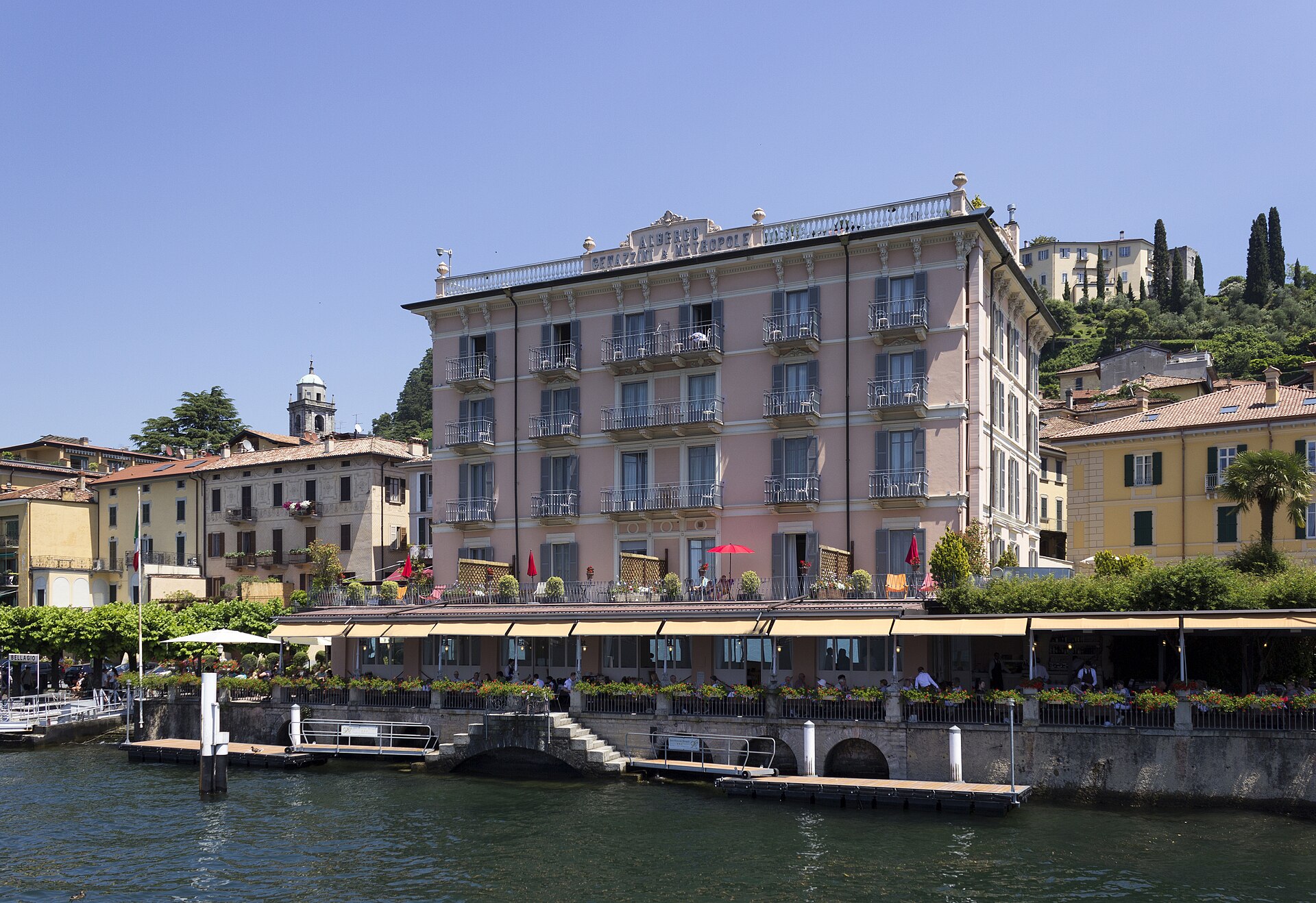
- Bellagio sits at the tip where the arms meet, which is why it turns up on every postcard. Stepped stone lanes climb from the water, the cafes and boutiques stay busy, and boats leave in every direction, so it is the most central base for getting around by water. The trade-offs are real: it is the busiest and priciest town, parking is a headache, and those charming lanes are stairs, hard with heavy bags or limited mobility. The gardens of Villa Melzi are a short walk along the shore. Good for a first-timer who wants the classic scene and does not mind crowds.
- Varenna faces Bellagio from the eastern shore. It is smaller and calmer, with a waterfront walkway, two garden villas, and the single most useful feature on the lake for anyone without a car: a train station with direct regional trains from Milan. The station, the ferry pier, and the restaurants are all a short walk apart, and Bellagio is about fifteen minutes away by boat. Evenings are quieter than Bellagio. Good for couples, car-free travelers, and anyone who wants quiet nights.
- Menaggio sits on the western shore, north of Tremezzo. It is flatter and more spread out than the others, with a proper town center, a lakeside promenade, a public lido for swimming, and good bus and boat links, including buses over the hills toward Lugano in Switzerland. It tends to be better value than Bellagio and easier to walk. Good for families and longer stays.
- Tremezzo and Lenno are the western mid-lake, garden country. Villa Carlotta is in Tremezzo and Villa del Balbianello sits on a promontory near Lenno, and a couple of the lake's grand hotels are here too. It is quieter than Bellagio but still central by boat. Good for garden lovers who want a calmer stay within easy reach of the center.
- Como, the city, anchors the southwestern tip. This is a small city rather than a village fantasy, with a cathedral, a lakefront, a funicular up to the hill village of Brunate, a long history in silk, and the fastest trains to Milan. It is a slow boat from Bellagio, so not the base for daily village-hopping, but it is the easiest place to arrive if you want city comforts, restaurants, and nightlife. Good for short trips and car-free arrivals.
- Cernobbio is a small, low-key town just north of Como on the western shore, best known as the home of the historic Villa d'Este hotel. Quiet and close to the city. Good for a refined, unhurried base near Como.
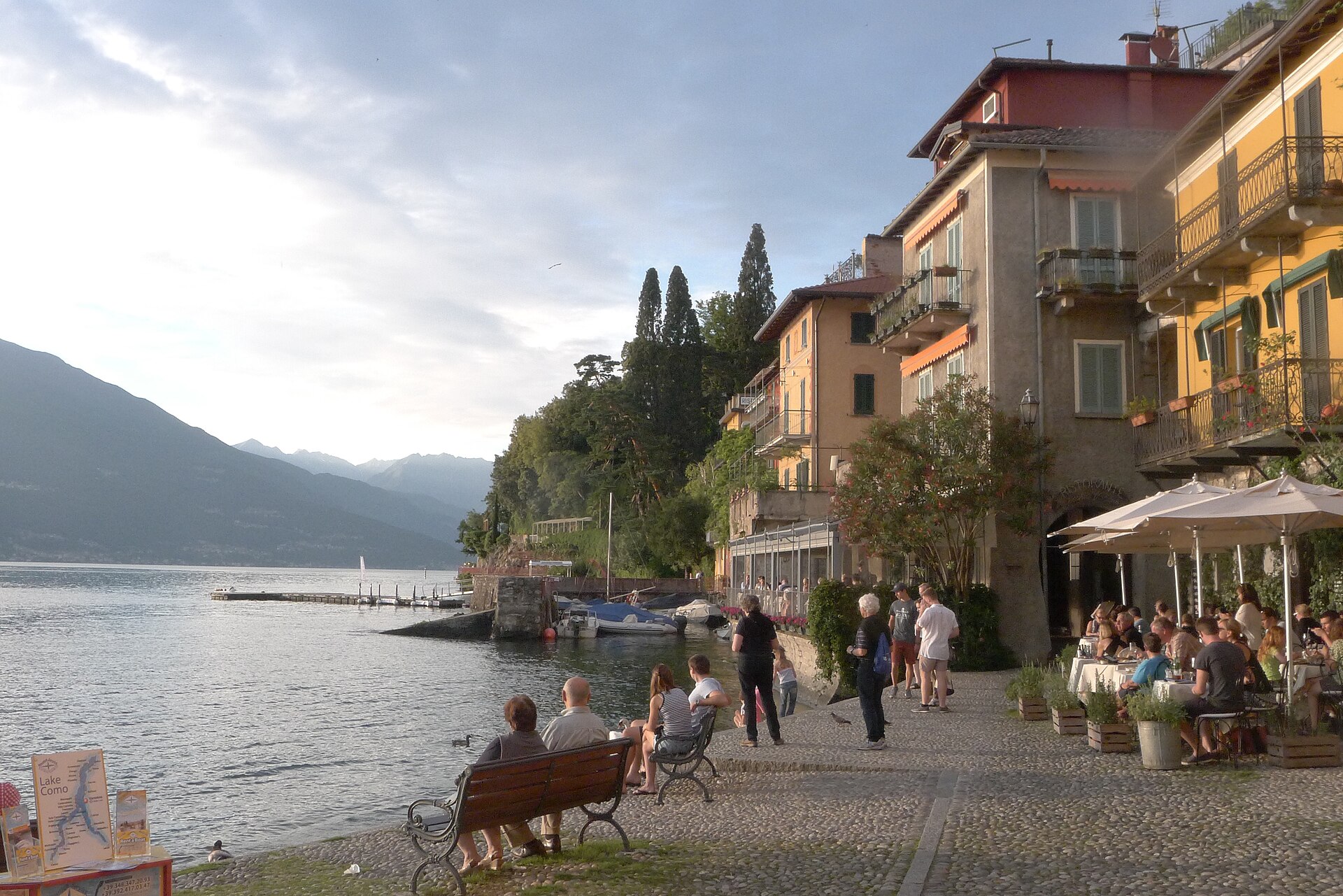
Varenna Italy, waterfront at sunset · Jmatazzoni · CC BY-SA 4.0 · cropped
| Town | Feel | Views | How to reach | Crowds | Best for |
|---|---|---|---|---|---|
| Bellagio | Stepped stone lanes, boutiques, buzz | Central, where the three arms meet | Boat from Varenna or Menaggio; slow boat or long drive from Como | High, especially midday | First-timers who want the classic scene |
| Varenna | Small, calm, waterfront walkway | West across the lake at sunset | Direct train from Milan; pier by the station | Moderate; busy at the pier midday | Car-free travelers and quiet nights |
| Menaggio | Real town, flatter, spread out | East toward Bellagio and the peaks | Boat or bus; easy by car; buses toward Lugano | Moderate | Families and longer stays |
| Tremezzo & Lenno | Quiet western shore, garden country | East across to Bellagio | Boat from the center; car or bus on the shore road | Lower than Bellagio | Garden lovers wanting calm near the center |
| Como (city) | Small city, cathedral, lakefront, nightlife | Southern basin, framed by hills | Fast, frequent trains from Milan | Busy, but the city absorbs it | Short trips and easy car-free arrival |
Where to sleep, and what drives the price
Lodging falls into three tiers. At the top are the grand historic hotels on the water, such as Villa d'Este in Cernobbio and the Grand Hotel Tremezzo in Tremezzo, old estates with lakefront gardens and pools, priced to match. In the middle are boutique and mid-range hotels in the town centers, where most visitors land. And then there are apartments and small guesthouses, often the best value, especially for families or longer stays.
Four things move the price more than anything else. The first is a direct lake view, the single biggest premium on the lake; the same room facing the water can cost far more than the one facing the hill behind. The second is the town: Bellagio and the grand-hotel addresses command more than Menaggio or the eastern shore. The third is the season, with July and August at the top and spring and autumn noticeably cheaper. The fourth is whether you are down on the water or up the hill, since some places sit above the road with a climb or a shuttle.
A lake view is the one thing you pay the biggest premium for on Como. Be honest about whether you will use it. If your days are spent out on boats and in other towns, that view is mostly a photo you paid extra for; if a slow morning with coffee over the water is the whole point of the trip, it is worth every euro.
The practical move is to decide how you will actually spend your time. Book early for summer, because the best-value apartments and lake-view rooms go first. And read the fine print on location: a place billed as a short walk from the pier may mean a steep climb with your luggage, which matters more here than in a flat city.
When to go
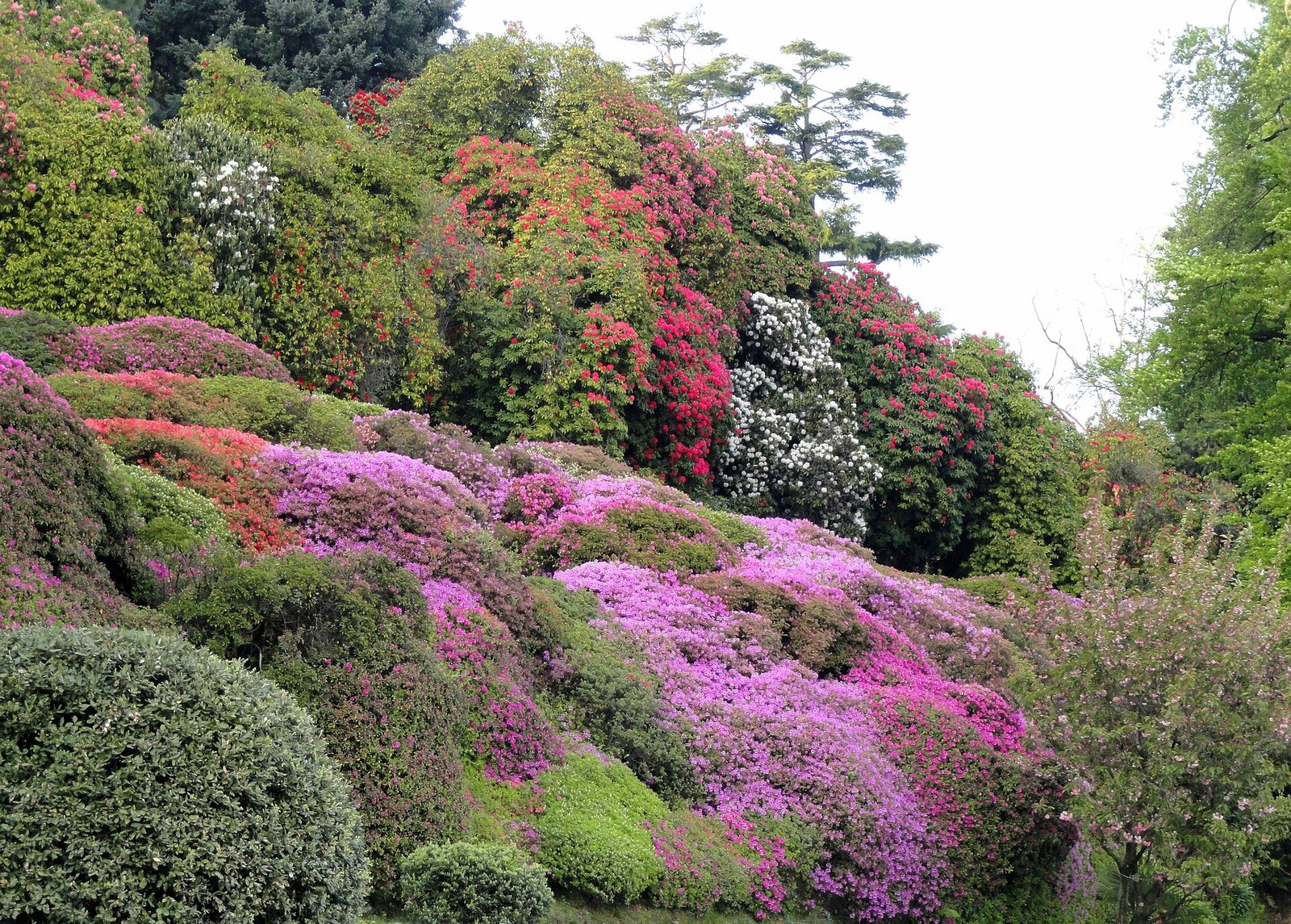
Two windows stand out: late spring, roughly late April into June, and early autumn, September into October. Spring brings the gardens into bloom, with azaleas, rhododendrons, and wisteria, and mild days for walking. Early autumn brings water still warm from summer, softer light, and thinner crowds. Either one gives you open attractions without the August crush.
July and August are hot, often around 30 degrees Celsius, and they are busy and expensive. Bellagio and Varenna fill up at midday, the ferries run packed, and popular restaurants need booking ahead. If you come then, lean on the first and last boats of the day and get your sightseeing done early, before the day-trippers arrive from Milan.
Winter, roughly November into March, is the quiet season. Many hotels, villas, and gardens close and boat schedules thin out, though the central car ferry keeps running year-round and the city of Como stays lively. It is good for low prices and calm, poor for gardens and swimming. The water is warm enough for a comfortable swim from around July into September, when the lidos and lakeside beaches are busiest.
One caution on the shoulder seasons: openings are not uniform. A place that closes at the end of October may already be winding down in its last weeks, and spring openings cluster around mid-to-late March. If a specific villa or hotel is the reason for your trip, check its current calendar before committing to dates.
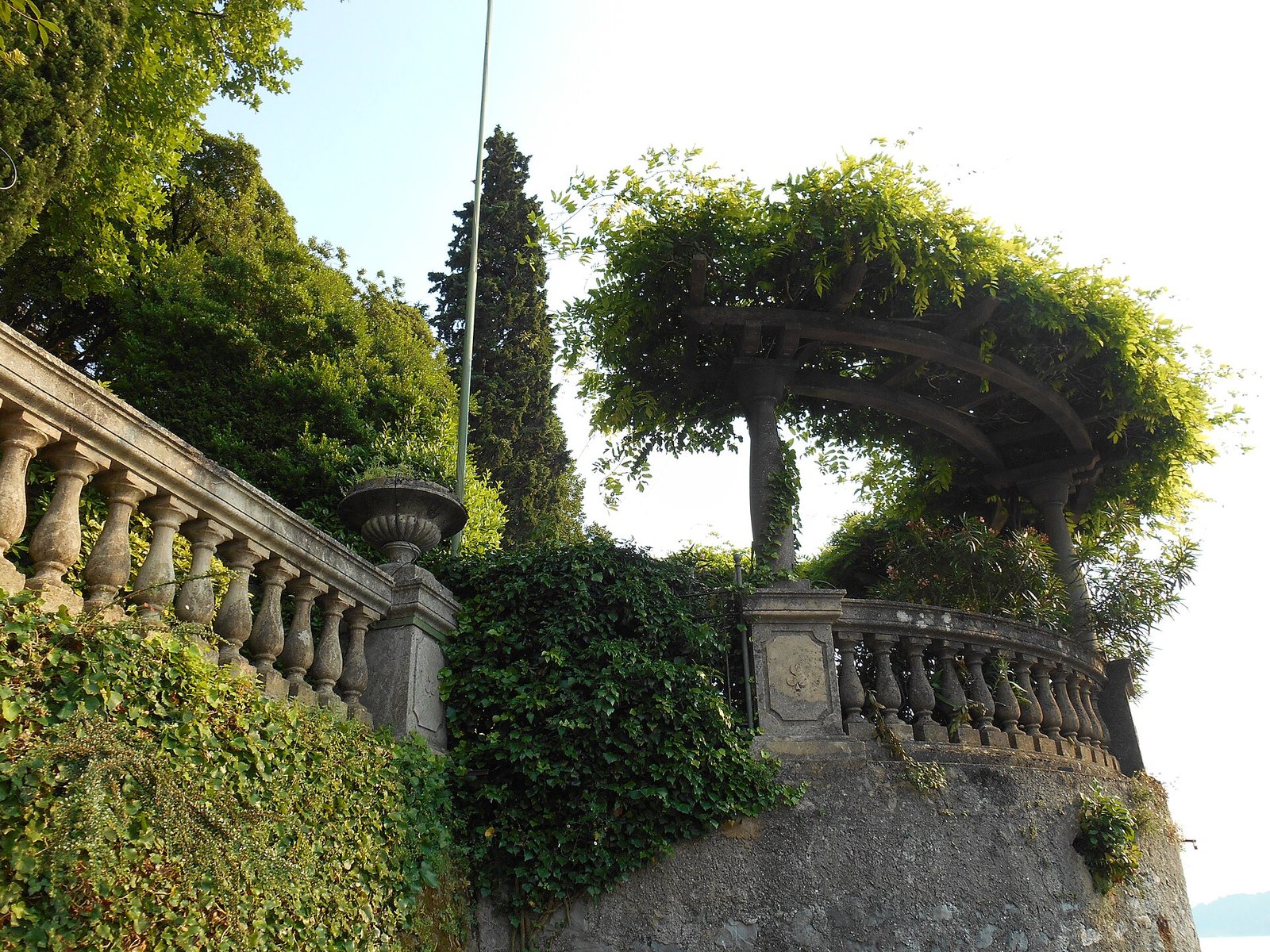
Varenna Italy · Reem Al-Kashif · CC BY-SA 4.0 · cropped
Getting there, and getting around
The gateway is Milan. Three airports serve it: Malpensa, the largest, to the west; Linate, the closest to the center; and Bergamo, also called Orio al Serio, to the east and busy with low-cost carriers. You route through Milan and out to the lake, no car required.
There are two easy car-free routes from Milan:
- To the center of the lake: take a regional Trenord train from Milano Centrale to Varenna-Esino, roughly an hour, running about hourly. The station sits a short walk above the ferry pier, so you can be on a boat to Bellagio or Menaggio within minutes of stepping off the train.
- To the city of Como: frequent trains run from Milano Centrale to Como San Giovanni, roughly 40 minutes to an hour, and a separate line runs from Milano Cadorna to Como Lago on the lakefront. This is the route for a base in Como or Cernobbio.
From the airports, allow a couple of hours door to door, more with bags. From Malpensa, take a train via Saronno toward Como, or head into Milano Centrale for the Varenna train; from Linate, a shuttle bus into the city connects to the trains; from Bergamo, buses run to Milano Centrale, or reach the eastern shore via Lecco. Check current schedules.
On the water, the boats are run by Navigazione Laghi, and it helps to know that there are three kinds of service, because the difference is easy to get wrong:
- The car ferry, or traghetto, which also carries foot passengers, shuttles frequently between Bellagio, Varenna, Menaggio, and Cadenabbia in the center of the lake. It runs year-round and is the workhorse of the middle. This is the boat you will use most.
- The fast service, an express boat, makes fewer stops and carries a small supplement over the standard fare.
- The slow all-stops boat calls everywhere and takes far longer end to end, which is pleasant for the ride but slow if you actually need to be somewhere.
Buy single tickets or a day pass at the piers; if you plan to hop between the central towns, a day ticket usually pays for itself. Per-hop foot fares are modest, but check current schedules for exact prices. And note that the slow boat from Como up to Bellagio can take a couple of hours, so if you are staying in the center, arrive by train to Varenna rather than by boat from Como.
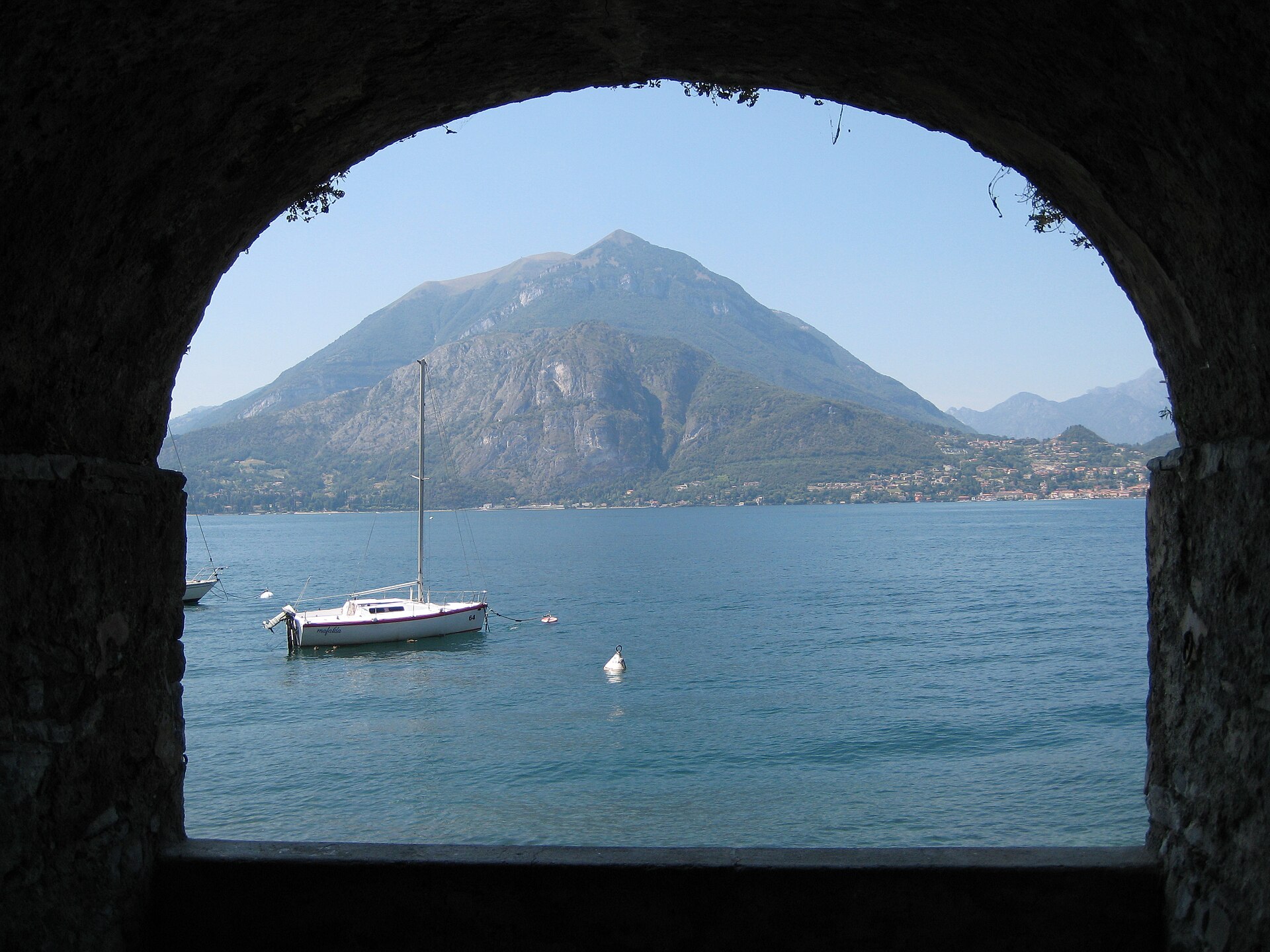
Lake Como from Varenna 01 · Aconcagua · CC BY-SA 3.0 · cropped
Good to know
The central towns — Bellagio, Varenna, Menaggio, Tremezzo, and Lenno — are close enough that frequent boats tie them together, and you can happily spend a week here with no car. Step outside that triangle and the math changes: the northern arm, the hill villages, and much of the Lecco branch are far better with a car, and boats to them are sparser. The other trap is mixing up the boat services: the slow all-stops boat can take three or four times as long as the express for the same trip, so check whether your departure is the fast one or the local, and note that last boats run earlier than you would expect outside high summer.
The villas and gardens worth your time
The lake's signature attraction is its villa gardens, several open to visitors. You do not need to see them all, but a few are worth planning your days around.
- Villa del Balbianello, on a wooded promontory near Lenno, is the most dramatic of the set: terraced gardens wrapping a headland with water on three sides. It is run by FAI, the Italian environmental trust, and has been used as a film location. Access can be limited and booking ahead is strongly recommended; you generally arrive by a short boat ride or a walk along the shore path.
- Villa Carlotta, in Tremezzo on the western shore, pairs a museum of sculpture and paintings, including work by Canova, with a large botanical park that climbs the hillside behind the house. It opens roughly from spring into early November and is at its best in April and May, when the azaleas and rhododendrons are in flower.
- The gardens of Villa Melzi, along the shore just outside Bellagio, are gentler and flatter: a long lakeside walk of specimen trees, a small museum and chapel, and a Japanese-inspired corner. The villa itself stays private, so the gardens are the draw. They open roughly from late March to late October.
- In Varenna, two smaller gardens sit side by side. Villa Monastero is a house-museum with a long botanical garden strung along the water, and Villa Cipressi has terraced gardens attached to a hotel but open to visitors.
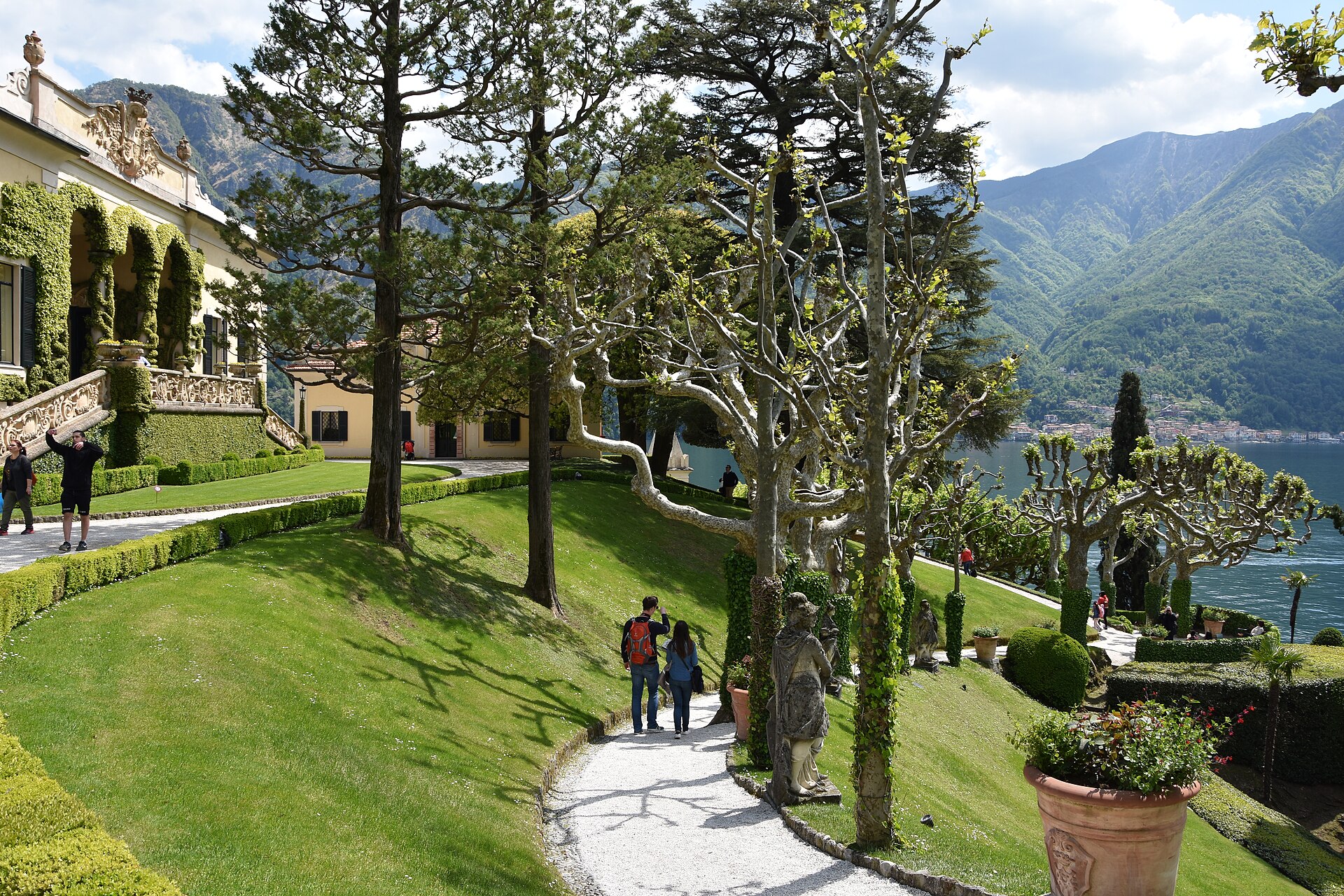
Lenno - Villa del Balbianello 0613 · Phyrexian · CC BY-SA 4.0 · cropped
A few notes tie them together. The gardens are seasonal, most close over winter, and most charge admission. Villa del Balbianello in particular rewards booking ahead in high season. And these are hillside gardens with steps and gravel, so wear shoes you can climb in.
Where to eat
The cooking here is northern-Italian lake food, not the tomato-and-olive-oil south. Look for the lake fish: risotto with perch fillets, risotto con filetti di pesce persico, is the dish to try first. Missoltini are small lake fish, salted and dried, then grilled with polenta, an old local preparation. Whitefish such as lavarello turns up too, polenta appears everywhere, and the mountains behind the lake add cheeses and cured meats.
Learn the rhythm and you will eat better. Many kitchens close in the afternoon, the Italian riposo, so plan lunch before about two o'clock or accept a late one. The other local ritual is aperitivo at sunset, a drink on a lakeside terrace as the light goes off the water.
On where to sit: the waterfront restaurants in Bellagio and Varenna have the views and the prices to match, while the eastern shore and Menaggio tend to be better value for the same lake fish. Long-running places are worth a reservation, such as Vecchia Varenna down in Varenna's little harbor, or the terrace restaurant out at Punta Spartivento on Bellagio's northern tip. Book a day or two ahead for a view table in summer.
Keep it honest, though. Menus and hours change, and some of the best meals are the simplest — a plate of perch risotto at a family trattoria a street back from the water often beats the pricey terrace.
Money and practical notes
- Money: the currency is the euro, and cards are widely accepted, but carry some cash for small cafes, market stalls, and ferry tickets at minor piers.
- Reservations: book dinner ahead in summer, and book Villa del Balbianello and popular boat tours ahead in high season.
- The afternoon closes down: shops and kitchens often shut for a few hours in the middle of the day, so do your errands and long lunches accordingly.
- Terrain: Bellagio and Varenna are built on slopes and stairs, so pack light and wear shoes you can climb in. If mobility is a concern, Menaggio and the flatter western towns are kinder.
- Driving: the shore roads are narrow and slow, several town centers have restricted-traffic ZTL zones, and parking in Bellagio and Varenna is scarce and expensive. If you rent, park at the edge of town and walk in, and skip the car entirely for a center-of-the-lake trip.
- Seasons: many villas, gardens, and some hotels close from roughly November into March. The central car ferry runs year-round, but schedules thin in winter, so check current timetables and opening calendars before you lock in dates.
- Day trips: Milan is about an hour away by train, and from Menaggio you can reach Lugano in Switzerland by bus; bring a passport and note that Switzerland uses a different currency.
- Dress: churches expect covered shoulders and knees, and the grand hotels and their restaurants lean smart in the evening.
By the numbers
Common questions
Bellagio or Varenna, which should I base in?
If you have a car and want the classic, busy postcard town with boat connections in every direction, choose Bellagio. If you are arriving by train and want quieter evenings, choose Varenna, where the station, pier, and restaurants are all a short walk apart and Bellagio is about a fifteen-minute boat ride away. Plenty of people split the difference: sleep in Varenna and day-trip to Bellagio.
Do I need a car?
For a trip based in the central triangle of Bellagio, Varenna, Menaggio, Tremezzo, and Lenno, no. The boats connect everything and a car is mostly a parking problem. Rent one only if you are staying on a quieter shore or want to explore the mountains and the northern end of the lake, where boat service is thinner.
When is the best time to visit?
Late spring, roughly late April into June, and September into October give you the best mix of good weather, open attractions, and manageable crowds. Spring is best for the gardens in bloom; early autumn for warm water and soft light. July and August are hot, crowded, and pricey, while winter is quiet with many seasonal closures.
How do I get there from Milan without a car?
For the center of the lake, take a regional train from Milano Centrale to Varenna-Esino, about an hour, then walk down to the ferry pier. For the city of Como, take a fast train from Milano Centrale to Como San Giovanni, roughly 40 minutes to an hour, or a lakefront train from Milano Cadorna to Como Lago. From the airports, connect through Milan, or from Malpensa route via Saronno toward Como.
How does the ferry system work?
The boats are run by Navigazione Laghi. In the center, a frequent car-and-passenger ferry links Bellagio, Varenna, Menaggio, and Cadenabbia and runs year-round. Faster express boats make fewer stops for a small supplement, and slower all-stops boats take much longer. Buy single tickets or a day pass at the piers, and check current timetables, since the last boats run earlier outside summer.
Sources & further reading
- Navigazione Laghi — official Lake Como ferry and boat operator
- in-Lombardia — Lombardy regional tourism board, Lake Como
- Villa Carlotta, Tremezzo — museum and botanical garden
- Villa del Balbianello (FAI) — near Lenno
- Giardini di Villa Melzi — Bellagio
- Trenord — regional trains from Milan to Varenna and Como
- Villa d'Este — Cernobbio
- Bellagio tourist portal