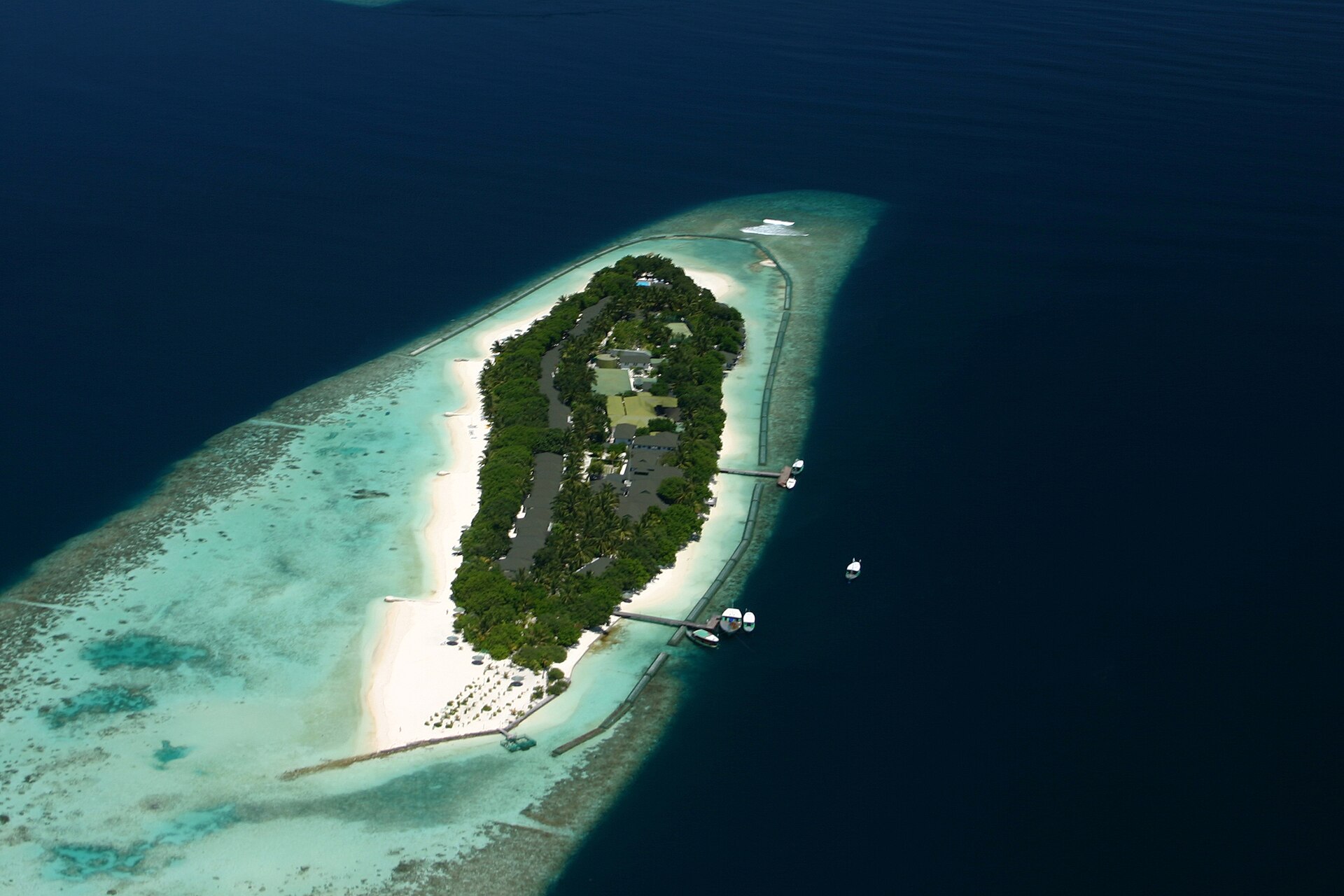
At a glance
- Base
- A private resort island or a guesthouse on a local island; many split their trip between both.
- When
- Drier season Dec-Apr (peak, highest prices); wetter May-Nov (lower prices). Baa Atoll marine life peaks May-Nov.
- Getting there
- Arrive at Velana International Airport (MLE) near Malé; resort or guesthouse arranges island transfer.
- Getting around
- Transfers by speedboat, seaplane, or domestic flight plus boat, depending on island distance.
- Book ahead
- Resort or guesthouse arranges transfers; check transfer type, cost, and seaplane daylight limits when booking.
- The price
- Resort or guesthouse choice, villa type, board basis, and transfer cost are key drivers.
The Maldives is a country made almost entirely of ocean. More than a thousand low-lying coral islands lie scattered across the Indian Ocean, grouped into around twenty-six ring-shaped atolls, and only a small share are inhabited. What makes planning here unlike almost anywhere else is the rule the tourism industry was built on: one island, one resort. Book a resort and you are booking an entire private island, with no road to it. You land at one airport beside the capital, continue by boat or small plane to your island, and once there you tend to stay put. That single fact shapes every choice that follows.
So the useful questions are not about which hotel has the prettiest photos. Do you want a private resort island, or a guesthouse on a local island where Maldivians live and work, which are two different holidays at very different prices? Which atoll, knowing the farther ones are more remote and cost more to reach? And, the part first-timers underestimate, how do you get there: by speedboat, by seaplane, or by a domestic flight and then a boat? The transfer is not a footnote. It can cost as much as a night in your room, it decides which resorts are even reachable, and because seaplanes fly only in daylight it can add an unplanned night near the airport. This guide works through all of it, in the order you decide.
In this guide
How the Maldives works
Picture a chain of coral rings dropped into the Indian Ocean, southwest of Sri Lanka and India, on the equator. Each ring is an atoll: a loop of reef around a shallow lagoon, dotted with small sand islands, almost none rising more than a couple of metres above the sea. The country spreads across roughly twenty-six atolls, and its islands come in three kinds you need to keep straight, because the rules on each differ.
First there is Malé, the capital, a small, crowded island often called one of the most densely populated cities anywhere; most visitors only glimpse it. Next to it, on its own island, sits Velana International Airport, code MLE, where almost every foreign visitor arrives. A short hop away is Hulhumalé, a reclaimed island with airport hotels that matters more than it sounds, for reasons below.
Second are the resort islands. Under the one-island-one-resort model, a company leases a whole uninhabited island and builds a single resort on it, with no towns and no locals beyond the staff. Here the usual rules relax: alcohol is served, swimwear is normal, and the island runs for guests. This is the Maldives of the brochures.
Third are the inhabited local islands, where Maldivians live. Since a law change around 2009 they have been allowed to run guesthouses and small hotels, which opened a much cheaper way to visit. Life here follows local Muslim custom: no alcohol, modest dress in public, a working community rather than a resort. Choosing between a resort island and a local island is the first and biggest fork in the road, so it comes next.
Resort island or local-island guesthouse
These are two different holidays that share a country. Neither is better in the abstract; they suit different budgets and moods, and plenty of people combine them.
A resort island is a self-contained world: beach, lagoon, pool, restaurants, spa, and dive centre, and you rarely leave until you go home. That buys privacy, quiet, and the classic overwater-villa setting. It also makes you a captive audience, since meals, drinks, and excursions are all bought from the resort at prices well above the mainland, and a remote island can leave little to do but relax, which is either the point or the problem. Even a modest resort is not cheap once the transfer and full board are added in.
A local-island guesthouse puts you in a real Maldivian town, eating at local cafes and sharing the island with residents, for a fraction of a resort's cost. The trade-offs are real: modest dress in public, away from the designated swimming beach; a dry island, with no alcohol beyond a bar boat offshore or a resort day trip; and a lively local beach rather than a private lagoon. What you gain is contact with the actual place and cheap access to the same reefs on shared excursions.
Maafushi, in South Malé Atoll and about half an hour from the airport by speedboat, is the best-known guesthouse island and the easiest introduction, with dozens of guesthouses, a swimming beach, and dive shops. Other inhabited islands run guesthouses too, from surf spots to quiet islands near the whale-shark grounds. A sensible plan is to split a trip: a few nights on a local island for everyday life and cheap diving, then a few on a resort for the private-lagoon finish.
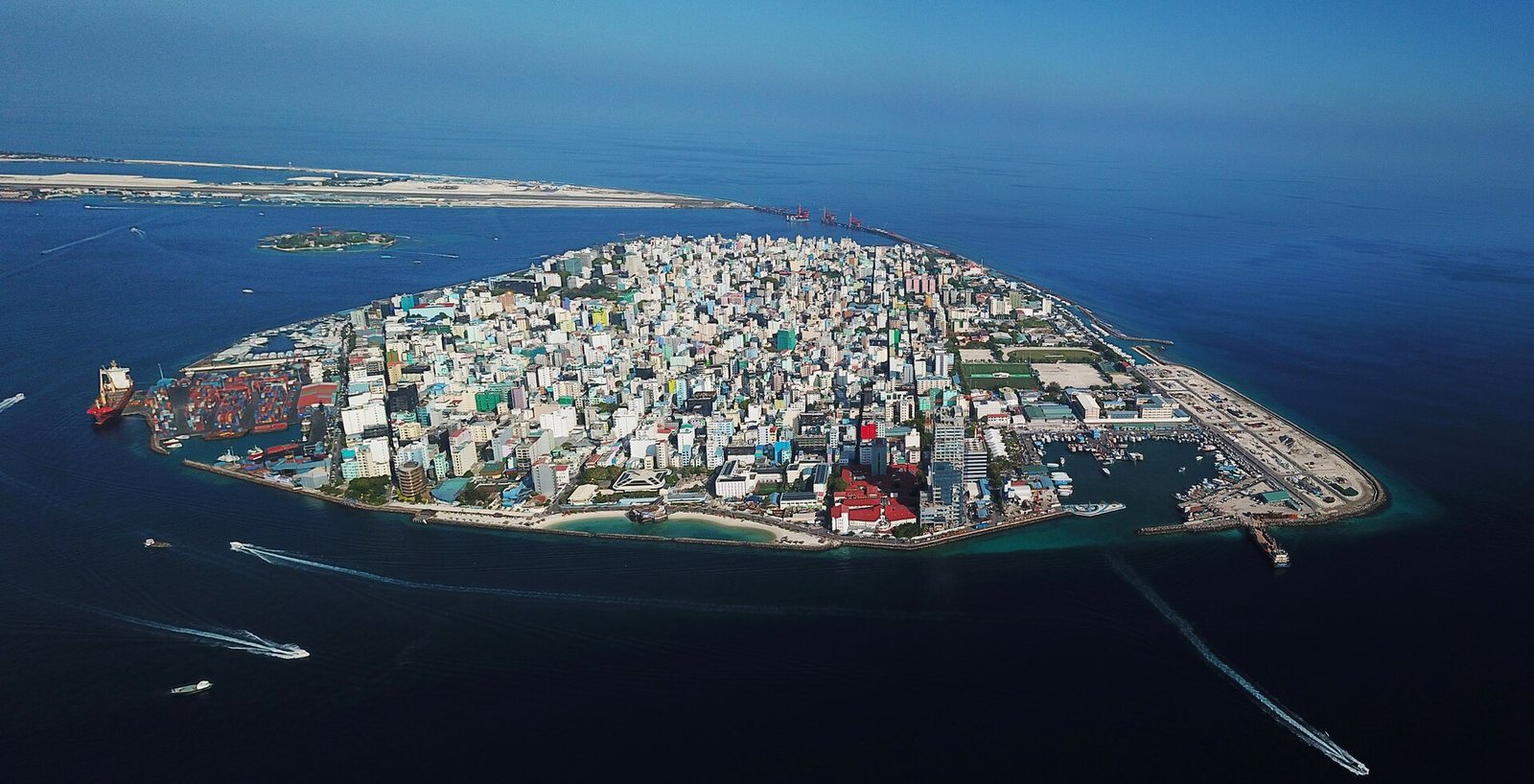
Male Maldives 2017 (238774303) · Shahee Ilyas · CC BY 3.0 · cropped
Choosing an atoll and the transfer trade-off
Once you know the kind of stay you want, the next decision is where to go, and that is really about how far you will travel from the airport. The trade is direct: the closer to Malé, the cheaper and simpler the transfer, but the busier the water; the farther out, the more remote the setting and often the better the reef, but the longer and pricier the journey. Here are the atolls most visitors end up in.
- North Malé and South Malé Atolls. Closest to the airport and most developed, with many resorts and guesthouses reachable by a short speedboat ride. The practical choice for a first trip, a short trip, or a late arrival, since speedboats run at any hour. Busier water, but hard to beat for convenience.
- Ari Atoll. A large atoll west of Malé, reached by seaplane or a domestic flight and a boat. Known for diving and for the resident whale sharks of its southern end, South Ari, seen year-round rather than only in season.
- Baa Atoll. North of Malé, a UNESCO Biosphere Reserve designated in 2011 and home to Hanifaru Bay, one of the world's great gathering places for manta rays and whale sharks. Reached by a roughly half-hour seaplane, or a short domestic flight to Dharavandhoo plus a boat. Remote, reef-rich, and generally higher-end.
Beyond these, resorts spread across many other atolls, from the far north to the deep south around Addu. As a rule, the more distant atolls are reached by a domestic flight plus a speedboat rather than a seaplane, which changes the timing and cost. For the far atolls the journey is a real part of the plan, not an afterthought.
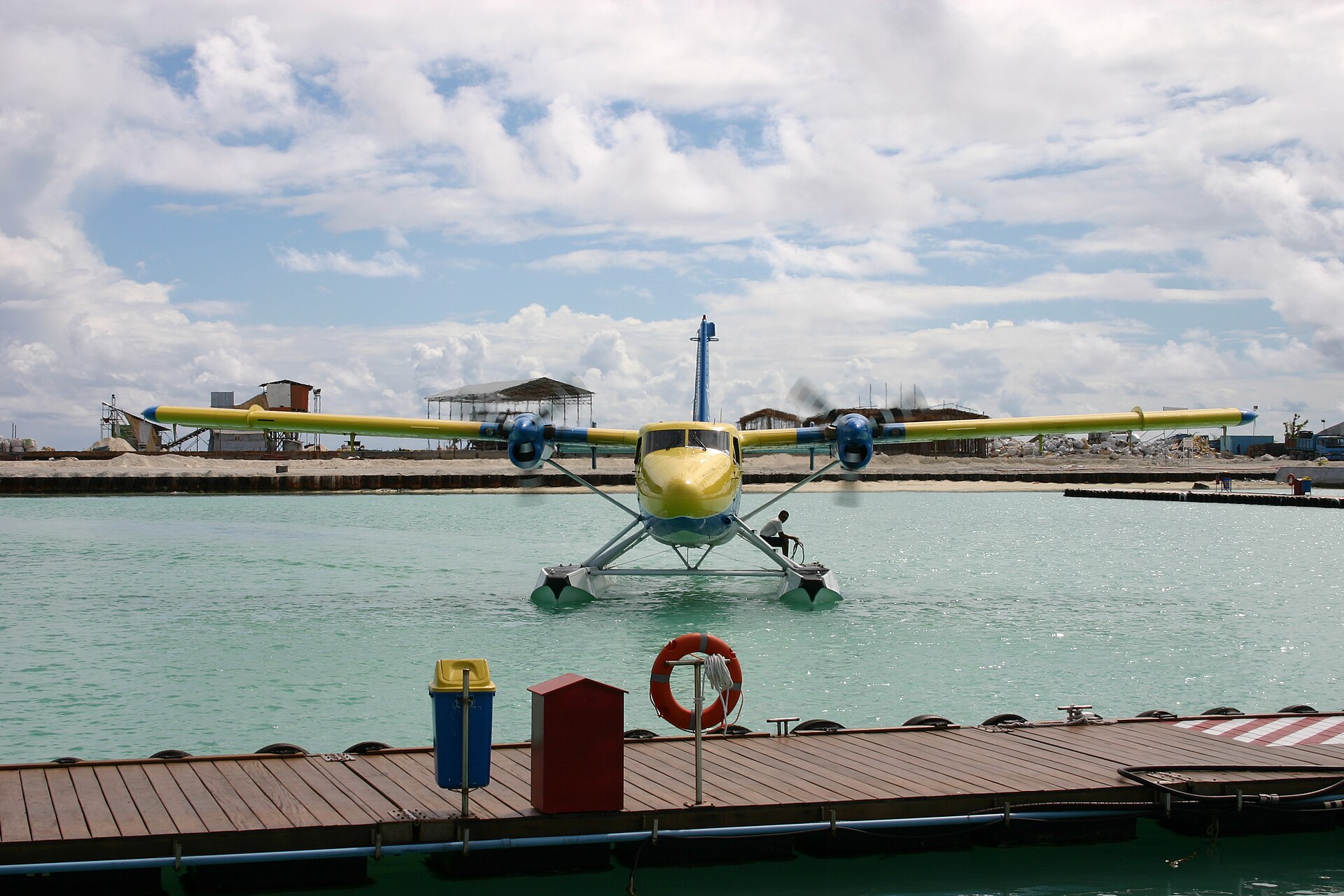
TMA TwinOtter1 · Pb1791 · CC BY-SA 3.0 · cropped
Where to sleep and what drives the price
On a resort island, the headline choice is the villa type, the single biggest lever on price after the resort itself.
An overwater villa is the one people picture: a room on stilts over the lagoon, with a deck and steps into the water, so you can swim from your own terrace. It is the most expensive category at almost every resort, and the openness makes it hot, with less shade than the beach. A beach villa sits on the sand under palms, a few steps from the lagoon; it usually costs less, stays cooler, and works better for families. A common rule of thumb is that a beach villa at a better resort beats an overwater villa at a weaker one, so do not fixate on the stilts.
The second lever is the board basis, which matters more here than at a city hotel, because on a private island you cannot walk out to a cheaper restaurant. Bed-and-breakfast leaves lunch and dinner to buy on the island daily; half board adds dinner; all-inclusive covers meals and usually a set list of drinks. On a remote island with no alternative, half board or all-inclusive can save real money, though drinks add up fast whatever you choose. Work out the true nightly cost with food and transfer included, not just the room rate.
The third lever is one the brochures gloss over: the house reef. Some islands are ringed by healthy coral you can snorkel straight from the beach, a huge part of the value; others sit in a sandy lagoon with little to see without a boat. If snorkeling matters, check that the island has a good, accessible house reef before you fall for the villa photos.
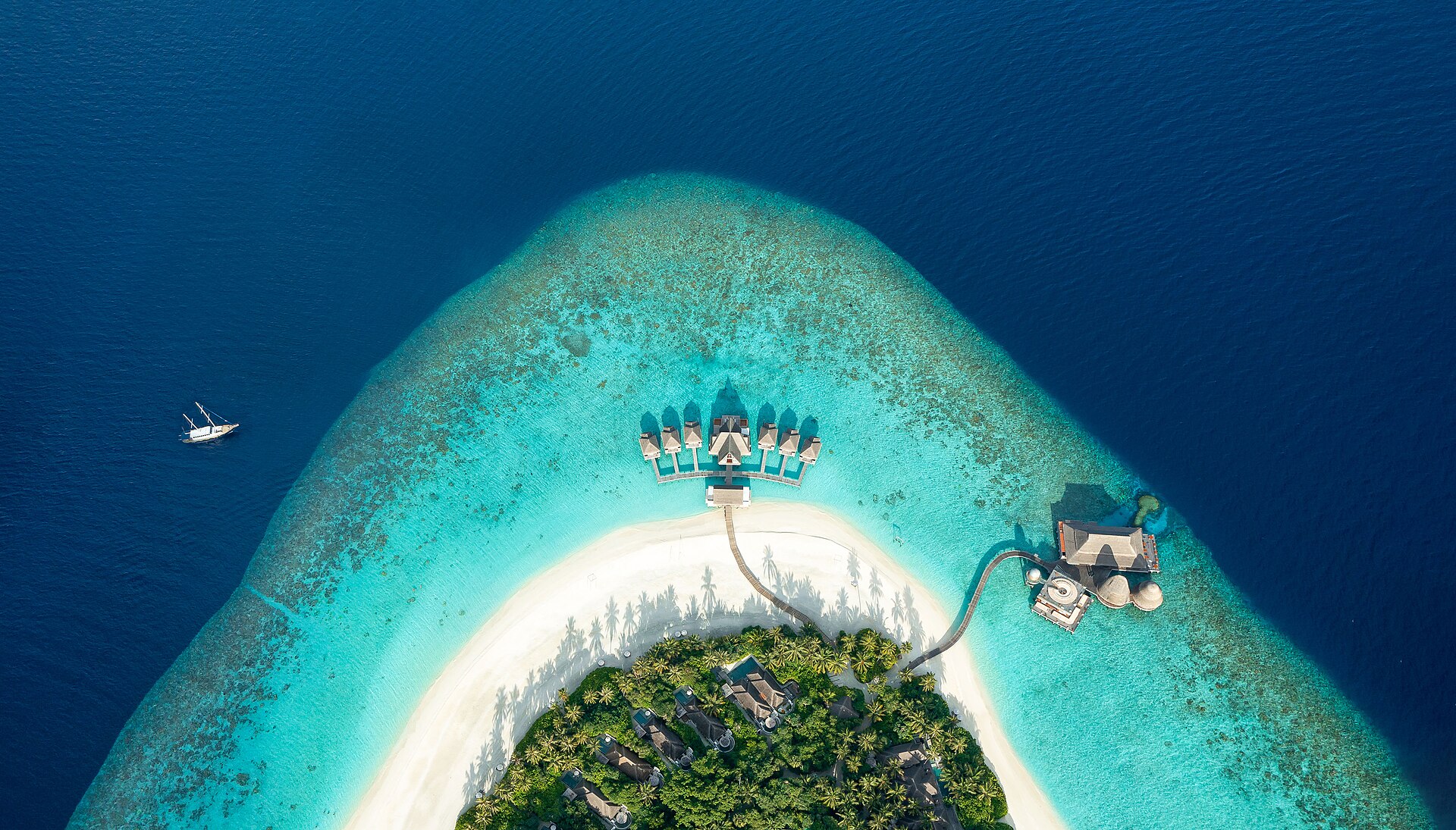
Anantara Kihavah - Aerial Hero Shot 2024 · Matheenfaiz · CC BY-SA 4.0 · cropped
When to go
The Maldives is warm all year, around the high twenties Celsius every month, so the seasons are about rain and wind, not heat. Two monsoons run the calendar. The northeast monsoon, roughly December to April, is the drier season, with more sun, calmer seas, and clearer water; it is also peak season, when prices are highest, and the Christmas-to-New-Year stretch is the busiest and most expensive of all. The southwest monsoon, roughly May to November, is wetter, with more rain and rougher water, along with lower prices and fewer people.
For most travelers the dry months are the safe pick, and March and April are often singled out as good value at the tail of the season. Still, the weather has grown less predictable, plenty of dry-season days are cloudy, and a wet-season trip can bring long spells of sun at a much lower rate, so the wet season is far from a write-off if you are flexible.
One caveat can flip the usual advice: the marine life. The plankton that pulls manta rays and whale sharks into Hanifaru Bay in Baa Atoll concentrates mainly in the southwest monsoon, so the best window there runs roughly May to November, in the so-called wet season. If that gathering is your reason for the trip, you may want to travel in the season most people avoid. The resident whale sharks of South Ari Atoll, by contrast, are around all year, a more weather-proof bet.
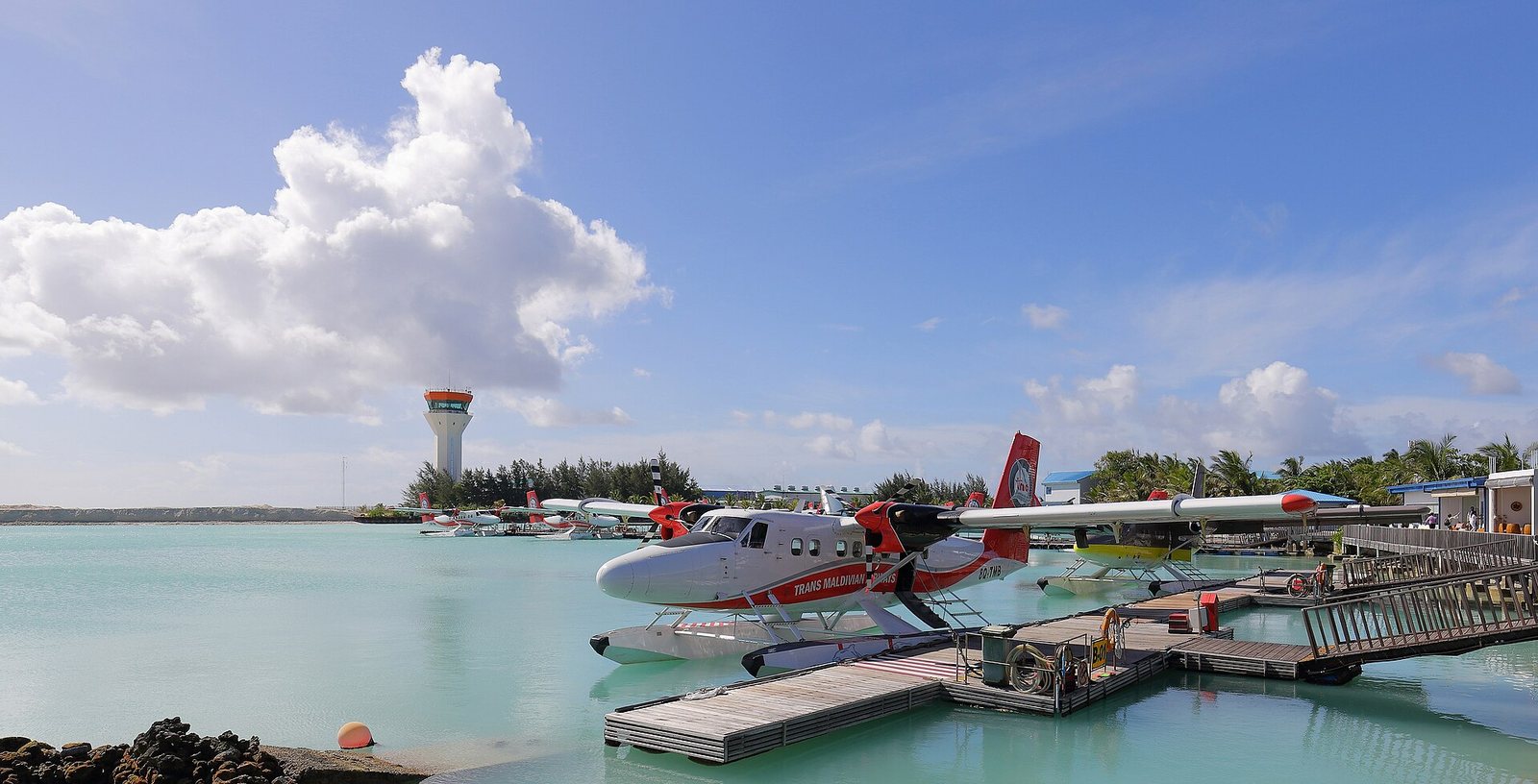
TMA DHC-6 Twin Otter at Velana International Airport, May 2017 · Martin Falbisoner · CC BY-SA 4.0 · cropped
Getting there and transfers in detail
Nearly everyone arrives at Velana International Airport near Malé, on long-haul flights through the Gulf, Asia, or Europe. You do not arrange onward transport yourself: your resort or guesthouse organises the transfer and meets you at the airport. What it looks like depends entirely on where your island is, and it falls into three types.
Speedboat. For islands near the capital, in North and South Malé Atoll and other close atolls, a speedboat is standard: a direct ride of roughly fifteen to ninety minutes. Boats run around the clock, so a late arrival is no problem, and it is usually the cheapest option. In strong wind the ride can be bumpy.
Domestic flight plus speedboat. For the far northern and southern atolls, you connect at Velana onto a domestic flight to a regional airport, then take a resort speedboat for the last stretch. The flights are short, usually under an hour, and run into the evening, so this route handles late arrivals better than a seaplane. It typically costs less than a long seaplane transfer, at the price of an extra connection and possible waiting.
Seaplane. For mid-distance atolls beyond speedboat range, including much of Ari and Baa, you transfer by seaplane, a small pontoon aircraft that lands on the water near your island. The flight is short, often twenty to forty-five minutes, and the aerial view is a highlight in itself. Two operators, Trans Maldivian Airways and Manta Air, run almost all of this traffic. Seaplanes are the most expensive transfer, frequently quoted in the hundreds of dollars per person return, and, crucially, they fly only in daylight.
| Transfer | Typical use | Rough time | Daylight only? | Feel |
|---|---|---|---|---|
| Speedboat | Islands near Malé (North and South Malé Atoll) | About 15 to 90 minutes | No, runs day and night | Quick and simple; bumpy in wind |
| Domestic flight + speedboat | Far northern and southern atolls (for example Addu, Laamu) | A 20 to 80 minute flight, then a boat | No, flights run into the evening | Two legs and a possible wait; reaches remote atolls |
| Seaplane | Mid-distance atolls (much of Ari and Baa) | About 20 to 45 minutes | Yes, daylight hours only | A scenic flight in itself; weather- and daylight-bound |
In the Maldives the transfer is not a detail you settle after choosing the room. It can cost as much as a night on the island, and because seaplanes fly only in daylight it can quietly decide whether you reach your resort today or sleep near the airport and go in the morning.
Good to know
Seaplanes operate in daylight only, with the last departures from Velana in the mid-to-late afternoon. If your flight lands in the evening and your resort is a seaplane island, you will not fly out until the next morning. Resorts handle this routinely by booking you an airport-area hotel in Hulhumalé for the night, but it adds a night and a cost, so check your arrival time against your transfer type before booking. Speedboat and domestic-flight islands avoid this, since boats run at any hour and most domestic flights run late.
What to actually do
The Maldives is built around the water, and most of what is worth doing happens in it or on it.
- Snorkel the house reef. On a good island you swim off the beach and are over living coral, reef fish, turtles, and small sharks within minutes. The simplest pleasure here, and on the right island the best.
- Dive. This is a serious diving destination, with reefs, channels, and coral outcrops full of life. Resorts and guesthouses have dive centres for beginners and experienced divers alike; local-island bases make it noticeably cheaper.
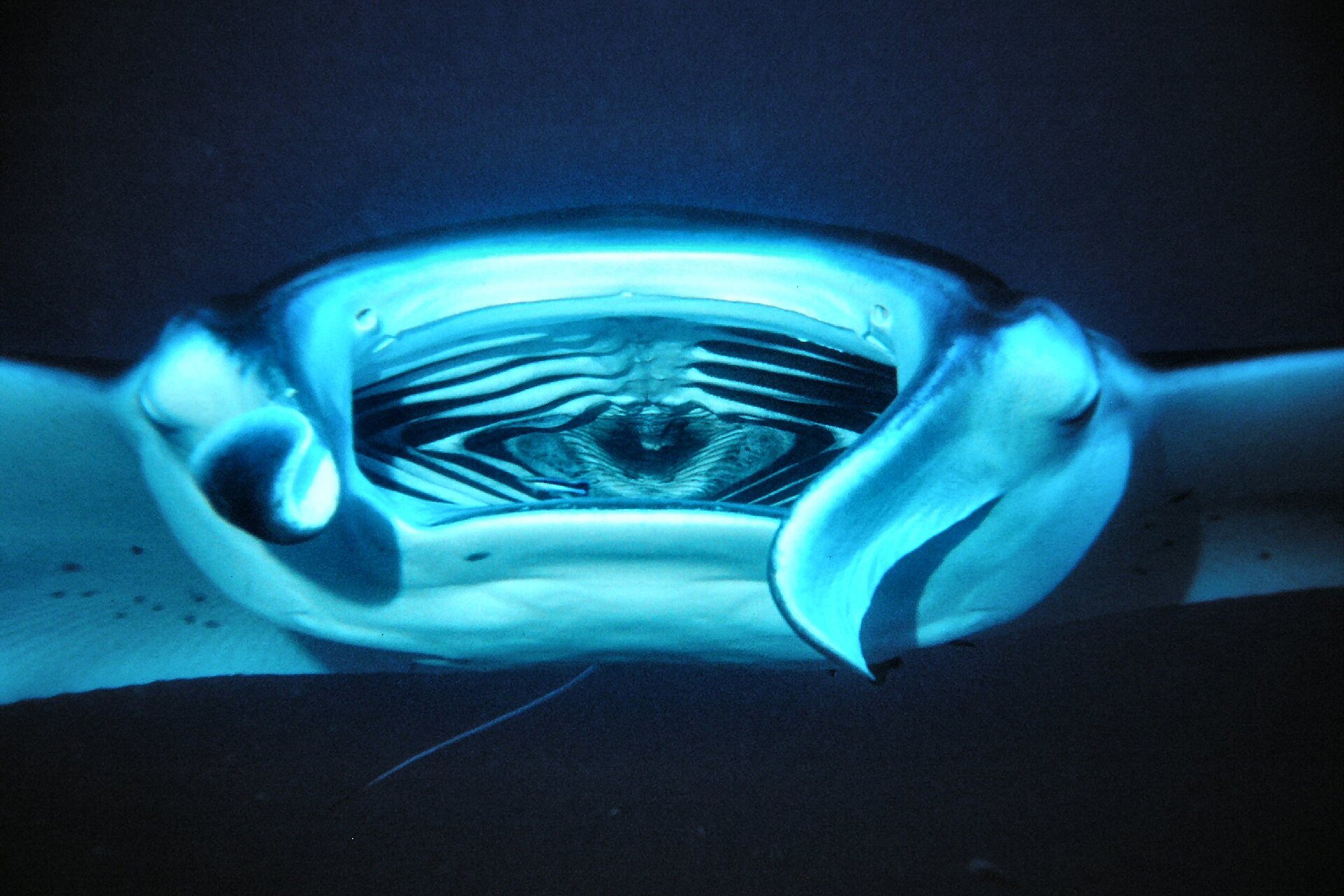
- See the big animals. Swim with the resident whale sharks off South Ari Atoll, reliable year-round, or visit Hanifaru Bay in Baa Atoll in the southwest monsoon, when manta rays and whale sharks gather to feed. Hanifaru is protected: snorkeling only, no scuba, with a guide and a visitor cap, so go with a licensed operator.
- Take a boat trip. Dolphin cruises, sunset fishing, and picnics on a bare sandbank in the lagoon are staples, and they get you onto the water you came for.
- Use the spa, or do very little. Resorts lean heavily on spas and on the business of resting; on a remote island that is largely the point, so be honest about whether that suits you.
- Surf, from a local base. Some inhabited islands sit near well-known reef breaks and make an affordable surf trip, generally best in the southwest monsoon.
Local customs and guesthouse-island rules
The Maldives is a Muslim country, and Islam shapes daily life and the law. On resort islands, which are private and set apart, this rarely touches you: alcohol is served, ordinary swimwear is fine, and the resort runs on its own terms. On inhabited local islands, the community's customs apply, and a little awareness goes a long way.
The main points on a local island are simple. Dress modestly in public, covering shoulders and knees, and keep swimwear to the island's designated swimming beach, often signposted as a bikini beach; cover up as soon as you leave the sand. The islands are dry: alcohol is not sold and you cannot bring it in, though some have a bar boat moored offshore, and a resort day trip is another option. Pork is off the menu too. During Ramadan, the month of daytime fasting, be discreet, avoiding food, drink, or cigarettes in public during daylight, and expect some cafes to keep different hours. Hosts will happily spell out the local dos and don'ts if you ask.
Public displays of affection are best kept low-key off the resorts, and photographing people, especially women, without asking is not welcome. Treat a local island as someone's home rather than a backdrop and you have most of the etiquette.
Money and practical notes
A few practical things make the Maldives run more smoothly, and most come back to the fact that resorts and local islands operate almost like two different countries.
- Alcohol is resort-only. It is served on resort islands but otherwise prohibited, including on local islands and at the border: you cannot bring it through customs, and any in your luggage is held and returned when you leave. On a local island, plan around the bar boats or a resort day trip.
- Money. The currency is the rufiyaa, but resorts price in US dollars and take cards easily, and most guesthouses and excursions accept dollars too. Carry small, clean dollar bills for tips and local purchases, and a little rufiyaa for cafes and ferries. You rarely need much cash on a resort, where you sign to your room and settle at the end.
- Taxes and service charge. Quoted rates are often before tax. A tourism goods-and-services tax (17 percent at the time of writing), a nightly green tax per guest, and a service charge of around 10 percent are added on top, so confirm whether a price is inclusive. These figures change, so treat them as a guide.
- Tipping. The mandatory service charge is shared among staff and is separate from tipping. Small extra tips for good service are welcome, a few dollars a reasonable benchmark.
- Connectivity. Resorts have Wi-Fi, sometimes patchy on far islands. A local SIM or eSIM from a Maldivian operator, sold at the airport, is cheap and useful for reliable data.
- Sun and reef. The equatorial sun is strong even under cloud. Use sun protection, and choose reef-safe sunscreen, since you will be swimming over living coral.
By the numbers
Common questions
Should I stay at a resort or a local-island guesthouse?
Choose a resort for privacy, an overwater or beach villa, alcohol, and a self-contained island where everything is arranged, and accept the high cost. Choose a local-island guesthouse for a fraction of the price, everyday Maldivian life, and cheap diving, and accept modest dress in public, no alcohol, and a shared beach. Many people do a few nights of each.
Seaplane, speedboat, or domestic flight, how do I know which I will take?
Your island decides, not you. Islands near Malé use speedboats, which run at any hour. Mid-distance atolls like much of Ari and Baa use seaplanes, which fly only in daylight and cost the most. The far northern and southern atolls use a domestic flight plus a boat. Your resort books whichever applies and meets you at the airport, so check the type and cost when you book the room.
When is the best time to go?
For reliable sun and calm seas, aim for the dry northeast monsoon, roughly December to April, with March and April often the best value; the Christmas and New Year weeks are priciest. The wet southwest monsoon, May to November, is cheaper and can still bring fine weather. One exception: the manta and whale-shark gathering in Baa Atoll's Hanifaru Bay peaks in the wet season, so wildlife trips may travel then on purpose.
Can I drink alcohol in the Maldives?
Only on resort islands, where it is served normally. Local inhabited islands are dry, you cannot bring alcohol into the country, and any in your bags is held at customs and returned on departure. On a local island, the workarounds are a bar boat offshore or a day trip to a nearby resort.
How many nights do I need?
Because transfers eat into the first and last day, a stay of at least four or five nights is usually worth the journey; fewer can feel rushed once you subtract travel time. Longer trips suit a split between a local island and a resort, or between two atolls, to see more than one side of the country at an easy pace.
Sources & further reading
- Visit Maldives — official tourism site
- UNESCO — Baa Atoll Biosphere Reserve (Man and the Biosphere)
- Trans Maldivian Airways — seaplane operator
- Manta Air — seaplane and domestic operator
- UK Foreign, Commonwealth & Development Office — Maldives travel advice (local laws and customs)
- Maldives Inland Revenue Authority — Green Tax and TGST
- Lonely Planet — Maldives travel guide