At a glance
- Base
- Atlantic Seaboard beaches, City Bowl, V&A Waterfront, or Constantia valley, depending on your priorities.
- When
- Summer (Nov-Mar) for beaches & long days; autumn (Mar-May) for calmer weather, fewer crowds & better value.
- Getting there
- Fly into Cape Town International Airport (CPT), 20km east; connections often via Europe or Johannesburg.
- Getting around
- Rent a car for exploring; Uber/Bolt are easy defaults; MyCiTi bus covers city, airport, Atlantic Seaboard.
- Book ahead
- Book accommodation, popular restaurants, cableway, and Robben Island ferry well ahead for peak season.
- The price
- Prices swing hard with seasons; December-January is busiest and most expensive; food/wine feel generous.
Cape Town is one of those rare cities where the land does most of the talking. A flat-topped mountain rises straight up behind downtown. The Atlantic wraps around a string of beaches and coves on one side, and behind the mountain the ground rolls into vineyards, forest and a second, warmer bay. You can stand on a city sidewalk at nine in the morning and be on a near-empty beach, a mountain trail or a wine farm by ten.
That range is the whole appeal, and it's also the catch. Cape Town is spread out, and its character changes from one suburb to the next, so the single decision that shapes your trip is where to base yourself. This guide compares the main areas — the Atlantic Seaboard beaches, the City Bowl under the mountain, the V&A Waterfront and the green Constantia valley — then gets into the stays the city is known for, when to come and how to read the wind, how to get there and around, what's worth your days, and a straight word on safety and money.
In this guide
- The lay of the land
- Where to base: area by area
- The stays: villas, boutique hotels and guest houses
- When to go, and the wind
- Getting there and getting around
- What to do: the mountain, the peninsula, the penguins
- The winelands and other day trips
- Food and wine
- Safety, money and practical notes
- Common questions
The lay of the land
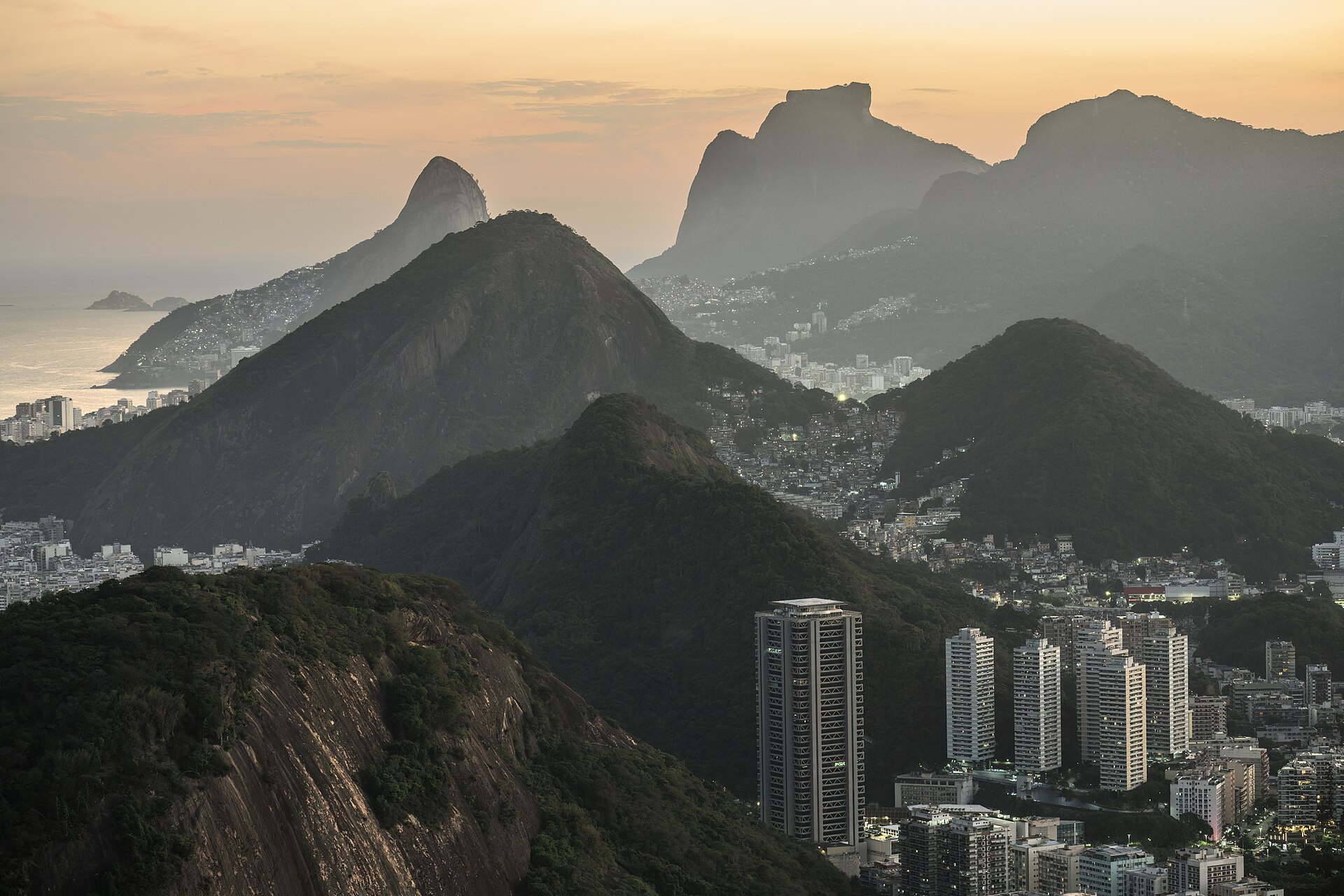
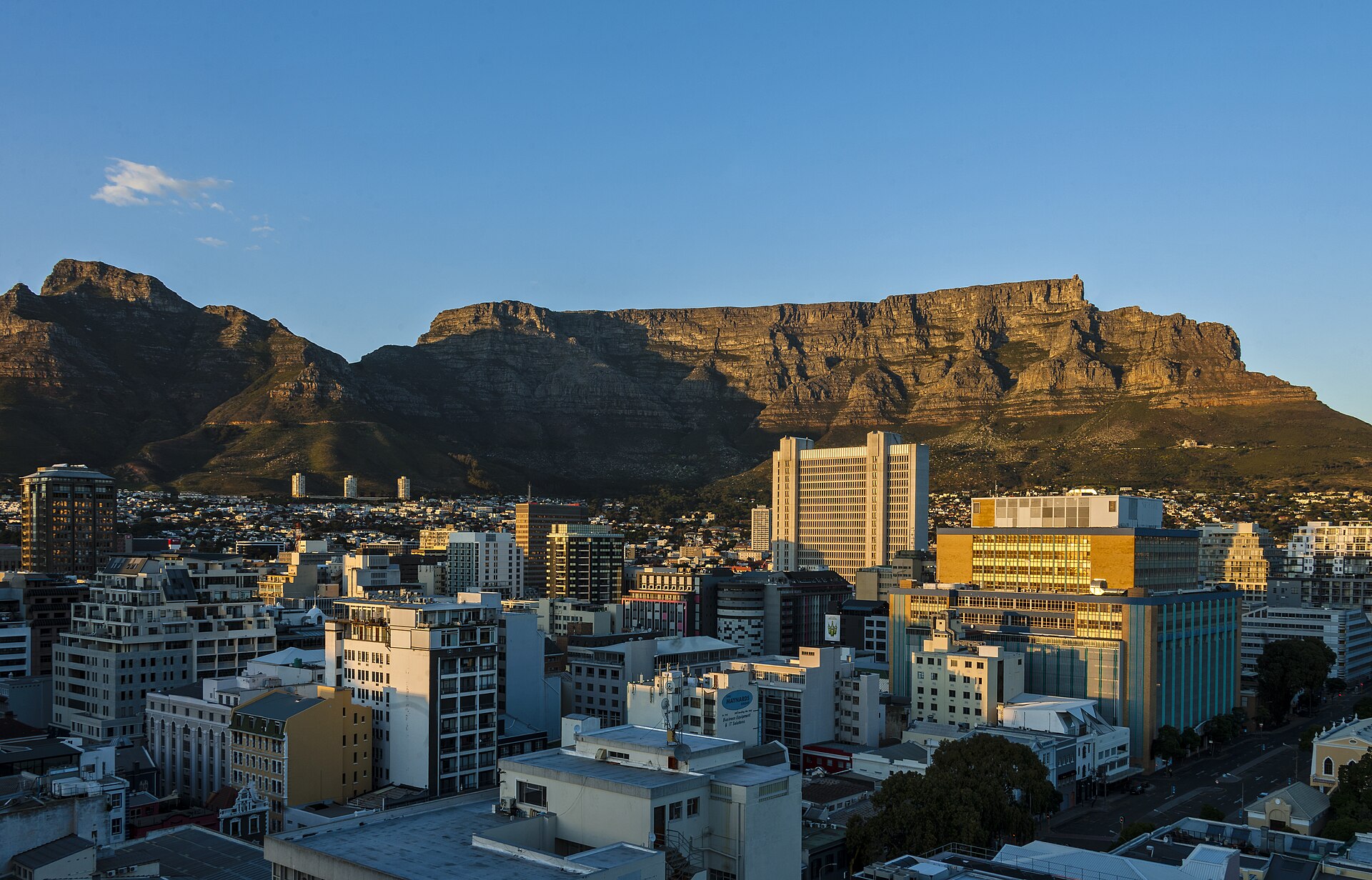
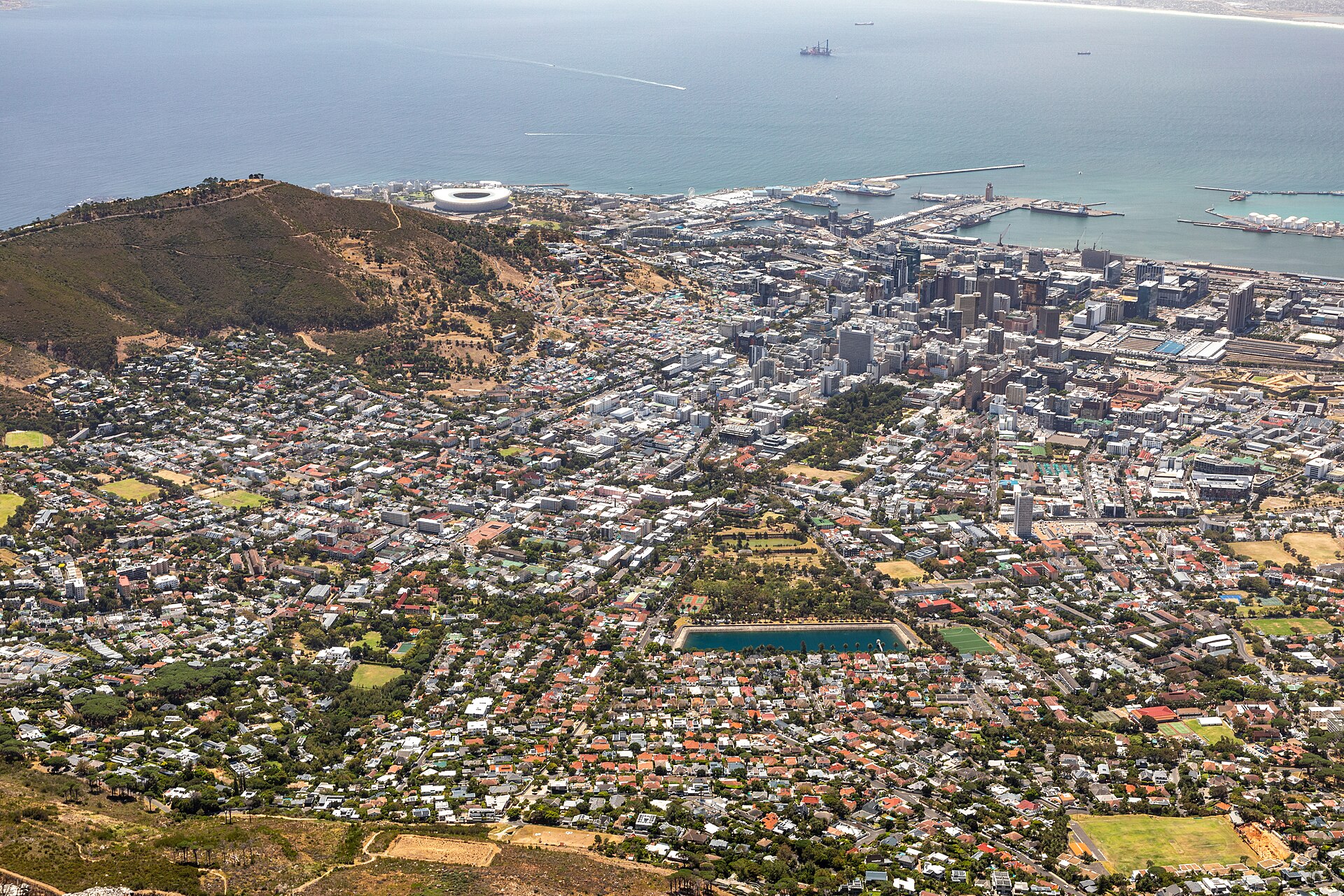
Start with the mountain, because everyone in Cape Town navigates by it. Table Mountain stands just over 1,000 meters (about 3,500 feet) above the city, a long flat wall of rock with Devil's Peak on one side and Lion's Head and Signal Hill on the other. The natural bowl of flat land between the mountain and the harbor is the City Bowl — the old center, the CBD and the residential streets climbing the slopes. This sits on Table Bay, the cooler, working-harbor side.
Follow the coast west and south and you reach the Atlantic Seaboard: Green Point, Sea Point, Bantry Bay, Clifton and Camps Bay, a run of beach suburbs below the Twelve Apostles ridge. Keep going and the road threads around Hout Bay and down the Cape Peninsula toward Cape Point. On the mountain's other flank lie the leafy Southern Suburbs — Newlands, Constantia and its vineyards — sloping toward the warmer waters of False Bay and the seaside towns of Muizenberg and Simon's Town. Beyond the city, an hour or so inland, sit the Cape Winelands around Stellenbosch and Franschhoek. Hold that rough map and the rest of the choices make sense.
Cape Town (ZA), Table Mountain, Blick auf City Bowl -- 2024 -… · Dietmar Rabich · CC BY-SA 4.0 · cropped
Where to base: area by area
There is no single right answer here, only trade-offs between views, walkability, quiet, and how much you'll lean on a car. Here's how the main options actually feel.
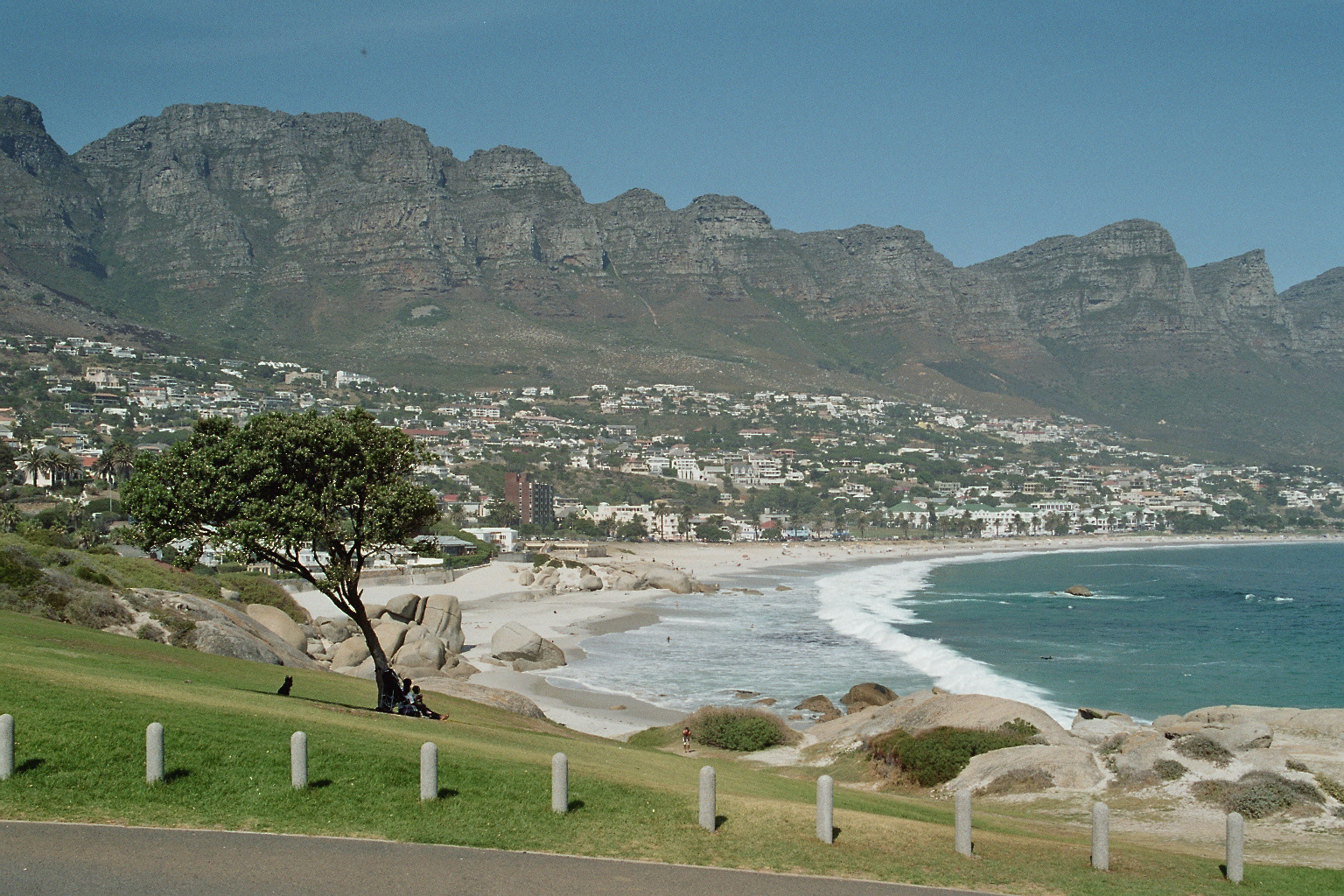
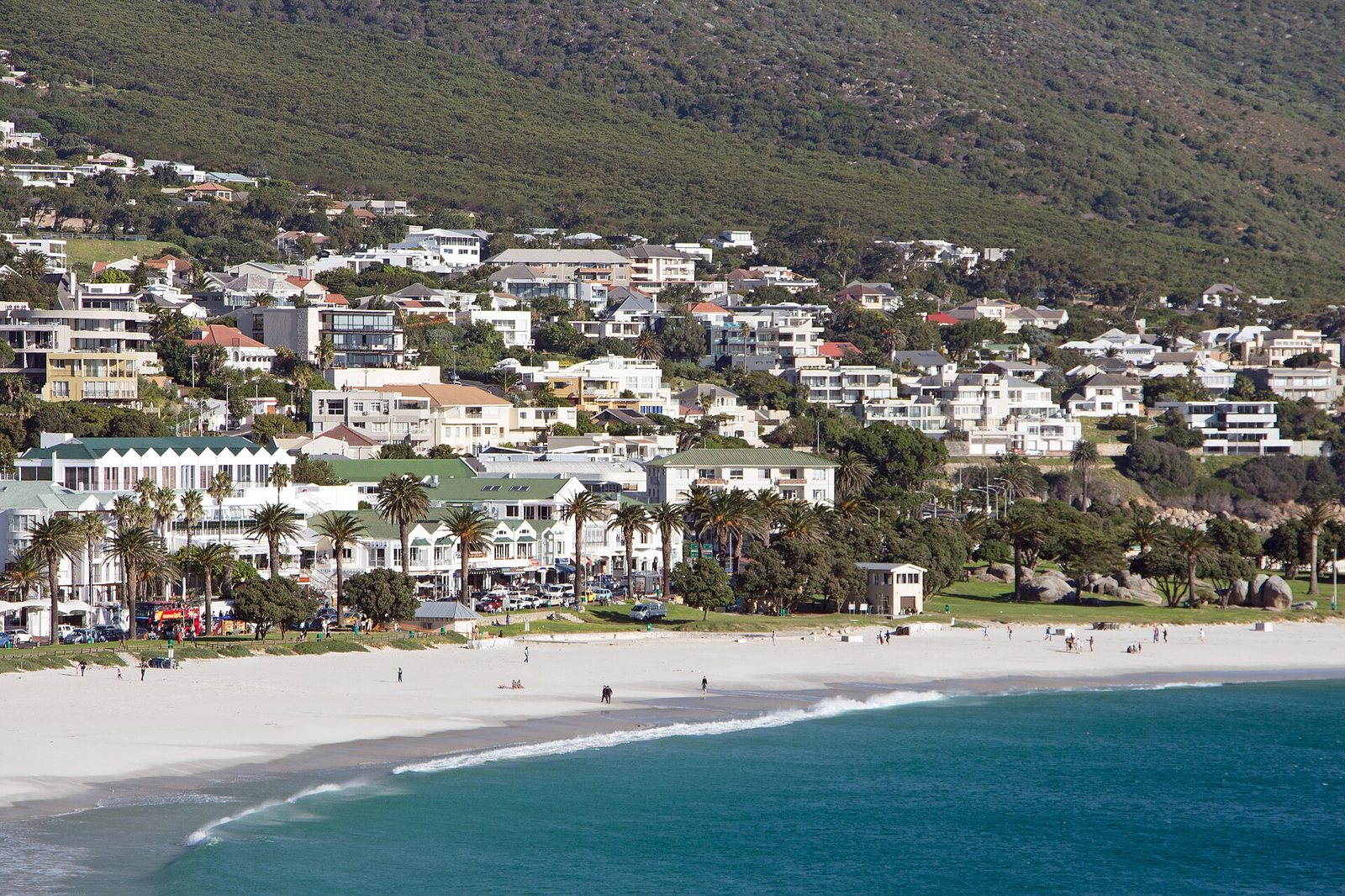
The Atlantic Seaboard (Camps Bay, Clifton, Bantry Bay, Sea Point). This is the beach-and-sunset side, and it's where a lot of the villa and guest-house money goes. Camps Bay has the wide beach and a busy strip of restaurants and bars right across the sand — lively, social, and a scene in high summer. Clifton, just to the north, is quieter and more residential, with four sheltered coves reached by steep steps. Bantry Bay is calmer still and more about the views than the crowds. Sea Point is the most everyday and walkable of the group, with a long ocean promenade and a wide range of places to eat. The trade-off across the whole seaboard: stunning water, and an afternoon wind that can be serious.
The City Bowl (Gardens, Tamboerskloof, the CBD, De Waterkant). Basing under the mountain puts you closest to the museums, the restaurants, the nightlife and the trailheads. Neighborhoods like Gardens and Tamboerskloof are residential and handsome; the CBD is busier and more mixed. You're a short drive from both the beaches and the Waterfront, and you can walk to more here than anywhere else in the city.
The V&A Waterfront. The redeveloped harbor is the safe, self-contained choice: hotels, shops, restaurants, the aquarium and the ferry to Robben Island, all in a controlled, walkable zone. It's polished and easy, and it can feel a little like a well-run mall. Good for a first trip, for families, or for a short stay where you don't want to think too hard.
Constantia and the Southern Suburbs. On the green side of the mountain, Constantia is all big trees, wine farms and quiet — closest to Kirstenbosch and a short drive from the False Bay beaches. You'll want a car, and it suits travelers who prefer space and vineyards to nightlife.
The southern beaches (Muizenberg, Simon's Town). Further out and more low-key, these False Bay towns draw surfers and families, with warmer water and the penguins close by. It's a longer haul to the city center, so it fits a slower, second-time visit.
| Area | Best for | Feel | Need a car? |
|---|---|---|---|
| Atlantic Seaboard | Beaches, sunsets, dining | Scenic, social, windy | Helpful |
| City Bowl | Sights, food, walkability | Urban, central | Optional |
| V&A Waterfront | First trips, families, ease | Polished, contained | No |
| Constantia / Southern Suburbs | Wine, quiet, greenery | Leafy, residential | Yes |
| Southern beaches | Surf, slow pace, penguins | Laid-back, out of town | Yes |
Afrika 2006 028 · Lettkow · CC BY-SA 3.0 · cropped
The stays: villas, boutique hotels and guest houses
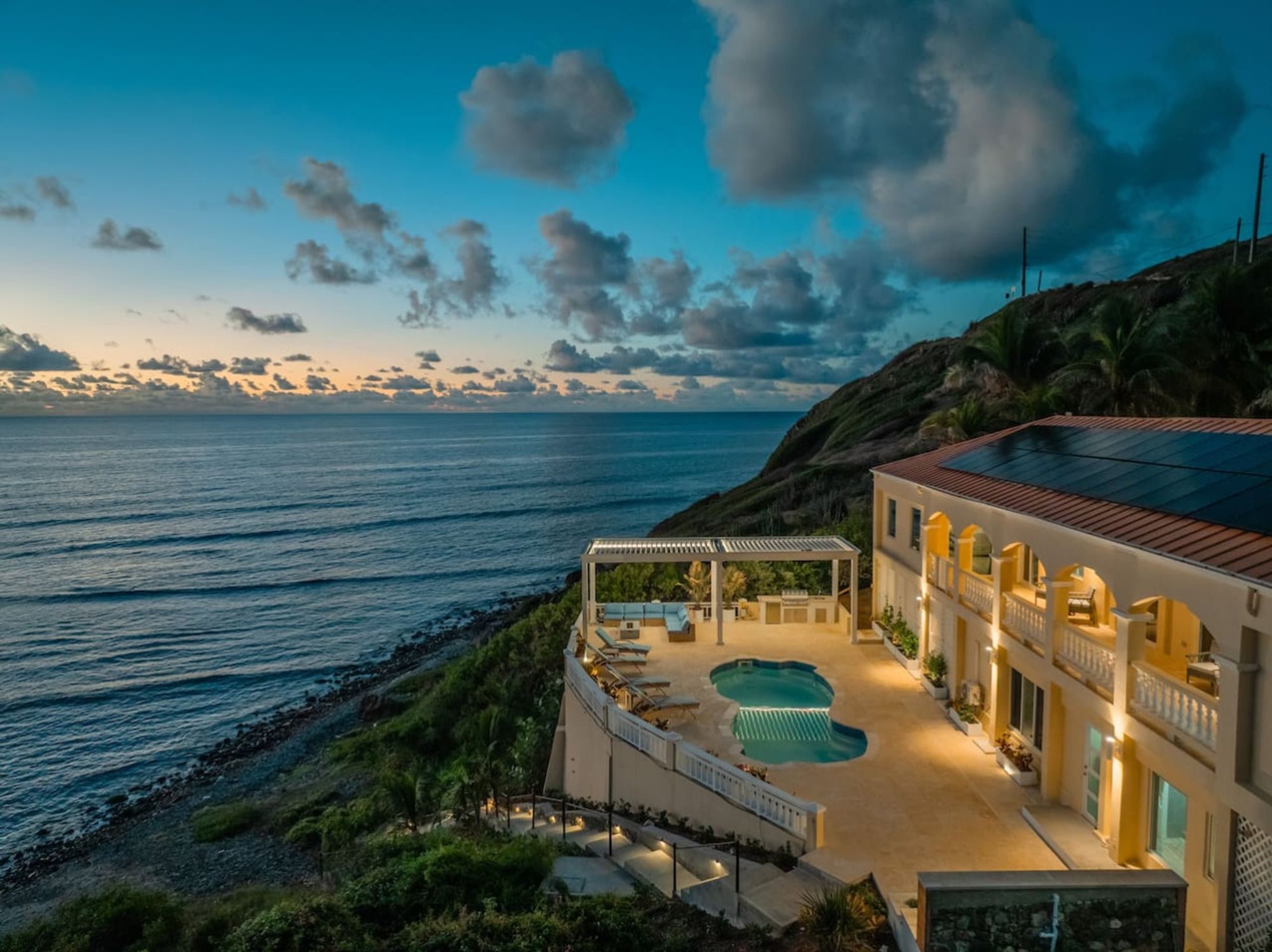
Cape Town does two kinds of lodging especially well: privately rented villas and small, design-led hotels. On the Atlantic Seaboard, self-catering villas and apartments are a genuine category, not an afterthought — many of the houses stepping down the slopes at Camps Bay, Clifton and Bantry Bay are rented by the week, often with a housekeeper, a pool and a view that does the heavy lifting. For a family or a group, this is frequently better value and a better experience than a hotel room.
At the hotel end, the names people tend to mention give you a sense of the range. Ellerman House, a former private estate above Bantry Bay, is small, art-filled and very high-end. The Silo Hotel, built into a converted 1920s grain silo above the Zeitz MOCAA contemporary-art museum at the Waterfront, is the architectural showpiece. Cape Grace sits on the Waterfront marina, and the pink Belmond Mount Nelson, up in Gardens, is the grand old hotel of the City Bowl, known for its gardens and its afternoon tea. In Camps Bay, the POD boutique hotel is a smaller, modern option near the beach. Treat these as examples rather than a ranking — Cape Town has a deep bench of guest houses and mid-range hotels below them.
Two practical notes. Prices and availability swing hard with the seasons, so book well ahead for the December–January peak. And whatever you pick, check how it handles power and water (more on that below) — the better places have quietly sorted this out.

Cape Town (ZA), Waterfront, Kran -- 2024 -- 2907 · Dietmar Rabich · CC BY-SA 4.0 · cropped
When to go, and the wind
Cape Town's high season is the southern-hemisphere summer, roughly November through March. This is the warm, dry, long-day stretch when the beaches and the mountain are at their best — and when the city is busiest and most expensive. December and January are the peak within the peak, when Capetonians and overseas visitors arrive together and popular restaurants and rentals fill up weeks out. If you want beach weather and don't mind crowds and prices, this is your window; just book early.
The thing nobody warns you about is the wind. A strong southeaster, nicknamed the Cape Doctor, blows through much of the summer, kicking up on many afternoons and occasionally for days at a stretch. It clears the air, and it can also flatten a beach plan, close the cableway and rattle a dinner outdoors. It isn't a reason to stay away, but it's real, and it's strongest in midsummer.
Autumn — roughly March into May — is the quiet sweet spot: still warm, usually calmer than midsummer, and with thinner crowds and softer prices than the December rush.
Winter, June through August, is the green season: cooler, wetter and much quieter, with the landscape turning lush and rates dropping. You'll lose some beach days to rain, but you gain elbow room, long lunches, and whale watching along the coast that runs roughly from winter into spring. Spring, in September and October, brings wildflowers and more whales and is another good-value shoulder. If your heart is set on swimming and sundowners on the sand, come in summer; if you mainly want to see the place well, the shoulder seasons are hard to beat.
Camps Bay beach 5 · HelenOnline · CC BY-SA 4.0 · cropped
Getting there and getting around
Cape Town International Airport (CPT) sits about 20 kilometers (roughly 12 miles) east of the city, a drive of around 20 minutes outside rush hour and closer to an hour if you hit the morning commute on the N2. It's the country's second-busiest airport, with direct links across Africa, Europe and the Middle East and frequent hops to Johannesburg; from North America you'll usually connect somewhere, often in Europe or via Johannesburg. Routes change season to season, so check current options when you book.
Once you're in town, the big question is whether to rent a car. Renting makes sense if you plan to explore the Cape Peninsula, the winelands or the False Bay beaches on your own schedule — the drives are a large part of the fun, and public transit doesn't reach most of it. South Africa drives on the left, the main roads are good, and the major rental firms all operate at the airport. If, on the other hand, you're basing at the Waterfront or in the City Bowl and taking day tours, you may not need a car at all, and parking plus the wrong-side-of-the-road learning curve can be more hassle than help.
For getting around without one, Uber and Bolt both operate widely in Cape Town and are the easy default for most visitors, especially after dark. The MyCiTi bus covers the airport, the City Bowl, the Atlantic Seaboard and some other routes, and it's fine in daylight. Where you park on the street, you'll meet car guards in reflective vests who watch vehicles for a small tip — a normal part of the routine here.
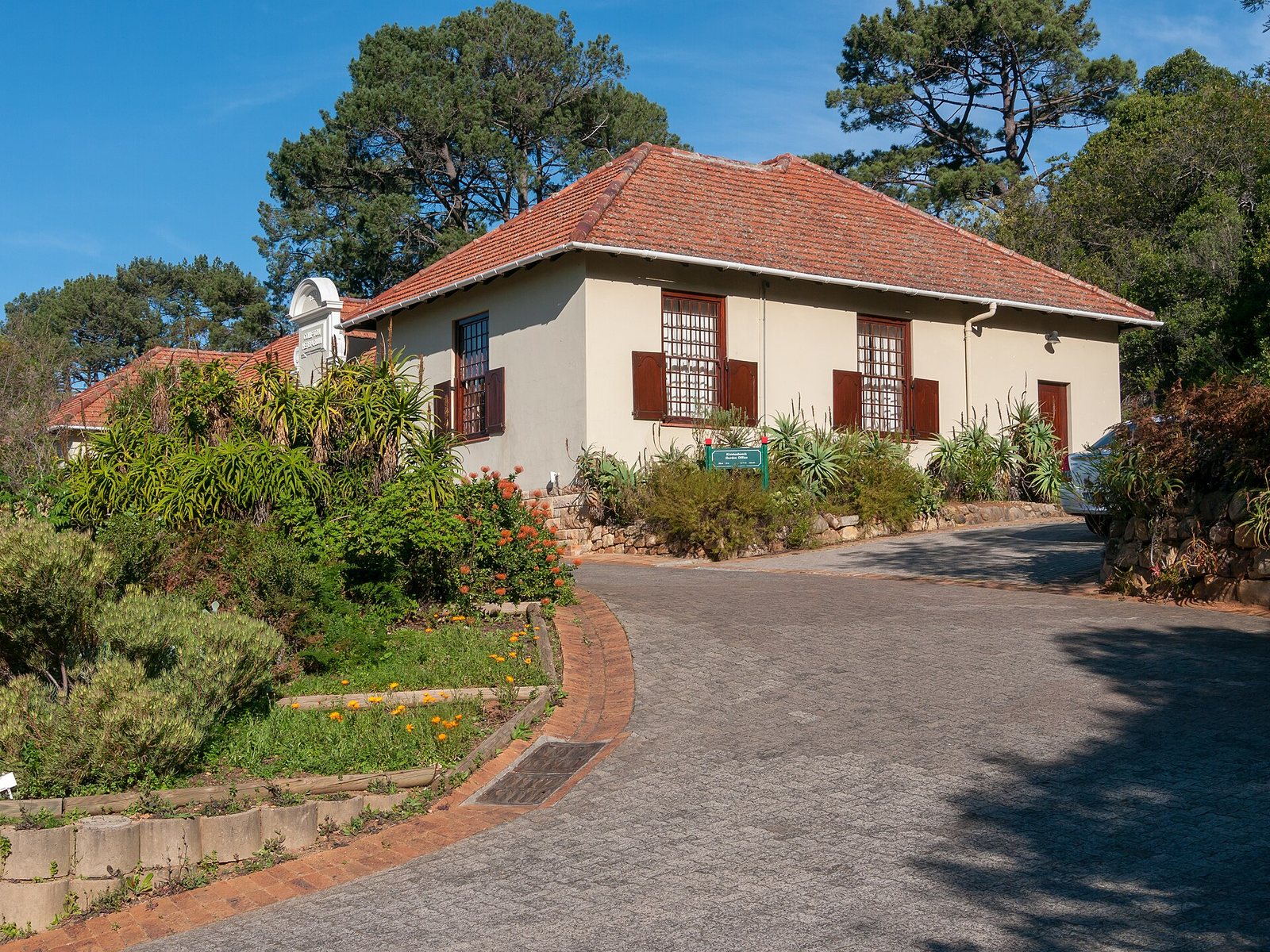
Kirstenbosch National Botanical Garden, Cape Town (P1060025) · Matti Blume · CC BY-SA 4.0 · cropped
What to do: the mountain, the peninsula, the penguins
Table Mountain is the obvious first move. You can ride the rotating cableway to the summit in a few minutes, or hike up — the Platteklip Gorge route is the direct, strenuous walk — and wander the flat top for the long views over the city and the bay. Book the cableway online, and go on your first clear, calm morning rather than saving it for the end of the trip.
Good to know
The cableway shuts down in strong wind and closes for annual maintenance (usually a stretch in winter), and the summit can vanish under the cloud locals call the tablecloth. Don't leave it for your last day. When you wake up and the mountain is clear and still, change your plans and go up then — the weather decides, not your itinerary.
For a shorter climb with a big payoff, Lion's Head is a popular walk, especially near sunset, and Signal Hill gives you the same view by car. South of the city, the Cape Peninsula makes a full, rewarding day: the coastal Chapman's Peak Drive (usually a toll road, occasionally closed for weather or rockfall), then the wild Cape of Good Hope and Cape Point at the end — dramatic, though, for the record, not the southern tip of Africa; that title belongs to Cape Agulhas, further east. Watch for baboons, and don't feed them.
On the way back up the False Bay side, Boulders Beach near Simon's Town is home to a colony of African penguins you can watch from boardwalks. Back in town, Robben Island — the apartheid-era prison where Nelson Mandela was held — is reached by ferry from the Waterfront; book ahead, and know that sailings are weather-dependent. Save time too for the Kirstenbosch botanical garden on the mountain's eastern slope and the brightly painted streets of the Bo-Kaap.
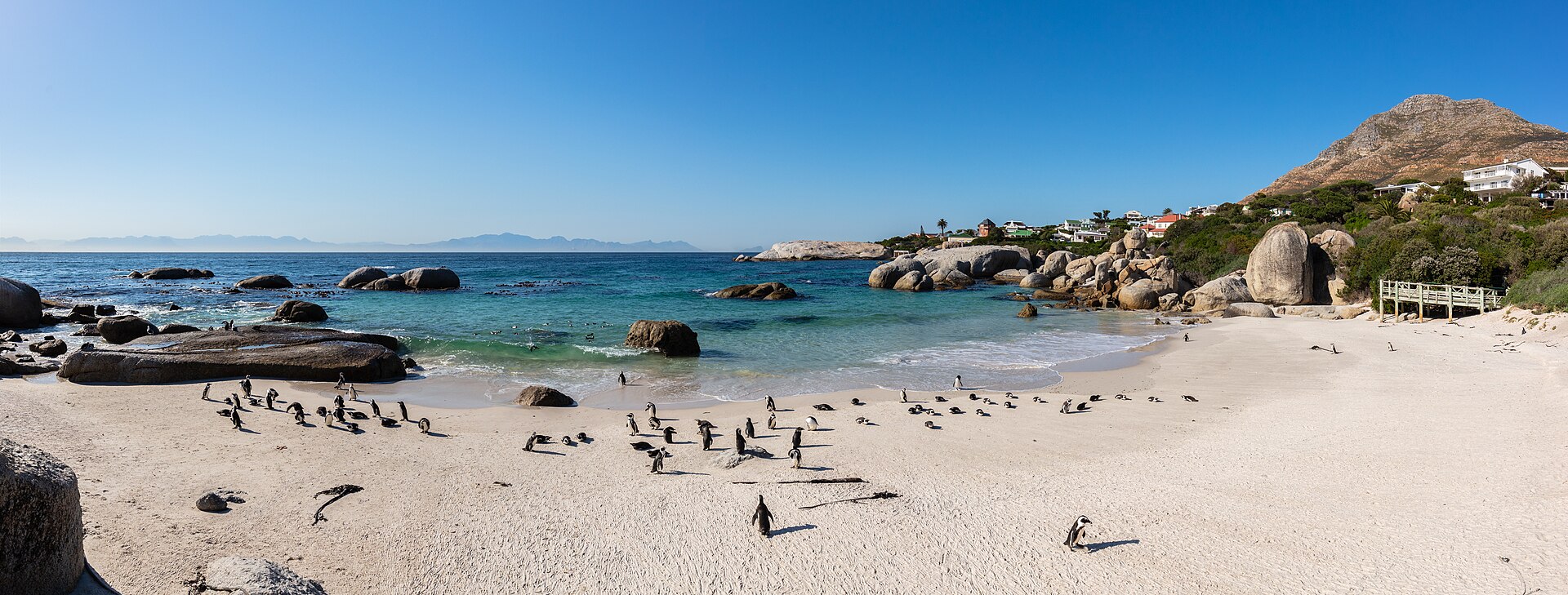
Pingüinos de El Cabo (Spheniscus demersus), Playa de Boulders… · Diego Delso · CC BY-SA 4.0 · cropped
The winelands and other day trips
You don't have to leave the city for wine. The Constantia valley, on the green side of Table Mountain, is a working wine region inside the metro, anchored by Groot Constantia, the country's oldest wine estate, with several other cellars a short drive apart. It's the easy option when you want tastings without a long trip.
For the full winelands, though, drive an hour or so inland to the historic towns of the Cape Winelands. Stellenbosch, founded in the late 1600s and one of South Africa's oldest towns, pairs oak-lined streets and a university town's energy with a dense concentration of estates. Franschhoek, a pretty valley settled by French Huguenots, leans upscale on food and wine; the hop-on Franschhoek Wine Tram is a popular, low-stress way to visit several farms without driving. Paarl rounds out the trio. If you're tasting, either book a tour with a driver or nominate one in your group — the estates are spread out and the roads are patrolled.
Other day trips worth the time: Hermanus, about two hours east, is one of the better land-based whale-watching spots when the southern right whales come in, roughly winter into spring. Closer in, the drive over Chapman's Peak or out to the small harbor at Hout Bay makes a good half-day. You could fill a week with day trips alone and still not run out.
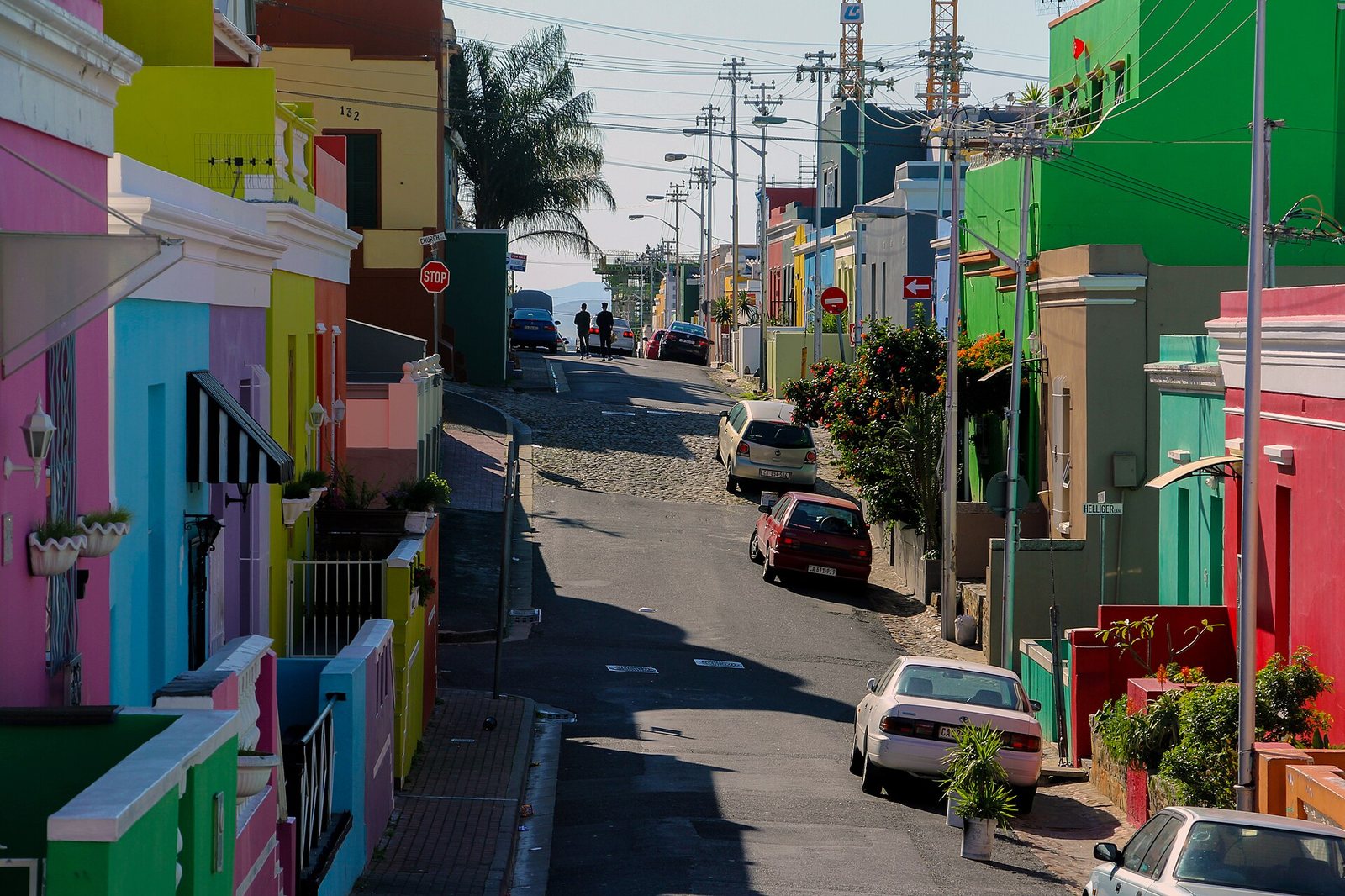
Chiappini Street, Bo-Kaap (01) · Moheen Reeyad · CC BY-SA 4.0 · cropped
Food and wine
Cape Town eats well, and by the standards of most American and European cities it does so at prices that feel generous — one of the quiet pleasures of a trip here. The local wine is the headline: the Cape is known for chenin blanc, its own red grape pinotage, sauvignon blanc, and the traditional-method sparkling wines labeled Cap Classique. You'll drink well without spending much.
On the plate, look for the Cape Malay cooking rooted in the Bo-Kaap — gently spiced dishes like bobotie and slow curries — alongside the country's serious devotion to the braai, the South African barbecue. Seafood is strong on both coasts, and the fine-dining scene, especially out in the winelands, punches well above what you'd expect for the money. For something casual, the city's weekend food markets — the long-running one at the Oranjezicht City Farm and the V&A Food Market among them — are a good, low-commitment way to graze and people-watch. Vegetarians and vegans are well looked after in the City Bowl and along the Atlantic Seaboard.
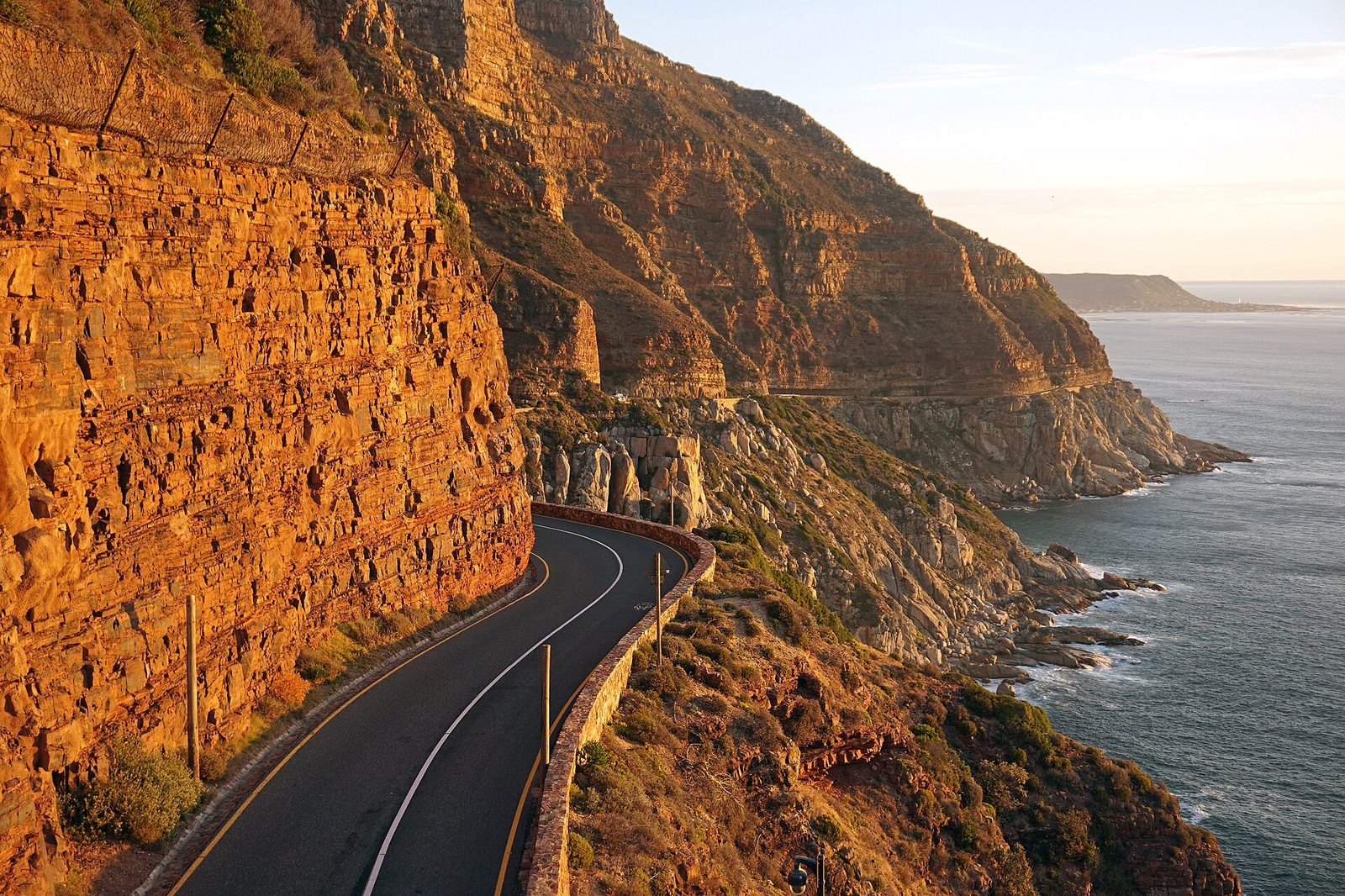
Chapmans Peak Drive 3 · kallerna · CC BY-SA 4.0 · cropped
Safety, money and practical notes
Cape Town is a rewarding place to visit and also a city of real inequality, and it pays to be sensible rather than either careless or fearful. Most serious violent crime is concentrated in areas well away from where visitors go; what tourists more often meet is opportunistic theft — phone snatching, pickpocketing, break-ins to parked cars. The usual habits cover most of it: don't walk alone late at night, keep your phone and jewelry out of sight on the street, use Uber or Bolt after dark, and don't leave anything visible in a car. On the mountain and on trails like Lion's Head, walk in a group and in daylight and stick to popular routes; solo hikers on quiet paths are the ones who run into trouble. If a stranger steers you toward a route or an errand that wasn't your own plan, don't follow it.
A few money and utility notes. The currency is the rand; cards are accepted almost everywhere and ATMs are common. Tipping runs around 10% in restaurants, with a few coins for car guards and petrol attendants. South Africa has had years of load-shedding — scheduled rolling blackouts — which eased through 2024 and 2025 but can still return; a power bank is worth packing, and better hotels run backup power. The plugs are unusual (a large three-round-pin type mostly specific to the region), so bring a universal adapter. Tap water in the city is generally considered safe to drink, though it's polite to use it thoughtfully given the region's dry years. Many visitors, including from the US, UK and EU, can currently enter for up to 90 days without a visa, but confirm the current rules before you fly.
By the numbers
Common questions
How many days do I need in Cape Town?
Five to seven days is a comfortable first visit: enough for the mountain, the peninsula, Robben Island, a wine day and a couple of slower beach or market mornings, with room for the weather to misbehave. If you want to add a safari or more of the winelands, plan on more.
Is Cape Town safe for tourists?
For most visitors who take normal city precautions, yes. The risks are mainly opportunistic theft rather than anything aimed at travelers. Stay aware on the street, use ride-hailing at night, and don't hike alone on quiet trails, and you remove most of the trouble. Government travel advisories carry the current detail worth reading before you go.
Do I need to rent a car?
It depends on where you stay and what you want. For the peninsula drive, the winelands and the False Bay beaches on your own schedule, a car is a real advantage. If you're based at the Waterfront or in the City Bowl and using tours and ride-hailing, you can skip it. Remember that driving is on the left.
When is the best time to visit?
For beaches and long warm days, the November–March summer, with December and January the busiest and priciest. For fewer crowds, calmer weather and better value, the autumn shoulder around March to May is hard to beat. Winter is green, wet, quiet and good for whales.
Should I stay in the city or the winelands?
Most first-timers should base in Cape Town and treat the winelands as a day trip or a single overnight — you get the city and the vineyards without much backtracking. If wine and quiet are the whole point of your trip, a night or two out in Stellenbosch or Franschhoek is a fine addition.