The Complete Guide to Paraty, Brazil
Everything you need for the Costa Verde's most beautiful town: the UNESCO old town, the waterfalls and trails, the islands and beaches, the cachaça, where to eat and stay, when to come — and exactly how to get here.
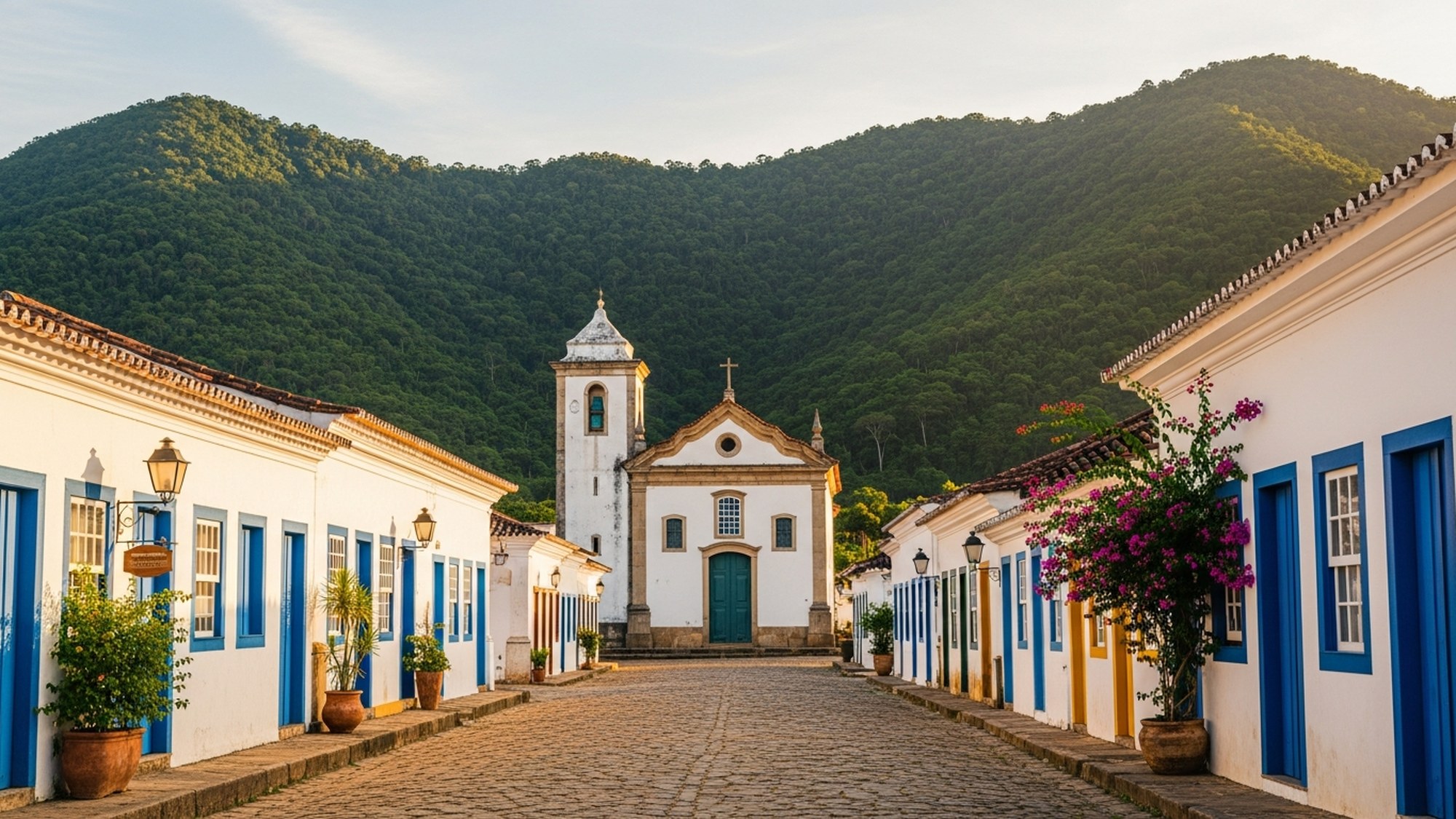
Most people arrive in Paraty by car, after a long curving drive down the coast, and the town does a strange thing to them within about ten minutes. The cobblestones force you to slow down — there is no other option, the stones are too uneven to walk fast on — and once you slow down, you start to notice that almost nothing here is from this century. The buildings are low and whitewashed with brightly painted window frames. Cars are nowhere. The streets dip and rise, and at the right tide they fill with seawater. You came for a weekend and within an hour you are quietly recalculating whether you can stay longer. This guide is the one I wish someone had handed me the first time: what Paraty actually is, how it got this way, and how to make the most of a few days here without wasting them.
In this guide
Where Paraty is
Paraty sits on the Costa Verde — the Green Coast — a stretch of the Brazilian shoreline where the Atlantic forest comes right down to the sea and the mountains never really stop. It's a municipality in the south of Rio de Janeiro state, roughly midway between the cities of Rio de Janeiro and São Paulo. That middle position is part of why it matters: for centuries it was the natural meeting point between the coast and the interior, and today it's the reason so many travelers can reach it from either direction in an afternoon.
From Rio it's around 250 kilometers, which translates to roughly four hours of driving depending on traffic and weather. I say "roughly" and I mean it — the route is the Rodovia Rio–Santos (BR-101), a two-lane coastal road that hugs the mountains and bends constantly. It's genuinely beautiful, with sea views opening up between the curves, but it is not a road you race down. Heavy rain can slow it to a crawl and, in the wettest months, occasionally close sections of it after landslides. Plan your timing as a range, not a promise.
The payoff for that geography is that Paraty is hemmed in by protected wilderness on three sides and ocean on the fourth. A large majority of the municipality is forest and parkland, which is why the town never sprawled the way coastal Brazil so often does. You get a compact historic core, a working modern town around it, and then green mountains in every direction.
A short history
To understand why Paraty looks the way it does, you have to understand that it got rich, then got forgotten, and the forgetting is what saved it.
In the late 17th century, gold was discovered in the interior, in what's now Minas Gerais. The problem was getting it to Portugal. The colonial solution ran a stone-paved mule road down through the mountains to the coast, and Paraty's sheltered harbor became the port where the gold was loaded onto ships bound for Rio and then Lisbon. For decades the town was a hinge in the whole colonial economy — gold flowing out, goods and people flowing in. Alongside the gold came sugarcane, and alongside the cane came stills. Paraty became one of the great cachaça-producing centers of colonial Brazil, and its product got so famous that the town's name became a byword for the drink itself.
Two things ended the boom. First, the gold ran out, or thinned to the point where it no longer justified the route. Second, the colonial administration cut a more direct road from the mines straight to Rio de Janeiro, bypassing the long detour to the coast. The traffic moved. Later, when Brazil built its railways and the southern port of Santos took over the heavy trade, Paraty had no role left to play. The town was, in effect, frozen. The wealth stopped, but so did the demolition and rebuilding that "progress" usually brings. The colonial center simply stayed put, settling gently into decline while the rest of Brazil modernized around it.
It stayed that way — quiet, hard to reach, half-asleep — until the coastal road arrived in the 1970s and connected the town to the outside world again. Tourists and artists found it almost immediately. What they found was a near-intact 18th-century port town, the kind that elsewhere had been bulldozed a century earlier.
Paraty wasn't preserved on purpose. It was preserved by being left alone, and then rediscovered before anyone could ruin it.
The recognition that the preservation deserved came in stages. In 2019, UNESCO inscribed "Paraty and Ilha Grande – Culture and Biodiversity" on the World Heritage List (List No. 1308) — Brazil's first mixed site, honored for both its cultural and its natural value. It's a rare designation, and it fits a place where colonial architecture and Atlantic rainforest are basically the same story.
The old town
The historic center is the reason most people come, and it's small enough to learn in a day and rewarding enough to keep walking for three. The defining feature underfoot is the cobblestone — large, irregular stones the locals call pé de moleque, which translates loosely as "kid's foot" and refers to a knobby Brazilian peanut candy the surface resembles. They are charming and they are merciless. Walk slowly. Wear flat, sturdy shoes. Wheeled luggage will hate you.
The streets themselves are a quiet piece of colonial engineering that most visitors miss until someone points it out. The historic center was built slightly below the high-tide line, with gaps deliberately left in the seawall. At the highest tides, seawater flows in through those gaps, runs along the low streets, and then drains back out as the tide falls — flushing the streets clean. It was the colonial sanitation system, and it still works. If you happen to be there at a high tide, you'll see the lowest streets shining with a thin sheet of water. Stick to the higher ones and watch your step.
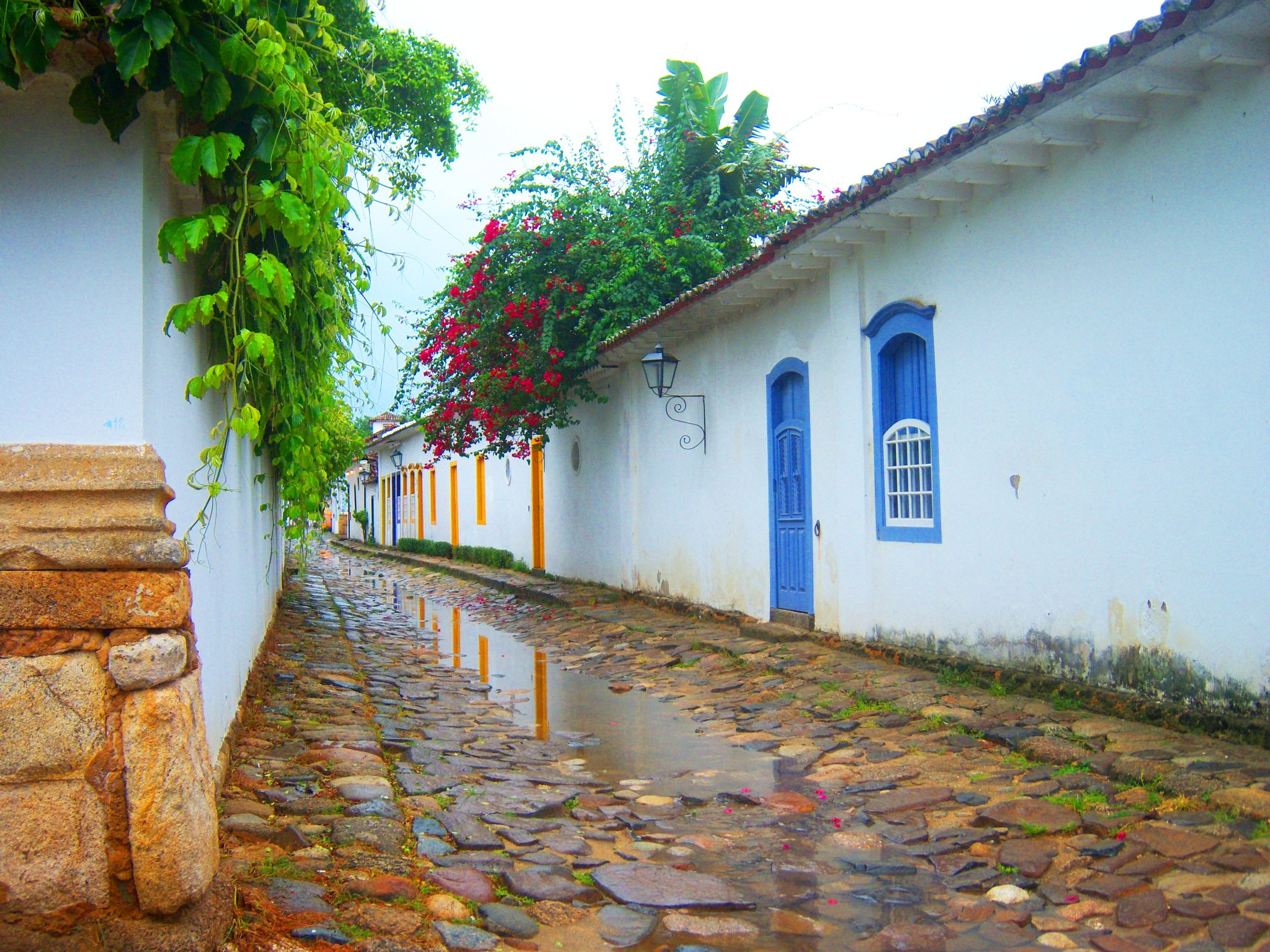
The other thing you'll notice fast: there are no cars. The historic center is closed to motor traffic, which is the single biggest reason it feels the way it does. No engines, no horns, no parked SUVs blocking the view of a 250-year-old façade. You park at the edge of the old town and walk in. Bicycles thread through, horse-drawn carts occasionally clop past, and at night the whole place glows under low warm lighting because there's nothing harsh competing with it.
The architecture follows a consistent grammar. Whitewashed walls, low rooflines of terracotta tile, and window and door frames painted in strong colors — deep blue, ox-blood red, forest green, ochre. Many doorways carry carved symbols above them, marks of the families and trades that once lived there. It is uniform without being monotonous, and it photographs absurdly well at the two hours after sunrise and the hour before sunset, when the light goes long and gold.
Good to know
- The historic center is car-free. Leave the car at the periphery and walk in.
- Cobblestones are genuinely uneven — flat, closed shoes beat sandals or heels every time.
- The lowest streets flood at high tide by design. Check the tide, or just walk the higher lanes.
- Early morning and the golden hour before sunset are the best times to wander and shoot.
Churches and culture
Paraty has four notable colonial churches, and the interesting part is that they were not just four churches for one town — they were churches built along the lines of a rigid colonial caste system, each serving a different group. Reading the town through its churches tells you more about 18th-century Brazilian society than any plaque could.
The oldest surviving one is the Igreja de Santa Rita, completed around 1722. It's the small, postcard-perfect church near the waterfront that you've probably already seen in photos of Paraty without knowing its name. Today it houses the town's Museum of Sacred Art, and it's the most photographed building in town for good reason — its lines are clean and its setting, framed by the bay and the boats, is hard to beat.
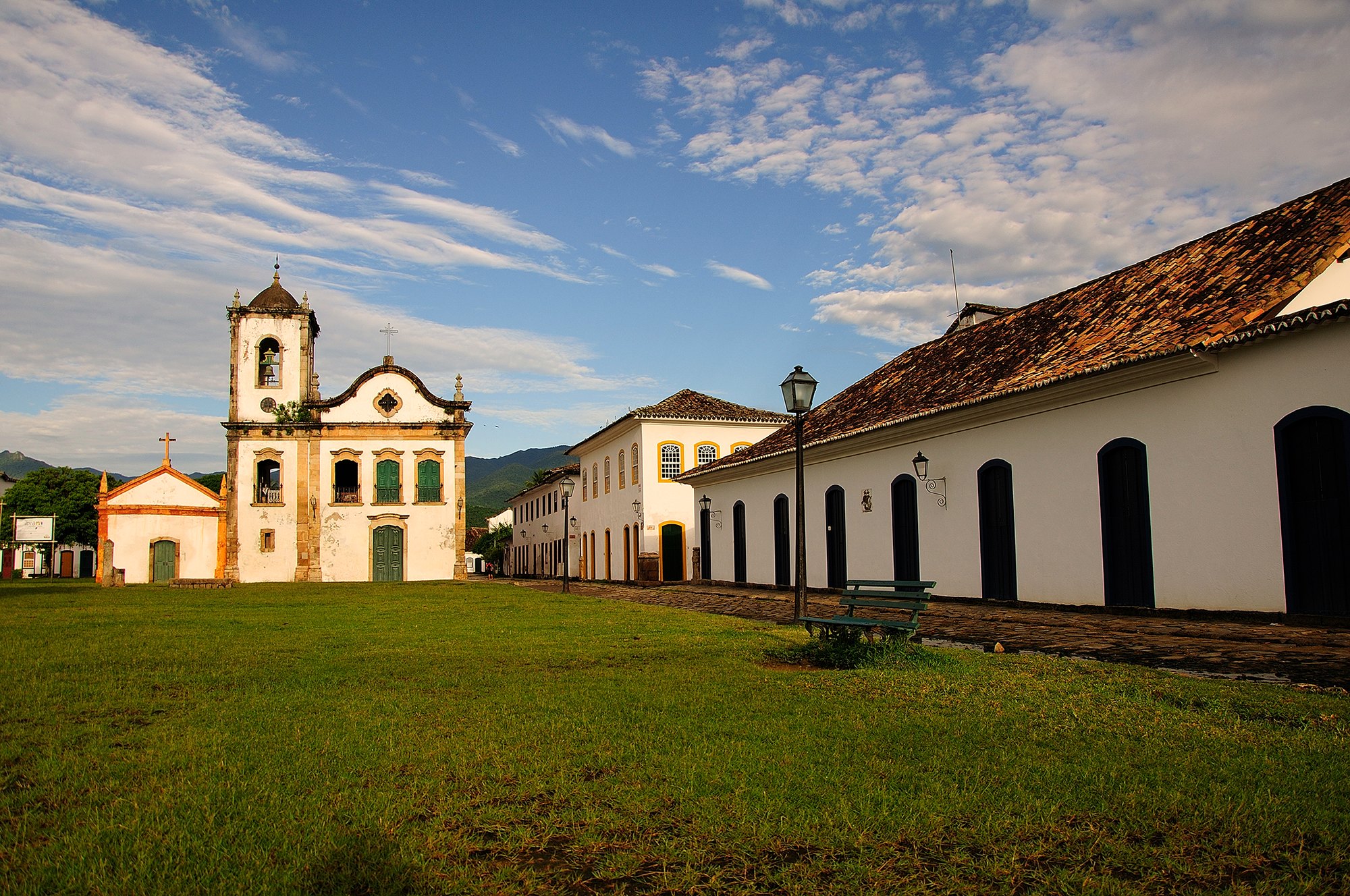
The largest is the Igreja Matriz de Nossa Senhora dos Remédios, the main parish church on the central square. Work on it spanned a remarkably long time — it was begun in the 17th century and the present building was completed only in the 1870s — which is part of why it dominates the old town visually. It served the broad Catholic congregation of the town.
The most historically charged is the Igreja de Nossa Senhora do Rosário e São Benedito, dating to around 1725, built by and for the town's enslaved Black population. In colonial Brazil, enslaved and free Black communities built their own churches and brotherhoods because they were excluded from others, and these became centers of community and identity. Standing inside it now, knowing who built it and why, is a more sobering and more honest encounter with the town's past than the prettier waterfront chapel allows.
The fourth, the Igreja de Nossa Senhora das Dores, was built around 1800 for the white elite. Smaller and more refined, it sits closer to the water on the quieter edge of the center.
Beyond the churches, the old town has quietly turned its colonial houses into a culture of its own. Galleries, artisan workshops, and small design shops fill the ground floors; many of the most atmospheric pousadas (the Brazilian word for a small inn or guesthouse) occupy restored colonial mansions, with internal courtyards you'd never guess at from the street. Paraty is also a literary town in a specific, organized way: every winter it hosts FLIP — the Festa Literária Internacional de Paraty — an international literary festival started in 2003 and modeled on Britain's Hay Festival. For roughly a week in July, writers from around the world fill the squares and the town runs at full tilt. And in 2017, UNESCO named Paraty a Creative City of Gastronomy, a recognition you'll taste as much as read about.
Waterfalls, trails, and forest
It's easy to treat Paraty as a town with a pretty backdrop. It isn't. The forest behind it is one of the richest fragments of the Atlantic rainforest left anywhere — the Mata Atlântica, a biodiversity hotspot with thousands of plant species and an extraordinary rate of endemism, of which only a small fraction of the original forest survives. More than three-quarters of the Paraty municipality is protected land. The town happens to sit at the front door of a serious wilderness.
What that means for a visitor is waterfalls and trails, both within easy reach. The most famous waterfall is the Cachoeira do Tobogã — a long, smooth granite slab that the river has polished into a natural waterslide. Locals slide down it, fast, and the firm rule is to go down seated, never standing; people get hurt trying to stand. Just upstream is a deeper swimming hole with a rope swing. Closer to the Pedra Branca valley, the Cachoeira da Pedra Branca offers a more contemplative falls on a private farm, reached by a short stone-stair trail.
For walking, the spectrum runs from gentle to genuinely tough. The gentlest and most rewarding is the Caminho do Ouro — the Gold Trail — a preserved section of the original colonial stone road, hand-laid by enslaved Africans, where the gold once traveled down to Paraty's port. It's an easy-to-moderate guided walk that doubles as a history lesson under the canopy. At the demanding end are multi-day treks into the Serra da Bocaina national park and across the wild Juatinga peninsula, for people who want their forest with effort attached.
There's far more here than one section can hold. For the full rundown of falls — which to swim, how to reach them, what to bring — see our guide to the waterfalls of Paraty. For trails, parks, and the longer treks, see hiking and nature in Paraty.
The bay, islands, and beaches
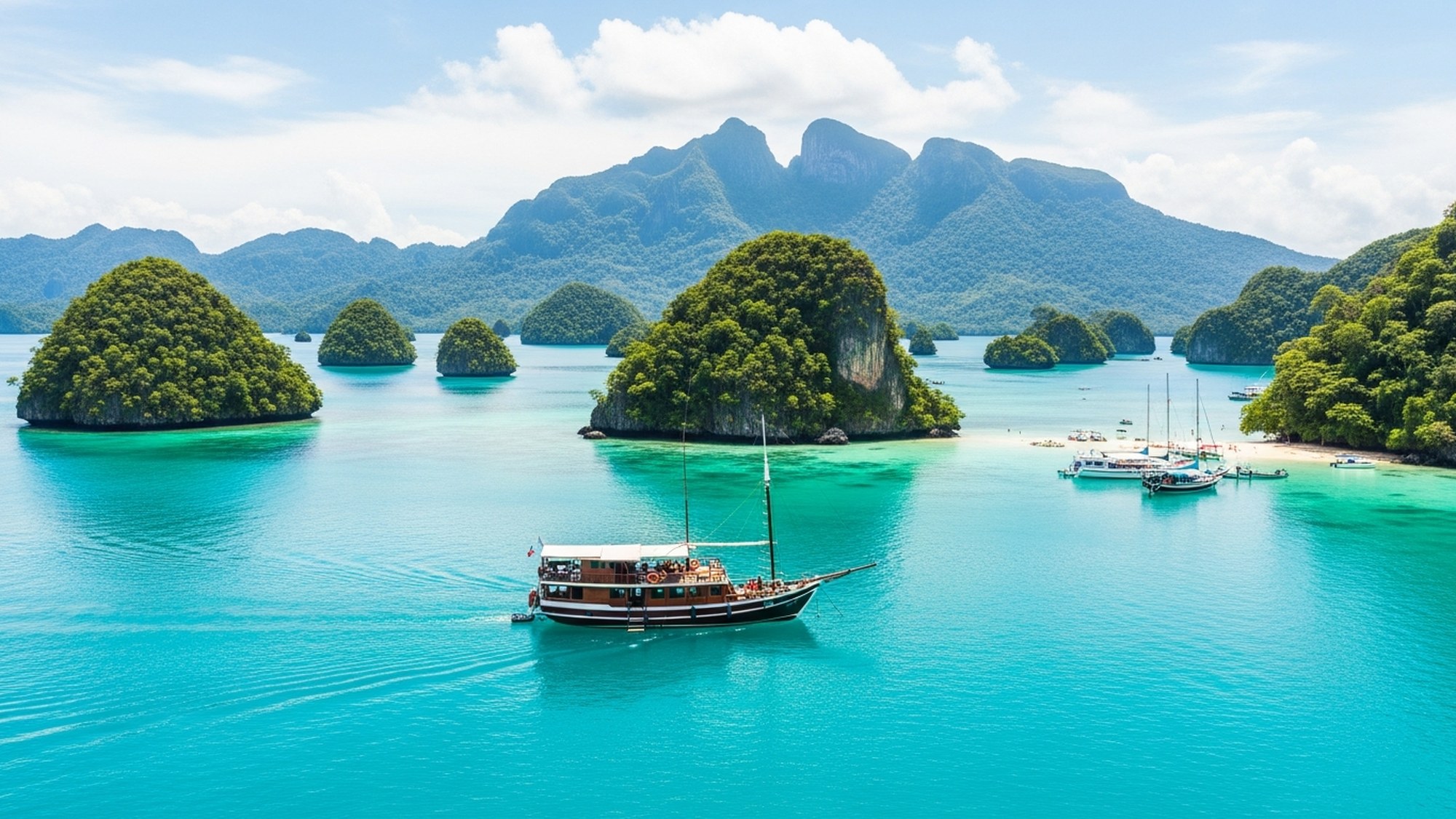
Then there's the water. Paraty's bay is scattered with islands — somewhere around 65 of them — and the shoreline and islands together hold roughly 300 beaches. (You'll see much bigger numbers thrown around, like 365 islands; those belong to the wider Bay of Ilha Grande, which stretches up toward Angra dos Reis. Paraty's own count is more modest, and nobody has an official tally anyway.)
The classic way to see it is the schooner tour — a wooden-styled tour boat, called an escuna, that leaves from the town pier and spends about five hours hopping between a handful of islands and beaches, stopping at each long enough to swim and snorkel. It's the easy, sociable, good-value option. If you'd rather set your own course, you can hire a private speedboat (a lancha) and skip the schedule entirely, choosing your own beaches and lingering where you like.
The water itself ranges from bath-warm coves with sandy bottoms to clear snorkeling spots over rocks teeming with fish. Some beaches you can drive to; many of the best are reachable only by boat or by a forest trail; a few require both effort and good timing. South of town, the laid-back village of Trindade and the sheltered natural rock pool nearby are perennial favorites.
The water deserves its own day and its own guide. For which islands to prioritize, how to choose between a schooner and a private boat, and the beaches worth the trail, read Paraty by boat: islands and beaches.
Cachaça
Let's clear up the most common myth first: cachaça was not invented in Paraty. Cachaça — Brazil's sugarcane spirit — was made all across colonial Brazil. What happened in Paraty is more interesting and more specific. The town's cachaça became so renowned, for so long, that the word "parati" (lowercase) turned into a generic synonym for good cachaça. From roughly the 18th century into the mid-20th, ordering "uma dose de parati" — a shot of parati — meant ordering a quality cane spirit, regardless of where it came from. The town's name had become the gold standard for the drink. That's a rarer kind of fame than inventing something.
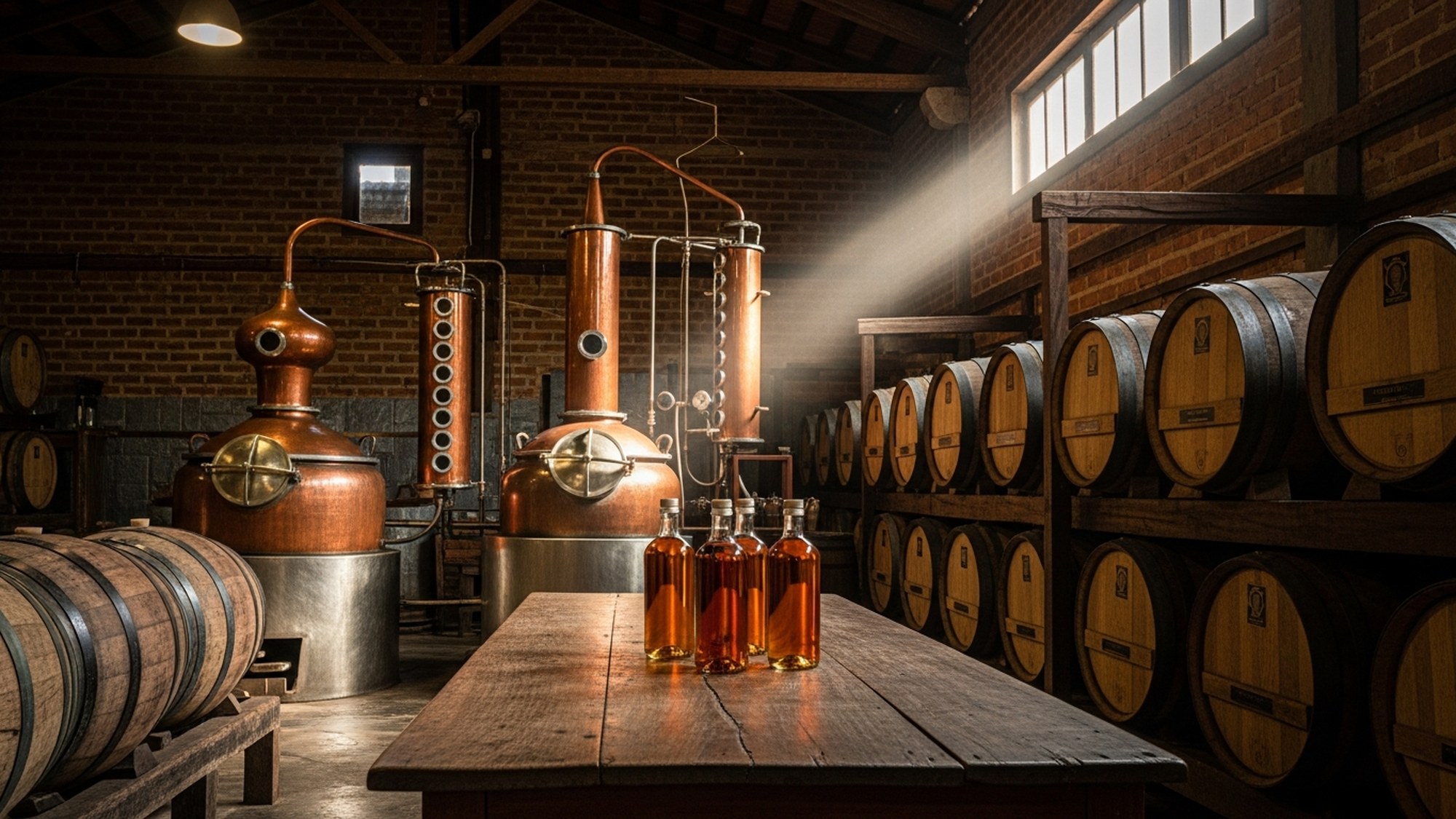
That reputation now has legal teeth. Paraty cachaça carries a protected Geographic Indication — first an Indication of Origin granted by Brazil's patent office (INPI) in 2007, and then, in 2024, a Denomination of Origin as well. Paraty is the only cachaça region in Brazil to hold both. In practical terms, that means a bottle labeled Paraty cachaça is the real thing, made here, to a defined standard. It's the spirits-world equivalent of Champagne or Cognac protecting its name.
Visiting a distillery — an alambique — is one of the genuine pleasures of a trip here, and several welcome visitors. Maria Izabel (note the spelling, with a z) is a small, well-regarded organic producer on a hillside sítio a short drive toward Rio; visits are by appointment and the cachaça is excellent. In the Pedra Branca valley, a cluster of distilleries sits conveniently near the waterfalls, which is why "waterfalls plus cachaça" jeep tours are a standard half-day outing: Engenho d'Ouro is an award-winning producer with tours and tastings; Paratiana occupies a colonial mansion and keeps a small cachaça museum with thousands of labels; and the Pedra Branca distillery still works a traditional copper pot still you can watch in action.
A visit runs about half an hour of guided walking — past the cane fields, the press, the fermentation tanks, the copper still, and the aging barrels — followed by a tasting. You'll usually try the clear, unaged prata (silver), a barrel-aged ouro (gold), and often a flavored or infused bottle or two. Many tours are free or cost very little, and the people pouring tend to be the people who made it. Buy a bottle of something you liked; it travels well and it's a better souvenir than a fridge magnet.
Food and drink
UNESCO's Creative City of Gastronomy label is not a marketing flourish — Paraty earns it. The food here leans on two things: what comes out of the bay, and what grows in the surrounding forest and farms. Eating well is easy, and it's one of the quiet highlights of the town.
Seafood is the backbone. The bay supplies fish, shrimp, squid, and shellfish that turn up grilled, fried, or simmered into a moqueca — the rich coconut-and-palm-oil seafood stew that's a staple of the Brazilian coast. Palm heart (palmito) shows up everywhere, often the fresh, tender, locally grown kind that bears little resemblance to the canned version, served grilled or in salads and pastas. You'll find banana served in savory dishes, cassava and its flours in a dozen forms, and tropical fruits you may not recognize. The caiçara communities — the traditional coastal people of this stretch of shore — have their own deep cooking traditions, and the best regional cooking here traces back to them.
And then there's the drinking. With world-class cachaça made down the road, the caipirinha — cachaça, lime, sugar, ice — is the obvious move, and a good one made with a good cachaça is a revelation if your only reference is the airport-bar version. Bartenders here also build caipirinhas with local fruits beyond lime; try a few.
I'm not going to invent restaurant names for you — the scene changes, and the most reliable recommendation in a town like this is a local one. Ask where you're staying, or ask your host or concierge, for current favorites; the people who live here know which kitchens are on form this season. What I will say is that you can eat very well across the price range, from a simple grilled-fish lunch by the water to a serious multi-course dinner in a candlelit colonial dining room.
Worth trying
- Moqueca — coastal seafood stew with coconut milk and palm oil.
- Fresh palm heart — locally grown, grilled or in salads; nothing like the canned kind.
- A proper caipirinha — made with a good local cachaça; ask for fruit variations too.
- Whatever's fresh from the bay — grilled fish and shrimp are usually the safest, happiest order.
When to visit
Here's the honest weather summary: Paraty is one of the rainiest spots on the Brazilian coast, and it has no true dry season. It rains here year-round. What changes is how much. The rain concentrates in the hot, humid summer — roughly December through February — when daytime temperatures sit around 27–28°C and downpours are frequent and heavy. The cooler months, roughly June through August, are milder (days around 22–24°C, nights that can dip surprisingly cool) and see fewer rainy days, even if "dry" is never quite the right word.
For most travelers, the sweet spot is the drier stretch from April to October, and the shoulder seasons within it — April–May and September–October — are about as good as it gets: pleasant weather, thinner crowds, lower prices, and roads less likely to be disrupted by heavy rain. Summer is high season for a reason (it's warm, it's holiday time, the bay is glorious between storms), but it's also the busiest, the priciest, and the wettest, and it's the period when the coast road is most prone to weather closures.
The other thing that shapes when you visit is the festival calendar. Three events draw crowds and are worth either targeting or avoiding, depending on your taste:
- Festa do Divino — a centuries-old religious folk festival, typically around May, with processions, music, and food filling the old town.
- FLIP — the international literary festival, usually in early-to-mid July. Wonderful if you want the buzz; book far ahead, because the town fills completely.
- Festival da Cachaça — the cachaça festival, usually in August, a good-natured celebration of the local spirit.
If your priority is quiet beaches and easy walking, aim for a shoulder month and skip festival weeks. If you want the town at full energy, time it to FLIP or the Divino and reserve everything early.
Getting there
Paraty is reachable but not instant, and the trade-off is exactly the one that kept it preserved: it's far enough off the beaten path to stay special. Most visitors come from Rio de Janeiro — around 250 kilometers and roughly three and a half to four hours by car or private transfer, depending on traffic and weather. São Paulo is a similar distance from the other direction. There's also a comfortable intercity bus from Rio that takes a bit over four hours.
The town has a small airport, but set your expectations: it handles general aviation only — private jets, air taxis, and charters — with no scheduled commercial flights and a short runway suited to light aircraft. For most people that means the airport is irrelevant; for a few, an air taxi from Rio is a genuinely useful way to skip the coastal road entirely, which matters most in the rainy summer months when landslides can close the highway.
The route, the airports, the bus, transfers, and the timing tricks all deserve more detail than fits here. For the full breakdown of every way in — and which one suits your trip — read how to get to Paraty.
Where to stay
Broadly, you have two characters of place to choose between, and they offer genuinely different trips.
The first is a pousada in the old town. Many of Paraty's most atmospheric guesthouses occupy restored colonial houses right in the historic center — courtyards, thick whitewashed walls, the sound of nothing but footsteps on cobblestone at night. You step out your door into the museum-piece streets, the restaurants, the galleries, the pier. The trade-offs are real ones: rooms in old buildings can be snug, sound carries on stone streets, and you're in the thick of the town's energy, which is wonderful by day and lively well into the evening.
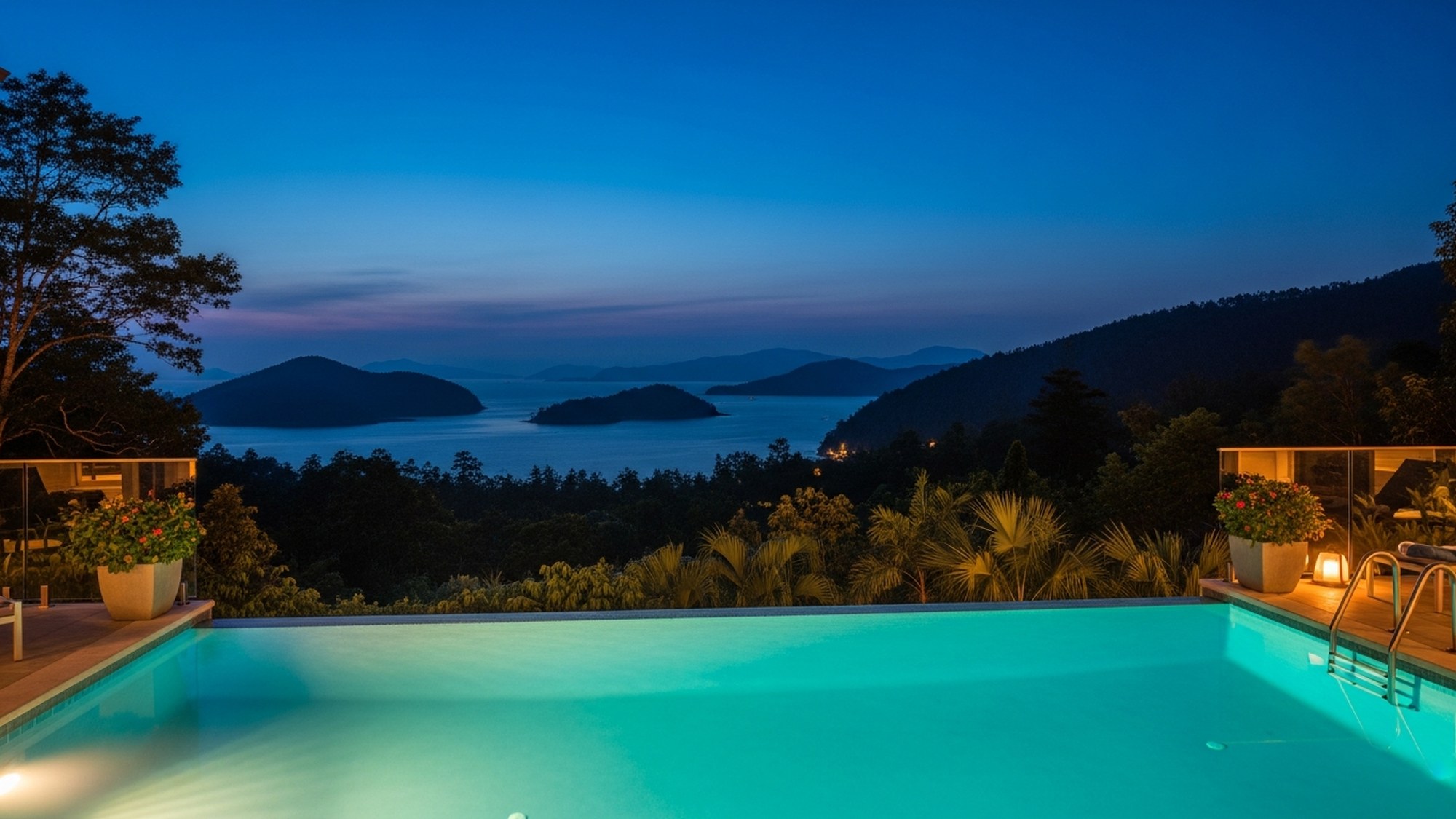
The second is a villa or house in the hills above the town and bay. Here you trade walk-everywhere convenience for space, privacy, and a view — the kind of place where you wake up over the water, swim in your own pool, and drive or get driven into the historic center when you want it. Some travelers, particularly couples and families who want a quiet base after busy days out, deliberately prefer a private villa above the bay for exactly this reason. Our own house, Amorielli, sits up in the hills with a wide view over the water — that's the sort of stay we mean.
Neither is better; they suit different people and different trips. If it's your first visit and you want to be immersed in the town, stay central. If you want the town and a retreat to come home to, go up the hill.
Practical tips
A handful of practical things make a Paraty trip smoother, and most of them are easy if you know them in advance.
Money. The currency is the Brazilian Real (R$). Cards are widely accepted in pousadas and the better restaurants, but carry cash — you'll want it for boat operators, beach vendors, artisans, smaller eateries, and tips. Many of the best small experiences here run on cash.
Language. The language is Portuguese. English is spoken at upscale pousadas and tour operators but thins out quickly beyond them. A few words of Portuguese go a long way, and a translation app on your phone covers the rest.
Shoes and the streets. I'll say it a third time because it matters: the cobblestones are no joke. Flat, closed, sturdy shoes. Leave the heels at home, and don't trust wheeled luggage on those stones — carry it the last stretch into the car-free center, or stay somewhere you can reach without dragging a suitcase over them.
The car-free center. You cannot drive into the historic core. Park at the periphery — there are lots and street parking around the edges — and walk in. If you're staying inside the center, your pousada will tell you where to leave a car and how to bring your bags in.
Health, before you go
For this region of Brazil, a yellow fever vaccination is generally recommended, and standard mosquito precautions are sensible — dengue and other mosquito-borne illnesses occur on this coast, especially in the warm, wet season. Health guidance changes, so don't rely on this paragraph: check the current CDC (or your own country's official) travel advisories for Brazil before you go, and talk to a travel clinic in good time, since some vaccines need to be given days or weeks ahead. Bring insect repellent regardless of season.
Connectivity and pace. Wi-Fi and mobile coverage are good in town and patchier out in the forest and on remote beaches — which is, frankly, part of the appeal. Don't over-schedule. Paraty rewards a slower trip: half a day for the old town, a day on the water, a day in the forest, and plenty of time to do nothing in particular.
A four-day itinerary
If you have three or four days, here's a plan that balances the town, the water, and the forest without rushing. Adjust freely — and build in slack for weather, because the bay and the falls are both better in sun.
Day 1 — Arrive and settle into the old town
Arrive, drop your bags, and don't try to do too much. Spend the late afternoon walking the historic center on foot, with no agenda — let the cobblestones set the pace. See the Igreja de Santa Rita by the water, find the main square and its parish church, and wander the side streets as the light goes gold. Have dinner in town and a caipirinha made with a local cachaça. Early night; you've probably been on the road.
Day 2 — The bay by boat
Give the whole day to the water. Take a schooner tour from the pier, or split a private speedboat if you'd rather choose your own beaches and avoid the crowd. Swim, snorkel, eat lunch on board or on an island, and don't fight the slow rhythm of it. Back in town by late afternoon, with time for a shower and a relaxed dinner.
Day 3 — Forest, waterfalls, and cachaça
Head inland. A classic combination is a morning at the Cachoeira do Tobogã — slide it seated if you're feeling brave, swim in the pool above it — followed by an afternoon distillery visit and tasting in the Pedra Branca valley, where falls and alambiques sit close together. If you'd rather walk, swap the waterslide for a guided stretch of the Caminho do Ouro, the old colonial gold road through the forest. Either way, you'll have earned dinner.
Day 4 — Your choice, then go slow
Use the last day for whatever pulled at you most. Options: a trip south to the village of Trindade and its sheltered natural pool; a longer hike for the energetic; a quiet morning of galleries, shops, and a long lunch in town; or simply a swim and a book if you're staying somewhere with a view. Leave a buffer before you travel — the coast road doesn't like to be rushed.
If you only have two days
Do the old town the afternoon you arrive, give your one full day to the bay by boat, and fold a single waterfall-and-cachaça visit into your departure morning if timing allows. The water is the thing you'll regret missing most.
Common questions
How many days do I need in Paraty?
Two days is enough to see the old town and get out on the water once, which is the bare minimum I'd recommend. Three to four days is the sweet spot — it lets you give the bay, the forest and waterfalls, and the historic center each their own day, with breathing room for weather and for doing nothing. Stay longer than four and you'll find you've stopped checking a list and started living there a little, which is the whole point.
Is Paraty worth visiting if I've already seen Rio?
Yes, and it's a deliberate contrast rather than more of the same. Rio is a vast, high-energy city; Paraty is a small, preserved colonial port with no cars in its center and rainforest at its back. Compared with Brazil's other Costa Verde and Rio-coast destinations — the glamour of Búzios, the yacht-and-resort sprawl of Angra dos Reis, the car-free wilderness of Ilha Grande — Paraty is the refined, low-key, history-rich one. If you liked Rio, Paraty is the calm chapter that comes after.
When is the best time to go?
The drier months of April to October, and especially the shoulder seasons of April–May and September–October, which offer good weather, fewer crowds, and lower prices. The summer (December–February) is warmest and busiest but also the rainiest, and it's when the coast road is most prone to weather disruptions. There's no truly dry season here — Paraty is one of the rainiest spots on the coast — so pack for rain whenever you come.
Do I need a car in Paraty?
It depends on your plans. The historic center is car-free, so you'll walk it regardless. For the town itself plus boat tours from the pier, you don't strictly need a car. A car (or a driver) is genuinely useful if you want to reach the waterfalls, the distilleries in the Pedra Branca valley, or the village of Trindade to the south on your own schedule — though tours and transfers cover all of those too. If you're staying up in the hills rather than in the center, you'll want a car or arranged transport.
Was cachaça invented in Paraty?
No — that's a common mix-up. Cachaça was made all over colonial Brazil. Paraty's cachaça simply became so famous that the town's name, "parati," turned into a synonym for quality cane spirit for a couple of centuries. Today Paraty is the only cachaça region in Brazil with both an Indication of Origin (2007) and a Denomination of Origin (2024), so the name now carries legal protection as well as historical fame. Visiting a distillery for a tasting is one of the best things you can do here.
Is Paraty good for families, or more for couples?
Both. Couples love the romance of the old town and the bay; families do well with boat days, beaches, the natural waterslide, and easy forest walks. The main thing to plan around is the cobblestones, which are hard going for strollers and small wheels — and the car-free center, which is great for letting kids roam but means you'll be carrying bags the last stretch. A villa in the hills with a pool is a popular family base; a central pousada suits couples who want to step straight into the town.
Sources & further reading
More from the Journal
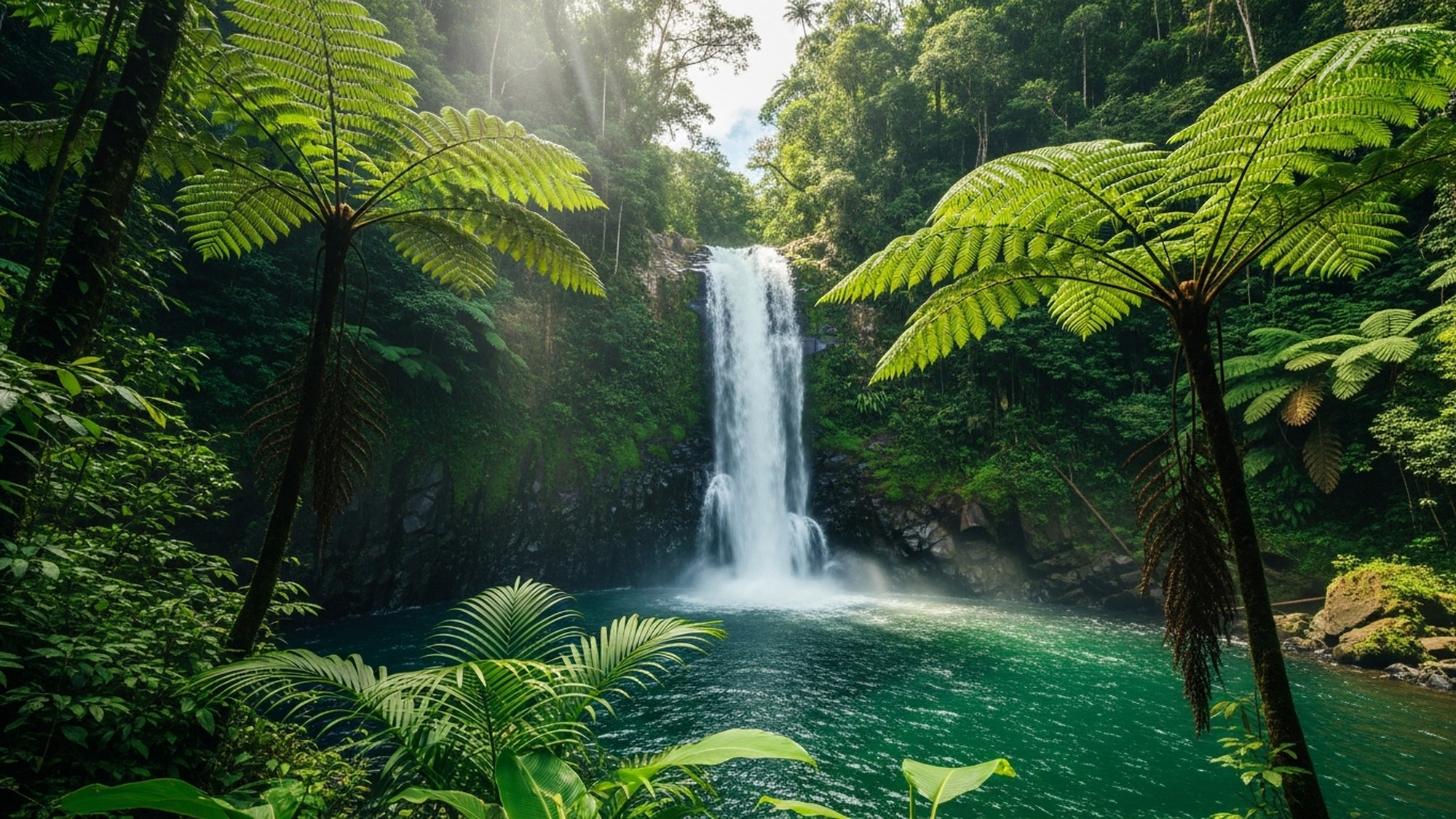
The Waterfalls of Paraty: A Complete Guide
From the natural rock-slide of the Tobogã to the jungle pools of the Pedra Branca valley — where to find Paraty's waterfalls, how to reach them, how to stay safe, and the cachaça distilleries hidden among them.
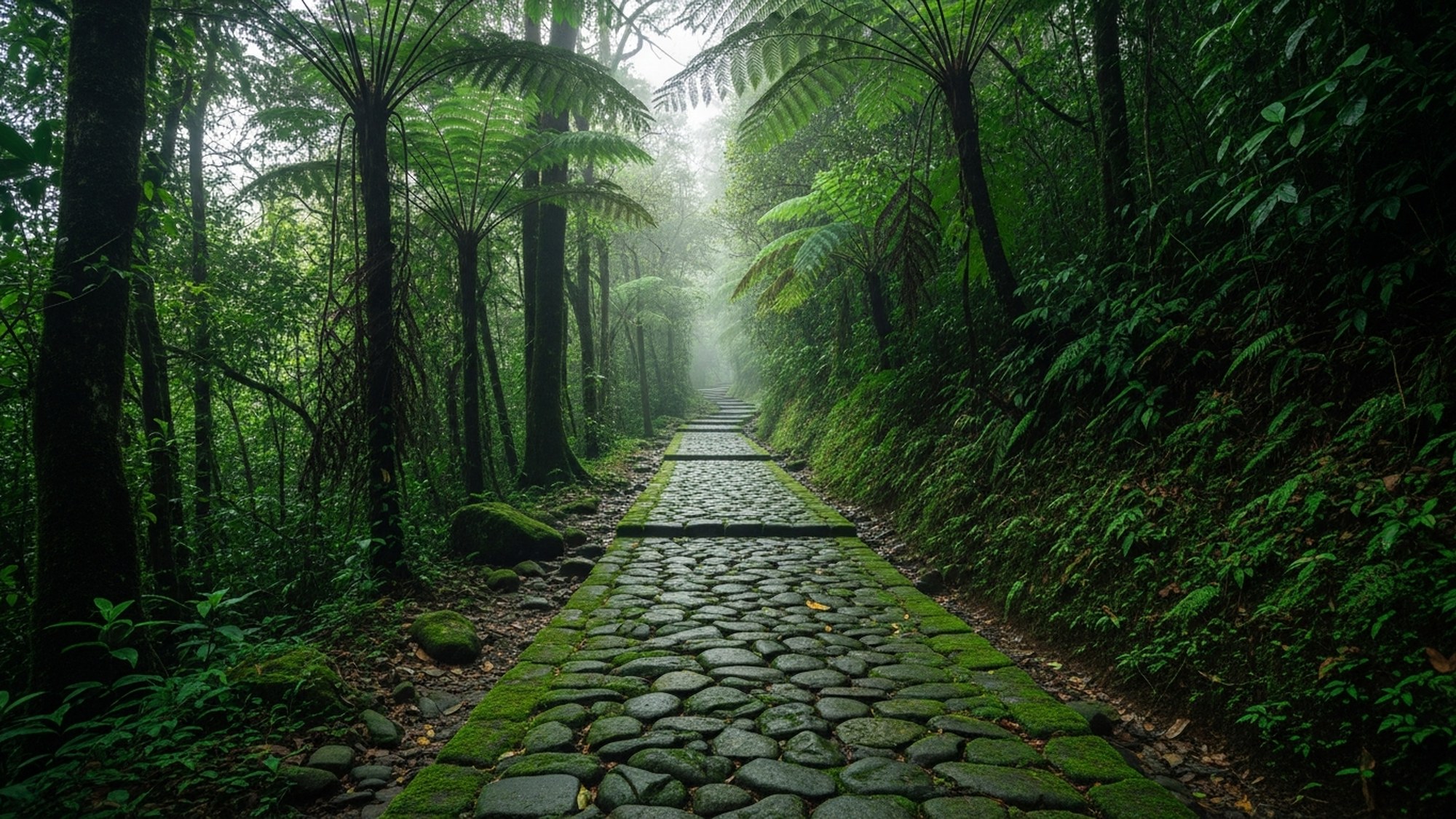
Hiking & Nature in Paraty: Trails, Parks & the Atlantic Forest
The colonial Gold Trail, the Serra da Bocaina National Park, the wild Juatinga reserve and the climb to the Sugarloaf of the Mamanguá — a complete guide to walking one of the planet's richest forests.
Paraty by Boat: Islands, Beaches & Schooner Tours
Sixty-five islands, three hundred beaches and water the colour of glass. How to choose between the classic schooner and a private speedboat, the beaches worth the trail, and the day trip to Trindade's natural pool.
Stay at Amorielli.
A villa with an infinity pool, a private waterfall, and the kind of view people travel a long way to find. Join the waitlist to book the first season.