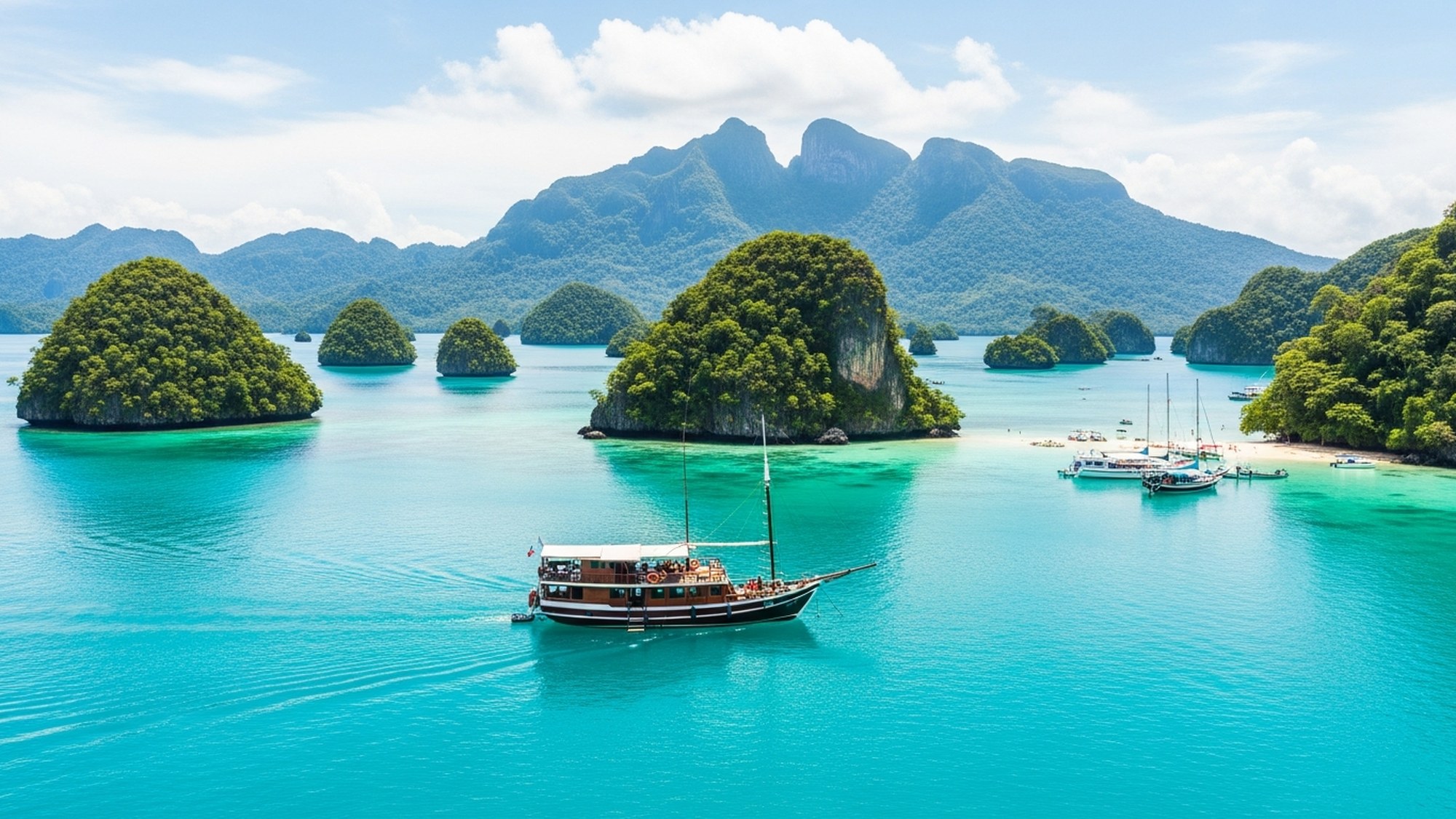
Paraty by Boat: Islands, Beaches & Schooner Tours
Sixty-five islands, three hundred beaches and water the colour of glass. How to choose between the classic schooner and a private speedboat, the beaches worth the trail, and the day trip to Trindade's natural pool.
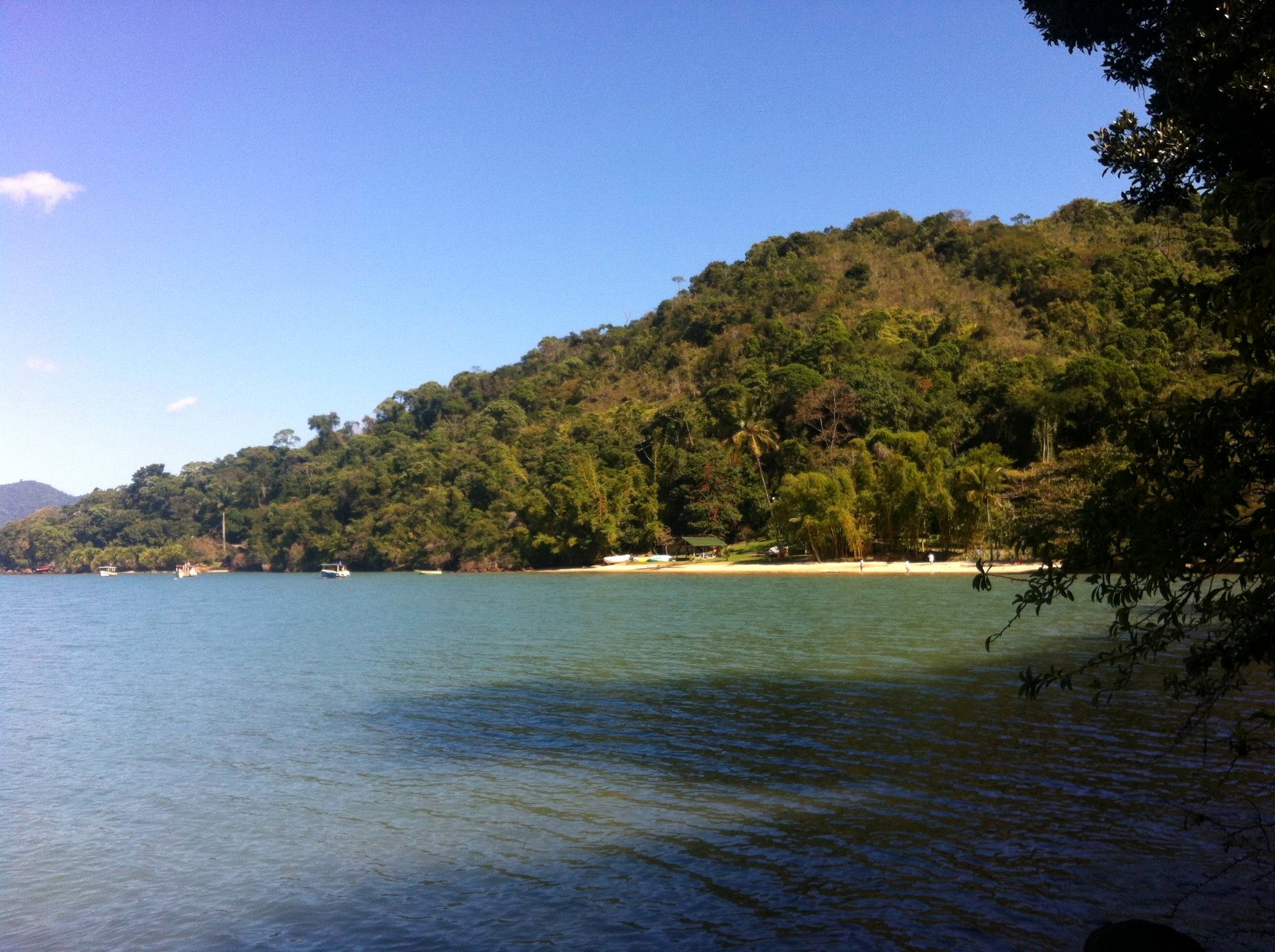
The first thing you notice about Paraty's water is how little it moves. The Bay of Paraty sits inside a much bigger sheltered bay, ringed by mountains and forested islands, so the open-ocean swell never really reaches it. On a calm morning the surface goes flat and glassy, the color of weak tea near the mangroves and a clean green-blue out by the islands, and you can see your own shadow on the sand four meters down. People come to Paraty for the cobblestones and the colonial old town, and those are genuinely worth a day. But the town is the smaller half of the story. The bigger half is out on the water, and the only honest way to write a guide to it is to start there.
This is a guide to seeing Paraty by boat: what the classic schooner tour actually involves, when a private speedboat is worth the extra money, which swimming and snorkeling stops are the good ones, and how to reach the beaches you can only get to by trail or by hull. It also covers Trindade, the beach village down the coast with the best natural swimming pool in the region. None of it is complicated. But there are a few things worth knowing before you stand on the pier deciding which boat to get on.
In this guide
The bay, and why the water is the main event
Paraty's bay holds roughly 65 islands and around 300 beaches. You will see bigger numbers thrown around — 365 islands, two thousand beaches — but those belong to the wider Baía da Ilha Grande, the enormous bay that stretches up the coast to Angra dos Reis. Paraty's own slice of it is smaller and, frankly, more pleasant for it. The islands sit close together, the channels between them are short, and a half-day on a boat can take in four or five completely different swimming spots without ever feeling rushed or far from shore.
The geography is what makes the water so good. The Serra do Mar comes down almost to the coast here, so the bay is wrapped on three sides by steep green mountains. Dozens of islands break up whatever swell does get in. The result is water that stays calm and clear most mornings, especially in the drier months, with very little of the chop you get on more exposed coastlines. It is warm, too — this is the tropics, and you can swim comfortably year-round, even in the cooler winter weeks.
What you will not find is a single signature beach that everyone photographs. Paraty does not really work that way. The pleasure of it is the spread: a snorkeling cove off one island, a sandbar off the next, a beach you reach by walking forty minutes through forest, a rock pool tucked behind a headland. The water is the attraction, and the boats are simply how you get to the good bits of it. Almost everything below — the schooner, the speedboat, Trindade, the trail beaches — is a different way of answering the same question, which is: how do you want to spend a day on this water?
It helps to picture the layout, because it explains why the day works the way it does. The town and its pier sit at the back of the bay, where the mangroves and the river mouths are. The islands fan out in front of it toward the open water, getting wilder and clearer the farther out you go. The murkier, brackish water near the pier — that mangrove tea color — isn't where you swim; it's just the harbor. Within twenty or thirty minutes of leaving the dock you're out among the islands where the water turns clear, and that's where every tour spends its time. So the few minutes of unremarkable water at the start are not a bad omen. They're the price of admission, and they're brief.
This whole bay sits inside Brazil's first mixed UNESCO World Heritage site, inscribed in 2019 as "Paraty and Ilha Grande – Culture and Biodiversity" (List No. 1308) — recognized both for the colonial town and for the extraordinary stretch of Atlantic Forest and coast around it. That matters in a practical way as well as a romantic one: much of what you'll snorkel over and swim in is protected, the marine life is genuinely abundant rather than picked clean, and the rules about sunscreen, anchoring, and not touching things exist for a reason. You are a guest in a living system, not a water park.
The classic schooner tour
The default way to see the bay is the escuna — the schooner tour. These are the wooden-decked boats you see lined up along the waterfront, and they run essentially the same loop every day. Tours depart from the Cais de Paraty, the main pier at the edge of the old town, usually mid-morning, and run for around five hours. The standard route makes four swimming stops of roughly forty minutes each, typically Praia da Lula, Praia Vermelha, Lagoa Azul, and Ilha Comprida, though the exact lineup and order can shift with the weather and the operator.
The big schooners are genuinely big — the largest hold something like 220 people across two or three decks. They have a bar and a small restaurant on board, music, sun deck up top, shade below. Food is usually not included in the ticket price; you buy lunch and drinks on board, or bring your own snacks. At each stop the boat anchors offshore and you swim, snorkel, or just float around for forty minutes before the horn calls everyone back. Ladders off the side make getting in and out easy, and the crews are used to swimmers of every ability.
Here is the honest version of what that day is like. The schooner is the budget-friendly, sociable, low-effort option, and on a good day it is a genuinely lovely way to spend five hours. You are out on the water with a drink in your hand, the scenery is excellent, and you get to swim in four different spots without thinking about navigation or anchoring. It is the right call for most first-time visitors, families, and anyone who likes a bit of a party atmosphere.
The trade-offs are equally honest. A full boat is a lot of people, and at the popular stops you may be sharing the water with several other schooners that all run a near-identical route. Forty minutes is enough for a swim but not for lingering — just as you settle in, the horn goes. You do not get to choose the stops or the timing, and the boat moves at schooner pace, which is to say, slowly. If your idea of a perfect day is a quiet cove to yourselves, this is not it. But if you want a relaxed, inexpensive, well-organized introduction to the bay, the schooner does exactly what it says.
A few tactics make the schooner day noticeably better. Take the earliest departure on offer — the water is clearer, the boats less crowded, and the first stop is yours before the rest of the fleet catches up. Stake out a spot on the upper deck early if you want sun, or below if you want shade; people tend to plant themselves for the day. When the boat anchors, get in the water fast rather than queuing for the ladder at the end, because forty minutes goes quickly and the last ten are a scrum to re-board. And manage your expectations about lunch: the on-board galley does simple, decent food — grilled fish, rice, fries — not a gourmet spread, and it costs what captive-audience food costs. If you care about eating well, bring your own.
One useful distinction while you're choosing a boat: not all of them are the same vintage. The big modern schooners are the 220-passenger party boats. You'll also see saveiros — older, traditional wooden sailing-style craft — and smaller schooners that take far fewer people. If a quieter, more characterful boat appeals to you more than the floating bar, ask specifically; the smaller boats run the same bay but with a fraction of the crowd. They cost a bit more and sell out faster, which tells you something about which experience people prefer once they know it exists.
Good to know
- Schooners leave from the Cais de Paraty, the pier next to the old town. You can buy tickets at the pier the morning of, or in advance through agencies in town.
- The tour runs around five hours with four stops of roughly forty minutes. Lunch and drinks are bought on board.
- Stops and order depend on conditions. If the sea is up, the captain may swap an exposed stop for a sheltered one — that is a good sign, not a bad one.
- Bring cash. The on-board bar and any beach vendors won't always take cards, and signal on the water is unreliable.
The private speedboat alternative
The other way to do it is a lancha — a private speedboat, hired for you and your group alone. This is the more expensive option, sometimes considerably so, but for a certain kind of day it is worth every real. The speedboat is faster, which changes the math entirely: stops that the schooner can't reach in five hours come into range, and the time you save on transit becomes time in the water. You choose the route, you choose the timing, and you are not sharing the boat with two hundred strangers.
What you are really buying is control and quiet. A captain who knows the bay will read the day's conditions and the day's crowds and route around both — pulling into a snorkeling spot just as a schooner is leaving it, or finding a beach the big boats skip entirely. You can stay an hour at the stop you love and skip the one you don't. You can leave at eight in the morning, when the water is at its flattest and the light is best, instead of waiting for the mid-morning departures. With kids, with anyone prone to seasickness, or with a group that simply wants to set its own pace, that flexibility is the whole point.
The other thing a speedboat unlocks is range. The schooner's five-hour loop is calibrated for a big, slow boat, which means it sticks to the closer, well-trodden stops. A fast lancha can push farther out and farther down the coast — to quieter islands, to a beach the fleet doesn't bother with, even down toward Trindade or the entrance of the Saco do Mamanguá if that's how you want to spend the day. You can also string together a route that no schedule would allow: an early snorkel before the crowds, a beach for lunch, a quiet cove for the afternoon, back in time for sunset. The boat bends to your day instead of the other way around.
When is it worth it? If it is a special occasion, if you are a group splitting the cost, if you have done the schooner before and want something more particular, or if you only have one day on the water and want to make it count — a private boat is the upgrade that actually delivers. If you are traveling solo or as a couple on a normal budget, the schooner gives you ninety percent of the experience for a fraction of the price. There is no wrong answer here; there is only what kind of day you want. A couple of practical notes if you do go private: agree the route and the hours with the captain before you cast off, confirm whether ice, water, and any snorkel gear are included or whether you should bring your own, and clarify the price up front so there are no surprises at the dock. If you'd rather skip all of that — have the boat, the captain, the route, and a cooler of cold drinks arranged before you arrive so all you do is walk down to the pier — a good concierge can set it up. Amorielli's can handle exactly that.
The swim and snorkel stops
The bay's stops blur together if nobody tells you what's what, so here is the rundown of the ones you're most likely to hit, schooner or speedboat. A couple of them have names that mislead, and it's worth getting straight before you go.
Lagoa Azul
The "Blue Lagoon" is the most famous stop, and the first thing to know is that it is not a lagoon. There's no enclosed pool of water here. Lagoa Azul is a clear-water snorkeling spot in the channel around Ilha da Pescaria, where the bottom is bright sand and the water turns a vivid blue-green over it. It took the name from the 1980 film The Blue Lagoon, parts of which were shot in the region — not from any geological feature. It is shallow, calm, full of small fish, and on a sunny day genuinely lives up to the color in its name. It is also the busiest stop, precisely because it's the famous one, so the schooners cluster here. Beautiful, but rarely to yourself.
Ilha Comprida
Often billed as the bay's "natural aquarium," and the billing is fair. The clear water around Ilha Comprida is full of fish, and the snorkeling is the best on the standard route. The catch — and it surprises people — is that the island itself is private, so you don't go ashore. You snorkel off the back of the boat. That sounds like a limitation but isn't much of one: the water right around the boat is exactly where the fish are, and a forty-minute stop here is the highlight of many people's day. Bring or rent a mask; this is the stop that rewards one.
Ilha do Pelado
Another excellent snorkeling island, reachable by boat only. The water is clear and the marine life is good, and because it's slightly off the most-trafficked loop it tends to be quieter than Lagoa Azul. Some private-boat captains favor it for exactly that reason. If your schooner stops here, count yourself lucky.
Praia da Lula
A small, pretty beach accessible only by boat — there's no road and no trail in. That isolation keeps it calm and uncrowded relative to the snorkel stops, and it's a common schooner anchorage. The swimming is easy and the setting, a curve of sand under green hills, is the postcard version of the bay. A good stop for people who'd rather swim and stand on sand than snorkel.
Praia Vermelha
"Red Beach," named for the reddish tint in its sand, is reachable by boat or by a walking trail of around two kilometers. It's a relaxed beach with calm water and, often, a simple kiosk or two for a cold drink and a plate of fish. Because it has a trail, it draws a slightly different crowd than the boat-only stops, but it rarely feels busy. A pleasant, low-key place to spend forty minutes or a whole afternoon if you've walked in.
Trindade and the Natural Pool
If you want a day on the water that doesn't involve a boat tour at all, drive south to Trindade. It's a former fishing-and-hippie village around 25 to 30 kilometers down the coast, reached by a turnoff from the BR-101 and a steep, winding little road down to the sea. Trindade is more laid-back and more backpacker-ish than Paraty's old town — surf shops, simple pousadas, beach kiosks, bare feet — and it has a clutch of beaches strung along the shore, each with its own character.
Coming in, the first beach you reach is Cepilho, which gets the best surf in the area and is where the boards congregate. Next is Ranchos, the central beach and the social heart of the village, lined with kiosks and the place where the local boats depart. From the far end, Praia do Meio begins, and it's the trailhead for the walk to the natural pool. Beyond that, reachable only on foot, is Praia Brava — bigger surf, wilder, and worth the trail if you want the empty end of Trindade.
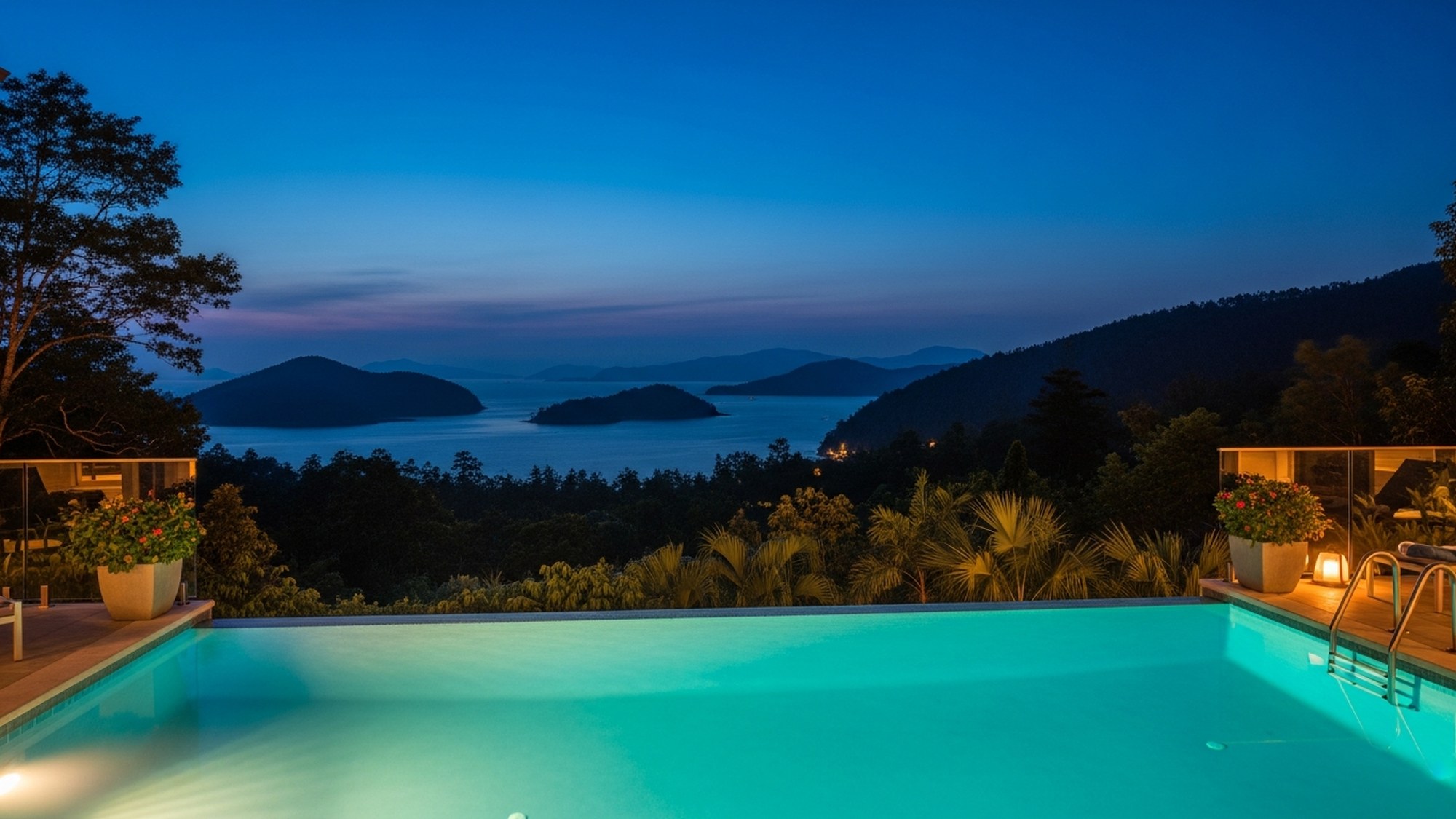
The reason to come, though, is the Piscina Natural do Cachadaço — the Natural Pool, also called the Caixa D'Aço. It's a sheltered pool of clear, shallow, calm water held in by a rim of rock, just around the headland past Praia do Cachadaço. The rocks block the swell, so the water inside stays still and transparent, and it fills with fish — it's the best easy snorkeling in the whole Paraty area, no boat tour required. You can reach it two ways: take a short local boat from Ranchos, or walk the coastal trail from Praia do Meio. The trail is the more rewarding approach if you're up for it, threading through forest and along the shore, but the boat is quick and saves your legs. Either way, go in the morning before the crowds and the afternoon clouds arrive.
Good to know — Trindade
- It's a day trip by road, around 25–30 km south of Paraty. Allow extra time; the access road is steep and narrow, and traffic backs up in high season.
- The Natural Pool (Cachadaço / Caixa D'Aço) is reached by boat from Ranchos or a trail from Praia do Meio. Bring a mask — this is a snorkeling spot first and foremost.
- The natural pool sits within protected park land. Treat it gently: no sunscreen slicks in the pool, no standing on or breaking the rock, no feeding the fish.
- Trindade gets genuinely packed at Carnival and over the summer holidays. Come in shoulder season, or come early in the day, and it's a different place.
Beaches by trail or boat
Some of Paraty's best beaches have no road to them at all, and that's exactly why they're worth the effort. The flagship is Praia do Sono, a long, undeveloped curve of sand south of town. You reach it on foot — a trail of around three kilometers that takes about an hour, starting from Laranjeiras (the Vila Oratório trailhead) — or, if you'd rather not walk, by a short boat hop from the same area. The walk is the classic way in: a forest path that delivers you, a little sweaty, onto a beach with kiosks, simple campsites, and a genuinely undeveloped feel. Sono is also the gateway to even more remote beaches beyond it, Praia dos Antigos and Antiguinhos, which you reach by continuing on foot or by boat from Sono.
The general rule across the bay is this: the snorkeling islands — Ilha Comprida, Ilha do Pelado — are boat-only, because they're islands and several are privately held. Praia da Lula is boat-only too, with no trail in. Lagoa Azul, being a water stop rather than a beach, is boat-only by definition. Then there's a middle tier reachable either way: Praia Vermelha (boat or a ~2 km trail), the Cachadaço natural pool at Trindade (boat from Ranchos or trail from Praia do Meio), and Praia do Sono (the ~1-hour trail or a boat). Knowing which is which saves you a wasted morning looking for a road that isn't there.
The best beaches in Paraty make you earn them a little — a forty-minute boat ride, an hour on a forest trail. That's the whole point. The ones you can drive to are not the ones worth writing home about.
A practical note on the trail beaches: wear proper shoes, carry water, and bring cash, because the kiosks at the far end won't run a card. Phone signal is patchy to nonexistent once you're on the trail, so download your map or your route ahead of time and tell someone your plan. None of these walks is dangerous in good weather, but they are real walks through real forest, not boardwalks.
The boat-or-trail decision for these beaches usually comes down to two things: how much you enjoy walking, and what the surf is doing. The trail is the better experience when the weather is good and you want the forest as part of the day — and at Praia do Sono in particular, arriving on foot, hot and a little tired, and then walking straight into that long flat beach is a genuine reward. The boat makes sense when the trail would be a slog in heat or mud, when you've got young kids or anyone who can't manage an hour's walk, or when you simply want more beach time and less transit. At some beaches the local boatmen will be waiting at both ends, so a common move is to walk in and boat out (or the reverse) once your legs have had enough. Ask at the trailhead or the kiosks what's running that day; it's an informal system and it works.
Choosing a boat, and what to bring
Reduced to its simplest, the choice between a schooner and a private speedboat comes down to four things: budget, crowd tolerance, control, and time. The schooner is cheaper, more social, fixed in its route and timing, and slower. The speedboat is pricier, private, fully flexible, and fast enough to reach more in a day. Most people who want a relaxed, well-priced day on the water should take the schooner and enjoy it. People with a special occasion, a group to split the cost, a low tolerance for crowds, or just one precious day to spend should hire the lancha. Neither is wrong.
Schooner vs. speedboat, in short
- Take the schooner if: you want the cheaper option, you don't mind a full, sociable boat, and a fixed five-hour loop with four stops suits you fine. Great for first-timers and families.
- Hire a speedboat if: you want to choose your route and timing, avoid the crowds, start early, or you're a group that can share the cost. Best for special days and repeat visitors.
- Either way: mornings are calmer and clearer than afternoons. Book the earliest departure you reasonably can.
Whichever boat you take, the packing list is much the same, and getting it right is the difference between a great day and a slightly miserable one.
- Reef-safe sunscreen. The equatorial sun is no joke and the reflection off the water doubles it. Use a reef-safe formula — you'll be swimming over living reef and in protected pools, and the standard stuff harms them. Apply before you board; reapplying on a rocking deck is a chore.
- Cash, in small notes. The on-board bar, the beach kiosks, and the local boats at Trindade often don't take cards, and there's no signal to run one anyway. Bring more than you think you'll need.
- Drinking water. Boats sell it, but it's cheaper and surer to bring your own. You dehydrate fast out there without noticing.
- A dry bag. The single most useful thing you can pack. It keeps your phone, cash, and a dry shirt safe from spray, the bottom of a wet boat, and the swim ashore. A cheap roll-top one is plenty.
- A mask and snorkel, if you have them. Rentals exist on the bigger boats, but a mask that actually fits your face transforms the snorkel stops. This is the bay's best feature — come equipped for it.
- A hat, sunglasses, and a light layer. Shade is limited on a small boat, and the wind off the water can feel cool even on a hot day.
On seasickness: the bay is sheltered, so it's far calmer than open ocean, and most people are completely fine. If you're prone to it, take your motion-sickness remedy before you board, not after you feel it — once it's started, it's too late. Sit toward the middle and back of the boat where the motion is least, keep your eyes on the horizon or the shore rather than on your phone, and stay on deck in the fresh air rather than below. A small boat in a flat morning bay is about the gentlest open-water trip there is, but a windy afternoon can put a chop on it, which is one more reason to go early.
Best time and sea conditions
Paraty doesn't have a true dry season — it's one of the rainiest places on the Brazilian coast, and it can rain in any month. But the rain is concentrated in the summer, December through February, which is also the hottest, busiest, and most crowded stretch. The water is warm and the bay is at its liveliest, but you're sharing it with the high season's crowds and gambling against heavy afternoon downpours. The drier, more comfortable window runs roughly April through October.
The genuine sweet spot is shoulder season — April–May and September–October. You get the best balance of decent weather, calmer and clearer water, thinner crowds, and lower prices, and the access roads are far less prone to the landslide closures that hit the coast road in the wet summer months. Winter (June–August) is cooler, with warm days around the low-to-mid twenties and chilly nights, but it brings fewer rainy days and lovely clear mornings on the water. The swimming is still perfectly comfortable.
Whatever the month, the single most useful rule for boat days is this: go in the morning. The bay is almost always calmest and clearest in the early hours, before the day heats up. Heating drives the wind, wind puts chop on the water and stirs up the bottom, and Paraty's clouds have a habit of building through the afternoon into rain. The same trip that's glassy and brilliant at nine can be gray, choppy, and murky by three. Wind, when it comes, mostly costs you clarity for snorkeling and comfort on a small boat; heavy rain can shut tours down entirely or push the captain toward the most sheltered stops. Book the earliest departure you can stand, and you'll see the bay at its best.
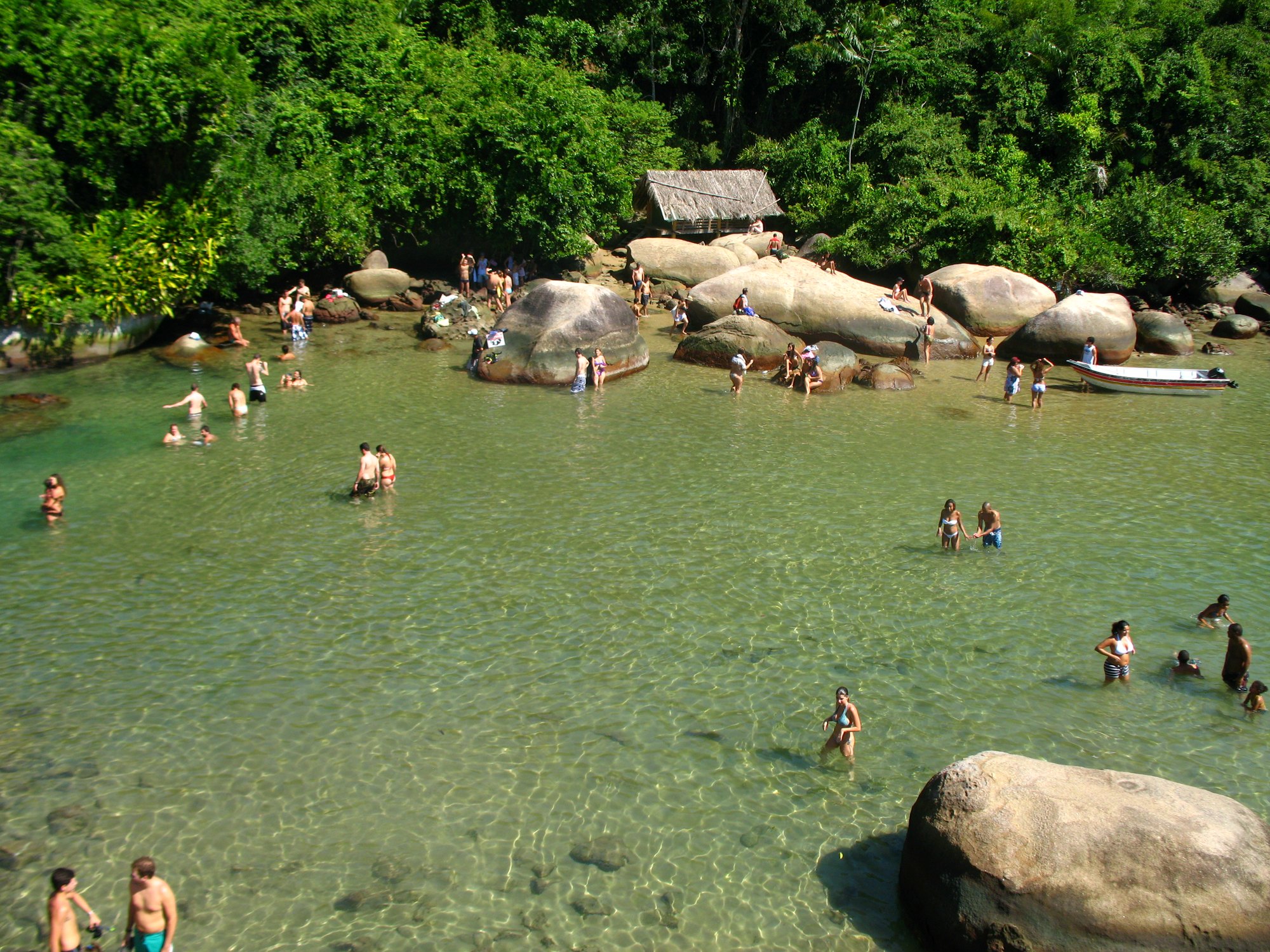
One more practical thought. After a few days of boats and trails — the early starts, the salt, the sand that gets into everything — there's a real pleasure in a day when you don't go anywhere at all. You let the bay come to you instead: a long swim, a long lunch, the same view from a chair that you spent the week motoring out to find. A villa with a pool over the islands makes that an easy day to take, and Amorielli is built for exactly that kind of afternoon. The boats will still be there tomorrow.
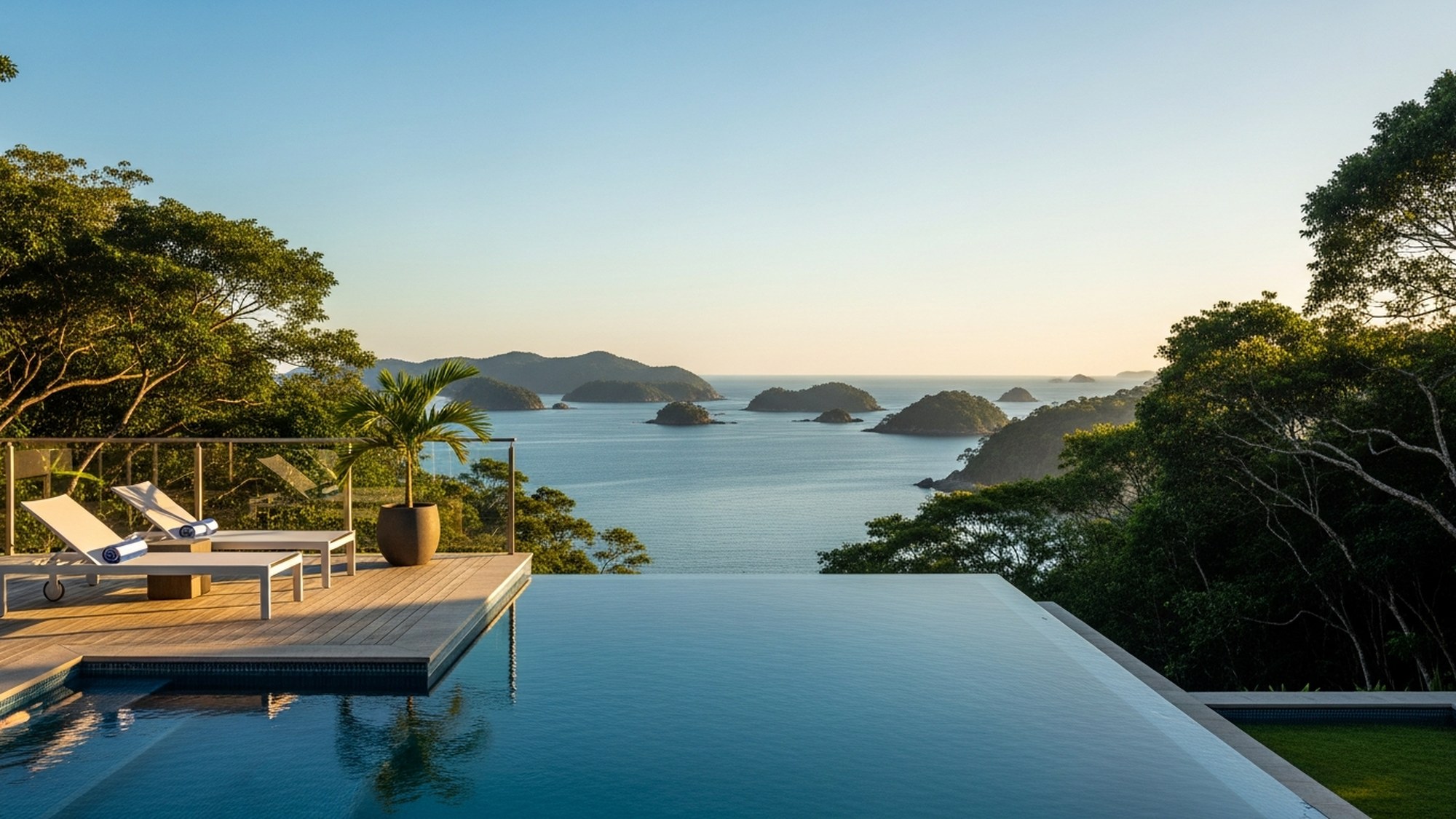
If you're still mapping out the wider trip, the complete guide to Paraty covers the old town, where to eat, and how the pieces fit together; the hiking and nature guide goes deeper on the forest trails, including the Saco do Mamanguá; and if you haven't sorted the logistics yet, how to get to Paraty walks through every route in. But the water is the part most people remember. Get out on it early, pick the boat that fits your day, and don't skip the swim at Trindade.
Common questions
How much does a schooner tour in Paraty cost?
Prices change with the season, the operator, and the size of the boat, so it's not worth quoting a hard figure that'll be stale by the time you read it — but the schooner is the budget option, and tickets are sold both at the pier and through agencies in town. Remember that lunch and drinks are usually extra, bought on board, and that you'll want cash. For current rates, ask at the Cais de Paraty the day before, or have your host or concierge confirm and book ahead.
Schooner or private speedboat — which should I book?
Take the schooner if you want the cheaper, more sociable option and don't mind a fixed five-hour route with four stops; it suits first-timers and families well. Hire a private speedboat if you want to choose your own route and timing, avoid the crowds, start early, or you're a group splitting the cost. The speedboat costs more but gives you control and quiet, and it can reach stops the schooner can't fit in.
Is the snorkeling actually good?
Yes, and it's the bay's best feature. The clear, calm water around islands like Ilha Comprida (the "natural aquarium") and Ilha do Pelado is full of fish, and the Natural Pool at Trindade is excellent and easy. Bring your own mask if you can — a well-fitting one makes a real difference — and remember that the snorkel stops are often where you stay on or near the boat rather than going ashore.
Can I get to the beaches without a boat tour?
Some of them, yes. Praia do Sono is a roughly one-hour trail (about 3 km) from the Laranjeiras / Vila Oratório area, or a short boat hop. Praia Vermelha has both a boat option and a ~2 km trail. Trindade's beaches are reached by road, and its Natural Pool by a trail from Praia do Meio or a local boat from Ranchos. But the snorkeling islands — Ilha Comprida, Ilha do Pelado — and Praia da Lula are boat-only, because they're islands or have no land access.
When is the best time to go out on the water?
In the morning, almost regardless of the month. The bay is calmest and clearest early, before the day's heat builds the wind and the afternoon clouds roll in. For the trip overall, the shoulder seasons — April–May and September–October — give the best mix of good weather, calm clear water, thinner crowds, and lower prices. Summer (December–February) is hottest and busiest, with the most rain; winter is cooler but has lovely clear mornings.
Will I get seasick?
Probably not. Paraty's bay is sheltered by mountains and islands, so it's far calmer than open ocean and most people are fine. If you're prone to motion sickness, take your remedy before boarding rather than after symptoms start, sit toward the middle of the boat, keep your eyes on the horizon, stay in the fresh air on deck, and choose an early-morning departure when the water is at its flattest.
More from the Journal
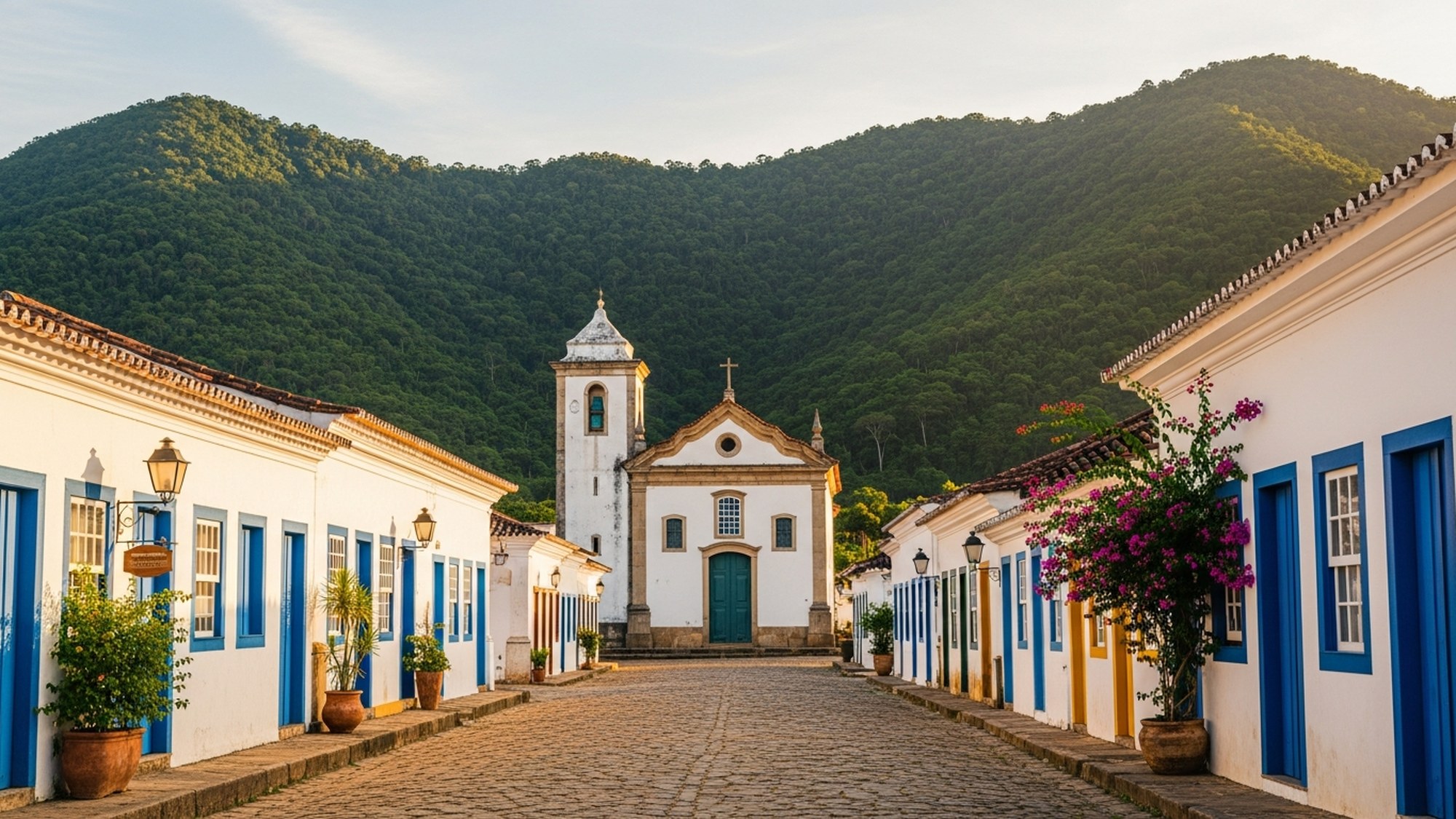
The Complete Guide to Paraty, Brazil
Everything you need for the Costa Verde's most beautiful town: the UNESCO old town, the waterfalls and trails, the islands and beaches, the cachaça, where to eat and stay, when to come — and exactly how to get here.
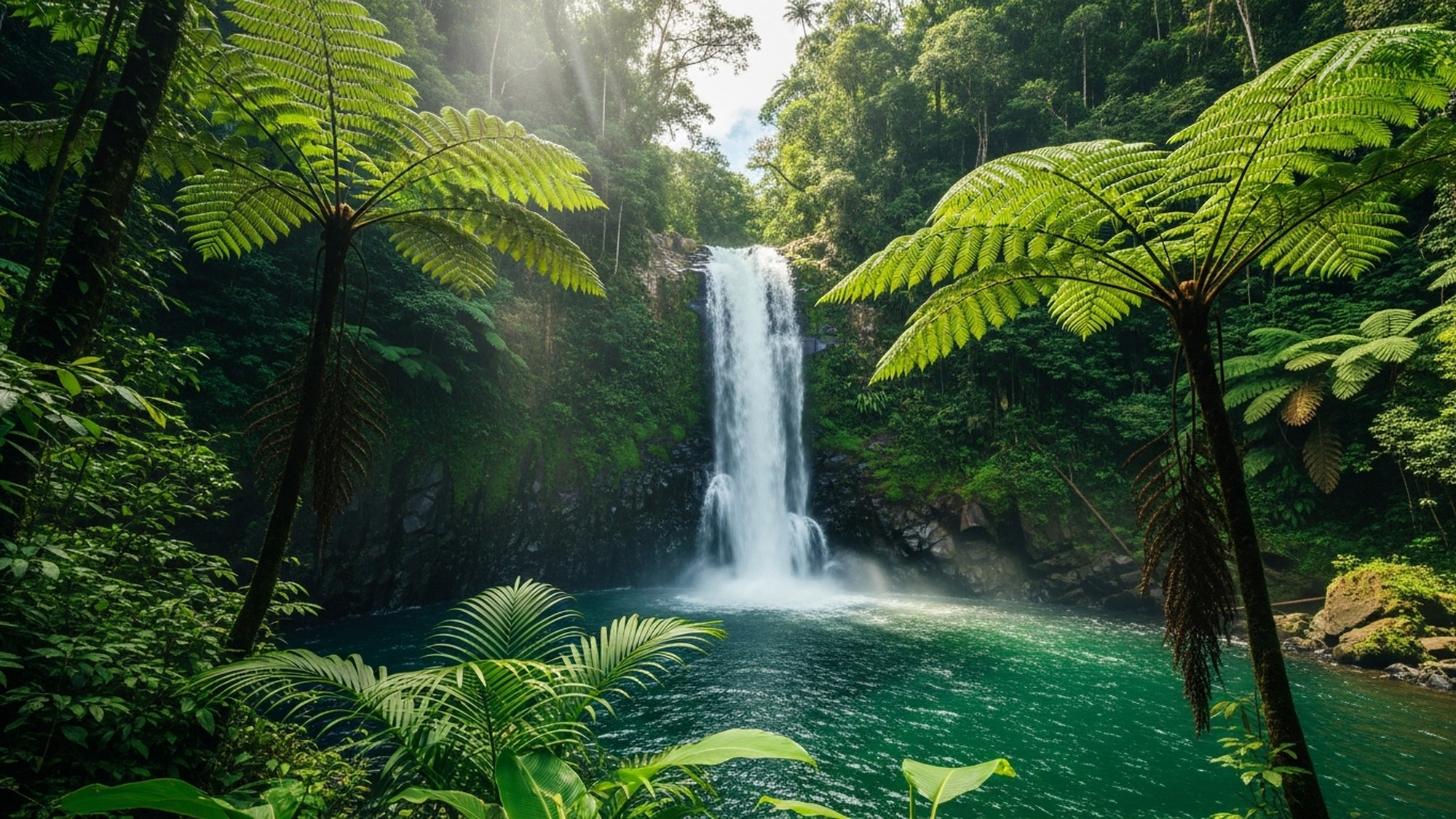
The Waterfalls of Paraty: A Complete Guide
From the natural rock-slide of the Tobogã to the jungle pools of the Pedra Branca valley — where to find Paraty's waterfalls, how to reach them, how to stay safe, and the cachaça distilleries hidden among them.
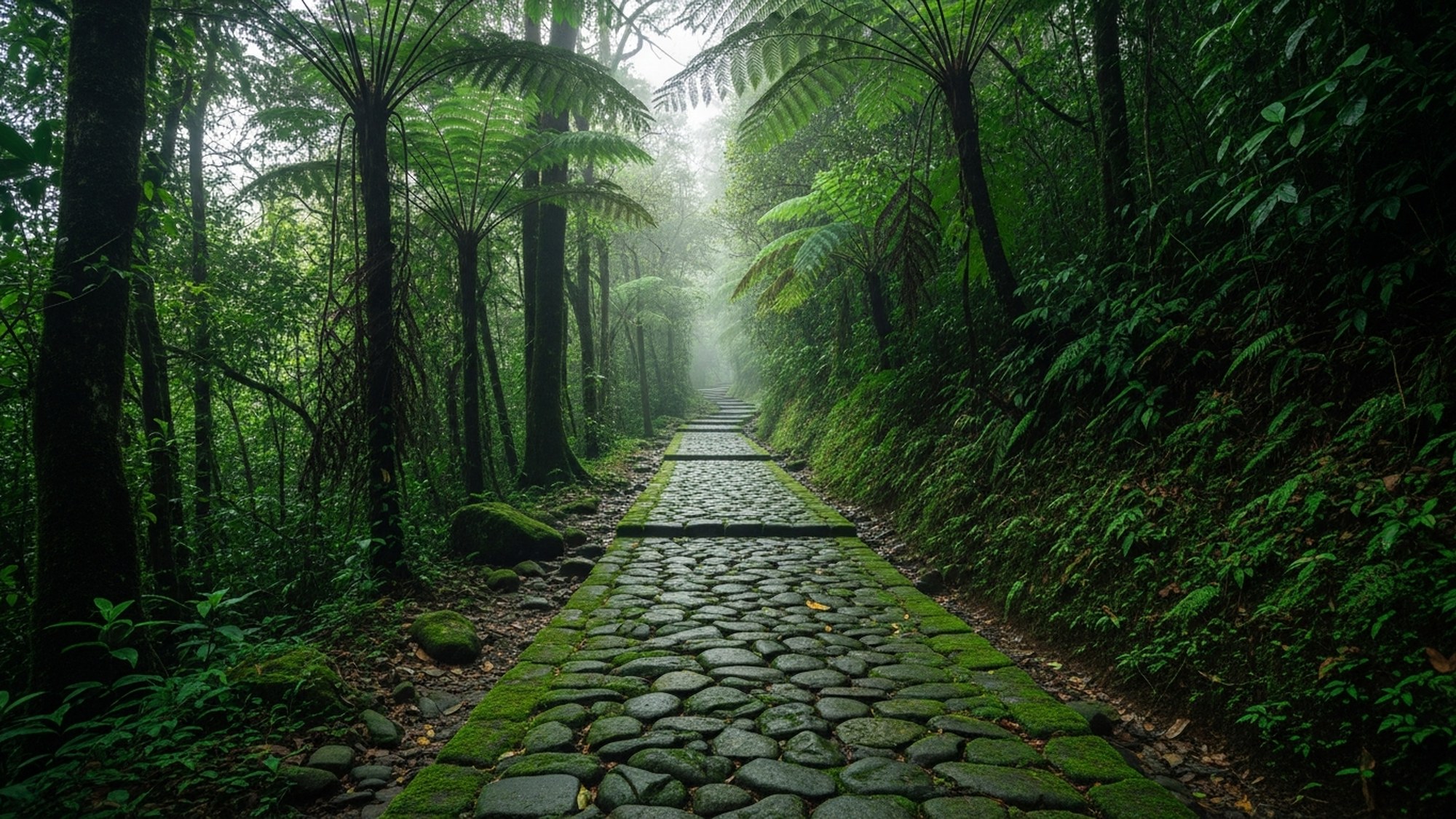
Hiking & Nature in Paraty: Trails, Parks & the Atlantic Forest
The colonial Gold Trail, the Serra da Bocaina National Park, the wild Juatinga reserve and the climb to the Sugarloaf of the Mamanguá — a complete guide to walking one of the planet's richest forests.
Stay at Amorielli.
A villa with an infinity pool, a private waterfall, and the kind of view people travel a long way to find. Join the waitlist to book the first season.