The car-free colonial center is one long browse: where to buy artisanal cachaça, the town's two real bookshops, the ceramics and craft streets, the art galleries, the market days, and the local sweets worth carrying home.
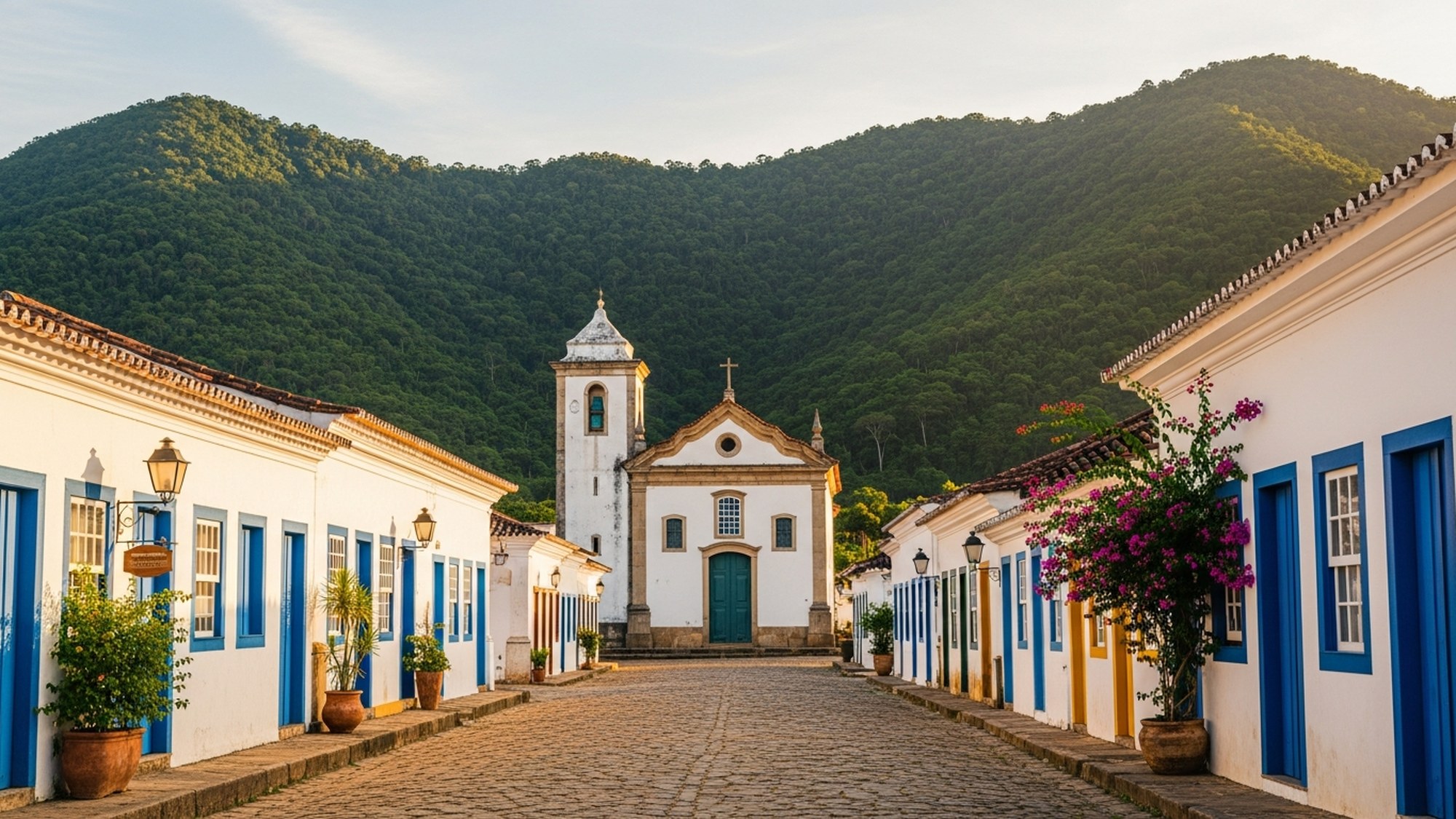
Shopping in Paraty is not a mall and a list of chains. It is a walk. The whole historic center is closed to cars, and its shops sit behind the same whitewashed colonial doors as the restaurants and pousadas — a bookstore next to a cachaça cellar next to a ceramicist's studio, all within a few minutes of each other on the cobblestones. What you find here is what the town actually makes and keeps: cachaça, hand-thrown pottery, indigenous and caiçara craft, silver-and-seashell jewelry, and — because Paraty hosts one of the world's great literary festivals — a couple of genuinely good bookshops.
This is our honest guide to buying well in Paraty: where the shops cluster, the names worth walking to, and what's actually worth carrying home. Everything here has been checked against the shops' own sites, established listings and local guides, because a shopping guide full of places that closed last year helps nobody. Small-town shops do open, close and move, so treat any exact door number as a starting point and confirm on the day — but the streets, the categories and the anchors below are solid.
In this guide
Where the shops are
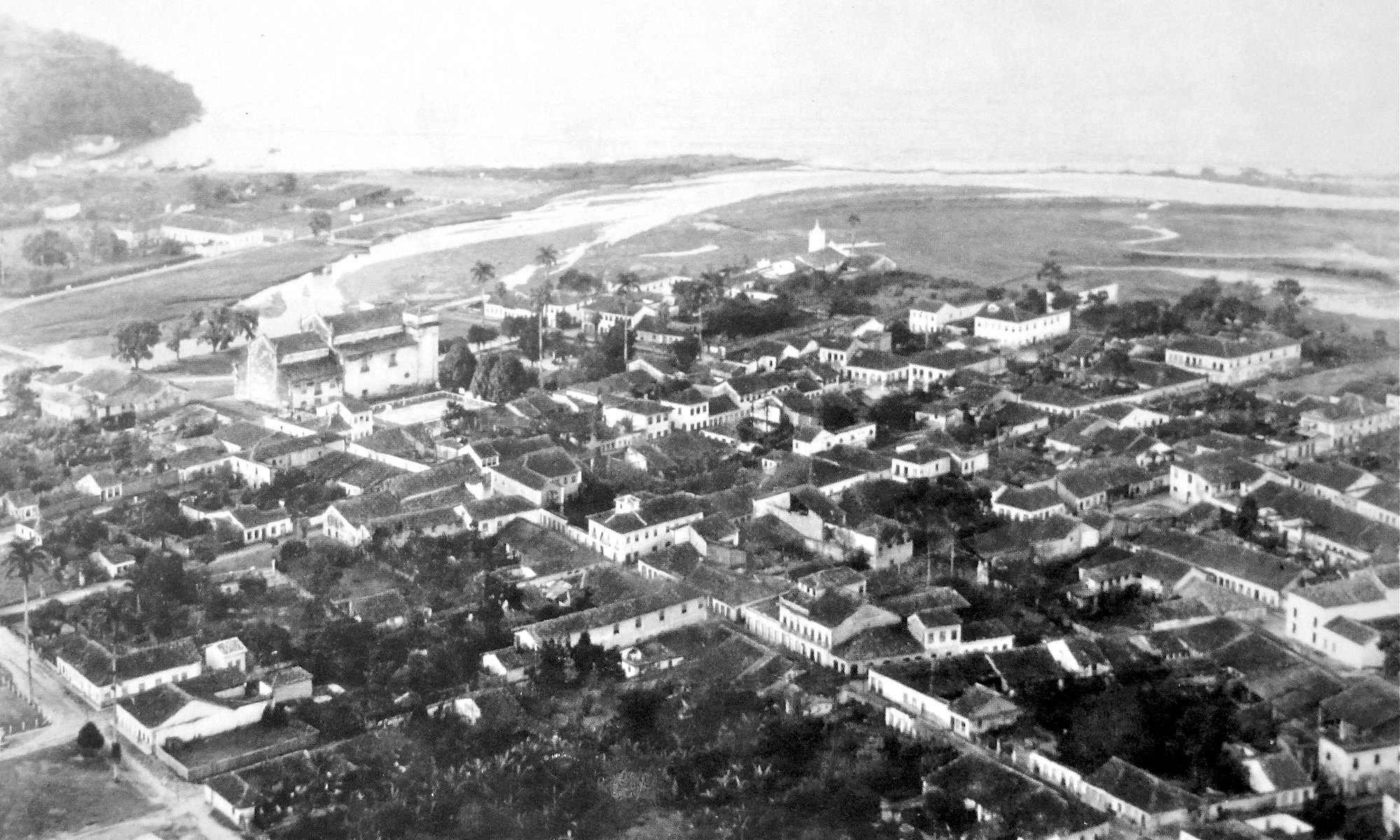
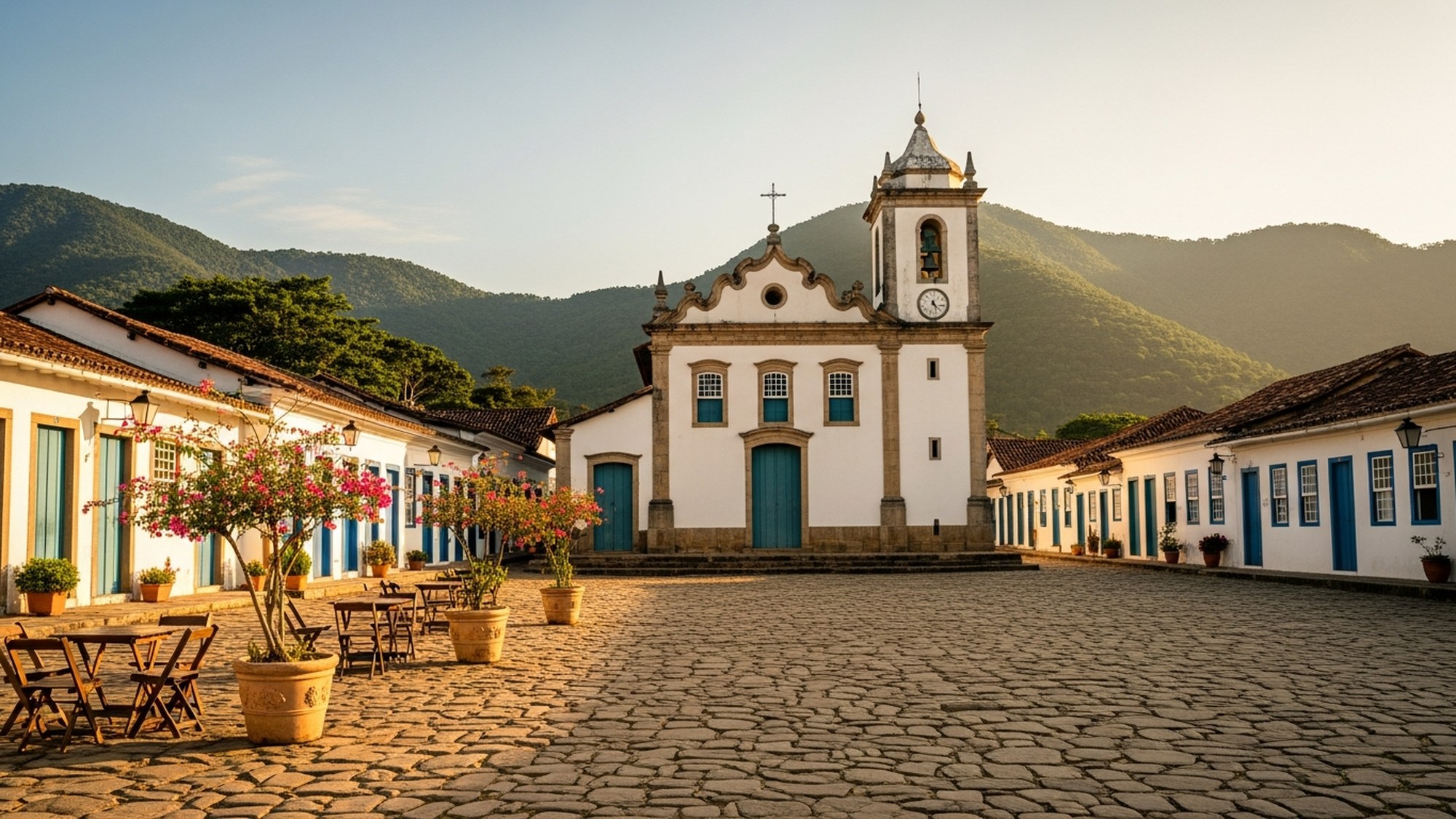
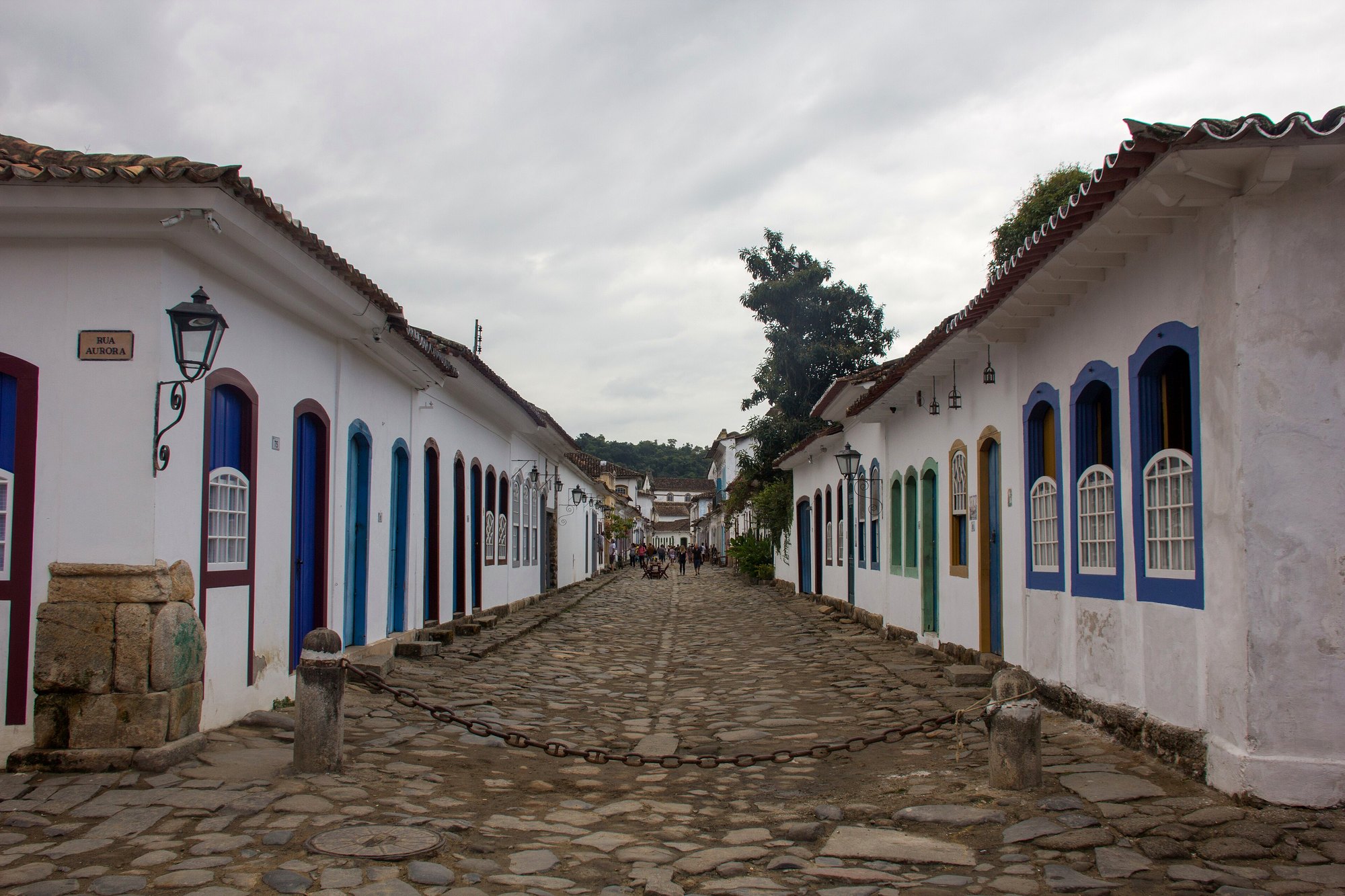
Almost all of Paraty's shopping happens in the car-free historic center, on the same irregular "pé de moleque" cobblestones that were laid to flood at the highest tides and rinse the streets clean. Two streets carry most of it. Rua do Comércio — the name means "Commerce Street" — is the main artery, lined with galleries, boutiques, cachaça shops and craft stores. Rua da Lapa is the quieter one, known for ceramics, wooden furniture, lace and fabric. The Praça da Matriz, the main square by the mother church, regularly has stalls selling local handicraft and regional food and drink.
Because it is all on foot, shopping and sightseeing are the same activity here. You are already walking past these doors on the way to dinner. Wear flat shoes — the stones are genuinely lumpy — and keep some cash on you, because the smallest craft stalls don't always take cards.
Cachaça: the bottle to bring home
If you buy one thing in Paraty, buy cachaça. This was one of colonial Brazil's great sugar-and-spirit ports, "Paraty" is still a protected origin for the drink, and the historic distilleries in the hills above town produce some of the country's most respected artisanal labels. You can tour the distilleries themselves — we cover those in our where-to-eat guide — but if you just want to taste and buy in town, two shops in the center do exactly that.
Armazém da Cachaça is the big one, on Rua Maria Jácome de Mello in the historic center. It stocks one of the largest cachaça selections in town — hundreds of labels — with a rotating handful open to taste for free, plus liqueurs, sweets, peppers and truffles. It's the place to compare a Maria Izabel against a Coqueiro or a Corisco before you commit. Empório da Cachaça is the smaller, more intimate version — a shop-and-tasting-bar on Rua Doutor Samuel Costa with regional cachaças, sweets and craft beers, English-speaking staff, and cocktails if you'd rather drink than shop. Between the two you can learn what all the fuss is about without ever getting in a car.
Good to know
Artisanal cachaça travels fine in checked luggage, wrapped well. If you're flying home, buy it near the end of your trip, keep the receipt, and check your airline's and your home country's alcohol allowance — most let you bring a bottle or two. A good aged (amarela) cachaça drinks more like a fine rum or a whisky than the raw stuff in a caipirinha.
Bookshops & the literary town
Paraty takes books seriously. Every year it hosts FLIP — the Festa Literária Internacional de Paraty, one of the most important literary festivals in the Portuguese-speaking world — and that culture has left the town with real bookshops, not just postcard racks.
The standout is Livraria das Marés, the bookstore of the Pousada Literária, on Rua Tenente Francisco Antônio in the historic center. It runs to some 4,000 titles across a beautifully designed space, with a café attached — an easy place to lose an hour out of the sun. Livraria de Paraty is the town's original bookshop, open more than two decades, part bookstore and part coffee shop. And if you happen to visit during FLIP itself (July), the festival runs its own large pop-up festival bookstore plus a scattering of curated literary "houses" — a book-buyer's few days if ever there was one. See our best-time-to-visit guide for the festival dates.
A town that throws a book festival every year is a town that keeps good bookshops the rest of the year. Paraty is one of the few small places where "let's find a bookstore" is a real plan.
Art galleries & studios
Paraty has drawn artists for decades, and a number of small galleries and working studios are folded into the center's colonial houses. A few worth looking for:
- Galeria Zeca Orsi — a long-running gallery near the Largo do Rosário showing a range of styles and techniques; one of the better-known names in town.
- Marcelo Oséas Galeria — photography alongside artisanal regional pieces, on Rua do Comércio.
- Refil Paraty — sustainable design and furniture with work from several local artists, on Rua Santa Rita; as much a design shop as a gallery.
- Galeria Aecio Sarti — a distinctive one: paintings made on repurposed truck tarpaulin (lona de caminhão), on Rua Doutor Samuel Costa.
- Casa da Cultura de Paraty — on Rua Dona Geralda, the town's cultural center, with rotating exhibitions and local history; a good first stop to see what's on.
Other studios — Patricia Sada's ceramics-and-canvas work, the Atelier Lúcio Cruz — turn up as you wander, and that is really the way to do it. The pleasure of a town this small is that you don't plan the galleries; you find them between the church and lunch.
Craft, ceramics & jewelry
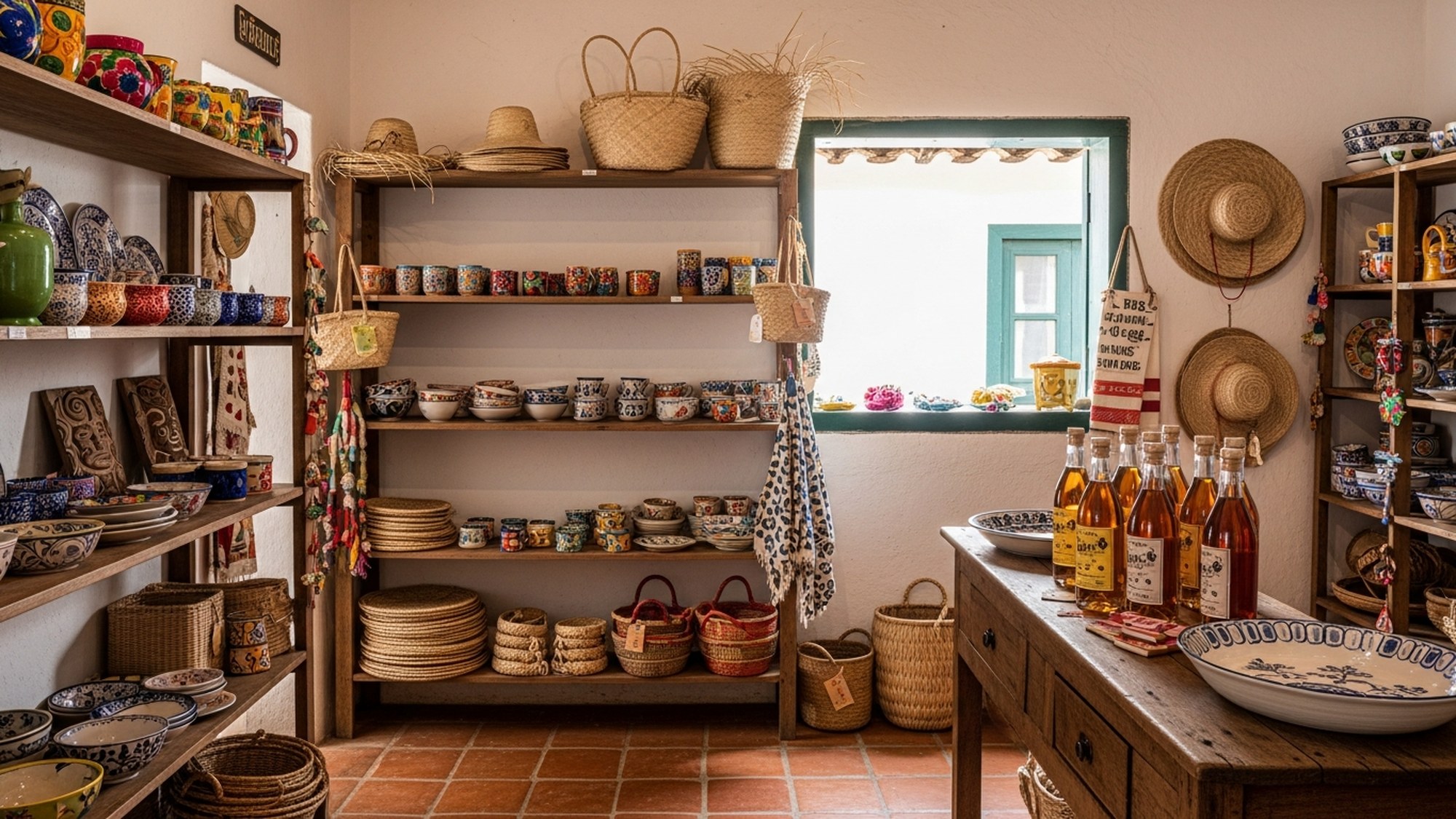
The everyday craft is where Paraty is strongest, and it clusters on Rua da Lapa: hand-thrown and hand-painted ceramics, wooden pieces, lace, quilts (colchas), hammocks (redes), cushions and home textiles. Much of it is genuinely local work rather than imported souvenir stock, and prices are reasonable for handmade goods.
For indigenous craft, Canoa Arte Indígena in the historic center sells beadwork, wooden sculpture, macramé and woven textiles, with staff who explain the techniques and the communities behind each piece — a more meaningful buy than a generic keyring. And Paraty has a small tradition of artisan jewelry made from silver, semi-precious stones and locally gathered seashells; you'll see it in several center shops, often made by the person selling it.
| What | Where to look | Notes |
|---|---|---|
| Artisanal cachaça | Armazém da Cachaça, Empório da Cachaça | Taste before you buy; aged labels travel well |
| Books | Livraria das Marés, Livraria de Paraty | Both have cafés; FLIP pop-up shop in July |
| Ceramics, lace, textiles | Rua da Lapa | The craft street; much of it locally made |
| Indigenous craft | Canoa Arte Indígena, center | Beadwork, carving, woven pieces |
| Silver & seashell jewelry | Center shops & stalls | Often made by the seller |
| Local sweets | A Caiçarinha, Maria Beijinho | Massapão & manuê — Paraty's own |
Markets & the square stalls
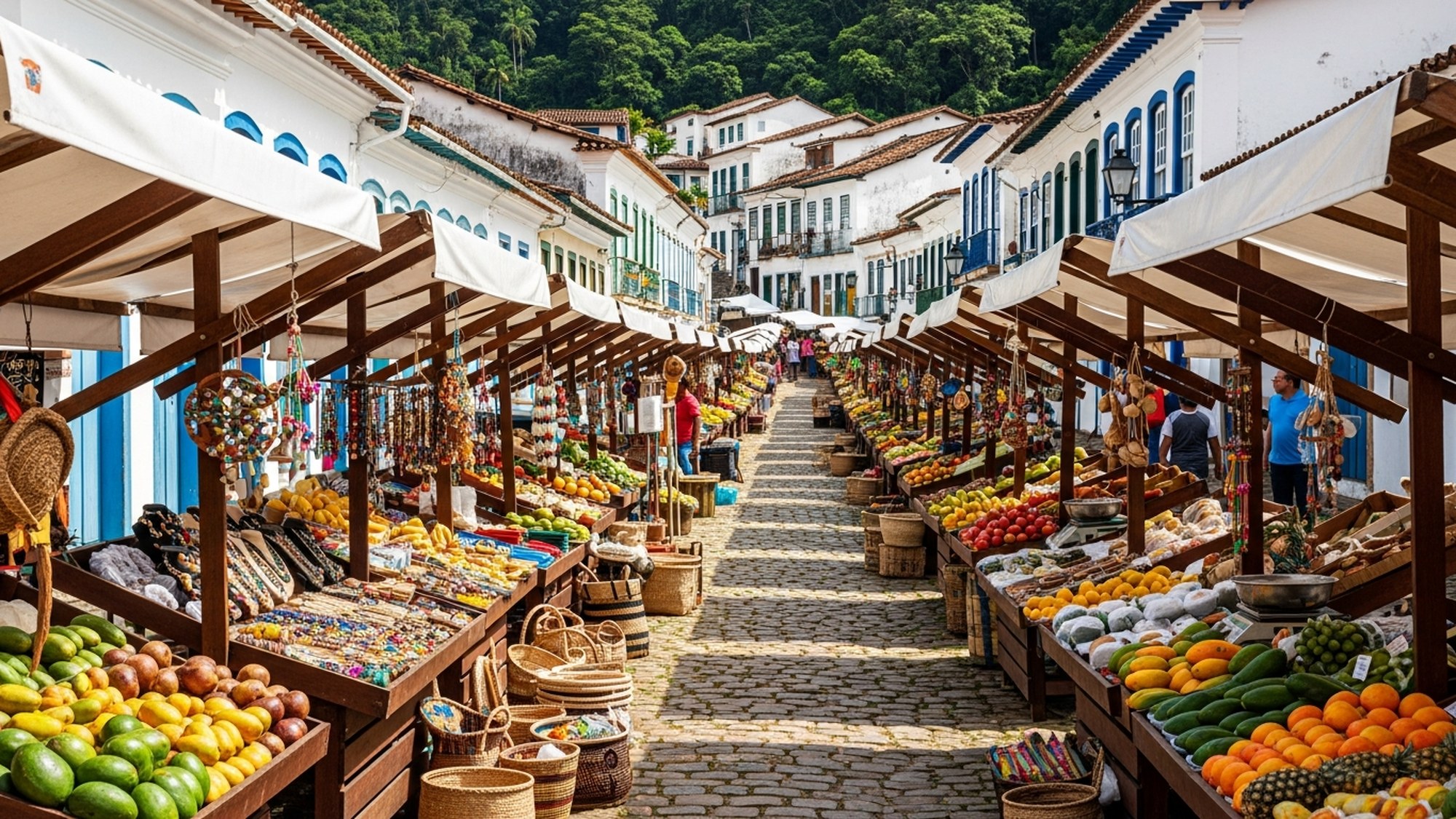
For fresh, un-touristy shopping, Paraty has a farmers' market (feira) near the bus station at the edge of the center — homemade preserves and cheeses, free-range eggs and produce, much of it grown by the people selling it. It runs most mornings, and locals say Friday is the best day, when extra stallholders come in. It's a lovely early-morning wander even if you're only buying fruit for the day.
Back in the center, the Praça da Matriz regularly hosts stalls of handicraft and regional food and drink — a good, low-pressure place to pick up small gifts and see what local makers are bringing to town that week.
Sweets & edible souvenirs
Paraty has its own sweets, and they make excellent, cheap souvenirs. Look for massapão and manuê — two traditional local confections you'll rarely see elsewhere. A Caiçarinha is a specialty shop built around exactly these regional sweets and souvenirs, and Maria Beijinho is a sweets shop and café good for cakes, brigadeiros and a coffee break while you shop. Add a bag of these to a bottle of cachaça and you have a genuinely local gift box that cost very little and came from nobody's factory.
Practical notes: hours, cash & packing
- Bring some cash. Cards work in most established shops, but the market and the smallest craft stalls often prefer cash. Draw money from an ATM inside a bank lobby in town before you need it — see our 3-day itinerary for the practical logistics.
- Hours run late and pause mid-afternoon. Many shops open late morning, quieten in the hot early afternoon, and stay open into the evening when the streets fill for dinner. Evening is a pleasant, cool time to browse.
- Pack for cobblestones and rain. Wheeled bags hate the stones, and Paraty is a wet coast; wrap anything fragile, and buy breakables near the end of the trip.
- Confirm door numbers on the day. Small shops move. Use the street names here to find the right block, then follow your eyes — in a center this compact, that's all it takes.
Common questions
What should I buy in Paraty?
Artisanal cachaça is the signature buy — Paraty is a protected origin for the spirit, and shops like Armazém da Cachaça let you taste before choosing. Beyond that: hand-thrown ceramics and textiles on Rua da Lapa, indigenous and caiçara craft, silver-and-seashell jewelry, books (this is a literary town), and local sweets like massapão and manuê.
Where is the main shopping area?
The car-free historic center, especially Rua do Comércio (the main commercial street) and the quieter Rua da Lapa (ceramics, wood, lace, fabric). The Praça da Matriz has craft and food stalls, and there's a farmers' market near the bus station. Everything is walkable.
Does Paraty have a market?
Yes — a farmers' market (feira) near the rodoviária (bus station) at the edge of the center, open most mornings, with Friday often the busiest and best. In the center, the Praça da Matriz regularly has handicraft and regional-food stalls.
Can I buy cachaça in town without doing a distillery tour?
Yes. Armazém da Cachaça and Empório da Cachaça are both in the historic center and offer tastings and a wide range of labels to buy, no car required. If you do want to see how it's made, the historic distilleries in the hills run tours — covered in our where-to-eat guide.
Do the shops take credit cards?
Most established shops do, but the farmers' market and the smallest craft stalls often prefer cash. Carry some Brazilian reais for those, and draw it from an ATM inside a bank lobby in town rather than a street machine.