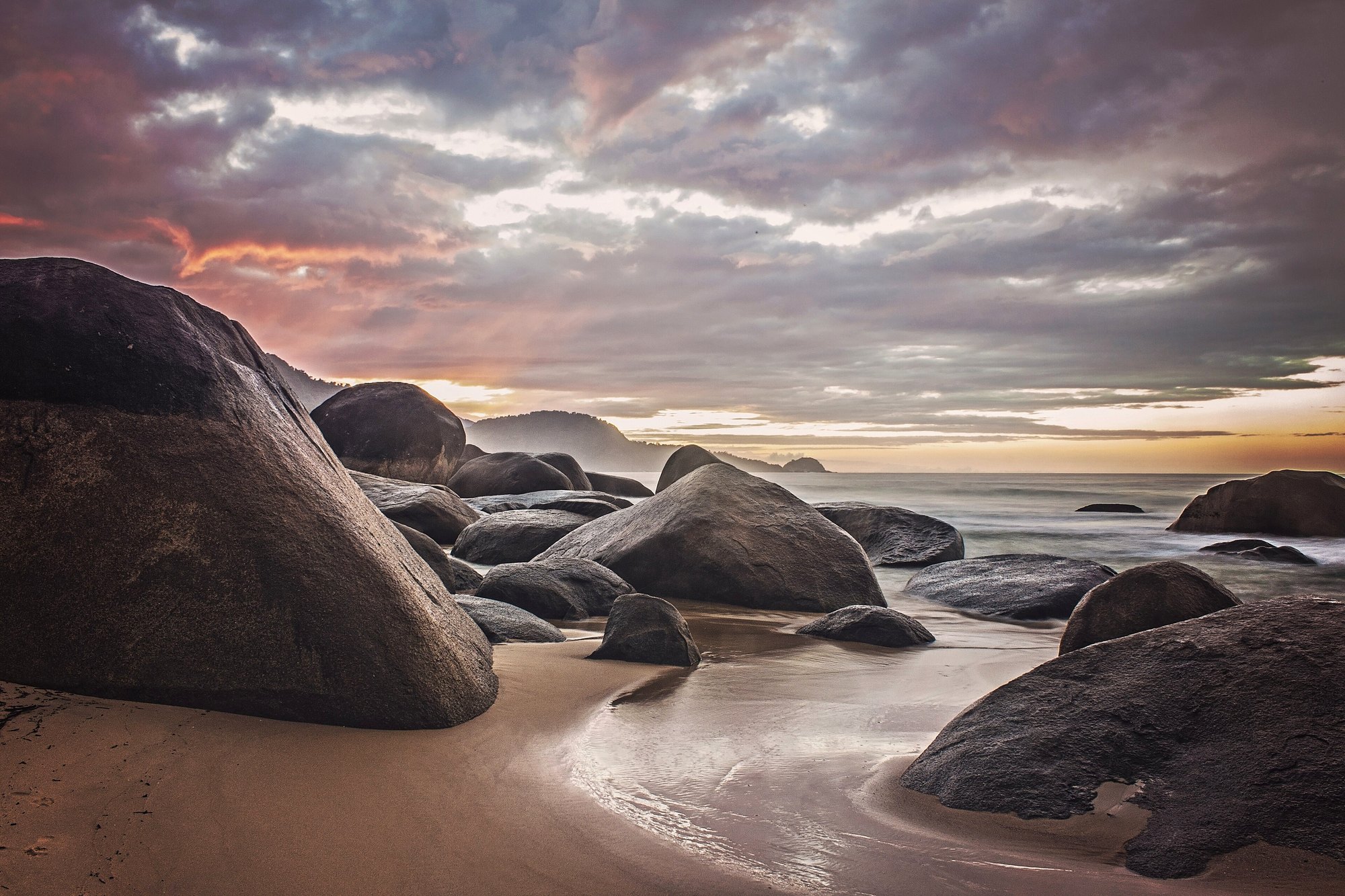
The laid-back beach village half an hour south of Paraty: its four beaches, the crystal-clear Cachadaço natural pool and the trail to reach it, how to get there, and what to know before you go — including the no-ATM rule.
Half an hour south of Paraty, the road tips over a forested ridge and drops to Trindade — a former caiçara fishing village that turned, slowly, into one of the Costa Verde's most loved beach hangouts without ever losing its bare feet. There are no big resorts here. There's a handful of streets, a string of wide sandy beaches backed by rainforest, simple pousadas and beach bars, and — the reason a lot of people come — a natural tidal pool of clear water among the rocks that snorkelers treat like an aquarium.
This is our honest guide to Trindade: the beaches and which is which, the famous Cachadaço natural pool and how to reach it, how to get down there from Paraty, and what to know before you go — including the crowding, and the fact that there's no cash machine in the village. Everything here has been checked against established guides and the official conservation-area information; where sources genuinely disagree, we say so rather than guess.
In this guide
Where Trindade is & what it's like
Trindade sits about 25 kilometres south of Paraty's historic center — roughly 30 to 40 minutes by road — still within the municipality of Paraty, and entirely inside a protected area (more on that below). It grew up as a fishing village and, over the last few decades, became a magnet for surfers, backpackers and families who wanted somewhere simpler and wilder than the colonial town. It kept the character: this is a rustic, faintly bohemian place of small pousadas, campgrounds and beach barracas, with most of the shops and eating along the Rua Principal. Come for the beaches and the calm, not for polish.
The beaches
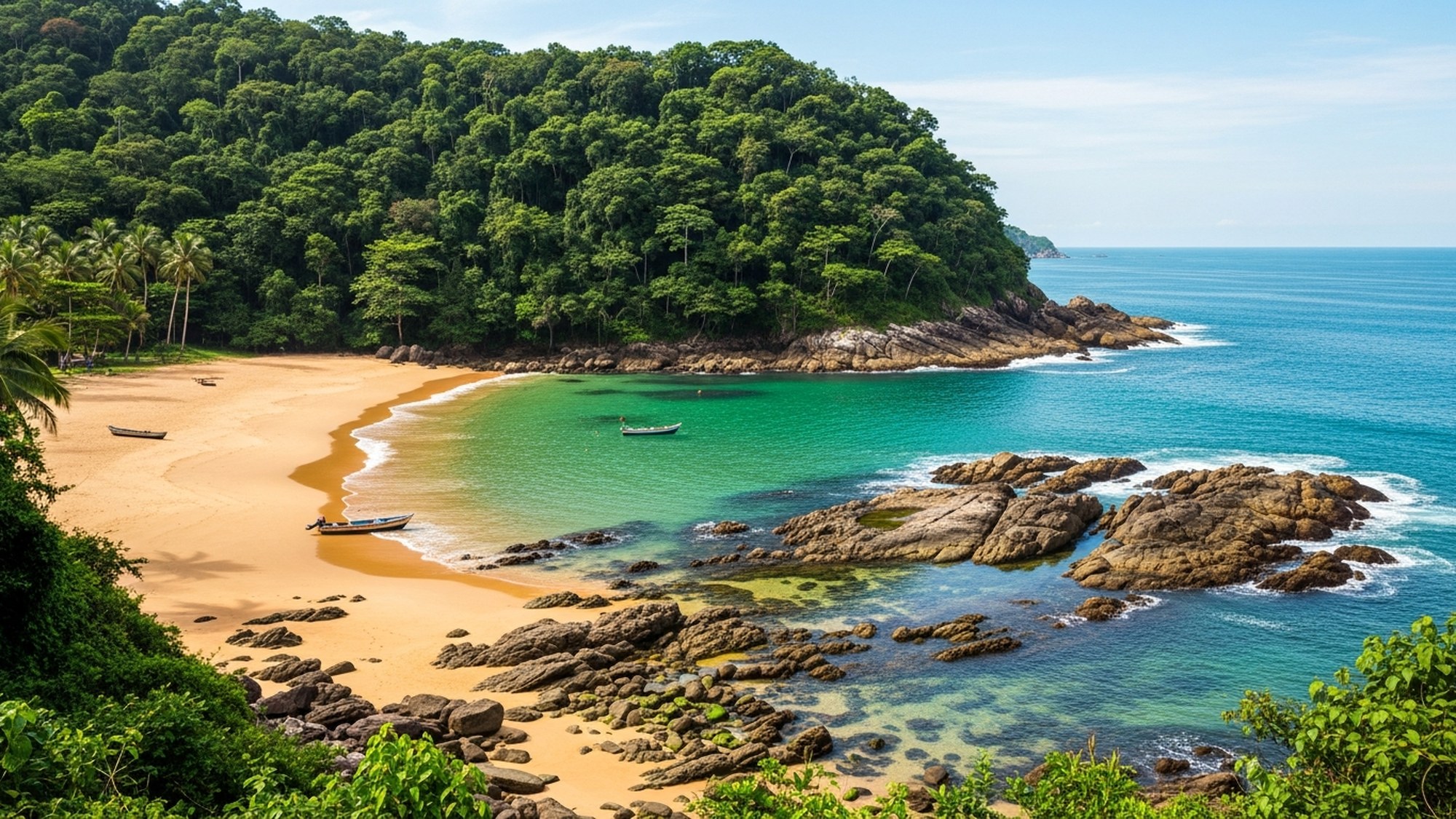
Trindade strings along a run of four main beaches, each with its own character:
- Praia do Cepilho (sometimes "Cepilhão") — the surf beach at the northern end, known for big waves. Beautiful, but the water is powerful and it's not a swimming beach for the unsure. Reached by car or by scrambling over the boulders at the end of the next beach.
- Praia dos Ranchos / Praia de Fora — the main beach fronting the village, and the liveliest, with bars, kiosks, chairs and umbrellas. This is where the day happens.
- Praia do Meio — a calmer, photogenic swimming beach, and the start of the trail to the Cachadaço pool. The natural place to base a beach day if you have kids.
- Praia do Cachadaço — the farthest and quietest, white sand and preserved forest, but with currents and generally rougher water; the reward beyond it is the pool, not the swim.
You'll also see the rough surf stretch referred to loosely as "Praia Brava" — treat that as a nickname for the wilder water near Cepilho rather than a separate, official fifth beach.
The Cachadaço natural pool
The Piscina Natural do Cachadaço is Trindade's signature sight: a natural swimming pool of calm, crystal-clear water, sheltered by a ring of large granite rocks just off the Cachadaço beach. It's shallow — generally no more than about a metre deep — and full of fish, so it's a superb, easy snorkel, a genuine "natural aquarium." (You may see it spelled "Caixa d'Aço" on older signs; same place.)
There are two ways in. The classic is the trail from Praia do Meio, near the bus stop: about 1.5 kilometres, under an hour, through Atlantic Forest, past Cachadaço beach to the pool, with handrails and improvised steps along the way. It isn't hard, but it gets slippery after rain, so wear proper footwear. The easier way is a short boat hop from Praia do Meio or dos Ranchos, a few minutes across for a small fee. One important safety note: the pool itself is calm and shallow, but the adjacent beach and open sea have real currents — stay in the sheltered pool if you're not a strong swimmer.
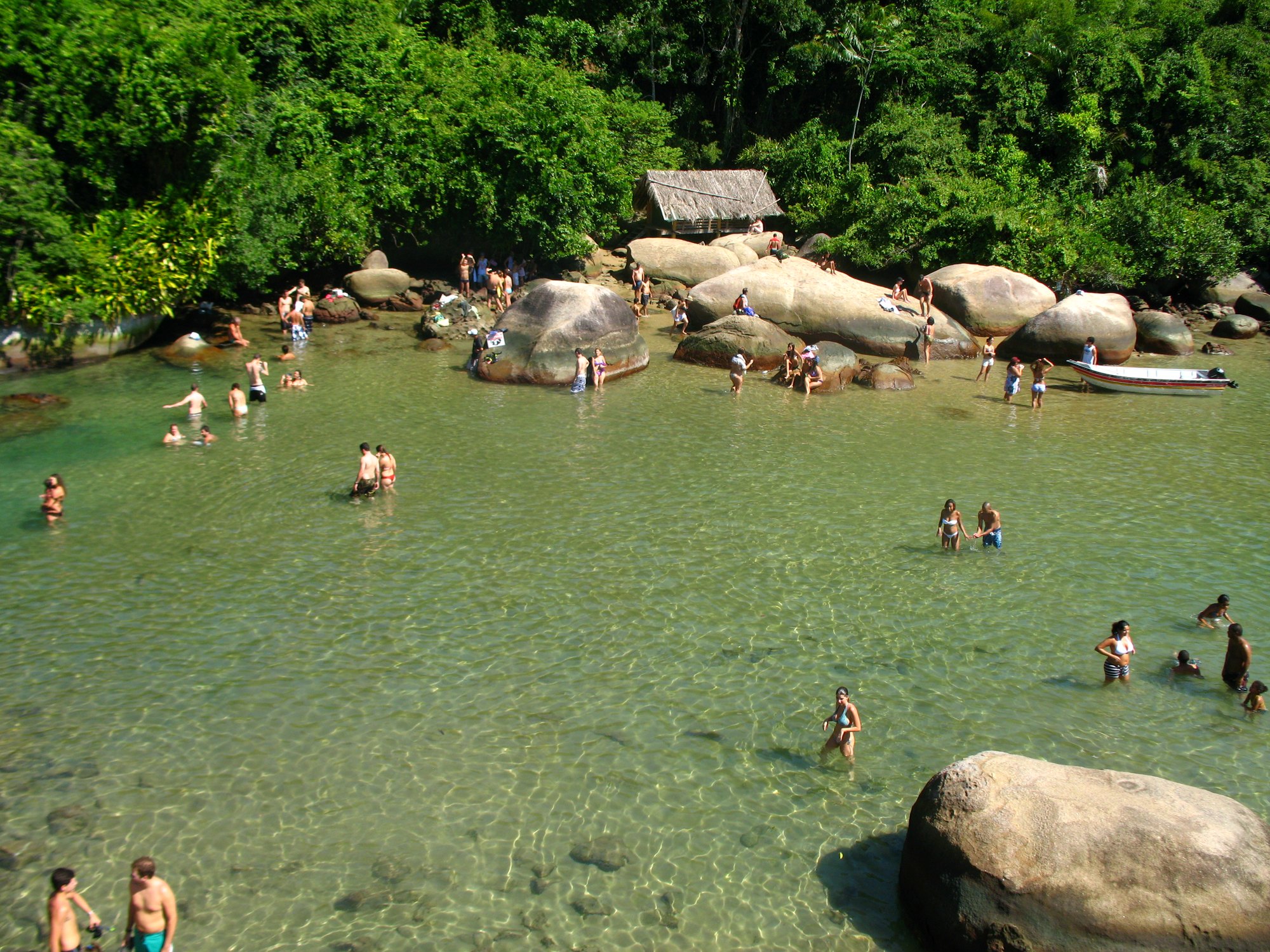
Go early. The pool is small and it is no secret — on a summer weekend it fills by mid-morning. Before 9am you can have that clear water almost to yourself; by noon in January you're sharing it with a crowd.
Getting there from Paraty
Two straightforward options:
- By local bus. Colitur runs buses from Paraty's bus station (the rodoviária, a few minutes from the historic center) down to Trindade — a cheap, roughly 40–50-minute ride. Frequency varies through the day and the seasons, so check the timetable, especially for the last bus back.
- By car. Head south from Paraty on the BR-101 (the Rio–Santos road), then take the signposted turnoff and wind down the steep hill — historically nicknamed the Morro do Deus-me-livre for how hard it once was in the rain, now paved but still narrow and twisty — into the village.
One thing to know: tour vans and buses aren't allowed into Trindade itself, and the village streets are narrow and pedestrian-dominated, so drivers park in designated lots and walk in. Parking is limited and fills fast in peak periods, with real congestion getting in and out — another reason to arrive early. For the wider picture on reaching this coast, see our how-to-get-to-Paraty guide.
Good to know: bring cash
There is no ATM in Trindade — the nearest cash machines are back in Paraty. Some small pousadas and barracas don't take cards, and some ask for payment on arrival, so draw enough cash in town before you head down. It's the single most common thing visitors get caught out by.
Staying, eating & practicalities
Trindade's lodging is simple and plentiful: small family-run pousadas, guesthouses and campgrounds, most within a short walk of the beaches, plus beach bars and barracas serving fresh fish and the usual Brazilian beach fare. It's an easygoing place — bring a relaxed attitude and modest expectations about infrastructure and you'll love it. If you're weighing a night or two here against staying in the colonial town, our where-to-stay guide lays out the trade-offs. Many people do both: a few nights in Paraty for the town, a couple in Trindade for the beaches.
A few practical notes: peak-season crowding is real and heavy — New Year, the first weeks of January, weekends and national holidays pack the place, and locals will tell you plainly to avoid those dates if you can. Go on a weekday, out of the summer peak, and Trindade is close to idyllic. Bring sun protection, water shoes for the rocks, and cash.
A protected coast
Trindade lies inside the Cairuçu Environmental Protection Area (APA de Cairuçu), established in 1985 and managed by ICMBio, which safeguards this stretch of Atlantic Forest — from mangrove to hillside rainforest — and the traditional caiçara, quilombola and indigenous communities who live along it. The wider region was recognised in 2019 as the UNESCO World Heritage Site "Paraty and Ilha Grande – Culture and Biodiversity," a rare mixed listing for both nature and culture. It adjoins the Serra da Bocaina National Park as part of a larger conservation mosaic. In plain terms: this is a genuinely wild, protected coast, and it deserves to be treated gently — carry your rubbish out, don't touch the pool's marine life, and stay on the trails. For more on walking this forest, see our hiking-and-nature guide.
Common questions
Is Trindade worth visiting?
Yes — if you want wild beaches, a laid-back village feel and one of the best natural snorkeling pools on the coast, and you don't mind rustic infrastructure. It's a highlight of the Paraty area. Just avoid the summer-holiday peak and weekends if you can, when it gets very crowded, and go early in the day.
How do I get to Trindade from Paraty?
By Colitur local bus from the Paraty bus station (about 40–50 minutes, cheap) or by car south on the BR-101 and down the signposted hill. Tour vans and buses can't enter the village, so drivers park in lots at the edge and walk in. Check the last bus time if you're not driving.
What is the Cachadaço natural pool?
A shallow (roughly one-metre) natural swimming pool of clear water sheltered by granite rocks off Cachadaço beach — calm, full of fish, and ideal for snorkeling. Reach it by a ~1.5 km forest trail from Praia do Meio (under an hour, with handrails, slippery when wet) or a short boat ride. Stay in the sheltered pool if you're not a confident swimmer, as the open sea nearby has currents.
Is there an ATM in Trindade?
No. There's no cash machine in the village — the nearest are in Paraty. Some pousadas and beach spots don't take cards, so bring enough cash for your stay.
When is the best time to go to Trindade?
A weekday outside the summer peak, and early in the morning. New Year, January and weekends are extremely busy. The drier, quieter months (roughly April to September) are calmer overall — see our best-time-to-visit guide for the full seasonal picture.