At a glance
- Base
- Gustavia (town life), St Jean (lively beach), Flamands (calm beach), Grand Cul-de-Sac (watersports), or Lorient (low-key).
- When
- Mid-December to April (high season, busiest, dearest); May, June, November (shoulder, quieter, better value).
- Getting there
- Fly to Sint Maarten (SXM), then small plane hop (10-15 min) or ferry to Gustavia; or direct small plane from San Juan.
- Getting around
- Hire car (essential for most stays); taxis limited, no public transport. Roads are narrow, steep, switchbacked.
- Book ahead
- Accommodation (especially Christmas/New Year), car hire, and high season dinner reservations.
- The price
- High across the board, especially Christmas/New Year; hotels, villas, food are expensive; euro currency.
St. Barthelemy is a small French island, about 25 square kilometres with a resident population somewhere around ten thousand, and the way you stay on it is not quite like anywhere else in the Caribbean. There are no sprawling all-inclusive resorts, no cruise terminal, no casino strip. What there is instead is a scatter of small, expensive hotels and, far more numerous, several hundred private villas set into the hills above the beaches. For most visitors the first real decision is not which hotel but whether to take a villa at all, and if a hotel, which of the dozen or so serious ones fits.
The second decision is where on the island to point yourself, because St. Barth is cut into quartiers, each with a different character and a different beach: Gustavia the harbour town, St Jean by the airport, quiet Flamands, the lagoon at Grand Cul-de-Sac, and the wilder corners beyond. The third thing to settle before anything else is how you will actually arrive, since the airport takes only small aircraft on a famously steep approach and most people land first on Sint Maarten and hop across. This guide walks through all three.
In this guide
The lay of the island
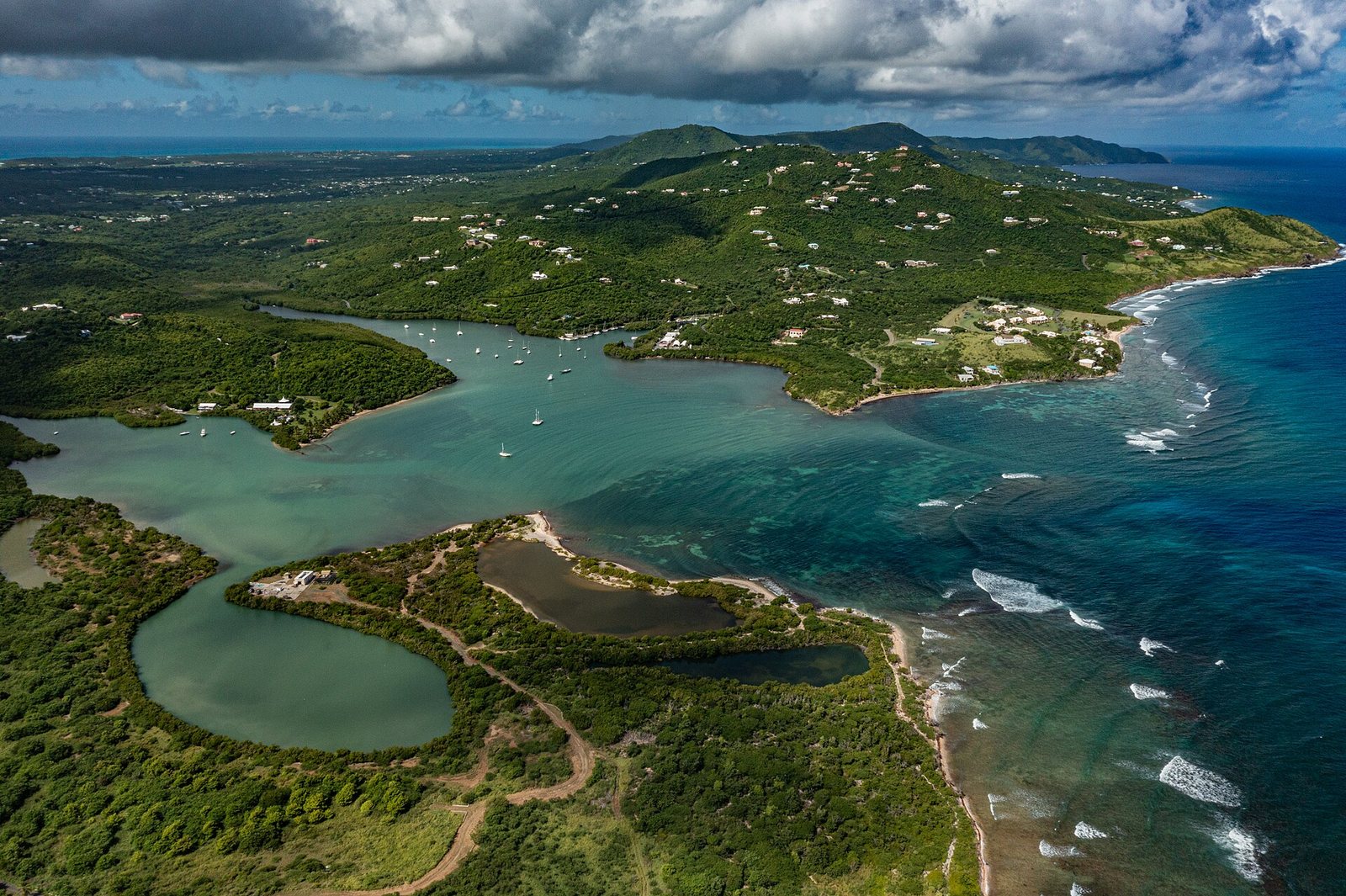
St. Barth sits in the northern Leeward Islands, a short hop southeast of Sint Maarten. It is French, an overseas collectivity of France since 2007, so the currency is the euro, the food and wine are French, and the signage and paperwork are in French, though English is widely understood wherever tourists go. The island is dry and hilly, volcanic in origin, ringed by more than a dozen beaches and covered in low green scrub rather than rainforest.
It is also genuinely small. You can drive from one end to the other in well under half an hour, and the roads that get you there are narrow, steep, and switchbacked, so a hire car (or one of the little open-sided buggies you will see everywhere) is close to essential unless you plan to stay put. There is one real town, Gustavia, wrapped around a horseshoe harbour on the southwest coast, and everything else is a loose collection of quartiers, each named for its bay. Getting oriented among them is the first job.
The quartiers, and which beach to base by
Where you base yourself decides which St. Barth you get: town life, a lively beach, a quiet cove, or near-total seclusion. Here are the main options, roughly from busiest to most remote.
Gustavia
The capital, and the only place that feels like a town. It rings a small yacht harbour lined with boutiques, bakeries, and restaurants, and it is where the ferries dock and the New Year superyacht crowd gathers. Basing here gives you the most to walk to, including Shell Beach, a sheltered cove of pale sand and shell fragments about five to ten minutes on foot from the quay. It is the choice if you want dinners out and a sense of activity rather than a beach at your door.
St Jean
The busy middle of the island, built around a long crescent beach split in two by the rock that Eden Rock hotel sits on. The airport runs right up to one end, so the beach comes with a steady, low-flying show of small planes dropping in. St Jean has the densest cluster of shops, beach restaurants, and small hotels, and a central location that puts most of the island within a ten or fifteen minute drive. A sound pick for a first visit and for anyone who wants to be near things.
Flamands
West of St Jean, Flamands is one of the widest and calmest beaches on the island, a broad band of white sand backed by a low cliff and a handful of hotels and villas. It is quieter than St Jean but still has somewhere to eat, and it is an easy drive into Gustavia. A good middle ground for people who want a proper swimming beach without the bustle.
Grand Cul-de-Sac
On the northeast coast, Grand Cul-de-Sac is a shallow lagoon held back by a reef, which makes it the island's watersports corner: warm, flat, protected water that suits kitesurfing, windsurfing, paddleboarding, and easy snorkelling, and is safe for children. Three of the best-known hotels sit on this bay, and there are good restaurants, so it works as a self-contained base a little removed from Gustavia but not far.
Lorient
Between St Jean and the east end, Lorient is a low-key, residential quartier with a modest beach, a surf break, and a couple of shops and snack spots. It is where a lot of islanders live, and it suits travellers who want somewhere calmer and more everyday while staying central.
Gouverneur and Saline
On the south coast, Anse du Gouverneur and Grande Saline are the wild beaches: broad, undeveloped stretches of sand with no hotels, no beach bars, and no services of any kind. Gouverneur is reached by a steep road down to a small car park and a short walk; Saline by a track and a five-minute walk over the dunes. You come for the day with your own water and shade. Few people base right here, but these are the beaches many come to St. Barth for.
Colombier and Pointe Milou
At the northwest tip, Colombier is the most secluded beach of all: no road reaches it, only a footpath of twenty to thirty minutes from the end of the Colombier road, or arrival by boat. Nearby Pointe Milou is a rocky point rather than a beach, known for sunset and for one clifftop hotel. Both are for people who actively want to be away from the crowd.
The hotels, and the villa question
For a place this well known, St. Barth has surprisingly few hotels, and none of them are big. The serious ones number perhaps a dozen, mostly five-star, and small by design, a few dozen rooms each and often spread across cottages and bungalows rather than stacked in a block. Prices are high and the season is short. No rates are listed here, because they move a great deal by date and any figure would mislead. What follows is a sketch by character and location.
The hotels
- Eden Rock - St Barths (St Jean) is the island's landmark, built on and around a rocky point in the middle of St Jean beach. Part of the Oetker Collection, it was rebuilt after Hurricane Irma and reopened in 2019, with a Jean-Georges Vongerichten restaurant on the sand. Central, visible, and dear.
- Cheval Blanc St-Barth Isle de France (Flamands) is an LVMH property on the wide Flamands beach, and the only hotel on the island with the French Palace distinction. Colonial in style, discreet, with dining overseen by Jean Imbert.
- Le Sereno (Grand Cul-de-Sac) is a family-run, lagoon-front hotel of around forty suites, low and understated, with interiors by Christian Liaigre. Quiet and design-led.
- Le Barthelemy Hotel & Spa (Grand Cul-de-Sac) is a larger contemporary five-star on the same bay, with a spa and a beachfront setting that works well for families.
- Rosewood Le Guanahani St Barth (Grand Cul-de-Sac) has the most resort-like feel on the island, set on a private peninsula between two beaches, with its signature brightly painted clapboard cottages; it too was rebuilt after Irma and reopened in 2021.
- Hotel Christopher (Pointe Milou) is a clifftop hotel on the north coast, not on a beach but with a big pool, a spa, and sunset views over the water.
- Villa Marie Saint-Barth (on the hillside above Flamands, at Colombier) is smaller and garden-filled, a plantation-style cluster of bungalows, greener and more romantic than grand.
A few others fill out the list, among them the secluded Le Toiny on the wilder southeast coast, and the tourism office keeps a current register of what is open.
The villa question
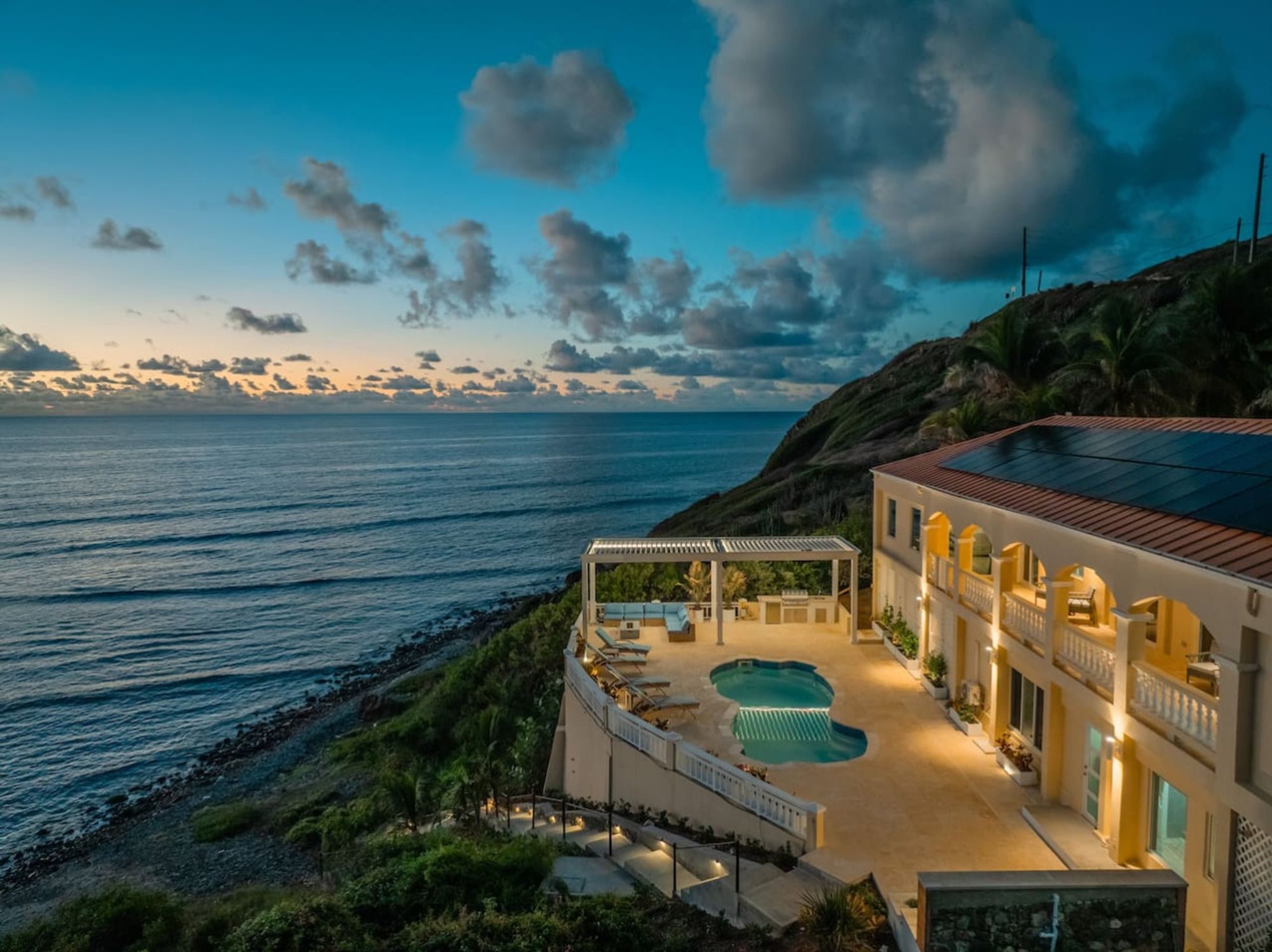
Most people who stay on St. Barth do not stay in a hotel at all. The island's dominant form of lodging is the private villa, and several rental agencies between them list many hundreds of houses, from modest two-bedroom places to large estates with pools, staff, and long views. For a family or a group, a villa is often both better value and a better fit than hotel rooms: you get a kitchen, a pool, space, and privacy, and the whole culture of the island is built around this kind of self-contained stay. The trade-offs are the usual ones. You cater for yourself or arrange a cook, you need a car, and service is whatever you set up rather than a front desk down the hall. Book through an established agency, be clear about which quartier and which view you are paying for, and read what is actually included.
The island rewards a decision made early: pick the quartier before the property. A well-priced villa in the wrong corner still leaves you driving switchbacks to the beach you wanted, while the right bay can make even a plain room feel like the whole point of the trip.
Getting there: the airport and the St Maarten hop
This is the part St. Barth is known for, and it is worth understanding before you book, because it shapes the whole trip. The island's airport, Remy de Haenen (code SBH, in St Jean, and still often called by its older name, Gustaf III), has a very short runway that ends at the beach and a steep, curving approach. Aircraft come in low over a dip in the hillside, with a road running across the top of it, then drop sharply to the tarmac. Only small short-takeoff-and-landing aircraft can use it, typically around nineteen seats or fewer, and by rule they fly in daylight only, under visual flight rules; there are no night landings, and pilots need a specific certification to land here.
Because no large jet can reach St. Barth directly, almost everyone connects. The usual gateway is Sint Maarten (airport code SXM, Princess Juliana), the Dutch side of the neighbouring island, which does take long-haul and regional jets. From there it is a short hop, on the order of ten to fifteen minutes in the air, across to St. Barth on a small plane. A few operators do most of this flying:
- Winair and St Barth Commuter run the frequent shuttle flights between Sint Maarten and St. Barth.
- Tradewind Aviation offers a more polished scheduled service, including a longer direct route from San Juan, Puerto Rico.
- Cape Air and various charter operators also serve the island.
The other way across is by sea, which skips the small-plane experience altogether. Public ferries run between the two islands and dock at Gustavia's maritime terminal. Great Bay Express sails from Philipsburg on the Dutch side; Voyager sails from Marigot on the French side. The crossing runs roughly thirty to forty-five minutes depending on the route and can be choppy, and schedules shift by season, so check current times. Private boat transfers are the third option.
One practical note on connections: because St. Barth flights stop at dusk and depend on daylight and weather, leave real margin between your incoming long-haul flight and the last hop across, and do not plan to land on St. Barth late in the day. A missed connection here usually means an unplanned night on Sint Maarten.
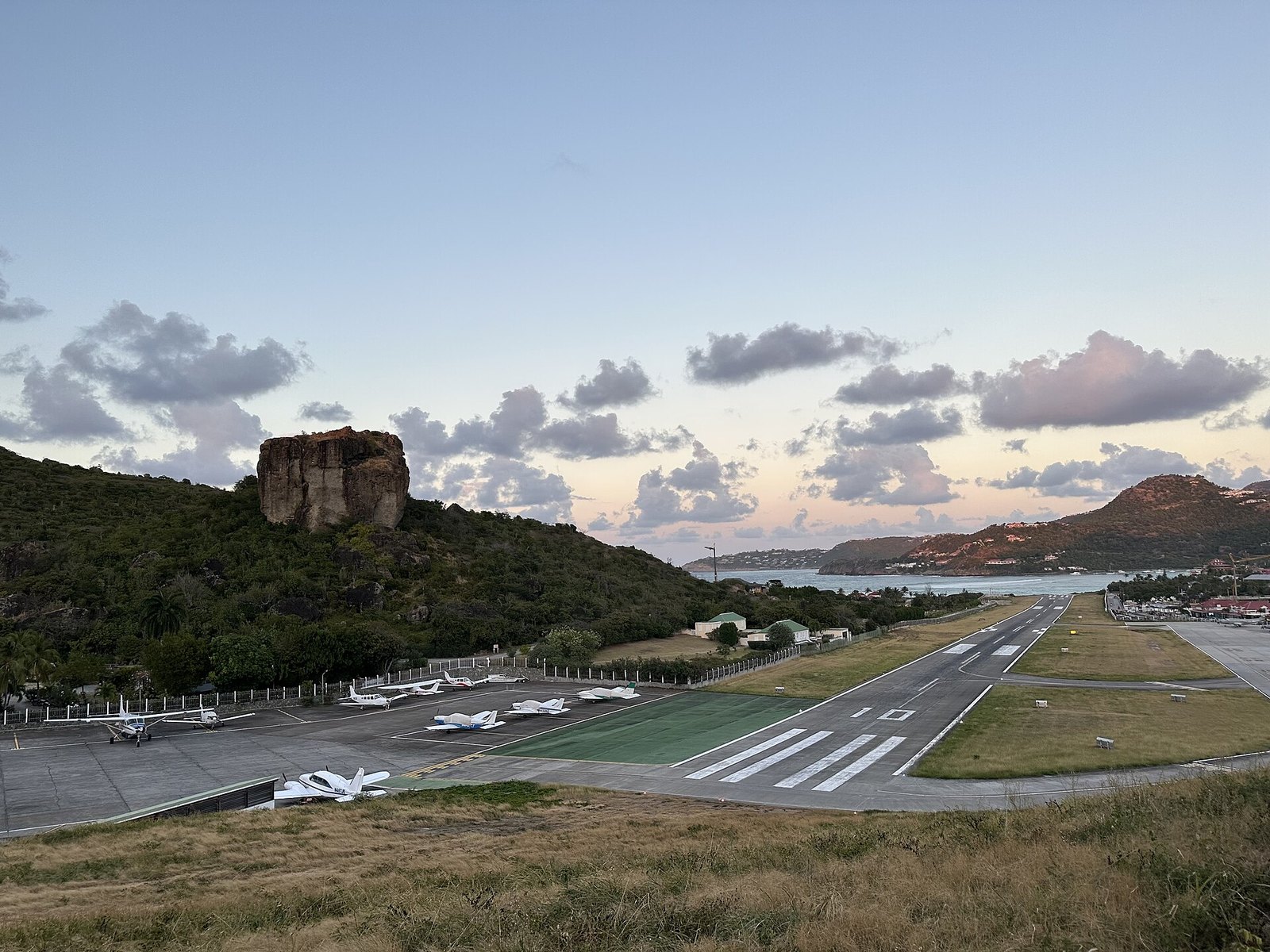
St-Barthelemy-Airport · Drozdp · CC BY-SA 4.0 · cropped
When to go
St. Barth has a long high season and a real off-season, and the gap between them in price and atmosphere is wide.
The high season runs from about mid-December through April: dry, sunny, warm days, cooler breezy evenings, and the island at its busiest and most expensive. The peak within the peak is the Christmas and New Year fortnight, when Gustavia fills with superyachts and rooms are booked far ahead at their highest rates; February is busy too. May, June, and November are the shoulder months, still mostly warm and dry, quieter, and better value, with most places open. The low season, roughly August through October, overlaps the height of Atlantic hurricane season, and a number of hotels and restaurants close for part of it. This is when the island is cheapest and quietest, with the trade-off of storm risk and reduced services.
Hurricane season formally spans June to November, with the greatest statistical risk in August and September. St. Barth was hit hard by Hurricane Irma in September 2017 and rebuilt under strict building codes. The practical point for a visitor is less about a rare major storm than about the ordinary late-summer pattern of closures and the chance of a washed-out week, so check what is open for your dates.
| Season | Months | Weather | Crowds and price | Notes |
|---|---|---|---|---|
| High | Mid-Dec to April | Dry, sunny, breezy | Busiest, dearest | Christmas and New Year peak; book well ahead |
| Shoulder | May, June, November | Mostly warm and dry | Quieter, better value | Most places open |
| Low | August to October | Hot, humid, storm risk | Cheapest, quietest | Some hotels and restaurants close; hurricane season |
The beaches and what to do
The beaches are the main event, and they are all public and free; there are no private beaches on St. Barth, though hotels and clubs set out loungers on the sand in front of them. They range from busy and serviced to empty and wild, so it is easy to pair a lively day with a remote one.
- St Jean is the long, lively crescent by the airport, with beach restaurants and the best people-watching. Good for a first day.
- Grand Cul-de-Sac is the reef-protected lagoon, warm and flat, the place for kitesurfing, windsurfing, paddleboarding, and easy snorkelling with children.
- Flamands is wide, white, and calm, with a little more surf than the lagoon.
- Shell Beach is the walkable cove just below Gustavia, backed by a bar-restaurant and made of pale sand and shell; good for sunset.
- Gouverneur and Saline are the undeveloped south-coast beaches, beautiful and serviceless; bring your own everything.
- Colombier is the hike-or-boat-only cove at the northwest tip, quiet and good for snorkelling.
Beyond the sand, the island is not a place of big organised attractions. What there is: snorkelling and diving on the reefs and around the marine reserve, boat trips out to the surrounding islets, walking the coastal paths, browsing the boutiques and the small Wall House museum in Gustavia, and eating and drinking, which is a genuine pastime here. Sunset drinks at a bar on Pointe Milou or the Gustavia waterfront are close to an institution. It is a low-key island by design; if you need nightclubs and casinos, this is not the one.
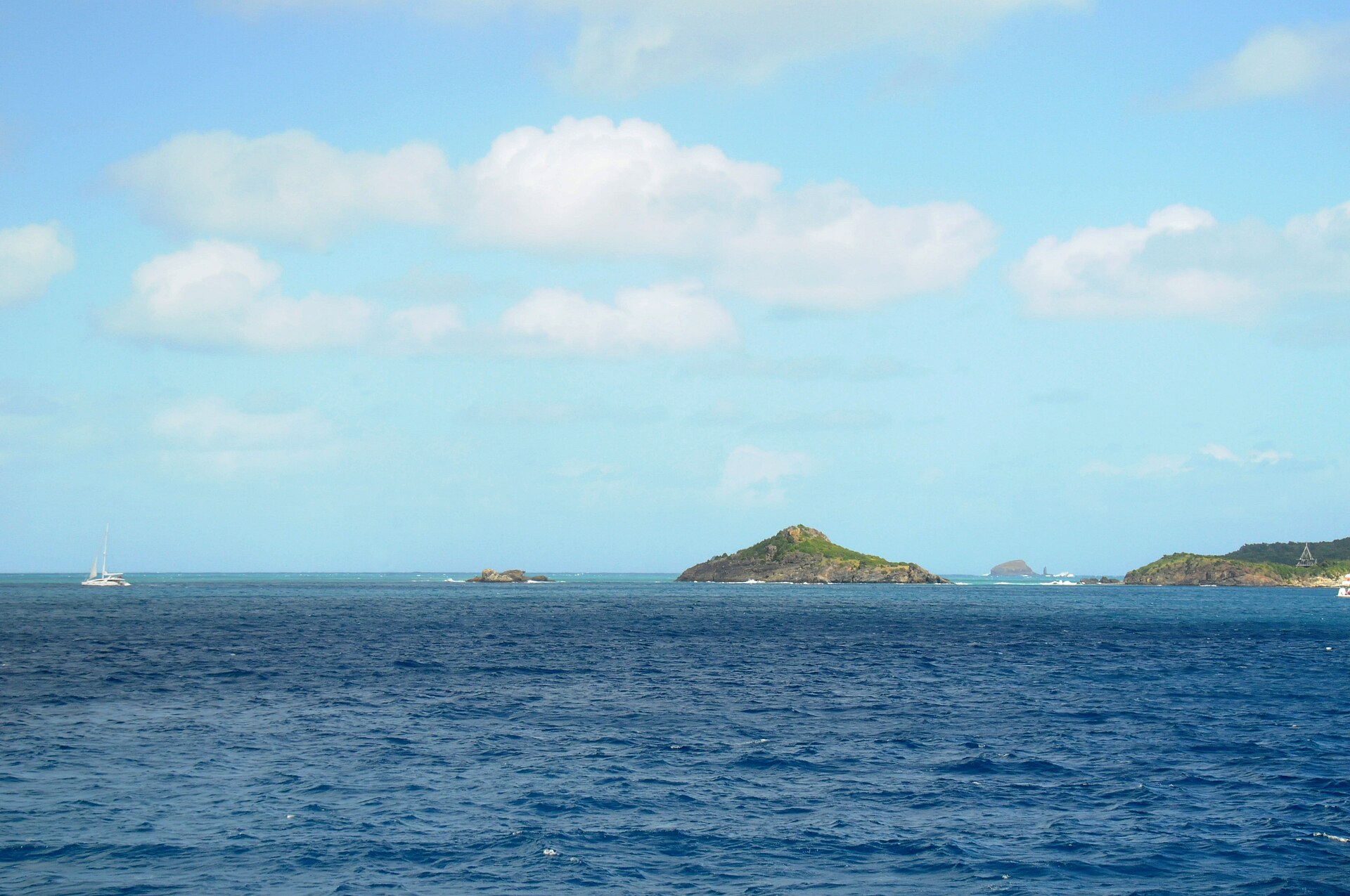
Looking north towards the Anse de Colombier, St. Barthelemy -… · David Broad · CC BY 3.0 · cropped
Food, money, and practical notes
Eating and drinking
Food is one of the real reasons to come. St. Barth is French, and it eats like it: proper bakeries and croissants, French wine, and a long list of restaurants running from beach shacks to serious kitchens, many with a French-Caribbean or Italian slant. Groceries lean French too, shipped or flown in, which is part of why eating, in or out, is not cheap. Reservations are wise in high season, especially for dinner and for the better-known tables. Tap water is generally treated and drinkable, though many visitors stick to bottled.
Money and language
The currency is the euro. Cards are taken almost everywhere, but carry some cash for small purchases and tips. Many places quote and charge in euros even though a lot of visitors arrive from the dollar world, so keep an eye on the exchange rate on card charges. The language is French; English is widely spoken in hotels, restaurants, and shops, but a few words of French are appreciated. As part of France, St. Barth uses European-style plugs and 220-volt power, so bring adapters.
Getting around
Rent a car. The island is too hilly and spread out to walk between quartiers, taxis are limited and not cheap, and there is no real public transport. Small cars and the open-sided buggies are the norm; the roads are narrow, steep, and busy in places, and parking in Gustavia and St Jean can be tight at peak times. Drive on the right, as in mainland France.
Good to know
- The airport takes only small aircraft in daylight, so plan to connect through Sint Maarten (SXM) and leave a generous buffer before the last hop across. A late long-haul arrival can strand you overnight on the other island.
- Almost every stay needs a car. Book one with your accommodation, and expect narrow, steep roads and tight parking in town.
- Prices are high across the board and the currency is the euro; little here is a bargain, and the Christmas to New Year window is the dearest and busiest of all.
- The wild south-coast beaches, Gouverneur and Saline, and the cove at Colombier have no shops, bars, or shade, so carry water, food, and sun cover.
- Nothing is invented here on price; rates move sharply by date, so confirm current figures directly with hotels, villa agencies, and the ferry and flight operators.
Common questions
Villa or hotel, which should I book?
For a couple who want service, a room made up each day, and a bar and restaurant on site, one of the small hotels is the simpler choice. For a family or a group, a private villa is usually better value and a better fit, with a kitchen, a pool, and space, which is also how most of the island stays. If you take a villa, budget for a hire car and decide early whether you want to cook, eat out, or bring in a cook.
How do I actually get to St. Barth?
Almost everyone connects through Sint Maarten (SXM), which takes long-haul jets. From there you either fly the ten-to-fifteen-minute hop on a small aircraft with Winair, St Barth Commuter, or Tradewind, or take a ferry across to Gustavia with Great Bay Express or Voyager. Tradewind also flies a longer direct route from San Juan. Leave plenty of time for the connection, as the last flights across go before dark.
Is the landing really that steep?
The approach is genuinely dramatic. Planes come in low over a gap in the hills, with a road across the top, then drop quickly to a short runway that ends at the beach. It is flown every day by certified pilots on small aircraft in daylight only, and it is safe, but it is not for the very nervous. If you would rather skip it, take the ferry from Sint Maarten instead.
When is the best time to go?
For the most reliable weather, come in the high season from mid-December through April, and accept the crowds and the highest prices, with Christmas and New Year the busiest. For a quieter island and better value with most things still open, aim for the shoulder months of May, June, or November. August through October is cheapest but overlaps hurricane season, when some places close.
Do I need a car?
In almost all cases, yes. The quartiers are spread across steep hills, taxis are few and expensive, and there is no useful public transport, so a hire car is how you reach the beaches and restaurants. The exception is a short stay based in Gustavia, where you can walk to town and to Shell Beach, though you will still want wheels to see the rest of the island.
Which beach should I base near?
For town life and dinners out, base at Gustavia; for a lively central beach, St Jean; for a wide calm beach with less bustle, Flamands; for a watersports lagoon and a self-contained resort feel, Grand Cul-de-Sac. The wild beaches at Gouverneur, Saline, and Colombier are day trips rather than places to stay, since they have no services at all.
Sources & further reading
- Saint-Barth Tourisme, the island tourism committee (official)
- Remy de Haenen (Gustaf III) Airport, St. Barthelemy, overview
- Winair, scheduled flights via Sint Maarten (SXM)
- St Barth Commuter, St Maarten to St Barth flights
- Great Bay Express, ferry from Philipsburg, Sint Maarten
- Eden Rock - St Barths (Oetker Collection)