At a glance
- Base
- Base in one zone: Val d'Orcia, Chianti, Siena hills, or Lucca area.
- When
- Late spring (May-June) for green hills, or autumn harvest (Sept-Oct) for festivals and wine.
- Getting there
- Fly to Florence (FLR) or Pisa (PSA), pick up a car at the airport.
- Getting around
- A car is essential; park outside historic town centers (ZTLs) and walk in.
- Book ahead
- Tastings, restaurants, automatic cars, and country estates, especially for spring and autumn.
- The price
- Brunello wine is expensive due to aging; agriturismo offers good value.
Tuscany is usually sold as one thing and lived as several. The countryside that draws most people is not Florence but the land south and between: the wide farmed valley of the Val d'Orcia, the vineyard hills of Chianti strung between Florence and Siena, and the bare clay ridges of the Crete Senesi. They sit close together on the map and feel different on the ground, and the first real decision of a Tuscan trip is which of them you sleep in.
This guide is for the reader choosing where to base and how to spend the days, not for the city break. It covers the zones worth staying in, the estates and working farms the region rents rooms in, the wine and the autumn harvest, when to come, how to arrive, and the one practical fact that shapes everything: out here you want a car, and the towns you most want to see are the ones you cannot drive into.
In this guide
The shape of the region
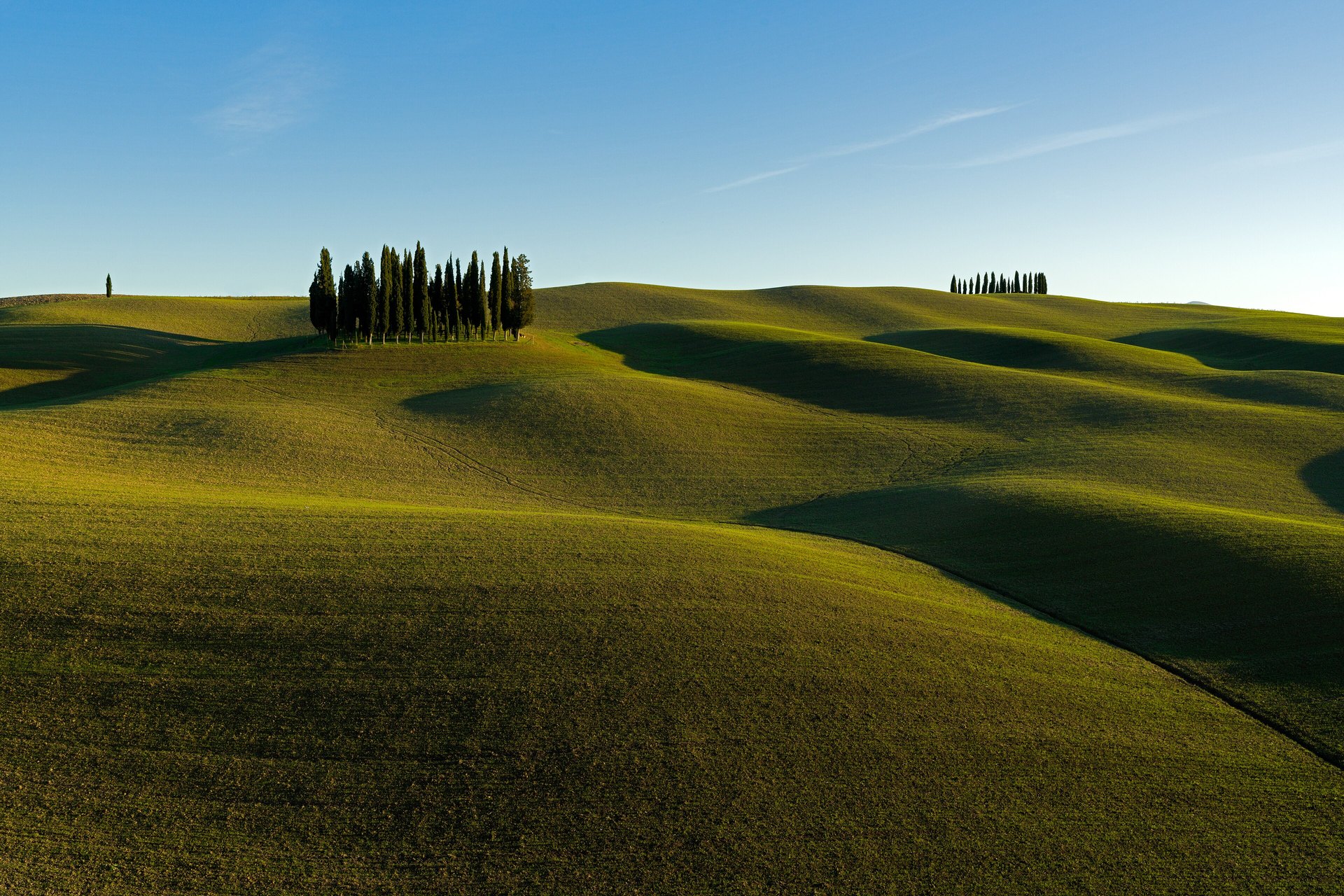
Hold the map with Florence at the top and Siena in the middle. Almost everything this guide covers sits south of Florence and around Siena, in the province's hill country. The land is not flat and it is not mountainous; it is a run of low hills, vineyards, wheat and sunflower fields, oak woods, and the single-file cypress trees that mark farm drives and hilltop chapels. Those cypresses are not decoration. In the Val d'Orcia they line the roads and settlements as they have for centuries, and they are part of why the valley carries UNESCO protection.
Three things structure a trip here:
- The hilltowns. Life is organized around small fortified towns on high ground, such as Montalcino, Pienza, Montepulciano, Radda, and Castellina, each an easy target for a morning or a lunch.
- The vineyards and cantinas. The estates that make Brunello, Vino Nobile, and Chianti Classico mostly welcome visitors for tastings, but usually by appointment rather than by walking in.
- The harvest. The grape harvest, the vendemmia, and the later olive harvest give autumn its whole character, and they are the reason September and October are the sweet spot.
Distances are short but slow. Roads bend around every hill, the pretty ones are two lanes at best, and you will lose time behind a tractor at exactly the moment the light turns good. Plan for that. A base and a car beat a fast itinerary.
The zones to base in
Pick one zone and stay put; the region is small enough to day-trip the rest, and moving hotels every night mostly costs you lunches. Here is how the main areas differ.
Val d'Orcia
This is the wide, open valley south of Siena, a UNESCO World Heritage cultural landscape since 2004 and the view most people carry of rural Tuscany: farmed hills, lone cypresses, and Renaissance towns on the ridges. Its official heart is five municipalities, Castiglione d'Orcia, Montalcino, Pienza, Radicofani, and San Quirico d'Orcia, with Montepulciano just to the east. Montalcino is the wine capital, a hill town under a 14th-century fortress that gives its name to Brunello. Pienza is a small Renaissance town rebuilt in the 15th century by Pope Pius II as a model city, and it is the home of pecorino di Pienza, the sheep's-milk cheese. San Quirico d'Orcia and the spa hamlet of Bagno Vignoni sit in the middle of it all. Base here for scenery, wine, and quiet, and accept that nightlife means a good dinner and a walk.
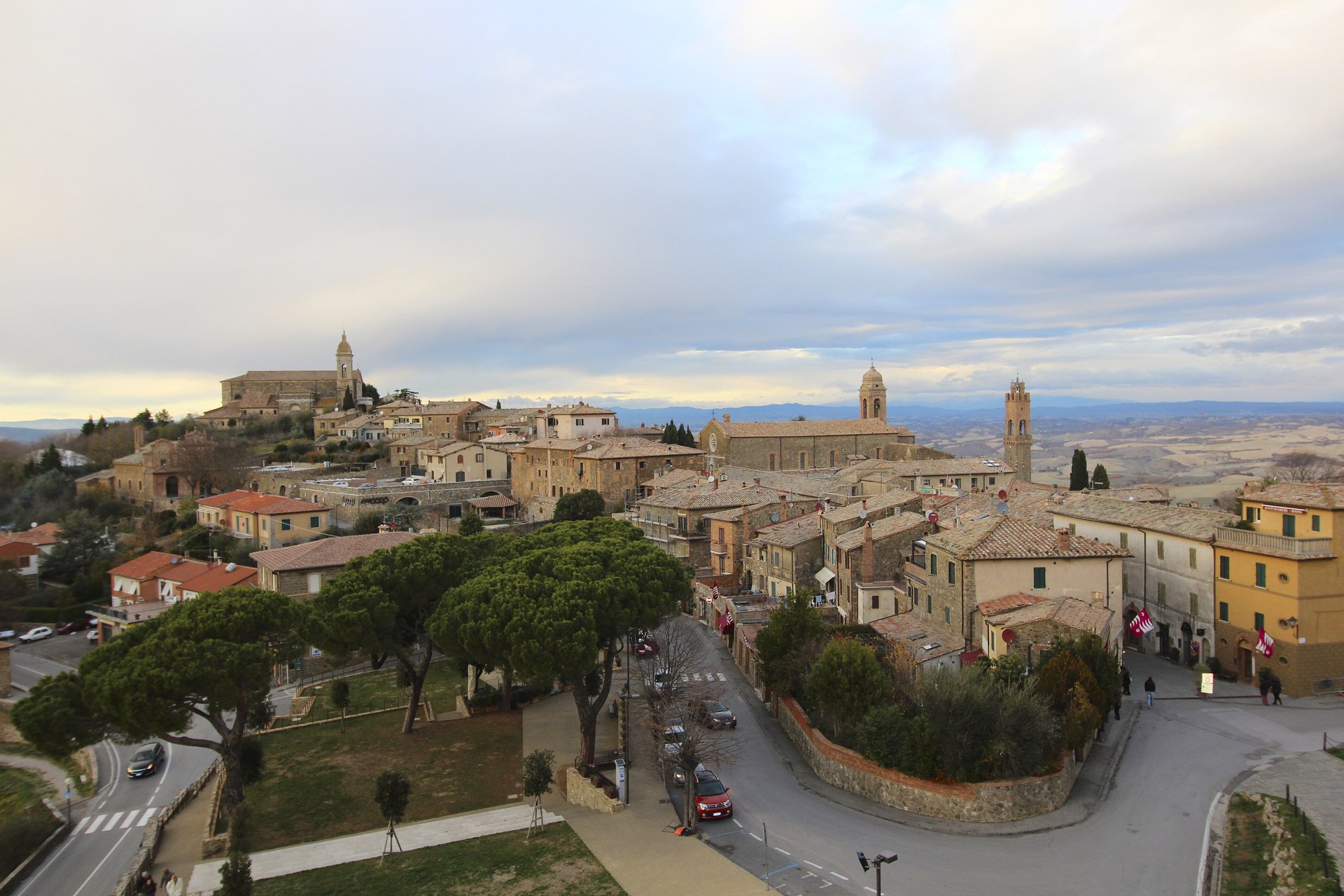
MontalcinoViewFromCastle1 · LigaDue · CC BY-SA 4.0 · cropped
Chianti
Chianti is the vineyard country directly between Florence and Siena, higher and more wooded than the Val d'Orcia, and closer to a city if you want one. The famous towns end in the words "in Chianti": Greve, the biggest and the northern gateway coming down from Florence; Panzano, above a vine-filled basin locals call the conca d'oro; Radda, a small walled town that was a seat of the medieval Chianti league; and Castellina, an old frontier post between Florence and Siena with its walls still showing. The spine of the area is the Chiantigiana, the SR222, which runs the ridge from Florence to Siena through vineyard after vineyard. Base here if you want wine within reach of Florence.
The Siena hills and the Crete Senesi
East and south of Siena the land changes to the Crete Senesi, bare clay hills, almost treeless, that go gold in summer and brown after harvest, dotted with isolated farmhouses and the odd abbey. It is emptier and less visited than either Chianti or the Val d'Orcia, and it makes a good base if you want space and a short drive into Siena, the great Gothic city with its shell-shaped Piazza del Campo. Towns like Asciano and the abbey of Monte Oliveto Maggiore anchor the area.
Lucca and the northwest, as an alternative
If the southern hills feel too far from an airport, the northwest around Lucca is a gentler, greener alternative, within easy reach of Pisa. Lucca itself is a flat, walkable walled city you can cycle the ramparts of, and it makes an easy first or last night near the airport. It is a different Tuscany, less about wine estates and more about town life, but it is worth knowing as an option.
Where to stay: estates and farms
The signature Tuscan stay is not a hotel in a town; it is a restored country estate or a working farm with rooms. They range from grand walled hamlets turned into resorts to simple family agriturismi where breakfast is the farm's own eggs and oil. A few notes on the types, then some real, confirmable names by character. Rates move constantly and estates open and close with the season, so check current listings rather than trusting any figure here.
The borgo estates
Several old fortified hamlets and castle estates have been restored as resorts, keeping the chapel, the cellar, and the stone houses while adding a spa, a pool, and a serious kitchen. In the Val d'Orcia around Montalcino, Rosewood Castiglion del Bosco is one of the largest, a big private estate with its own Brunello winery, suites and villas, and a golf club, and Castello Banfi - Il Borgo is a small Relais & Chateaux hotel set in the stone hamlet beside the Banfi winery's Poggio alle Mura castle. In Chianti, COMO Castello del Nero occupies a restored castle near Tavarnelle, about half an hour from Florence. West toward Siena, Belmond Castello di Casole spreads across a very large estate above Casole d'Elsa. Most of these run seasonally, spring through autumn, so confirm dates.
The farm-to-table estates
A newer kind of estate leads with its own agriculture and kitchen. Borgo Santo Pietro, near Chiusdino southwest of Siena, is a country-house hotel on a working farm, growing and raising much of what its restaurants serve. Villa Lena, out near Palaia in the hills toward Pisa, pairs an organic farm and a farm-to-table table with an artist residency, and reads more like a relaxed creative retreat than a grand hotel.
The agriturismo
The most Tuscan option, and often the best value, is the agriturismo. The word is not marketing; in Italy it is a legal category, defined by national law, for a working farm that hosts guests as a side activity, with food and wine that come largely from the property. That is why a good agriturismo comes with the estate's own oil at breakfast and its own wine at dinner. They range from plain rooms on a family vineyard to polished conversions with pools that verge on boutique hotels. What they share is that a farm is really being run around you.
Two practical points when booking any of these:
- Confirm the season. Many of the country estates close from around November to March, and the farms are busiest and best during and just after harvest.
- Confirm what is nearby. A view usually means distance. Ask how far the nearest town, restaurant, and shop are before you book, because you will be driving to most dinners.
The country estate with its own winery and the family farm with six rooms are selling the same thing at different prices: a working piece of agricultural Tuscany that you get to sleep inside of. Decide how much service you want around that, not whether you want it.
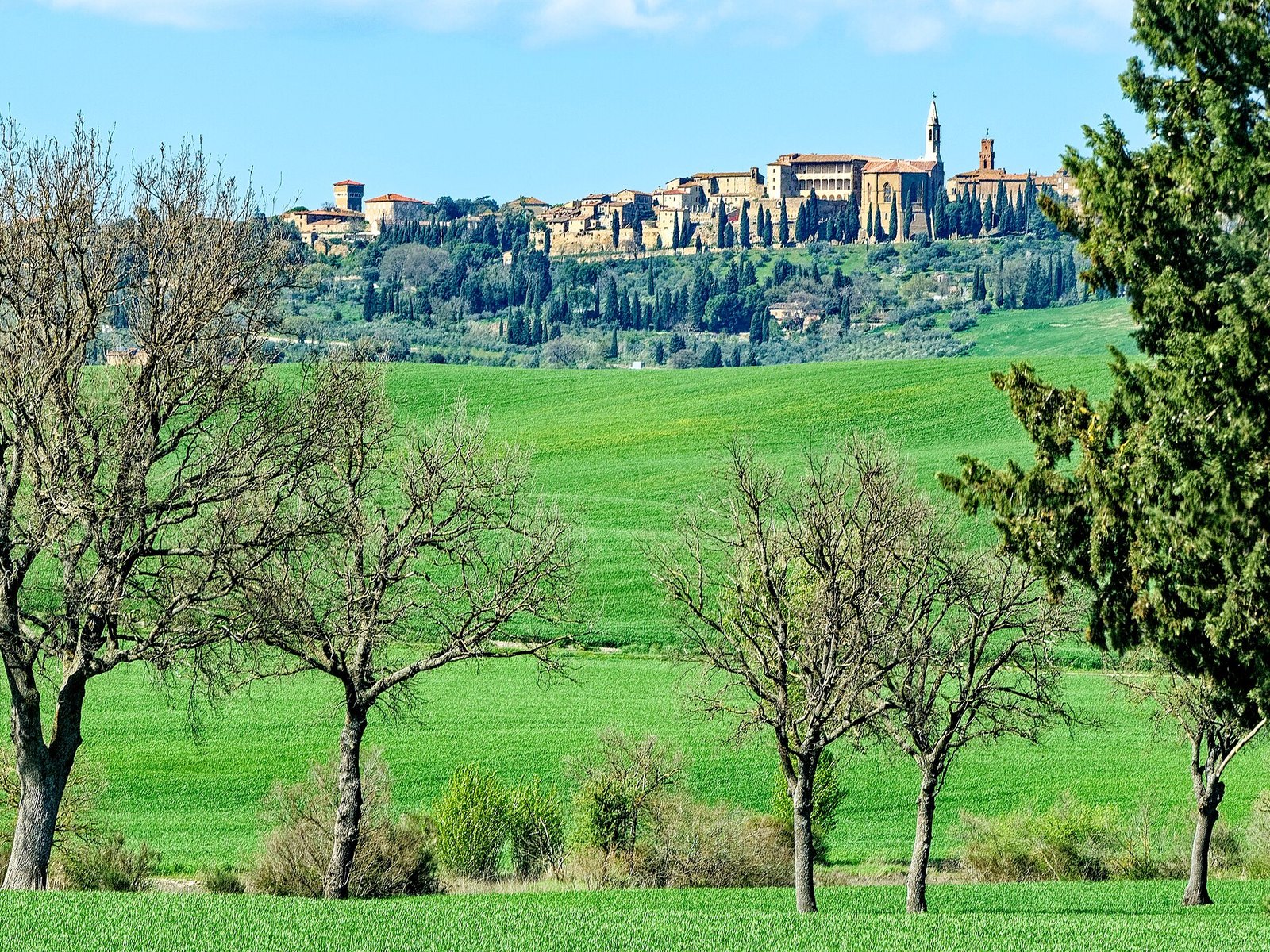
1996 wurde Pienza von der UNSCO als Weltkulturerbe anerkannt. 01 · Holger Uwe Schmitt · CC BY-SA 4.0 · cropped
The wine and the harvest
Most of the reds here are built on one grape, Sangiovese, dressed differently by each zone.
- Brunello di Montalcino is the heavyweight, made from Sangiovese (called Brunello locally) around Montalcino. It is aged for years in wood and bottle before release; by the rules it cannot be sold until several years after the harvest, which is part of why it is priced the way it is. There is a younger, earlier-release Rosso di Montalcino from the same area if you want the character without the wait.
- Vino Nobile di Montepulciano comes from the hills around Montepulciano, also Sangiovese-based. It was among Italy's first wines to earn the top DOCG rank, and it is generally more approachable and better value than Brunello.
- Chianti Classico is the wine of the hills between Florence and Siena, marked by the black rooster (gallo nero) seal. Do not confuse it with plain "Chianti," a much larger and looser zone; Classico is the historic core.
Tastings at the cantinas are a good reason to have a car and a designated driver. The important habit is to book ahead: many estates receive visitors by appointment, not as a walk-in, especially the well-known ones. Your host or hotel can usually set up two or three visits a day, which is plenty.
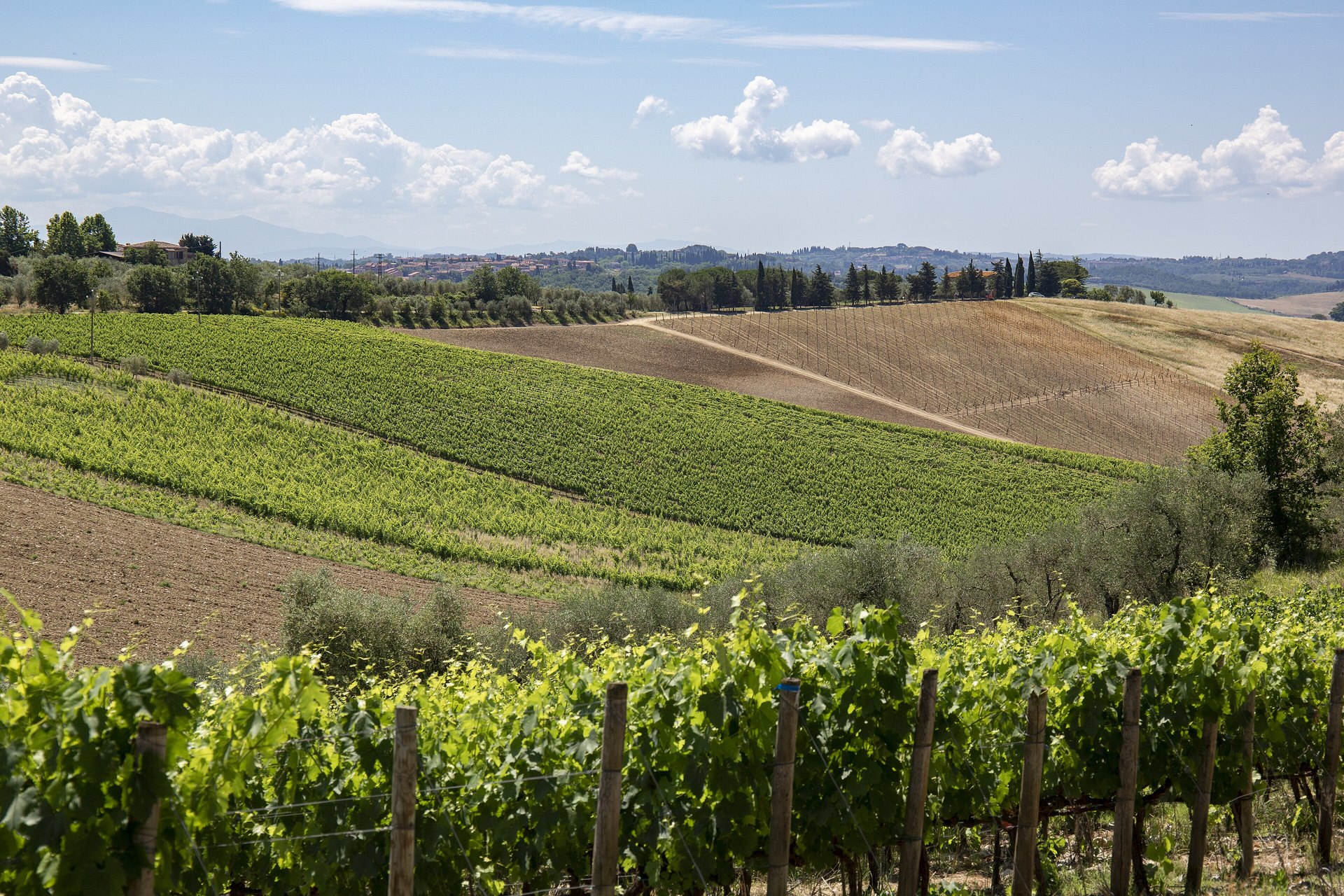
Chianti4 · Alicebrinis · CC BY-SA 4.0 · cropped
Then there is the harvest, the best single reason to time a trip. The vendemmia, the grape harvest, generally runs from around late August through October, moving with the weather and the site: the Chianti hills tend to peak from mid-September into early October, and slower Montalcino can run later into the month. The olive harvest follows, roughly from late October into November, when the estates press their new oil, cloudy and green and sharp, and many sell it straight from the mill. You do not need to pick grapes to enjoy this season; the towns hold food and wine festivals, the sagre, through the autumn, and the light and the emptier roads are reward enough.
When to go
There are two clearly good windows and two you should understand before you book.
- Late spring, roughly May into June, gives you green hills, wildflowers, long light, and warm-but-not-hot days, before the peak-summer crowds and heat arrive.
- Harvest, September into October, is the connoisseur's pick: the vendemmia, the first festivals, warm days and cool nights, and thinning crowds. This is the cover season for a reason.
The two to weigh carefully:
- High summer, July and especially August, is hot, and August brings the Italian holidays around Ferragosto on the 15th, when some family-run restaurants and shops close and the coast fills up. It is not a bad time for the estates with pools, but plan around the midday heat.
- Winter, roughly November through March, is quiet and can be beautiful in a stark way, but many country estates and some restaurants close, and short days limit driving. Good for thermal springs and truffles, thin on open estates.
| Season | The weather | What is happening | Keep in mind |
|---|---|---|---|
| Spring (Apr-Jun) | Mild to warm, green | Wildflowers, Easter, long light | Book estates early; some still opening |
| Summer (Jul-Aug) | Hot, dry | Festivals; August holidays | Midday heat; some closures in August |
| Autumn (Sep-Oct) | Warm days, cool nights | Grape then olive harvest; sagre | The sweet spot; book well ahead |
| Winter (Nov-Mar) | Cool to cold, some fog | Truffles, thermal baths | Many estates close; short days |
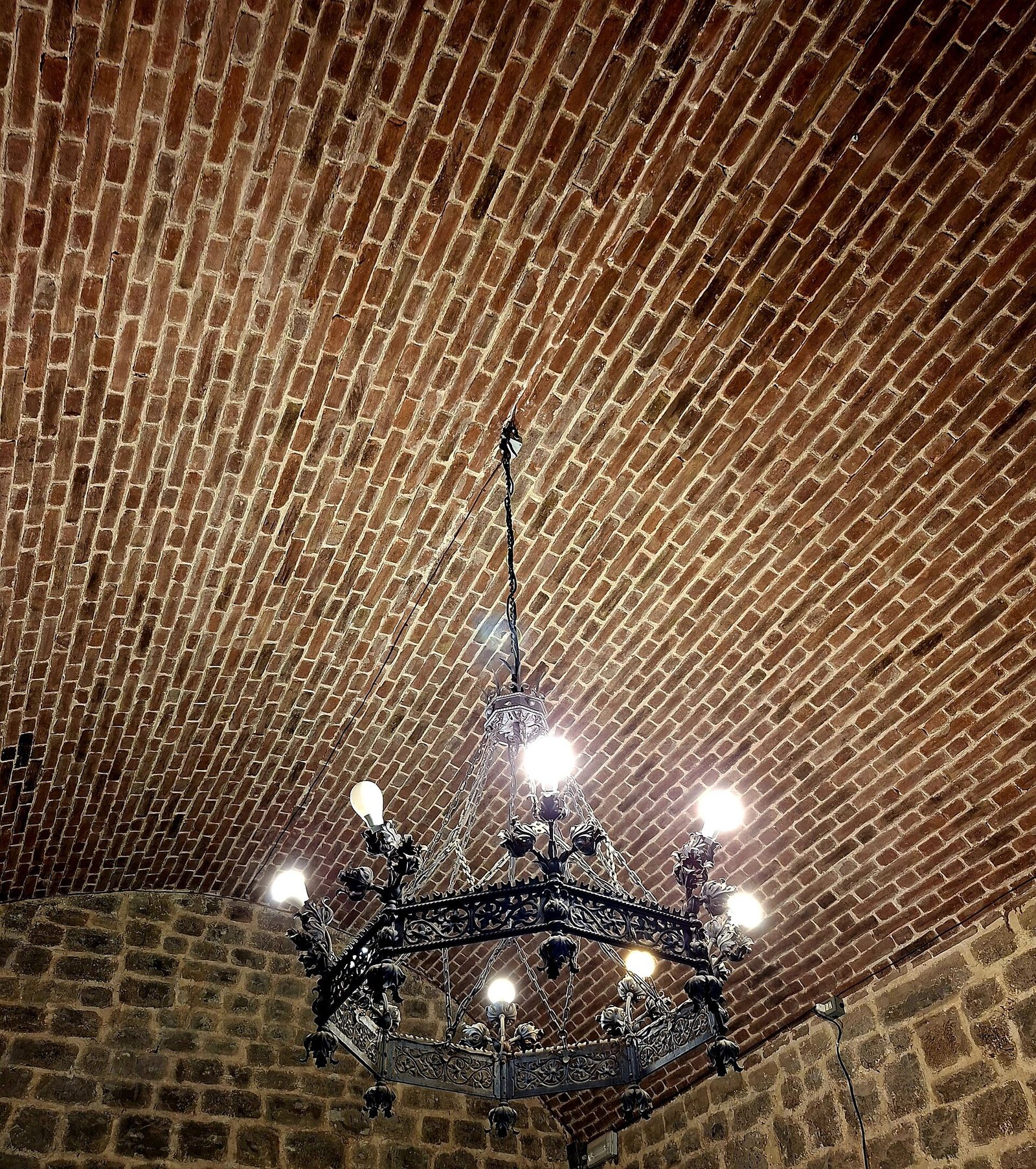
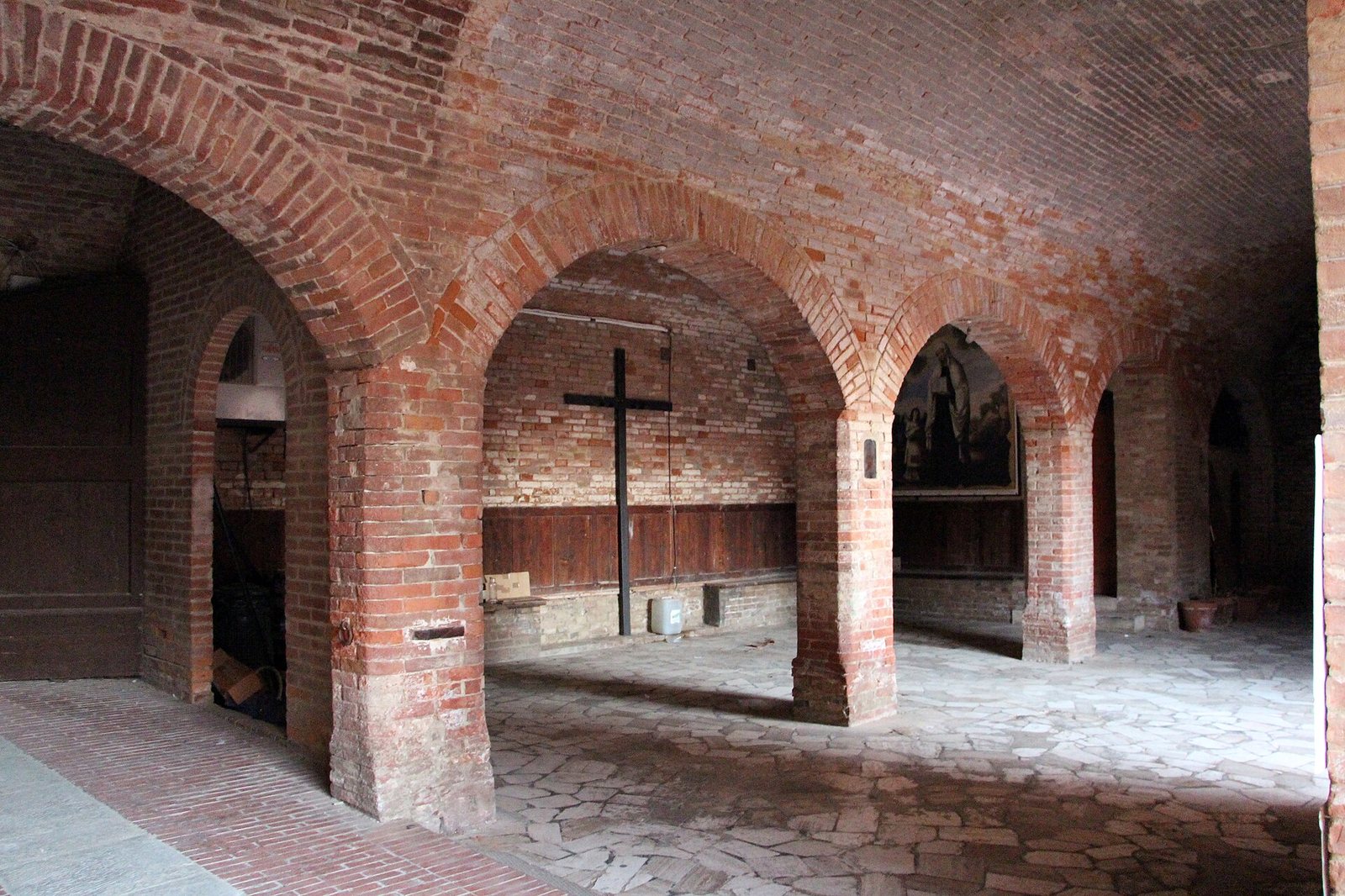
Montalcino - Fortezza di Montalcino - Soffitto a volta in mat… · Anna.Massini · CC BY-SA 4.0 · cropped
Getting there, and driving
Two airports cover the region.
- Florence (Amerigo Vespucci, code FLR), also called Peretola, is the closest airport to Siena and the southern hills, and a tram now links it to Florence's main station in about twenty minutes.
- Pisa (Galileo Galilei, code PSA) is a little farther but often has more flights, and it is the natural gateway for Lucca and the northwest.
You can reach the bigger towns by train. Siena, Lucca, and others are on the network, and the railhead for the deep Val d'Orcia is Chiusi-Chianciano Terme, which also has direct trains from Rome. But trains do not reach the vineyards, the small hilltowns, or most of the estates.
So, plainly: for this trip you want a car. Pick it up at the airport and drive out. A few honest cautions about driving here:
- Watch the ZTL. Almost every historic town center, including Florence, Siena, Lucca, Montepulciano, and San Gimignano, is a Zona a Traffico Limitato, a limited-traffic zone closed to non-resident cars and watched by cameras. Drive into one by accident and a fine follows by post, often months later. Park in the lots outside the walls (look for signs to parcheggio) and walk in. This is the single most common and most avoidable mistake visitors make.
- Roads are slow and narrow. The scenic routes are two-lane and winding, and some estate drives are gravel. Budget more time than the distance suggests.
- Book an automatic early. Manual transmission is the default in Italy; if you need an automatic, reserve it well ahead.
- Carry a backup for navigation. Signal drops in the hills, so do not rely only on your phone for the last mile to a remote farm.
Good to know
- The ZTL is the trap. When in doubt, do not drive into a walled town; park outside and walk. Cameras, not police, issue the fines.
- Book tastings and big-name tables ahead. Many cantinas and the better restaurants take visits by reservation, not walk-in.
- Estates run on the season. Confirm opening dates directly; a lot of country places close in winter.
- Bring layers in autumn. Harvest days are warm but the nights turn cool, and stone buildings hold the chill.
- Carry some cash. Small producers, farm stands, and village trattorias still like it, even as cards spread.
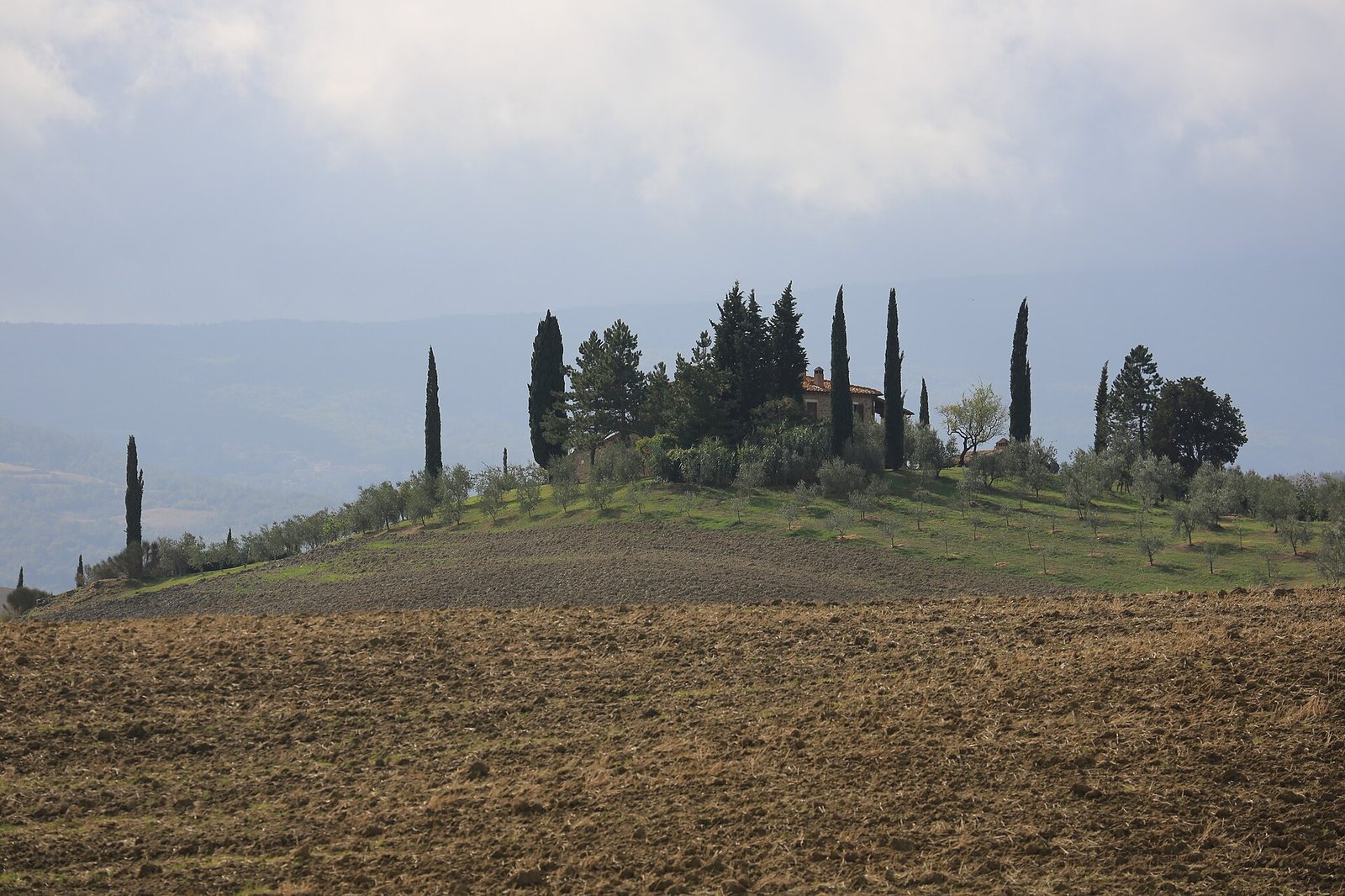
Terme Naturali Bagno Vignoni · Einaz80 · CC BY-SA 4.0 · cropped
The table, the springs, and the hilltowns
Tuscan country cooking is plain on purpose: good ingredients, few of them, not much sauce. Expect thick ribollita and bean soups, pici (a hand-rolled fat spaghetti of the south), wild boar (cinghiale) ragu, pecorino cheese in every stage from fresh to aged, grilled meat, and the local unsalted bread that surprises people at first. The famous bistecca alla fiorentina, a huge rare T-bone, is a Chianti and Florence specialty, and Panzano is known for its butchers. Drink the local red and the estate's own olive oil and you have most of it.
The hilltowns worth the drive
- Pienza for Renaissance streets and pecorino, small enough to see in a couple of hours.
- Montepulciano for Vino Nobile and long views, its main street climbing to a handsome square.
- Montalcino for Brunello and its fortress.
- San Gimignano, west of the others, for its cluster of medieval stone towers; go early or late, as day-trippers fill it midday.
- Siena itself for a day: the Piazza del Campo, the striped cathedral, and the alleys, all closed to cars.
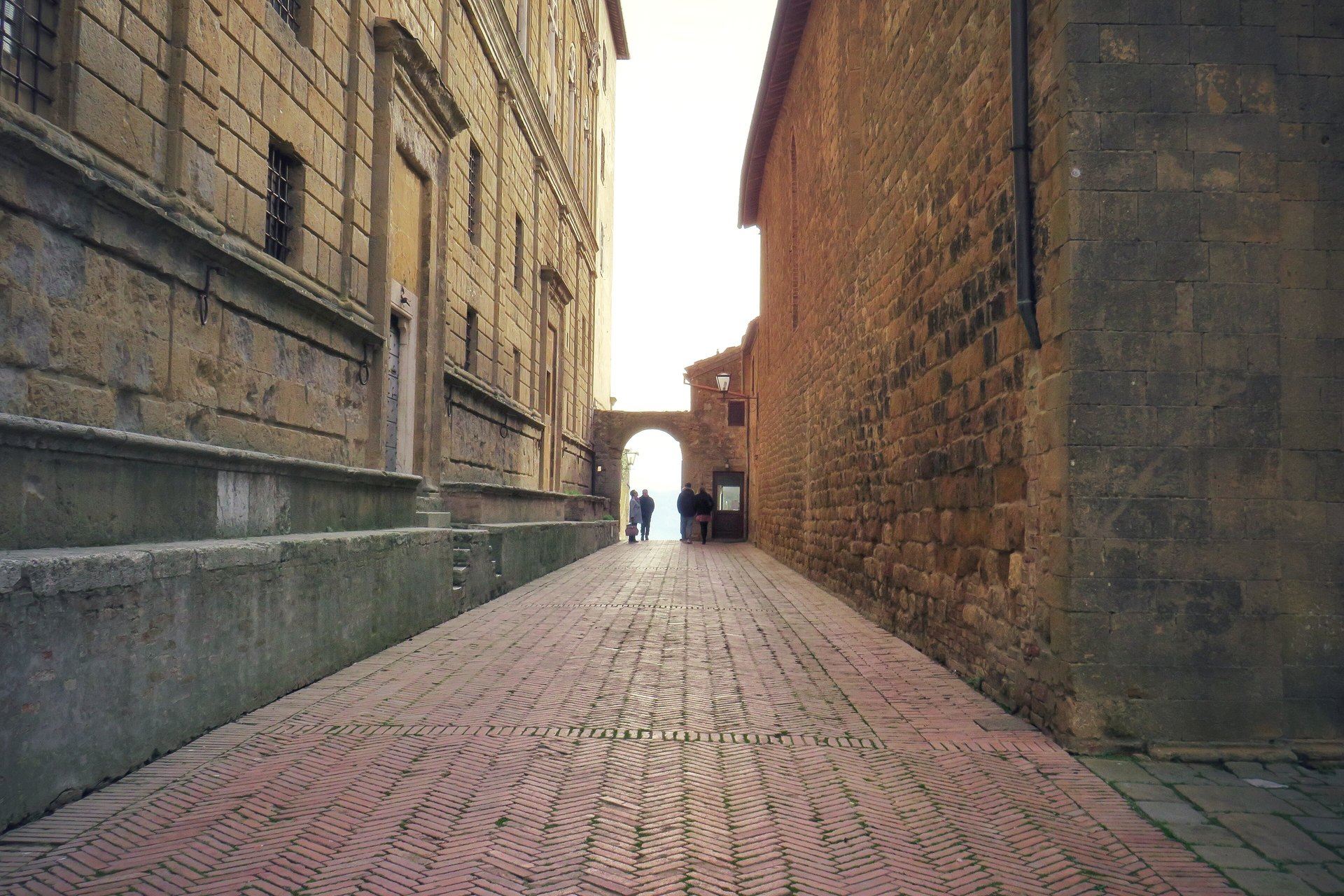
Pienza Siena Via del Balzello · PROPOLI87 · CC BY-SA 4.0 · cropped
The thermal springs
The same volcanic ground that feeds the vineyards feeds hot springs, and a soak is a good use of a cooler afternoon. In the Val d'Orcia, Bagno Vignoni is a tiny village built around a stone thermal basin in its main square; you cannot bathe in that historic pool now, but the village has thermal pools and spa hotels, and there are free pools downstream below the town. Farther south, toward the Maremma, the Cascate del Mulino at Saturnia are open-air terraced pools of warm water that are free to use and busy for good reason; go early or late to beat the crowds. Both are worth planning a half-day around.
By the numbers
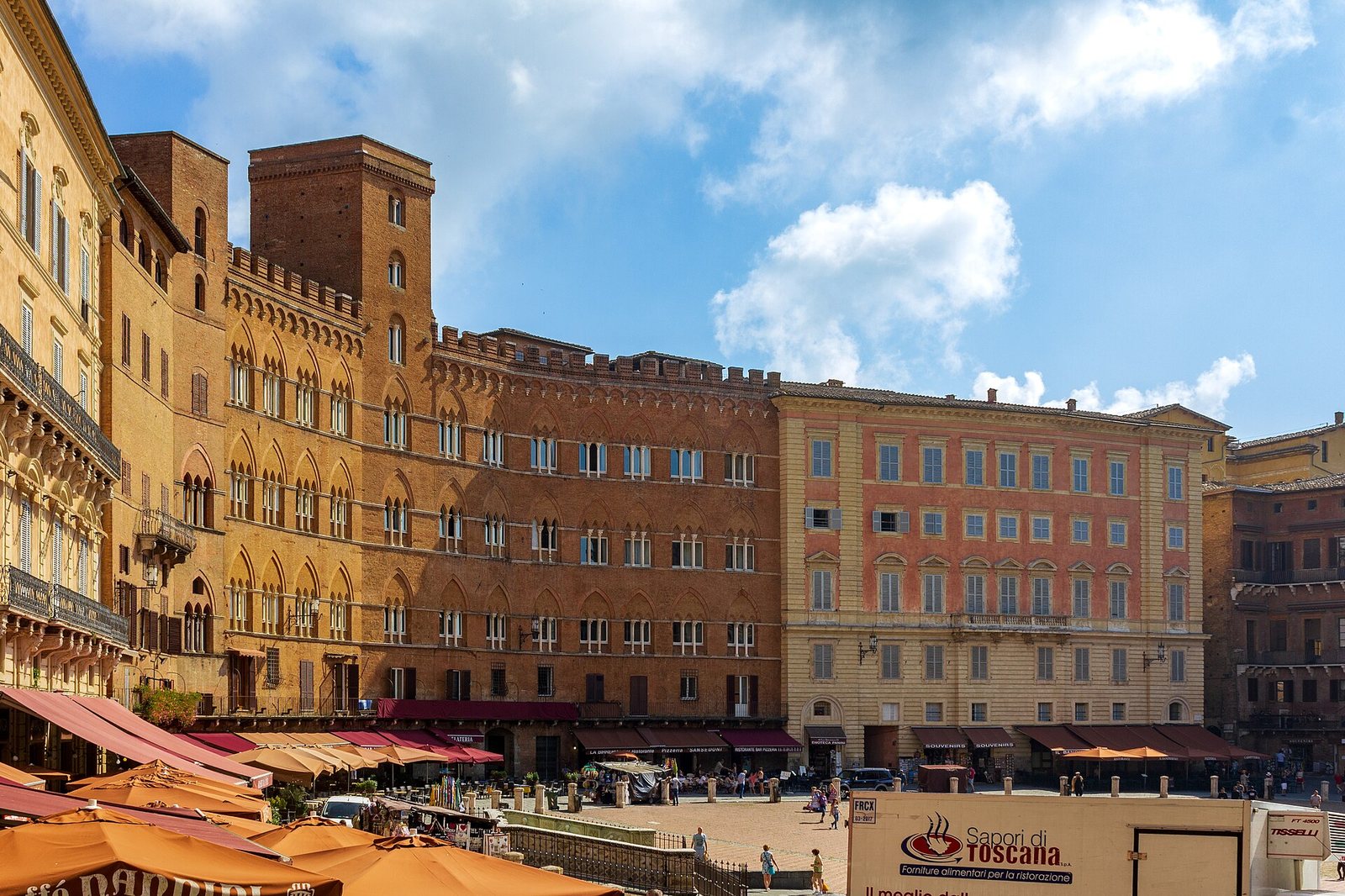
Monte oliveto maggiore, abitazioni dei fattori, 01 · Sailko · CC BY 3.0 · cropped
Common questions
How many days do I need?
Five to seven is a comfortable first trip: enough to settle into one base, drive the main hilltowns, do a day of tastings, spend a day in Siena, and still keep a slow morning or two. With only three or four days, pick one zone, Val d'Orcia or Chianti, and do not try to add the other.
Val d'Orcia or Chianti?
Val d'Orcia for the open scenery, the big-name wine towns, and quiet; Chianti for vineyards close to Florence and a shorter transfer from the airport. If you want the classic wide Tuscan landscape, choose the Val d'Orcia. If wine and access to a city matter more, choose Chianti.
Do I really need a car?
For the countryside, effectively yes. Trains reach Siena, Lucca, and Chiusi, but not the vineyards, the small towns, or most estates. If you would rather not drive, base in Siena or Lucca, use trains and the occasional guided day tour, and accept a narrower trip.
When is the grape harvest?
Roughly late August through October, varying by year and place. The Chianti hills tend to peak from mid-September into early October, and Montalcino can run later. The olive harvest follows into November. Confirm locally if you are timing a trip to a specific harvest, since dates move with the weather.
What is an agriturismo, exactly?
A legally defined Italian farm stay: a working farm that rents rooms as a secondary activity and serves food and wine largely from the property. Quality ranges from simple to near-luxury, but the common thread is that agriculture, not hospitality, is the main business.
Is August a bad time to go?
It is the hottest and busiest month, and around the mid-August Ferragosto holiday some family-run places close. It is fine if you have a pool and plan around the midday heat, but late spring and the September to October harvest are more comfortable and more interesting.