At a glance
- Base
- Comporta village, Carvalhal, or Melides; choose a village, a cabana near the sand, or a villa in the pines.
- When
- Late spring (May, June) or early autumn (September, October) for warm weather and fewer crowds.
- Getting there
- From Lisbon by car (1-1.25 hours) or drive to Setubal (40 mins) then car ferry to Troia (25 mins).
- Getting around
- A car is essential; pick up at Lisbon airport. Villages and beaches are spread out, public transport is thin.
- Book ahead
- Book early, especially for summer. Supply of cabanas, villas, and hotel rooms is small; August fills months ahead.
- The price
- Proximity to sand, size of place, and high summer season drive prices; supply is limited.
An hour or so south of Lisbon, past the last of the suburbs and across the Sado estuary, the road runs out into flat, bright country — rice paddies laid out in squares, umbrella pines, cork oaks with their trunks stripped red, and then a long line of dunes holding back the Atlantic. This is Comporta, a stretch of the Alentejo coast that has become fashionable over the last decade and has, so far, mostly refused to look the part. There are no beach towers here, no line of high-rise hotels along the front. Through a mix of strict building rules and the fact that a single family owned most of the land for generations, the coast has stayed low: whitewashed houses, thatched cabanas, and a handful of small hotels set back among the trees.
That restraint is the appeal, and it shapes the decision this guide is built around: where to base yourself, and in what kind of place. Comporta is not a single town but a scatter of villages — Comporta itself, Carvalhal, Pego, and Melides to the south — with the beaches on one side and the rice fields on the other. A cabana in the dunes, a villa in the pines, or a room in one of the low-slung design hotels? And once you have chosen, how do you spend the days? That is what follows.
In this guide
What Comporta is
Comporta sits on the Alentejo coast, on the south bank of the Sado estuary, roughly an hour to an hour and a quarter by car from Lisbon. The name covers a small parish and, loosely, the whole run of coast around it. The land is flat and worked: this is one of Portugal's rice-growing areas, and the paddies that spread inland from the road turn from water to bright green to gold across the season. Behind the beaches run belts of umbrella pine and cork oak, and between them, dunes and sandy tracks.
Three things explain why it looks the way it does. First, the land here was for decades a single estate, the Herdade da Comporta — roughly twelve thousand hectares controlled by the Espirito Santo banking family, who used it as a private retreat and let very little be built. When the family's bank collapsed in 2014, the estate was broken up and sold in parcels, which is why you now hear names like Philippe Starck and Christian Louboutin attached to the area. Second, building rules have stayed strict, holding development low and spread out. Third, the local architecture — the cabana — set a template that the new money has largely chosen to copy rather than replace.
The cabana is worth understanding, because it is everywhere and it drives the look of the place. Originally these were the huts of rice workers and fishermen: single-room buildings of timber and woven reed, with steep thatched roofs of straw or palm, often washed white with a stripe of blue. Over the last thirty years that plain form has been reworked into some of the most expensive holiday houses in Portugal — the same low silhouette and natural materials, now with glass walls and a pool. You will stay in one version of it, and eat lunch in another on the sand.
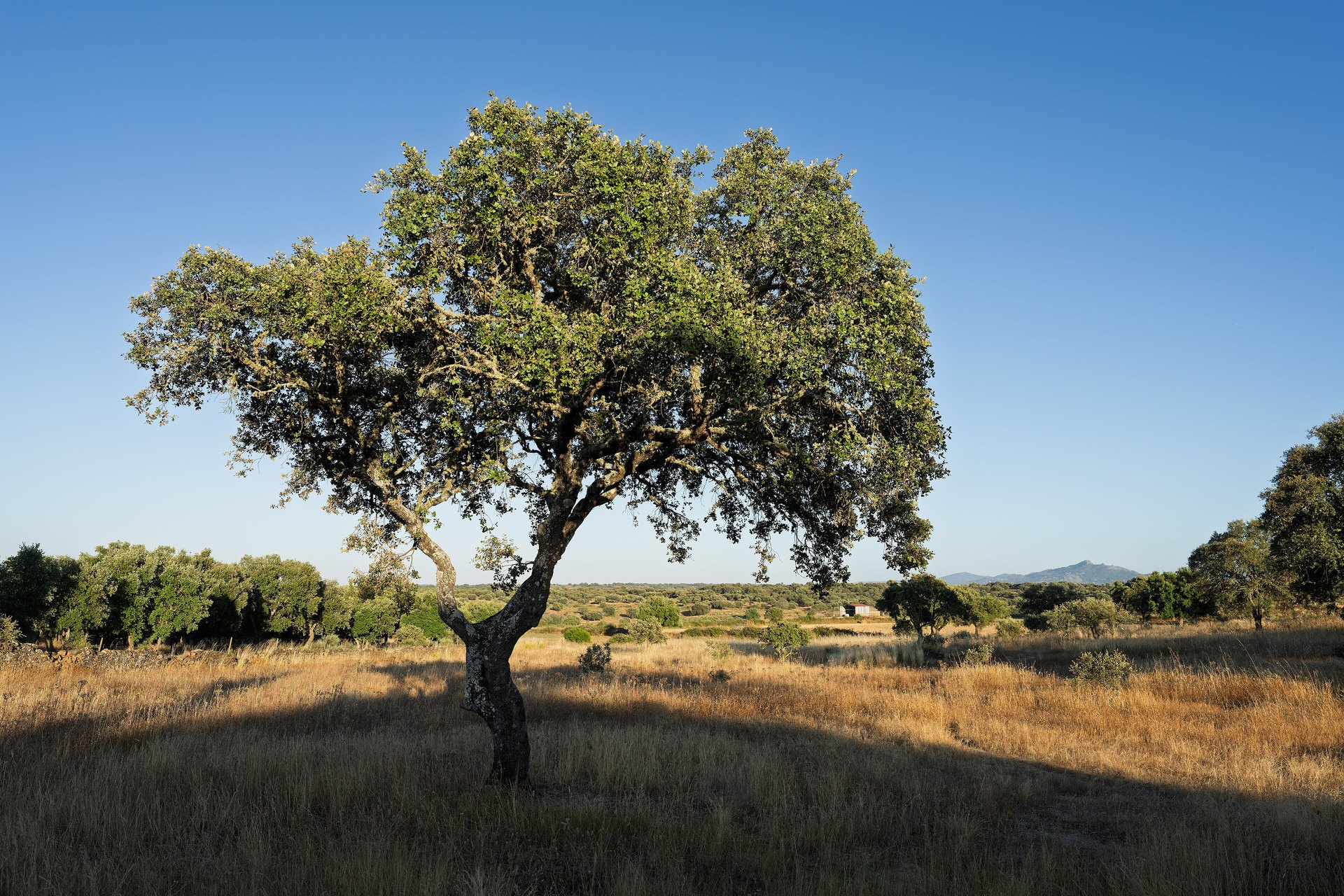
Cork oak tree (Quercus suber) next to Menir da Meada, Meada,… · Jules Verne Times Two · CC BY-SA 4.0 · cropped
An honest word about the present: Comporta has been discovered. It draws a fashion-and-design crowd in summer, prices have climbed, and there is real development pressure now that the old estate has been sold off in pieces. What it has not done, at least not yet, is build up — there is still no strip of seafront towers, and the rules that kept it low remain in force. Expect a quiet, low-built coast that happens to be expensive, not a resort.
Where to base
Everything here is close together, so the choice of base is less about logistics than about the kind of days you want. The villages are minutes apart by car, but there is no single center tying them together, so pick the one that fits and settle in.
Comporta village is the historic core, set back from the beach around a church and the old rice-workers' houses. It is low and whitewashed, with a short main street of shops, a few restaurants, and the most concentrated sense of a real village. Good if you want to walk to dinner and feel you are somewhere, not just parked near a beach.
Carvalhal, a few kilometres south, is the easier, more spread-out option: houses scattered through the pines with beach access, a supermarket, and enough restaurants to keep you fed for a week. It tends to suit families and groups renting a house with a pool, and parking is less of a fight than in Comporta village.
Melides, about twenty minutes further south, is the quieter and increasingly design-minded neighbour, built around a lagoon and its own long beach. It has fewer services and a slower pulse, and it is where Christian Louboutin put his hotel. Choose it if you want distance from the summer crowd and do not mind driving for a wider choice of restaurants.
Then there is the choice that cuts across all three: a cabana in the dunes versus a villa in the pines. A cabana, or a small house near the sand, puts you a short walk from the water and the beach restaurants; it is the more romantic and exposed option, and often the more expensive for the space. A villa set back in the pines gives you room, privacy, and a garden, at the cost of a drive to everything. It comes down to whether you would rather hear the sea or the wind in the trees.
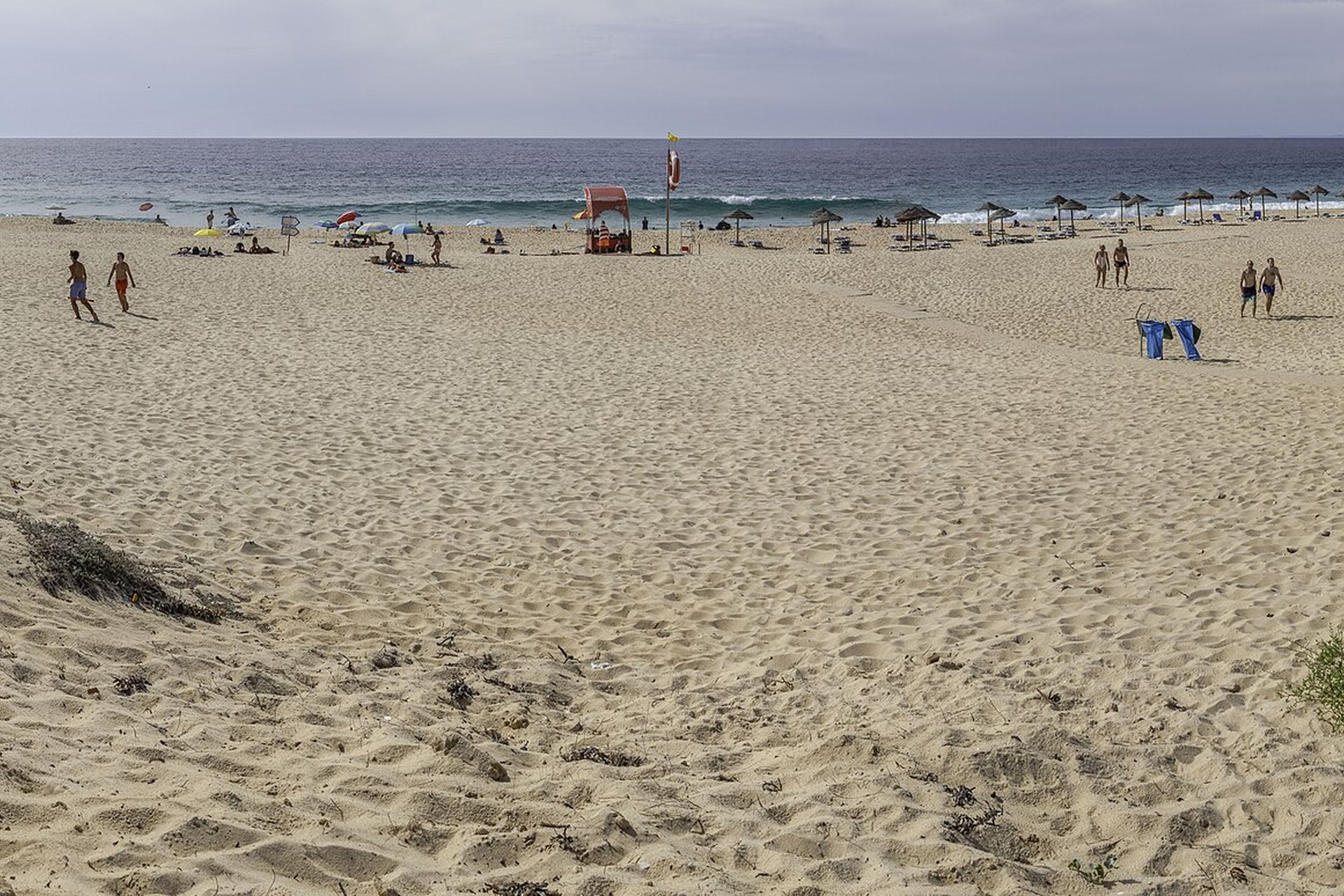
Playa de Comporta, Portugal, 2021-09-12, DD 15-26 PAN · Diego Delso · CC BY-SA 4.0 · cropped
| Base | Best for | The feel | Keep in mind |
|---|---|---|---|
| Comporta village | Walking to dinner, a real village | Whitewashed, low, historic core | Small; books out early in summer |
| Carvalhal | Families, house rentals, beach days | Spread out in the pines, easy | Less of a center; you drive a bit |
| Melides | Quiet, design, dodging the crowd | Slower; lagoon and long beach | Fewer restaurants and shops |
| A pine-forest villa | Space, privacy, a pool, groups | Secluded among cork and pine | You drive to the beach and to eat |
Where to sleep, and what drives price
There are no big resorts here, by design, and the hotel inventory is small — a handful of low-built places plus a large stock of private villas and cabanas let by the week. What you pay is driven less by star rating than by three things: how close you are to the sand, how much of the place is yours, and whether you are coming in high summer.
The small hotels are the simplest place to start:
- Sublime Comporta is the name most associated with the area's look — a country retreat and spa set inland among pine and cork near the hamlet of Muda, not on the beach. Its rooms are spread through the trees in low buildings and standalone cabins, and it runs a well-known restaurant. It is the reference point other places are measured against.
- Quinta da Comporta is the wellness-leaning choice: a low, roughly seventy-room hotel that faces the rice fields near Carvalhal, with a spa and a long pool. It is calmer and less scene-driven than the summer beach clubs.
- Vermelho, in Melides, is Christian Louboutin's first hotel — thirteen individually designed rooms, heavy on art and local craft, with a restaurant and garden. It is small, personal, and firmly at the top of the market. Note that it sits in Melides, a twenty-minute drive from Comporta village.
Alongside these sit the rentals, which is how a lot of people actually stay: a thatched cabana near the dunes, a designed villa with a pool in the pines, or a plain whitewashed house in a village. These run from merely expensive to eye-watering. Because there are no towers and no all-inclusive machines, supply is genuinely limited, and that is the biggest thing to plan around.
The practical takeaway on booking: the good cabanas, villas, and hotel rooms are few, and August in particular sells out months ahead. If your dates are fixed and fall in summer, book as early as you can and expect peak rates. If you have flexibility, moving to late spring or early autumn buys you both lower prices and a calmer coast.
When to go
Comporta has a clear season. It is quiet and half-shuttered in winter, wakes up in spring, runs hard through July and August, and winds down again in autumn. For most people the sweet spot is late spring or early autumn, when the weather is warm, the light is long, and the crowds have not arrived or have already gone home.
May, the month this issue is built around, is close to ideal. The rice paddies are filling and greening, daytime temperatures are comfortable — generally in the low twenties Celsius, low seventies Fahrenheit — the sea is still cold but the beaches are yours, and the restaurants and beach shacks are opening up for the season rather than turning people away. Rates sit well below their August peak. The honest caveat is that Atlantic water in spring is bracing, and some beach places may not be fully running early in the month.
Summer, July and August, is when Comporta becomes the place you read about: full, social, and expensive. The beaches are busy, restaurants need booking, parking fills early, and rates jump. It is also mosquito season — the rice fields and estuary that make the landscape breed them — so bring repellent. If you want the scene, this is it; if you want the quiet, avoid it.
September into October gives you much of May's calm with warmer water, since the Atlantic holds summer's heat well into the autumn. Winter is for people who want the coast nearly empty and do not mind that many restaurants and some hotels close or cut their hours.
Good to know
If you can choose your dates freely, aim for the second half of May, June, or September: warm, settled weather, a coast that is awake but not overrun, and rates well under the August peak. Book anyway — the supply of cabanas, villas, and hotel rooms is small enough that even the shoulder months tighten up, and high summer sells out months ahead. Whenever you come, plan on a car, and pack insect repellent for the evenings near the rice fields.
Getting there, and getting around
Comporta is close to Lisbon on the map and a little more involved in practice, because the Sado estuary sits between them. There are two normal ways to make the trip, and once you arrive you will want your own car for essentially everything.
By road, it is about an hour to an hour and a quarter from Lisbon: over the Vasco da Gama bridge, south on the A2 motorway, then west and down toward Comporta and Troia. It is a straightforward drive of a little over a hundred kilometres, most of it on good road.
By ferry, you can instead drive south to Setubal — roughly forty minutes from Lisbon — and take the car ferry across the mouth of the Sado to the Troia peninsula. The crossing runs frequently, on the order of every half hour to hour by season, and takes around twenty-five minutes; from Troia it is a short drive down the sandspit to Comporta. It is slower than the bridge but prettier, and the better arrival: you cross the water, land on the sand, and the coast opens up ahead of you.
Here is the part that matters: you need a car. There is no train to Comporta, the villages and beaches are strung along the coast, and public transport is thin — a scattering of buses that thins further at weekends. Without a car you are stuck; with one, the whole coast from Troia down to Melides is easy. Pick the car up at Lisbon airport, and if you cannot drive a manual, reserve an automatic early, as they are the exception here rather than the rule.
Once you are based, getting around is simple: short drives on flat roads, with sandy tracks running off toward the beaches. The main friction is summer parking at the popular beaches, which fills early on hot days — one more reason to go in the morning, or in the shoulder season.
The beaches and the stilt pier at Carrasqueira
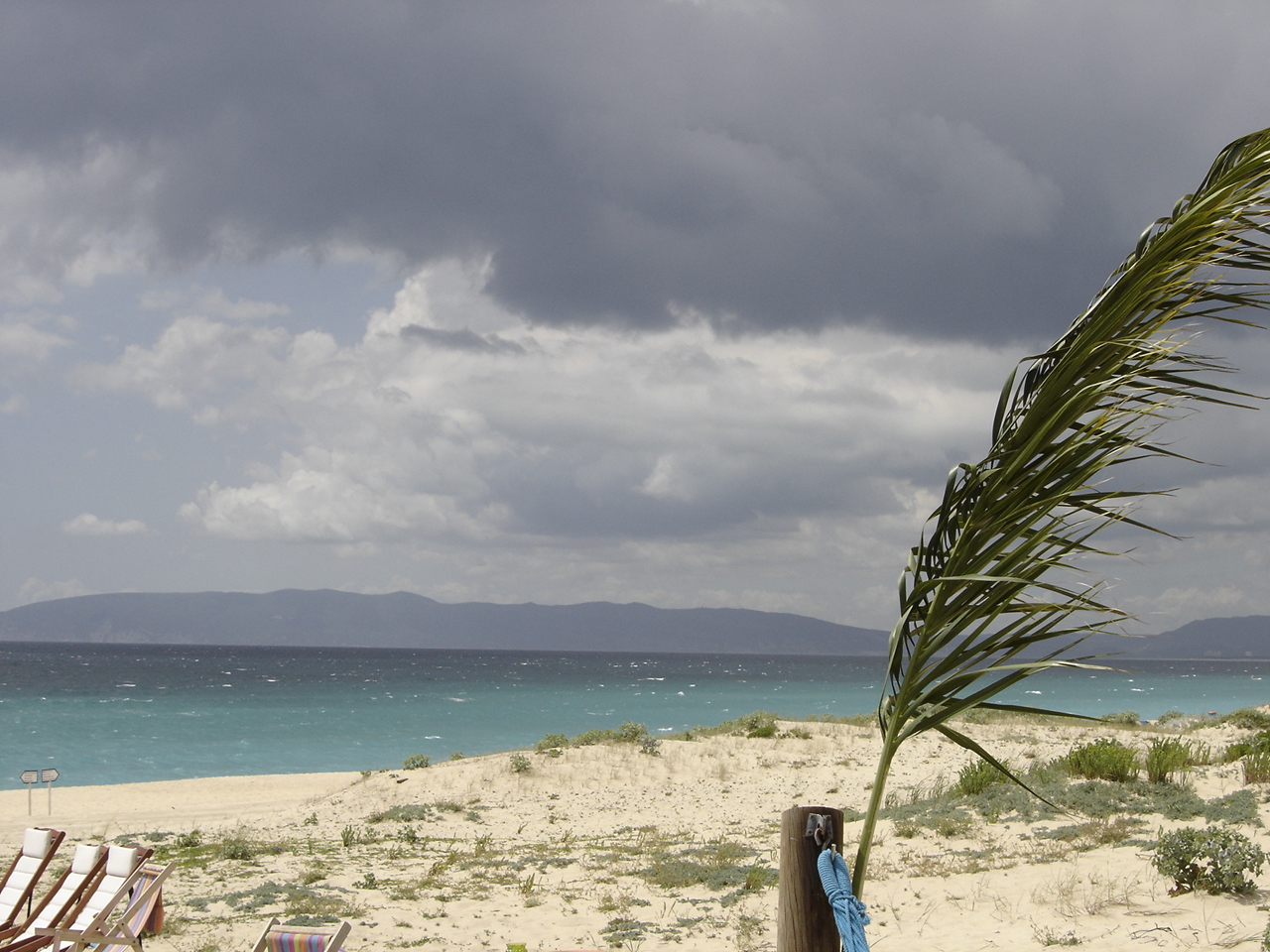
The beaches are the reason the rest of it exists. This is a long, nearly straight Atlantic coast of pale sand and dunes, backed by pine, running almost unbroken for tens of kilometres — from the Troia peninsula in the north, past Comporta and Carvalhal, south toward Melides. You reach the sand on wooden boardwalks across the dunes, and because the beaches are so wide and long, they rarely feel crowded even when the car parks are full.
A few to know by name:
- Praia da Comporta is the main beach for the village, reached through the dunes, with a beach restaurant and easy access. It is the busiest and the most convenient.
- Praia do Carvalhal, to the south, is a broad stretch backed by dunes and pine, with a couple of well-known beach restaurants and a scenic boardwalk approach.
- Praia do Pego is the long, quieter beach beyond Carvalhal, framed by pine forest, with a laid-back restaurant scene of its own.
Two things to expect of the water. It is the open Atlantic, so it is cold — noticeably so outside high summer — with surf and currents; this is a coast for walking, for swimming with respect, and the occasional surf lesson, not a flat warm bath. It is windy on some afternoons too, glorious for a walk and less so for a still lunch on the sand.
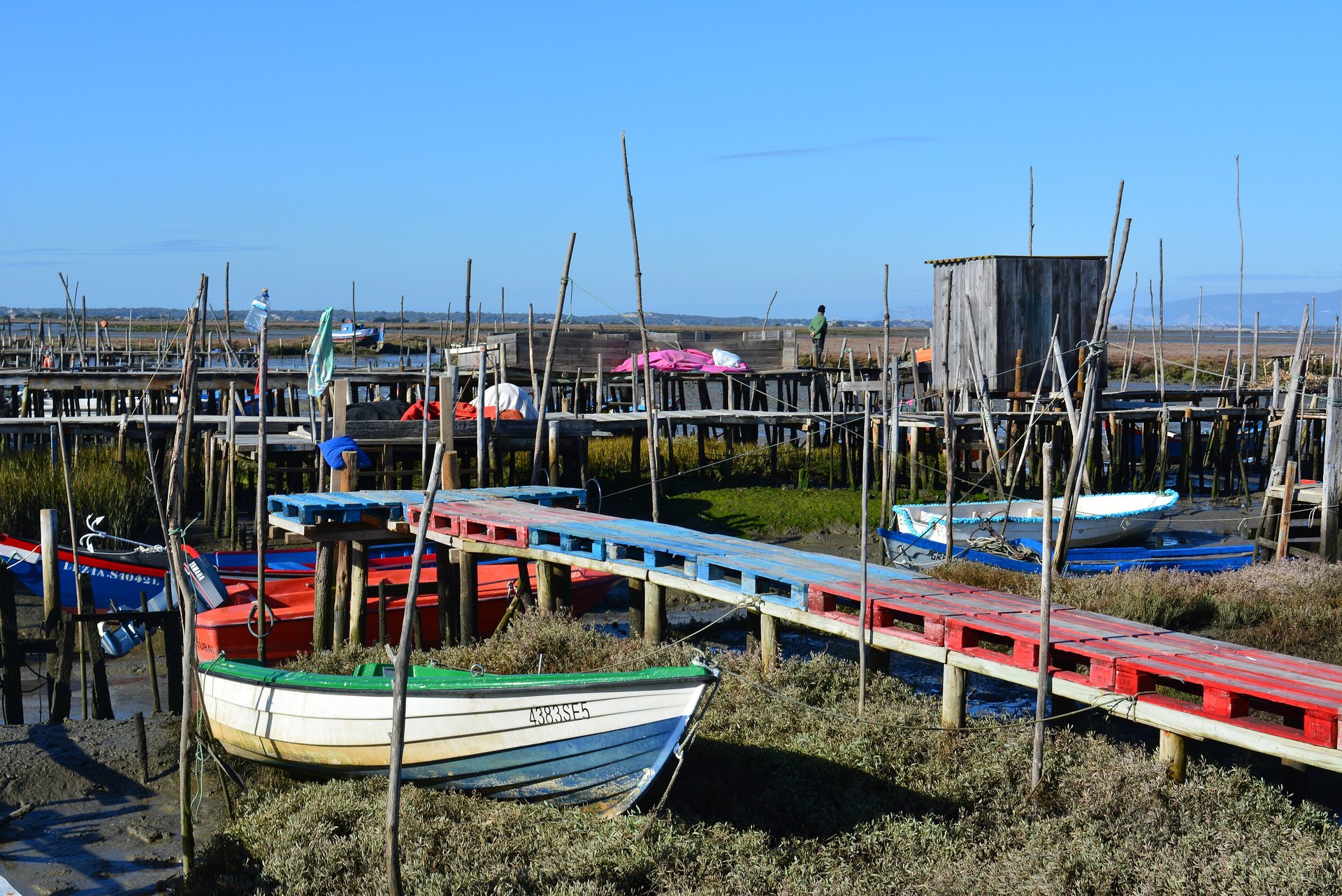
Cais Palafítico da Carrasqueira (2) · Sara Jaques · CC BY-SA 4.0 · cropped
The one non-beach sight worth planning around is the palafitte pier at Carrasqueira, a small fishing village on the Sado estuary a few kilometres from Comporta village. Here, generations of fishermen built a sprawling structure of wooden jetties on stilts out over the tidal mud, so they could reach their boats at low tide. It is weathered, rickety, and still in working use, and it is one of the last of its kind in Europe. Go at low tide to see how it works, or near sunset, when the light comes flat across the estuary. It is free to visit — walk carefully, as the planking is old and uneven.
The estuary itself holds one more thing worth your time: a small resident community of bottlenose dolphins, only a few dozen strong, one of very few groups in Europe that live year-round in an estuary. Boat trips to see them run from Troia and from Setubal across the water; treat sightings as likely, not certain, and pick an operator that keeps its distance from the animals.
Where to eat
Eating here divides neatly into two moods, and a good trip uses both: the barefoot beach lunch, and the slower dinner back in the trees.
Lunch happens on the sand. The beaches have a run of long-standing shacks where you eat grilled fish and rice with your feet more or less in it. Comporta Cafe, on the beach at Praia da Comporta, has been at it for years — hammocks, low chairs on the sand, an easy menu. Ilha do Arroz, out toward Pego, is the one to know for rice, the local specialty; the razor-clam rice is the dish people come back for. Sal, at Carvalhal, took over an old fisherman's restaurant and kept its plain bones. None of these are cheap, and the good ones fill in season, so book ahead in summer.
Dinner pulls back into the pines and the villages. In Comporta village and Carvalhal you will find restaurants shaded by trees and set in low, whitewashed or timber buildings, doing modern Portuguese cooking alongside the classics. The hotel restaurants — Sublime's in particular — are a reliable option for a more worked-up meal. Wherever you land, the local ingredients are the point: fish and shellfish from the coast and the estuary, rice from the fields you drove past, and Alentejo wine from just inland.
A note on the local plate: this is rice country, and rice arrives as a soupy, generous dish — with clams, razor clams, fish, sometimes duck — rather than a dry side. Order one to share, add the grilled fish of the day, and drink the regional white or a cold vinho verde.
Money and practical notes
A handful of things that make the trip smoother, without quoting prices that go out of date:
- Portugal is on the euro. Cards are widely accepted, including at most restaurants and shops, but it is worth carrying some cash for smaller beach places, markets, and the odd spot that prefers it.
- Book early, especially for summer. The supply of cabanas, villas, and hotel rooms is genuinely small, and August fills months ahead. This is the single most important piece of planning.
- Bring insect repellent. The rice fields and estuary that make the scenery also breed mosquitoes, and summer evenings can be bad. Treat it as non-negotiable from roughly June to September.
- Plan for the car. Budget for a rental and fuel, reserve an automatic early if you need one, and expect to drive short distances daily. Fill up when it is convenient, since stations are not on every corner.
- Respect the coast. The dunes are protected and fragile, so stick to the boardwalks, and the Atlantic has real surf and currents, so swim where others do and mind the flags.
- Come out of season if you can. Late spring and early autumn give you the coast at its best — warm, open, and calm — at a fraction of the August intensity.
By the numbers
Common questions
How many days do I need in Comporta?
Three to five is comfortable: enough to settle into a base, work through the main beaches, see the Carrasqueira pier, eat a couple of long lunches on the sand, and still have slow mornings. It is a place to decompress rather than rush, so extra days rarely feel wasted.
Do I really need a car?
Effectively yes. There is no train to Comporta, the villages and beaches are spread along the coast, and buses are thin, especially at weekends. A car turns the whole area into a fifteen-minute radius; without one, you will feel stranded.
Is Comporta expensive?
It can be. Accommodation in particular runs from expensive to very expensive, because supply is small and there are no budget resorts. You can soften it by coming in the shoulder season, renting a house with a group, and eating a mix of beach shacks and simpler village restaurants rather than only the marquee names.
Comporta or Melides?
Comporta and Carvalhal are the more established base, closer to the best-known beaches and the widest choice of restaurants. Melides, twenty minutes south, is quieter, more design-driven, and better if your priority is calm and space. Many people day-trip between them, so you do not have to choose entirely.
When is the best time to visit?
Late spring — May and June — and early autumn, September into October, are the sweet spots: warm, uncrowded, and cheaper than high summer. July and August are hottest, busiest, priciest, and buggiest. Winter is very quiet, with reduced hours and some closures.
Is it good for families?
Yes, particularly around Carvalhal, where houses with pools, easy parking, and broad beaches suit children well. The main cautions are the cold Atlantic and its currents, and summer mosquitoes in the evenings.
Sources & further reading
- Visit Portugal — Reserva Natural do Estuario do Sado (the estuary and its reserve)
- Turismo do Alentejo — official regional tourism board
- Sublime Comporta — official site of the country retreat near Muda
- Quinta da Comporta — official site of the rice-field wellness hotel
- Vermelho, Melides — official site of Christian Louboutin's hotel
- Atlantic Ferries — the Setubal to Troia car ferry