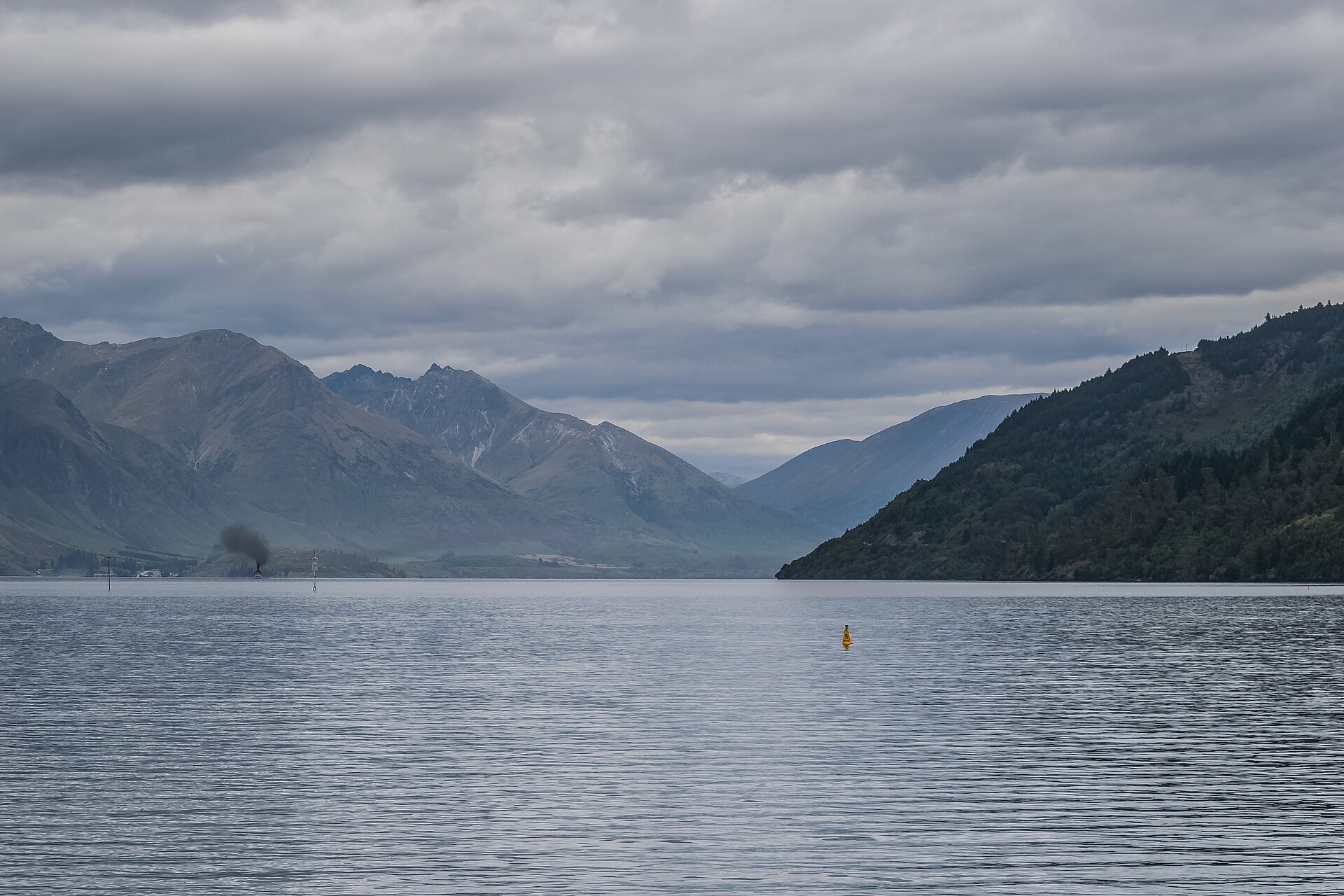
At a glance
- Base
- Central Queenstown (walkable), a lake lodge (quiet views), or Arrowtown (gold-era village, autumn colour).
- When
- Mid-to-late April for autumn colour; June-September for skiing; December-February for walking and warm days.
- Getting there
- Fly into Queenstown Airport (ZQN) from NZ cities or Australia, or drive from Christchurch (6 hrs) or Dunedin (3.5 hrs).
- Getting around
- Walkable town, local buses. Car needed for Arrowtown, Gibbston, Glenorchy, Milford Sound, or if based outside town.
- Book ahead
- Standout lodges, popular tables, rental cars for autumn-colour weeks, July ski holidays, and midsummer.
- The price
- View, address (town centre/marquee lodges), season (autumn/July ski peak), and what the rate includes (e.g., meals).
Queenstown packs three different holidays into one valley, and the first job is working out which one you came for. There is the town itself, small and walkable on a bay of Lake Wakatipu, where the cruise boats leave from the wharf and the restaurants sit a few streets apart. There is the lake-lodge holiday, a handful of properties a few minutes out on the water and turned toward the view, quiet in a way the town is not. And there is the country beyond: the gold-era streets of Arrowtown, the vineyards of Gibbston in the river gorge, and the dead-end road north to Glenorchy and Paradise, where the mountains close in and the sealed road gives out. Pick the base and you have mostly decided the shape of your days; the room matters far less than the ground it stands on.
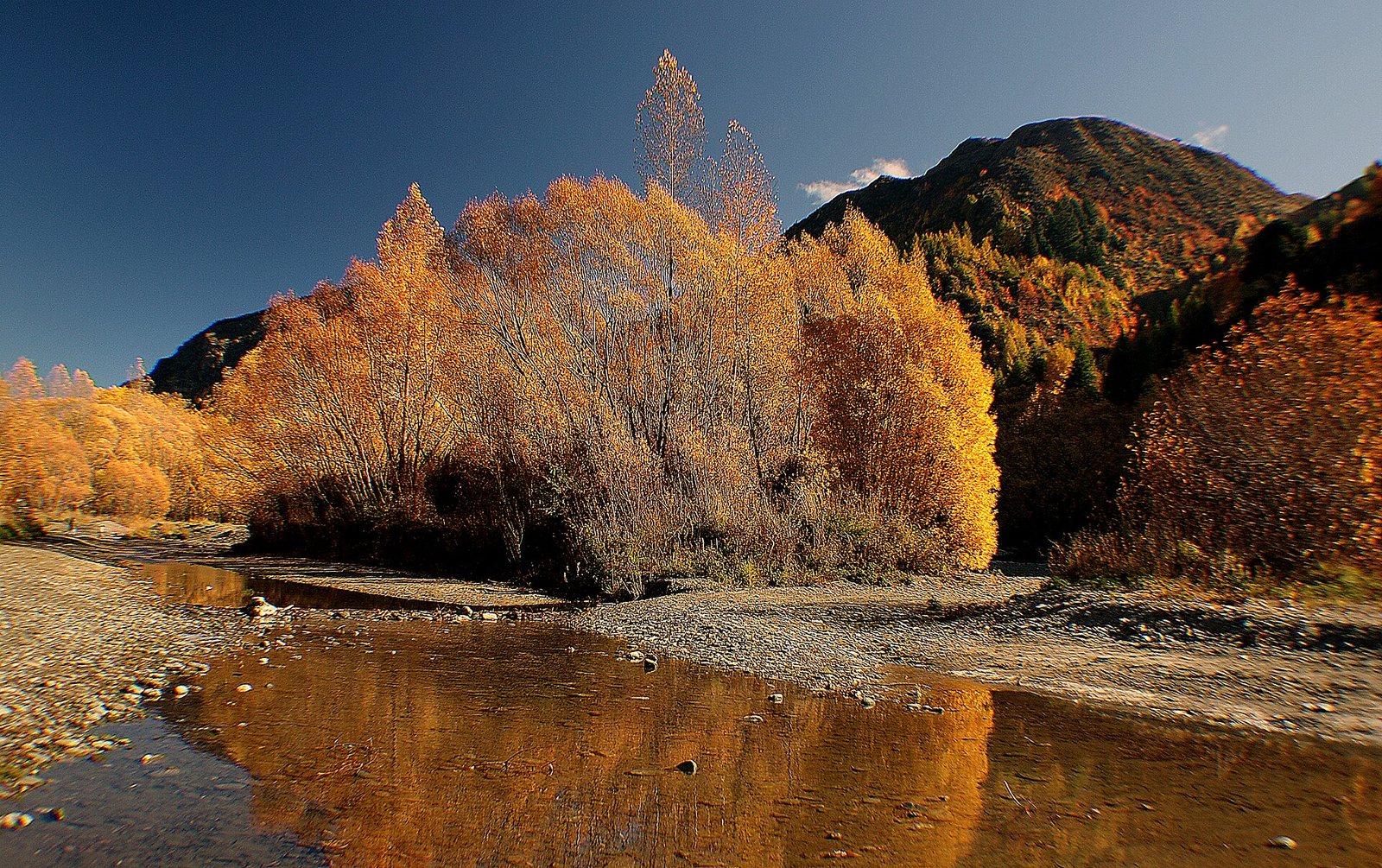
The second decision is when to come, and here the southern hemisphere turns a northern visitor's instincts upside down. March is not spring but the start of autumn, the season this issue is built around. Through late March and into May the imported oaks and sycamores of Arrowtown and the valley floors turn gold and red, the lake goes glassy on still mornings, and the summer crowds thin out. The colour is worth planning a trip around, but the window is short and it moves, arriving first as a tint in late March and running to a peak that is usually late April into early May. Winter, June to September, is the ski season; summer, December to February, brings the long walking days.
In this guide
The lay of the land, and how to choose
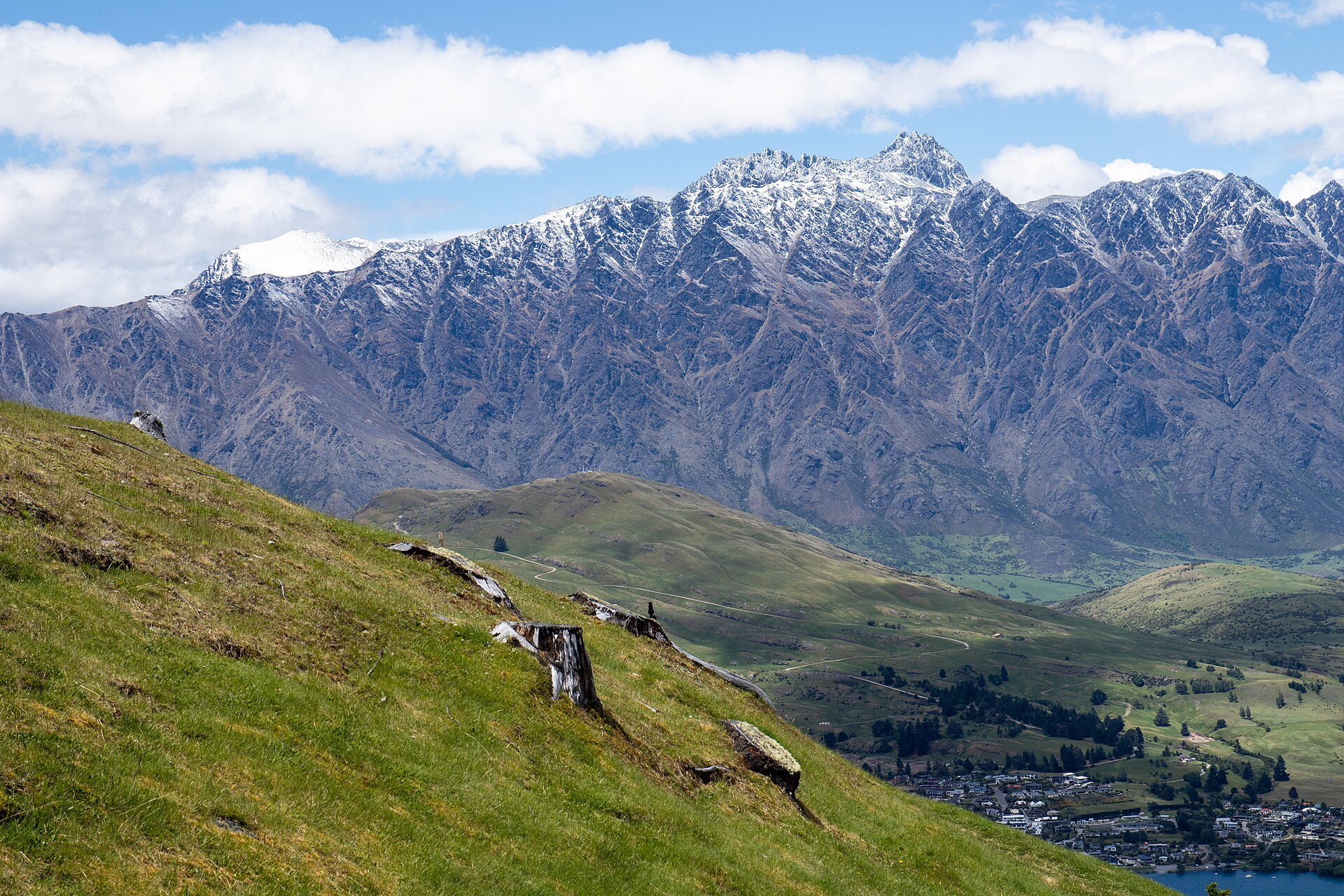
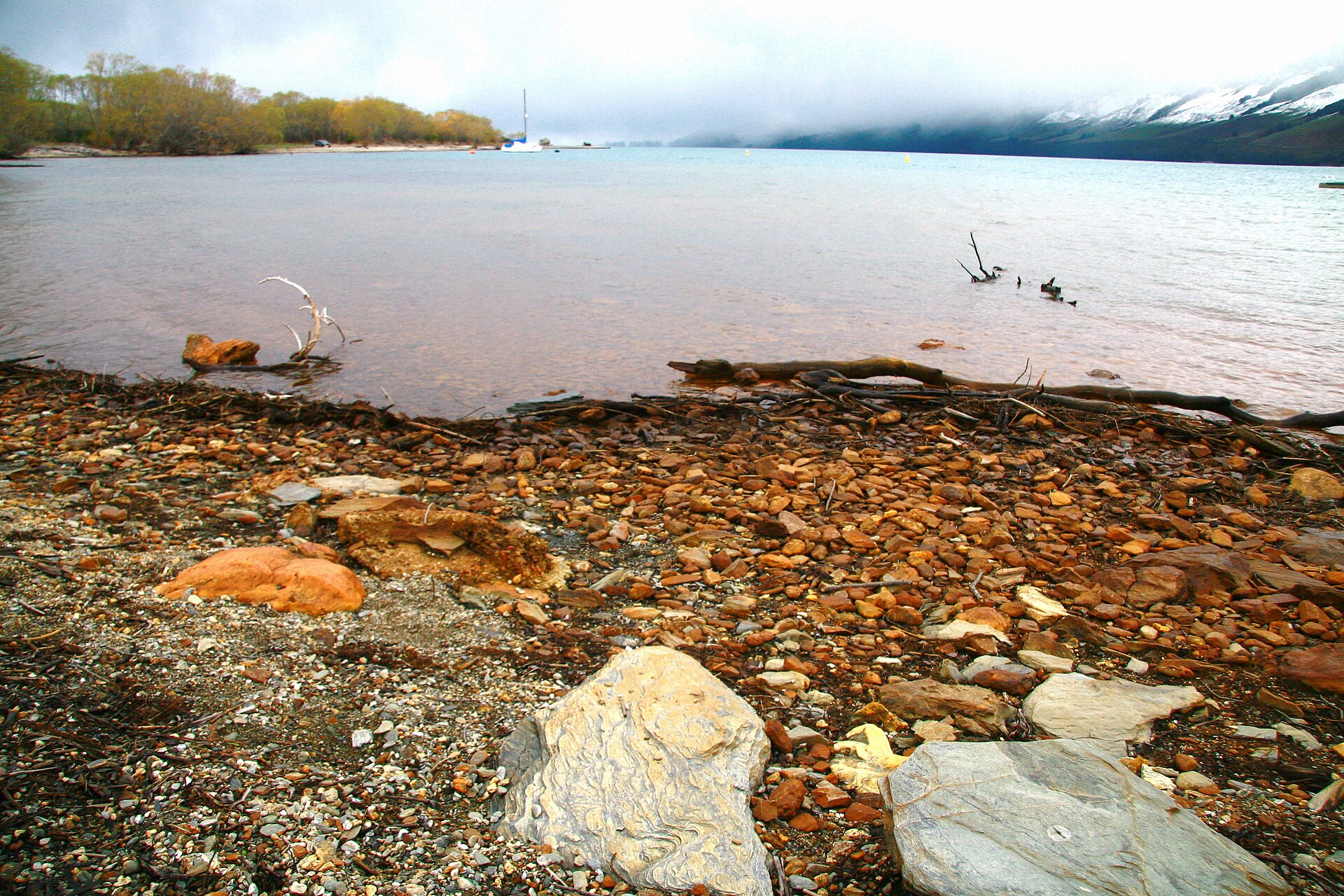
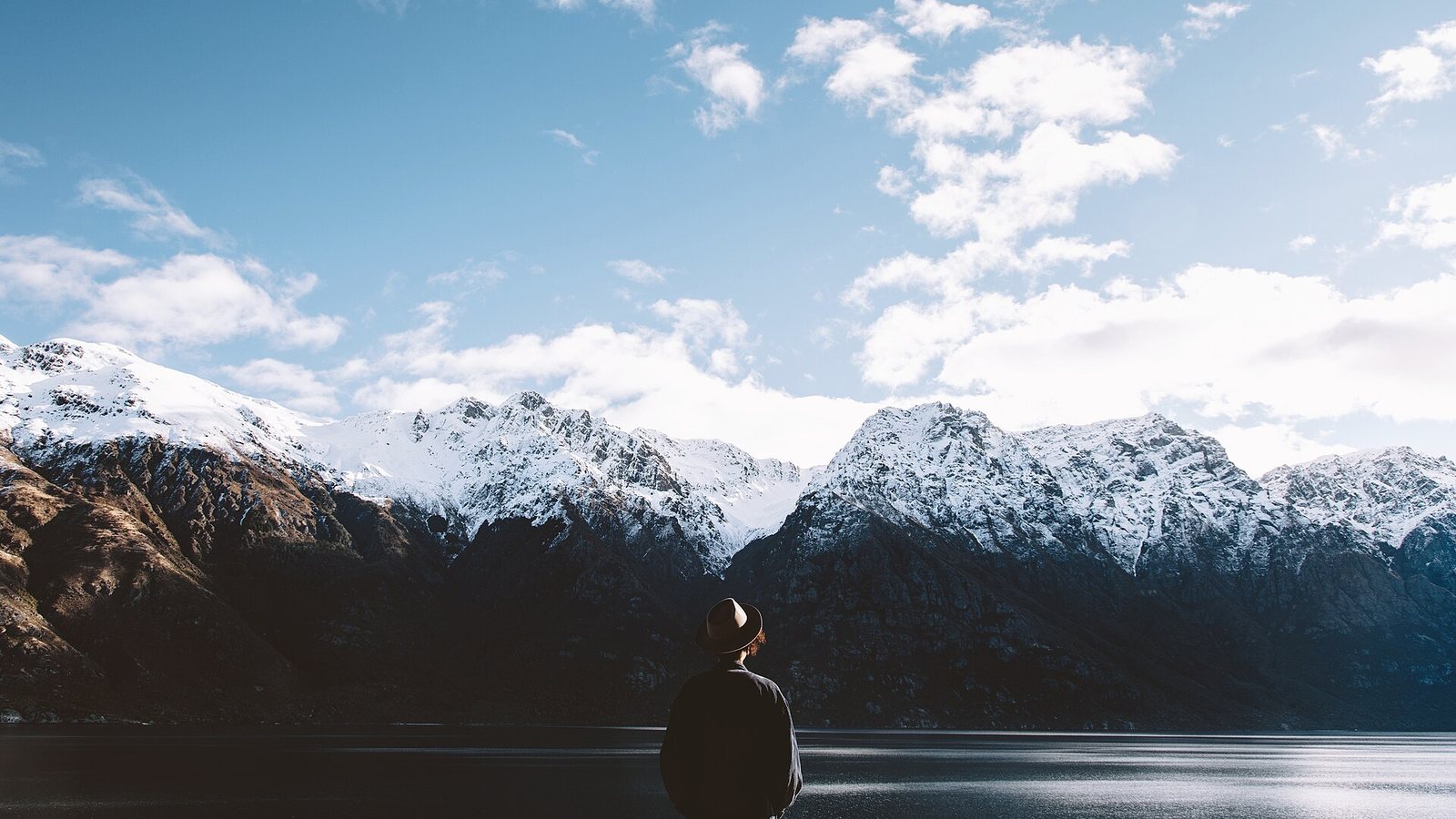
Queenstown sits on a bay near the middle of Lake Wakatipu, a long, thin lake bent into a zigzag that runs roughly 80 kilometres through the mountains of inland Otago. Locals call its colour Wakatipu Blue, a deep blue that shifts toward turquoise in certain light. The lake is why the town exists: before the roads it carried people and freight, and it still sets the view from almost everywhere. Across the water stands the Remarkables, a steep, saw-toothed range that catches the first and last light of the day and turns up in most photographs of the town whether the photographer meant it to or not.
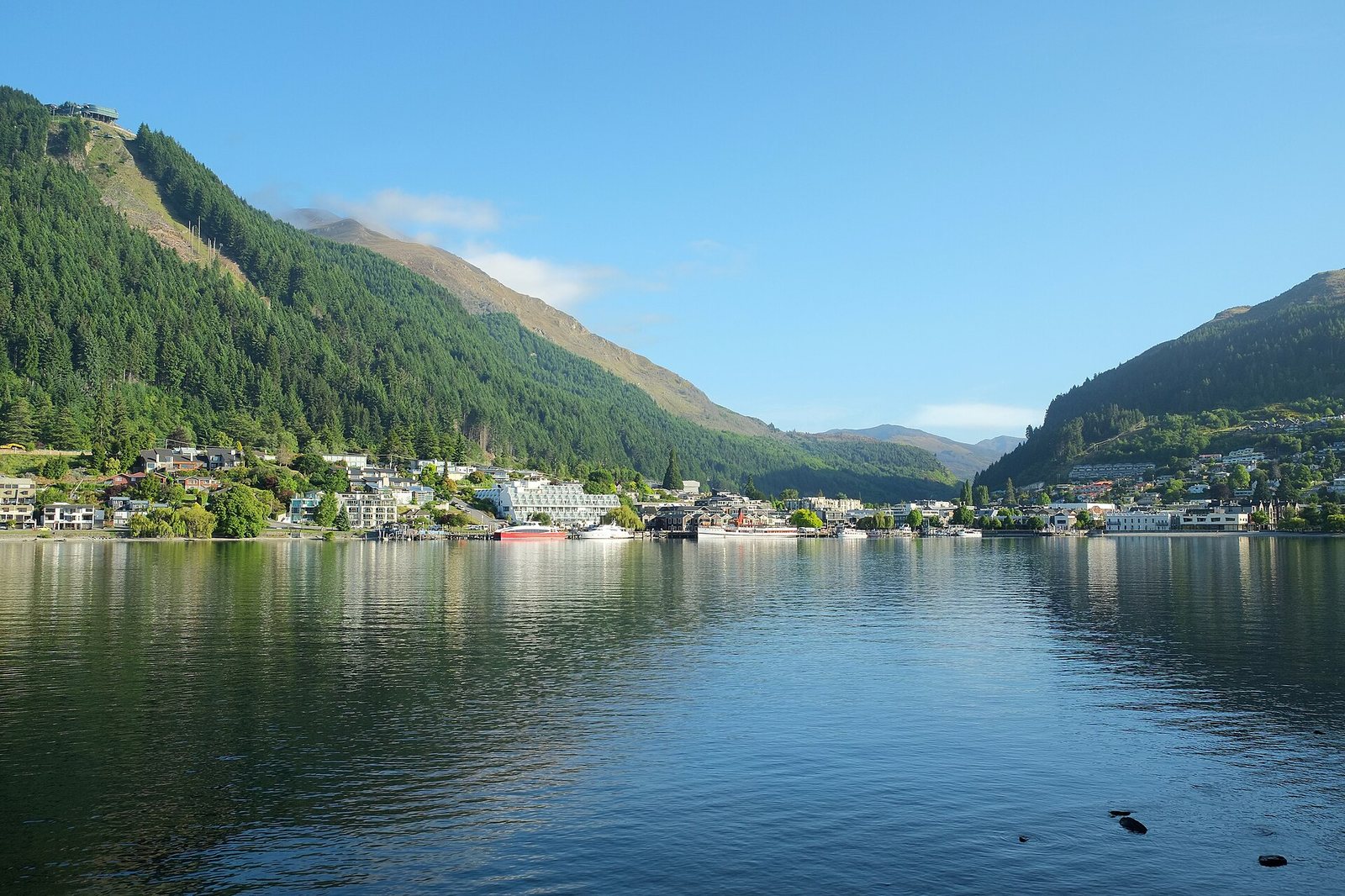
The centre is compact — a ten- or fifteen-minute walk across the downtown grid, from the gardens on the peninsula to the base of the Skyline gondola under Ben Lomond. Most of what visitors do happens along the waterfront and the few streets behind it: the wharf where the cruises and the old steamship leave, and the restaurants and bars. A few minutes east, around the airport at Frankton, is the everyday side of the district, with the supermarkets and much of the newer accommodation.
Beyond the town the region breaks into distinct pockets. Arrowtown, a restored gold-mining settlement, lies about twenty minutes northeast. The Gibbston wine valley runs east along the Kawarau River gorge, roughly twenty-five minutes out. And the road north hugs the lakeshore for about three-quarters of an hour to Glenorchy at the head of the lake, then on to the farm country called Paradise. The town also trades on adventure — the commercial bungy and the canyon jet boat were both invented here — but the autumn traveller usually comes for the quieter half of it.
Town, a lake lodge, or Arrowtown
Strip away the detail and the base decision comes down to three, maybe four, options. Read them against how much you want to drive, how much quiet you are after, and whether you came for the town or the country around it.
Central Queenstown is the choice if you want to be in the middle of things and never touch a car. The wharf, the gondola, the restaurants and the pick-up points for most tours are all within a walk, and the lake is at the end of the street. The trade-off is the usual one for a busy resort town: it is the priciest and most crowded part of the district, and in peak weeks the main streets fill. Choose it for a short, town-led stay, or if the buzz is part of what you came for.
A lodge on the lake, just outside, is the counterweight. A few minutes from the centre — west into Fernhill and Sunshine Bay, or around the shore to the hillside where Matakauri sits about seven minutes out — the ground climbs and the view opens over the water to the Remarkables. You wake to the lake and the quiet and drive in when you want the town. This is the autumn-issue base: a still morning over the water, the trees turning on the far shore, and dinner in town a short drive away when you want it.
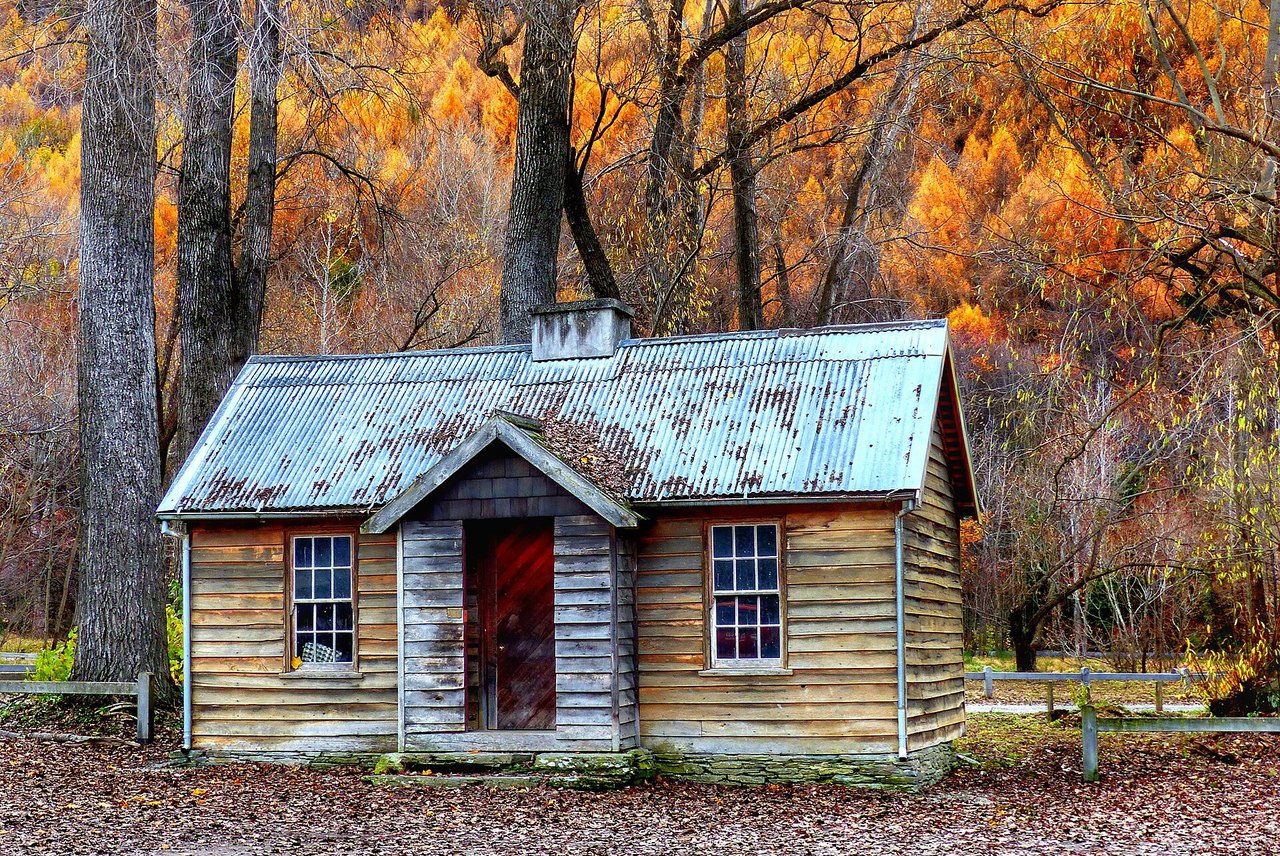
Arrowtown, about twenty minutes northeast, is a genuinely different holiday. It is a preserved gold-rush town, founded in 1862, its main street lined with miners' cottages and heritage shopfronts, and its streets planted with the imported oaks, sycamores, rowans and elms that turn the town and the hills behind it gold in April and May. It is slower and smaller than Queenstown, with quiet evenings and good restaurants, and it is the place to be for the colour — a village rather than a resort, if you accept the short drive in for the lake.
Beyond these three sits the wilderness option, Glenorchy and Paradise at the head of the lake, about forty-five minutes up the lakeshore; for most visitors it is a day out rather than a place to sleep, covered with the drives further down.
| Base | Feel | Best for | Trade-off | To town |
|---|---|---|---|---|
| Central Queenstown | Walkable town, wharf and restaurants at the door | Short stays, no car, town energy | Busiest and priciest; full in peak weeks | You are in it |
| A lake lodge just outside | Quiet, turned to the water and the Remarkables | Waking to the view, a calm evening | Need a car or shuttle for town; lodges cost most | About 5 to 10 minutes |
| Arrowtown | Gold-era village, autumn trees | The colour, slow evenings, restaurants | Drive in for the lake activities | About 20 minutes |
| Glenorchy and Paradise | Remote head of the lake, mountains and rivers | Walking and wilderness | Little nightlife; committed to the drive | About 45 minutes |
Where to sleep, and what drives the price
Queenstown's notable stays sort into three kinds: the town-centre hotels within a walk of the wharf, the lake lodges a few minutes out and turned toward the view, and the remote grand lodge up the valley at Glenorchy. No rates are quoted here, because they move with the season and the room, and the top lodges often fold dinner and breakfast into the stay. Book the standouts well ahead for the autumn-colour weeks and the July ski peak.
In the town
Eichardt's Private Hotel is the most central of the notable stays, a heritage building on the downtown waterfront whose history runs back to the 1860s gold rush. It is small and boutique, a handful of lakefront suites above its own bar and grill, with the wharf and the town's restaurants immediately outside. Choose it if being in the middle of Queenstown, on the water, is the whole point.
On the lake
Rosewood Matakauri, part of the Robertson Lodges group and run under the Rosewood name, sits about seven minutes from the centre on a hillside sloping to the shore, its suites and cottages angled at the lake and the peaks beyond. It is a lodge in the New Zealand sense — small and self-contained, with a spa, an infinity pool and dining built around the stay. The Rees Hotel, on the quieter eastern shore a few minutes out with a complimentary shuttle, is larger and more conventionally hotel-shaped, with rooms, apartments and lakeside residences, a restaurant and a serious wine cellar; it suits full hotel service or apartment space rather than a single suite. Higher up on Fernhill, Kamana Lakehouse bills itself as the town's highest hotel, which is another way of saying the view over the lake to the Remarkables is the reason to book, at a gentler price than the lodges.
Up the valley
Blanket Bay is the remote grand lodge, out near Glenorchy at the head of the lake, around forty-five minutes from Queenstown. Built in schist stone and heavy timber, it is a member of Relais & Châteaux, with suites and chalet rooms, stone fireplaces, a spa, and dining that is part of the draw. The setting is the point — mountains, water and quiet, with fishing, riding and walking arranged from the lodge. Choose it for the wilderness end of the region, and be happy to drive to town on the days you want it.
What drives the price
Four things move the number more than the star rating. The first is the view: a room facing the lake and the Remarkables costs more than the same room facing the hill behind it. The second is the address, since the town centre and the marquee lodges command more than Fernhill or the eastern shore. The third is the season, with the autumn-colour weeks and the July ski holidays at the top and the shoulders on either side noticeably softer. The fourth is what the rate includes, since the lodges often build dinner and breakfast into the tariff, which makes their headline figure hard to compare with a room-only hotel. Decide how you will spend your time before paying a premium for a view you will only see at breakfast.
When to go, and how short the autumn is
Because this is the southern hemisphere, the calendar runs backwards from Europe and North America. Autumn arrives as the northern spring begins, and the ski season falls across the northern summer. Match the season to the trip: the colour is an autumn event, the skiing a winter one, and the long walking days belong to summer.
The autumn window is the reason many people come, and it is worth being precise about how short it is. The turn begins as a tint in the last week or two of March, builds through April, and usually peaks late April into early May before the first hard frosts strip the trees. Arrowtown is the focal point, and its Akarua Arrowtown Autumn Festival runs in the last week of April, timed to the colour. If you can be flexible, aim for mid-to-late April; a trip booked for early March will catch clear, cooling days and thinning crowds but mostly green trees, and one booked for late May risks bare branches. The colour also moves with altitude and with the year, so treat any single date as a best guess.
The rest of the year has its own logic. Winter, June to September, is the ski season on Coronet Peak and the Remarkables, busiest over the July school holidays. Spring is changeable, with blossom and cold, high rivers from the snowmelt, and summer, December to February, brings warm days and long daylight for walking and time on the water.
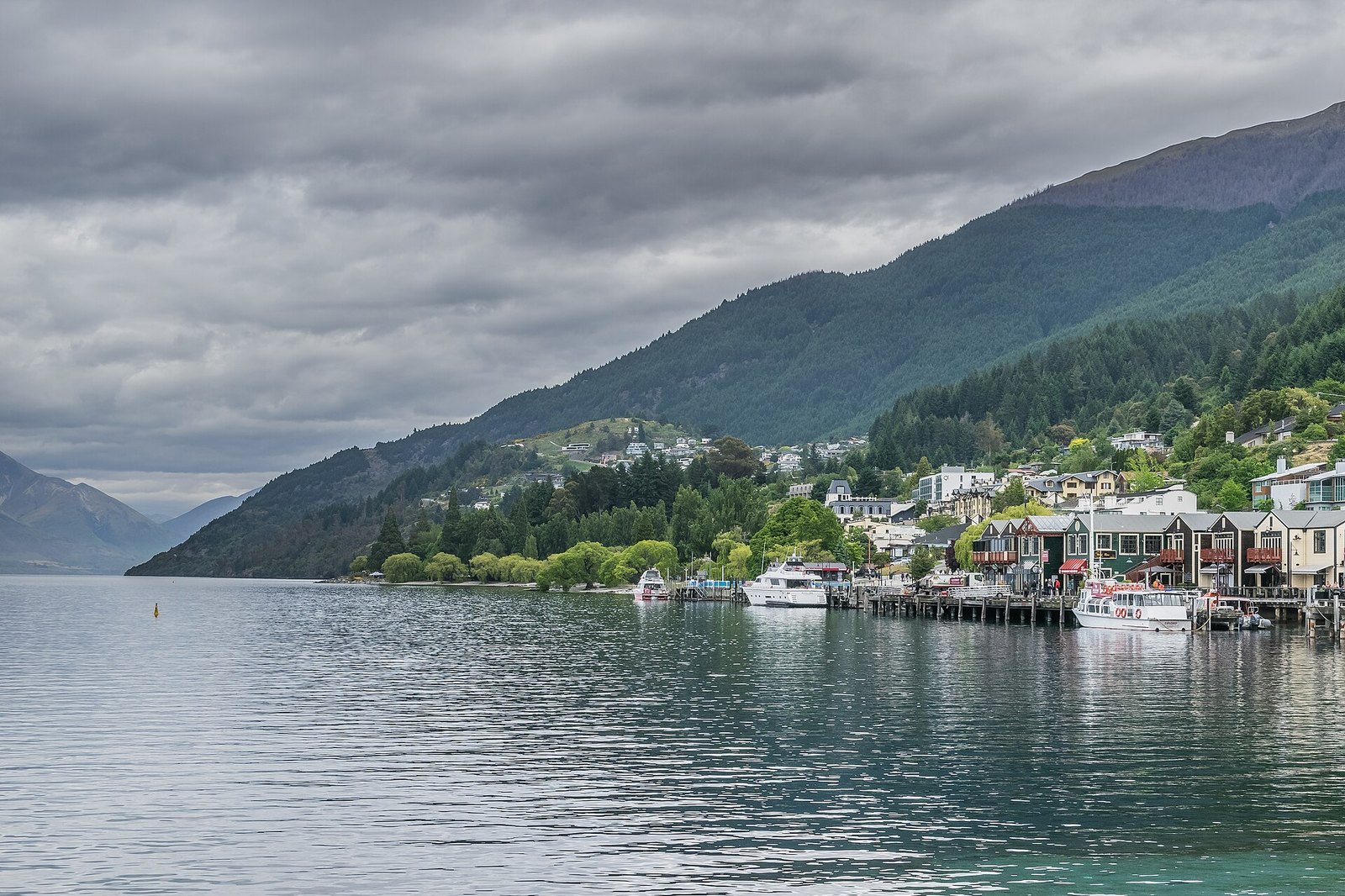
Lake Wakatipu 21 · Krzysztof Golik · CC BY-SA 4.0 · cropped
Getting there, and getting around
Most visitors arrive by air. Queenstown Airport (code ZQN), at Frankton about ten minutes east of the centre, takes domestic flights from Auckland, Wellington and Christchurch and a number of trans-Tasman services from Australia. It is a small airport in a mountain basin, so weather can delay flights; leave a buffer around tight connections.
Driving in is part of the appeal. From Christchurch the road runs around 480 kilometres and takes about six hours, through the Mackenzie country and past the interior lakes; from Dunedin on the southeast coast it is a shorter run, roughly three and a half hours. Either approach is scenery in its own right, worth building into the plan rather than rushing.
Around town, the centre is walkable and served by local buses, and operators run shuttles to their tour departure points. A car earns its keep mainly for the country beyond — Arrowtown, the Gibbston cellar doors, the Glenorchy road and the Milford day trip — and if you are basing outside the centre. Guided tours cover all of it if you would rather not drive the winding roads yourself.
Good to know
Mountain weather can run through several seasons in a day, so carry layers and a waterproof even in summer, and expect cold autumn nights once the sun drops behind the ranges. Traffic drives on the left; the roads to Arrowtown, Gibbston and Glenorchy are sealed but winding, the last stretch beyond Glenorchy toward the Routeburn is partly unsealed, and the Milford road can require snow chains in winter. New Zealand uses the New Zealand dollar and cards are accepted almost everywhere, though it is worth carrying a little cash for small rural stops. Book the standout lodges, popular tables and marquee activities well ahead for the autumn-colour weeks in April, the July ski holidays and the Christmas-to-January peak.
The drives and detours
Two runs out of town carry most of the region's scenery, and in autumn they are the heart of a visit. Neither needs a guide, though both are offered as tours if you would rather watch the view than the road.
Glenorchy, Paradise and the head of the lake
The lakeshore road north to Glenorchy is about 46 kilometres and takes roughly forty-five minutes, and it is one of the best short drives in the country. It hugs the western edge of Lake Wakatipu the whole way, water on one side and mountains rising on the other, and Bennetts Bluff Lookout is the stop to make — a signposted pull-off with a short track to a view back down the lake. Glenorchy itself is a small settlement at the head of the water; beyond it a mostly unsealed road runs a further fifteen minutes or so to Paradise, a scatter of farmland rather than a village, with one of the country's most photographed road signs and short walks into the beech forest. The valleys here, along the Dart and Rees rivers, sit in Mount Aspiring National Park and stood in for a good deal of Middle-earth in the Lord of the Rings and Hobbit films. It is also trailhead country: the Routeburn, one of New Zealand's Great Walks, starts from the Routeburn Shelter about 25 kilometres past Glenorchy, with gentler options like the flat Routeburn Nature Walk and jet-boat trips up the Dart.
Gibbston, the wine valley
East of town the road drops into the Kawarau River gorge, and about twenty-five minutes out it reaches Gibbston, Queenstown's nearest wine country, which locals call the Valley of the Vines. It is the highest and coolest of Central Otago's wine sub-regions, its north-facing hillside vines ripening late, and it is planted mostly in Pinot Noir. The gorge is also where commercial bungy jumping began — the historic Kawarau suspension bridge here has been a jump site since 1988 — so the drive pairs a wine valley with the sight of people throwing themselves off a bridge. As a detour, Gibbston is an easy half-day; the cellar doors come up in the next section.
Where to eat and drink
Queenstown eats well for its size, and the local table has a clear identity: Central Otago wine, especially Pinot Noir; lamb, venison and beef from the high-country stations; and fish from the lakes and the coast. In the town, the waterfront and the streets behind it carry most of the restaurants, from quick counters to lodge dining rooms, and in the autumn peak it pays to book dinner ahead.
The distinctive meal, though, is out in Gibbston, where the cellar doors do lunch among the vines. Gibbston Valley Winery, the valley's oldest, released its first commercial vintage in 1987 and now runs a bistro-style restaurant alongside its tasting room and a wine cave cut into the hillside; other estates along the gorge pour their Pinot over lunch as well. A cellar-door lunch here is the autumn set piece — a glass of Central Otago Pinot Noir, a plate of local produce, and the turning vines outside — and reason enough to give the valley a full afternoon rather than a rushed tasting. If you are driving, plan a designated driver or take a tour, because the gorge road is winding and the pours add up.
016 Gibbston valley vineyard landscape in Central Otago wine… · Marek Ślusarczyk (Tupungato) Photo portfolio · CC BY 3.0 · cropped
Money and practical notes
- Money. The currency is the New Zealand dollar, and cards are accepted almost everywhere; carry a little cash for small rural stops and honesty boxes.
- Getting around. The town is walkable and there are local buses, but a car is the easiest way to reach Arrowtown, Gibbston, Glenorchy and the trailheads, and traffic drives on the left.
- Milford Sound. The fiord lies about 288 kilometres away by road through Te Anau, roughly four to five hours each way, so a self-drive day is a long one; many people break the trip with a night in Te Anau, the last town with fuel and food before the fiord.
- Book ahead. Accommodation, tables and rental cars are tight during the autumn-colour weeks, the July ski holidays and midsummer, so reserve early.
- Connectivity. Mobile coverage is good in the town and patchy up the valleys, so download maps before heading to Glenorchy or the Milford road.
By the numbers
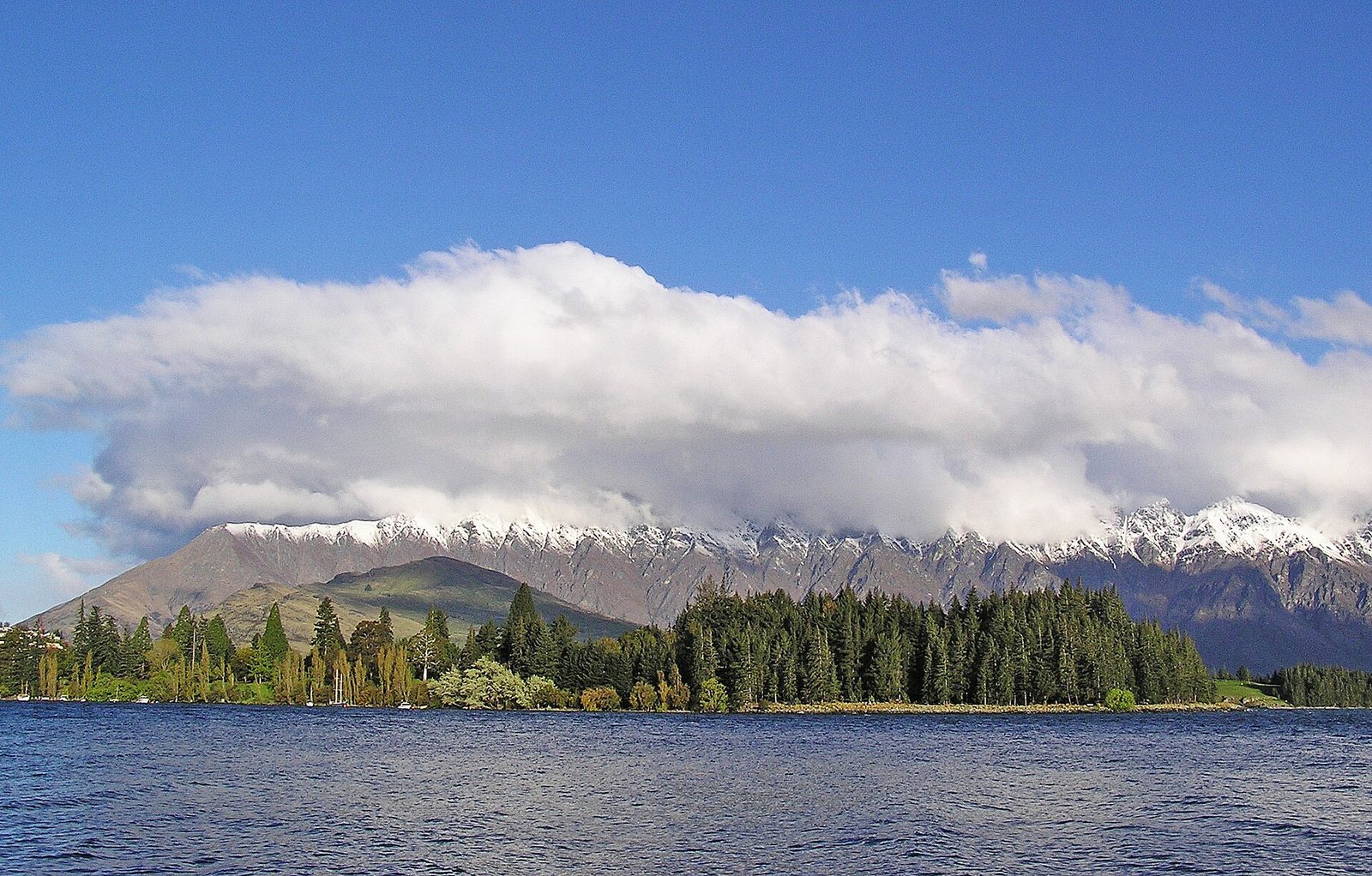
Lake Wakatipu & Remarkable Mountains · Donaldytong · CC BY-SA 3.0 · cropped
Common questions
When does the autumn colour actually peak?
Roughly late April into early May, with Arrowtown the focal point. The turn starts as a tint in late March, builds through April, and peaks before the first hard frosts strip the trees. The Akarua Arrowtown Autumn Festival runs in the last week of April, timed to the season. Exact peak shifts a week or two with the year and the altitude, so aim for the second half of April if you can be flexible.
Is March a good time to come?
March is early autumn — clear, cooling days, warmer water than later, and crowds thinning after summer — but the trees are mostly still green, with only a tint in the last week or two of the month. Come in March for the quiet and the settled weather; come from mid-April if the gold is the main event.
Central Queenstown or a lodge on the lake?
Base in the centre to walk to the wharf, the restaurants and the tours and skip the car. Choose a lodge a few minutes out, such as Matakauri, if you would rather wake to the lake and drive in when you want the town. For the wilderness end, Blanket Bay near Glenorchy trades proximity for scenery.
Is the Glenorchy drive worth it, and can I get to Paradise?
Yes. The lakeshore road to Glenorchy is about 46 kilometres and forty-five minutes, one of the finest short drives in the country, with Bennetts Bluff Lookout the stop to make. Paradise is a further fifteen minutes on a mostly unsealed road beyond Glenorchy — farmland and mountains rather than a town, but the walks and scenery are the reward.
Do I need a car?
Not for a town-based stay, which is walkable and served by buses and shuttles. A car pays off for Arrowtown, the Gibbston cellar doors, Glenorchy or the Milford drive, and if you are basing outside the centre.
How do I get there?
Fly into Queenstown Airport at Frankton from the main New Zealand cities or from Australia, or drive — about six hours from Christchurch, or three and a half from Dunedin. The overland approaches are scenic enough to plan around if you have the time.
Sources & further reading
- Destination Queenstown — the official regional tourism site
- Tourism New Zealand — Arrowtown and the autumn colour
- New Zealand Wine — the Central Otago wine region
- Gibbston Valley Winery — cellar door, restaurant and wine cave
- Department of Conservation — the Routeburn Track from Glenorchy
- Rosewood Matakauri — lake lodge outside Queenstown
- Blanket Bay — Relais & Châteaux lodge at Glenorchy