At a glance
- Base
- Base in Chora for nightlife, south-coast beaches for sunbeds and easy town access, or the north/Ano Mera for quiet and space.
- When
- Late April/May to October; August is peak (hottest, most expensive, crowded, windy); shoulder seasons (late May/June, September) offer better value.
- Getting there
- Fly direct to Mykonos Airport (JMK) from Athens/Europe, or take a ferry from Athens (Rafina or Piraeus ports).
- Getting around
- Buses are cheap and frequent; taxis are scarce; rent a car/quad for the north/remote beaches; sea bus connects New Port to town.
- Book ahead
- Book hotels, restaurants, beach club sunbeds, and transfers well ahead, especially for August.
- The price
- Price is driven by month (August is peak), view/beachfront, private pools, and address (Psarou, north of Chora are premium).
Mykonos is not one island but three, stacked onto the same few square miles, and the trip works or fails on which one you book for. There is Chora, the main town — a dense, photogenic, deafening maze of boutiques, bars and restaurants where the crowd is the point. There are the sheltered beaches along the south coast, where the day organises itself around a sunbed and a long lunch. And there is the thinly built north, plus the inland village of Ano Mera, where the wind does most of the talking. Choose wrong for your temperament and Mykonos can disappoint; choose well and it earns its reputation.
This is the August guide, which means it is honest about the season. August is the island at full volume — the hottest, most expensive, most crowded stretch of the year, and the one when the meltemi, the dry north wind, blows hardest. None of that is a reason to stay away; it is a reason to book with intent. Get the base right and the peak works in your favour: the wind that closes the north keeps the south-coast heat bearable, and the crowds that clog the lanes at midday thin out at breakfast and after dark. What follows sorts the town from the beaches from the quiet, and covers the one excursion — a morning on Delos — that most people build a day around.
In this guide
- Three islands in one
- Where to base: town, beach, or north
- Where to sleep, and what drives the price
- When to go, and why August is the crunch
- Getting there and getting around
- The beaches, and a morning on Delos
- Where to eat: beach clubs and the tavernas that outlast them
- Money and practical notes
- Common questions
Three islands in one
Mykonos is one of the smaller Cyclades, and its size is the first thing to hold in your head. You can drive from one coast to the other in well under an hour, so nothing is truly remote — but the roads are narrow, summer traffic is real, and short distances eat more time than the map promises. That compactness is why the choice matters: everything is close, yet each base delivers a different day.
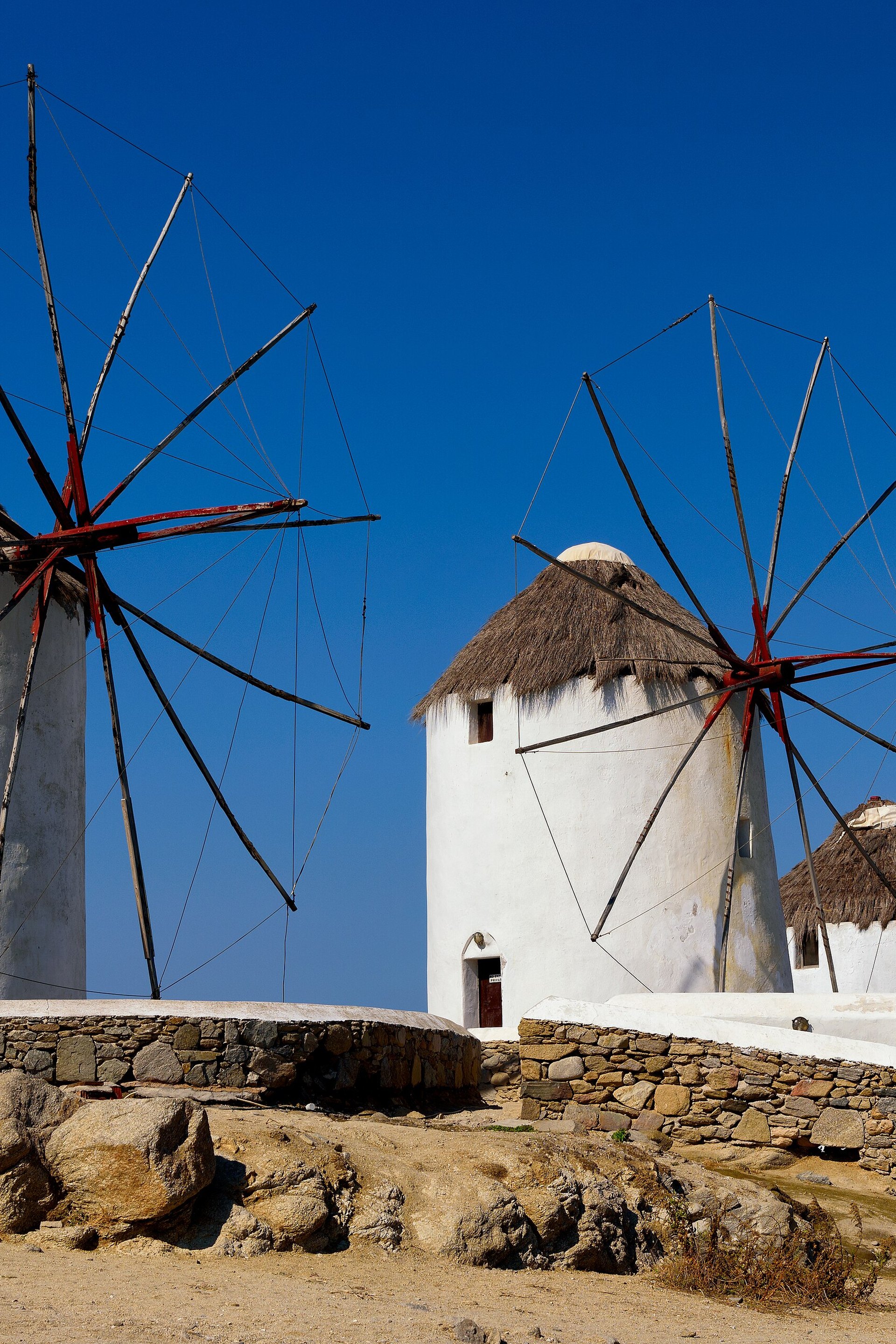
Chora — also written Hora, and usually just called Mykonos Town — sits on the west coast and is the hub. The old harbour, the Kato Mili windmills on their low rise, the Little Venice waterfront and the Matoyianni shopping lane are all a few minutes' walk apart. The airport is a short drive inland to the south. Big ferries dock at the New Port at Tourlos, a couple of kilometres north of town, while the Old Port in Chora now handles mainly the small boats out to Delos. The best-known beaches run along the south coast, where headlands break the summer wind; the north takes that wind on the chin and has stayed comparatively raw. Ano Mera, near the middle of the island, is the one true village set back from the sea.
So the choosing is really a question about yourself: the town if your ideal evening is dinner and three bars within reach, a south-coast beach if it is a sunbed and an unhurried lunch, the north if it is space and silence and you are at peace with driving for everything. In August especially, trying to have all three at once is the surest way to spend the trip stuck in traffic.
Where to base: town, beach, or north
Your base sets the tone of the trip far more than the hotel does. Here is how the three break down on the ground.
In and around Chora
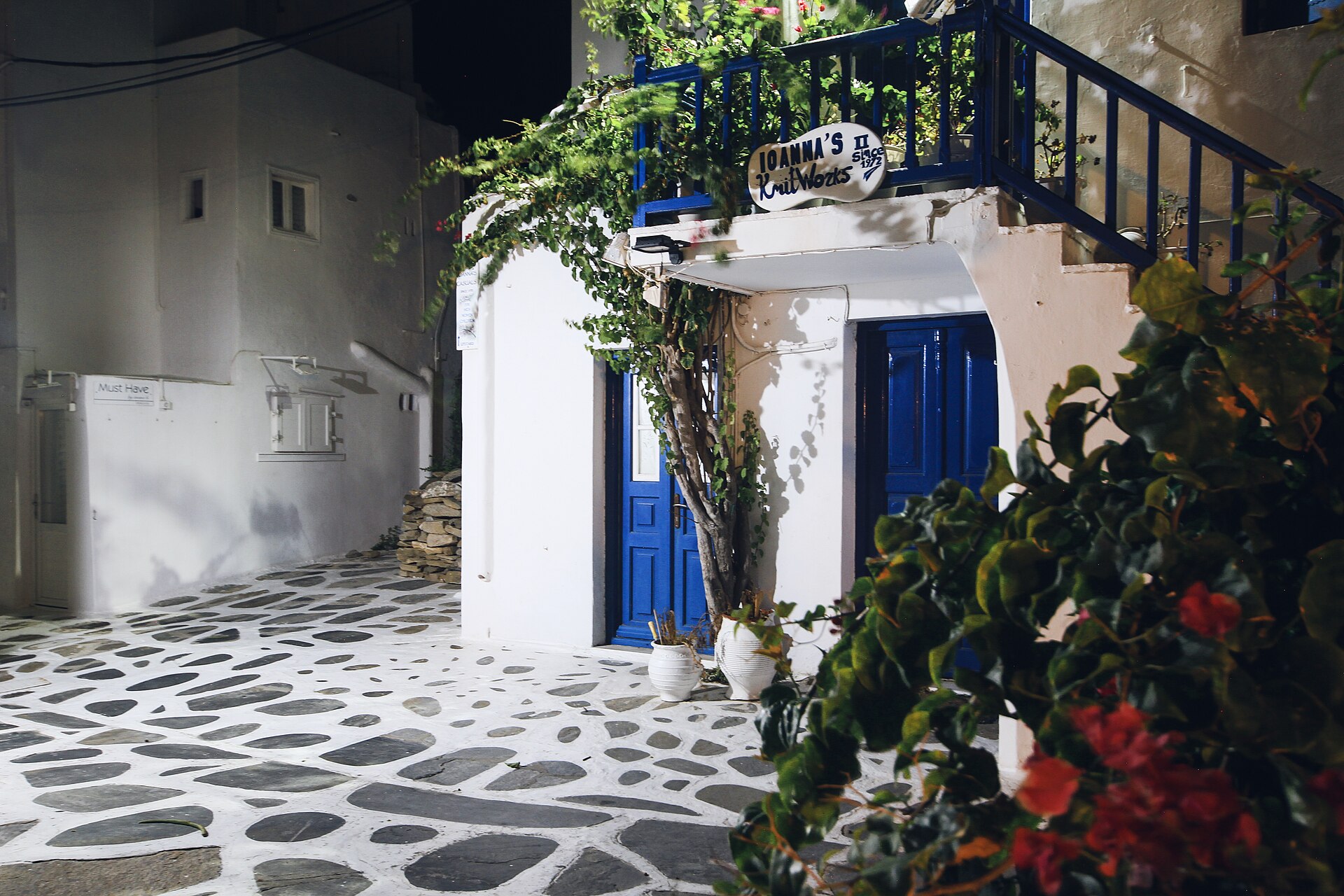
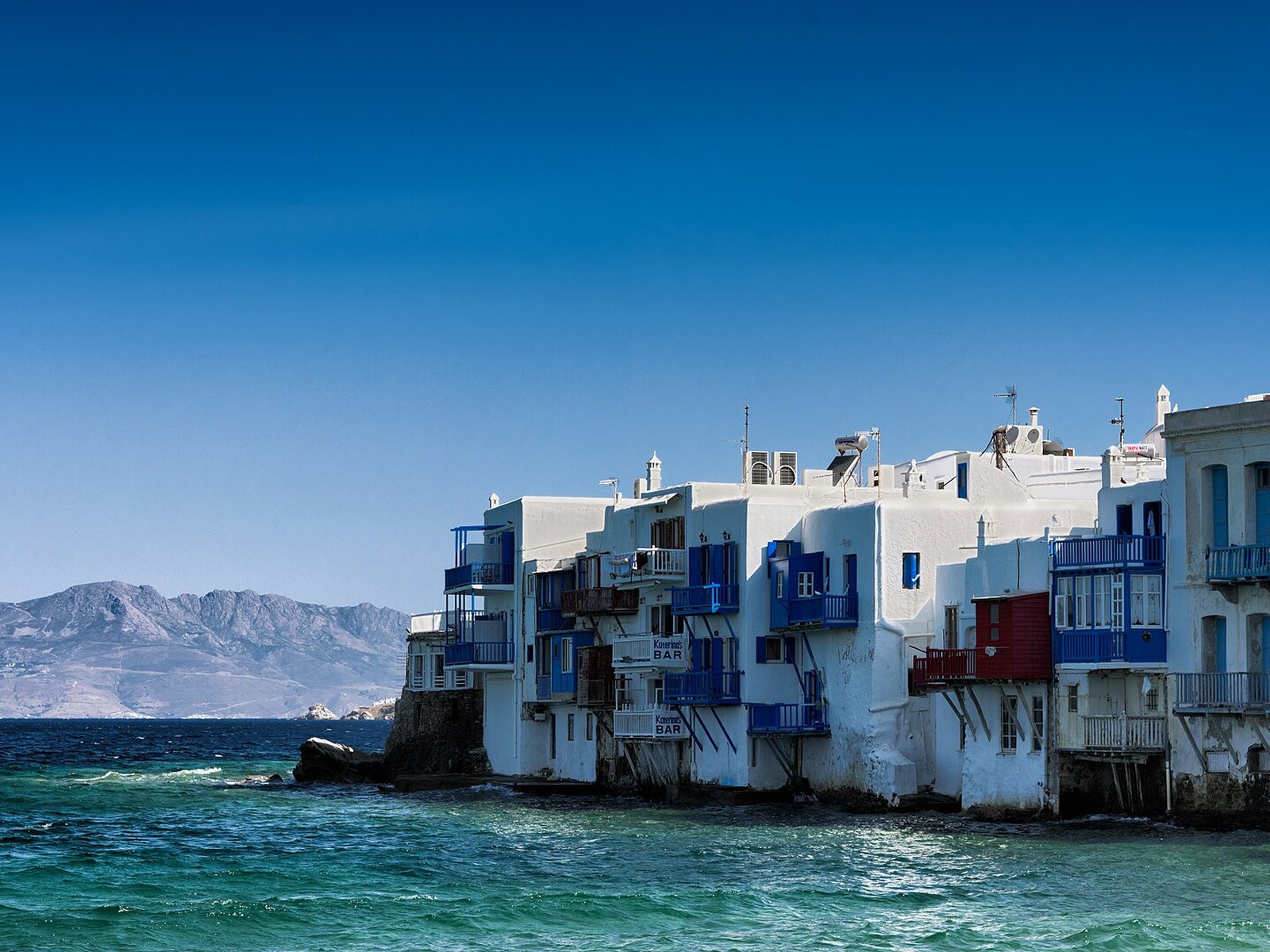
Staying in or just above the town puts the restaurants, boutiques and nightlife on your doorstep, and frees you from a car or a taxi to go out. The trade-off is precisely that energy — the lanes fill from late morning until the small hours in peak season, and the noise carries. The old town is pedestrian and pleasantly confusing, so plan to carry your bags the last stretch to the door. Little Venice, the row of old sea-captains' houses built hard against the water on the town's southwest edge, is the postcard corner and a standard spot for a sunset drink.
On the south-coast beaches
Ornos, Psarou and Platis Gialos are the beach bases closest to town, all on the sheltered south coast and a short drive from Chora. They suit anyone who wants to wake near the sand, walk to a beach club or a taverna, and still reach town easily in the evening. Ornos works best as a compromise: a proper beach, a lived-in village feel, its own restaurants and reliable buses. Psarou is smaller, deeper-pocketed and yacht-fringed; Platis Gialos is broad, shallow and hotel-lined. Further east, Elia and Kalo Livadi are longer and calmer — better if the beach itself is the point and you will drive in for a night out.
The quiet north and Ano Mera
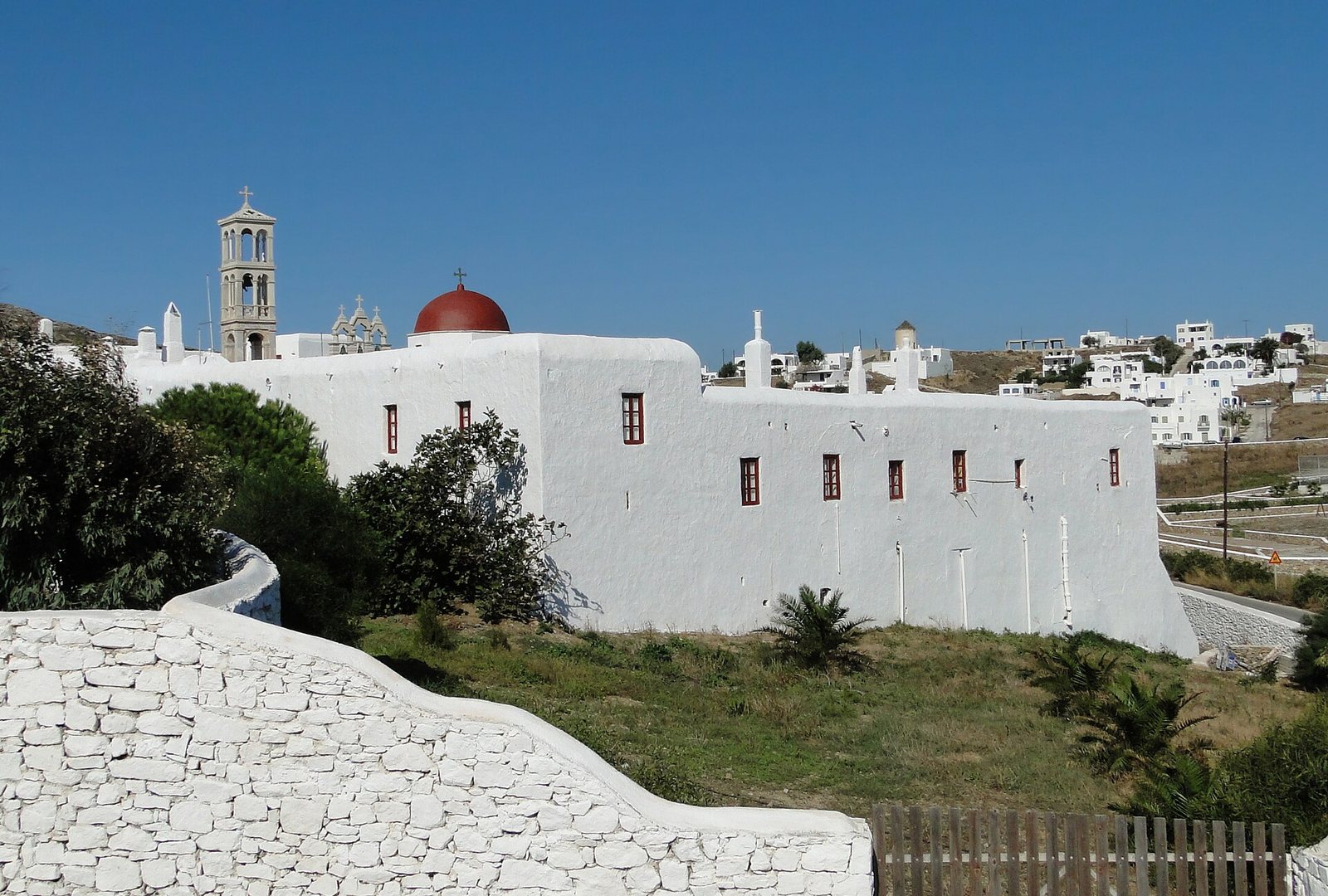
The north coast and the island's interior are where to go if crowds are the thing you most want to escape. Beaches such as Agios Sostis and Fokos are barely developed, reached by car and thin on facilities, which is exactly their draw. Ano Mera, the inland village, is built around the Panagia Tourliani monastery and a pedestrian square of tavernas, and it offers a plainer, more everyday Mykonos. The price of the calm is distance and exposure: you drive for dinner, you want your own wheels, and on a strong meltemi day the north can be too windy to swim.
| Base | Feel | Best for | Trade-off | Car needed? |
|---|---|---|---|---|
| Chora (town) | Dense, loud, walkable | Dining, nightlife, shopping, no car | Noise and crowds until late | No |
| South-coast beaches | Sheltered, resort-like | Waking by the sea, easy town runs | Priciest sand; books out early | Optional |
| North and Ano Mera | Wild, quiet, inland | Space, calm, escaping the crush | Exposed to wind; you drive for all of it | Yes |
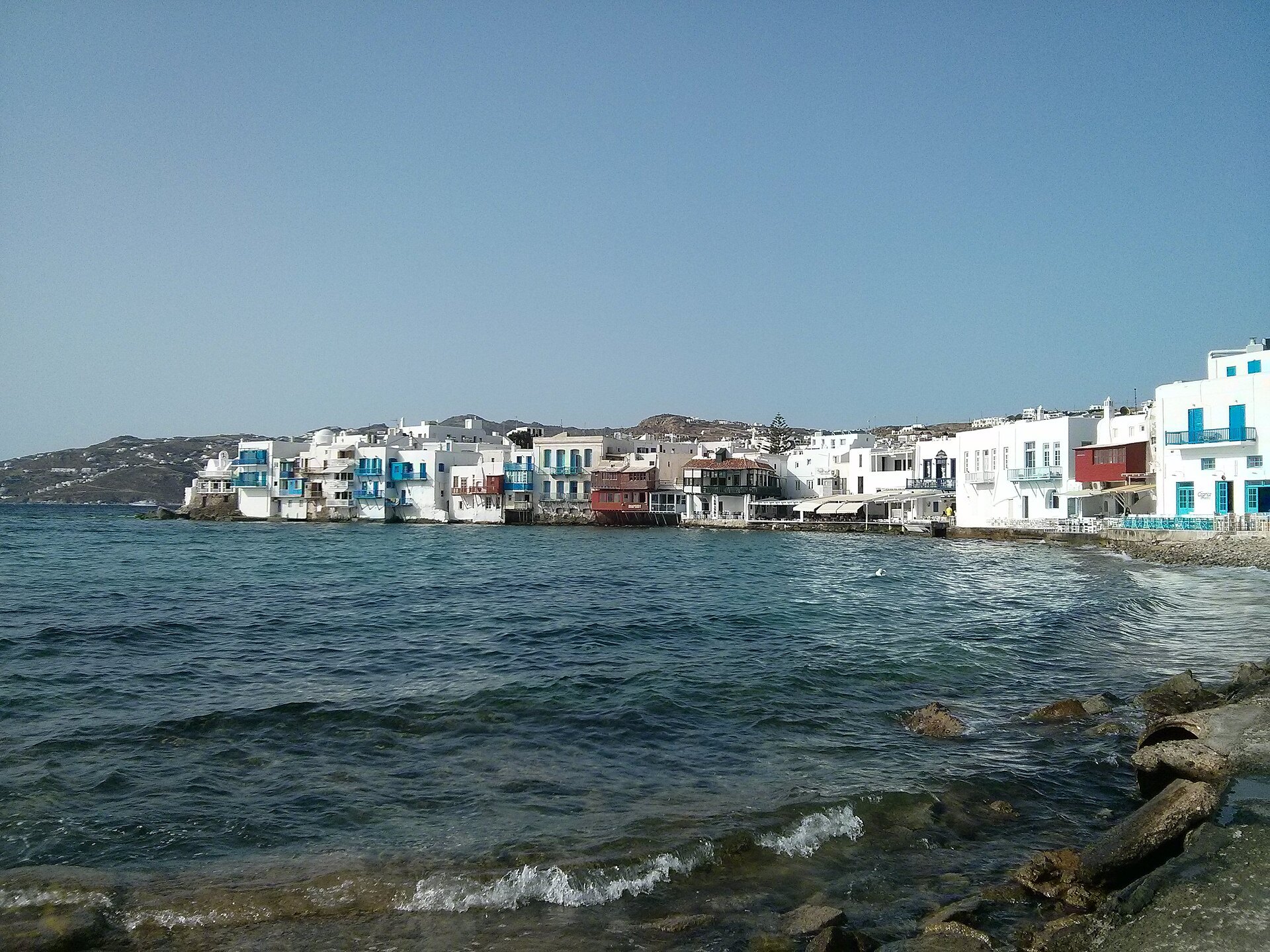
Little Venice 6 - Mykonos · Zigomitros Athanasios - Thor4bp · CC BY-SA 4.0 · cropped
Where to sleep, and what drives the price
Mykonos has one of the deepest benches of high-end hotels in Greece, and the useful way to read it is by where a place sits and what kind of stay it sets up — not by a nightly rate that swings with the calendar. A handful of things move the price far more than the star rating does:
- The view and the beachfront. A room over the water, or steps from a named beach, costs far more than the same bed set back with a garden view.
- A private pool. Suites with their own plunge pool sit at the top of every property's list; a shared pool is much cheaper.
- The address. Psarou and the strip just north of Chora carry a premium for the postcode alone; Ornos or the north cost less for comparable comfort.
- The month. August is the peak of the peak; the identical room in late May or late September can cost a fraction of its August rate, and many hotels impose minimum stays over the busiest weeks.
Below are established properties sorted by character. Book early for summer; the best rooms go months ahead.
Walkable to town
- Belvedere Hotel Mykonos sits on the hillside just above Chora, a short walk into the lanes, known for its spa and its sushi restaurant.
- Cavo Tagoo is cut into the cliff just north of town, with an infinity pool over the sea and many suites with private plunge pools; walkable to Chora and firmly in the see-and-be-seen bracket.
- Bill & Coo is a small, adults-focused hotel above Megali Ammos beach, twenty minutes on foot from the centre and calmer than its closeness to town suggests.
On the beach
- Santa Marina, a Luxury Collection Resort occupies its own peninsula above Ornos Bay with a private beach — a full resort for people who mean to spend their days on site.
- Mykonos Grand is a large resort on Agios Ioannis beach on the southwest coast, the stretch that looks across to Delos and is known for its sunsets.
- Katikies Mykonos is a design-led, pool-suite hotel on the same Agios Ioannis side, for couples wanting quiet and a view over a walk to nightlife.
Set apart
- Kalesma Mykonos stands on the hills of Aleomandra near Ornos, built to read like a low Mykonian village of suites and villas, each with its own terrace and pool; for those who want space and calm and do not mind the drive.
Platis Gialos 846 00, Greece - panoramio (4) · 7777777kz · CC BY 3.0 · cropped
When to go, and why August is the crunch
Mykonos runs on a short, intense season. Most hotels, beach clubs and restaurants open from roughly late April or May through October, then the island largely closes for winter, when the weather turns grey and blustery and much of the town shutters. Within the open season, the month you pick changes the trip more than any other single decision.
August is the crunch. It is the hottest stretch — daytime highs commonly sit in the low-to-mid 30s Celsius, into the low 90s Fahrenheit — as well as the most crowded and most expensive, with room rates and restaurant bills at their yearly peak and the popular beaches and clubs booked out days ahead. It is also when the meltemi blows hardest.
The meltemi is the strong, dry north wind that sweeps the Aegean through high summer. It is most persistent in July and August, can blow hard for several days without a break, and it is the reason the sheltered south-coast beaches are the dependable ones while the north can be unswimmable. It has an upside: the wind scours the humidity from the air and keeps the peak heat honest, so August rarely feels as heavy as the thermometer suggests. It also has a cost: on the windiest days fast ferries run late or are cancelled, so leave a real buffer if you have a flight home.
If you can flex, aim for the shoulder — late May and June, or September — for warm water, thinner crowds and a gentler wind, with the full cast of restaurants and beach clubs still open. But if August is your only window, and for many people it is, go anyway, and simply be deliberate about where you sleep and when you move.
Monastery of Panagia Tourliani 10 · Bernard Gagnon · CC BY-SA 3.0 · cropped
Getting there and getting around
Flying or the ferry
Mykonos Airport, code JMK, sits just outside Chora and takes direct flights from Athens through the year and from much of Europe over the summer. Flying is the quick option and, booked ahead, often no dearer than the boat. The alternative is the ferry from Athens, part of the holiday for many rather than a chore.
The Athens ports
Ferries to Mykonos leave from two Athens ports, and which you want depends on your plans. Rafina is closer to Athens International Airport, so it is the natural choice if you are heading straight from your flight to the island. Piraeus is the larger port nearer central Athens, easier if you are spending a night or two in the city first. High-speed boats make the crossing in roughly two and a half hours; slower conventional ferries take longer but ride the wind more steadily and cost less. On a windy day, sailings can be delayed or cancelled, so build in slack around any onward flight.
On the island
- Buses. The KTEL network is cheap and, in season, frequent. It runs from two stations in town — Fabrika, which serves the airport, Ornos, Psarou, Platis Gialos and the southern party beaches, and the Old Port, which serves Ano Mera, the New Port at Tourlos and the north. Check the last bus if you are out for the evening, as not all routes run late.
- Taxis. Mykonos has famously few taxis, and in August they are very hard to summon on demand. Pre-book transfers where you can.
- Quad, scooter or car. Your own wheels reach the north and the beaches the bus skips. The flip side is narrow roads, aggressive summer traffic and genuine trouble parking near the popular beaches in peak weeks. Quads are everywhere and fun, but people are hurt on them every season; take the helmet and the caution seriously.
- Sea bus. A small boat shuttles between the New Port and the town, a pleasant way to skip the road when you first arrive by ferry.
Good to know
Book restaurants and beach-club sunbeds well ahead in August, when the best fill days out; carry some cash for buses, small tavernas and the Delos site entry; note a nearby landmark rather than a street name to find your hotel, since the old town is a deliberate pedestrian maze; expect the meltemi to rearrange a day, so favour the south coast when it howls and leave a buffer around ferry times; and remember that almost everything here is seasonal, so outside roughly May to October assume many hotels and restaurants are closed.
20230509 NaxosParosDelosMykonos087 · Jean Housen · CC BY-SA 4.0 · cropped
The beaches, and a morning on Delos
Almost every Mykonos beach worth the name is on the south coast, where the headlands buy shelter from the meltemi, and most come with organised sunbeds and a bar or a full-blown beach club. The differences are of degree and of mood.
Glossy and organised
Psarou and Platis Gialos are the polished, close-to-town beaches. Psarou is the small, deep-glamour cove that fills with yachts and anchors the island's best-known beach club; Platis Gialos is broader, hotel-lined and calm enough for families. Neither is where you go to be alone.
The party strands
Paradise and Super Paradise are the home of the daytime club scene — big-name DJs, all-day music and a young, up-for-it crowd. Both are a good time on their own terms and hard work if what you wanted was a quiet swim.
The exposed north
Ftelia, Panormos and Agios Sostis face the wind. On a hard meltemi day they can be choppy and sand-blasted, which is why Ftelia is a magnet for kitesurfers and windsurfers; on a calm one they are among the least developed and most memorable beaches here. Agios Sostis has no organised service at all — you bring what you need.
A morning on Delos
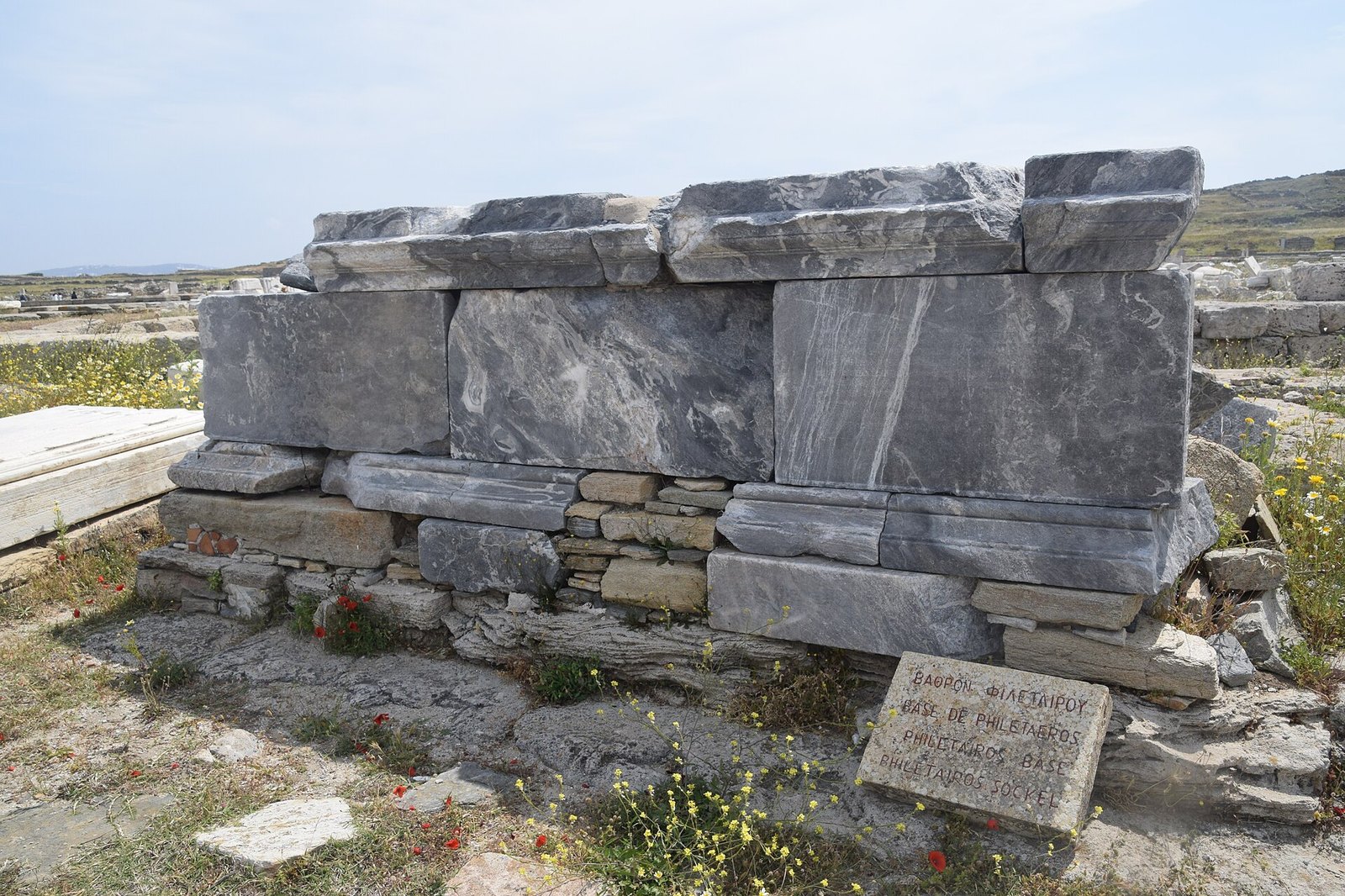
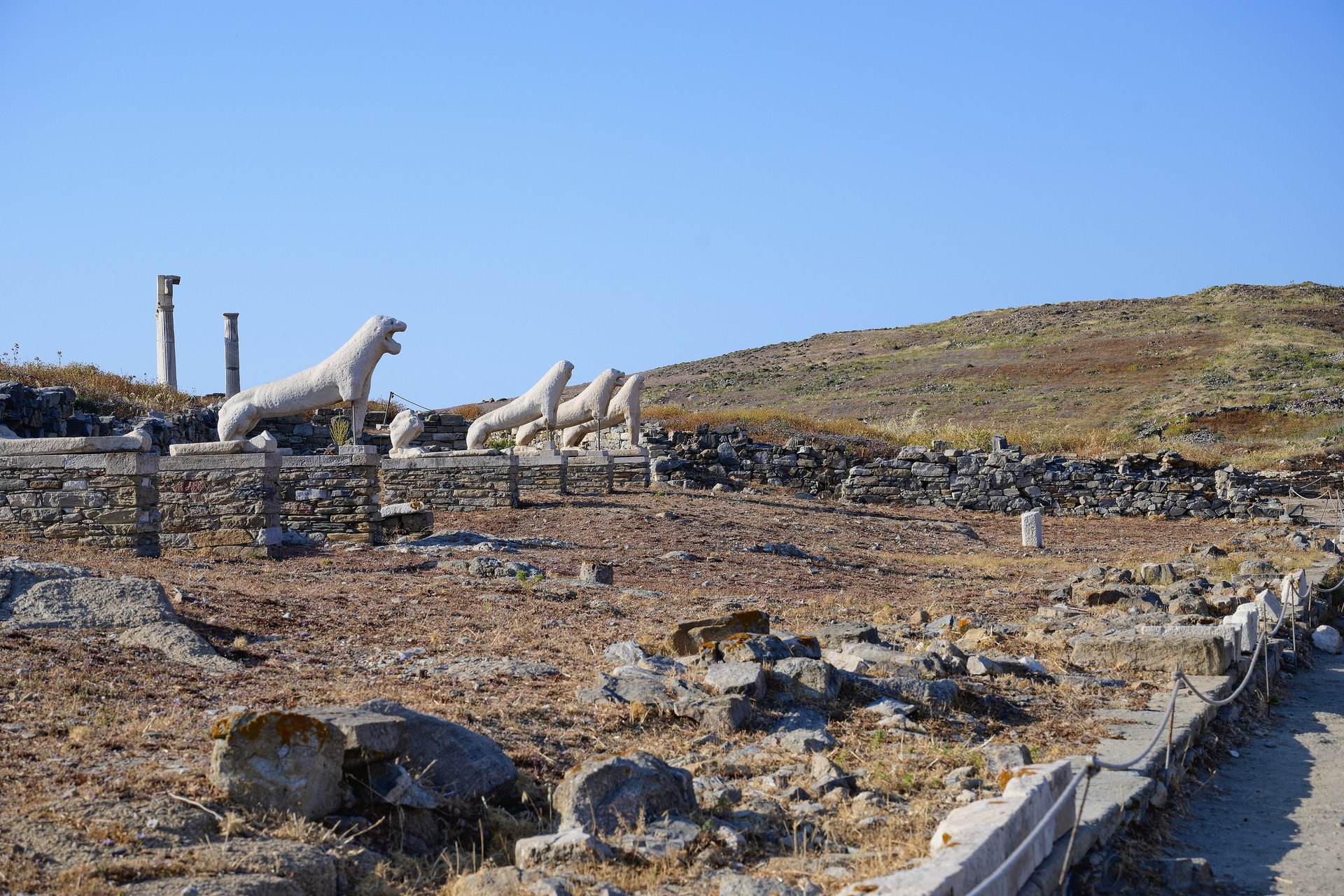
The one excursion nearly everyone makes is to Delos, the small uninhabited island just west of Mykonos that holds one of the most important archaeological sites in Greece and has been a UNESCO World Heritage Site since 1990. In myth it is the birthplace of Apollo and Artemis; on the ground it is a whole ancient town — temples, houses, mosaics and the weathered row of marble beasts known as the Terrace of the Lions, excavated in stages since the nineteenth century.
Boats run to Delos from the Old Port in Chora, and the crossing is short, on the order of half an hour. Go early: the site has almost no shade, and by noon in August the open marble is punishing, so catch a morning boat, walk the ruins before the heat peaks, and be back for lunch. Sailing days and hours shift with the season, and the site is not open every day, so check the timetable first; the boat and site tickets are separate, and you pay to enter on arrival. A guide is the difference between admiring old stone and understanding it — without one, bring a good site plan, a hat and more water than you think you need.
Terrace of the Lions Delos, 224775 · Zde · CC BY-SA 4.0 · cropped
Where to eat: beach clubs and the tavernas that outlast them
Eating on Mykonos runs between two poles, and the gap between them is wide.
The beach clubs
At one end are the beach clubs, where lunch is as much a scene as a meal. Nammos, on Psarou, is the emblem — grilled fish, a bay of superyachts, and prices to match; Scorpios, on Paraga, trades some of the flash for a slower, sundown-ritual mood. Neither is cheap: in peak season expect a minimum spend to claim a sunbed, and book well ahead, as the good days sell out weeks out. Go once for what it is, with your eyes open about the bill.
The tavernas that outlast them
At the other end are the tavernas, and they are where the island actually feeds itself. Kiki's Taverna, above Agios Sostis beach on the north coast, is the cult favourite — no electricity, no phone, no reservations; you write your name on a list, wait your turn, and eat grilled meat and salads under the trees. The square at Ano Mera has a couple of straightforward tavernas serving village food at village prices. And in the back lanes of Chora, a few streets off the boutique drag, kitchens still do honest Greek cooking for a fraction of the beach-club tariff. Order simply — the day's fish, a tomato salad, grilled vegetables, a carafe of the house white — and you eat well without the theatre.
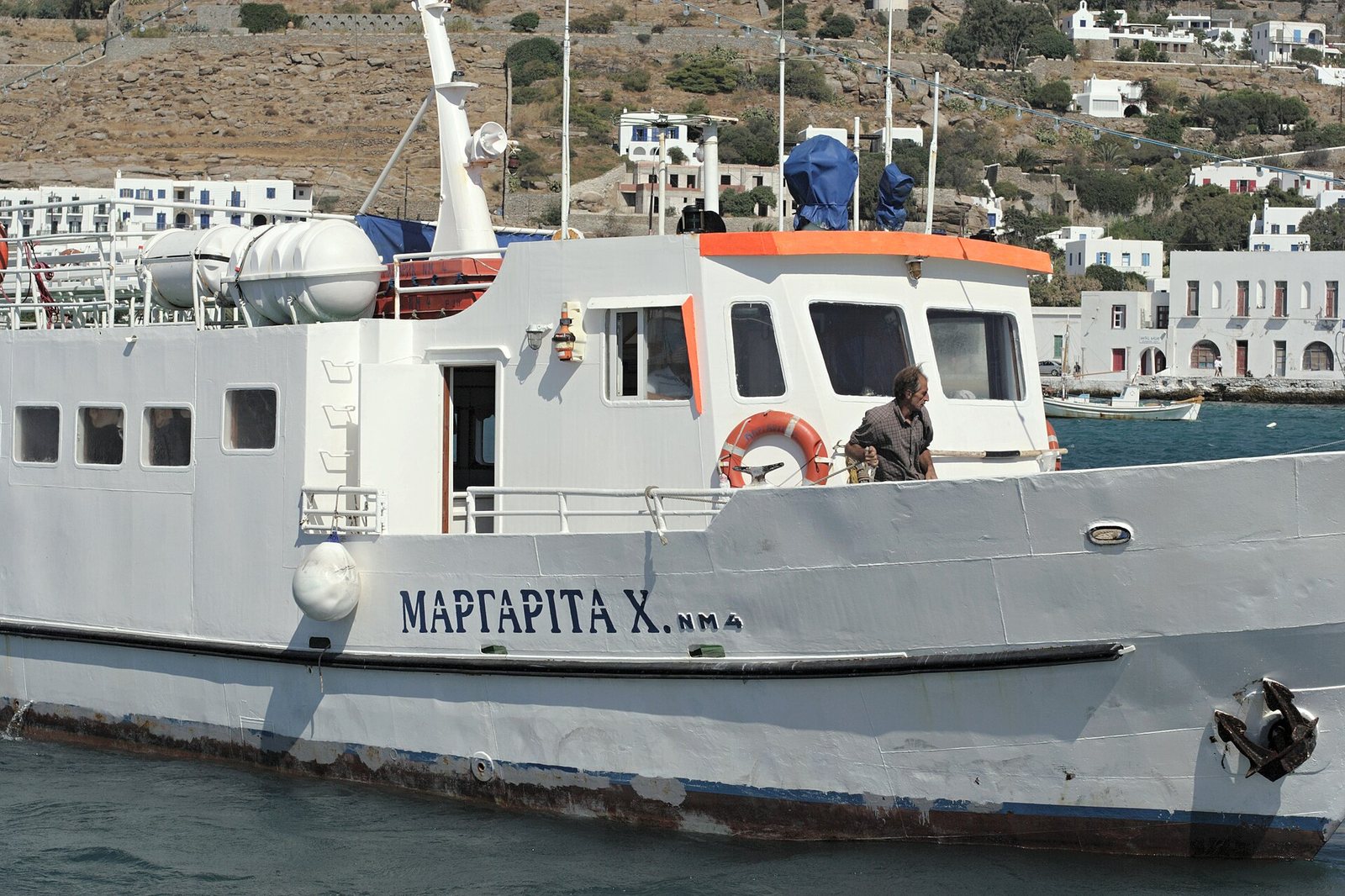
Margarita, ship, Chora of Mykonos, Delos, 060327 · Zde · CC BY-SA 4.0 · cropped
Money and practical notes
Mykonos is one of the pricier Greek islands, and August is the top of its market — but the difference between a punishing bill and a fair one is mostly in the choices you make, not the island itself.
- Where the savings are. Come in the shoulder if you can; base off the glossiest beaches — Ornos or the north over Psarou — and ride the buses; and book rooms and any beach-club day months ahead for August, when the best go first.
- Cash and cards. Cards are widely taken, but carry some cash for buses, small tavernas and the Delos entry.
- Sun and water. The summer sun is strong and shade is scarce on the beaches and on Delos; bring a hat, real sunscreen and more water than feels necessary, and pace the midday heat.
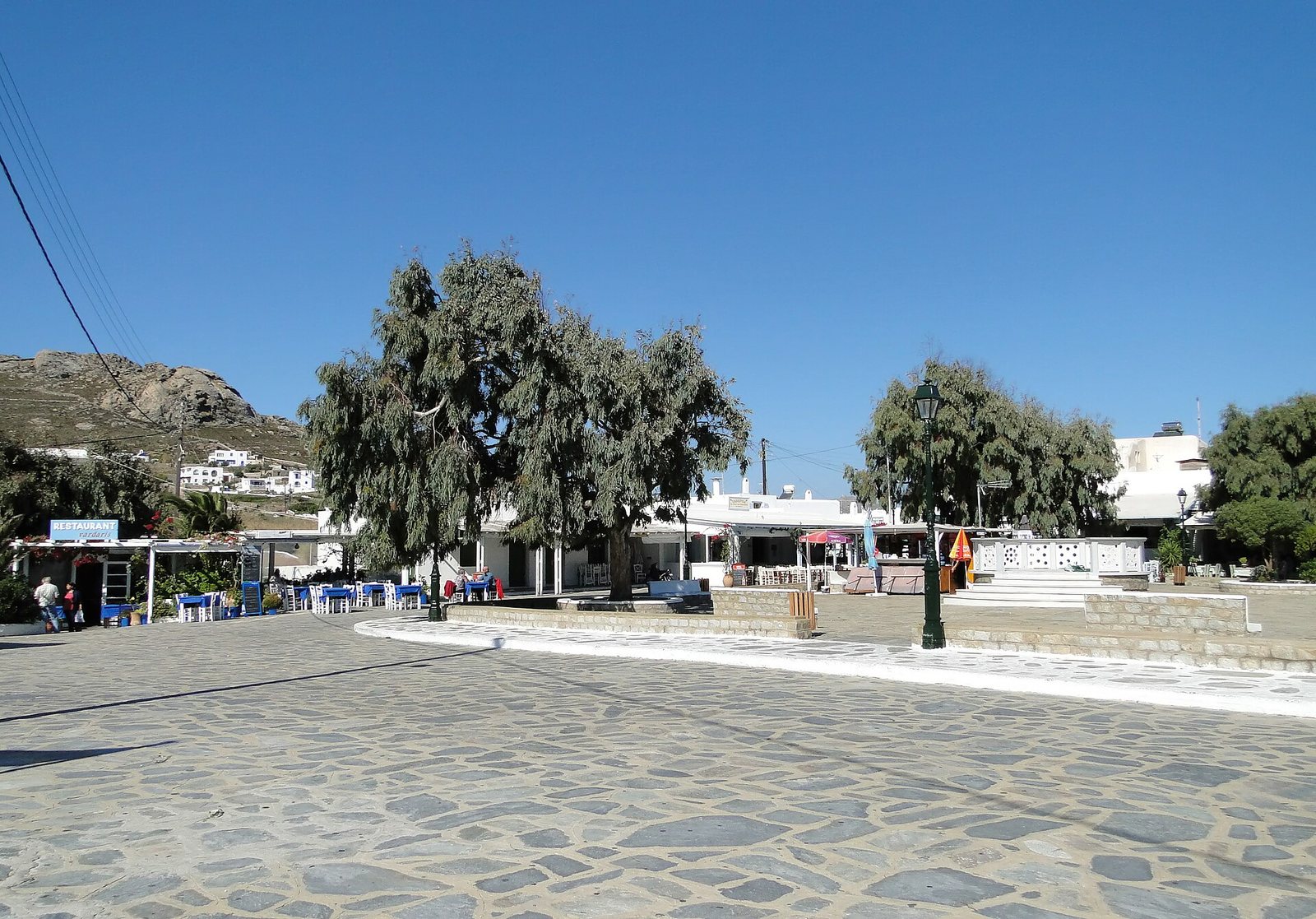
Ano Mera, Mykonos · Bernard Gagnon · CC BY-SA 3.0 · cropped
Common questions
Should I stay in town or on a beach?
Stay in or above Chora if you want to walk to dinner, shops and nightlife and can shrug off noise and crowds. Choose a south-coast beach — Ornos, Psarou or Platis Gialos — if you want to wake by the sea and still reach town easily. Pick the north or Ano Mera if quiet matters most, and plan to drive.
Is August worth it, or should I wait?
August is the most crowded, most expensive and windiest month, and still the fullest expression of the island, with every club and restaurant in play. If you can move to late May, June or September, you trade a little intensity for warm water, lighter crowds and better value. If August is your only window, go — just book early and be deliberate about your base.
How many days do I need?
Three to four nights is enough to see Chora, spend real time on two or three beaches, and take the half-day trip to Delos. Add nights if you want to slow down, seek out the quieter north, or split your stay between town and the coast.
Do I need a car or quad?
Not if you base yourself in town or on a bus-served south-coast beach and are content with buses, the odd taxi and pre-booked transfers. You will want your own wheels if you are staying in the north or inland, or if you mean to reach the undeveloped beaches the bus skips.
What is the meltemi, and will it ruin my trip?
The meltemi is the strong north wind that blows across the Aegean in summer, strongest in July and August. It rarely ruins a trip, but it shapes one: favour the sheltered south-coast beaches when it is up, expect the odd choppy day and possible ferry delay, and leave a buffer before any flight home.
Is Delos worth the trip?
Yes, if you have any interest in the ancient world — it is one of the great sites in the Aegean. Go with a guide or a good plan, take an early boat to beat the heat, check the current sailing and opening schedule first, and bring a hat and plenty of water.
Sources & further reading
- UNESCO World Heritage Centre — Delos
- Discover Greece (GNTO) — Delos, birthplace of Apollo
- Greeka — Mykonos travel guide, ports and airport
- Ferryhopper — Athens (Piraeus/Rafina) to Mykonos ferries
- Blue Star Ferries — Cyclades ferry operator
- Belvedere Hotel Mykonos
- Santa Marina, a Luxury Collection Resort, Mykonos