Malaga, a city long celebrated for its sun-kissed beaches, vibrant culture, and burgeoning art scene, has just delivered a sharp jolt to its tourism and property sectors. The city council, facing mounting pressure from residents and a palpable housing crisis, has approved a three-year moratorium on new hotels and tourist apartment blocks. This isn't a mere tweak to zoning laws; it's a decisive, sweeping measure that redraws the lines for development in one of Spain's most dynamic urban destinations, setting a precedent that other European cities grappling with similar challenges will undoubtedly watch closely.
The move, expected to take effect swiftly upon publication in the Official Gazette, specifically targets new tourist accommodation developments on land designated for residential use. This distinction is crucial: commercial land remains exempt from the restrictions, carving out a specific battleground in the city's urban fabric. The council’s decision is framed as the latest, and perhaps most impactful, step in a broader strategy to mitigate housing pressures directly linked to the city's explosive growth as a tourism hotspot.
It marks a significant escalation in Malaga’s efforts to rebalance the scales between its thriving visitor economy and the fundamental needs of its permanent residents. For developers, investors, and anyone tracking the trajectory of high-end travel and urban policy, this isn't just news from a single city; it's a potent indicator of a global shift, where unchecked tourism growth is increasingly confronting municipal limits and local resistance.
The Hammer Falls on Residential Developments
The Malaga City Council’s recently approved moratorium is not a subtle nudge; it is a direct intervention into the mechanics of urban development. For the next three years, the construction of new hotels, tourist apartment blocks, and other forms of tourist accommodation will be prohibited on parcels of land specifically designated for residential use. This measure, according to the city council, is designed to directly address the housing pressures that have become increasingly acute in Malaga.
The distinction between residential and commercial land is key. While the ban will significantly curtail the expansion of tourist accommodation in areas where people live, it leaves avenues open for development on commercially zoned plots. This suggests a strategic intent: to steer future large-scale tourism infrastructure towards specific commercial districts, potentially away from the heart of residential neighbourhoods that have borne the brunt of tourism's impact. However, the availability of suitable commercial land, particularly in desirable urban locations, is finite, and the exemption may offer less relief than it appears on paper.
The council's stated goal is clear: to manage tourism growth in a way that prioritises local housing affordability and availability. The measure is expected to come into force within days of its formal approval, following its publication in the Official Gazette. This rapid implementation underscores the urgency with which city officials are approaching the issue, reflecting a sentiment that the time for incremental adjustments has passed.
This is not a standalone policy, but rather an additional layer of regulation built upon existing measures. It signals a hardening stance from the city, moving beyond the regulation of individual short-term rental units to a more fundamental control over the very infrastructure of tourism. The implications for the city’s property market, its hospitality industry, and its urban planning trajectory are profound.
A Pattern of Restriction: Malaga's Evolving Stance
The latest moratorium is not an isolated policy decision but rather the culmination of an escalating series of measures from the Malaga City Council. It builds directly on an existing three-year suspension of new tourist rental licenses, which was introduced in August 2025. That earlier policy specifically targeted areas where tourist accommodation had already exceeded eight per cent of the total housing stock, effectively capping the growth of individual short-term rental properties in the most saturated neighbourhoods.
This progression reveals a clear regulatory philosophy at play. Initially, the focus was on controlling the proliferation of individual short-term rentals, often seen as the most immediate and visible contributor to housing scarcity and neighbourhood disruption. By setting a percentage threshold, the council attempted to create a quantitative limit, allowing some growth in less affected areas while halting it in others. This approach acknowledged the economic benefits of the short-term rental market while attempting to mitigate its negative externalities.
However, the new moratorium demonstrates that the earlier measures, while impactful, were deemed insufficient to address the scale of the problem. The shift from regulating individual rental licenses to banning entire categories of new development – hotels and tourist apartment blocks – signifies a more radical and comprehensive approach. It suggests a recognition that the issue extends beyond the Airbnb/Vrbo market to encompass the broader expansion of purpose-built tourist infrastructure on residential land.
This evolution in policy reflects a growing understanding among city officials that housing pressures are multifaceted, driven by both the atomised growth of individual rentals and the larger-scale development of dedicated tourist facilities. By tackling both fronts, Malaga is attempting to exert more holistic control over its urban environment, moving towards a model where tourism development is more tightly integrated into, and perhaps limited by, the city’s capacity to support its permanent population. This layered regulatory strategy is a blueprint for other cities grappling with similar challenges, indicating that initial, more targeted interventions may often be precursors to broader, more impactful restrictions.
The Numbers Game: Beds, Residents, and Balance
To understand the impetus behind Malaga’s latest regulatory move, one must look at the sheer scale of its tourist accommodation capacity. According to the city council, Malaga currently offers around 9,600 tourist apartment beds and approximately 14,000 hotel beds. These figures represent the traditional, purpose-built segments of the hospitality market, often operated by established companies or chains.
However, the truly staggering figure lies in the licensed short-term rental sector, which accounts for more than 64,000 beds across the city. This number, significantly larger than the combined total of hotel and tourist apartment beds, highlights the immense growth and dominance of the individual rental market in Malaga. It underscores how platforms like Airbnb and Vrbo have fundamentally reshaped the city’s accommodation landscape, making it accessible to a vast influx of visitors, but also placing unprecedented demands on its housing stock.
These numbers, when viewed against the backdrop of Malaga’s permanent population, paint a vivid picture of the housing pressure the city is experiencing. With tens of thousands of beds dedicated to transient visitors, a substantial portion of the housing market is effectively removed from residential use, driving up rental prices and making it increasingly difficult for locals to find affordable homes. This dynamic creates a direct conflict between the economic benefits of tourism and the social well-being of the city’s residents.
The council's decision to ban new developments on residential land, following its earlier cap on short-term rental licenses, is a direct response to these figures. It reflects an acknowledgement that the sheer volume of tourist beds, particularly in the short-term rental segment, has reached a critical mass, necessitating a more aggressive approach to rebalance the market. The goal is not to eliminate tourism, but to manage its footprint, ensuring that the city remains liveable for those who call it home year-round.
The Developers' Rush and the Loopholes
In the world of real estate and urban planning, the announcement of impending restrictions often triggers a predictable and frantic rush. Malaga's experience with this moratorium has been no different. City officials openly acknowledged that applications for new tourist accommodation developments increased significantly following the public announcement of the proposed restrictions. This surge represents a classic 'land grab' scenario, where developers and investors attempted to get their projects approved and grandfathered in before the new rules formally took hold.
The council's policy explicitly states that projects which had already submitted planning applications before the moratorium was formally approved will be allowed to proceed. This provision, while standard practice in many regulatory shifts, effectively creates a temporary loophole for those who were quick to react. It means that even as the ban takes effect, a pipeline of new hotels and tourist apartment blocks, conceived and initiated in the old regulatory environment, will still come to fruition over the coming years. This will inevitably dilute the immediate impact of the moratorium, as the supply of new tourist beds will continue to grow, albeit at a potentially slower pace, until these grandfathered projects are completed.
For the developers who managed to submit their applications in time, this represents a significant victory. Their projects, now operating in a market with restricted new supply, could potentially command higher valuations and generate stronger returns in the future. The ban effectively creates a scarcity premium for existing and approved tourist accommodation. However, for those who were too slow or too cautious, the door has now firmly closed, leaving them to contend with a significantly altered investment landscape.
This pre-emptive rush and the subsequent grandfathering clause highlight the complex dynamics of regulatory change. While the moratorium aims to curb future growth, its immediate impact will be tempered by the projects already in motion. It underscores the challenges cities face in implementing such sweeping changes without creating unintended consequences or allowing for last-minute manoeuvres that can undermine the policy's immediate effectiveness. The true impact of the ban will only be fully felt once this existing pipeline of approved developments has been exhausted.
Beyond the Ban: Commercial Conversions and Urban Fabric
The Malaga City Council’s reforms extend beyond a simple moratorium on new tourist accommodation. They also introduce tighter regulations around a common practice in many urban centres: the conversion of commercial premises into residential properties. Historically, converting vacant shops, offices, or other commercial spaces into flats has been seen as a way to revitalise urban areas and add to the housing stock. However, Malaga is now placing strict limitations on this process, particularly concerning its use for tourism.
Under the new rules, while conversions of commercial premises into residential properties will still be permitted, there is a crucial caveat: these newly created residential units cannot be used for tourist accommodation. This directly targets a potential workaround for developers and investors who might otherwise seek to circumvent the ban on new tourist apartment blocks by converting commercial properties into short-term rental units. The council is effectively closing a potential back door, ensuring that any new residential capacity generated through these conversions genuinely contributes to the permanent housing supply for local residents.
Furthermore, these conversions must now meet new habitability requirements, ensuring that the converted spaces are suitable and safe for long-term living. This is a welcome move for residents, addressing concerns that some commercial-to-residential conversions might have previously resulted in substandard living conditions. The reforms also prohibit such conversions on principal streets and public squares, preserving the commercial character and vitality of key urban arteries and public spaces. This reflects a broader concern for the city's urban fabric, aiming to prevent the hollowing out of commercial centres by their wholesale transformation into tourist-oriented residential blocks.
According to the city council, the moratorium is part of the city’s wider efforts to ease housing pressures while managing tourism growth.
These additional regulations demonstrate a nuanced understanding of the various ways in which tourist accommodation can infiltrate and reshape a city. By addressing both new builds and the repurposing of existing structures, Malaga is attempting a more comprehensive control over its urban development. It signals a move towards a clearer delineation between commercial and residential zones, and a commitment to protecting the integrity of its core urban areas for local commerce and community life, rather than solely for the transient visitor economy.
Malaga's Transformation: From Industrial Hub to Tourist Magnet
To fully appreciate the significance of Malaga's moratorium, one must understand the city's remarkable transformation over the past two decades. Not long ago, Malaga was largely seen as a gateway to the Costa del Sol, an arrival point for tourists heading to Marbella or Nerja, rather than a destination in its own right. Its identity was rooted in its industrial port, its historic but somewhat neglected old town, and its role as a regional administrative centre.
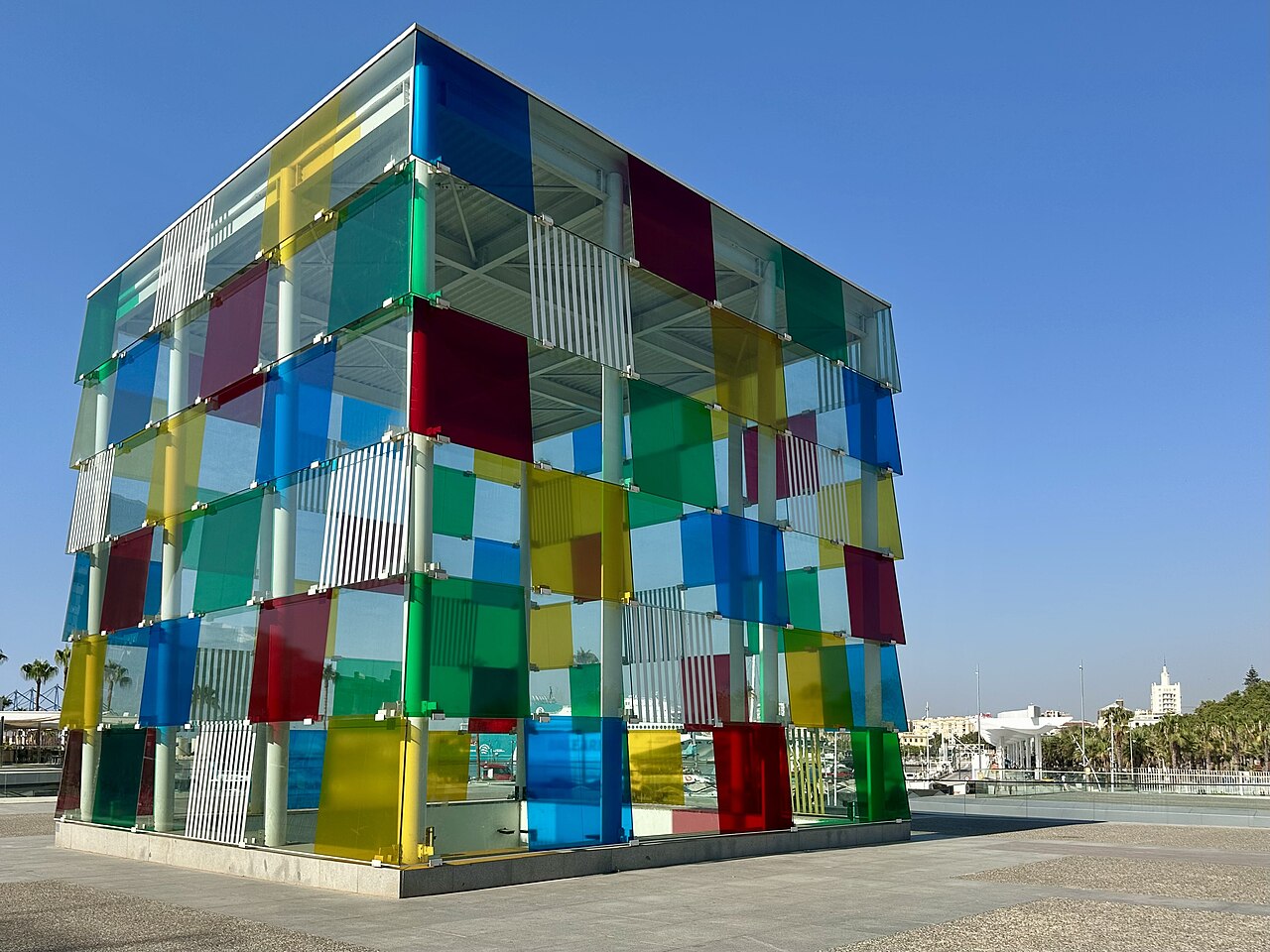
However, through concerted investment in culture, infrastructure, and urban regeneration, Malaga has reinvented itself. The opening of major art institutions like the Picasso Museum, the Carmen Thyssen Museum, and the Pompidou Centre's satellite branch, alongside the revitalisation of its port area and historic core, propelled it onto the international stage. It became a poster child for urban renewal, attracting a new breed of visitor – culture seekers, food enthusiasts, and those looking for an authentic Andalusian city experience beyond the typical beach resorts.
This success, while economically beneficial, has come at a cost. The rapid influx of tourists, coupled with the explosion of the short-term rental market, put immense pressure on Malaga's housing stock. Historic buildings in the city centre were converted from residential flats into tourist apartments, driving out long-term residents. Rental prices soared, making it increasingly difficult for local workers, students, and families to afford living in the city they call home. Neighbourhoods that once had a vibrant local character began to feel increasingly transient, dominated by holidaymakers and their associated amenities.
The city's appeal as an affordable, authentic Spanish city began to erode for its own citizens. This tension between economic prosperity through tourism and social equity for residents is not unique to Malaga, but its rapid and dramatic transformation made the conflict particularly acute. The moratorium, therefore, is not merely a response to housing numbers; it is a profound declaration about the city's future identity, a statement that its cultural renaissance must not come at the expense of its community's fundamental right to live and thrive within its own walls.
The Wider European Context: A Shifting Landscape
Malaga's decision to impose a three-year ban on new tourist accommodation is far from an isolated incident. It is, in fact, emblematic of a broader, increasingly assertive trend across popular European destinations. Cities from Lisbon to Amsterdam, Florence to Barcelona, have been grappling with the multifaceted challenges of overtourism and its impact on urban liveability. The playbook is becoming familiar: a period of rapid, often unregulated, growth in short-term rentals and tourist infrastructure, followed by a backlash from residents, and then a series of increasingly stringent municipal regulations.
Many European cities initially responded with softer measures, such as registration requirements for short-term rentals, limits on rental days, or zoning restrictions to specific areas. The 8% housing stock threshold for short-term rental licenses that Malaga introduced in 2025 is a common example of such an approach. These measures often aimed to find a balance, allowing some tourism while attempting to mitigate its most disruptive effects. However, the experience in many places has shown that these initial steps, while important, often prove insufficient to stem the tide of market forces driven by high demand and lucrative returns.
The move to a comprehensive ban on new developments, particularly on residential land, represents a significant escalation. It signals a shift from managing the symptoms of overtourism to addressing its root causes in urban planning and development. Cities are increasingly concluding that the market, left to its own devices, will continue to convert residential spaces into tourist accommodation, thereby exacerbating housing shortages and altering the character of neighbourhoods beyond repair.
This tightening regulatory environment across Europe has profound implications for the luxury stays market. It means that the era of easy expansion into new urban areas for hotels and tourist apartment operators may be drawing to a close in many desirable locations. It forces a re-evaluation of investment strategies, pushing capital towards existing properties, renovations, or perhaps less saturated, secondary destinations. Malaga’s ban is not an anomaly; it is a clear indication of a mature market reaching a saturation point, where social and environmental considerations are now taking precedence over pure economic growth in the tourism sector.
Malaga's ban is not an anomaly; it is a clear indication of a mature market reaching a saturation point, where social and environmental considerations are now taking precedence over pure economic growth in the tourism sector.
The Economics of Scarcity: What Happens Next
The imposition of a three-year ban on new tourist accommodation developments in residential areas fundamentally alters the economic landscape for Malaga's hospitality and property sectors. The most immediate and predictable consequence will be the creation of an artificial scarcity. With no new supply entering the market for a significant period, the value of existing, licensed hotels and tourist apartments, as well as approved projects, is likely to increase. This could lead to higher occupancy rates and stronger pricing power for current operators, as demand continues to grow while supply remains capped.
For owners of existing short-term rental properties, particularly those already operating legally in areas not exceeding the 8% housing stock threshold, this ban could be a boon. Their assets become more valuable in a constrained market, potentially allowing for higher rental yields. However, this also carries a risk: increased profitability often attracts more scrutiny, and cities might be tempted to introduce further taxes or stricter operational requirements on existing properties to capture some of this newfound value.
Developers and investors who were planning new projects on residential land will now need to pivot. Their options are severely limited, forcing them to either explore the finite commercial land parcels, if available, or shift their focus entirely to other markets. This could stifle innovation in the city's hospitality design and offerings, as new, cutting-edge concepts may struggle to find a foothold. It also raises questions about the long-term investment climate: will Malaga still be seen as an attractive place for significant hospitality capital if expansion is so heavily restricted?
Another economic consequence could be a re-evaluation of property types. If converting commercial premises to tourist accommodation is prohibited, and new residential-zoned tourist developments are banned, there might be a renewed focus on traditional long-term residential housing development. This, in theory, should help ease housing pressures, but the economics of such projects would need to be compelling enough to attract developers away from the higher returns typically associated with tourism.
Ultimately, the ban introduces a period of uncertainty and adaptation. While it aims to correct market imbalances, it will undoubtedly create new ones. The interplay between capped supply, continued demand, and the city’s enforcement capabilities will determine the true economic winners and losers over the next three years and beyond. The market will become less about expansion and more about optimisation and consolidation of existing assets.
What it means for where you stay
For the traveller considering a trip to Malaga, this moratorium signals a shift in the booking landscape. The days of seemingly endless new options, particularly in the heart of residential areas, are over for the foreseeable future. This means a few concrete things: expect less availability, especially for new, purpose-built tourist apartments, and potentially higher prices for existing properties as demand continues to outstrip a now-capped supply. Booking well in advance will become even more critical, particularly during peak seasons. Travellers might also find themselves staying in areas further from the traditional tourist core, or in commercially zoned districts, as new developments are pushed into these specific zones. It might also mean a more authentic, less tourist-saturated experience in some neighbourhoods, as the city strives to preserve its local character.
For the owner or prospective owner of a property in Malaga, the implications are equally significant. If you already own a licensed short-term rental or a hotel, your asset has likely just become more valuable due to the artificial scarcity created by the ban. This could lead to increased occupancy rates and potentially stronger rental yields. However, this also comes with increased regulatory risk; cities that impose such bans are often scrutinising existing operations more closely. Compliance with all local regulations, including the earlier 8% housing stock threshold for STR licenses, will be paramount. For those looking to invest, the window for new tourist accommodation on residential land has closed. Future investments will need to focus on existing, compliant properties or explore the limited opportunities within commercially zoned areas, understanding that the regulatory environment is now firmly geared towards protecting residential housing.
Source
ShortTermRentalz — reported 17 July 2026. Read by the Amorielli news desk.
Report an error in this story · Corrections policy and log

Pictures marked “Amorielli studio image” are illustrative scenes made for this story, not photographs of any property, company or person named. Pictures credited to a photographer are real photographs from Wikimedia Commons, used under the licence named beside each one; each caption says what the photograph shows. Details can change after publication; confirm specifics with the property or source. Like this? Get the newsletter.