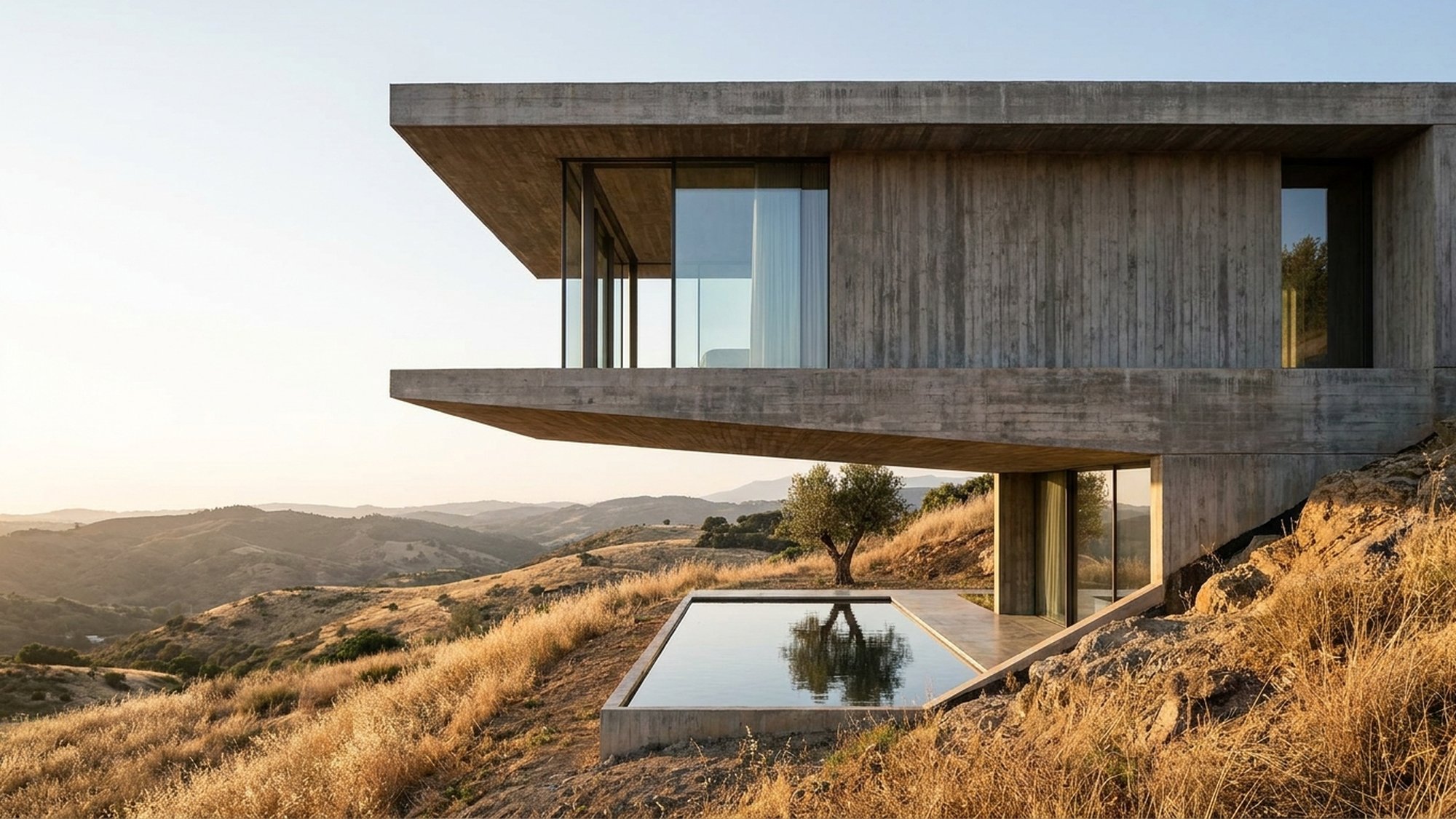
The siren call of Los Cabos has long echoed across the luxury travel landscape, luring a particular class of buyer with its promise of perpetual sunshine, cerulean seas, and the kind of high-end amenities that define a certain lifestyle. It is a destination that feels both wild and meticulously manicured, a place where desert meets ocean in a dramatic flourish. Against this backdrop, Pacaso, the real estate co-ownership company, has just unveiled its newest offering: Playa Linda, a five-bedroom, ocean-view villa set within the established beachfront community of Palmilla Norte along the San Jose Corridor.
Announced on September 16, 2026, this property represents more than just another luxury listing. It is a calculated step in Pacaso’s ongoing mission to redefine second-home ownership, transforming what was once an exclusive, often burdensome, endeavour into something ostensibly more accessible and, crucially, hands-off. For a starting price of $872,000 for a one-eighth share, buyers are promised not just a slice of Mexican paradise, but a seamless experience, fully furnished and professionally managed, where the only requirement is to “show up and be fully present with their families,” as Austin Allison, CEO and co-founder of Pacaso, puts it.
But like any proposition that promises to simplify the complex, the details warrant a closer look. What exactly does this “weight of traditional ownership” entail, and how effectively does Pacaso truly lift it? In a market already saturated with high-end hotels, vacation rentals, and outright property sales, where does fractional ownership fit, and for whom is Playa Linda a genuine opportunity, rather than just another well-marketed fantasy?
The Cabo Calling and Pacaso’s Playbook
Los Cabos, stretching across the southern tip of Mexico’s Baja California Peninsula, has for decades been a magnet for those seeking an escape from colder climes and a taste of the good life. Its dual personalities—the lively, party-centric Cabo San Lucas and the more tranquil, art-focused San Jose del Cabo—offer a spectrum of experiences. The San Jose Corridor, where Playa Linda is situated, bridges these two points, providing a quieter, more residential feel while still offering proximity to world-class golf courses, marinas, and dining establishments.
Palmilla Norte, specifically, holds a particular cachet. It is described by Pacaso as “one of Los Cabos’ most established beachfront communities,” a detail that speaks volumes about the company’s strategic site selection. Pacaso isn’t seeking out untouched, speculative frontiers; it is planting its flag in proven, high-value enclaves where a certain level of infrastructure, prestige, and demand already exists. This isn’t a gamble on an emerging destination; it’s an investment in a known quantity, a recognition that the luxury buyer often seeks reassurance through familiarity and established reputation.
The appeal of Los Cabos extends beyond its natural beauty. It’s a relatively easy flight from major North American hubs, making it a convenient weekend escape or an extended stay location. The region has cultivated a sophisticated hospitality ecosystem, from the sprawling, brand-name resorts that line its beaches to the independent, design-forward retreats that cater to a more discerning clientele. This existing framework of high-quality services and amenities provides fertile ground for a model like Pacaso’s, which relies heavily on the promise of a “resort-style” experience without the resort price tag for full ownership.
For Pacaso, Los Cabos has indeed become one of its “most sought-after second-home destinations,” a testament to the region’s enduring allure for affluent buyers. The company’s playbook is clear: identify locations with strong appeal for second homes, acquire properties that embody the desired lifestyle, and then fractionalise them. This strategy de-risks the investment for Pacaso by tapping into existing demand, and it offers buyers a seemingly straightforward path to owning a piece of a desirable, high-value asset that might otherwise be out of reach or simply too cumbersome to manage on their own.
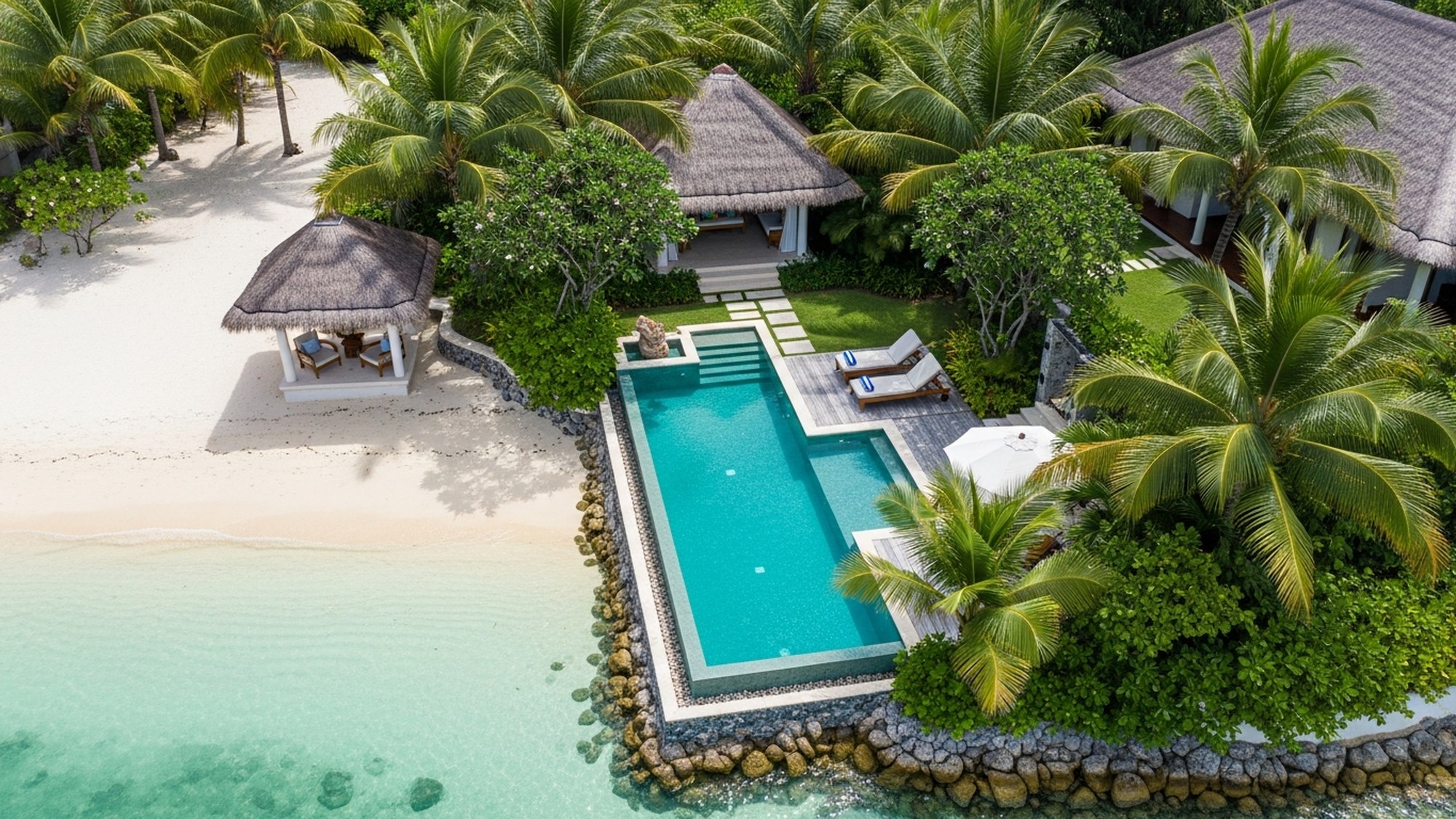
The choice of a five-bedroom, six-bathroom villa spanning nearly 5,000 square feet speaks to the specific demographic Pacaso targets: families or groups of friends who desire ample space, privacy, and the ability to host. This is not a compact pied-à-terre for a lone traveller; it is a sprawling residence designed for collective enjoyment, mirroring the kind of multi-generational travel or shared experiences that increasingly define luxury leisure. The property’s design around “resort-style indoor-outdoor living” — complete with an infinity pool, jacuzzi, palapa lounge, and kiva-style outdoor fireplace — is a direct nod to the expectations of this market, where the boundaries between interior comfort and exterior recreation are increasingly blurred.
Decoding Co-Ownership: A New Kind of Deed
Pacaso positions itself as “the leading real estate co-ownership company for second homes,” a designation that immediately begs for clarification. The term “co-ownership” can evoke various images, from traditional joint tenancy to the often-maligned timeshare. Pacaso, however, has been meticulous in distinguishing its model, emphasising that it offers a “real interest in one specific home” through a “property-specific LLC,” rather than the right-to-use points or floating weeks typically associated with timeshares.
This distinction is crucial. When a buyer purchases a one-eighth share of Playa Linda for $872,000, they are not buying a time slot. They are buying a fractional deeded interest in the underlying property, held within a limited liability company. This means, theoretically, that the share appreciates or depreciates with the market value of the home, much like traditional real estate. Owners can also sell their share, offering a liquidity that timeshares often lack, though the ease and speed of such a sale can vary significantly depending on market conditions and the number of other owners looking to divest.
The model is designed to appeal to individuals who desire the benefits of second-home ownership—the sense of having a personal retreat, a place to create “rituals and memories”—without the full financial commitment or the operational headaches. A full ownership of a nearly 5,000-square-foot villa in Palmilla Norte would likely run into the multi-million-dollar range. By dividing the property into eight shares, Pacaso makes a piece of that dream financially attainable for a broader segment of the affluent market.
However, the concept of a “real interest” in a home, while legally distinct from a timeshare, shares some practical similarities with other forms of shared property. The fundamental challenge of co-ownership, whether it’s a family cabin or a high-end villa, lies in scheduling and decision-making. Pacaso addresses this with its SmartStay™ system, which handles scheduling, aiming to prevent the conflicts that can arise when multiple parties vie for peak holiday weeks. The company states there are “no fixed weeks,” implying a flexible, equitable booking system, but the specifics of how this system prioritises or allocates in-demand dates are often the subject of intense scrutiny for any shared asset model.
The “fully managed” aspect is another cornerstone of Pacaso’s appeal. For many second-home owners, the true “weight” of ownership isn’t just the mortgage; it’s the constant worry about maintenance, repairs, landscaping, cleaning, and security. Pacaso promises to handle all of this, from “maintenance, housekeeping and scheduling” to what one assumes are utility payments, property taxes, and insurance. This hands-off approach is a powerful draw for busy professionals and families who value their leisure time above all else. It mirrors the hotel experience where one simply arrives and enjoys, but with the added sense of permanence and personalisation that comes with owning a specific property.
Playa Linda’s Particulars: What You Get for Your Share
Stepping inside the description of Playa Linda, one begins to understand the allure Pacaso hopes to convey. The villa is a substantial residence, with five bedrooms and six bathrooms spread across 4,892 square feet. This generous footprint is designed to accommodate multiple guests comfortably, with “four king suites and a fifth with two queen beds,” making it “suited to both quiet getaways and larger family gatherings.” This configuration is ideal for the target demographic—families with children, or couples travelling together—who appreciate privacy within a shared space.
The aesthetic promises a blend of local flavour and modern comfort. The primary suite, for instance, features a canopy bed and travertine floors, with arched doors that open directly onto a private terrace. These details suggest a thoughtful approach to design, aiming for a sense of place rather than a generic luxury box. The mention of “vaulted ceilings and covered terraces designed for entertaining” further reinforces the emphasis on space and flow, crucial elements for a property in a warm-weather destination like Los Cabos.
However, it is the outdoor living spaces that truly anchor the “resort-style” experience Pacaso promotes. The property boasts an “infinity pool, jacuzzi, palapa lounge and kiva-style outdoor fireplace, framed by palms and uninterrupted views of the Sea of Cortez.” These are not mere amenities; they are central to the lifestyle being sold. The palapa lounge, a traditional open-sided dwelling with a thatched roof, evokes a sense of tropical relaxation, while the kiva-style fireplace suggests evenings spent under the stars, adding a touch of rustic elegance. The “sweeping views of the Sea of Cortez” are, of course, the ultimate selling point, a constant reminder of the property’s prime location.
Beyond the immediate confines of the villa, owners of Playa Linda receive a one-year membership to Palmilla Dunes. This is a significant addition to the value proposition, extending the “resort-style” amenities beyond the private property. Palmilla Dunes is described as “one of Cabo’s premier beach clubs,” offering a comprehensive suite of facilities: “resort-style pools, a state-of-the-art fitness center, spa, tennis and pickleball courts and oceanfront dining.” This access effectively transforms the private villa into a satellite of a larger, full-service resort, providing a breadth of activities and services that would be impossible to replicate within a single private home.
The combination of a well-appointed, spacious villa and access to extensive external amenities creates a compelling package. It caters to the desire for privacy and personal space that a traditional hotel often lacks, while mitigating the isolation that can sometimes come with a standalone vacation rental. The “newly furnished and Pacaso Design Certified™” status also implies a consistent standard of quality and aesthetics, removing the need for owners to worry about interior design or upkeep. This holistic approach to the property experience is a key differentiator for Pacaso, aiming to deliver a product that is both aspirational and immediately usable.
The Management Machine: SmartStay and the Illusion of Effortless Living
The core promise of Pacaso, reiterated by CEO Austin Allison, is the abolition of “the weight of traditional ownership.” This weight, for many second-home owners, is not just the financial burden but the relentless logistical grind: finding reliable contractors for maintenance, coordinating cleaning services, managing utilities, and dealing with unexpected repairs from afar. Pacaso’s solution is its “professional management” service, facilitated by the proprietary SmartStay™ system.
The SmartStay™ system is the operational brain of the Pacaso model. It is designed to handle the crucial aspects of shared home management: “maintenance, housekeeping and scheduling.” This centralisation of administrative tasks is what allows owners to “simply arrive and enjoy the home.” In theory, this means no more frantic calls to plumbers, no more vetting cleaning crews, and no more awkward conversations about who gets the villa for Christmas. The system aims to provide a frictionless experience, mirroring the efficiency of a high-end hotel’s operations desk.
However, the smooth functioning of such a system relies on a delicate balance. Scheduling, for instance, is a perennial point of contention in any shared asset model. While Pacaso states there are “no fixed weeks,” the specifics of how the SmartStay™ algorithm allocates popular dates, manages last-minute changes, or resolves disputes among eight co-owners are critical. Does it operate on a rotating priority system? Is there a lottery for peak times? These are the pragmatic questions that determine whether the illusion of effortlessness holds up under real-world pressure.
The maintenance and housekeeping aspects are equally vital. A luxury villa requires continuous upkeep, especially in a coastal environment like Los Cabos, where salt air and humidity can take their toll. Pacaso’s promise to manage this implies a robust local team or a network of trusted vendors. The quality and responsiveness of these services directly impact the owner’s experience. A leaky roof or a malfunctioning appliance, if not promptly addressed, quickly erodes the “fully present” ideal. The ‘Pacaso Design Certified™’ status also suggests a commitment to maintaining a certain aesthetic and functional standard, which requires ongoing diligence.
The professional management component is where Pacaso truly differentiates itself from simply buying a fractional share in a property with friends or family. In those scenarios, the administrative burden often falls to one or two individuals, leading to burnout and resentment. By outsourcing this entire function to a dedicated company, Pacaso aims to remove the interpersonal friction that can plague shared ownership, allowing the focus to remain squarely on enjoyment and relaxation. This managed approach is arguably the most valuable aspect of the Pacaso offering, particularly for those who have experienced the hidden costs and time sinks of traditional second-home ownership.
The true value of a Pacaso share isn’t just in the property itself, but in the meticulously constructed illusion of effortless, worry-free ownership.
The Genesis of a Giant: Pacaso’s Rapid Ascent and Its Founders
Pacaso’s journey from a concept to a “leading real estate co-ownership company” has been remarkably swift. Co-founded in 2020 by Austin Allison and Spencer Rascoff, the company emerged during a period of unprecedented disruption and opportunity in the real estate market. The pandemic, which forced many to re-evaluate their living situations and priorities, ignited a surge in demand for second homes, particularly those offering space, privacy, and access to nature. Pacaso was perfectly positioned to capitalise on this shift.
Austin Allison, with a background in real estate technology, and Spencer Rascoff, a co-founder of Zillow, brought a potent combination of industry insight, technological acumen, and entrepreneurial drive to the venture. Their vision was clear: to democratise second-home ownership by making it more accessible and less burdensome. They understood that while the desire for a vacation home was strong, the practicalities—the high cost, the maintenance, the limited usage—often deterred potential buyers. Their solution was to fractionalise the problem, both literally and figuratively.
Since its inception, Pacaso has expanded rapidly, now operating in “more than 40 destinations around the world.” This global footprint, achieved in just a few short years, underscores the market’s appetite for their model. From Los Cabos to Kiawah Island, and even to urban centres like Paris, Pacaso has demonstrated an ability to identify diverse markets where affluent buyers seek a piece of a high-value asset. The company’s growth trajectory reflects a savvy understanding of both real estate economics and consumer psychology.
A notable development in Pacaso’s evolution, also introduced in 2026, is Infinity by Pacaso™. This “invitation-only home exchange for a curated group of owners” offers an additional layer of value and flexibility. It provides owners with “access to swap stays across a growing network of extraordinary homes in destinations like St. Barths, Tuscany, and Paris.” This move signals Pacaso’s ambition to transcend simple fractional ownership and create a broader luxury travel ecosystem. By offering an exchange programme, Pacaso enhances the utility of an owner’s share, allowing them to experience a wider range of properties and destinations without needing to acquire additional fractional interests.
The introduction of Infinity by Pacaso™ also serves as a premium retention tool, rewarding loyal owners with exclusive access to an even more rarefied collection of properties. It addresses a common desire among luxury travellers: variety and new experiences. For an owner of Playa Linda, the prospect of swapping a week in Los Cabos for a stay in a Parisian pied-à-terre or a Tuscan villa adds significant perceived value to their initial investment. It transforms a single asset into a passport to a global portfolio of exceptional homes, further solidifying Pacaso’s position in the high-end leisure market.
The Fractional Frontier: Market Dynamics and the Wider Impact
The emergence and rapid expansion of companies like Pacaso are not happening in a vacuum. They are a direct response to, and a further accelerant of, profound shifts in the luxury real estate and hospitality markets. The global pandemic, far from stifling demand for second homes, supercharged it. With remote work becoming more prevalent and the desire for private, secure retreats intensifying, properties in desirable locations saw unprecedented price surges. This made full ownership of a luxury second home even more financially challenging for many, creating a clear opening for fractional models.
The landscape of leisure travel has also been dramatically reshaped by platforms like Airbnb and Vrbo. These platforms normalised the idea of staying in someone else’s home, offering a more authentic and often more spacious alternative to traditional hotels. However, managing an Airbnb or Vrbo property, especially a high-end one, can be a full-time job for owners. Pacaso offers a middle ground: the personal space and amenities of a private home, but with the professional management and consistency typically associated with a hotel stay, without the owner having to be an active host.
This growth in fractional ownership, while beneficial for those who can afford a share, also has broader implications for local communities. In popular destinations like Los Cabos, the increased demand for properties—whether for full ownership, fractional ownership, or short-term rentals—can contribute to rising property values and a tightening of housing supply for local residents. The influx of external capital, while boosting the local economy through construction and service jobs, can also exacerbate affordability issues, creating a tension between the desires of luxury buyers and the needs of the permanent population.
Furthermore, the competitive landscape for luxury stays is becoming increasingly crowded. High-end hotels are investing heavily in villa products and branded residences, blurring the lines between hotel and home. Independent vacation rental agencies are offering concierge-level services to differentiate themselves. Pacaso operates in this dynamic environment, carving out a distinct niche by offering true deeded ownership with a managed service wrapper. Its success hinges on its ability to convince buyers that this model provides the best of both worlds: the investment potential of real estate combined with the ease of a hotel stay.
The “established beachfront communities” of Los Cabos, like Palmilla Norte, are already accustomed to a high level of luxury development and tourism. The introduction of Pacaso’s model here is less of a disruptive force and more of an evolution within an existing ecosystem. It caters to a segment of the market that values discretion, convenience, and a certain level of exclusivity, characteristics that Palmilla Norte already embodies. The question is not if the market can absorb these properties, but how this new form of ownership will integrate with the existing tapestry of high-net-worth individuals who either fully own or frequently rent in the area.
“Playa Linda highlights why Los Cabos has become one of our most sought-after second-home destinations. This home has incredible views and access to some of the best beaches and five-star amenities. But what really draws people to a home like Playa Linda is what ownership feels like once they’re there. Our owners get to show up and be fully present with their families. That’s the idea behind Pacaso: all of the memories a second home is meant to hold, without the weight of traditional ownership.”
The True Cost of Convenience: Beyond the Initial Investment
The initial investment of $872,000 for a one-eighth share of Playa Linda is certainly substantial, positioning Pacaso’s offerings squarely in the luxury segment. However, like any real estate purchase, this is just the entry point. Co-ownership, even with professional management, comes with ongoing costs that buyers must factor into their decision. These typically include monthly management fees, a share of property taxes, insurance, utilities, and a reserve fund for major capital expenditures. While Pacaso handles the administration of these, the financial responsibility rests with the owners.
The convenience of professional management is not free. The fees associated with Pacaso’s services, while consolidating many individual expenses, represent a significant ongoing outlay. Buyers are essentially paying a premium for the peace of mind and hands-off experience. For individuals who might be adept at managing properties themselves or who have access to local networks, this premium might feel less justified. But for the target demographic—time-poor professionals and families—the value proposition often outweighs the cost, as their time is arguably more valuable than the management fees.
Another consideration is the long-term appreciation and liquidity of fractional shares. While Pacaso maintains that owners hold a “real interest” and can sell their share, the market for fractional interests can be less liquid than for whole properties. Finding a buyer for a one-eighth share might take longer, and the pricing dynamics can be more complex, influenced not just by the property’s value but also by the specific terms of the LLC agreement and the perceived value of the managed service. The resale process and associated fees are crucial details that any prospective buyer should thoroughly investigate.
Furthermore, while the SmartStay™ system aims to eliminate scheduling conflicts, the reality of shared ownership means compromise. Even with the best system, not everyone can have their first choice for every holiday. The mental calculus of balancing personal desires with the needs of co-owners, even if mediated by a system, is an inherent part of the model. For some, the absolute freedom and spontaneity of full ownership, or the flexibility of a high-end rental, might ultimately be a more appealing, albeit more expensive or involved, option.
The concept of “all of the memories a second home is meant to hold, without the weight of traditional ownership” is a powerful marketing message. It speaks to a deep-seated desire for a personal sanctuary, a place of retreat and connection. However, the “weight” of ownership can also include the emotional attachment and complete control that comes with sole proprietorship. For those who envision truly customising their second home, making spontaneous weekend trips without checking a calendar, or leaving personal effects exactly as they wish, a fractional model, by its very nature, introduces a degree of standardisation and shared responsibility that might subtly diminish that sense of absolute personal domain.
What it means for where you stay
For the traveller considering a luxury stay in Los Cabos, Pacaso’s Playa Linda presents a compelling, albeit specific, option. If you are someone who frequently visits the region, desires the space and amenities of a private villa, appreciates a high level of professional management, and is comfortable with the concept of shared usage, then a Pacaso share could be a financially astute way to access a multi-million-dollar asset. The one-year membership to Palmilla Dunes significantly sweetens the deal, offering a breadth of resort amenities that enhance the overall experience. This is a model for those who value convenience and a curated experience above absolute, unfettered control.
However, if your travel patterns are less predictable, or if the idea of sharing a property with seven other co-owners, even through a managed system, feels restrictive, then the traditional luxury hotel or high-end vacation rental market might still be a better fit. Los Cabos offers an abundance of exceptional hotels and private villas for rent through platforms like Airbnb Luxe or dedicated agencies, providing flexibility without the long-term financial commitment or the intricacies of co-ownership. These options allow for spontaneous decisions and a fresh experience with each visit, without the ongoing financial obligations beyond the stay itself.
For owners and hosts in the luxury rental market, Pacaso’s continued expansion, particularly into established communities like Palmilla Norte, signals a growing competitor for the high-end traveller’s dollar. While fractional ownership is distinct from short-term rentals, it targets a similar demographic of affluent individuals seeking premium accommodations. The success of Pacaso’s managed model also underscores the increasing demand for turnkey solutions in luxury real estate. Owners considering renting out their properties, or those already doing so, should note the emphasis on professional management, resort-style amenities, and seamless guest experiences that Pacaso is setting as a benchmark. The market is increasingly rewarding properties that offer a hassle-free, fully serviced experience, blurring the lines between private home and luxury hotel. This means investing in top-tier maintenance, high-quality furnishings, and responsive guest services is more critical than ever to remain competitive.
Source
PR Newswire — reported 16 September 2026. Read by the Amorielli news desk.