At a glance
- Base
- Inside the walled old town, Getsemaní, or Bocagrande; the walled old town is the recommended choice.
- When
- Dry season (December to April) for reliable sun, lower humidity, and calmer seas; February is ideal.
- Getting there
- Fly into Rafael Núñez International Airport (CTG), a short drive to the old town. Direct flights or via Bogotá.
- Getting around
- Walk the old town and Getsemaní; use taxis or ride-hailing apps for Bocagrande, airport, and sights outside the core.
- Book ahead
- Book hotels inside the walls months ahead for high season (Dec-Apr), especially around holidays.
- The price
- Accommodation prices vary significantly by location (walled city most expensive) and season (dry season is peak).
Lay of the land
Cartagena is a small city that behaves like a large one, and the part most visitors come for is smaller still. The walled old town — the Ciudad Amurallada — is a compact grid of colonial streets ringed by stone ramparts the Spanish spent the better part of two centuries building. Pedro de Heredia founded the port in 1533, and for the next three hundred years it was one of Spain's most important harbours in the Americas: a place where silver was warehoused, enslaved people were landed, and pirates were a recurring line item in the accounts. Francis Drake sacked the town in 1586 and left with a ransom. The walls you walk today are the direct answer to that raid.
Understanding the city means understanding three concentric ideas. There is the walled centre, which splits loosely into the grander northern quarter around Plaza de Bolívar and Plaza Santo Domingo, and the quieter San Diego neighbourhood at its northern end. There is Getsemaní, just outside the main gate, once the working district and now the part of town where you are most likely to hear a domino game before you see it. And there is the modern city — the high-rise peninsula of Bocagrande, the airport suburb of Crespo, and the sprawl beyond — where most of Cartagena's roughly one million residents actually live.
For a traveller, the geography is unusually forgiving. The old town is entirely walkable; you can cross it in twenty minutes and lose an afternoon doing it. Getsemaní is a five-minute walk from the clock tower gate. Bocagrande is a short taxi ride south. The one thing worth knowing up front is that the old town and the beach are not in the same place. The pretty streets are inland, behind the walls. The high-rise beaches are elsewhere, and the water you have seen photographed — clear, turquoise — is offshore, an hour out by boat. Deciding which of these you came for is the single most useful thing you can do before you book anything.
The old town is where Cartagena earns its reputation. Streets are narrow, buildings low and painted in ochre, coral and faded blue, and nearly every balcony carries bougainvillea. The UNESCO listing that arrived in 1984 covers the port, the fortresses and the group of monuments, and it has kept the skyline inside the walls low. The result is a centre that reads as a whole rather than a set of restored highlights. Gabriel García Márquez, who spent formative years here as a young reporter, set part of his fiction in these streets, and the city leans into that association without overplaying it.
Heat is the constant. Cartagena sits close to sea level about ten degrees north of the equator, and the temperature barely moves across the year — daytimes in the low thirties Celsius, nights not much cooler. What changes is the humidity and the rain, and that single variable is the difference between a week you remember and a week you spend indoors. We will come to the timing, because it matters more here than almost anywhere else in this issue.
Where to base yourself
There are three real choices, and they suit three different trips. Inside the walls, in Getsemaní, or out in Bocagrande. Each has a clear argument, and each has a cost.
Sleeping inside the walls is the reason most people come and the choice we would make. You wake in the old town, you can be up on the walls early before the heat arrives, and everything you want to see at night is a short walk from your door. The trade-off is money and noise. Rooms behind the walls are the most expensive in the city by some margin, and the streets around Plaza Santo Domingo and the Plaza de los Coches run loud and late. If you are a light sleeper, ask for a room off the street or facing an interior courtyard, and treat that as non-negotiable.
Getsemaní is the value case, and increasingly the interesting one. A generation ago it was rough; today it is the barrio with the street art, the small plazas, the evening crowds spilling out around the Plaza de la Trinidad, and a growing stock of guesthouses and small hotels in restored houses. You pay noticeably less than inside the walls for a five-minute walk to the same gates. The caveat is that Getsemaní has become popular enough to have its own late-night noise, and a few blocks are livelier than a family might want. Walk the specific street before you commit if you can, or read recent guest reviews for the noise, not the decor.
The walls are the whole argument for staying inside them: sleep where you can be on the ramparts at six, before the heat and the crowds arrive.
Bocagrande is the beach-and-tower district, a strip of high-rise hotels and apartments along a grey-sand shore south of the centre. It suits travellers who want a pool, a sea view from a balcony, chain-hotel reliability, and a lower nightly rate than the old town commands. What it does not give you is atmosphere; the beach here is functional and plain, the sand darker than the brochure suggests, and you will be taking a taxi into the old town most evenings. We would base here only for a specific reason — a long stay, a family that needs a pool, a business trip. It would not be our first choice.
A note on a common routing mistake. Do not split three or four nights between Bocagrande and the walled city thinking you will get the best of both. You will spend the trip in taxis and unpacking twice. Pick one base for the town portion of your stay, and if you want beach and clear water, add it as a day trip or a separate island night, and don't set up a competing base.
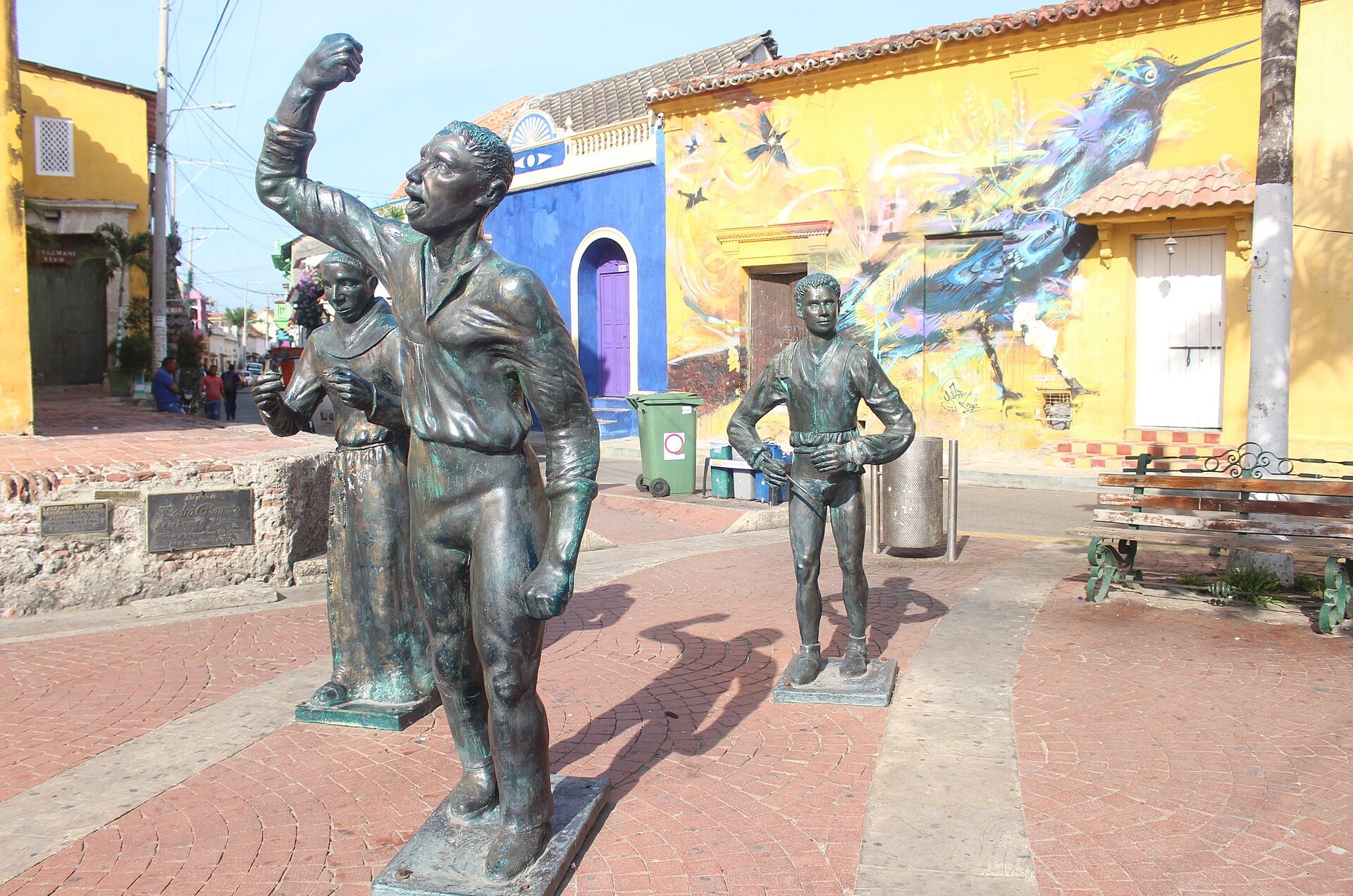
Statues in Plaza de la Trinidad · Jami430 · CC BY-SA 4.0 · cropped
Where to sleep
Cartagena's signature room is the converted colonial casa: a merchant's house or former religious building turned inward around a courtyard, with a plunge pool where the cistern used to be and a roof terrace for the evening. This is the format worth paying for, because it is the one thing the modern towers cannot fake. The best examples are inside the walls and in San Diego, and there is a smaller, cheaper version of the same idea across Getsemaní.
The clearest single landmark at the top of the market is the Sofitel Legend Santa Clara, set in a 17th-century former convent in the San Diego quarter. It is genuinely historic — the cloister, the courtyard and the scale of the building are the draw as much as the service — and it is priced accordingly. Even if you do not stay, it is the reference point everything else is measured against, and its bar is a reasonable way to see the interior for the cost of a drink.
Below that, the old town has a deep bench of small luxury and boutique hotels in restored houses, typically a dozen to twenty rooms arranged around a courtyard. We won't name ones we cannot personally vouch for; the useful advice is structural: look for a property with a genuine interior courtyard and a usable roof terrace, confirm the room has effective air conditioning and, if you want quiet, a position away from the street. In Cartagena's heat a usable pool matters every day, but many of these plunge pools are ornamental — check the photographs for something you can actually get into.
Getsemaní's accommodation runs from well-run hostels through mid-range guesthouses to a handful of design-led small hotels. This is where independent travellers and anyone on a budget should look first. Expect to pay a fraction of the walled-city rate for a restored room a short walk from the same sights; expect, in return, thinner walls and street noise on the livelier blocks. It is also the best part of town for a longer, more local stay, with more casual places to eat within a few minutes' walk.
Bocagrande is the district for the international chains and the serviced apartments. If you need a reliable big-hotel room with a pool, a gym and a sea-view balcony, this is where you will find it at a predictable price. Book a high floor for the view, and remember the beach below is the city's everyday beach.
Two practical points on booking. First, rates swing sharply with the calendar: the dry-season peak and the holidays around Christmas, New Year and Colombian long weekends can double what you pay in the low season, so lock the dates before the room. Second, the small courtyard hotels have very few rooms, which means the good ones sell out early in high season — if a converted casa inside the walls is the trip you are picturing, book months ahead rather than weeks.
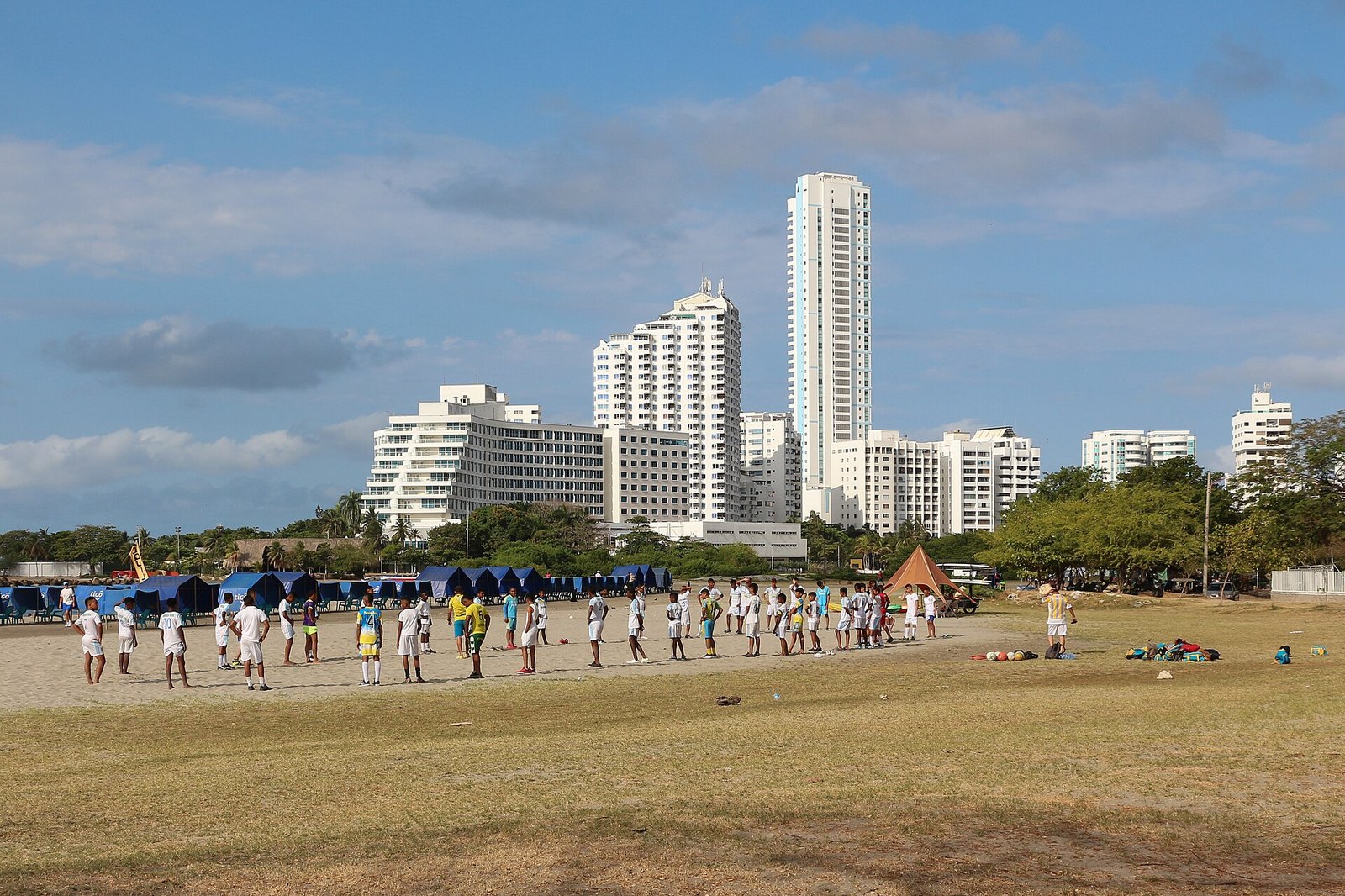
Bocagrande, Cartagena 03 · Bernard Gagnon · CC BY-SA 4.0 · cropped
When to go
This is the section that decides the trip. Cartagena has a dry season and a wet season, and unlike the temperature, the difference between them is large and it is visible from the moment you arrive.
The dry season runs roughly from December to April. These are the months of reliable sun, lower humidity, calmer seas and the best odds for a day out to the islands. February — the month of this issue — sits comfortably in the middle of that window: warm, bright and about as dry as the city gets. If you are choosing when to come and you have the flexibility, this is the season to choose. The cost of that reliability is company and price. The dry months are peak season, the old town is busy, and rooms are dearer, with the sharpest spikes around the Christmas and New Year holidays and Colombia's clustered long weekends.
The wet season runs roughly from May into November, with the heaviest rain typically arriving in the later months, around October and November. Rain here tends to come as short, heavy afternoon downpours, and rarely all-day grey, and the mornings can still be usable, so a wet-season trip still works — it is cheaper, quieter, and the city is still the city. But the seas are rougher, island trips are more often cancelled, and the humidity is heavier. If clear water and boat days are central to your plan, the wet season is a gamble you can lose.
Whatever the month, plan around the heat rather than against it. The pleasant hours are early morning and the last hour before dark; the middle of the day belongs to the pool, a long lunch, or a shuttered room. Locals structure the day this way, and so should you. The ramparts at sunset, cooling and catching the light, are the reward for having stayed inside the walls.
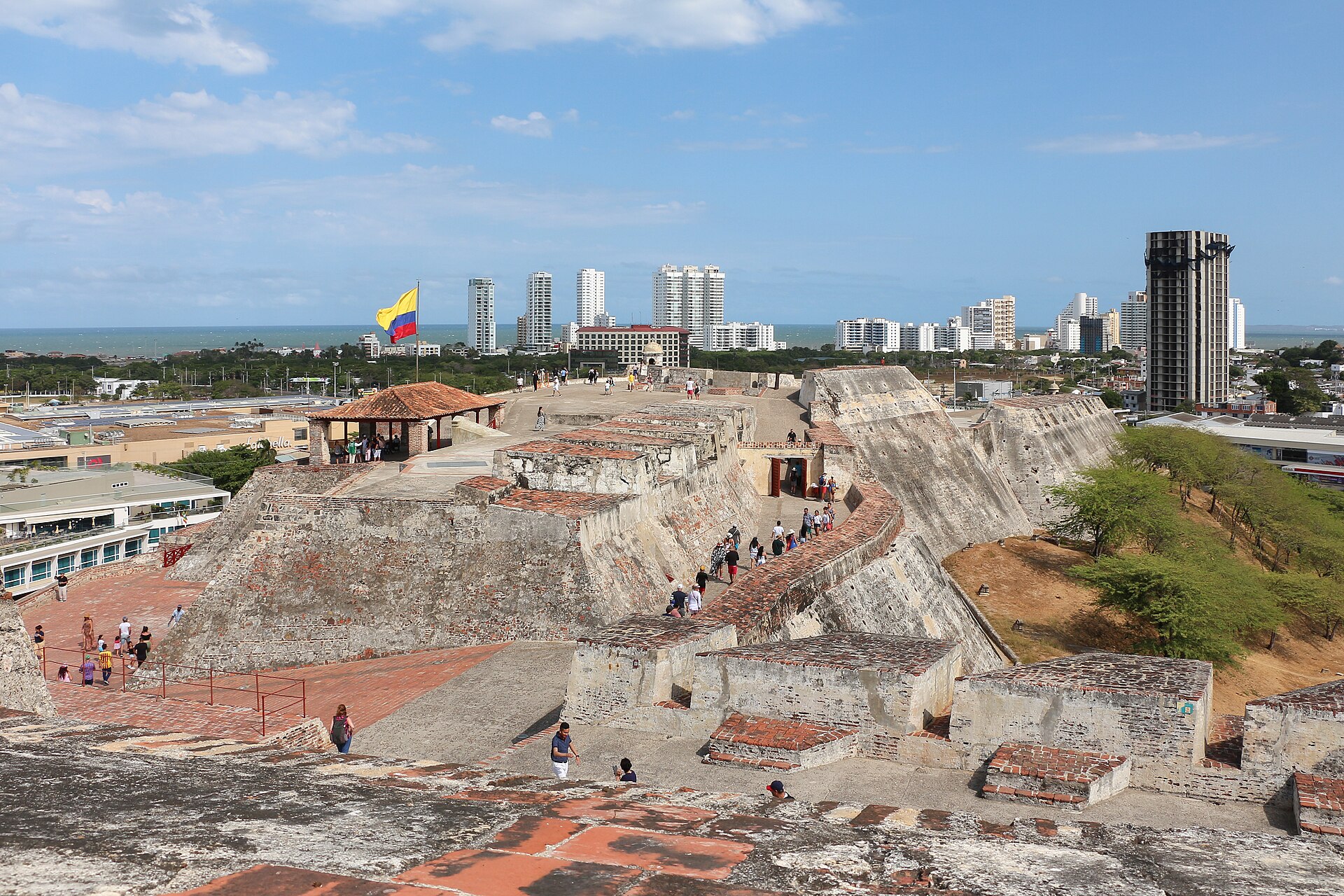
Castillo San Felipe de Barajas, Cartagena 15 · Bernard Gagnon · CC BY-SA 4.0 · cropped
Getting there and around
Cartagena's Rafael Núñez International Airport sits in the Crespo neighbourhood, unusually close to the centre — the drive into the old town is a short one, often under fifteen minutes outside of traffic. That proximity is a real convenience; you can land and be walking the walls the same morning.
Most international travellers arrive via Bogotá, from which the flight is short, a little over an hour; the country's domestic network is dense and competitive, so fares between the major Colombian cities can be modest if booked ahead. There are also direct international routes to Cartagena from a handful of hubs, including some United States cities, which can save you a connection through Bogotá. Check whether a direct flight exists for your route before you assume you must transit the capital.
Once you are in town, you will walk more than you expect. The old town and Getsemaní are best covered entirely on foot; the streets are too narrow and too interesting for anything else. For everything outside that core — the airport, Bocagrande, Castillo San Felipe, the boat docks — use taxis or a ride-hailing app. Cartagena's taxis have historically not run on meters, so agree the fare before you get in, or use an app that fixes the price in advance. Rides within the city are generally inexpensive; the airport run in particular should not cost much.
A few ground rules make the city easier. Carry small bills, because change for large notes is a recurring nuisance. Keep hydrated and treat the midday sun seriously; heatstroke ruins more Cartagena holidays than anything else. Street vendors and offers of sunglasses, hats, cigars and boat trips are constant, especially around the main plazas and the walls — a polite, firm "no, gracias" and a continued walk is the local rhythm, and it works. And while the tourist core is well policed and generally comfortable, treat late-night walks in unfamiliar outer neighbourhoods with the same ordinary caution you would apply in any port city.
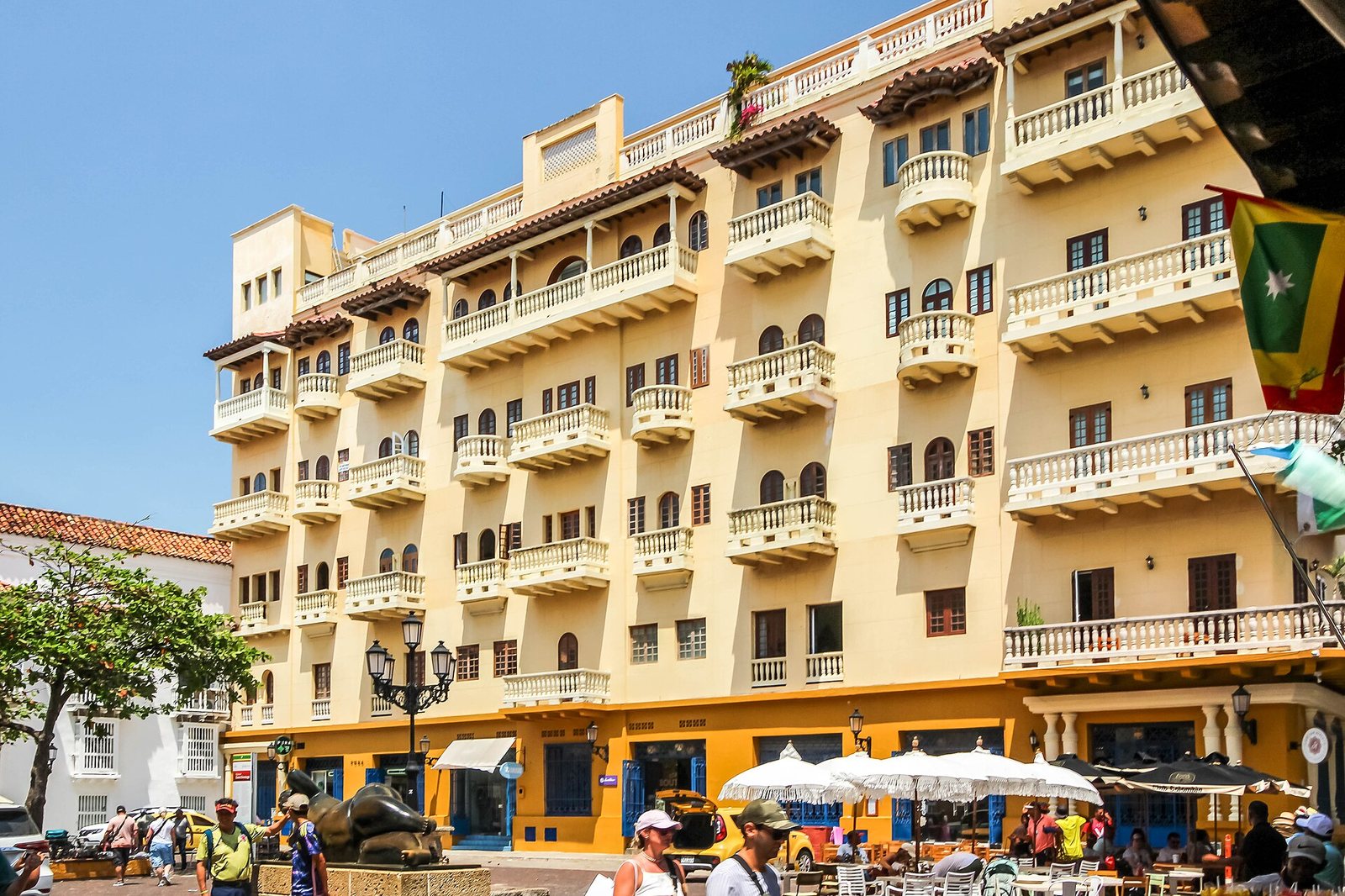
Bocagrande, Cartagena 02 · Bernard Gagnon · CC BY-SA 4.0 · cropped
What to see
Start with the walls themselves. Las Murallas — the ring of ramparts and bastions around the old town — are free to walk, and the walk is the best single thing you can do in Cartagena. Go early, when the stone is cool and the light is low, or return in the last hour before sunset, when half the city seems to gather on the seaward stretch. There is a well-known bar built into the wall on the western side where people go for the sunset; it is worth doing once, with the understanding that you are paying for the position, not the drinks.
Inside the walls, the pleasure is largely aimless. The set-piece squares — Plaza de Bolívar with its cathedral and colonnades, Plaza Santo Domingo with its church and its reclining Fernando Botero bronze, the Plaza de los Coches by the clock-tower gate — are worth finding, but the streets between them are the real attraction, and the correct way to see them is to get slightly lost. The Palace of the Inquisition on Plaza de Bolívar is a well-preserved colonial building with a museum inside that gives the history its darker weight; it is a useful hour if you want to understand what these pretty streets were built on.
The great fortress is the Castillo San Felipe de Barajas, on a hill just outside the walled centre. This is the largest fortress the Spanish built in the Americas, a sloping mass of stone and tunnels raised to defend the city from the land side, and it is the one paid sight we would not skip. Go early to beat both the heat and the crowds, and take water; there is little shade on the ramparts. From the top, the layout of the whole city — old town, Getsemaní, Bocagrande, the bay — finally makes sense.
Getsemaní deserves an evening on its own terms. Walk the streets for the murals, which residents painted themselves, and let the Plaza de la Trinidad be the place you end up as the light goes. It is where the barrio gathers after dark, and sitting on the church steps with a cold drink and watching it fill up is as good an hour as the city offers. For a longer view, the hilltop convent on the Cerro de la Popa, La Popa, gives the widest panorama of Cartagena; go by taxi and time it for late afternoon.
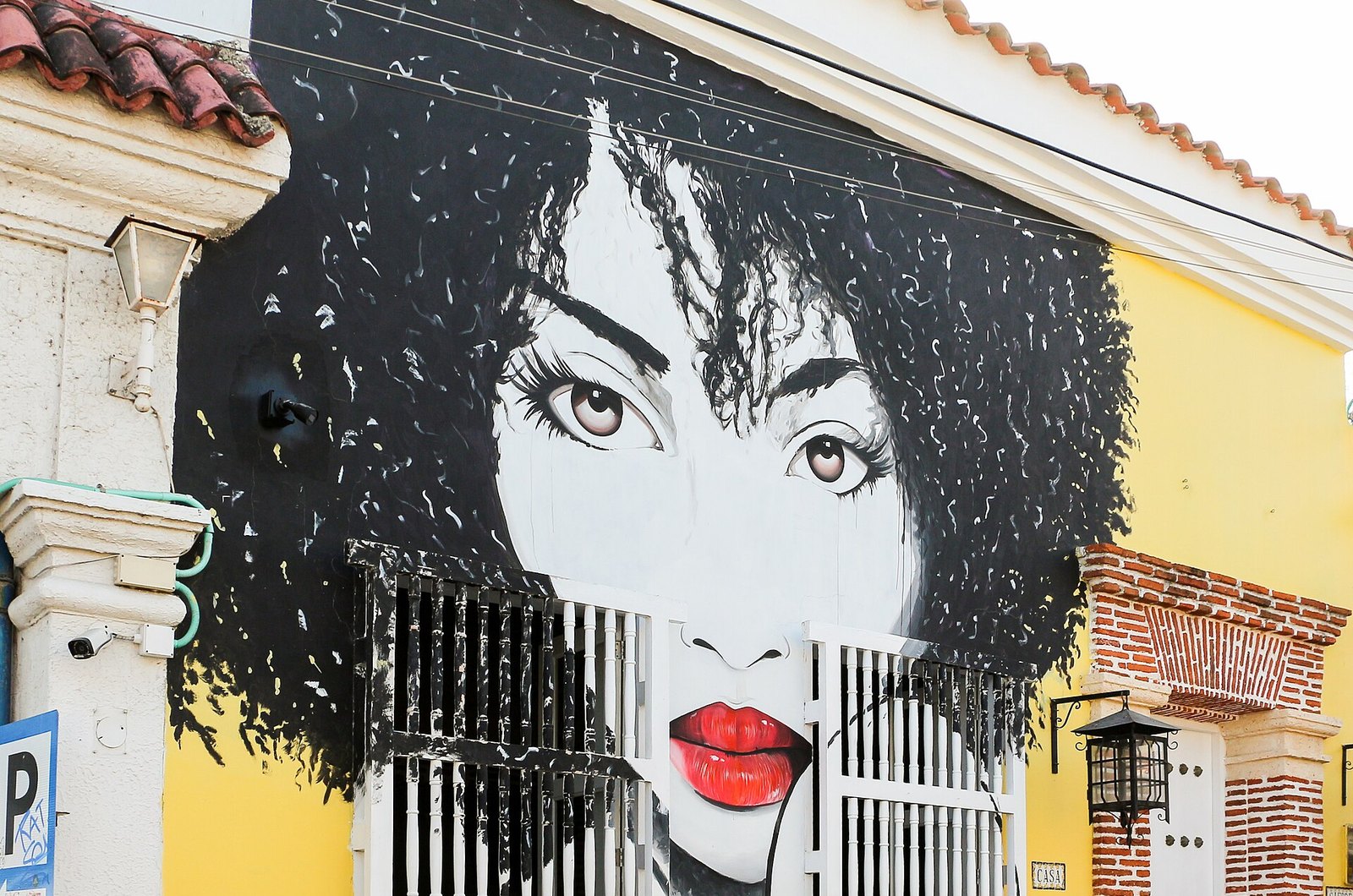
Graffiti in Getsemaní, Cartagena 02 · Bernard Gagnon · CC BY-SA 4.0 · cropped
By the numbers
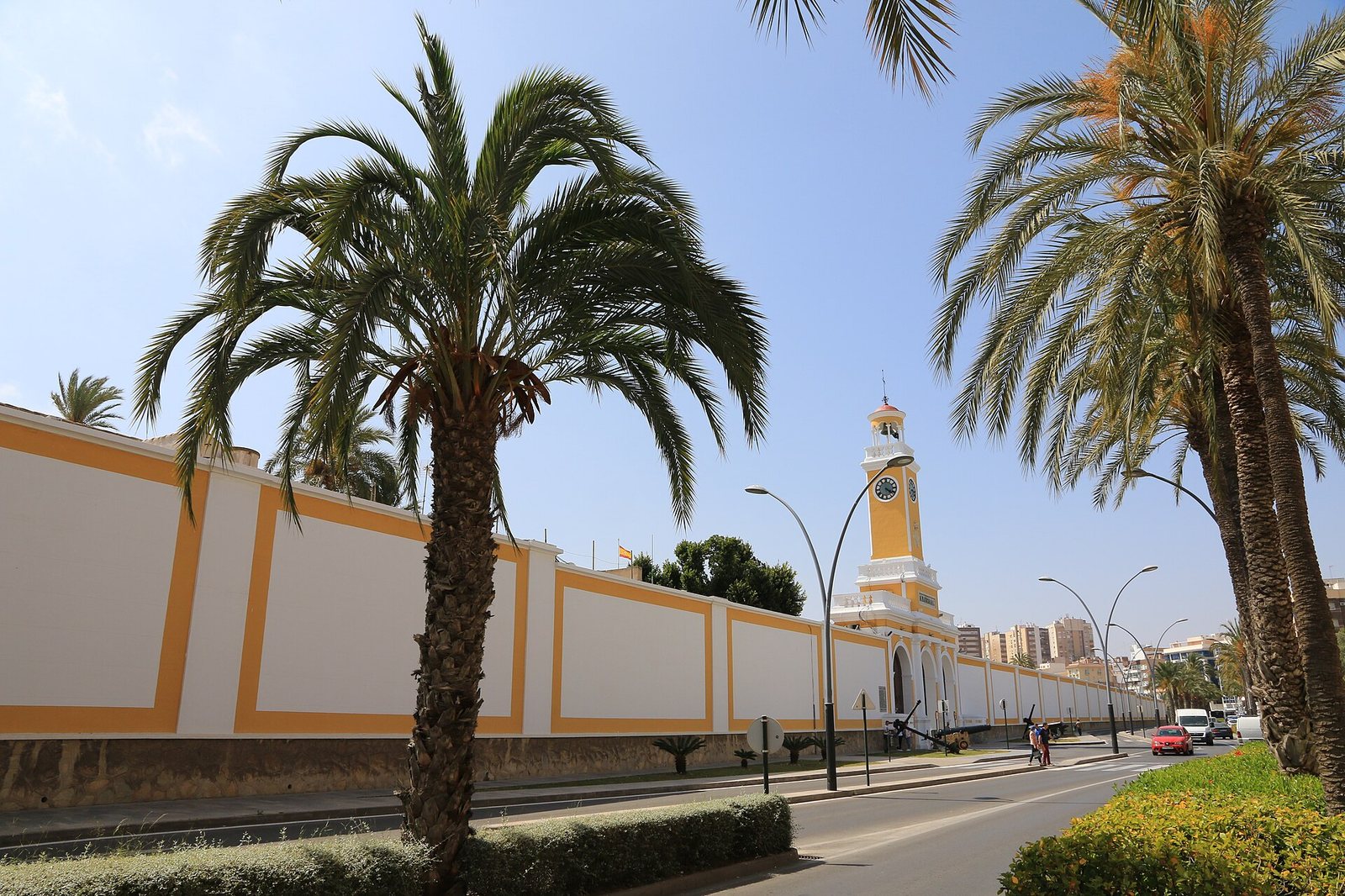
Arsenal Gate of Cartagena in Spain 2016 a · Øyvind Holmstad · CC BY-SA 4.0 · cropped
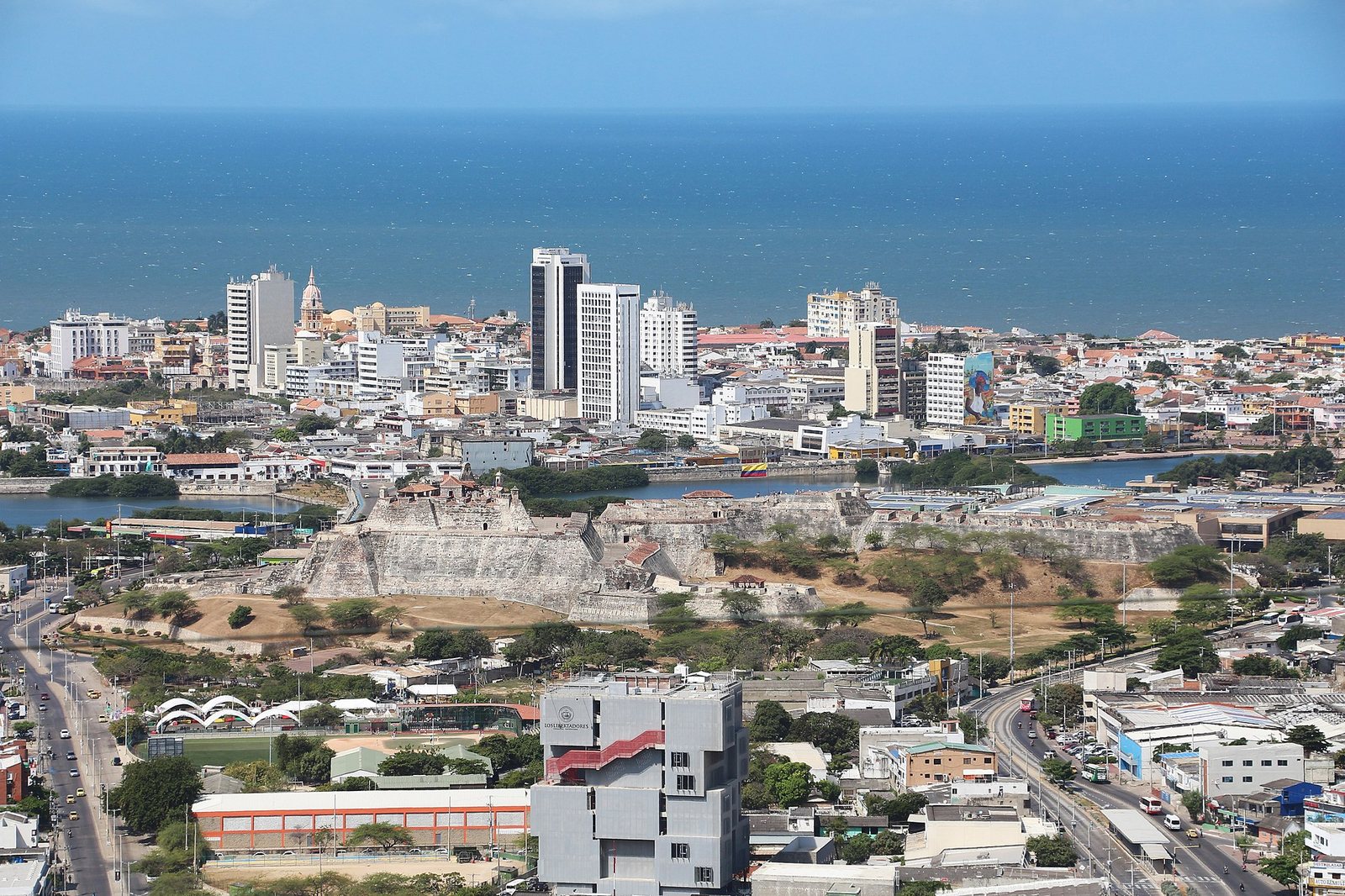
View of Cartagena from Convento de Santa Cruz de la Popa 02 · Bernard Gagnon · CC BY-SA 4.0 · cropped
The beaches and the islands
Here is the correction most first-time visitors need. The beach in the postcard is not in Cartagena. The city's own beaches — the long grey-sand strip at Bocagrande, the closer stretches near Crespo — are ordinary, often busy, and not why the region is photographed. The clear turquoise water lives offshore, and reaching it takes a boat and the better part of a day.
The offshore option is the Islas del Rosario, a small coral archipelago southwest of the city that forms part of a protected national marine park, the Corales del Rosario y San Bernardo. This is where the water turns clear and the snorkelling is worth the effort. Boats leave from the city docks in the morning and return in the afternoon; the sea is calmest and the trips most reliable in the dry season, which is another argument for a February visit. You can do the islands as a day trip, or stay a night at one of the small island lodges for a quieter version once the day boats have gone.
The other common excursion is Playa Blanca, on the Barú peninsula, a true white-sand beach reachable by boat or road. It is beautiful and it is busy; the day-tripper version, packed and heavily hawked, is not everyone's idea of a good time, so go early, go independently if you can, or stay over to have the beach in the quiet hours. Manage the expectation and it delivers; arrive at midday with the crowds and you may wonder what the fuss was about.
If you have only one day to spend on the water, spend it on the islands and skip the city beaches, and book through your hotel or a reputable operator rather than the first tout at the dock. Confirm what the price includes — the park entry fee and the return time in particular — before you hand over money. And build the trip into the early part of your stay, so a cancelled boat still leaves you a second chance.
Sources & further reading
UNESCO World Heritage Centre, listing for the Port, Fortresses and Group of Monuments, Cartagena (inscribed 1984). ProColombia / Colombia Travel, the national tourism board, for regions, seasons and getting around. Parques Nacionales Naturales de Colombia, for the Corales del Rosario y San Bernardo National Natural Park covering the Rosario Islands. General reference on the city's colonial history and climate via Encyclopædia Britannica.
Comments