At a glance
- Base
- No single base; choose from Inverness, Fort William, Skye (Portree), or Aviemore based on trip focus.
- When
- Late May is the sweet spot: long days, green hills, and midges have not yet appeared.
- Getting there
- Fly into Inverness Airport, or Glasgow/Edinburgh (3 hours' drive); trains also serve Fort William and Inverness.
- Getting around
- A car is essential for most itineraries; be aware of single-track roads and passing places.
- Book ahead
- Accommodation, especially on Skye, and rental cars book months ahead in popular spots.
- The price
- Driven by accommodation type (hostels to castle hotels) and popularity, with Skye being more expensive.
Lay of the land
The Scottish Highlands are large in a way the map underplays. From Inverness, the region's only city, it is a good half-day's drive to the far northwest coast, and the roads that get you there rarely run straight for long. Distances that look modest on paper turn into slow, winding hours behind a caravan, and the first mistake most visitors make is treating the Highlands as a place you can see in a loop of long driving days. You cannot. You can see a corner of it well, or you can see all of it from the inside of a car.
Geographically, it helps to hold four ideas in your head. There is the Great Glen, the dead-straight fault line that runs southwest from Inverness to Fort William, carrying Loch Ness and the Caledonian Canal along its floor. There is Lochaber, the mountainous country around Fort William and Ben Nevis, which most people rate the finest scenery on the mainland. There are the islands off the west coast, of which Skye is the largest of the Inner Hebrides and the easiest to reach, now joined to the mainland by a bridge. And there are the Cairngorms in the east, a rounded plateau of high, cold, subarctic ground with a national park draped over it and a very different feel from the jagged west.
The weather sorts the rest. This is one of the wetter parts of Europe, and the mountains make their own conditions; a bright morning in a glen is a promise, not a contract. What the Highlands offer in exchange is scale, emptiness and light. In late spring the hills green up, the days stretch toward eighteen hours of usable light, and the biting midges that plague the summer months have barely appeared. Get the timing right and you get the best of the place with the smallest tax on your patience.
This guide is organised around a single decision: where you sleep. Choose your base badly and you will spend the trip in transit. Choose it well and the Highlands open up one glen at a time.
Where to base yourself
There is no single right base, because the Highlands are too big for one. There are four sensible ones, each suited to a different trip, and the skill is matching the base to what you actually want to do rather than trying to service all of it from a central point that does not exist.
Inverness is the practical capital and the obvious first base. It has the region's airport, its main railway station, its supermarkets and its hospital, and it sits at the top of the Great Glen with Loch Ness on its doorstep. Use Inverness if you want an easy landing, a comfortable town with restaurants that stay open, and day trips to Loch Ness, the Culloden battlefield, the Clava Cairns and the eastern glens. It is also the start and end point of the North Coast 500 driving route. What Inverness is not is dramatic; the great mountains are two hours or more to the southwest, so treat it as a gateway and a soft first night rather than the scenery itself.
Fort William sits under Ben Nevis in Lochaber and calls itself the outdoor capital of the UK, which for once is close to fair. From here you are within striking distance of the best of the west mainland: Glen Nevis, Glencoe half an hour south, the road to Mallaig, and the Glenfinnan Viaduct that the steam train crosses. The town itself is workmanlike rather than pretty, but the position is superb. Base here if your trip is about mountains, walking and the Jacobite steam train, and if you would rather be surrounded by scenery than by shops.
Come in late May and you get the long light without the midges that own July.
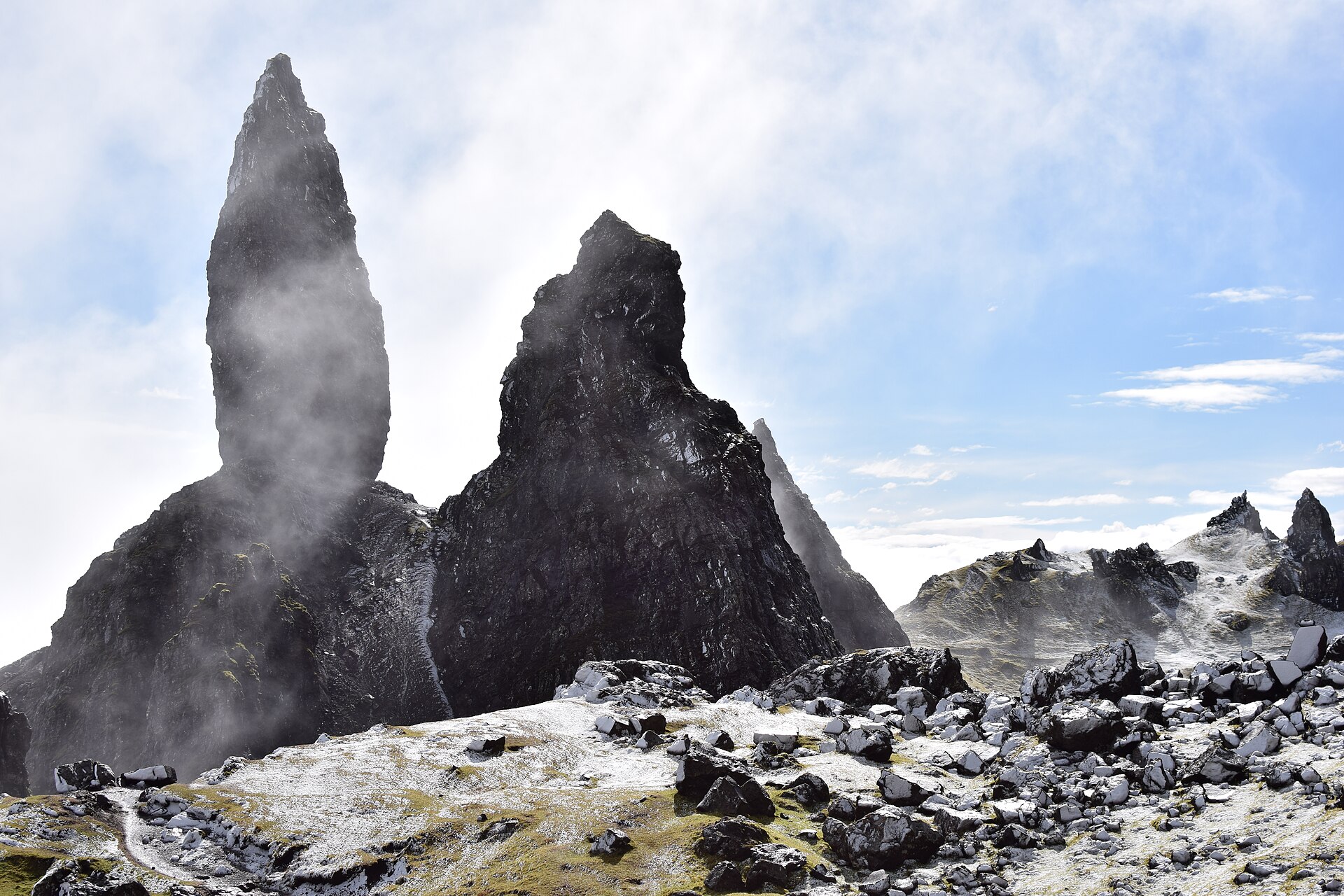
Skye deserves several nights of its own, not a day trip. The island is roughly fifty miles long, and its set-pieces — the Old Man of Storr, the Quiraing, the Cuillin ridge, Neist Point — are spread along single-track roads that punish the impatient. Portree, the small harbour town in the middle, is the natural base, with Dunvegan and the quieter south around Sligachan as alternatives. The trade-off is real: Skye has become very popular, its car parks fill early, and its accommodation books up further ahead and costs more than the mainland equivalent. Come here for the island itself, give it three nights minimum, and start your days early to have the famous places to yourself.
Aviemore and the Cairngorms are the eastern alternative, and the one most visitors overlook. The landscape is gentler and higher — ancient Caledonian pine forest, ospreys, reindeer, and a plateau that holds snow late — and it pairs naturally with Speyside, the whisky country just to the north. Base in or near Aviemore if you want forest and wildlife over sea and cliffs, if you are travelling with children, or if you want the Highlands with slightly better odds on the weather, since the east is drier than the west.
The routing mistake to avoid is trying to combine Skye and the Cairngorms in one short trip. They sit at opposite ends of the region, and the drive between them eats the better part of a day each way. A week does one western base and one eastern base comfortably, or one base done properly. It does not do four.
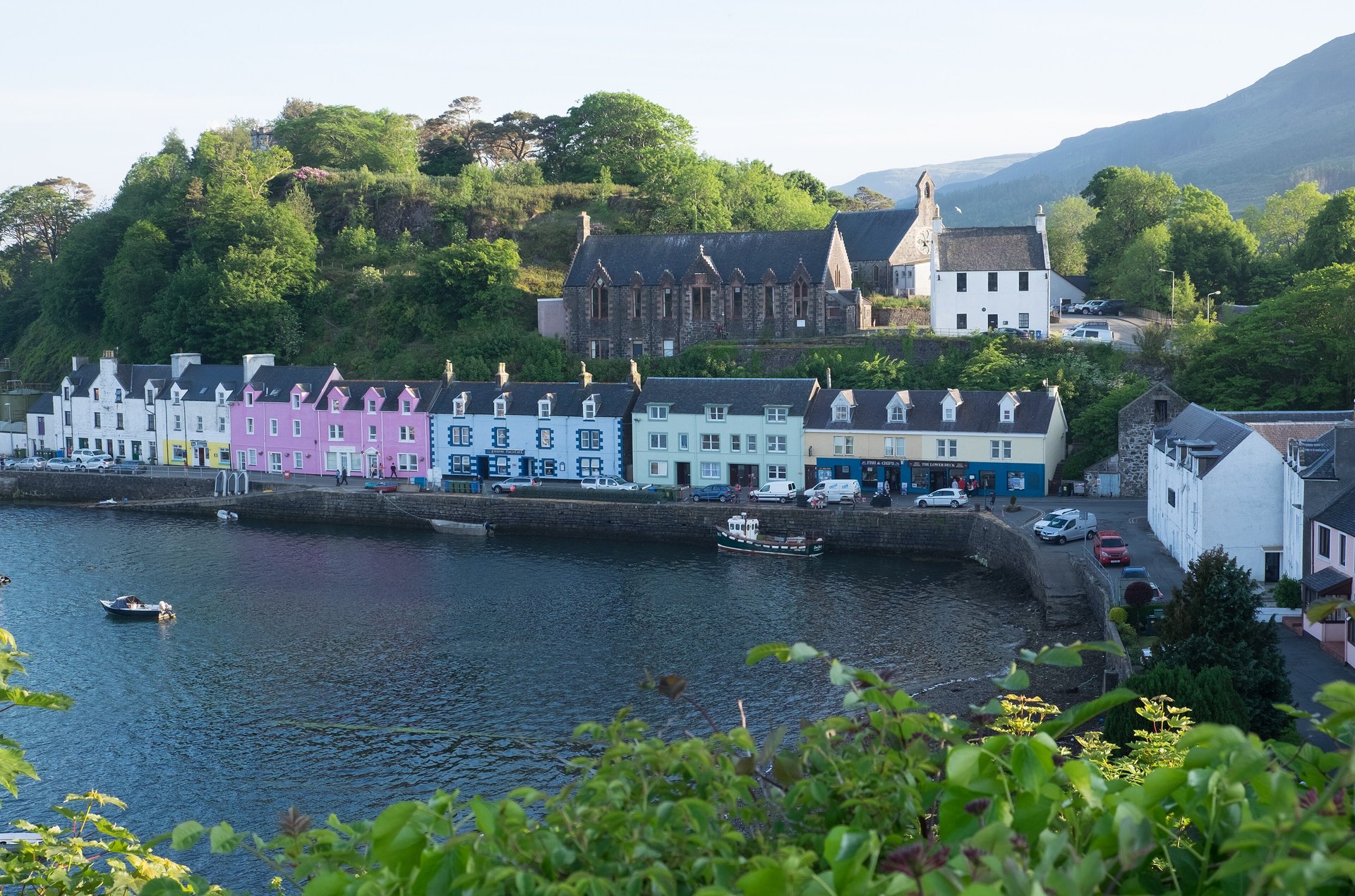
Portree harbour front 2016 · DeFacto · CC BY-SA 4.0 · cropped
Where to sleep
The Highlands cover the full range, from bunkhouse to castle, and the type of roof you choose shapes the trip as much as the town does. It is worth being clear about what each one gives you.
At the top sit the country-house and castle hotels, the Highlands' signature form of luxury. These are grand Victorian shooting lodges and baronial houses set in their own grounds, run as small hotels with serious kitchens and long views. Inverlochy Castle near Fort William is the best-known of the type — a nineteenth-century house where Queen Victoria stayed in 1873 — and there are a handful of others of similar standing scattered across the region. Expect to pay a great deal, to dine formally, and to feel a long way from anywhere. These places are destinations in themselves; book one for the last two nights of a trip rather than as a touring base, because their whole point is that you stop moving.
A step down and far more numerous are the traditional coaching inns and small hotels, often the oldest building in a village and the social centre of it. The historic inn at Sligachan on Skye, sitting between the Red and Black Cuillin, is the classic example — a walkers' and climbers' institution for well over a century. Places like this give you a bar with a fire, decent local food, and a location you could not buy new. Rooms are simpler than the price sometimes suggests; you are paying for the position and the history, and it is usually worth it.
The workhorse of a Highland trip is the bed and breakfast or guesthouse, and the region does this exceptionally well. A good Highland B&B — a stone house with three or four rooms, run by people who live there — is often the warmest and best-value bed you will find, and the breakfast is not a token gesture. This is the sensible backbone of a touring trip. Book well ahead in the popular spots; the best ones on Skye in particular go months before the season.
Self-catering — a cottage or a lodge taken by the week — suits families and anyone who wants to cook, and it is often the cheapest way to put a group under one roof in a good location. The catch is the weekly minimum and the Saturday-to-Saturday rhythm, which locks your dates. At the budget end, the Highlands have an excellent network of hostels and bunkhouses, many in spectacular positions, that are clean, cheap and used by walkers of every age rather than only the young.
One practical point cuts across all of these. In the remotest areas — the far northwest, the smaller islands — the choice thins out fast, and what exists books early and charges accordingly. If your trip depends on a specific night in a specific far-flung spot, secure that bed first and build the rest of the itinerary around it.
When to go
May is, on balance, the best month to be in the Highlands, and late May is the sweet spot. The argument rests on three things happening at once: the days are long, the hills are green, and the midges have not yet taken over.
The daylight alone is worth planning around. This far north, late May gives you sunrise before five and light in the sky well past ten, which changes what a day can hold. You can climb a hill after an unhurried breakfast, drive a long single-track road in the evening with the light going gold on the water, and still not be racing the dark. In practice you get something close to eighteen usable hours, and the low sun at each end of them is when the landscape looks its best.
The midge is the other half of the case. The Highland midge is a small biting fly that swarms in still, damp, overcast conditions from roughly June to September, and at its summer peak in the west it can spoil an evening outdoors. In May the population is only beginning to build, so you get warm, long days largely free of it. This is the strongest reason to favour late spring over high summer, and anyone who has been bitten senseless in a July glen will tell you the same.
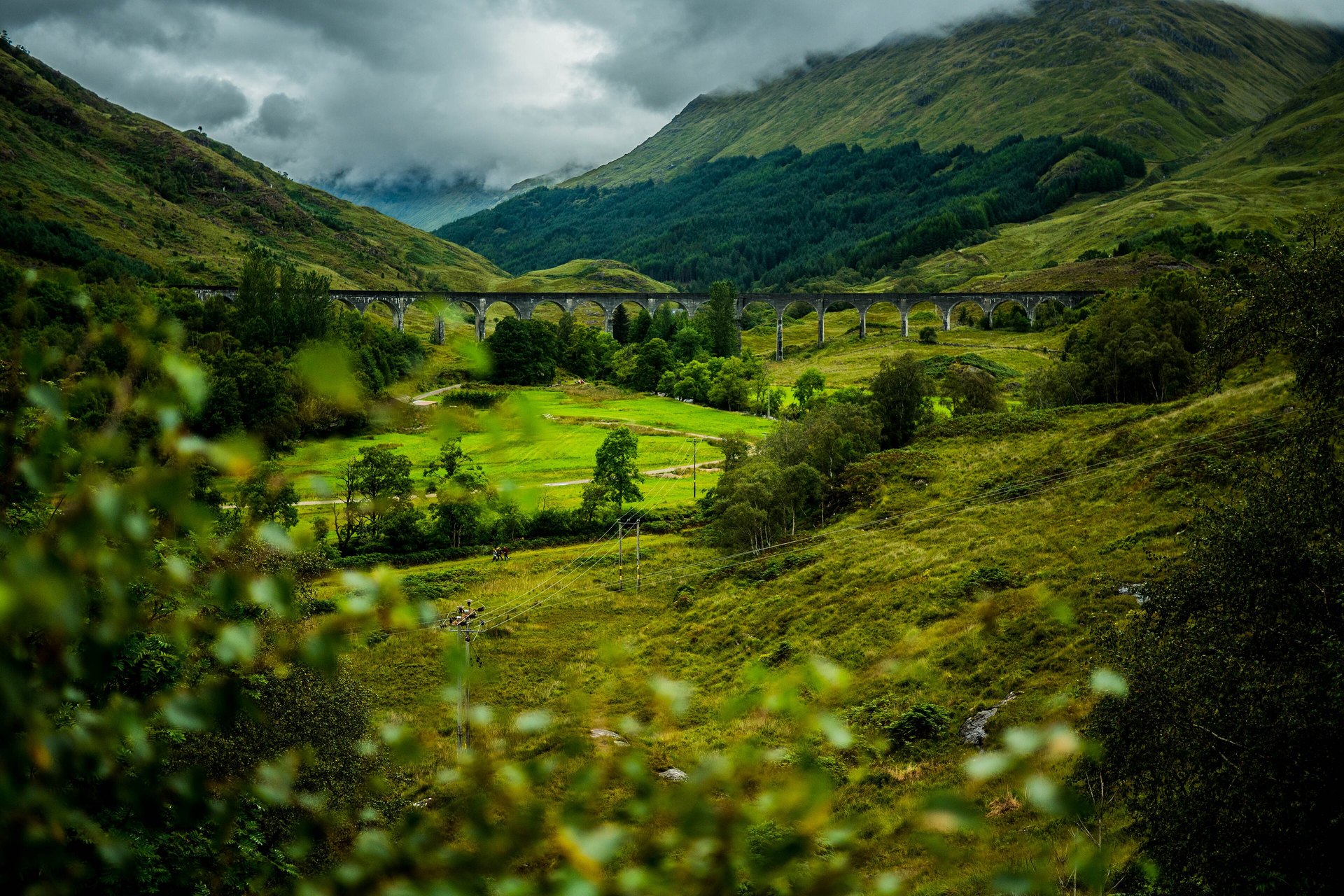
Glenfinnan Viaduct at Loch Shiel · Paul Stümke · CC BY-SA 4.0 · cropped
The rest of the year has its own logic. April is quieter and cheaper but colder, with snow still on the high tops and some seasonal businesses not yet open. June is fine but the midges have arrived and the crowds have thickened, particularly on Skye. July and August bring the warmest weather, the longest queues, the fullest car parks and the midges at full strength; they also bring the Highland Games season and a genuine holiday atmosphere, if that is what you want. September can be superb — the crowds thin, the heather is out in late summer, and the light turns — but the weather grows less reliable. October brings autumn colour and the red deer rut. Winter is for those who know what they are doing: short days, real cold, closed roads after snow, and the small chance of the aurora in the far north on a clear, dark night.
Whatever month you choose, plan for weather rather than against it. Pack for rain and wind even in May, carry layers, and build slack into the itinerary so a wet day can be spent low and a clear one seized for the hills. The people who enjoy the Highlands most are the ones who let the weather decide the order of the week.
Getting there and getting around
Most visitors arrive through one of three gateways. Inverness Airport connects to a handful of UK and European cities and puts you straight into the Highlands, which is the fastest way in if the schedules suit you. More often, people fly into Glasgow or Edinburgh, both roughly three hours' drive from Fort William or Inverness, and pick up a car there. Of the two, Glasgow is the more natural jumping-off point for the west and for Skye.
The trains deserve a mention because two of them are experiences in their own right. The West Highland Line runs from Glasgow up to Fort William and on to the fishing port of Mallaig, and it is widely rated one of the great rail journeys in Britain, crossing the Glenfinnan Viaduct on the way. The Caledonian Sleeper runs overnight from London, with portions serving Fort William and Inverness, so you can board in the city at night and wake among the mountains. Both are ordinary working services as well as scenic ones, and both are a fine way to arrive if you are prepared to base your trip around a place the train reaches.
For most itineraries, though, you will need a car. The Highlands are too spread out and too thinly served by buses for anything else to work once you leave the main towns, and the freedom to stop where the view demands it is much of the point. Rent from the airport you fly into, and reserve it well ahead in the season.
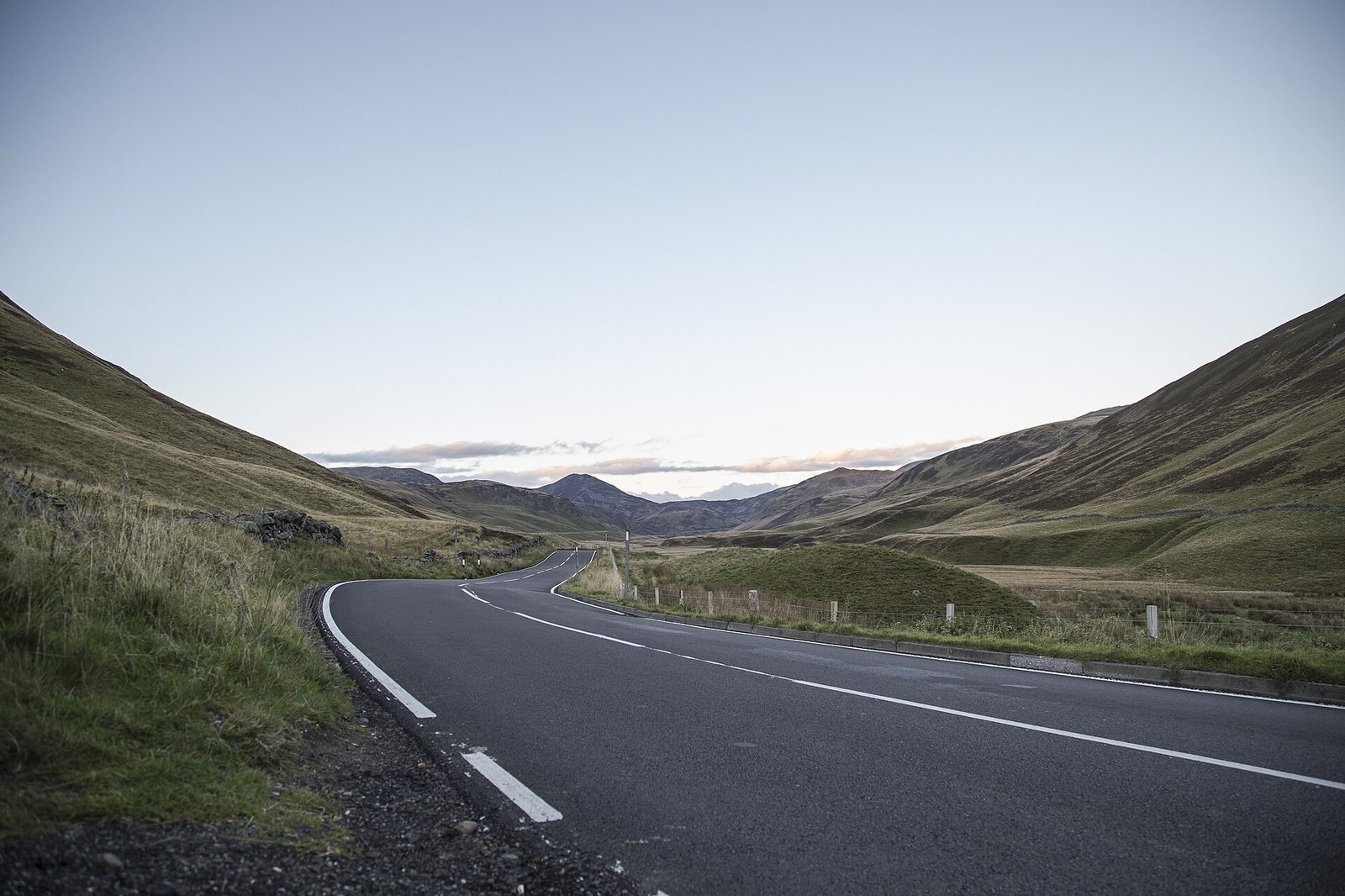
The driving itself asks for a word of caution. Away from the few main roads, much of the Highlands runs on single-track roads — one lane wide, with marked passing places at intervals. The etiquette is simple and non-negotiable: you pull into a passing place to let oncoming traffic through or to let a faster car behind you overtake, and you never park in one. These roads are slower than their length suggests, so halve your instinctive estimate of how far you can get in a day. The North Coast 500, the 500-mile loop from Inverness around the northern coast, is largely made of them; it has become very popular and is a genuinely spectacular drive, but it is a serious undertaking that deserves five days or more. Take it slowly, or leave it for another trip.
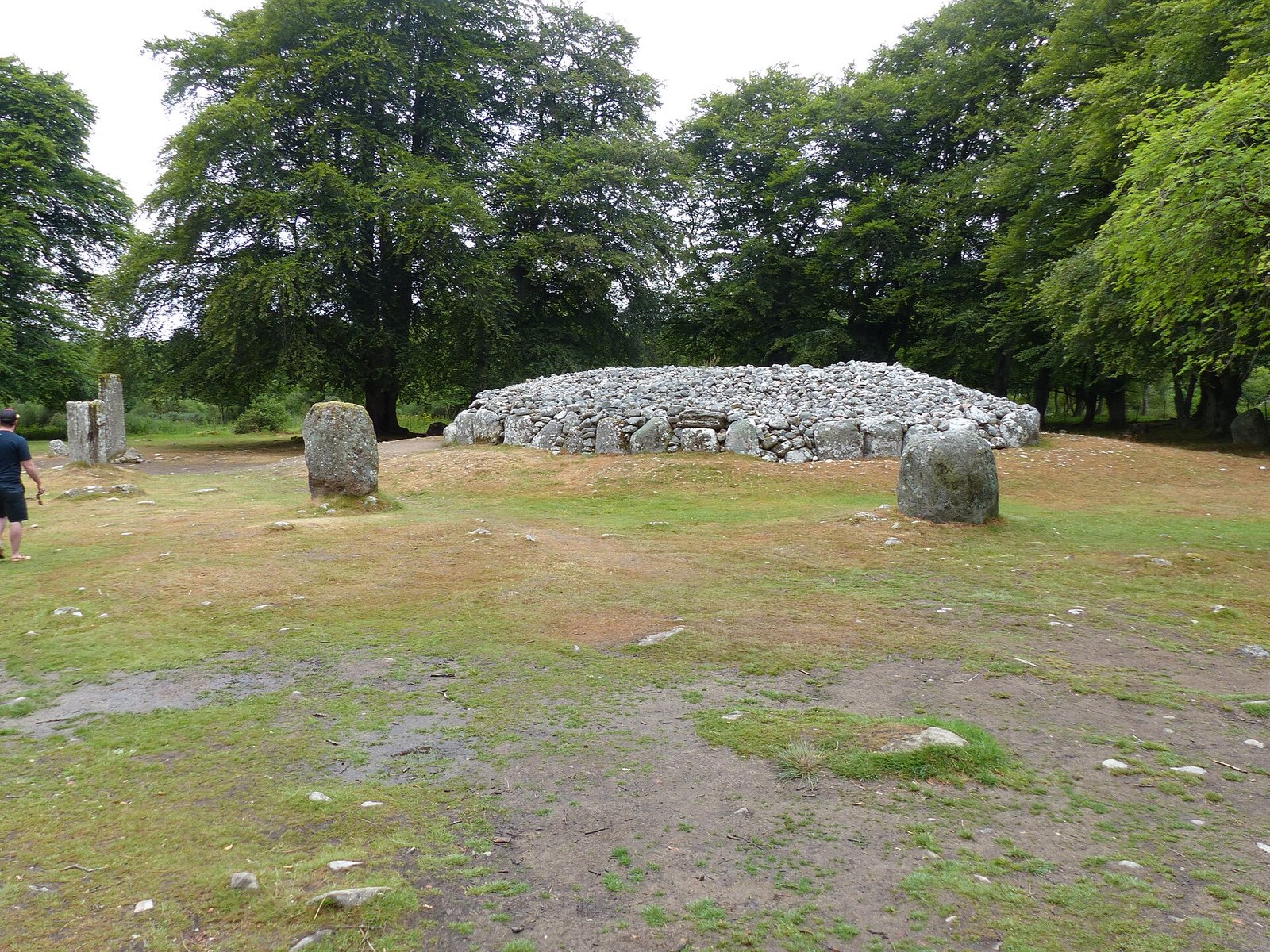
2018 07 10 Schottland (54) Balnuaran of Clava · Bewahrerderwerte · CC BY-SA 4.0 · cropped
What to see, and what to skip
The Highlands reward depth over breadth, so this is a shortlist of the things that earn their reputation, organised by base.
On Skye, the Trotternish peninsula in the north holds two of the island's finest walks: the Old Man of Storr, a great rock pinnacle above a short, steep climb, and the Quiraing, a strange landslip of towers and terraces with a walk along its foot. Both are busy; both are best at first light or last. The Cuillin — the black, serrated ridge at the island's heart — is the most demanding mountain terrain in Britain, and the full ridge is for experienced mountaineers only, but Glen Sligachan and the Fairy Pools below it give walkers a taste of it. On the west coast, Neist Point lighthouse and Dunvegan Castle, the seat of Clan MacLeod, are both worth the drive. Portree itself, with its ring of coloured houses around the harbour, is a pleasant place to end a day.
From Fort William, Glencoe is the essential day out — a steep-walled valley and one of the darkest chapters in Highland history, the 1692 massacre of members of Clan MacDonald. The National Trust for Scotland visitor centre there tells the story with care, and the Three Sisters and Buachaille Etive Mòr are among the most photographed mountains in the country for good reason. Ben Nevis, the highest peak in the British Isles at 1,345 metres, is climbed by many on its long mountain path; it is a serious full-day walk on unforgiving ground, not a stroll, and the summit is in cloud far more often than not. The Glenfinnan Viaduct, crossed by the Jacobite steam train in summer, sits above Loch Shiel with a monument to the 1745 Jacobite rising at the water's edge.
From Inverness, Loch Ness is the obvious draw, and Urquhart Castle on its shore is a fine ruin whatever you think of the monster stories. More affecting, for many, is the Culloden battlefield just outside the city, where the 1746 battle ended the Jacobite cause; the visitor centre and the walk across the moor are sobering and very well done. The Bronze Age Clava Cairns nearby are quiet and free.
In the Cairngorms, the draw is different: ancient pine forest at Rothiemurchus, the lochs and high ground around Aviemore, free-roaming reindeer, and the Speyside distilleries a short drive north for those who want them. It is the place to come for wildlife and forest rather than sea cliffs and ridges.
What to skip is mostly a matter of scale. Do not try to do the whole region in a week, do not treat the North Coast 500 as a quick add-on, and do not give Skye a single rushed day. Rush it and the region gives very little back.
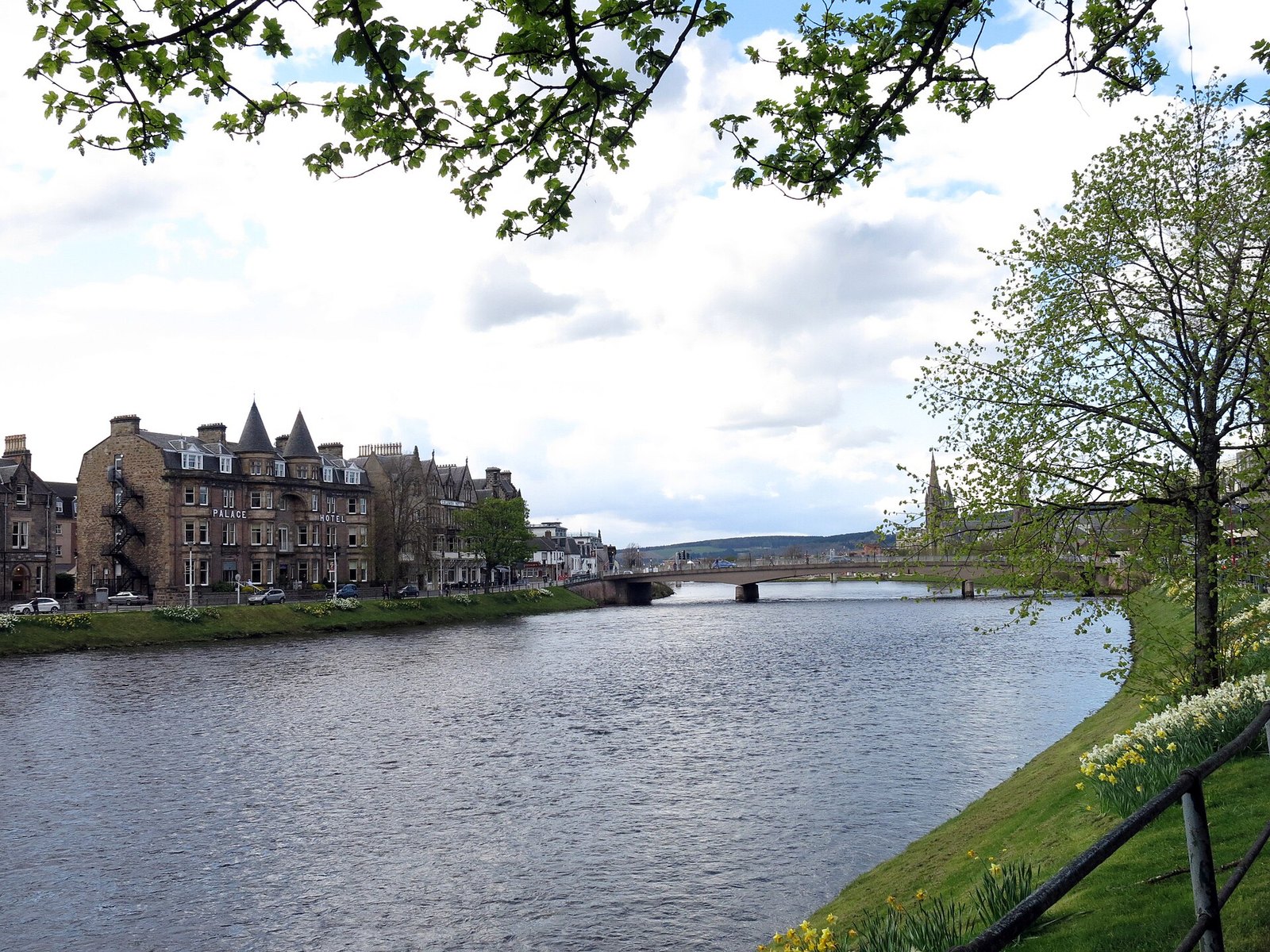
Inverness - Inverness, Ness Walk, Palace Hotel - 20140424175448 · Enric · CC BY-SA 4.0 · cropped
By the numbers
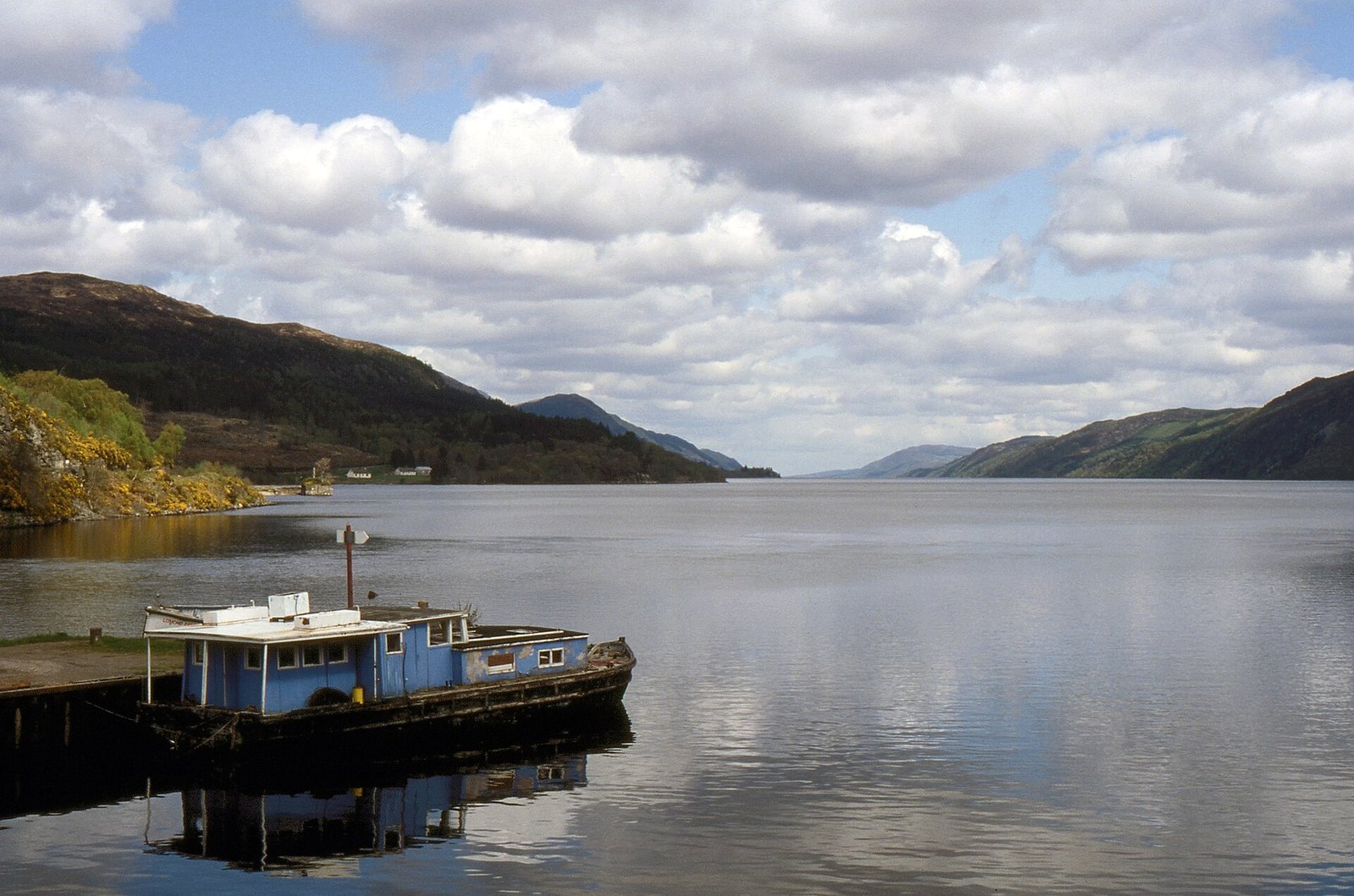
Loch Ness - Fort Augustus, Scotland, UK - May 13, 1989 · Giorgio Galeotti · CC BY 4.0 · cropped
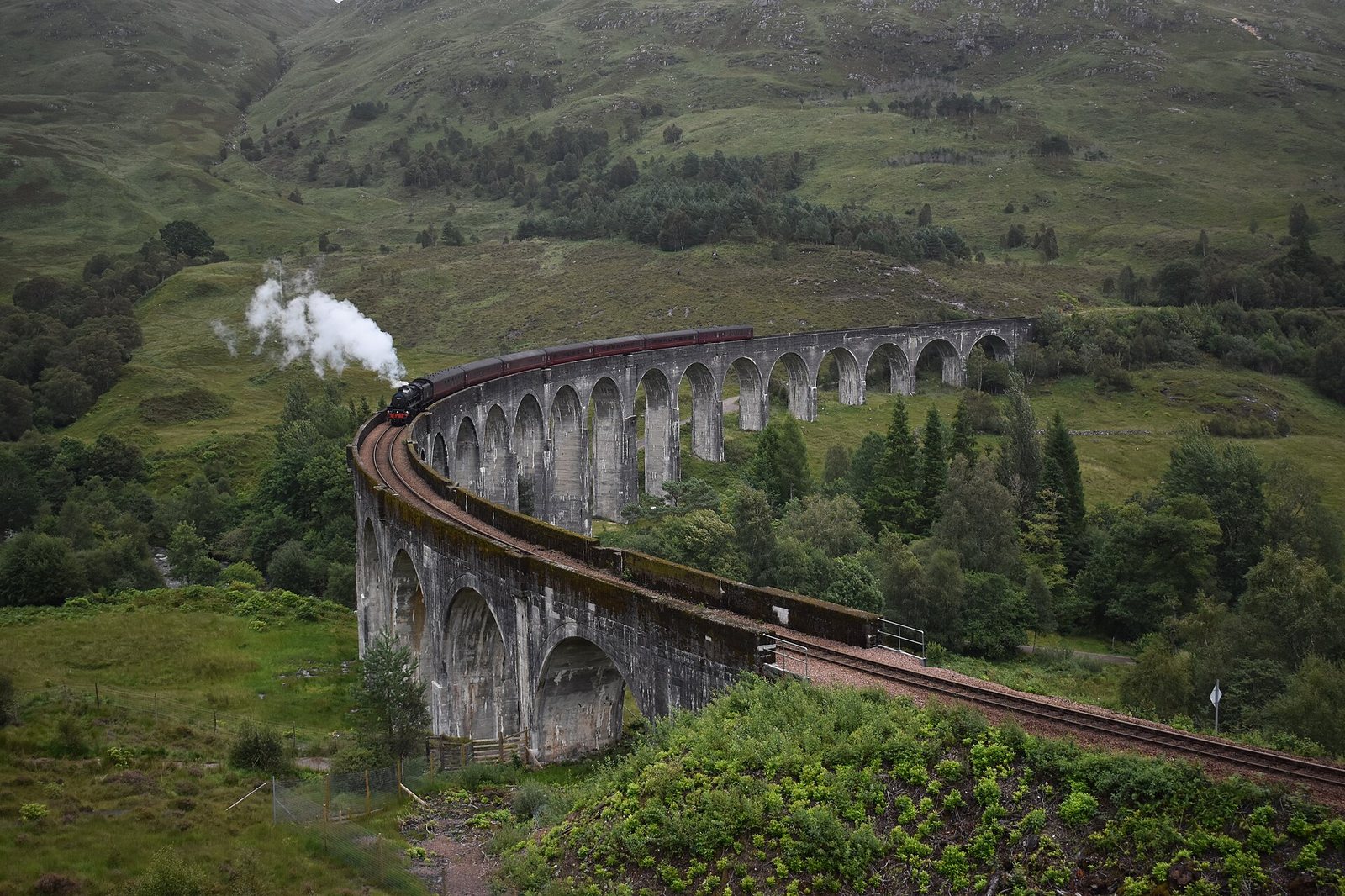
Jacobite Steam Train passing Glenfinnan Viaduct (2025) (1) · S. Perquin · CC BY-SA 4.0 · cropped
The short version
If this is your first trip and you have a week, base for three or four nights on Skye and the rest around Fort William, and see the west properly. If you want forest, wildlife and better weather odds, or you are travelling with children, choose the Cairngorms and pair them with Speyside. If you simply want an easy, comfortable Highland week without long driving days, stay in or near Inverness and run day trips out. And whichever you choose, come in late May: the light is long, the hills are green, the midges are still asleep, and the Highlands are as good as they get.
Sources & further reading
VisitScotland, the national tourism organisation (visitscotland.com), for regional overviews, seasonal guidance and travel practicalities. The National Trust for Scotland (nts.org.uk) for Glencoe, Culloden and Ben Nevis site information. The Cairngorms National Park Authority (cairngorms.co.uk) for the eastern Highlands. ScotRail and Caledonian Sleeper (scotrail.co.uk; sleeper.scot) for the West Highland Line and overnight services.
Comments