At a glance
- Base
- Sultanahmet (monuments), Beyoğlu (evenings, Karaköy, Galata), or Asian side (Kadıköy, Moda) for local life.
- When
- September is best; also late May, early June, or first half of October for good weather and fewer crowds.
- Getting there
- Fly into Istanbul Airport (IST) or Sabiha Gökçen (SAW); Havaist/Havabüs coaches, metro, or taxi.
- Getting around
- Istanbulkart for ferries, trams, metro, funiculars, buses; T1 tram, Marmaray rail, and ferries are key.
- Book ahead
- Book hotels a few months ahead for September; tickets for Topkapı Palace.
- The price
- Hotel prices vary greatly due to Turkish lira fluctuations; compare hotel sites and booking platforms.
Lay of the land
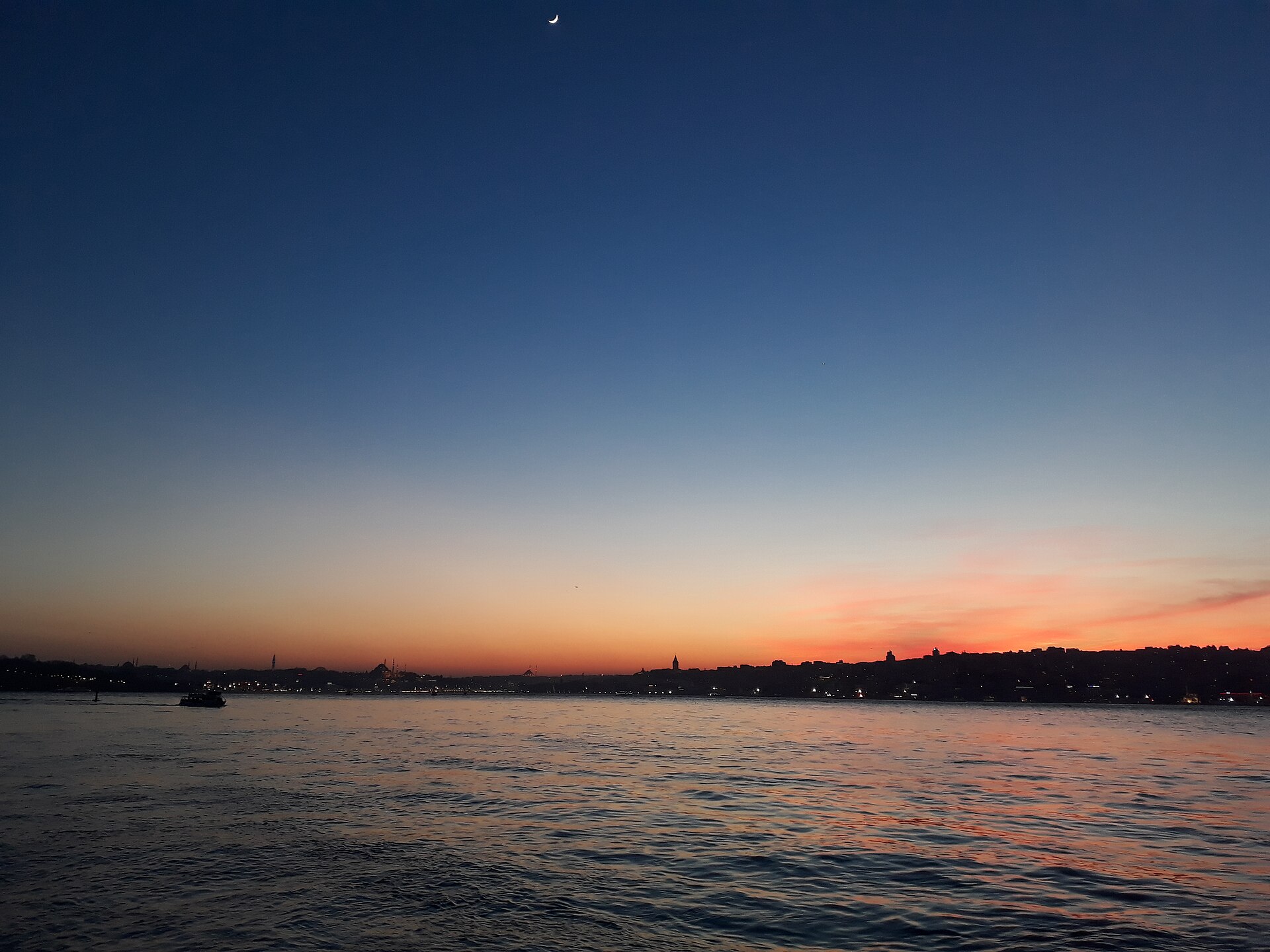
Istanbul sits on two continents, and the water is the point. The Bosphorus, a strait roughly thirty kilometres long, runs north to south and joins the Black Sea to the Sea of Marmara. Everything on its western bank is Europe; everything on its eastern bank is Asia. Ferries cross it all day, and once you have taken a few you stop thinking of the city as a map and start thinking of it as a set of shores you can reach by boat.
The European side is itself split by the Golden Horn, a long inlet that reaches inland from the strait. South of the Horn is the old imperial peninsula, the district most people mean when they say Sultanahmet: Hagia Sophia, the Sultan Ahmed Mosque, Topkapı Palace, the Basilica Cistern, the Grand Bazaar. This is the historic core, and it is compact enough to walk in a morning. North of the Horn, across the Galata Bridge, the ground rises to Karaköy at the waterfront and then to Beyoğlu, the nineteenth-century city of İstiklal Avenue, the Galata Tower and the old European embassies.
The Asian side, across the Bosphorus, is where most Istanbullular actually live. Kadıköy and its neighbouring quarter Moda are busy, unglamorous and full of good eating; Üsküdar, further north, is older and quieter, its mosques set along the waterline. Visitors reach the Asian side by ferry or by the Marmaray, the rail line that runs under the strait, and many never do. That is a mistake worth correcting, and we will come back to it.
What ties the parts together is not a grand plan but the topography of a city built on hills over deep water. Distances look short on a map and are not, because you are always climbing, crossing a bridge or waiting for a boat. The single most useful thing to understand before you book anything is that the monuments are concentrated on the old peninsula, but the ordinary life of the city — the bars, the ferries, the late dinners — is mostly north of the Horn and across the strait. Where you sleep decides which of those two Istanbuls you get by default, and how much of the other you have to work for.
In September the whole geography reads more kindly than it does in high summer. The heat has come off, the sea breeze does its work, and the ferries stop feeling like a sauna. This is a walking-and-boats city, and September is a walking-and-boats month.
Where to base
There are, in practice, three sensible bases, and the choice between them is the decision that shapes the trip. The first is Sultanahmet, on the old peninsula, within walking reach of almost every headline monument. The appeal is obvious: you can be at Hagia Sophia before the queues build and back at your room to escape the midday sun. The cost is just as real. Much of Sultanahmet exists for visitors, which means it empties in the evening, the restaurants along the main streets are aimed squarely at tourists, and the neighbourhood has little life of its own once the coaches leave. Stay here if seeing the monuments efficiently is the whole of your plan and a few short days is all you have.
The second base, and the one we would choose for most people, is Beyoğlu — the broad district that runs from Karaköy up to Taksim, taking in Galata and the streets around İstiklal Avenue. This is where the city keeps its evenings: the meyhanes and wine bars, the bookshops, the late trams. From Galata you can walk down to the Karaköy waterfront and take a ferry, or cross the bridge on foot to reach Sultanahmet in about half an hour. You give up the doorstep convenience of the old city, but you gain a neighbourhood that stays alive after dark and a much wider choice of eating.
Base where the ferries run, not where the monuments are.
Within Beyoğlu, Karaköy and Galata are the sweet spot: close to the water, on the tram and ferry lines, and a manageable climb from the tower. Higher up, around Taksim and İstiklal, you are more central to nightlife but further from the water and the boats, and the top of İstiklal can be loud late into the night. If you want quiet, ask for a room off the main avenue.
The third option is the Asian side, and specifically Kadıköy or Moda. This is the contrarian choice, and it rewards travellers who have been to Istanbul before or who simply prefer a lived-in neighbourhood to a monumental one. Rooms tend to cost less, the market and the meze houses are excellent, and the ferry back across to the European shore is one of the best short journeys in the city. The trade-off is time: you will spend twenty to forty minutes on a boat each way to reach the old-city sights, which is a pleasure the first time and wearing by the fourth day. Base here if a daily boat crossing sounds like part of the appeal.
Wherever you land, favour a location within a short walk of a ferry pier or a tram or metro stop over one that is merely close to a monument. In a city this vertical and this spread out, being on the transit network matters more than being on a particular square.
Where to sleep
Istanbul's hotels sort roughly into four kinds, and each maps onto the neighbourhoods above. In Sultanahmet the stock is dominated by small and mid-sized hotels in restored townhouses, many of them with a rooftop terrace and a claimed view of Hagia Sophia or the Sea of Marmara. The good ones are comfortable and the terraces are a real pleasure at breakfast; the weaker ones trade entirely on their location and let the rooms slide. If you book here, read recent guest accounts closely for two things — actual quiet, since the call to prayer and the street noise both carry, and whether the promised view is a view or a sliver.
In Beyoğlu the range is wider. Karaköy and Galata have a strong crop of design-led hotels in converted commercial buildings, the sort of place with exposed brick, a good coffee bar and rooms that are small but well made. This is where we would spend a mid-range budget. Higher up toward Pera and Taksim you find the grander end, including the Pera Palace, the hotel built at the end of the nineteenth century for passengers arriving on the Orient Express and long associated with the writers and diplomats who stayed there. It is expensive and it trades heavily on its history, but as a piece of the city's story it is real, and a drink in the bar costs far less than a night in the rooms.
At the top of the market are the Bosphorus hotels — the waterside palaces and grand houses converted into places to stay along the European shore north of Beyoğlu, in and around Beşiktaş and Ortaköy. A room here can look straight down the strait at the ships passing, and the price reflects it. These are destination hotels rather than bases for sightseeing: you are a fair way from the old city, and you will rely on taxis, the tram or the ferry to reach it. Choose one if the view itself is the reason you came.
The fourth kind is the plain, well-run mid-range hotel in Kadıköy or a residential pocket of Beyoğlu, where you pay for a clean room in a real neighbourhood and spend the difference on dinner. Given the state of the Turkish lira, hotel prices for foreign visitors have moved a great deal from year to year, and often within a single year. Treat any figure you read as a rough guide, book a few months ahead for September, and compare the hotel's own site against the booking platforms, because the gap between them can be large.
One practical note on all of it: air conditioning and a quiet room are worth paying for. September days are still warm, and Istanbul is a loud city that does not go to sleep early.
Exterior of the Audience Chamber-Topkapı Palace · Joseolgon · CC BY 4.0 · cropped
When to go
September is close to the best month, and this issue is built around it. The furnace of July and August has eased, daytime temperatures settle into the mid-twenties Celsius, the humidity drops, and the sea is still warm enough that the ferry decks are a comfortable place to sit. The crowds thin from their August peak without disappearing, and the light in the late afternoon — long and low across the water — is the light the city is photographed in.
The shoulder either side is nearly as good. May and early June bring similar temperatures and the city in leaf, though spring can be wetter. October holds its warmth well into the month before the rain sets in properly toward November. If you have a free choice and cannot travel in September, aim for the second half of May or the first half of October and you will get much the same city in much the same mood.
High summer is the season to approach with caution. July and August are hot and humid, the monuments and the Grand Bazaar are at their most crowded, and the middle of the day is best spent out of the sun. Winter is the opposite trade: December to February is cold, grey and often wet, with the occasional snowfall that transforms the domes and empties the streets. Prices are lowest and the queues are shortest, but daylight is short and the ferries lose their charm in a cold wind. It is a real Istanbul, and a quieter one, but it is not the city this issue is about.
Two timing points matter whatever the month. First, Friday is the main day of communal prayer, and the working mosques — including the Sultan Ahmed Mosque and Hagia Sophia, both functioning mosques again — close to visitors around midday prayers and can be busy with worshippers at other prayer times through the day. Plan mosque visits for the morning or the late afternoon, and never mid-Friday. Second, if your dates happen to fall near a national or religious holiday, expect domestic travel to surge and ferries and intercity transport to fill; it is worth checking the calendar before you fix your plans.
Istanbul Türkiye Hagia Sophia Grand Mosque Ank Kumar Infosys… · Ank Kumar · CC BY-SA 4.0 · cropped
Getting there and getting around
Istanbul has two airports, and which one you use changes your first two hours in the city. The larger, Istanbul Airport (IST), opened in stages from 2018 and sits well to the north-west on the European side — a long way out, around forty-five kilometres from the historic core. Most long-haul and international flights use it. The smaller, Sabiha Gökçen (SAW), is on the Asian side and is served heavily by budget and regional carriers. If you are basing on the European side, an arrival at the Asian airport means a longer transfer, and vice versa, so it is worth checking which airport your flight uses before you fix your hotel.
From Istanbul Airport there are three sensible ways in. The Havaist coaches run to Taksim and other central points and are the cheapest; a taxi is the most direct but the fare into the centre is substantial and traffic can make it slow; and the M11 metro line, opened in recent years, now connects the airport to the city and is the most reliable way to avoid the traffic, though it involves a change or two to reach the old city. From Sabiha Gökçen, the Havabüs coaches and the metro serve the Asian side, with an onward crossing to Europe. In all cases, allow far more time than the distance suggests, because Istanbul's traffic is genuinely bad.
Inside the city, the network is better than first-time visitors expect, and one card runs all of it. Buy an Istanbulkart from a machine at any airport, metro or ferry stop, load it with credit, and use it on the ferries, the trams, the metro, the funiculars and the buses. The card is cheaper than single tickets and saves you fumbling for fares at every gate.
For sightseeing, three lines do most of the work. The T1 tram runs through Sultanahmet, across the Galata Bridge to Karaköy and on to Kabataş, stitching the old city to the waterfront. The Marmaray rail line crosses under the Bosphorus and is the fastest way between the European and Asian shores when the ferries are not running your way. And the ferries themselves — the commuter boats between Eminönü, Karaköy, Kabataş, Kadıköy and Üsküdar — are both transport and sightseeing, and cost a fraction of a tour. Taxis are plentiful and cheap by European standards; insist the meter is running, or use a ride-hailing app that shows the fare, to avoid the occasional argument.
The one routing mistake to avoid is trying to cross the city by road at rush hour. If you need to move between continents in the morning or the early evening, take the Marmaray or a ferry and leave the bridges to the traffic.
Galata Kulesi, Beyoğlu, İstanbul, 2016 07 · Gargarapalvin · CC BY-SA 4.0 · cropped
What to see, and in what order
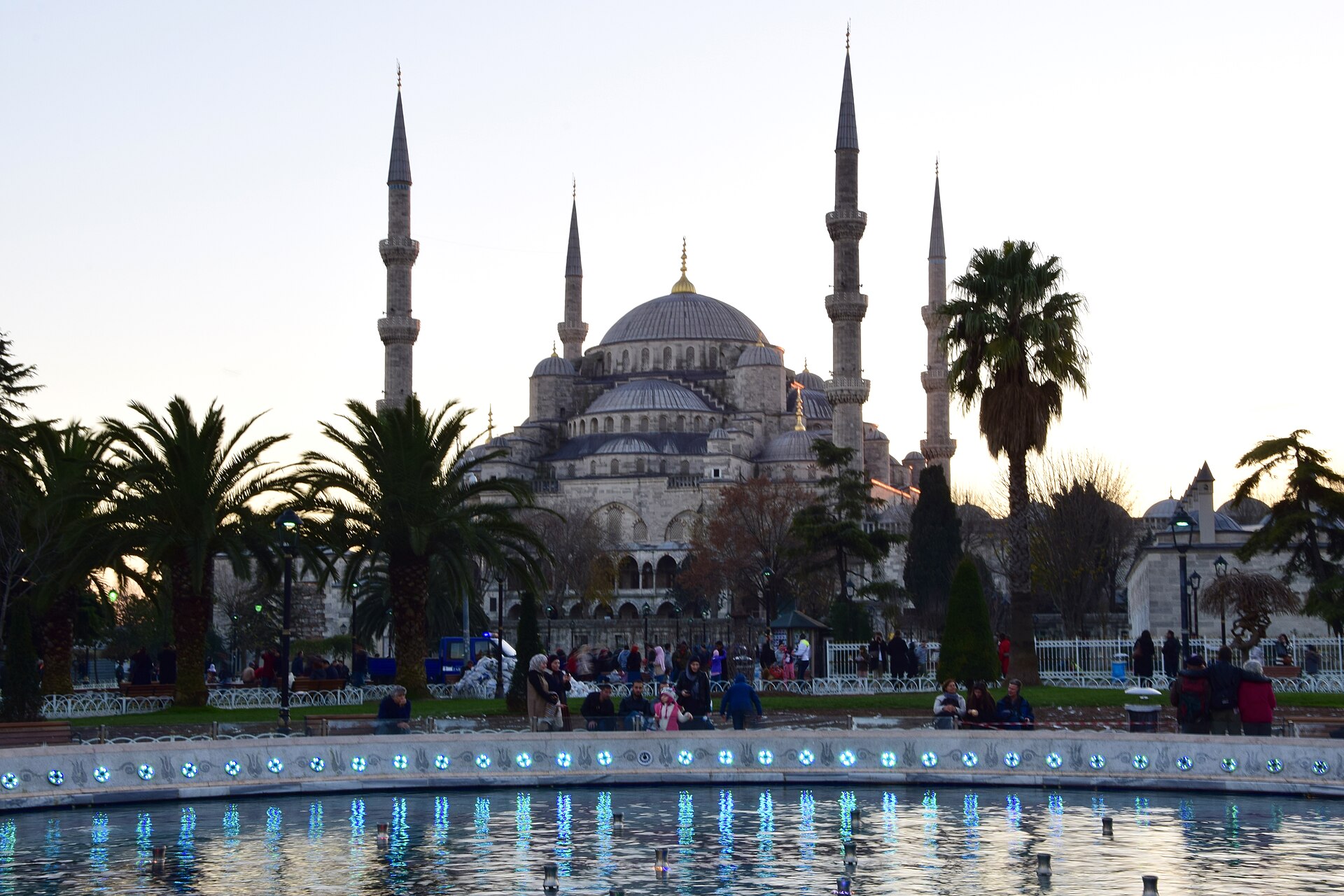
The old-city monuments cluster tightly enough that you can see the essentials in one well-planned day, and it pays to plan it. Start early at Hagia Sophia, the sixth-century church that became a mosque, then a museum, and is now a functioning mosque once more; go at opening, before the crowds and the midday prayers. Cross the square to the Sultan Ahmed Mosque, known to visitors as the Blue Mosque for its İznik tiles, completed in the early seventeenth century and unusual for its six minarets. The Blue Mosque is free to enter as a working mosque; Hagia Sophia, since 2024, charges foreign visitors an entrance fee for the tourist route, though its prayer hall stays open to worshippers. At both, dress modestly, cover as required, and remove your shoes.
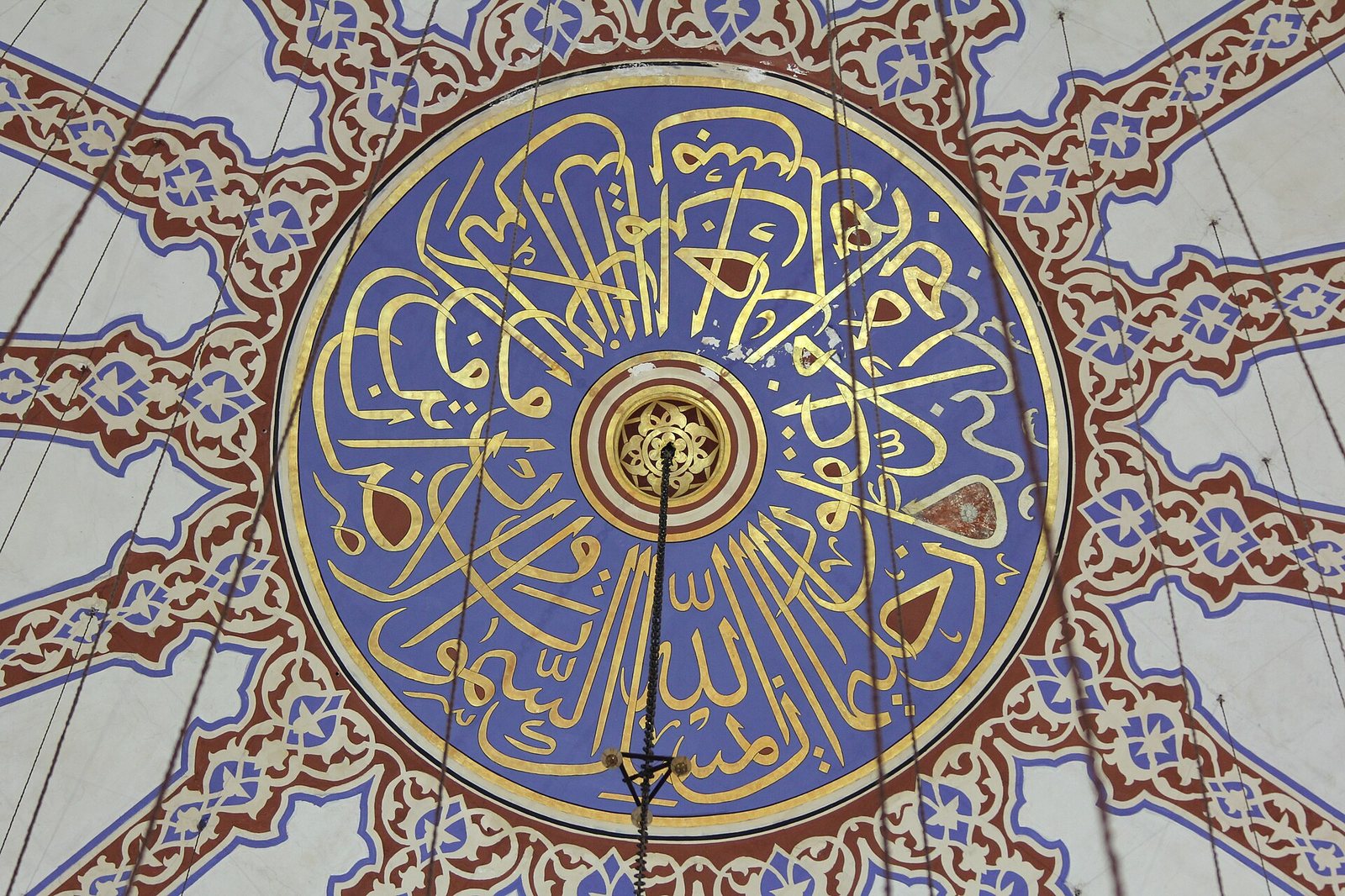
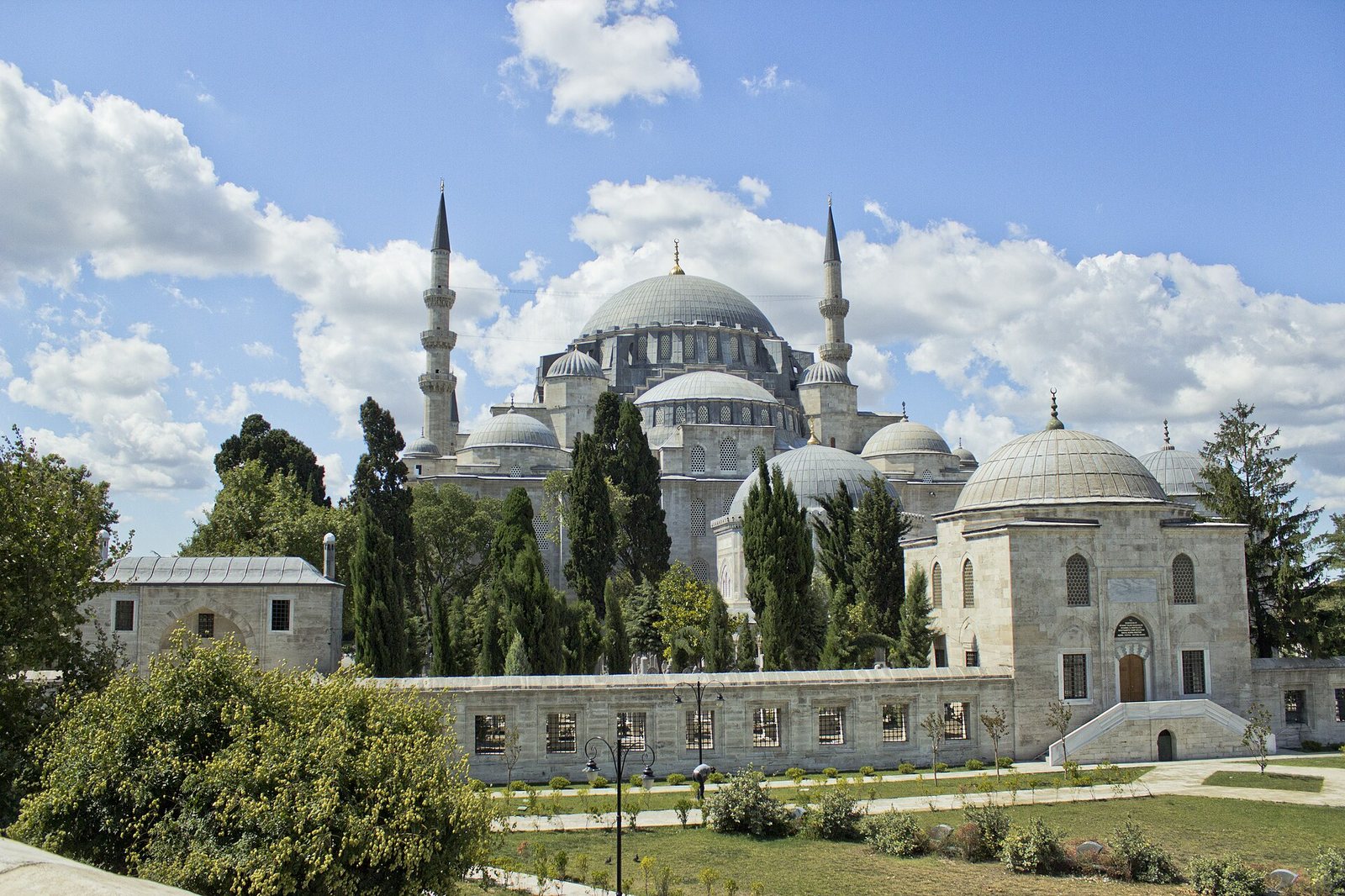
From there it is a short walk to the Basilica Cistern, the vast underground water chamber built under Justinian, its forest of columns lit low over dark water — a good place to be in the heat of the day. Topkapı Palace, the seat of the Ottoman sultans for centuries, needs a couple of hours on its own and deserves them; buy a ticket in advance if you can, and treat the Harem as a separate, worthwhile add-on. If you have the appetite for one more, the Süleymaniye Mosque on the third hill, the work of the architect Sinan, is calmer than the Sultanahmet pair and has one of the finest views back over the Golden Horn.
The two great markets are a different kind of sightseeing. The Grand Bazaar, a covered warren of thousands of shops, is best treated as a place to wander and drink tea; go in, get lost on purpose, and accept that the first price is rarely the real one. The Spice Bazaar near Eminönü is smaller, denser and more sensory, and sits beside the New Mosque and the waterfront where the Bosphorus ferries leave — a natural place to end a morning and start a boat.
The best half-day that most visitors skip is the Bosphorus by ferry. The public commuter boats and the longer sightseeing ferries run up the strait past the waterside yalı — the old wooden mansions built at the water's edge — the Ottoman palaces, and the two great bridges. It costs a fraction of a private tour and shows you the shoreline close up: the painted timber houses, the fortress walls, the tankers sliding past under the hills. Take a tea from the on-board seller, sit on the open deck, and let the shores go by. If you do only one thing beyond the monuments, do this.
For a change of register, the Golden Horn neighbourhoods of Fener and Balat, with their steep streets of coloured houses and the seat of the Greek Orthodox Patriarchate, make a good, quiet morning's walk. And a historic hammam is worth an afternoon — the sixteenth-century Çemberlitaş bath, attributed to Sinan, and the eighteenth-century Cağaloğlu bath are among the well-known ones, both long used to visitors. Go knowing it is a scrub and a steam, not a spa, and it will not disappoint.
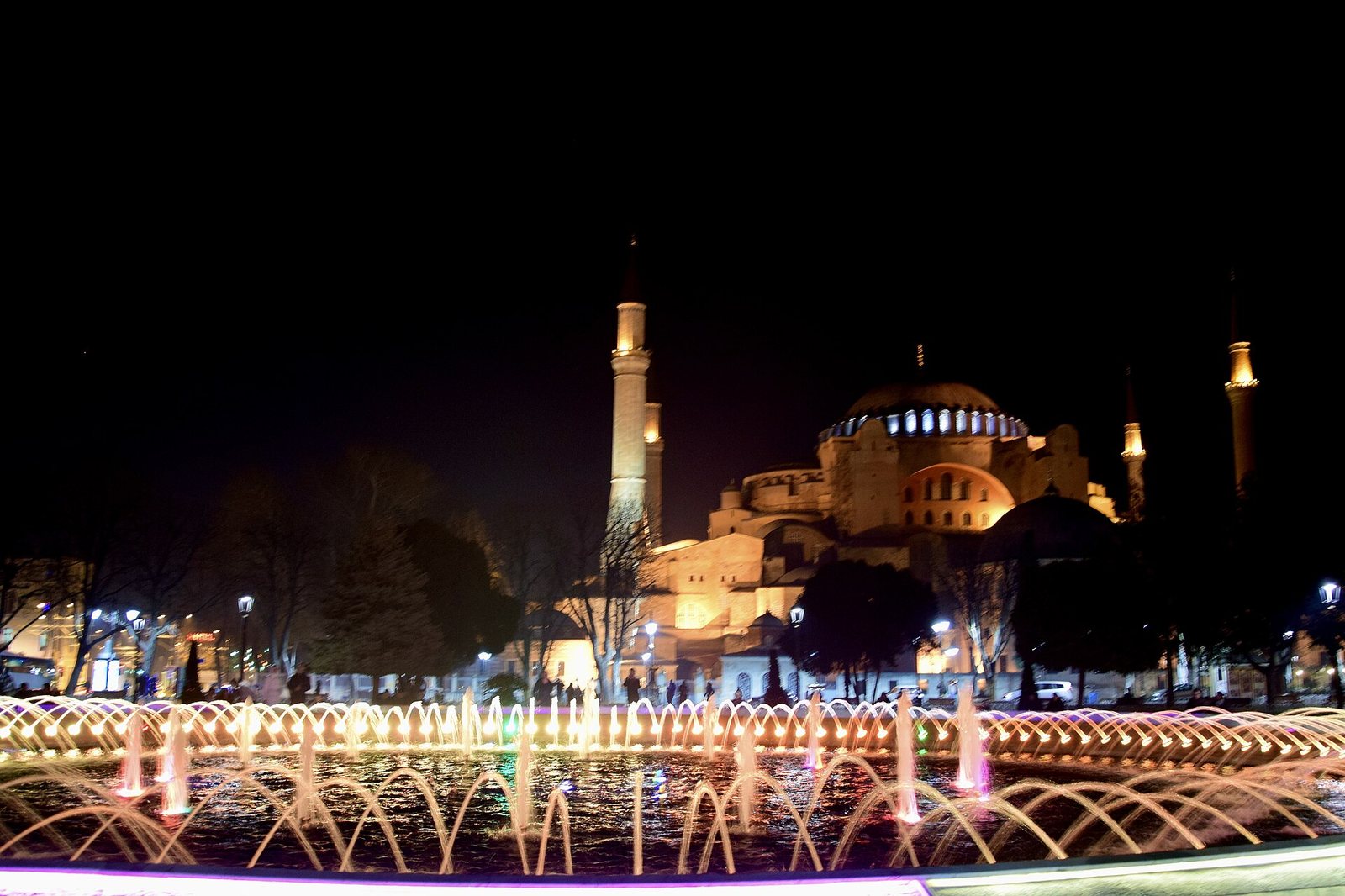
Hagia Sophia Grand Mosque, Istanbul, Türkiye ( Ank Kumar, Inf… · Ank Kumar · CC BY-SA 4.0 · cropped
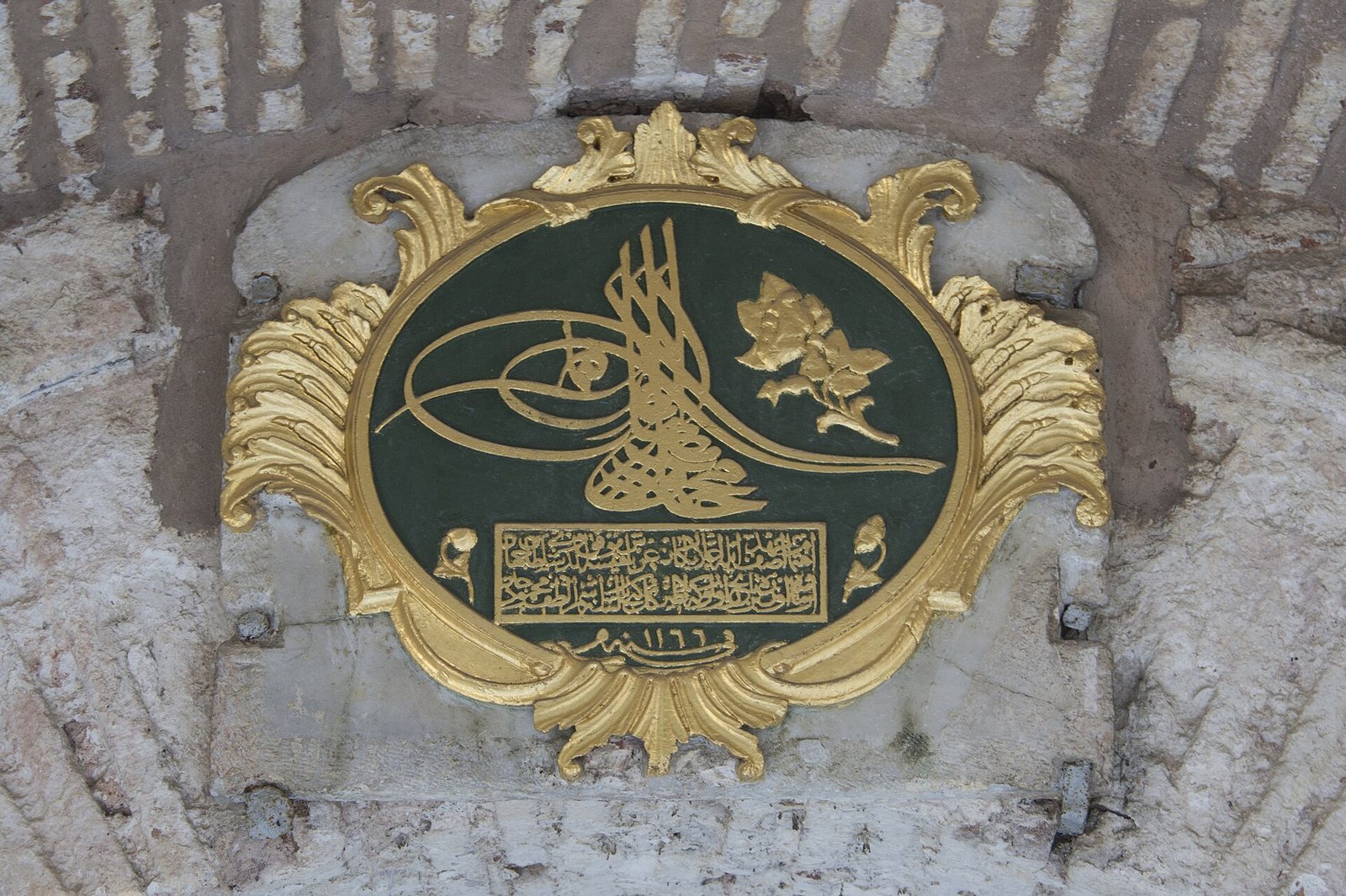
Topkapı Garden NE of Fourth Courtyard in 2016 02 0928 · Dosseman · CC BY-SA 4.0 · cropped
Across to Asia
Save at least one evening for the Asian side, because it is where the city relaxes. The ferry from Eminönü or Karaköy to Kadıköy takes about twenty minutes and delivers you into a market district that has no monuments to speak of and no need of them. The produce market spills across several streets, the meze houses and the fish stalls are busy with locals rather than tour groups, and the neighbouring quarter of Moda, along the water, is a fine place to walk off dinner as the sun goes down behind the old city across the strait.
For eating, this is the best part of the city. The regional Anatolian cooking that Kadıköy is known for is a long way from the kebab-and-baklava idea of Turkish food, and an evening here reorganises what you thought the cuisine was. Further north, Üsküdar is older and more traditional, with mosques by the water and the small Maiden's Tower on its rock offshore; it makes a gentler counterpoint to Kadıköy's noise.
If you have a spare day and the weather holds, the Princes' Islands in the Sea of Marmara are the detour worth the boat. The ferry out to Büyükada, the largest, takes an hour or more; motor traffic is banned, so you get around on foot, by bicycle or by electric buggy, past the old wooden summer houses under the pines. Go on a weekday if you can, since Istanbullular pour out to the islands at weekends. Take the earlier boat, walk the quiet end of the island, and take a late-afternoon ferry back as the light drops over the water — the arrival into the city from the sea is the best way to end a day, and a fitting last look at a city that only really makes sense from the water.
Sources & further reading
Go Türkiye, the official tourism portal of the Republic of Türkiye (goturkiye.com), for destination and monument information. Şehir Hatları, Istanbul's public ferry operator (sehirhatlari.istanbul), for Bosphorus and cross-strait routes and timetables. Metro İstanbul and İETT (metro.istanbul; iett.istanbul) for the metro, tram and Istanbulkart public-transport network, and TCDD Taşımacılık for the Marmaray line under the strait. The Turkish Ministry of Culture and Tourism (kulturportali.gov.tr) for Topkapı Palace, Hagia Sophia and other historic sites.
Comments