At a glance
- Base
- Base in town for a first visit, 'Sconset for quiet, or a rented house mid-island or near beaches.
- When
- July for full volume; late April for Daffodil Festival; June for Film Festival; late September for value.
- Getting there
- Ferry from Hyannis (Cape Cod) or fly to Nantucket Memorial Airport (ACK) from Northeast cities.
- Getting around
- Walkable town, excellent bike paths, seasonal shuttle buses (the Wave); car useful for far north tip.
- Book ahead
- Book accommodation and car ferry months ahead for July/August; passenger ferry tickets for summer weekends.
- The price
- High demand in summer drives up prices for accommodation, car ferries, and services; September offers better value.
Lay of the land
Nantucket is a single island about thirty miles south of Cape Cod, roughly fourteen miles long and shaped like a lamb chop lying on its side in the Atlantic. There are no bridges to it. You arrive by boat or by small plane, and that fact governs everything that follows — the prices, the crowds, the way the island empties on a Sunday afternoon and refills on a Friday. It is a place you commit to reaching, and the effort is part of why it stays the way it is.
The island is famous grey, and the grey is not an accident. The old whaling town and the cottages that spread out from it are clad in cedar shingles left unpainted, which weather from raw honey to a soft driftwood colour within a couple of seasons of salt air. Nantucket also earned the nickname the Grey Lady for its fog, which rolls in off the water without much warning and can sit over the harbour for a morning before the sun burns it off. Pack a layer even in July; the evenings turn cool and damp when the fog comes back.
For most of a century Nantucket was one of the great whaling ports of the world. In the early 1800s its ships ranged the Pacific for sperm whales, and the fortunes that came back built the brick mansions on upper Main Street and the candle factory that is now a museum. The industry collapsed in the middle of the century — a sandbar that kept the largest ships out, the Great Fire of 1846 that levelled much of the waterfront, the discovery of petroleum, the pull of the California gold rush — and the town froze. That collapse is why the centre survives so intact: there was no money to tear anything down and rebuild. The whole town and much of the island are now protected, one of the largest concentrations of pre-Civil-War architecture anywhere in the country.
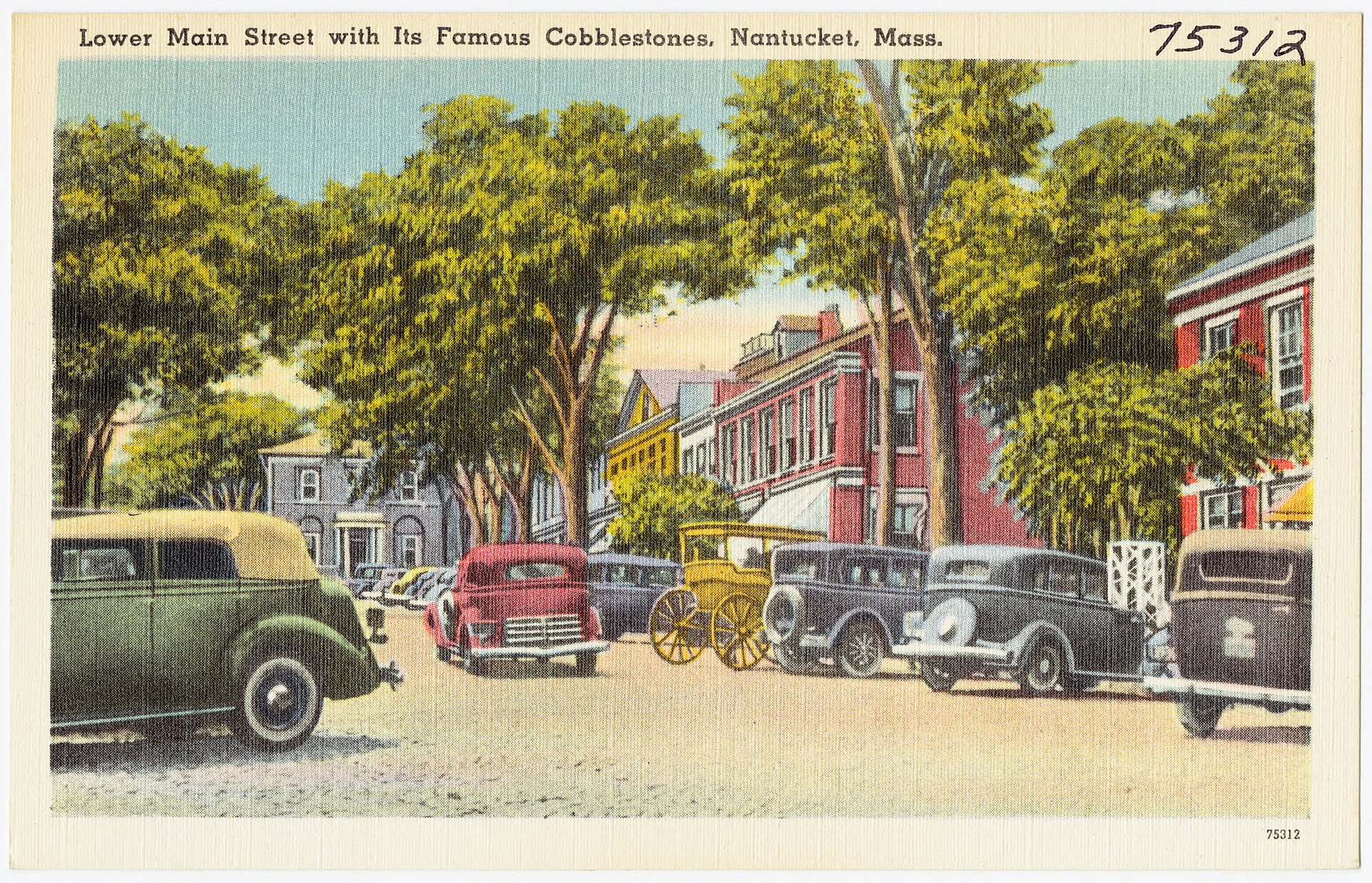
Practically, the island breaks into three parts. There is the town itself, wrapped around the harbour on the north side, where the cobblestones, the shops, the ferries and most of the beds are. There is Siasconset — everyone says 'Sconset — a small former fishing and artists' village on the east end, about seven miles out, quieter and older-feeling, where the cottages disappear under climbing roses in high summer. And there is everything in between and beyond: the mid-island where most year-round islanders actually live and shop, the moors and cranberry bogs in the middle, and the long sand spits at the far ends where the land runs out into wildlife refuge. Knowing which of these you want to wake up in is the single most important decision of the trip.
Where to base yourself
Base yourself in town on a first visit. Everything is walkable from the harbour — restaurants, the museum, the ferry you will leave on, the boats you might take out — and you will not need a car for days at a stretch. The trade-off is noise and price: the streets around Main Street and Straight Wharf are busy until late on July weekends, and a room within a short walk of the water is the most expensive bed on the island. If you want the town at its best, walk it early, before nine, when the cobbles are quiet and the light is low and the day-trippers are still on the ferry.
'Sconset is the other serious option, and it suits a particular kind of week. It is calm, it is beautiful in an unforced way, and the Bluff Walk and the rose cottages are worth waking up to. But it is a village with a village's handful of options: a few places to eat, a small market, and a seven-mile trip back to town whenever you want more than that. If you are travelling to slow down, read on a porch and cycle to a beach, 'Sconset earns its remove. If this is your only visit and you want to be in the middle of things, it will feel far.
The third choice — a rented house mid-island or out toward the beaches at Cisco, Surfside or Madaket — is how a lot of families do a week or two, and it is often the better value if there are four or more of you. Here a car or at least a fleet of bicycles becomes useful, because you are no longer within walking distance of dinner. Weigh it: a house near Cisco puts you close to the best surf beach and the brewery but twenty minutes of pedalling from a restaurant. My advice for a shorter stay is to pay for the town and walk everywhere; for a longer one, take the house and accept the wheels.
Leave the car in Hyannis. In town the island is smaller than the queue for the car ferry.
Brant Point October · Brittle617 · CC BY-SA 4.0 · cropped
Where to sleep
There are broadly four kinds of bed on Nantucket, and the right one depends as much on your temperament as your budget. Understand the categories first and the specific names matter less.
The first is the harbourfront resort. The White Elephant sits directly on the water at the edge of town, with lawns running down to the boat basin, and it is the classic address if you want a full-service hotel a two-minute walk from Main Street. Book it and its peers months ahead for July, and expect rates that climb well into the several hundreds and beyond per night at peak — this is the top of the market and it prices like it. What you are paying for is location and service.
The second is the town inn: a converted whaling-era house on one of the side streets, a dozen or so rooms, breakfast, a porch. The Jared Coffin House, a brick merchant's mansion on Broad Street, is the best-known of the historic ones; Union Street Inn and a scattering of small guesthouses fill the same niche with more of a bed-and-breakfast feel; Greydon House, also on Broad Street, brought a more designed, boutique sensibility. These give you the walkable town at somewhat gentler rates than the waterfront resorts, and a good deal more character. They are my default recommendation for a couple.
The third is the 'Sconset cottage. The Summer House at 'Sconset is the established name here — rose-covered cottages near the bluff with a restaurant and a pool across the lane above the beach — and it is the way to sleep in the village without renting a house. It is a specific pleasure and a specific price; go in knowing you are choosing setting over the buzz of town.
The fourth is the private rental, booked through an agency or the usual platforms, which is how most of the island's summer population is actually housed. For July you want to be looking in the winter before, not the spring; the best houses go early and prices are firm because demand always exceeds supply. Read the fine print on distance to town and whether a car comes with the house. A pretty cottage that turns out to be a taxi ride from everything can quietly reshape the whole week.
Whatever the category, the rule for July is the same: reserve as far ahead as you can bear to, and do not expect a bargain. Nantucket in high summer is a seller's market, and the places that stay empty tend to be empty for a reason.
Brant Point Lighthouse · Marissa Muscillo · CC BY-SA 3.0 · cropped
When to go
July is the island at full volume. The weather is as reliable as New England gets — daytime temperatures usually in the seventies to low eighties Fahrenheit, the water warm enough to swim without flinching by mid-month, long light that lasts past eight in the evening. It is also the most crowded and most expensive stretch of the year, alongside August, and the two peak months run more or less continuously from the Fourth of July to Labor Day. The Fourth itself is a genuine island event, with a water-fight on Main Street in the afternoon and fireworks over Jetties Beach after dark; if you want to be here for it, book early and expect the town to be packed.
The one date to plan around in the other direction is the Boston Pops on Nantucket, an outdoor benefit concert for the island's hospital held at Jetties Beach on a Saturday in early August. It is a fixture, and it fills beds across the island for that weekend. Whether you come for it or route around it, know it is on the calendar. June brings the Nantucket Film Festival in the last full week of the month and thinner crowds; late April is the Daffodil Festival, when the roadsides are yellow and an antique-car parade runs out to 'Sconset. None of these is July, but they tell you how the year is shaped.
If your dates are flexible and you would trade a little warmth for a lot of room, the second half of September is the better-value stretch: the water is still warm, the light softens, the crowds thin sharply after Labor Day, and rates ease. For a first visit in high summer, though, July delivers exactly what the island promises — you are simply sharing it, and paying for the privilege.
Getting there
Almost everyone comes through Hyannis, on the south side of Cape Cod, where two ferry operators run to the island. The Steamship Authority is the only line that carries cars: its traditional ferry makes the crossing in about two hours and fifteen minutes, and its high-speed passenger catamaran, the Iyanough, does it in roughly an hour. Hy-Line Cruises runs a competing high-speed passenger catamaran from the same town, also about an hour. For a foot passenger, either fast boat is the sensible choice; buy the ticket ahead for summer weekends, when sailings sell out.
Bringing a car is a different matter. Vehicle space on the Steamship Authority is limited, reservations are required, and in high season they are gone months in advance — car slots for a summer weekend can be claimed almost the moment they are released. The fare for a vehicle is also steep. Unless you are staying out of town for a fortnight with a lot of gear, this is effort and money you do not need to spend. Leave the car on the Cape and travel light.
Flying is the quick alternative. Nantucket Memorial Airport, code ACK, takes seasonal direct flights from Boston, New York and other cities in the Northeast, plus short hops from Cape Cod and Martha's Vineyard on small regional carriers. It is the fastest way in when the schedule and fare line up, and it skips the Cape traffic entirely on a Friday in July. There are also seasonal passenger ferries from other points — from Harwich Port further out on the Cape, and a seasonal fast boat up from the New York area — but these run on limited schedules; check the current season's timetable rather than assuming they operate.

SankatyLightNantucket 87002028 HopeLourieKillcoyne · Hope Lourie Killcoyne · CC BY-SA 4.0 · cropped
Getting around
Once you are here, the good news is how little you need. The town is comfortably walkable end to end, and the island has an unusually good network of paved bicycle paths radiating out from it — along Milestone Road the seven miles to 'Sconset, out to Surfside and Cisco on the south shore, and west toward Madaket. Renting a bike for the week is the single best small decision you can make: it turns the flat, open middle of the island into something you cross for pleasure, and it removes the parking problem entirely.
For anyone not cycling, the island's regional transit authority runs seasonal shuttle buses — the Wave — from town out to 'Sconset, Madaket, the mid-island and the airport, at modest fares. They are a useful way to reach a far beach or the village without a car. Taxis and ride services exist but are limited and pricey in high season, and they will not save you time on a busy evening.
The one place a proper vehicle earns its keep is the far north tip. Reaching Great Point and the Coskata-Coatue refuge means driving on soft sand, which requires a four-wheel-drive and an over-sand permit from the trustees who manage it — or, more sensibly for most visitors, joining a guided natural-history tour that handles the driving. It is the exception that proves the rule: for everything else, feet, a bicycle and the shuttle will do.
Candle Factory (17) · Asknha1894 · CC BY-SA 4.0 · cropped
By the numbers
What to see and do
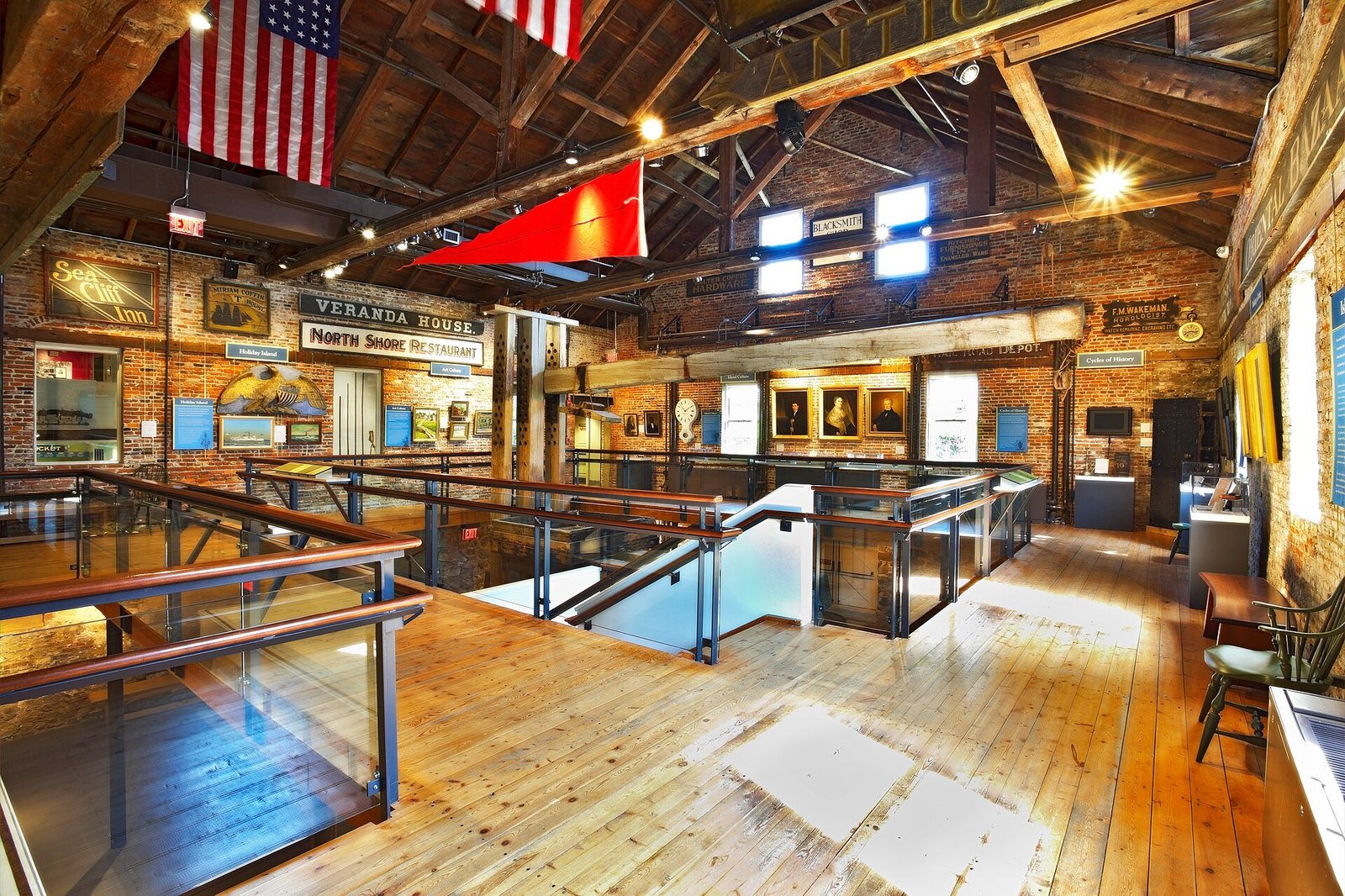
Start with the Whaling Museum on Broad Street, run by the Nantucket Historical Association in the old spermaceti-candle factory. It holds the skeleton of a sperm whale and a working candle press, and it does the essential job of explaining why this small island once mattered so much to the world — including the story of the whaleship Essex, rammed and sunk by a whale in 1820, which fed into Melville's Moby-Dick. An hour here early in the trip makes the rest of the town legible.
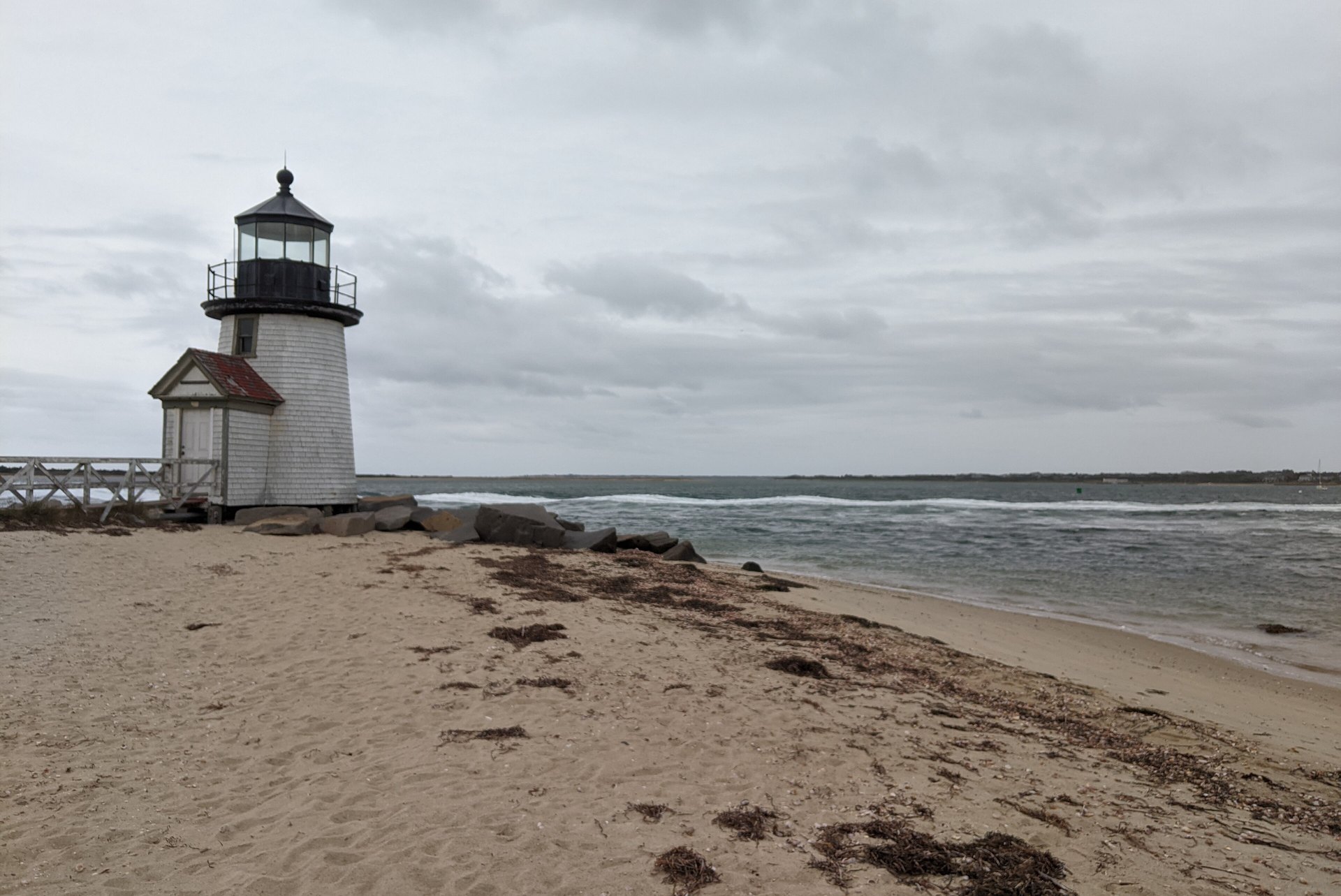
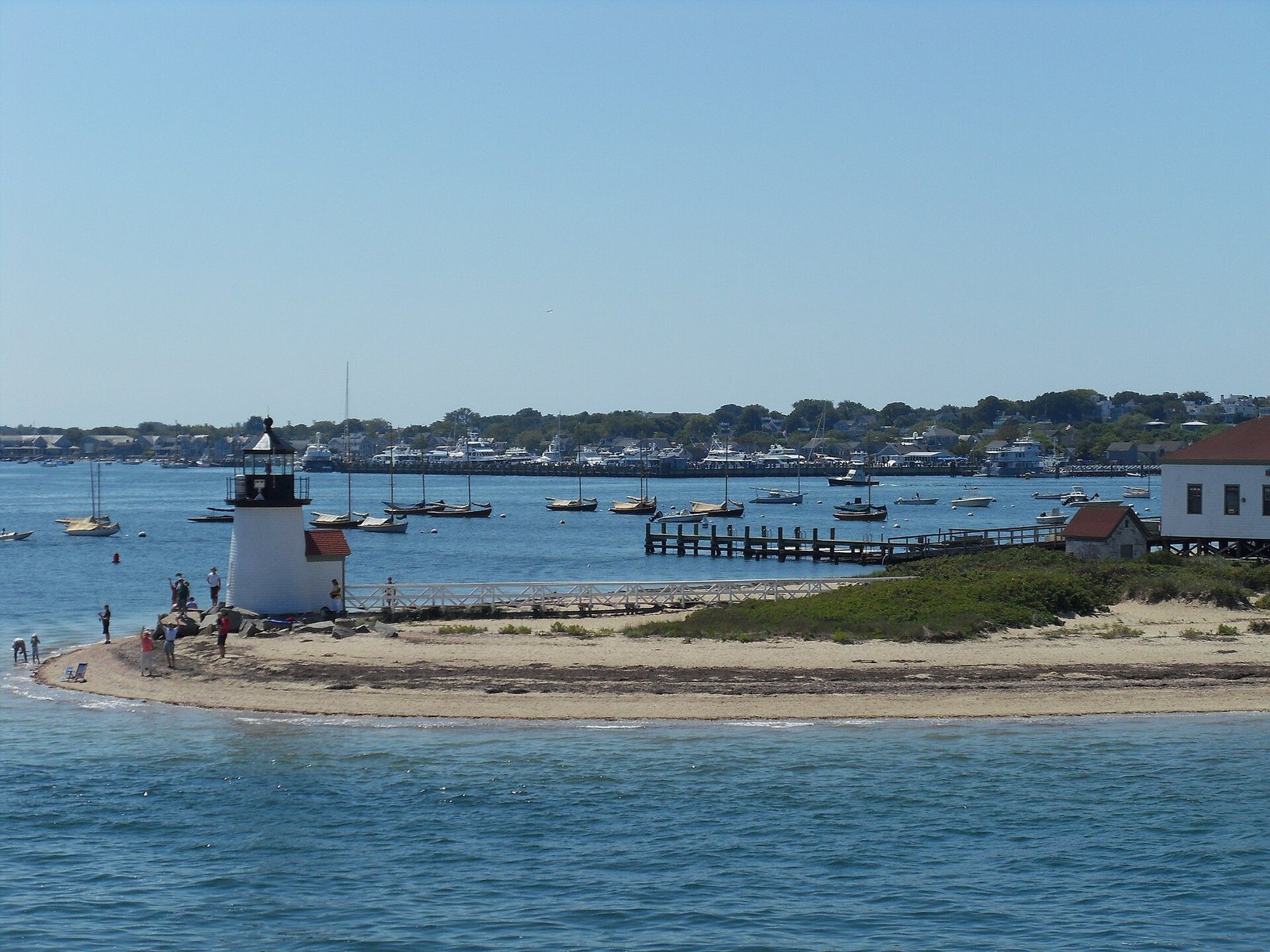
Then walk the town properly. Upper Main Street carries the grand whaling-captains' houses and the cobblestones; the wharves below hold the shops, the fish market and the fishing and pleasure boats. Out along the harbour arm is Brant Point Light, a short white lighthouse at the harbour mouth on one of the oldest light-station sites in the country — the tradition is to toss a penny overboard as your ferry passes it, to be sure you will come back. It is a ten-minute walk from town and the classic first and last view of the island.
For a day out of town, 'Sconset is the obvious one. Ride or take the shuttle out, walk the Bluff Walk — a public footpath that runs along the top of the bluff past the backs of the shingled houses and their gardens — and look at the roses, which peak in exactly this month. Nearby stands Sankaty Head Light, its red band unmistakable, moved back from the eroding cliff edge in 2007 to save it. The village has a beach at the bottom of the bluff and enough of a lunch to make an afternoon of it.
The beaches are the other half of the island, and they divide by temperament. Jetties, a short ride or walk from town, is the calm, family beach on the north shore, with gentle water and facilities. Children's Beach, right in the harbour, is calmer still and made for small ones. On the south shore the water is open ocean and the surf is real: Surfside and Cisco get the waves and the surfers, and are the ones to choose for a proper swim in cold, clean Atlantic. Madaket, on the west end, is where islanders go for the sunset — the day-trip worth timing deliberately is a late-afternoon ride out to Madaket to watch the sun drop into the water, a sandwich from one of the town's well-known counters in your bag, and the last light behind you as you ride home.
Beyond that, keep it simple: an afternoon at Cisco Brewers on the way to or from the south-shore beaches, an hour poking through the shops and galleries, a boat out into the harbour if the weather is kind. Nantucket does not reward a packed itinerary. It rewards choosing one thing a day, doing it slowly, and letting the fog and the light set the pace.
Sources & further reading
Practical and historical detail in this guide can be checked against the following: the Steamship Authority (ferry crossings, the high-speed Iyanough, and vehicle reservations from Hyannis); the Nantucket Historical Association (the Whaling Museum, the Essex, and the town's whaling and architectural history); the Town and County of Nantucket official website (transport, beaches and visitor information); and Nantucket Cottage Hospital for the Boston Pops on Nantucket concert.

Comments