At a glance
- Base
- Base in Val Gardena, Alta Badia, Cortina d'Ampezzo, Val di Funes, Alta Pusteria, or Alpe di Siusi villages.
- When
- High summer from late June to early September; August is peak, most expensive, and busiest.
- Getting there
- Fly to Venice, Verona, Innsbruck, or Munich; then drive or use regional trains and buses.
- Getting around
- Public transport is dense and reliable in South Tyrol; a car offers flexibility but has costs and restrictions.
- Book ahead
- Hotels and rifugi require booking months ahead for July and August, especially for peak season.
- The price
- Prices are highest in August; wellness hotels and Cortina are expensive, farm stays and Val di Funes are cheaper.
Lay of the land
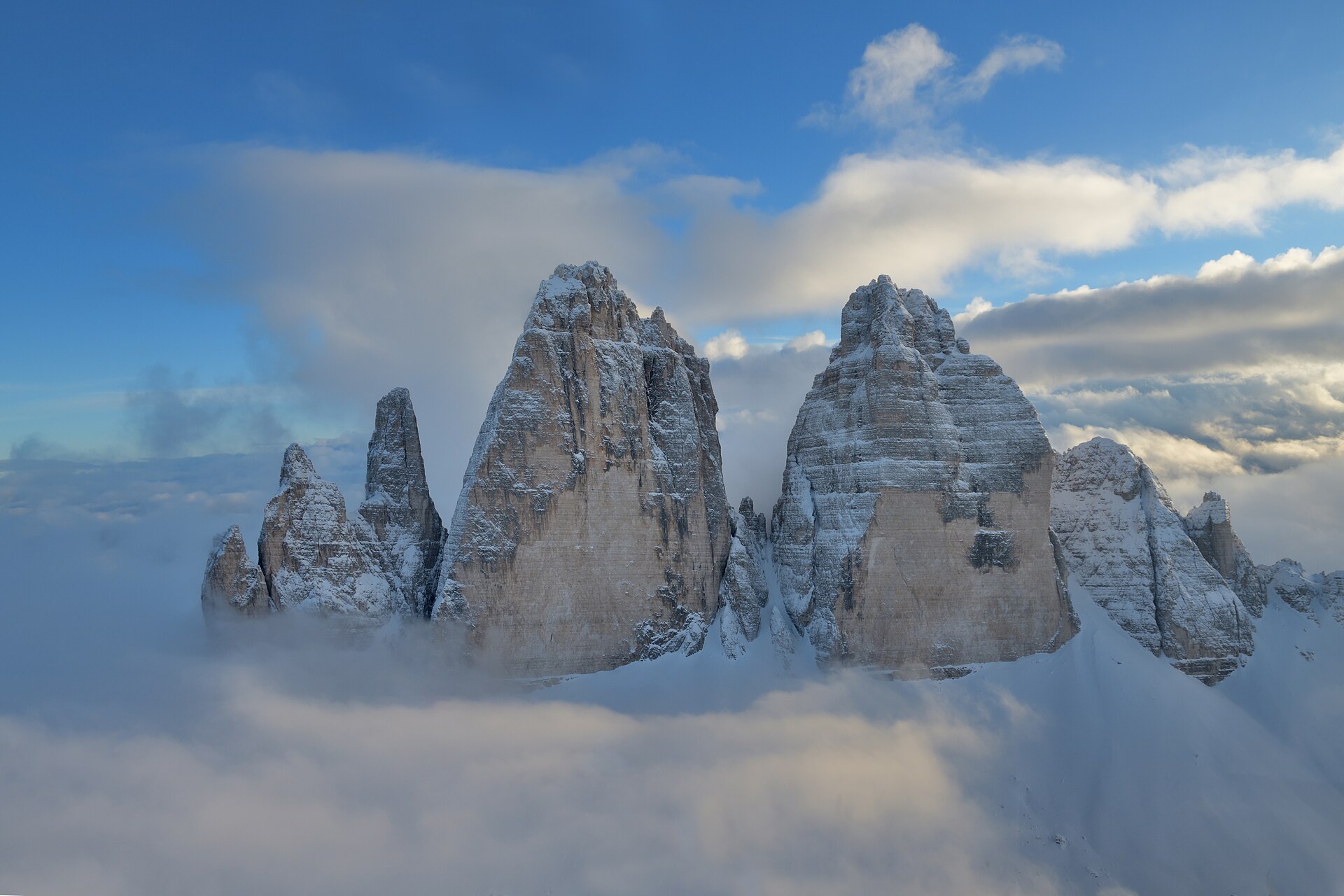
The Dolomites are not one mountain but a scatter of pale rock groups across the north-east corner of Italy, spread over three provinces: South Tyrol (Alto Adige), Trentino, and the Veneto province of Belluno. What ties them together is the rock itself. It is a light dolomitic limestone that goes grey at midday and turns a warm rose-pink at dusk, an effect the locals call the enrosadira. The mountains stand as towers and walls rather than the rounded snow-domes of the western Alps, and that vertical, almost architectural shape is why the region was inscribed on the UNESCO World Heritage list in 2009, across nine separate systems.
For a visitor the practical unit is the valley. Each one has its own road, its own string of villages, its own cable cars fanning up to the high ground, and often its own language. In the northern valleys you will hear German first, Italian second, and in a handful of them a third tongue: Ladin, a Rhaeto-Romance language that predates the arrival of both German and standard Italian in these valleys, still spoken as an everyday matter in Val Gardena, Alta Badia, and a few neighbouring valleys. Menus, place names and road signs carry two or three versions of everything. Ortisei is also Sankt Ulrich and Urtijëi. It is worth knowing this before you arrive, because the map you buy and the map on your phone may not agree on what a place is called.
The distances look small and behave large. Valleys that sit a few kilometres apart as the crow flies are separated by a wall of rock, so getting from one to the next means a mountain pass and a long series of hairpins. A drive that a flat map suggests should take thirty minutes can take ninety. This matters enormously when you choose a base, because in the Dolomites you do not really tour from a single hotel. You settle into one valley, walk and ride its lifts, and accept that the famous sight two valleys over is a proper day out, not an afternoon errand.
High summer is the season this issue is built around. From late June the meadows are in full flower, the mountain huts are open, the cable cars are running their summer timetables, and the passes are clear of snow. August is the peak of the peak: warm, long-lit days, everything working, and the whole of Italy on holiday at once around Ferragosto, the mid-month public holiday on the fifteenth. Prices are at their highest and the honeypot sights fill by late morning. None of that need spoil the trip. It simply means the plan has to be built around timing and a sensible base rather than luck.
Where to base
Start with a decision that shapes everything else: the German-speaking valleys of South Tyrol to the north, or the Veneto side around Cortina to the south, itself a Ladin-rooted valley for all that you will mostly hear Italian there. The two feel different, and the choice is as much about temperament as scenery.
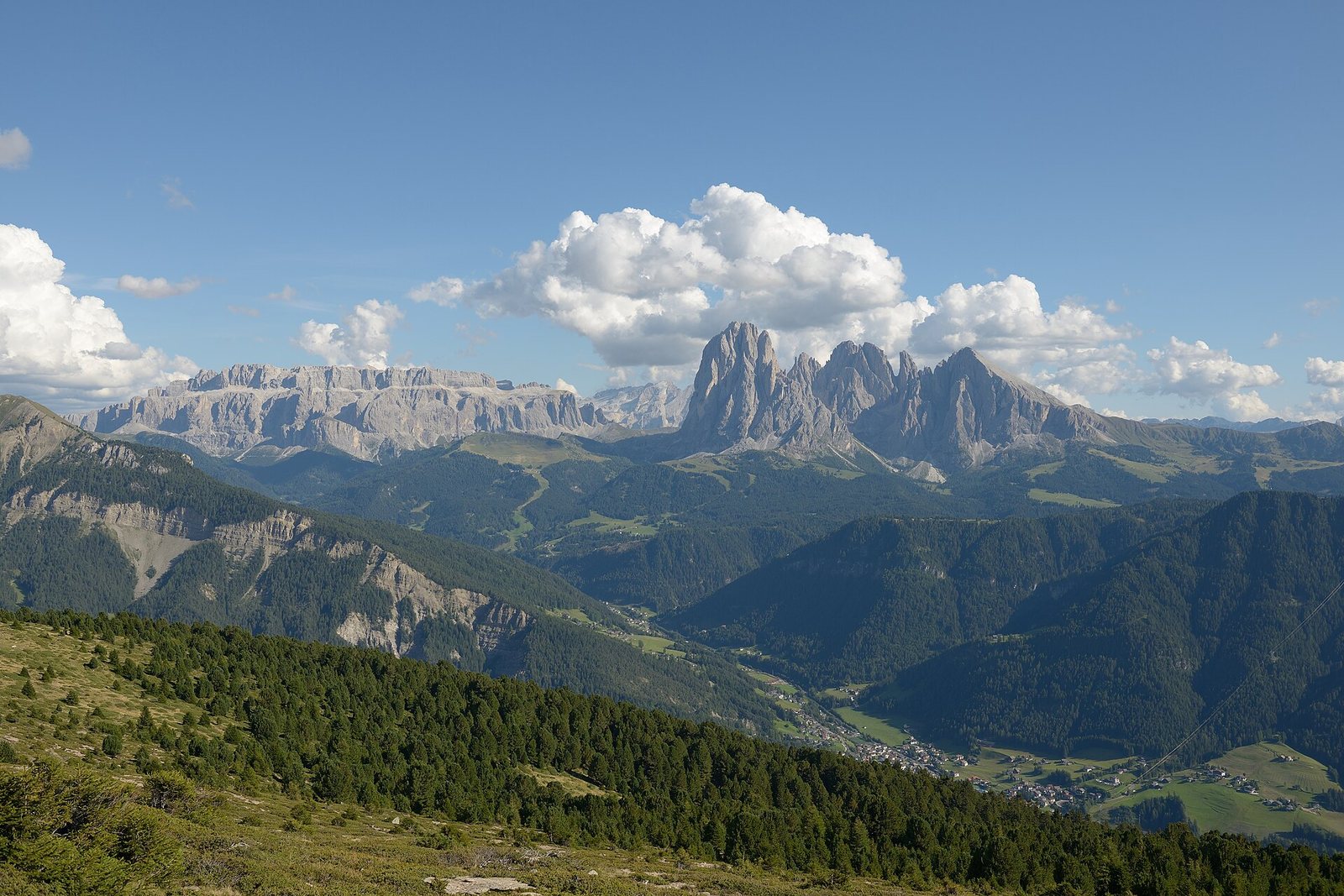
The two Ladin valleys of the north, Val Gardena and Alta Badia, are the most efficient bases for a first visit. Val Gardena runs west to east through Ortisei, Santa Cristina and Selva, and it is dense with cable cars, so a non-hiker can reach high ground from the village centre in minutes. From Ortisei one lift climbs to the Alpe di Siusi and another, on the far side of the valley, to the Seceda ridge, with its famous tilted meadow falling away beneath a saw of rock. Alta Badia, over the Gardena pass, is quieter and greener, centred on Corvara, La Villa, San Cassiano and Colfosco, and it sits directly under the Sella massif, the great flat-topped block that the passes circle. Both valleys are well-off and know it; expect polished hotels, good food, and August prices to match.
Cortina d'Ampezzo is the grand name and the Veneto alternative. It is a proper town rather than a string of villages, with a pedestrian high street, a long resort history, and a scale of glamour the northern valleys do not attempt. Cortina hosted the 1956 Winter Olympics and is a host again for 2026, so expect building works and higher prices as those Games approach. As a base it is well placed for the eastern sights, the Tre Cime and the Lagazuoi front among them; it has no railway of its own, but frequent direct coaches from Venice and Treviso airports make it reachable without a car. What it is not is cheap, and in August it is busy in the way a fashionable town is busy, which is a different thing from the trailhead crowds.
Two quieter options are worth weighing. The Val di Funes (Villnöss) north of Bolzano is a small farming valley under the Odle peaks, less geared to tourists and cheaper for it, with the much-photographed church of Santa Maddalena in its meadow; it makes a calm base if you are happy to drive to the bigger sights. And the Alta Pusteria (Hochpustertal) around Dobbiaco (Toblach) and San Candido (Innichen) puts you within reach of both Lago di Braies and the Tre Cime while sitting on the region's only useful railway line. My own preference for a first week in August is Alta Badia or the Alpe di Siusi villages: high enough to walk from the door, well served by lifts for the days your legs are tired, and far enough from the most crowded honeypots to sleep in peace.
Seiser Alm 04 · H. Zell · CC BY-SA 3.0 · cropped
Where to sleep
The Dolomites do not run to a single kind of hotel, and matching the room to the trip you actually want is the difference between a good week and an expensive one. Broadly there are four sorts of bed, and it helps to know which is which before you book.
The first is the alpine wellness hotel, the four- and five-star houses that fill the northern valleys. These are family-run more often than not, built and rebuilt over generations, and their proposition is half board and a large spa: a pool, saunas, a treatment list, and a dining room that expects you back each evening. They are extremely comfortable and, in August, extremely booked. If this is the trip you want, reserve months ahead, and read the board terms carefully, because many of these hotels sell the week rather than the night in peak season and quietly expect you to eat in.
The second is the town hotel, most obviously in Cortina, where the grand old houses trade on address and history and put you a short walk from restaurants and shops rather than from a trailhead. You pay for the location and the name. It is the right choice if you want a town evening and a lift or a short drive to the mountains in the morning, and the wrong one if your days are all going to start at a cable-car station in the next valley.
The third, and the one that travels well on a smaller budget, is the working farm. South Tyrol runs a well-known farm-stay scheme, Roter Hahn (the Red Rooster), which certifies rooms and apartments on genuine mountain farms. You get a simple, spotless room, often a kitchen, sometimes the farm's own speck, eggs and juice, and a fraction of the hotel price. It suits a family or anyone planning to be out all day and back only to sleep.
Choose the valley first and the hotel second; in the Dolomites the address on the map decides your whole week, and the thread count decides almost nothing.
The fourth kind of bed is the rifugio, the mountain hut, which is a category of its own and gets its own section below. For the valley nights, my advice: spend on position, not on marble. A modest room in the right village, from which you can walk or ride to the high ground before breakfast, will give you far more of the Dolomites than a plush suite an hour's drive from where you actually want to be at eight in the morning.
Val Gardena with Sella and Saslonch from Resciesa · Wolfgang Moroder · CC BY-SA 3.0 · cropped
When to go
The summer walking season is short and clearly bounded. Most high cable cars and the great majority of rifugi open around mid-to-late June and close again in late September or early October; outside that window the huts are shut, the top lifts may not run, and snow can linger on the higher passes well into June and return by October. If your trip depends on huts and high routes, you are effectively choosing among July, August and the first half of September.
August is the fullest month and the most expensive. Days are warm, often into the high twenties Celsius in the valleys, everything is open, and the meadows are still green. It is also when Italian and German families take their main holiday, with the whole country moving around the Ferragosto weekend on the fifteenth. Book accommodation, and any rifugio you mean to sleep in, months rather than weeks ahead, and be ready for the popular sights to be crowded from late morning.
The single most useful habit in August is to walk early. Afternoon thunderstorms are a regular feature of Dolomite summers, not an occasional nuisance: mornings tend to be clear and the cloud builds through the afternoon into storms that can arrive fast and dangerously on exposed ground. Starting at first light solves two problems at once. You are off the high, exposed sections before the weather turns, and you reach the honeypots before the crowds do.
Lago di Braies South Tyrol 3 · kallerna · CC BY-SA 4.0 · cropped
Two shoulder alternatives are worth a thought if you can move your dates. Late June and early July bring the fullest flowering of the meadows and long light, with slightly thinner crowds than August, though the highest routes may still hold snow. The first half of September is the quietest good window: warm enough, huts and lifts still running, prices easing, and the crowds thinning noticeably once the schools go back. Only from mid-September does the risk grow that a hut or a top lift has closed for the year, so check opening dates before you commit to a route that depends on them.
Getting there
There is no airport in the mountains themselves, so the real question is which gateway leaves you the shortest drive. From the south and the Veneto side, Venice and Verona are the usual airports, each a drive of roughly two to three hours to Cortina or the southern valleys depending on traffic and exactly where you are headed. From the north, Innsbruck in Austria is close to the northern South Tyrolean valleys over the Brenner pass. Munich is a longer haul but a large, well-connected hub that many people use for the region.
By rail, the key fact is that the northern valleys are reachable and Cortina is not, at least not directly. The main line up the Adige valley from Verona serves Bolzano (Bozen), Bressanone (Brixen) and Fortezza (Franzensfeste), and a branch runs east through the Pusteria valley to Dobbiaco (Toblach) and San Candido (Innichen). From those stations, a good regional bus network climbs into the side valleys. Cortina, by contrast, lost its railway decades ago; you reach it by bus, typically from Dobbiaco or from the station at Calalzo di Cadore, or by road. Check current timetables close to travel, as mountain bus schedules change with the season.
Whether to hire a car is the decision that colours the whole trip. In the northern valleys you can manage without one: South Tyrol's public transport is dense and reliable, and a regional mobility pass, sold to guests through many hotels, covers buses and regional trains and is often the smart buy for a car-free week. A car buys you the early starts and the flexibility to cross passes on a whim, but it comes with a real cost in August. The most popular sites now actively manage traffic in high season. Access to Lago di Braies is restricted by car for much of the summer day, the road up the Alpe di Siusi is closed to non-resident cars during daytime hours, and the toll road to the foot of the Tre Cime fills its car parks early. If you drive, the answer to all of these is the same: arrive before the restriction bites, or use the buses laid on precisely because it does.
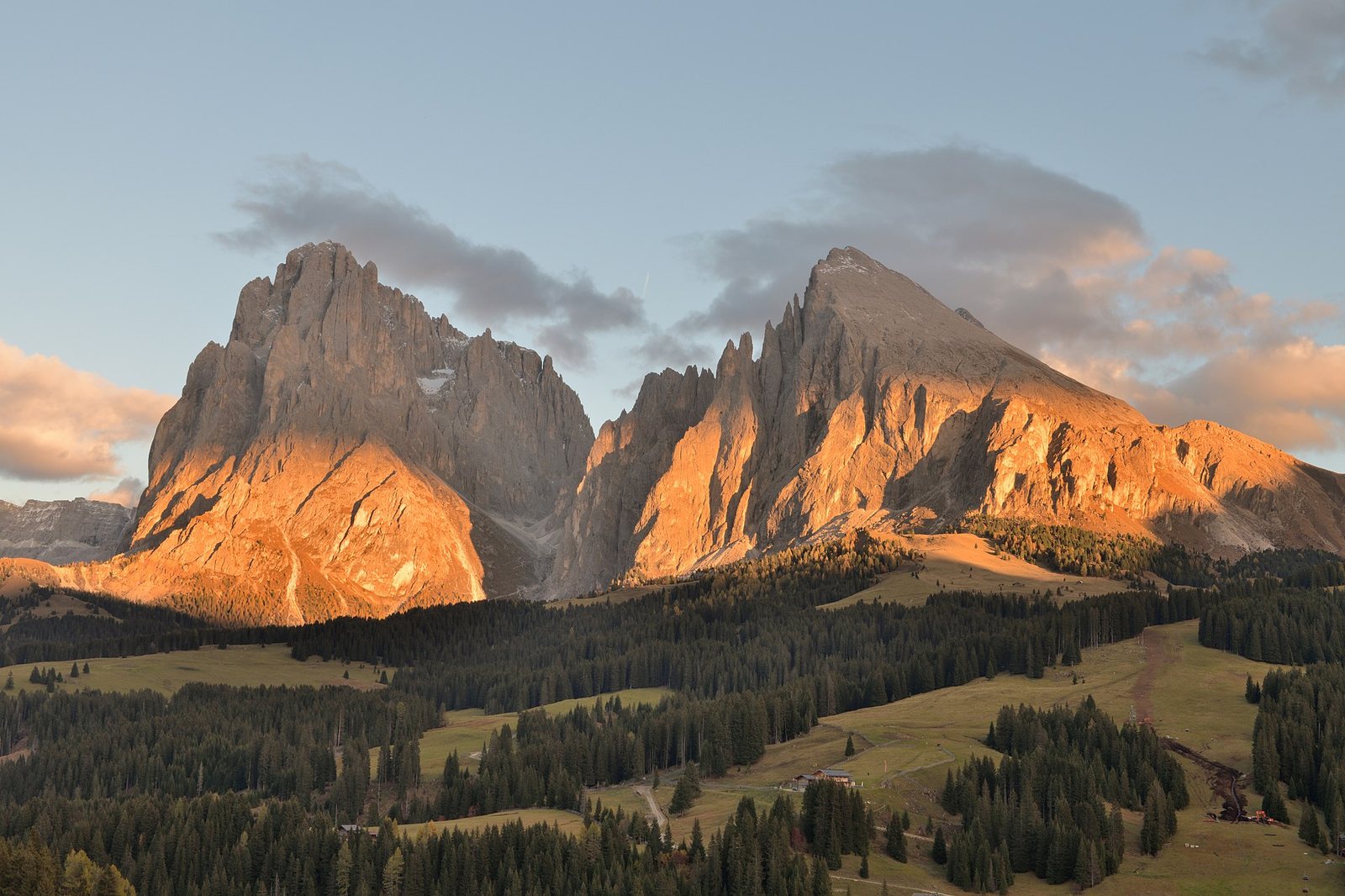
Saslonch udu da Mont de Seuc · Wolfgang Moroder · CC BY-SA 3.0 · cropped
What to see
The Tre Cime di Lavaredo, three sheer parallel towers on the border of South Tyrol and the Veneto, are the region's signature and deserve their fame. The classic outing is the roughly ten-kilometre loop around their base, which most walkers reach from the Rifugio Auronzo car park at the end of a toll road above Misurina. It is not a hard walk by mountain standards, which is exactly why it is busy; the north faces, the ones on the postcards, are on the far side of the loop, so an early anticlockwise start rewards you with the great view and comparatively empty ground. If the car park is full, and in August it fills early, there is a summer bus.
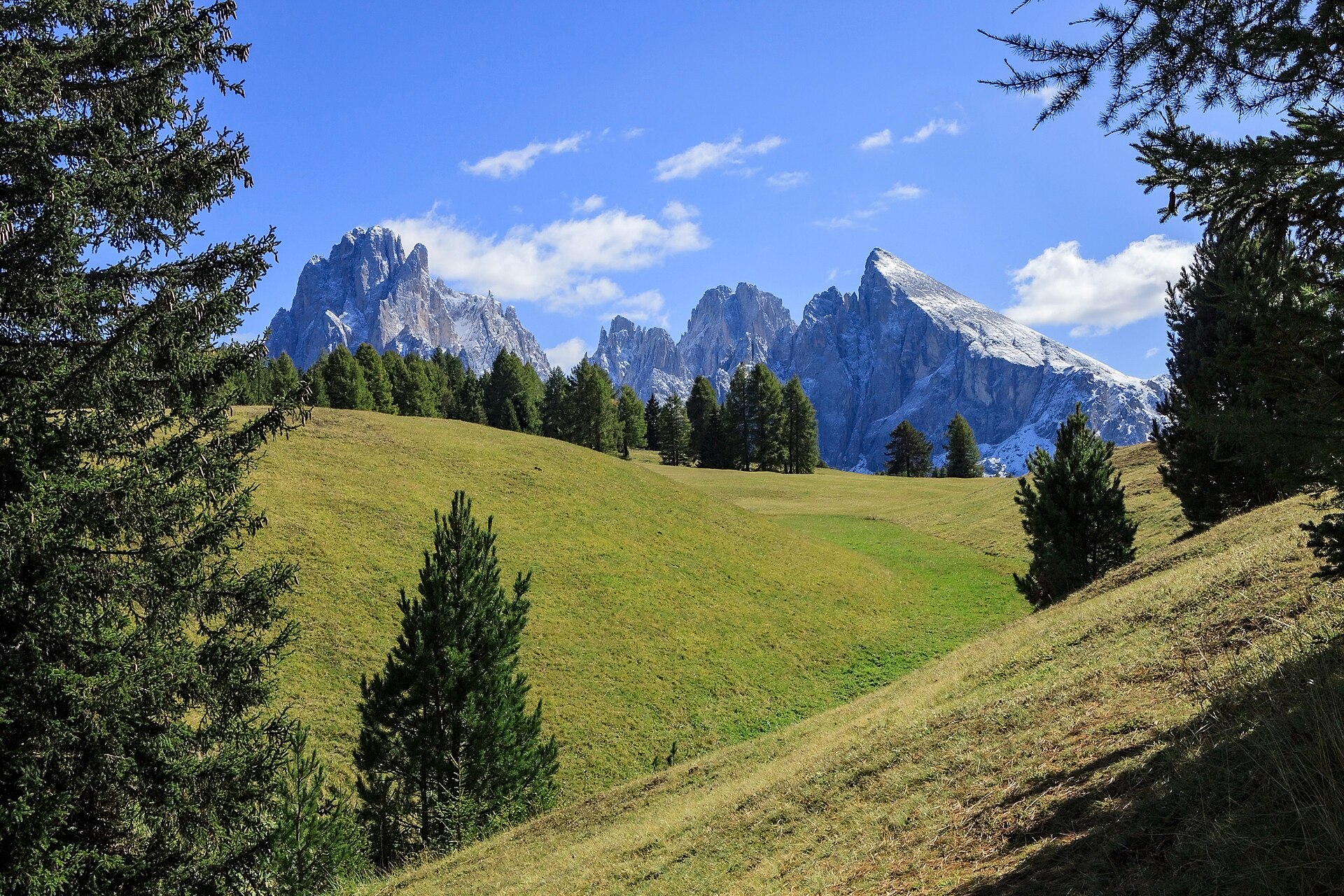
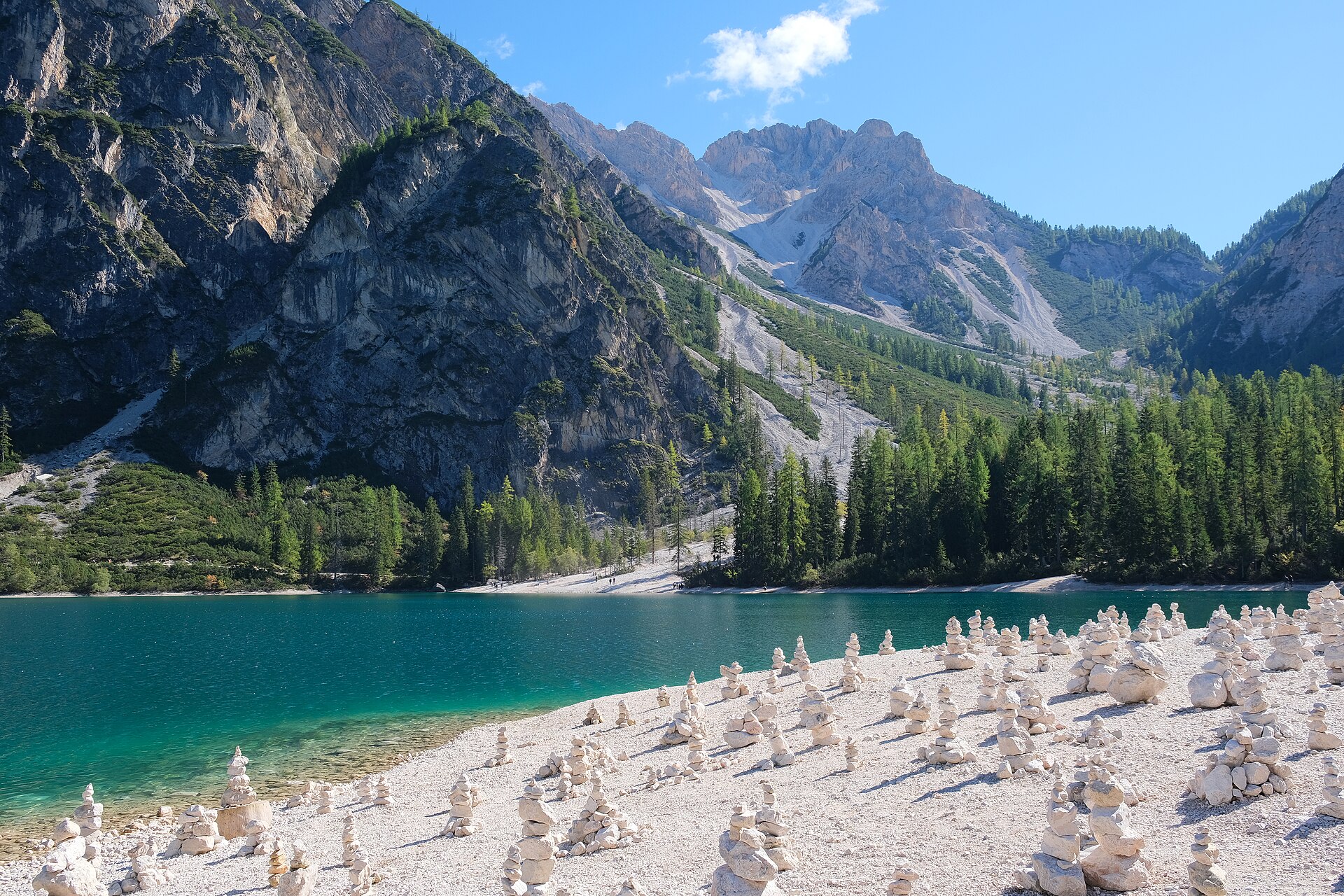
The Alpe di Siusi, the Seiser Alm, is the counterpoint to all that verticality: the largest high-altitude meadow in the Alps, a vast gently rolling upland grazed by cattle and framed by the Sassolungo and Sciliar peaks. It is reached by cable car from Ortisei or from the village of Siusi, and it is the place to send anyone who wants the scenery without the climbing, with easy, near-level paths and huts serving lunch. Lago di Braies (Pragser Wildsee), a deep green lake with a wooden boathouse under a steep wall of rock, is the other great non-walker's sight, and the one most transformed by its own popularity; go at opening or in the last light, not in the middle of an August day.
For those who want to touch the mountains rather than only look, the via ferrata is the Dolomites' particular invention: protected climbing routes fitted with steel cables, rungs and ladders, which let a reasonably fit person with a harness, a via ferrata set and, ideally, a guide travel over ground that would otherwise need rock-climbing skill. Many of the most storied routes date from the First World War, when the front ran straight through these mountains. Around Cortina the Lagazuoi cable car carries you up to a mountain honeycombed with wartime tunnels you can walk through, and the small area of the Cinque Torri holds an open-air museum of restored trenches. These are among the most human sights in the range, a reminder that the pale rock was fought over within living memory.
If you have a day for the valleys rather than the heights, Bolzano rewards it. The provincial capital is a handsome, arcaded town where the Italian and German worlds meet plainly in the streets and the food, and its South Tyrol Museum of Archaeology holds Ötzi, the remarkably preserved Copper Age body found in a glacier on the border ridge in 1991. It is the one indoor sight worth a wet afternoon, and a useful corrective to the idea that these mountains are only scenery.
By the numbers
The rifugi, and the one night up high
The rifugi, the mountain huts, are the feature that makes the Dolomites feel like a country of their own. There are hundreds of them, from small stone refuges on remote cols to large, almost hotel-like houses reachable by cable car, and together they make multi-day walking possible without a tent. Most are run privately or by the Italian Alpine Club, most serve hot lunches to day walkers who simply arrive at the door, and many offer beds and an evening meal to those who book. The food is plain mountain cooking: barley soup, canederli (the bread dumplings called Knödel to the north), plates of speck, spätzle, and a slice of strudel with the coffee.
Sleeping in one is the single experience I would urge on any first-time visitor with the legs for it. Even a night in a hut reached by a cable car and a short walk changes the trip completely. You are there for the two hours the mass of day visitors is not: the long slow colour on the rock at dusk, the quiet after the last lift down, the stars, and a dawn start onto ground that is briefly yours alone. The classic version is a longer traverse, staying hut to hut over several days along one of the numbered Alte Vie, the high routes that thread the range, but you do not need a week to taste it. One well-chosen night is enough.
The practicalities are simple but not optional. Beds are often in shared dormitories; you bring a sleeping-bag liner, cash for the extras, and earplugs. Half board, a bed with dinner and breakfast, is the norm and in summer costs, as a rough guide, in the region of sixty to ninety euros a person, though prices vary and are worth confirming when you book. And you must book, well ahead for July and August, because the good huts on the popular routes fill months in advance. Telephone or email the hut directly; a booking is a promise the guardian relies on, and a no-show in the mountains is a real discourtesy. Get that right and the rest of the Dolomites arranges itself around it.
Sources & further reading
UNESCO World Heritage Centre, listing for The Dolomites (inscribed 2009), whc.unesco.org. IDM Südtirol / South Tyrol official tourism board, suedtirol.info, for valleys, farm-stay (Roter Hahn) and regional mobility information. Dolomiti UNESCO Foundation, dolomitiunesco.info, for the nine mountain systems and visitor guidance. Club Alpino Italiano (CAI), cai.it, for the rifugi network and the Alte Vie high routes.
Comments