At a glance
- Base
- Inside or immediately beside the Ring (First District), or Seventh District (Neubau) if on a budget.
- When
- First three weeks of December, especially the first ten days for fewer crowds and better rates.
- Getting there
- Fly to Schwechat (VIE) and take a train to Wien Mitte or main station; or arrive by rail from Europe.
- Getting around
- Public transport pass for U-Bahn, trams, buses; walk the centre; do not hire a car.
- Book ahead
- Several months ahead for late December; New Year's Concert tickets a year ahead by lottery.
- The price
- Central locations are expensive; New Year's Eve is most expensive; rates ease in early December.
Lay of the land
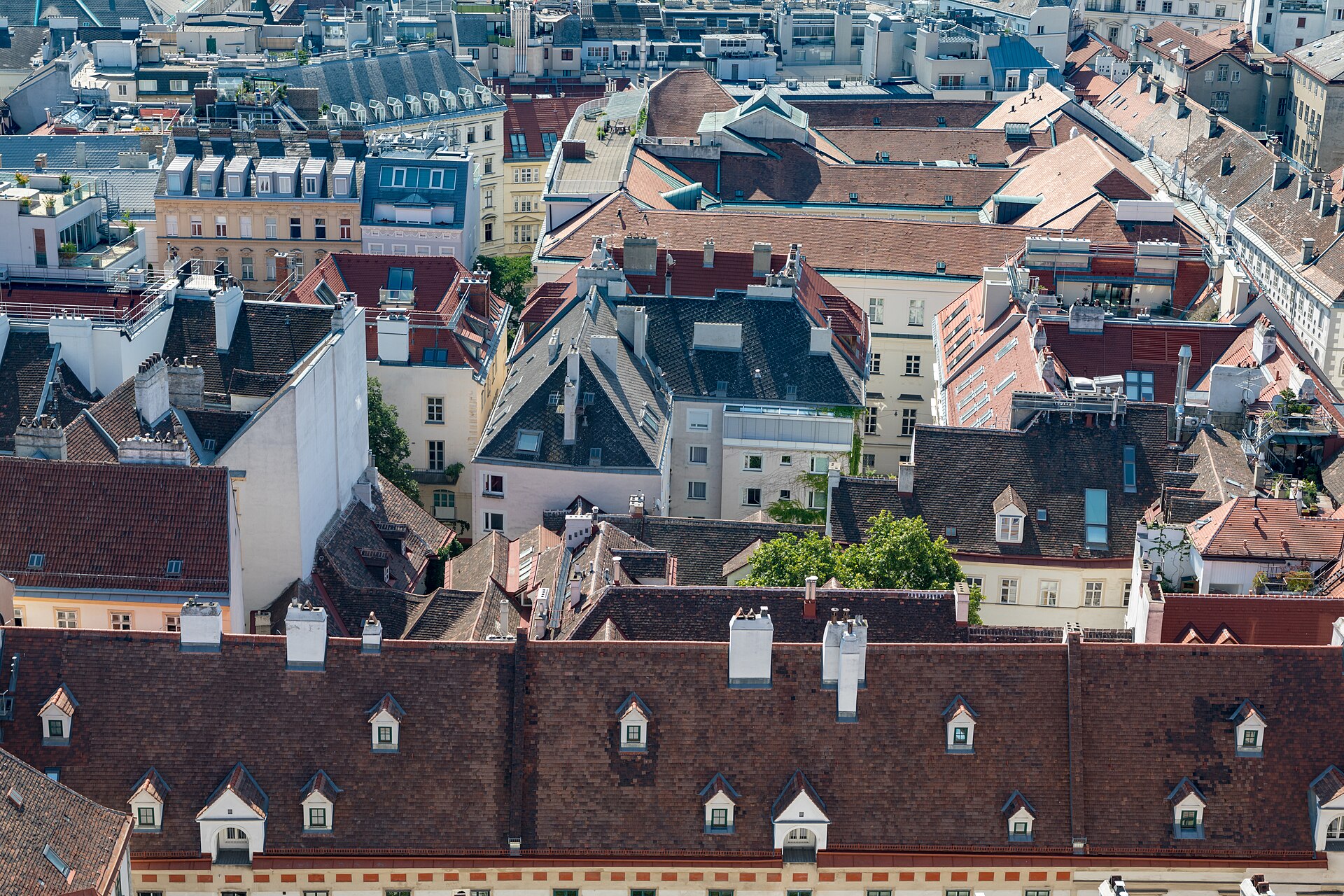
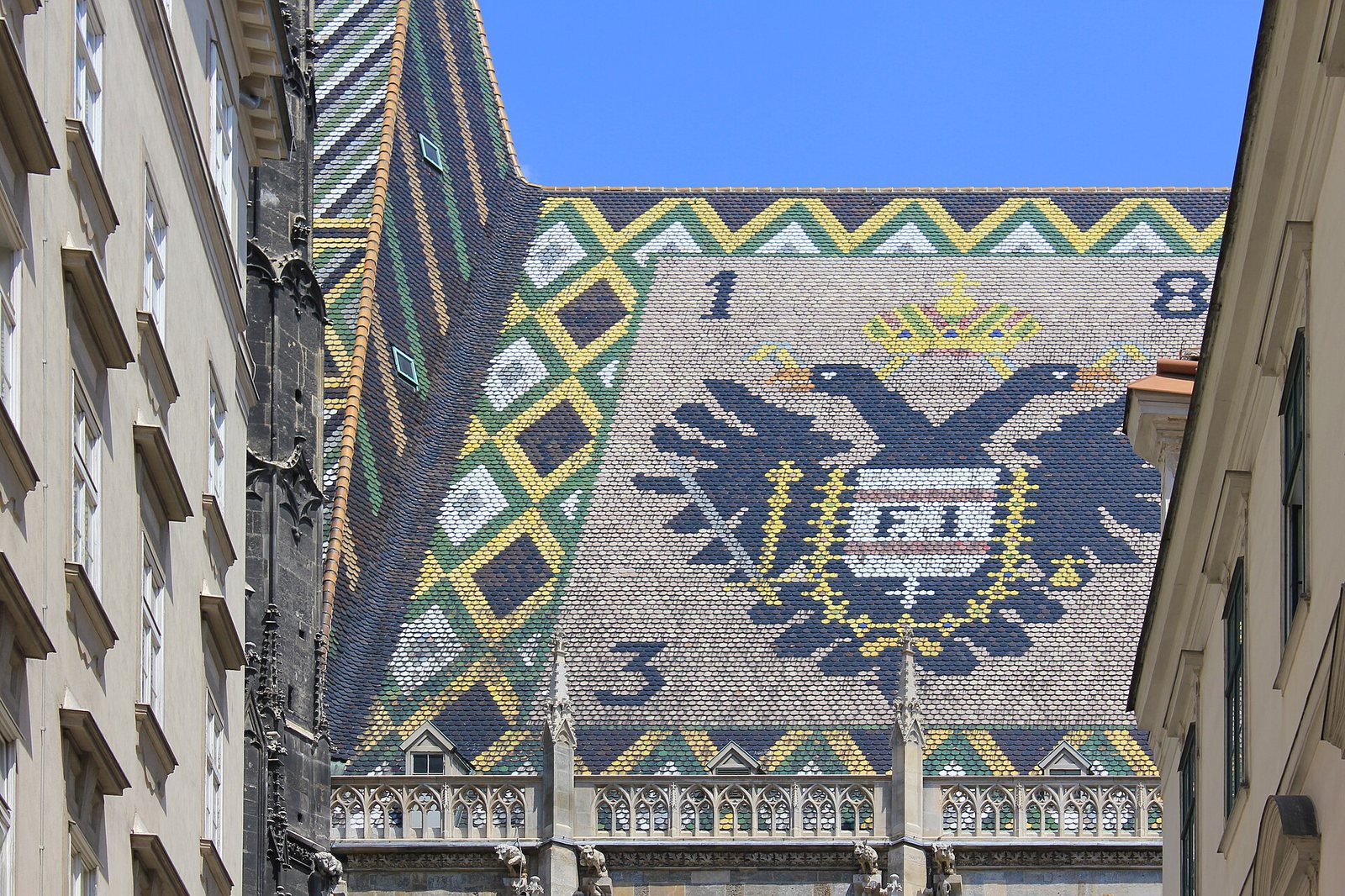
Vienna is a large city that behaves, for a visitor, like a small one. The part most people come for sits inside a ring road, the Ringstrasse, built in the 1860s on the line of the old city walls. Everything that says "imperial Vienna" is on or just off that circle: the State Opera, the Hofburg, the parliament, the twin museums on Maria-Theresien-Platz, the City Hall, the university, the Burgtheater. Inside the Ring is the First District, the Innere Stadt, and at its heart stands St Stephen's Cathedral, the Stephansdom, whose south tower and patterned tile roof are the landmark you orient by.
The districts spiral outward from there and are numbered, which is more useful than it sounds; Viennese addresses lead with the district number, and once you know that the low numbers are central you can place any hotel or restaurant on a map in your head. The Second District, Leopoldstadt, lies across the Danube Canal and holds the Prater park with its Ferris wheel. The Third has the Belvedere. West of the Ring, the Sixth and Seventh, Mariahilf and Neubau, carry the long shopping street of Mariahilfer Strasse between them, the Naschmarkt along the Sixth's southern edge, the MuseumsQuartier, and the small lanes of Spittelberg.
The river itself is a mild disappointment if you arrive expecting a waterfront. The Danube proper runs to the northeast, wide and canalised; what edges the old town is the narrower Danube Canal, lined in recent years with bars in summer and largely quiet in December. You take Vienna in from its squares, boulevards, and interiors, not from the water, which in the cold months is exactly the right shape to be.
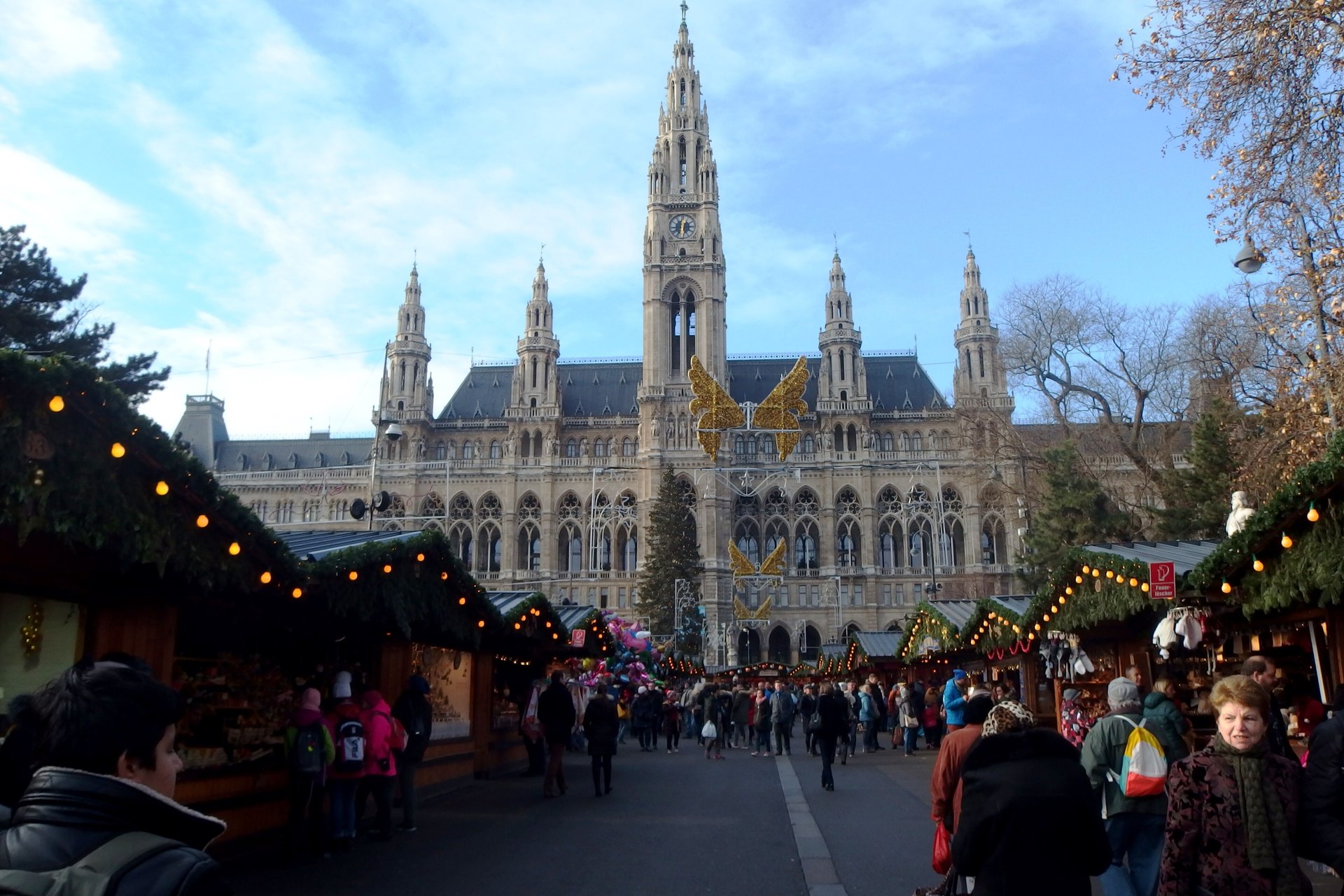
December sharpens all of this. The markets open from the middle of November and most run to Christmas Eve or the days just after, so for the whole month the central squares are given over to wooden stalls, chestnut smoke, and the smell of mulled wine. Daylight is short; it is properly dark by late afternoon, which is when the city looks best. Plan your days around the fact that the good hours are the dark ones, and that between four and eight in the evening the centre is at its most itself.
Where to base yourself
For a first visit in December, base yourself inside or immediately beside the Ring, in the First District. The reason is simple: the markets, the cathedral, the opera, the coffee houses, and the palaces are all either within the Ring or one short tram or U-Bahn ride from it, and in cold, dark weather the value of a short walk home is hard to overstate. You will pay for the postcode. The trade is that you lose no time in transit and can duck indoors whenever the cold wins.
If the centre is beyond your budget, and for many travellers it will be, the Seventh District, Neubau, is the base I recommend without hesitation. It sits just outside the Ring behind the MuseumsQuartier, it has the Spittelberg market on its own doorstep, and it is a fifteen-minute walk or a two-stop U-Bahn ride to the cathedral. It is also where the city feels lived-in rather than staged, with good places to eat that are not built around tourists. The neighbouring Sixth and Eighth, Mariahilf and Josefstadt, work the same way.
The centre buys you time, not comfort; the value of walking home in ten minutes when it is dark by four is the whole argument.
Avoid the reflex to book near the airport or out by the exhibition grounds to save money, then commuting in each day. Vienna's transport is excellent and cheap, but December evenings are the point of the trip, and you do not want to be weighing a last glass of Glühwein against a thirty-minute ride back to an anonymous district. If price is the constraint, stay small and central rather than large and distant. A modest room three streets from the cathedral beats a generous one in the Twenty-Second.
One routing note worth its own line: the Danube island and the newer glass districts across the river photograph well and cost less, but they are the wrong side of a wide, cold walk for a festive trip. Keep to the historic wedge between the Ring and the outer belt, the Gürtel, and you will barely touch public transport at all.
Schoenbrunn Christmas market 2018 · Montanabw · CC BY-SA 4.0 · cropped
Where to sleep
Vienna's grand hotels are genuinely grand and old, and a few are worth naming because they are institutions rather than merely expensive. The Hotel Sacher, behind the opera, is the one with the cake; the Hotel Imperial and the Hotel Bristol both sit on the Ringstrasse in nineteenth-century palaces and have hosted the city's official guests for well over a century. Staying in one of these is a specific pleasure and a specific price. If you want the full imperial idea for a night or two, this is where it lives, and December is when the lobbies earn their keep with fires, garlands, and a proper afternoon coffee ritual.
Below that tier, the First District has a deep bench of four-star and boutique hotels in converted townhouses, many on quiet lanes a few minutes from the cathedral. This is the sweet spot for most visitors: central address, real Viennese building, breakfast that leans into cold cuts and good coffee, and no need to touch a tram. Book a room facing an inner courtyard if you are a light sleeper, because the market crowds and the New Year's Eve trail keep the centre awake late in this season.
In Neubau and Spittelberg, look for the small design-led hotels set inside Biedermeier houses. They tend to give you more room and more character for the money, a neighbourhood of galleries and bars around you, and the Spittelberg market at the end of the street. This is the base I would choose myself for a week in December, trading half a star of polish for a quarter of the price and a better breakfast address.
A practical word on booking. December is high season for the markets, the New Year's Concert draws its own crowd around the turn of the month, and rooms in the centre go early and dear; expect to book several months ahead for the last two weeks, and expect the nights around New Year's Eve to be the most expensive and the hardest to find of the whole winter. Rates ease noticeably in the first ten days of the month, before the crowds thicken, which is one good reason to come early rather than late.
Whatever the tier, ask two questions before you book: how far to the nearest U-Bahn station, and whether breakfast is included. In this cold, a hotel that feeds you well before you go out and sits over a metro line is worth more than one with a smarter bar.
Wien Belvedere Botanischer Garten Allee2 · Isiwal · CC BY-SA 4.0 · cropped
When to go
The best window for a festive trip is the first three weeks of December. The markets are open and fully stocked from the middle of November, the decorations are up, the coffee houses are in their element, and the crowds have not yet reached their Christmas-week peak. Come in the first ten days and you get the season with room to move; come in the third week and you get the season at full volume, with queues at the busy stalls and hotels at their firmest prices.
Christmas itself changes the city's rhythm. Most of the central markets close on the twenty-third or twenty-fourth, and the twenty-fifth and twenty-sixth are quiet public holidays when many restaurants and nearly all shops shut. If you want markets, arrive before the twenty-fourth. If you want the calm, empty, snow-lit version of the imperial city, the days right after Christmas can be beautiful, but plan your meals in advance because your options narrow sharply.
The turn of the year is its own event. The Schonbrunn market and one or two others carry on into early January, the Vienna Philharmonic's New Year's Concert fills the Musikverein on the thirty-first, the thirtieth and the first, and the city stages a New Year's Eve trail of stages and stalls through the centre. It is festive and it is crowded, and both hotels and restaurants price accordingly. The formal ball season, the one people picture, really belongs to January and February, so do not come in December expecting the great balls; the big one at the opera falls later in the winter.
As for weather: cold, grey more often than bright, daytime temperatures usually hovering a few degrees either side of freezing, and darkness by late afternoon. Snow is possible and turns the palaces to postcards, but it is not reliable, so pack for damp cold rather than an alpine freeze and treat any snow as a bonus. The short days are not a problem here. This is an indoor city with good reasons to be indoors.
Wien, Stephansdom, Blick vom Südturm -- 2018 -- 3282 · Dietmar Rabich · CC BY-SA 4.0 · cropped
Getting there and getting around
Vienna's airport sits at Schwechat, southeast of the city and about a quarter of an hour out by the fast train. Two rail options run from the airport to the centre: the dedicated City Airport Train to Wien Mitte, quick and priced accordingly, and the ordinary suburban and regional trains, which take a few minutes longer, stop more often, and cost a good deal less. For most people the cheaper train is the right call; it drops you at Wien Mitte or the main station with easy U-Bahn connections. Taxis and ride-hailing exist and are reasonable if you are heavy with luggage.
If you are already in Europe, arrive by rail if you can. Fast Railjet services connect Vienna with Salzburg, Munich, and beyond in a few civilised hours, and the ÖBB night trains reach the city from a spread of European capitals. The main station, Wien Hauptbahnhof, is a short metro ride south of the centre. Trains land you closer to your hotel and in better temper than a flight, and in winter they are less prone to the delays that fog and snow bring to airports.
Once you are in the city, buy a public transport pass for the length of your stay and forget about single tickets. The system, run by Wiener Linien, folds the U-Bahn, trams, and buses into one fare, runs late, and runs often. The U-Bahn will get you between districts fast; the trams are slower and far more pleasant, and following the Ring by tram is a sightseeing trip in itself, since between lines 1, 2, and D you can trace most of its length past the great public buildings.
Do not hire a car. Parking in the centre is restricted and expensive, the one-way system is unfriendly, and you will never need it. Everything in this guide is reachable on foot or by metro, and the one worthwhile day trip out of town is better done by train anyway. Walk the centre, take the tram when your feet give out, and keep the metro map on your phone for the cold nights.
Schonbrunn Palace 7 · Slyronit · CC BY-SA 4.0 · cropped
What to see
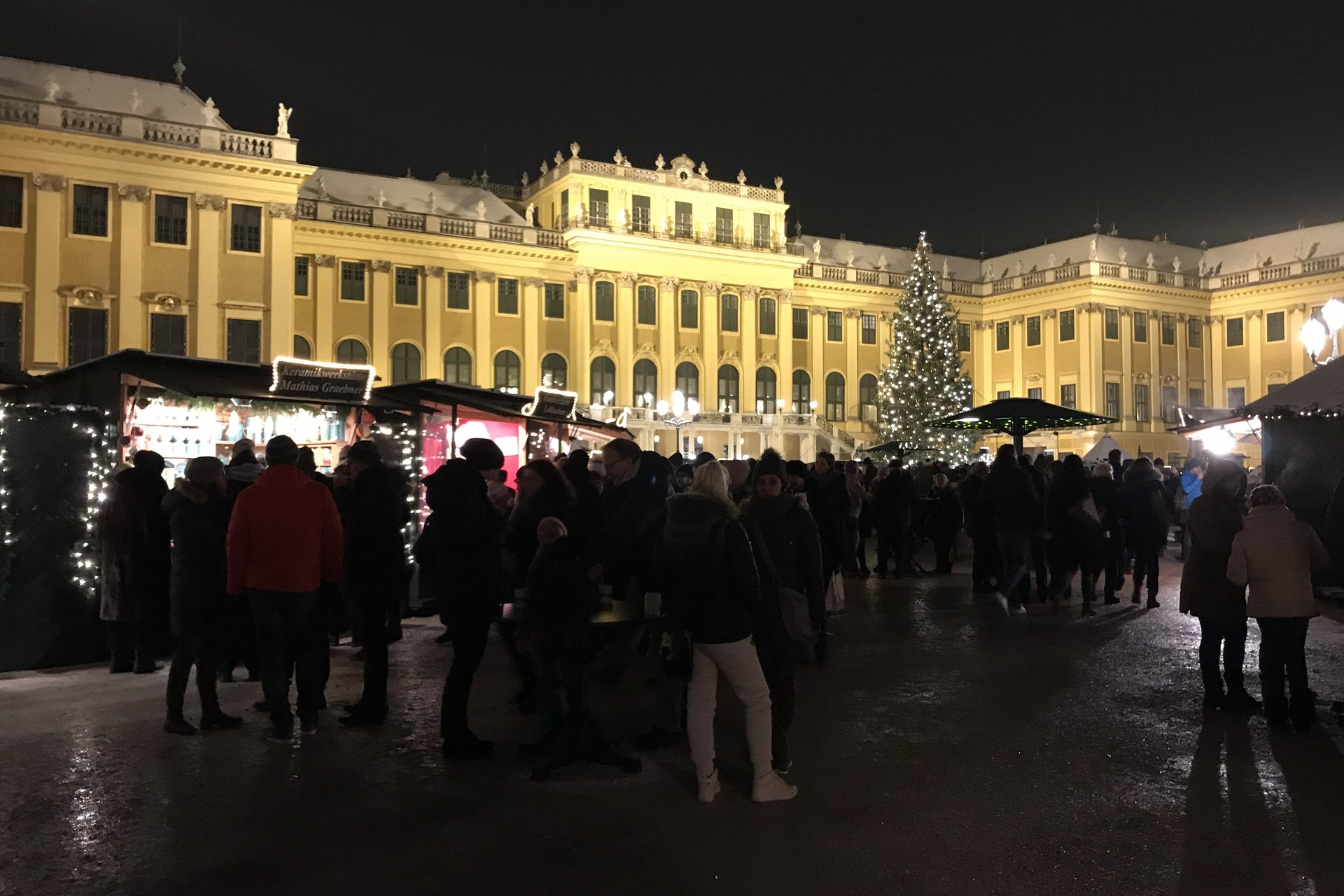
Start with the two palaces, because they anchor the imperial story and both dress up for winter. The Hofburg, in the centre, was the Habsburgs' city residence and is really a small city of its own: the imperial apartments and the Sisi Museum, the treasury with its crowns, the Spanish Riding School with its Lipizzaner horses, and the chapel where the Vienna Boys' Choir sings Sunday Mass in season. Schonbrunn, the summer palace out to the west and reached in minutes by U-Bahn, gives you the long yellow facade, the formal gardens climbing to the Gloriette, the oldest zoo in the world in its grounds, and one of the better Christmas markets in its forecourt.
The cathedral is non-negotiable. St Stephen's stands at the very centre, its roof tiled in a bright zig-zag, its south tower climbable for those with the legs, its interior vast and dim and free to enter at the back. Around it, the First District rewards aimless walking: the Graben and Kohlmarkt for the grand shopfronts, the small baroque churches, and the sudden squares where a market appears.
For music, the two rooms to know are the State Opera, the Staatsoper, on the Ring, and the Musikverein, whose Golden Hall hosts the New Year's Concert. Both run full winter programmes; the opera famously releases a batch of cheap standing tickets shortly before each performance for those willing to queue, which is the best-value hour in Vienna if you are prepared to stand. The New Year's Concert itself is allocated by lottery a year ahead and is effectively impossible to buy on the day, so do not plan around getting in.
For pictures, the choice is easy and worth making. The Kunsthistorisches Museum on the Ring holds one of the world's great old-master collections, including the room of Bruegels with the snow-bound Hunters in the Snow, which is the right painting to stand in front of in December. The Belvedere, in its baroque palace, holds Klimt's The Kiss. Between them you have a morning of the city's best art without a wasted step.
The one day-trip I would make time for is up the Danube. A train west along the river brings you in an hour or so to Krems, the eastern gateway of the Wachau, the terraced wine valley that runs upstream to Melk and its hilltop abbey, reached by riverboat or by its own train line. In December it is quiet, cold, and handsome, a complete change of scale from the city. If you would rather stay urban, Bratislava sits about an hour east by train, small and walkable, with its own Christmas market and a castle on the hill.
By the numbers
The markets and the coffee houses
The markets are the reason most people come, so choose among them rather than trying to see all thirty. The largest is the Christkindlmarkt on the Rathausplatz in front of the City Hall, a full production with a park of illuminated trees behind it; it is the one to see once and the one most likely to be shoulder to shoulder. For atmosphere over spectacle, the small market in the lanes of Spittelberg, the elegant one on the Freyung, the arts-and-crafts Art Advent on the Karlsplatz, and the market between the two great museums on Maria-Theresien-Platz all repay a slow hour more than the big one does. The Schonbrunn and Belvedere markets pair a palace with your mulled wine.
Two practical habits make the markets better. First, the mulled wine, the Glühwein, is usually served in a market's own decorated mug against a small deposit, which you can either return for your money or keep as the least expensive souvenir in the city; collectors work their way from square to square doing exactly this. Second, eat as you go. Roasted chestnuts, the Maroni, potato fritters, sausages, and, if you find them, warm sweet dumplings are the point, and a market dinner of small hot things is one of the pleasures of the season.
The coffee houses are the other half of a Vienna December, and they are protected as living cultural heritage for good reason. A proper Kaffeehaus is a room you rent for the price of a coffee: marble tables, bentwood chairs, newspapers on wooden frames, a waiter in a dark jacket who is in no hurry to move you on. Café Central, under its vaulted ceiling near the Hofburg, is the grand and busy one; Café Landtmann on the Ring, Café Sperl in the Sixth, and Café Hawelka in the centre each hold their own character, and any of them will do for an afternoon.
And the cake. The Sachertorte, the dense chocolate cake with its layer of apricot jam, was created in the city in the nineteenth century, and there is a genuine old rivalry over the original between the Hotel Sacher and the confectioner Demel. Have a slice at one, and a slice of something else entirely, an apple strudel warm from the kitchen, at the other. Order it with a mélange, the Viennese coffee with foamed milk, sit by a window as the light goes, and let the afternoon do what December afternoons in Vienna are for.
Sources & further reading
Vienna Tourist Board (Wien Info, wien.info) for market dates, opening hours, and district guidance; Wiener Linien (wienerlinien.at) for public transport fares and the U-Bahn and tram network; Schloss Schönbrunn (schoenbrunn.at) and the Imperial Palace (Hofburg) collections via the Kunsthistorisches Museum (khm.at); and ÖBB (oebb.at) for rail connections and airport trains.
Comments