At a glance
- Base
- Base in Myrtle Beach proper, North Myrtle Beach, Surfside Beach, Garden City, Murrells Inlet, or Pawleys Island.
- When
- Spring (April-May) and autumn (Sept-Oct) for warm days, fewer crowds, lower prices; ocean swimmable.
- Getting there
- Fly into Myrtle Beach International (MYR), 15 mins from beach. Charlotte, NC, is a 3.5-4 hr drive for more options.
- Getting around
- A car is essential; US-17 is the main road. Avoid summer congestion. Ride apps limited, bus is limited.
- Book ahead
- Book early for summer and May motorcycle rallies. Book golf tee times ahead for spring and autumn.
- The price
- Proximity to water, season (summer highest, winter lowest), area, size, and resort extras drive price.
Myrtle Beach is not one place. It is the best-known name on a roughly 60-mile run of connected beach towns along the northern coast of South Carolina, a stretch people call the Grand Strand. It runs, more or less without a break, from Little River near the North Carolina line down to the old port of Georgetown, and the single decision that shapes your whole trip is which part of it you sleep in. The sand is nearly continuous; the towns along it are not the same. Base in the high-rise middle and you are in the thick of the boardwalk and the crowds. Base at the quiet south end and you are among salt marsh, weathered cottages, and seafood docks. Get the area right and the Strand is easy. Get it wrong and you spend your holiday driving up and down US-17 in summer traffic.
Most people arrive picturing the tall oceanfront towers and the amusement rides, and that version of Myrtle Beach is real and simple to book. But the honest answer to where to stay depends on what you want your mornings to look like: a busy beach with a boardwalk and an observation wheel, a calmer family stretch where the same houses fill up every July, or a marsh-and-golf south end where dinner is fried shrimp on a dock. This guide walks through how the Grand Strand is laid out, the areas worth basing in, when to come, how to get there and around, and the beaches, gardens, golf, and food worth planning your days around.
In this guide
How the Grand Strand is laid out
Think of the Grand Strand as a single long line of beach with towns strung along it, north to south, across two counties. Starting at the top, near the state line, are Little River and North Myrtle Beach. Then comes Myrtle Beach itself, the built-up centre with the boardwalk, the resorts, and the airport. South of the city are the family beaches of Surfside Beach and Garden City. Cross into Georgetown County and you reach what its tourism board calls the Hammock Coast: Murrells Inlet, Litchfield, old Pawleys Island, and the port town of Georgetown at the far end. The Atlantic is on one side of all of it, the Intracoastal Waterway runs behind it, and US-17 ties the whole length together.
Why does the layout matter for where you sleep? Because the loud attractions cluster in Myrtle Beach proper, while the quieter beaches, the seafood, and the gardens sit at the north and south ends. The distances look small on a map, but US-17 crawls on summer weekends, so the area you pick decides how much of your holiday you spend in the car. The airport, Myrtle Beach International, sits right in the middle of the city, which makes the whole coast easy to reach.
The areas worth basing in
Five areas cover almost every sensible plan, running from the busy centre out to the quiet ends. Here is who each one suits.
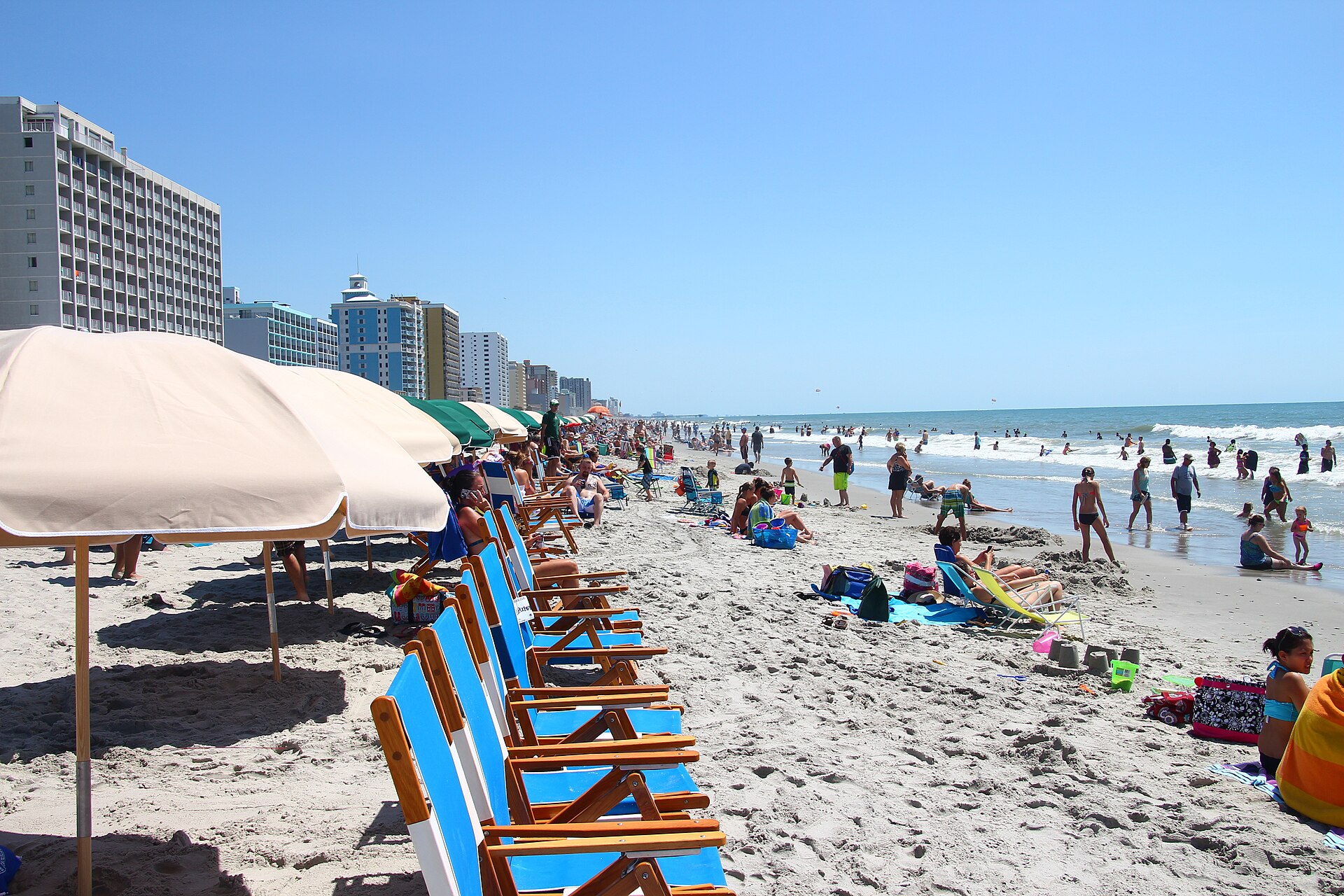
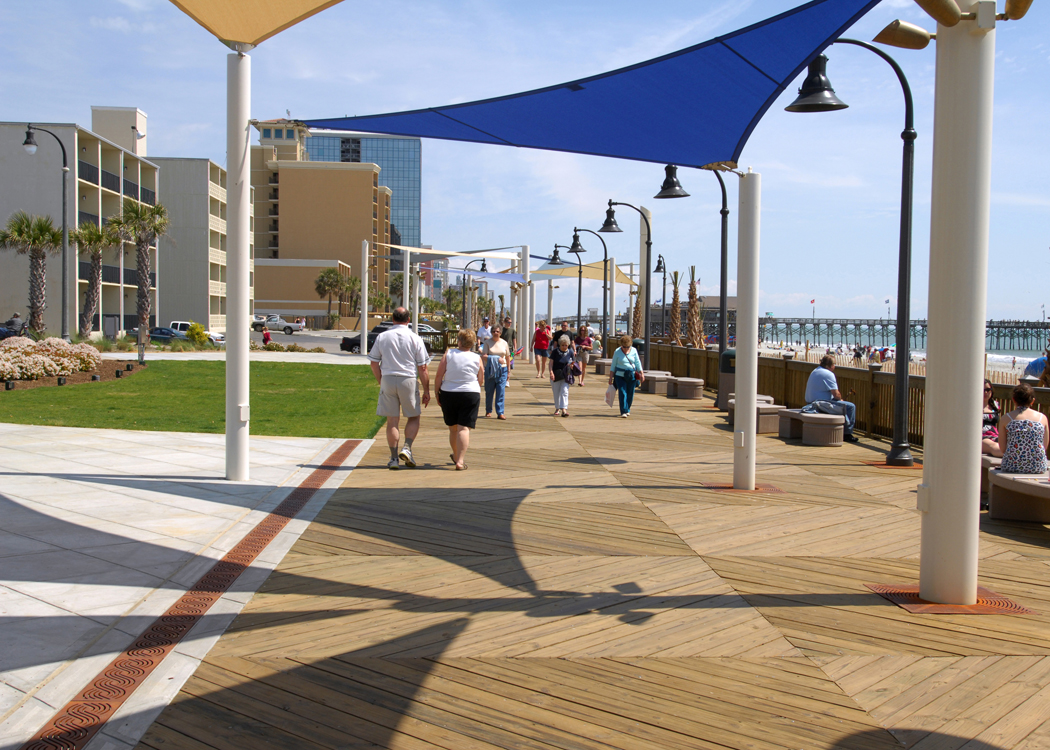
- Myrtle Beach proper is the busy centre and the version everyone pictures. Ocean Boulevard runs along the beachfront, backed by high-rise resorts and condo towers, with the 1.2-mile boardwalk, the 187-foot SkyWheel, arcades, mini-golf, and Broadway at the Beach a little inland. Everything is close and something is always open. The trade-offs are the crowds, the traffic, and the built-up feel. Good for first-timers who want the scene, families who want the rides and the boardwalk, and anyone flying in who wants to be central.
- North Myrtle Beach is calmer and more residential, about nine miles up the coast, and leans to beach houses over towers. It was formed in 1968 from four older communities whose names you will still see on the map: Cherry Grove at the north end, with its fishing pier and a maze of tidal creeks; Ocean Drive, the heart of it, and the home of the shag, South Carolina's state dance, with beach-music clubs still going on Main Street; Crescent Beach in the settled middle; and Windy Hill to the south, where Barefoot Landing sits on the waterway. Good for families and returning visitors who want a quieter, house-based beach.
- Surfside Beach and Garden City are the family beaches just south of the city. Surfside calls itself "The Family Beach" and means it: a low-key town, a fishing pier, and rows of rental houses. Garden City runs down a narrowing spit toward the mouth of Murrells Inlet, with the ocean on one side and the creek on the other, a pier of its own, and a lighthearted, family feel. Good for families who want a calmer stretch a short drive from the action.
- Murrells Inlet is the south-end fishing village and the eating capital of the coast; it bills itself the seafood capital of South Carolina. It is built around the MarshWalk, a half-mile boardwalk along the salt marsh lined with seafood restaurants and bars. It is not a wide swimming beach itself, the sand is across the water at Garden City and at Huntington Beach State Park, but it has the best food on the Strand and sits next door to Brookgreen Gardens. Good for food, marsh views, and golf.
- Pawleys Island is the old, low-key far south. One of the oldest seaside resorts on the East Coast, it was settled in the early 1700s by rice planters who moved their families to the island each summer, and it still wears the label "arrogantly shabby" with pride. Weathered grey cottages, a narrow barrier island, handmade rope hammocks, no high-rises, and little to do but the beach, the creek, and the golf. Good for couples and families who want quiet and nothing on the schedule, and for golfers.
| Area | Feel | The beach | Near it | Crowds | Best for |
|---|---|---|---|---|---|
| North Myrtle Beach | Residential, family, beach houses | Wide and calm; Cherry Grove creeks at the north end | Barefoot Landing, Main Street shag clubs | Moderate | Families wanting quiet and space |
| Myrtle Beach proper | Built-up, busy, always awake | The classic strand, backed by towers | Boardwalk, SkyWheel, Broadway at the Beach | High, especially summer | First-timers who want the scene |
| Surfside & Garden City | Low-key, family, house rentals | Gentle family beach; inlet at the south tip | Two fishing piers; the amusements up the road | Moderate | Families wanting a calmer base |
| Murrells Inlet | Fishing village, marsh, seafood | None in the village; beach across the water | MarshWalk, Brookgreen, Huntington Beach | Busy at dinner | Food, marsh views, and golf |
| Pawleys Island | Old, plain, unhurried | Narrow, quiet, cottage-lined | Golf, Brookgreen, the Hammock Coast | Low | Quiet stays and golfers |
Where to sleep, and what drives the price
Lodging on the Strand falls into a few types. The most visible are the oceanfront high-rise resorts and condo towers, thickest in Myrtle Beach proper and North Myrtle Beach, many with pools and a balcony over the water. Alongside them, and often the better deal for a family, are the beach houses and cottages to rent, the default at the north end, in Garden City, and on Pawleys. Then there are mid-rise condos a block or two back. Rent a house or a condo with a kitchen and you get more room for the money and space to spread out for a week.
Four things move the price more than anything else. The first, and the biggest, is how close you are to the water: an oceanfront unit costs far more than the same one a block back, and the words matter, since "oceanfront," "ocean view," and "ocean side" are not the same thing. The second is the season, and here the Strand swings hard, with summer at the top, spring and autumn cheaper, and winter cheapest of all. The third is the area, with prime oceanfront and the south end running higher than the older inland blocks. The fourth is size and the resort extras, which the pool-and-slide towers charge for.
The oceanfront balcony is the thing you pay the steepest premium for on the Grand Strand. Be honest about whether you will use it. If your days are out at golf, at Brookgreen, and at dinner in Murrells Inlet, that view is mostly a photo you paid extra for. If a slow morning with coffee over the surf is the whole point of the week, it is worth it.
The practical move is to decide how you will actually spend your time, then book early for summer, and earlier still if your dates fall on the May rallies. Read the fine print on the beach block and on what "oceanfront" really means before you pay for it. Amorielli's own Collection leans toward the house-and-apartment end of this, a small set of places you book direct with the people who run them, listed at the foot of this guide.
When to go
Summer, roughly June through August, is peak: hot and humid, with highs in the upper 80s and low 90s Fahrenheit, around 30 to 33 Celsius, warm ocean water, and the beach and boardwalk at full tilt. It is also the busiest and priciest stretch of the year, and rental weeks turn over on the weekends, so Saturdays and Sundays bring heavy check-in traffic. Afternoon thunderstorms are common and usually blow through in an hour.
Spring and autumn are the sweet spots. April and May, and again September into October, give you warm days, thinner crowds, and lower prices, with the ocean still swimmable in early autumn. One thing to know about May: two motorcycle rallies fill the Strand that month, the long-running Myrtle Beach Bike Week, the Harley-Davidson rally that runs about ten days in the middle of May, and Atlantic Beach Bikefest, also called Black Bike Week, over the Memorial Day weekend at the end of it. They draw big crowds, heavy traffic, and full hotels; plan around them if you want a quiet beach, and book well ahead if you are coming for them.
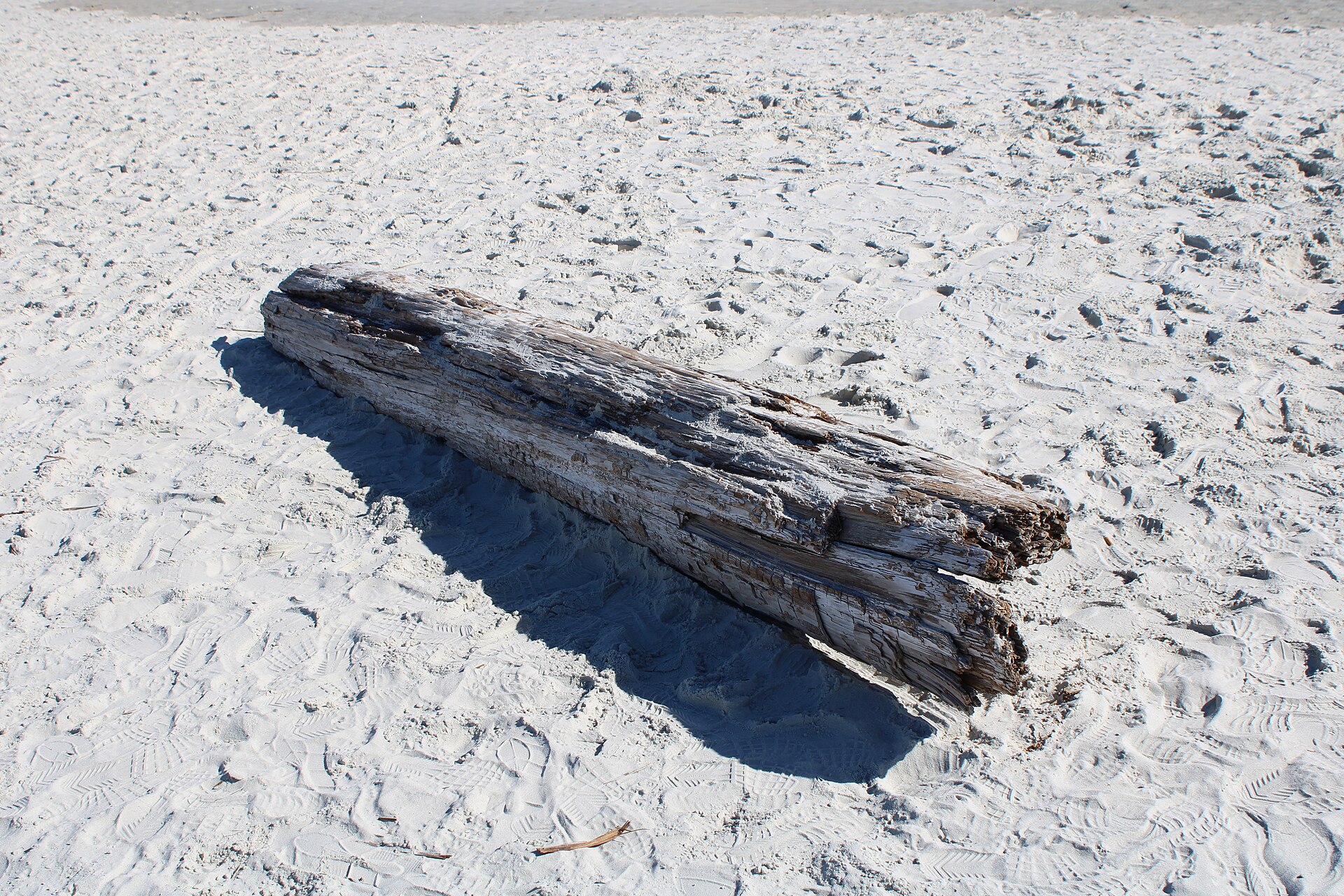
Driftwood at the Huntington Beach State Park beach 2 · DogsRNice · CC BY-SA 4.0 · cropped
Winter, December through February, is mild and quiet. Daytime temperatures often sit in the 50s and 60s Fahrenheit, snowbirds settle in for months at a time, and some seasonal restaurants and attractions trim their hours or close, though the golf courses stay open and cheaper. One caution for late-summer trips: hurricane season runs from the start of June to the end of November, with the peak risk from August into early October. A direct hit in any given year is unlikely, but a passing storm can bring days of rain and rough surf, so watch the forecast and consider travel insurance if you are coming in that window.
Getting there, and getting around
The easy part is arriving. Myrtle Beach International Airport (airport code MYR) sits right in the city, about three miles from the oceanfront, and is served by the major and low-cost carriers, among them American, Delta, United, Southwest, Spirit, and Allegiant, with many seasonal nonstop routes from the East Coast and Midwest. You can land and be at the beach in fifteen minutes. If you need more flight options or a wider choice of fares, Charlotte in North Carolina is the big hub, about three and a half to four hours away by car.
Once you are here, a car is the default. US-17 is the spine, running the length of the Strand; through Myrtle Beach it splits into US-17 Business, known as Kings Highway, near the ocean, and the US-17 Bypass a little inland, while a parallel freeway, the Carolina Bays Parkway (SC-31), lets you skip the worst of the local traffic. The one thing to plan around is summer congestion: US-17 and the connectors clog on hot weekends and at rental changeover, so time your arrival and your grocery run off the peak. Ride apps work in the built-up core, and the local bus, the Coast RTA, is limited, so do not count on getting by without a car. Base somewhere walkable, the Myrtle Beach boardwalk, Ocean Drive, or the Murrells Inlet MarshWalk, and you can leave it parked for stretches.
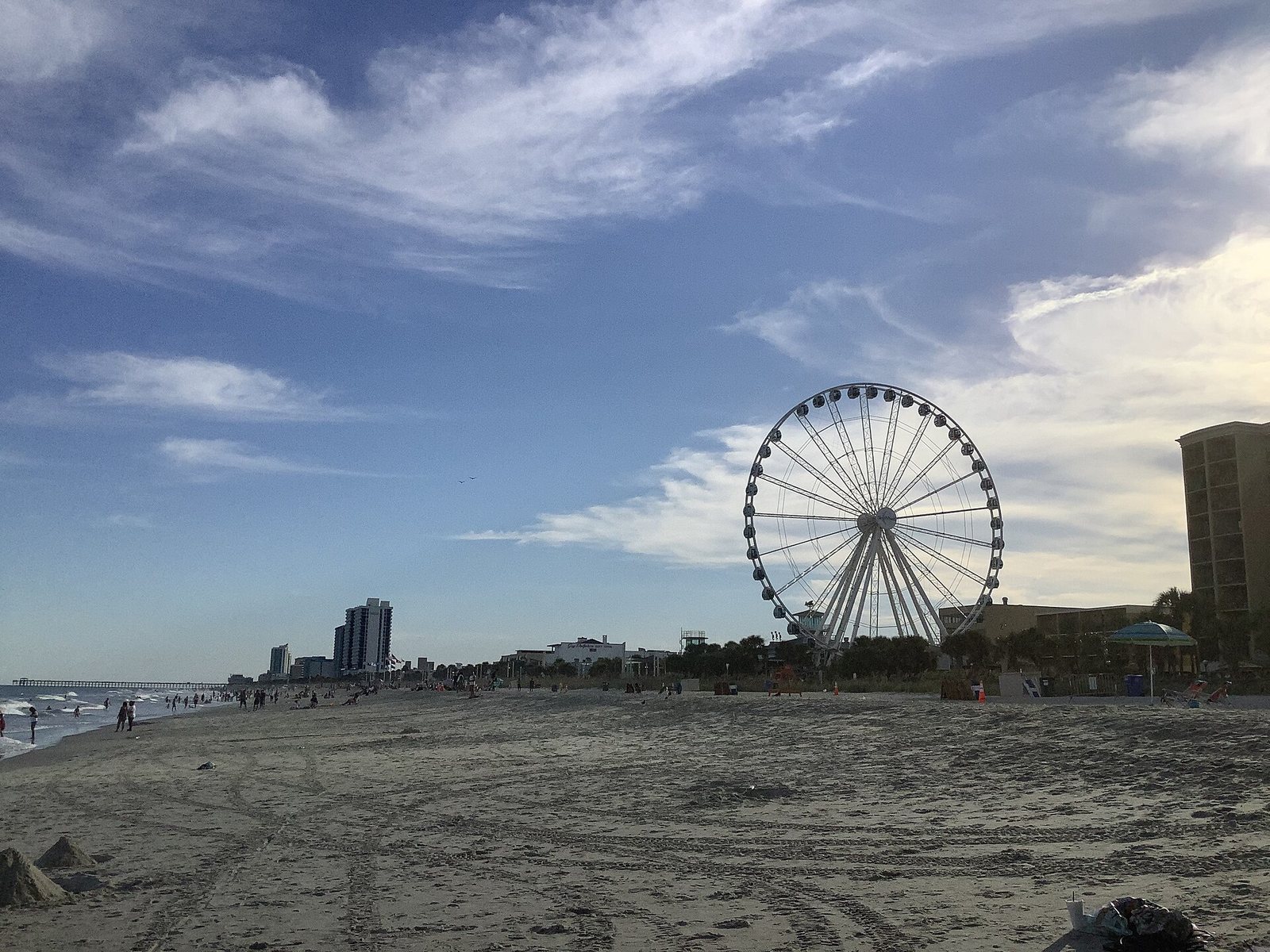
SkyWheel Myrtle Beach in August 2022 · DiscoA340 · CC BY-SA 4.0 · cropped
The sights worth planning around
You do not need to do everything, but a few things are worth building your days around, and they are spread along the coast.
- The boardwalk and SkyWheel are the busy heart of Myrtle Beach proper. The Oceanfront Boardwalk and Promenade runs about 1.2 miles between the 14th Avenue and 2nd Avenue piers, past arcades, beach bars, and the 187-foot SkyWheel, an observation wheel with enclosed gondolas that opened in 2011.
- Broadway at the Beach and Barefoot Landing are the two big shopping-and-entertainment complexes. Broadway at the Beach, in the city, wraps a lagoon and holds Ripley's Aquarium, shops, restaurants, and a cinema. Barefoot Landing, up in North Myrtle Beach, lines the Intracoastal Waterway and holds shops, the Alabama Theatre, the House of Blues, and Alligator Adventure.
- Brookgreen Gardens, near Murrells Inlet, is one of the real highlights of the coast. Created in the 1930s by Archer Huntington and his wife, the sculptor Anna Hyatt Huntington, on the grounds of former rice plantations, it holds the largest collection of American figurative sculpture set in formal gardens, along with a small Lowcountry Zoo and boat tours of the old rice fields. Plan half a day.
- Huntington Beach State Park sits directly across US-17 from Brookgreen, on the Huntingtons' former estate. Its 2,500 acres take in an undeveloped beach, salt marsh, some of the best birding in the state, with more than 300 species recorded, and Atalaya, the Moorish-style winter house the couple built in 1931, open for tours.
- The Murrells Inlet MarshWalk is a half-mile boardwalk along the estuary, lined with seafood restaurants and bars, with dolphins working the creek and live music at night. It is as much an evening out as a sight.
- Golf is a reason many people come. The Grand Strand is one of the country's great golf destinations, with more than 80 courses along the 60 miles and a long-held nickname as a golf capital, plus the elaborate mini-golf courses that are a family ritual here. Book tee times ahead in spring and autumn, the prime golf seasons.
- The beaches themselves are the main event: wide, gently sloping, sandy, and warm through the summer. Cherry Grove at the north end and Huntington Beach at the south are the quiet stretches; the Myrtle Beach strand is the one with the scene.

Brookgreen Gardens Sculpture33 · Doug Coldwell · CC BY-SA 3.0 · cropped
Two of these pair naturally: Brookgreen Gardens and Huntington Beach State Park sit across the road from each other about fifteen miles south of the city, so you can do the gardens in the morning, the beach and marsh in the afternoon, and dinner on the Murrells Inlet MarshWalk to finish.
Where to eat
The thing to understand first is fried seafood, Calabash-style. The name comes from the little town of Calabash, North Carolina, just over the state line north of North Myrtle Beach, where the local method is a light corn-flour dredge rather than a heavy batter, fried and piled high. The big all-you-can-eat Calabash seafood houses are a Grand Strand institution. Beyond the fry, the cooking here is Lowcountry: shrimp and grits, she-crab soup, boiled peanuts, and the one-pot low-country boil of shrimp, sausage, corn, and potatoes.
The eating heart of the coast is Murrells Inlet. The MarshWalk restaurants, long-running names like Drunken Jack's and the Dead Dog Saloon among them, put fresh seafood over the water with live music alongside, and there are plenty of plainer fish houses off the boardwalk too. The village bills itself the seafood capital of South Carolina, and for the Strand it earns the title. Elsewhere on the coast, seafood markets and oyster bars keep the shrimp-boat catch on menus everywhere.
Keep it honest, though. Some of the best meals here are the plainest: a paper tray of fried shrimp, a dozen local oysters in the cooler months, a shrimp burger from a shack near the pier. Book ahead for the MarshWalk and the popular rooms on summer weekends, and go early or late to miss the wait for a table.
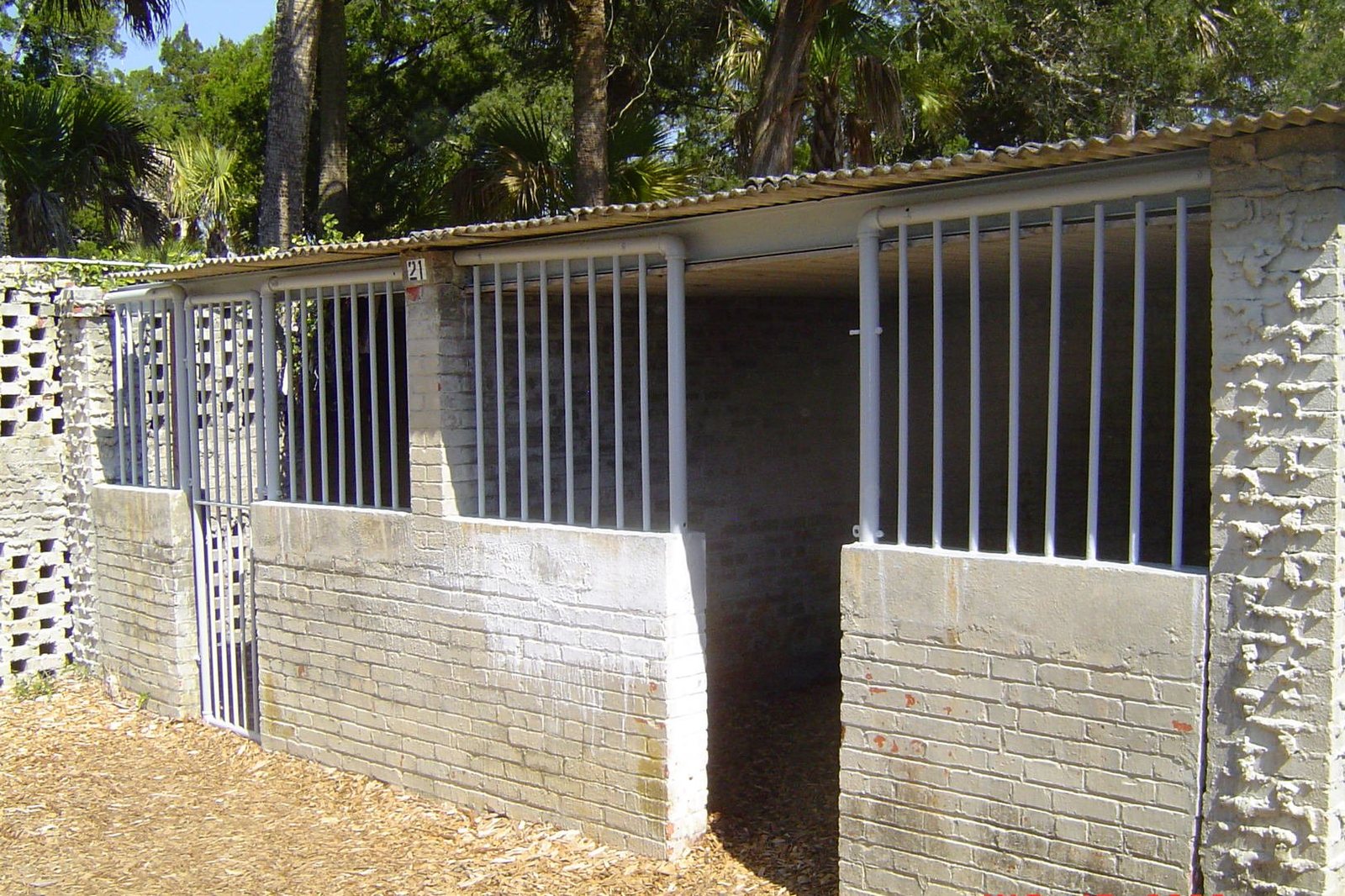
Atalaya horse stalls · User:Doug Coldwell · CC BY-SA 3.0 · cropped
Practical notes
- Book early: summer and the May motorcycle rallies fill up first, so reserve well ahead for those dates; spring and autumn are easier and cheaper.
- Swim safely: stay near a lifeguard where you can, learn to spot a rip current, and check the coloured flag warnings; the water is warm from late spring into autumn.
- Beach rules: many towns ban glass containers on the sand, and rules on alcohol, dogs, and tents vary from one town to the next, so check the local ordinance where you are staying.
- Tides and the inlets: at Garden City and Murrells Inlet the beach and the creeks change a great deal with the tide, so a tide chart helps if you plan to swim, boat, or fish.
- Hurricane season: it runs June through November; watch the forecast for a late-summer trip and consider travel insurance.
- Weekend turnover: most rental weeks change over on Saturday or Sunday, so expect check-in traffic and busy grocery stores at the weekend.
Good to know
Because the airport sits in the middle of the city, arriving on the Grand Strand is easy; the harder choice is which of its 60 miles to sleep on. Pick your area by the morning you want, the boardwalk scene in Myrtle Beach proper, family houses in North Myrtle Beach or Garden City, marsh and seafood at Murrells Inlet, or plain old cottages at Pawleys Island. A car and US-17 tie the whole coast together, but heavy summer traffic is the one thing to plan around, so time your drives off the peak. And save a day for the south end, where Brookgreen Gardens and Huntington Beach State Park sit across the road from each other, with dinner on the Murrells Inlet MarshWalk to finish.
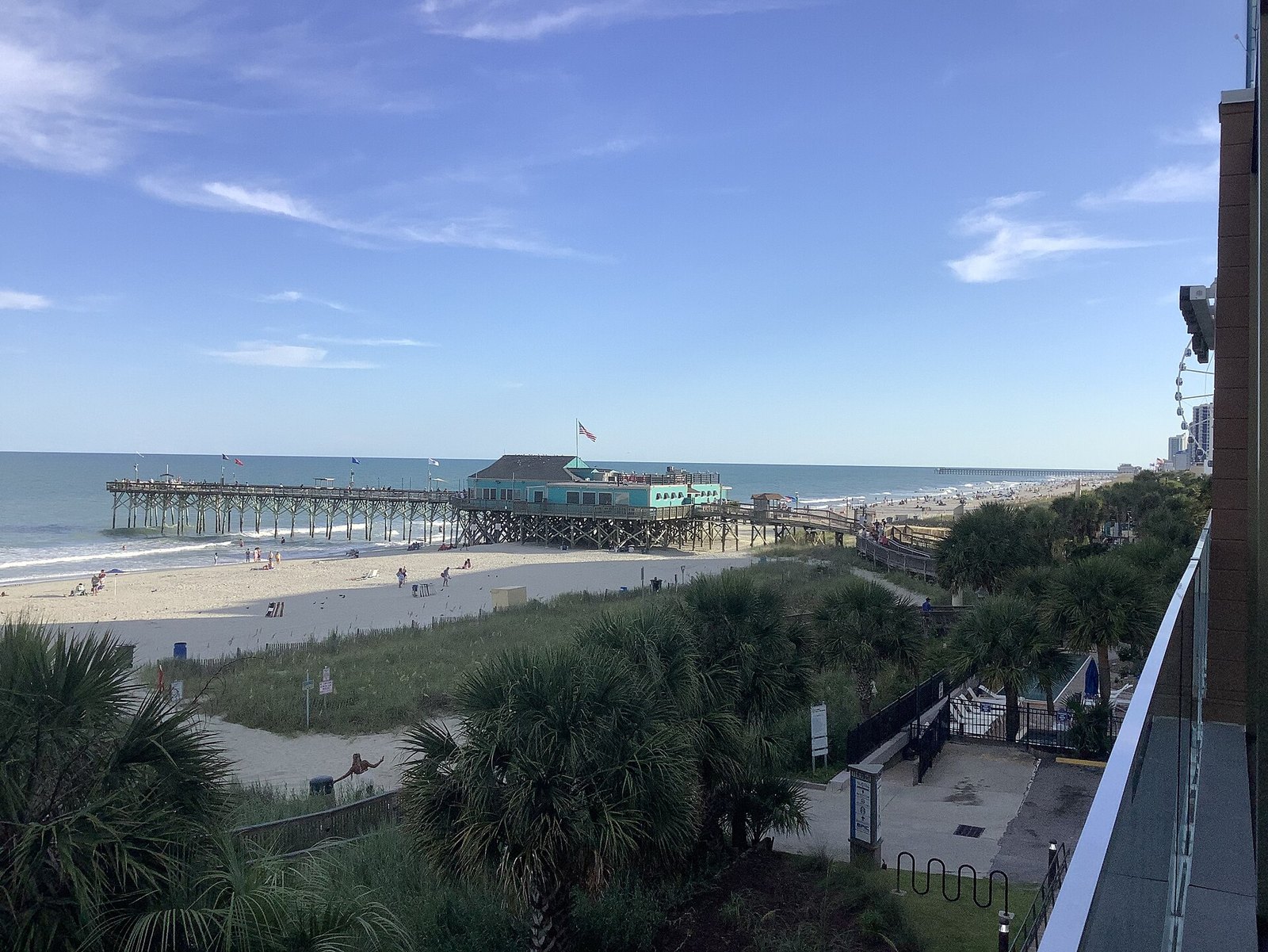
Myrtle Beach Pier in August 2022 · DiscoA340 · CC BY-SA 4.0 · cropped
By the numbers
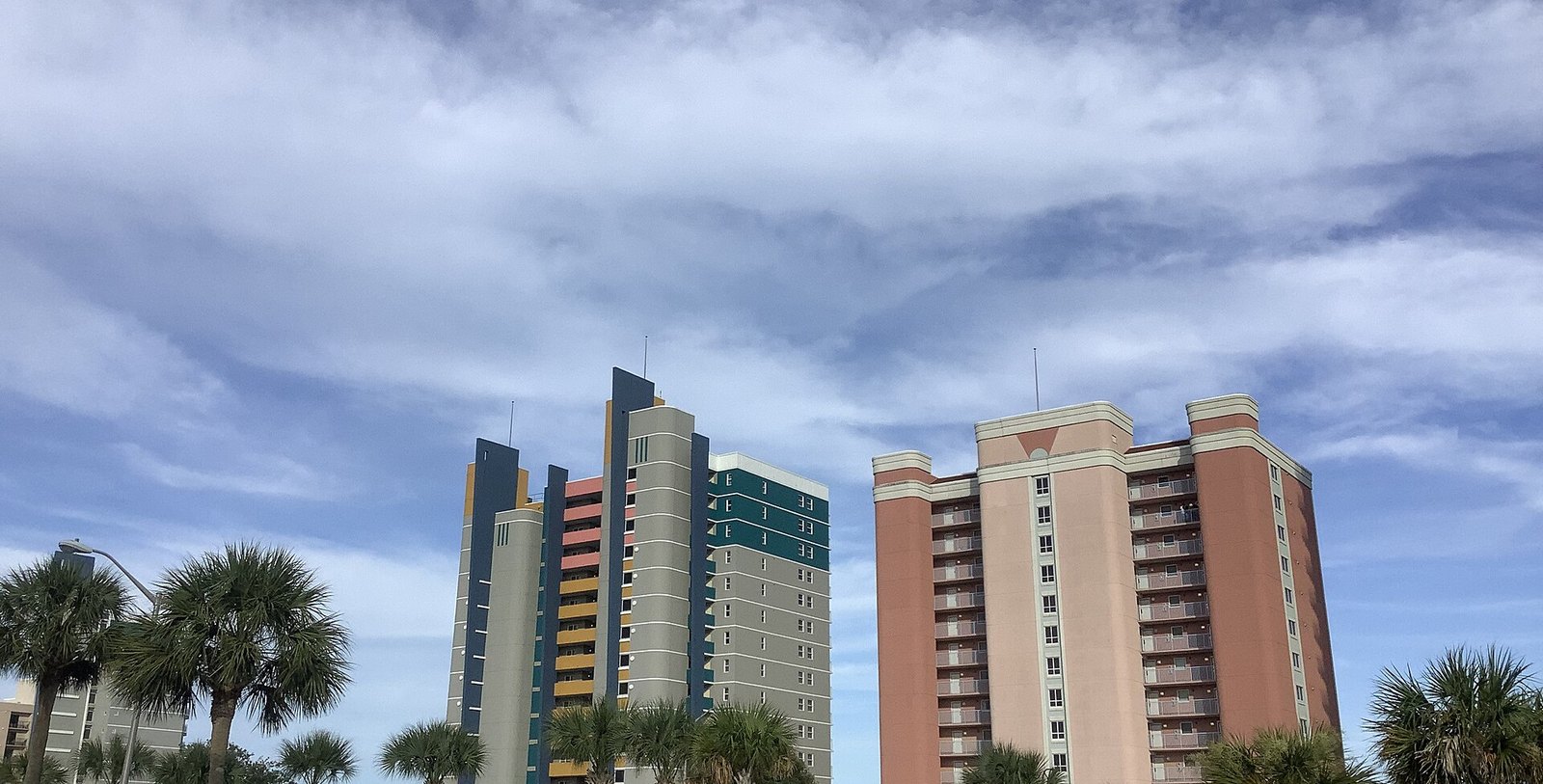
Hotels along the Grand Strand 2 · DiscoA340 · CC BY-SA 4.0 · cropped
Common questions
Which area should I stay in for a first trip?
Myrtle Beach proper if you want the boardwalk, the rides, and to be central to everything. North Myrtle Beach or Garden City if you want a quieter family beach built around rental houses. Murrells Inlet or Pawleys Island if you are after the south-end marsh, the seafood, and the golf. Plenty of families split the difference and base around Surfside or the calmer north end of the city.
Do I need a car?
For most trips, yes. The airport is right in town, but the Strand is 60 miles long, public transit is limited, and the sights are spread from one end to the other. You can park it for stretches if you base somewhere walkable, but you will want it to get between the towns and out to the gardens and parks.
When is the best time to go?
Spring, roughly April and May, and early autumn, September into October, give you the best mix of warm weather, lower prices, and thinner crowds, with the ocean still swimmable in early autumn. Summer is the hottest and busiest; winter is mild and quiet with some seasonal closures. If you want to avoid big crowds, note the two motorcycle rallies that fill the coast in May.
What is the difference between Myrtle Beach and North Myrtle Beach?
Myrtle Beach is the built-up centre, with the boardwalk, the SkyWheel, the high-rise resorts, and the nightlife. North Myrtle Beach, about nine miles up the coast, is a separate, quieter, more residential town built around beach houses and the shag beach-music scene on Ocean Drive. Families who want space and calm often prefer the north; visitors who want the action stay in the city.
Is the Grand Strand good for families?
Yes. The boardwalk, the amusement rides, the wide gentle beaches, the elaborate mini-golf, and the aquarium are all built for children. For a calmer family stretch, look at North Myrtle Beach, Surfside Beach, which calls itself "The Family Beach," or Garden City.
What should I eat?
Fried Calabash-style seafood is the local signature, along with a low-country boil, shrimp and grits, she-crab soup, and fresh local shrimp and oysters. Murrells Inlet is the seafood heart of the coast, and its MarshWalk, a boardwalk of seafood restaurants over the water, is the place to start.
Sources & further reading
- Visit Myrtle Beach — the Myrtle Beach Area Chamber of Commerce official tourism site
- Discover South Carolina — the state’s official tourism site
- South Carolina State Parks — Huntington Beach State Park and Atalaya
- Brookgreen Gardens — sculpture garden and wildlife preserve near Murrells Inlet
- Myrtle Beach International Airport (MYR) — official airport site
- Murrells Inlet MarshWalk — the estuary boardwalk and its restaurants
- Myrtle Beach Bike Week — official spring rally dates
- National Hurricane Center (NOAA) — Atlantic hurricane season and advisories

Comments