At a glance
- Base
- Base in one of the high-desert towns along Highway 62 or north of it, near a park entrance.
- When
- Spring (March-May) and fall (Oct-Nov) for mild days; winter for clear skies; summer is dangerously hot.
- Getting there
- Rent a car at Palm Springs International (PSP) or Ontario International (ONT) and drive.
- Getting around
- A car is essential; towns are strung along miles of highway, trailheads are a drive.
- Book ahead
- Keys Ranch tour, campgrounds, popular vacation rentals, and some restaurants.
- The price
- Remoteness, privacy, view, design, size of rental, season, and weekend demand.
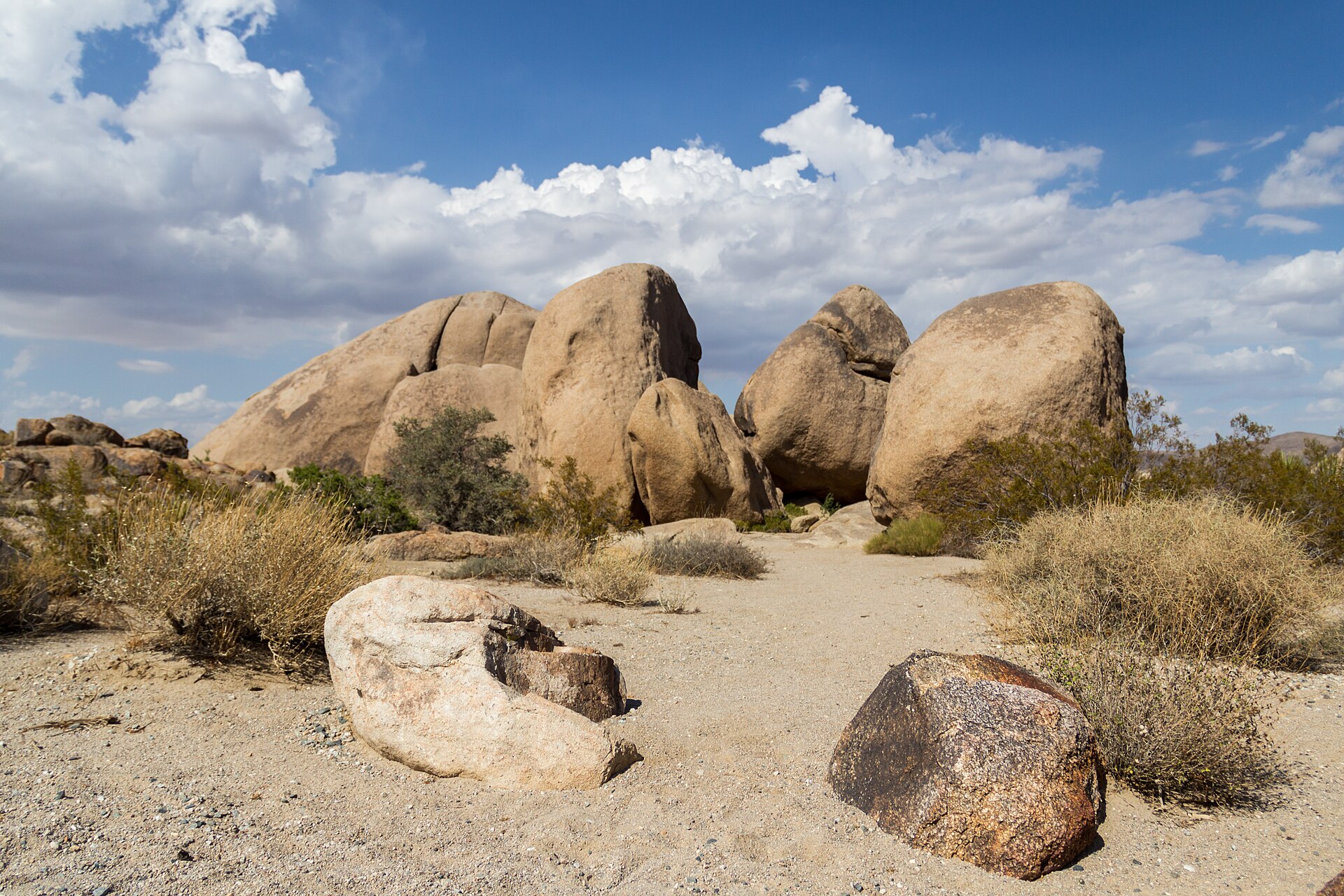
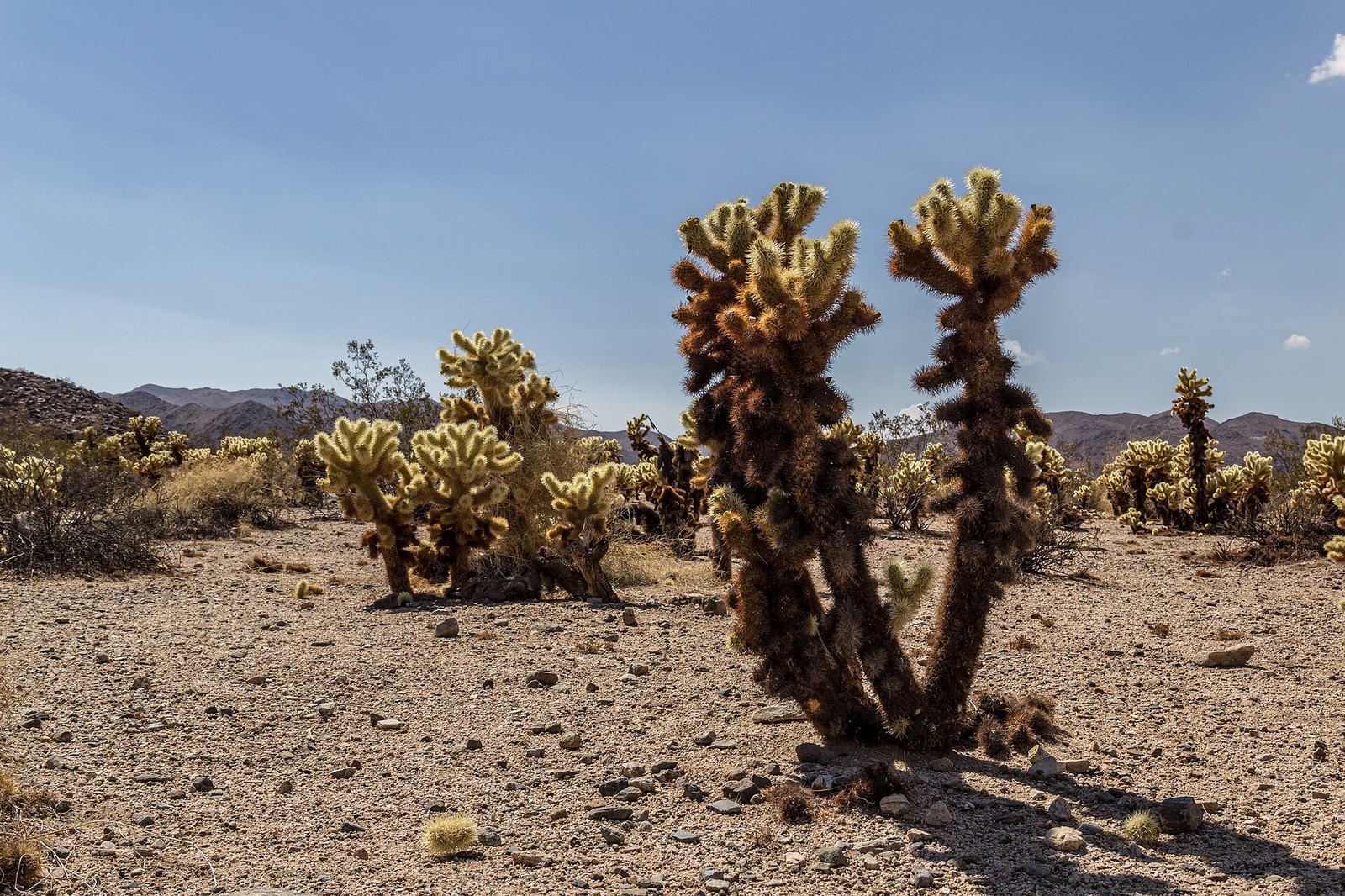
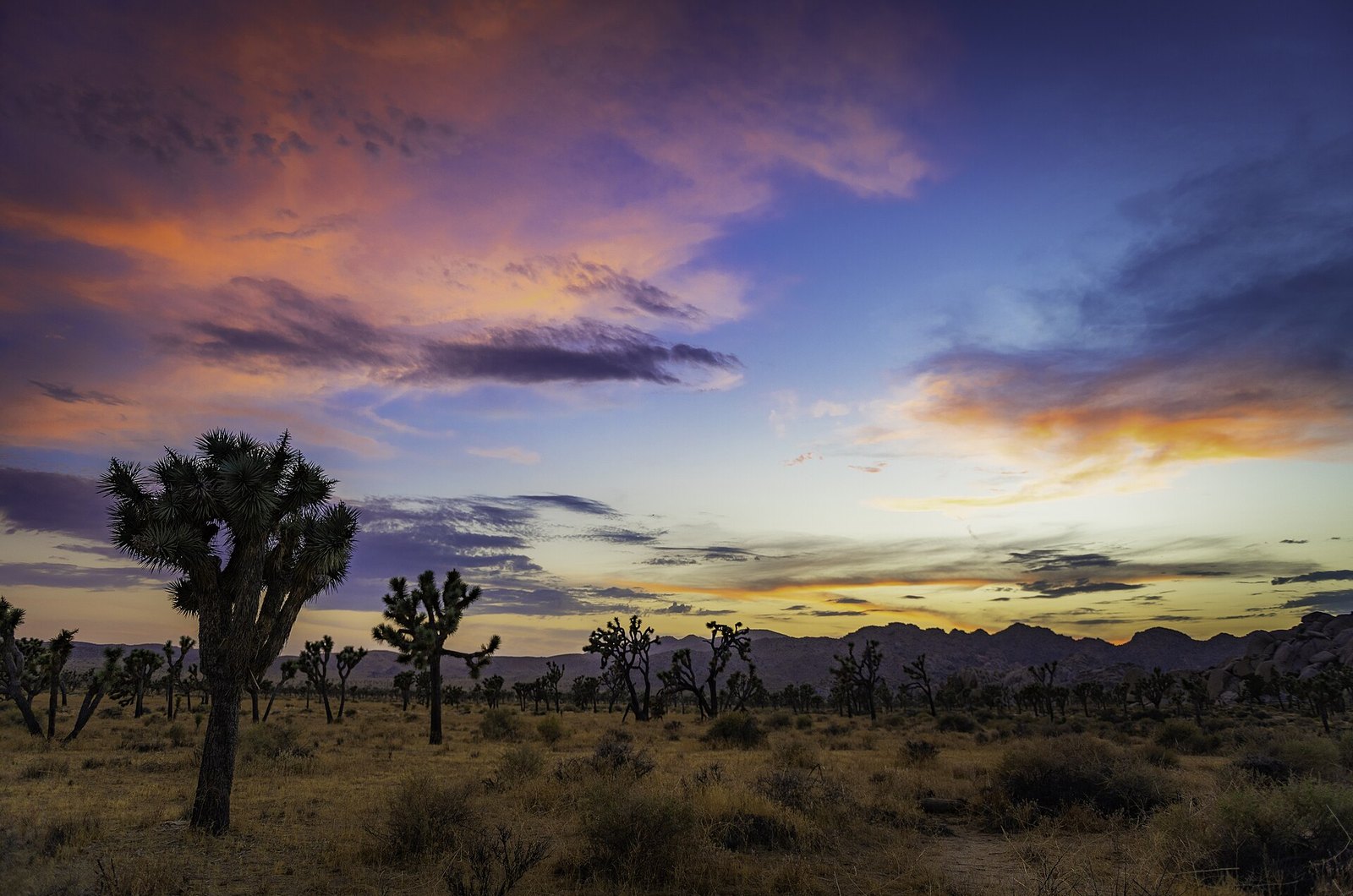
Joshua Tree is not one place you book. It is a national park plus a run of high-desert towns strung along a single highway, and the choice that shapes your trip is which town you sleep in — and making your peace with the fact that you will drive. The park sits where two deserts meet: the higher Mojave, with the twisting Joshua trees and piled granite boulders everyone comes to photograph, and the lower Colorado desert to the south and east, open country of creosote and cholla. The towns around the park's western and northern edges are where you actually stay, eat, and buy gas, because inside the park there is none of that.
Most people arrive picturing the park and treat a bed as an afterthought. That is backwards. The towns along Highway 62 — Yucca Valley, the town of Joshua Tree, and Twentynine Palms, plus the smaller Pioneertown and Landers — each make for a different kind of trip, and none is more than a short drive from an entrance. This guide covers how the area is laid out, the towns worth basing in, when to come, getting there and around, the sights inside the park and out, the dark sky, and where to eat.
In this guide
How the park and towns are laid out
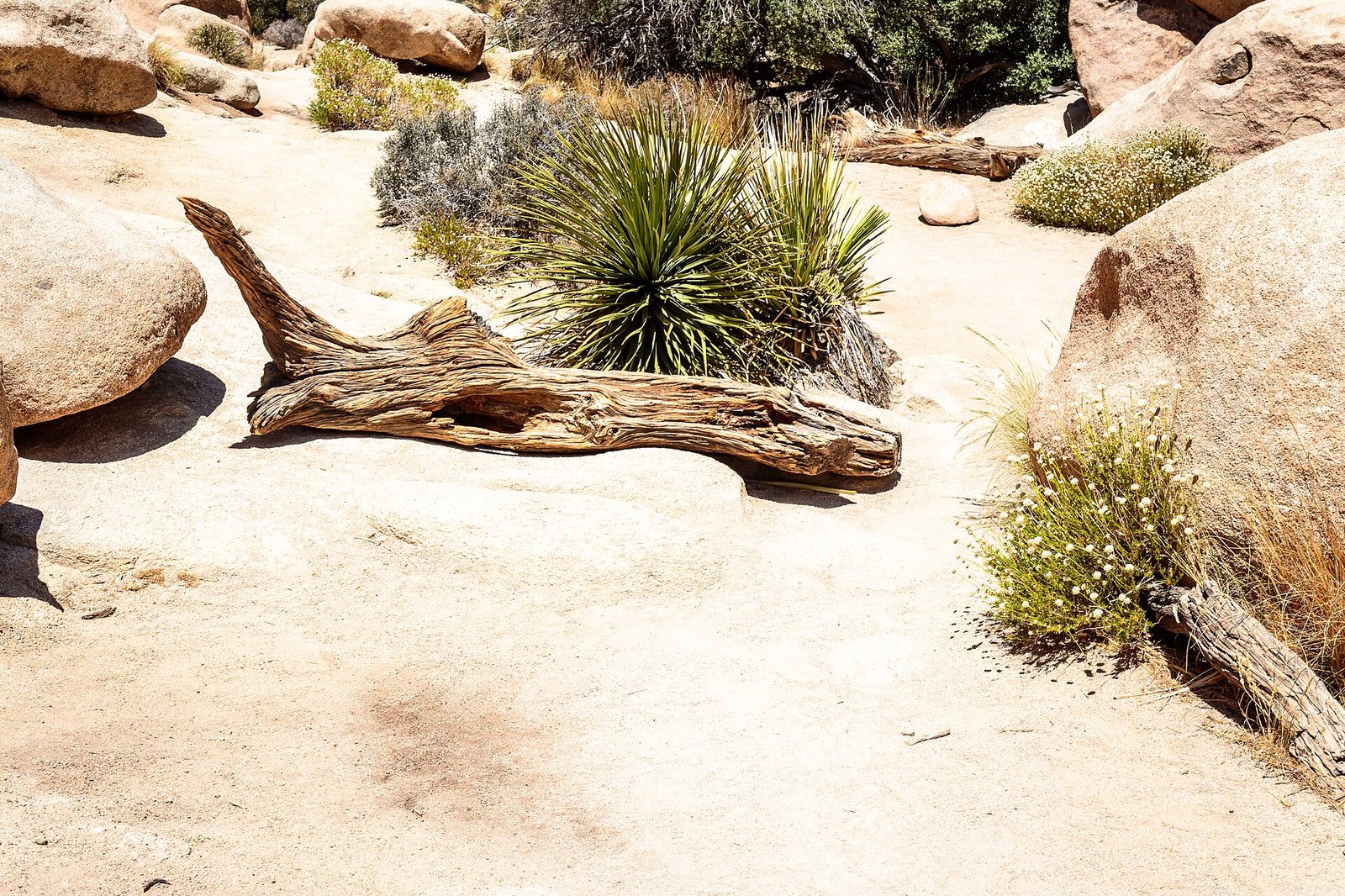
The park protects the meeting of two deserts, split roughly by elevation around 3,000 feet. Above that line is the Mojave, the high desert: cooler, a little wetter, and the only place the Joshua tree grows, among the granite boulder piles. Below it, to the south and east, is the Colorado desert, the western edge of the larger Sonoran — hotter, lower, and more open, with creosote, ocotillo, and cholla. Elevations run from under 1,000 feet in the eastern flats to more than 5,800 feet on the ridgelines, which is why the park can be near freezing at dawn and baking by afternoon.
The towns sit along State Route 62, which runs northwest to southeast across the top of the park. Coming up from Palm Springs or Los Angeles you climb out of the Coachella Valley into Yucca Valley, then the town of Joshua Tree, then Twentynine Palms, and each has an entrance near it. North of the highway, on back roads, are the two smaller places worth knowing: Pioneertown and, further out, Landers.
Why does this matter for where you sleep? The park has three entrances and no services inside, so the town you choose decides which gate you use, how far you drive to a trailhead, and where you buy food, water, and fuel. Base near the west or north entrance and the famous Mojave sights are close.
The desert towns worth basing in
Four places cover almost every sensible plan, from a real working town to a couple of streets in open desert. Here is who each suits.
- Yucca Valley is the largest town and the commercial hub of the Morongo Basin, at around 3,300 feet. It has the supermarkets, the restaurants, and generally the best value on lodging, since people live here rather than visit. It sits minutes from the west entrance road, and its Old Town has antique shops and galleries. Good for first-timers, families, and tight budgets.
- The town of Joshua Tree is smaller, artier, and right at the west entrance — the busiest gate and the closest to the Mojave boulders. This is the walkable heart of the scene: a short strip of cafes, a saloon, galleries, and a Saturday farmers' market, with trailheads a short drive up Park Boulevard. It costs more than Yucca Valley. Good for climbers, the design-minded, and people who want the park at the door.
- Twentynine Palms is the town by the north entrance, home to the park headquarters and a large Marine Corps base, which gives it a plainer, more practical feel. It has the main visitor center, painted murals downtown, and the quietest access to the northern sights, and it is often the best value of the three. Good for a calmer, cheaper base.
- Pioneertown and Landers are the small, remote options north of the highway, where the desert-modern rental scene is at its most isolated. Pioneertown is a 1946 Western film set that grew into a tiny community; Landers is scattered homesteads further out. You trade shops for dark skies, quiet, and distance — everything is a drive. Good for couples and groups who want seclusion and a striking house.
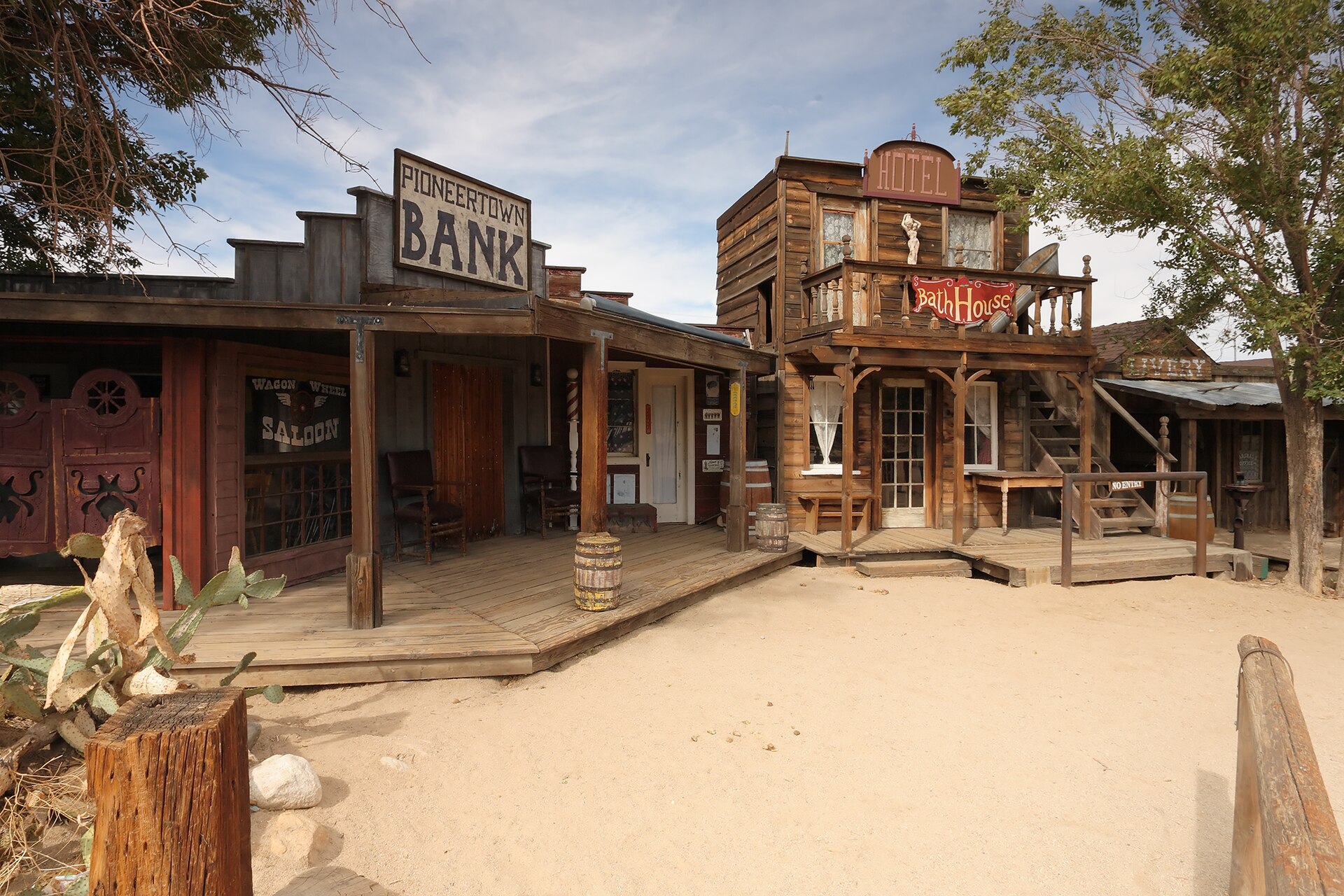
Pioneertown california saloon and bath house · Matthew Field (Mfield) · CC BY-SA 3.0 · cropped
| Town | Feel | Nearest entrance | Services | Value | Best for |
|---|---|---|---|---|---|
| Yucca Valley | Working town, spread out | West, via Highway 62 | Most on offer — supermarkets, shops | Best | First-timers and families |
| Joshua Tree (town) | Small, artsy, walkable strip | West, the busiest gate | Cafes and basics | Mid to high | Climbers and the design-minded |
| Twentynine Palms | Plain, practical, military town | North, by the headquarters | Gas and groceries | Strong | Quieter, cheaper stays |
| Pioneertown & Landers | Remote, design-forward, dark | West or north, a drive away | Almost none — stock up first | Varies | Seclusion and a striking house |
Where to sleep, and what drives the price
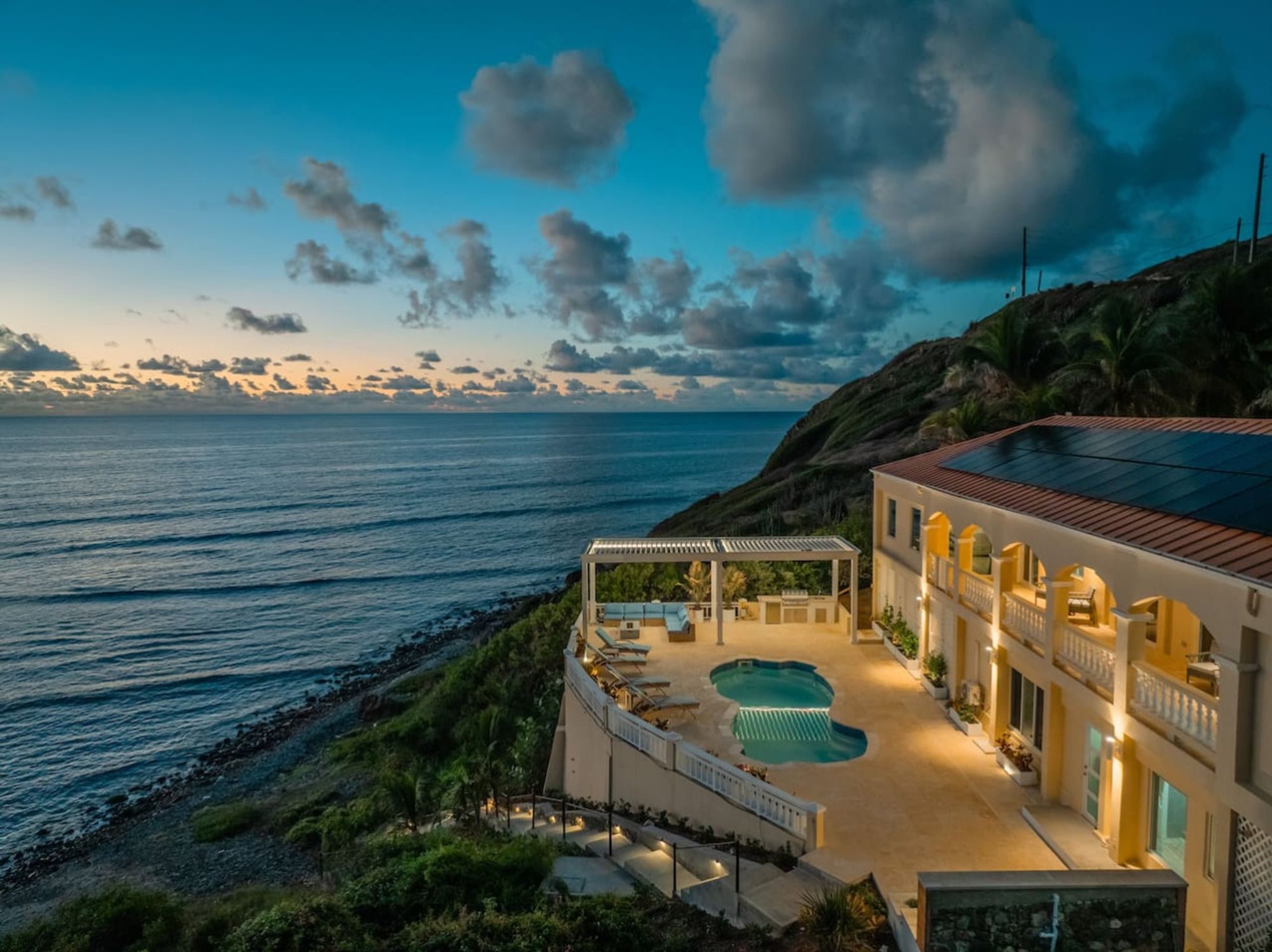
Lodging here is unusual for a park gateway: the story is vacation rentals, not hotels. The desert around the towns is full of homes to book — old homesteader cabins done up simply, and a wave of desert-modern houses with concrete floors, plunge pools, fire pits, and big glass framing the boulders and the sky. There are motels and a few small inns along Highway 62, but most visitors, and nearly all groups, end up in a whole house. That is the local product, and what the towns do best.
A few things move the price. The first is remoteness and privacy: a house on its own acres with no neighbor in sight, out toward Pioneertown or Landers, costs more than the same place on a town street. The second is view and design — a photogenic modern house that frames the rocks, with a pool and a hot tub, commands a premium over a plain cabin. The third is size, since these are whole homes and you often pay by the bedroom. The fourth is the season and the weekend: spring and fall weekends, and the big festival weekends down in the Coachella Valley, are the peak.
The premium here is for privacy and a dark sky, not a beachfront. Be honest about whether you will use them. If your plan is to be in the park at dawn and at a music venue at night, a remote house is mostly a long drive you paid extra for. If slow mornings by a pool and nights under the Milky Way with no one around are the whole point, it is worth every mile of dirt road.
Decide how you will spend your time, then book early for spring and fall weekends, when the best houses go first. Read the fine print on access, too: some striking rentals sit at the end of a few miles of dirt road, which a low car and a rainy day do not love.
Joshua Tree National Park (California, USA) -- 2012 -- 5669 · Dietmar Rabich · CC BY-SA 4.0 · cropped
When to go
This is high desert, so set aside any picture of year-round warmth. The two best windows are spring, roughly March into May, and fall, October into November. Both bring mild days in the seventies and low eighties Fahrenheit, cool nights, and good conditions for hiking, climbing, and evenings under the stars. Spring can add wildflowers: after a wet winter the flats and rock crevices bloom, though a dry winter can mean almost nothing, so treat it as a bonus. These are the busiest and priciest months, and the west entrance backs up on weekend mornings.
Summer, June into September, is genuinely hot and can be dangerous: daytime highs regularly clear 100 degrees Fahrenheit and can go well past it. It is the quietest and cheapest time, but midday hiking in that heat is a real risk. If you come in summer, start at dawn, carry far more water than feels reasonable, and be off the trails by late morning.
Winter, December into February, is the quiet, clear season. Days are cool, often around 60, and nights drop below freezing, with the occasional dusting of snow on the higher boulders. Pack for cold and it is a fine time to come: the air is clear, the crowds thin, and the long nights are among the best of the year for stargazing. The swing between day and night is large in every season, so bring layers.
Getting there, and getting around
You need a car here. There is no useful public transport to or around the park, the towns are strung along miles of highway, and the trailheads are a drive from any bed. Rent at the airport and keep it the whole trip.
The closest airport is Palm Springs International (code PSP), down in the Coachella Valley, roughly forty minutes to an hour up Highway 62 to the towns and a little more to the gates. From the wider Los Angeles area it is about two and a half hours by road, more in traffic, with the park roughly 140 miles east of the city; Ontario International (ONT) is a middle option, nearer an hour and a half.
The park has three entrances, and knowing which is which saves time:
- The West Entrance, from the town of Joshua Tree on Park Boulevard, is closest to the Mojave boulders and by far the most used. It backs up on weekend mornings, so come early.
- The North Entrance, at Twentynine Palms, sits by the park headquarters and main visitor center and is often the quieter way in.
- The South Entrance, near Cottonwood Spring, is off Interstate 10 about 25 miles east of Indio, with its own visitor center a few miles up the road. It is the least crowded and the natural choice from the east or through the Colorado desert.
As of this writing, Joshua Tree does not require a timed-entry reservation for general admission — you pay at the gate or show a pass and drive in. Popular parks do trial and change these rules, so check the National Park Service site for Joshua Tree before you travel. A few things inside do need booking, notably the ranger-led Keys Ranch tour, and the campgrounds fill far ahead in the busy seasons.
The park has no services inside — no gas, no food, no dependable water, and patchy-to-no cell signal. Fill the tank and buy food and water in Yucca Valley, the town of Joshua Tree, or Twentynine Palms before you drive in. The rule of thumb is at least a gallon of water per person per day, more if you hike or camp; you can top up jugs at a few ranger stations and campgrounds, but do not count on it. Download an offline map before you lose signal at the gate.
Good to know
Two facts keep a Joshua Tree trip smooth. First, the park has no gas, food, or dependable water and little cell service, so fill up and stock up in the towns before every drive in, and carry more water than you think you need. Second, this is a certified International Dark Sky Park, and the night is half the reason to come — plan at least one evening past sunset, bring a headlamp with a red setting, and pack warm layers, because the desert loses its heat fast after dark.
The sights worth planning around
The park is bigger than a day, but a handful of stops are worth building your days around, and most cluster in the Mojave half, along Park Boulevard between the west and north entrances.
- Hidden Valley is an easy one-mile loop that threads into a bowl ringed by rock, once said to have hidden rustlers' cattle — the best quick sample of the boulder country.
- Barker Dam is another easy loop, about a mile and a half, out to a small dam built by early ranchers that holds water after rain; there are Native petroglyphs along the way and, on a still morning, reflections in the pool.
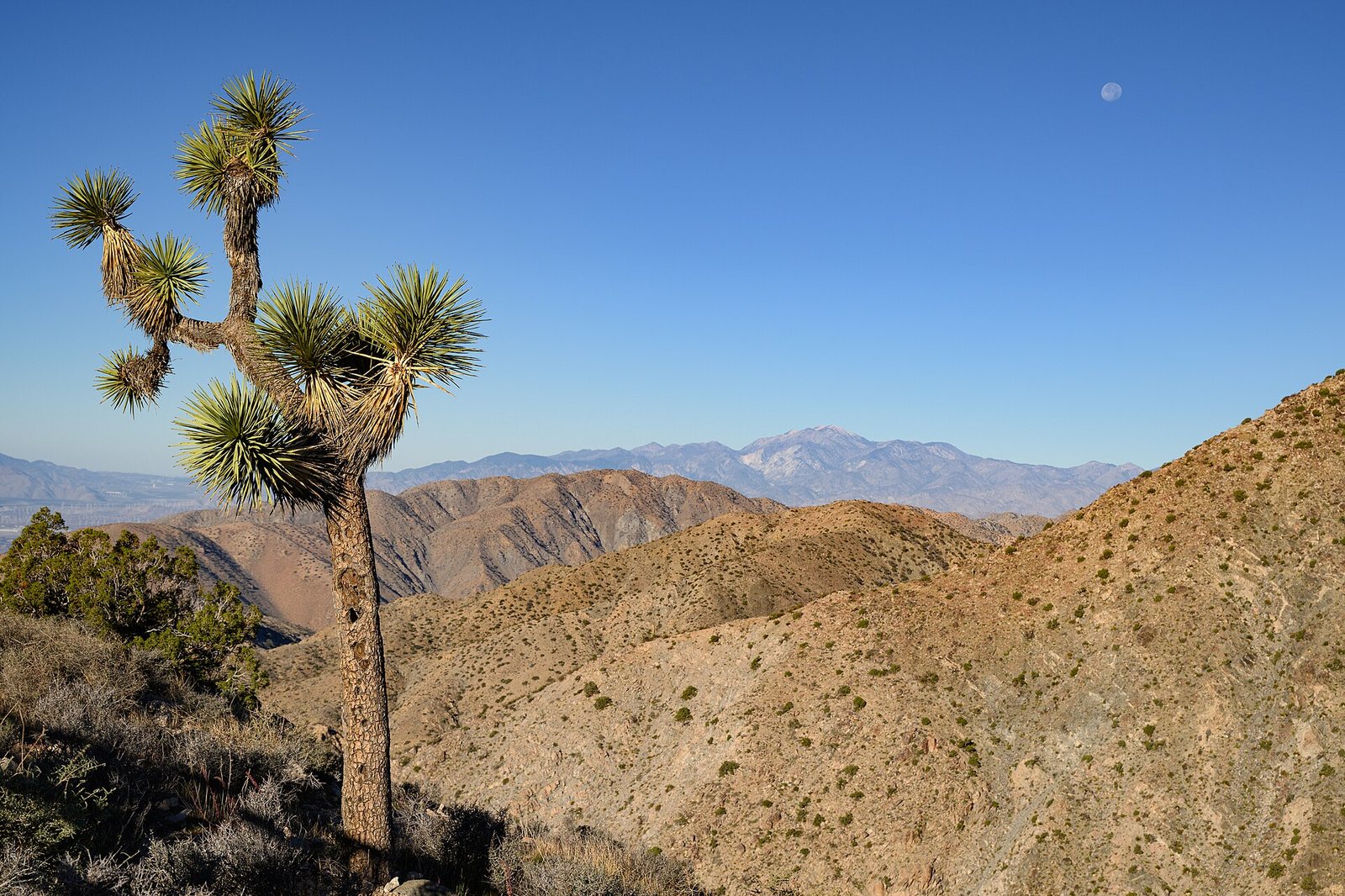
- Keys View is the big overlook, a short drive to a point high on the crest of the Little San Bernardino Mountains, more than 5,000 feet up. On a clear day you see the whole Coachella Valley, the Salton Sea, the line of the San Andreas Fault, and Mount San Jacinto opposite. Haze builds through the day, so go early or at sunset.
- Skull Rock is a roadside boulder weathered into the shape of a skull, easy to reach on a short loop near Jumbo Rocks.
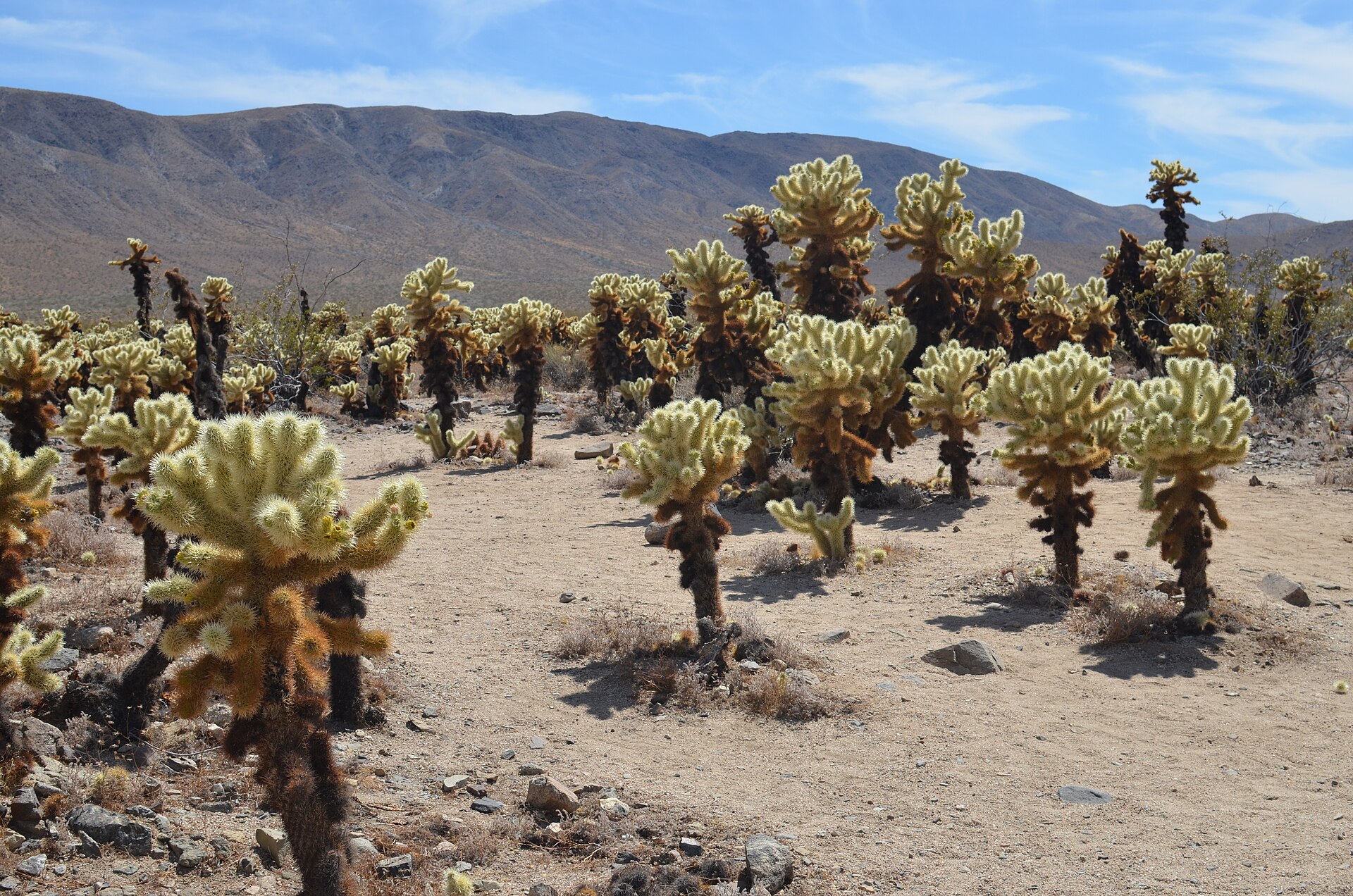
- Cholla Cactus Garden sits further south on Pinto Basin Road, where the Mojave gives way to the Colorado desert. A quarter-mile loop runs through a dense stand of teddybear cholla that lights up when the sun is low behind it. Do not touch — the spines cling.
- Ryan Mountain is the classic climb, about three miles round trip and a solid thousand-foot ascent to a summit around 5,450 feet with a 360-degree view over the central basin. Take water and start early.
Joshua Tree is also one of the great rock-climbing and bouldering areas in the country. The grippy granite draws climbers from all over in the cool months, and even if you never rope up, the boulder fields around Hidden Valley and Jumbo Rocks are good to scramble. Schools in the towns run beginner sessions.
Cholla Cactus Garden Joshua Tree National Park 2019 9 · Steven Lek · CC BY-SA 4.0 · cropped
The other half of the park is the sky. Joshua Tree was certified an International Dark Sky Park in 2017, and it is one of the darkest, most reachable night skies within a few hours of Los Angeles. On a clear, moonless night the Milky Way stands out to the naked eye. You do not need a tour or a telescope: pull into a marked pullout away from headlights, give your eyes twenty minutes to adjust, and look up. Winter nights are the longest and driest, while the bright core of the Milky Way rides highest from late spring through summer. The towns keep their lighting down, and many rentals sell the sky as much as the house.
Beyond the park boundary
The country outside the park is a genuine draw on its own, and a couple of half-days out here round out a trip.
- Pioneertown, a few miles up the road from Yucca Valley, is the 1946 Western film set — built for Roy Rogers, Gene Autry, and dozens of cowboy pictures — that turned into a real, tiny town. Walk its Mane Street of false-front buildings, catch a staged gunfight put on by volunteers on some weekends, and browse the shops.
- Pappy & Harriet's, in Pioneertown, is the anchor: a barbecue joint and roadhouse that grew out of an old cantina into one of the better-known small music venues in the country, with a history of surprise sets by big names. It gets busy, so reserve well ahead and check the calendar.
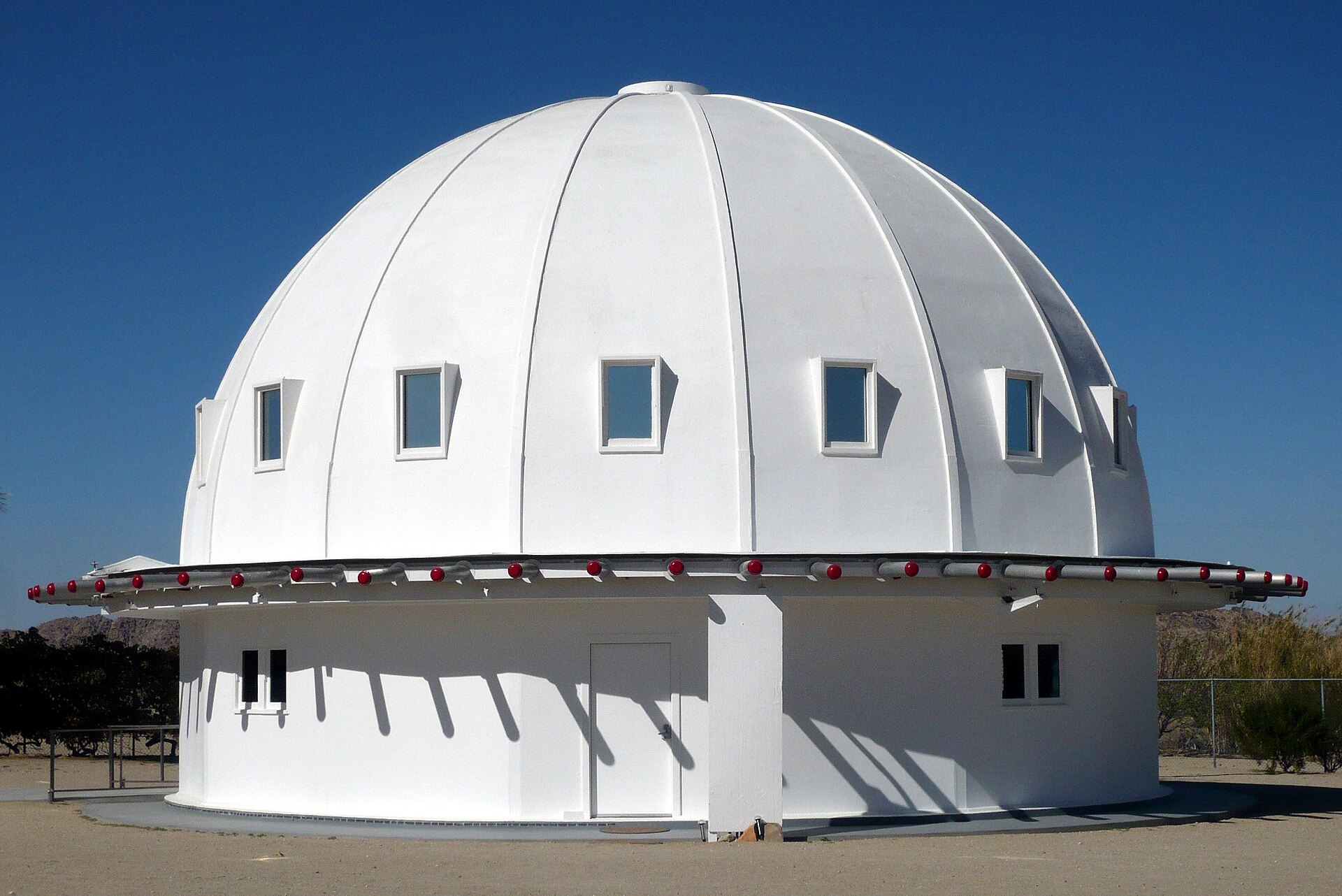
- The Integratron, out in Landers, is a white wooden dome built in the 1950s by George Van Tassel, who said the design drew on his own research, the work of Nikola Tesla, and instructions he claimed came from extraterrestrial visitors. Today it is known for sound baths played on quartz bowls inside its acoustics, by reservation only.
- The Noah Purifoy Outdoor Desert Art Museum, near the town of Joshua Tree, is ten acres of large assemblage sculpture the artist Noah Purifoy built from salvage over the last fifteen years of his life. It is open to the public, free, and worth an unhurried walk; check current hours first.
- The towns themselves fill up on weekends, with a small, real scene of cafes, galleries, vintage shops, live music, and Saturday markets — low-key and worth an afternoon between park days.
Integratron-3 · Jessie Eastland · CC BY-SA 4.0 · cropped
Where to eat
This is not a fine-dining destination, and that is part of the appeal. The food to seek out is unfussy and desert-town: barbecue, diner breakfasts, good coffee, and a few newer farm-to-table spots that followed the design crowd out from Los Angeles. Pappy & Harriet's in Pioneertown is the name everyone knows, as much for the room and the music as the plates. In the town of Joshua Tree and along Highway 62 you will find coffee roasters, taco stands, and a saloon or two.
Learn the rhythm and you eat better. The good places get slammed on spring and fall weekends and some keep short hours, so check before you drive and book ahead where you can, especially for dinner and for Pappy & Harriet's. Yucca Valley has the supermarkets for stocking a rental kitchen, which, with a house and a group, is often the best way to eat here anyway.
Keep it honest, though. Some of the best meals out here are the simplest: tacos from a stand, barbecue at a picnic table, a thermos of coffee while the sun comes up over the boulders before you head into the park.
Barker Dam Joshua Tree December 2013 004 · King of Hearts · CC BY-SA 3.0 · cropped
Practical notes
- A car is essential: rent at the airport, keep it the whole trip, and expect to drive daily between town, trailheads, and dinner.
- No services in the park: no gas, food, or dependable water and little cell signal, so fill up, stock up, and download an offline map before each visit.
- Water and heat: carry at least a gallon of water per person per day, more when hiking; in summer, hike at dawn and rest through the afternoon, and learn the signs of heat illness.
- The night is cold: even after hot days, nights run cool to freezing depending on the season, so always pack a warm layer, especially for stargazing.
- Cash and fuel: keep some cash for markets and small spots, and do not let the gauge run low, since the next station can be far off.
- Dark-sky etiquette: use a red light at night, keep headlights and phone screens down at pullouts, and give other stargazers their darkness.
- Tread lightly: pack out everything, stay on trails, and never touch the cholla; this is fragile, slow-growing desert.
- Check before you go: confirm entrance rules, road and trail closures, campground reservations, and business hours on the National Park Service and town sites, since desert conditions and small-town schedules change.
By the numbers
Common questions
Which town should I stay in for a first trip?
Yucca Valley for value and services, or the town of Joshua Tree if you want to be right at the busy west entrance and the small arts-and-cafe scene. Yucca Valley has the supermarkets and generally cheaper lodging; Joshua Tree puts you closest to the Mojave boulders and costs a little more. Twentynine Palms is the quieter, cheaper option by the north entrance.
Do I need a car?
Yes. There is no useful public transport, the towns spread along miles of highway, and every trailhead is a drive. Rent at Palm Springs airport and keep the car the whole trip.
Does Joshua Tree require a timed-entry reservation?
As of this writing, no — you pay the fee or show a pass at the gate and drive in, with no timed-entry system for general admission. Parks do change these rules, so check the National Park Service site before you travel. Note that the ranger-led Keys Ranch tour and the campgrounds do need reservations.
When is the best time to visit?
Spring, March into May, and fall, October into November, are ideal, with mild days, cool nights, and, after a wet winter, spring wildflowers. Summer is dangerously hot and best avoided for midday hiking; winter is cold at night, sometimes with snow, but clear and excellent for stargazing.
Is there anywhere to buy food, water, or gas inside the park?
No. The park has no gas, food, or dependable water, and cell service is patchy to none. Fill up and buy food and water in the towns first, carry at least a gallon per person per day, and download an offline map before the gate.
Is Joshua Tree good for stargazing?
Very. It is a certified International Dark Sky Park and one of the darkest night skies within easy reach of Los Angeles. Come on a clear, moonless night, pull into a park pullout away from lights, let your eyes adjust, and look up; winter nights are the longest and clearest. Bring a red flashlight and warm layers.
Sources & further reading
- National Park Service — Joshua Tree National Park
- NPS — Directions and transportation, Joshua Tree
- NPS — Fees and passes, Joshua Tree
- NPS — Stargazing at Joshua Tree
- DarkSky International — Joshua Tree Dark Sky Park
- Visit California — Joshua Tree
- Visit 29 Palms — Twentynine Palms visitors bureau
- The Integratron — Landers
Comments