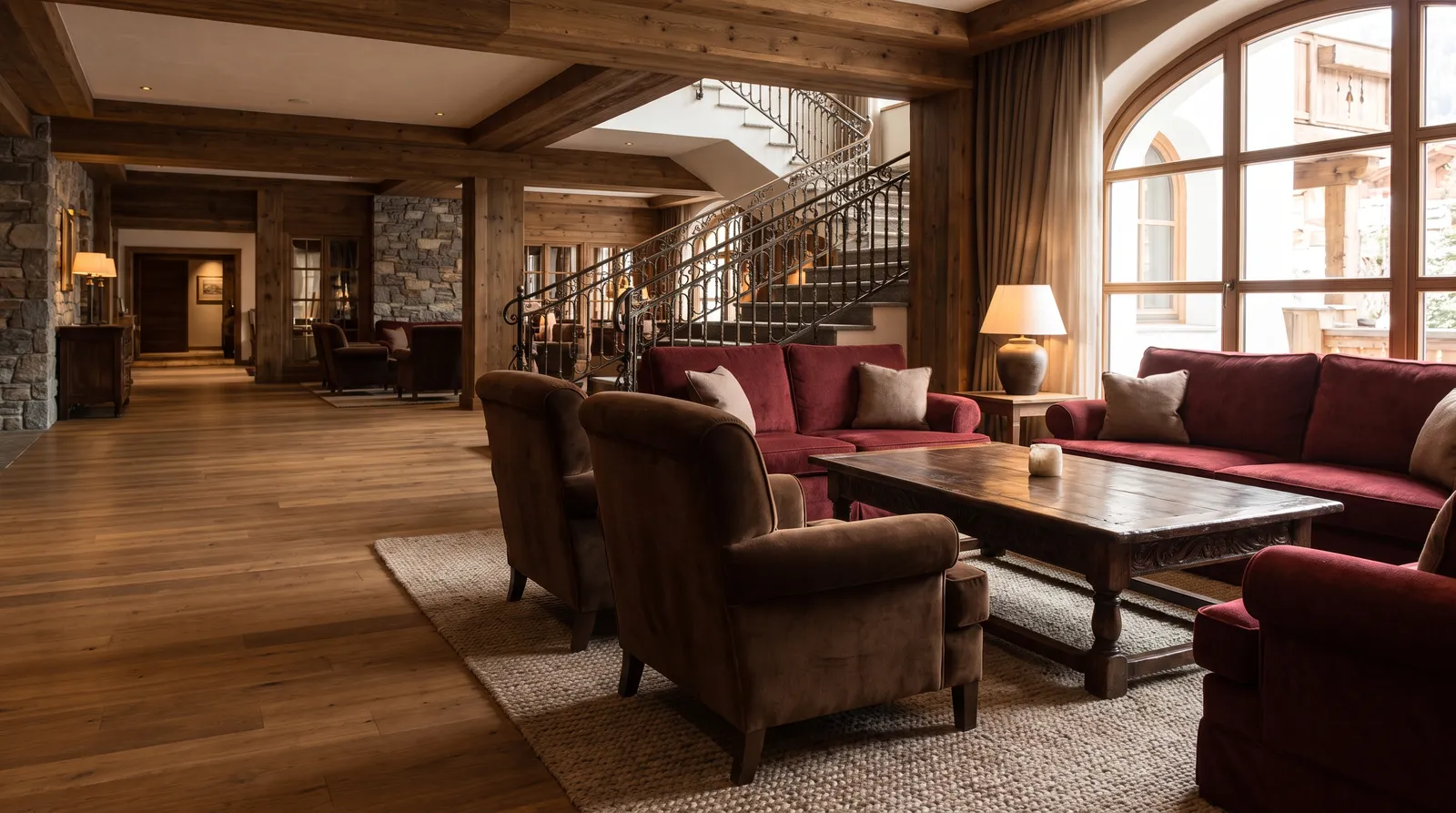
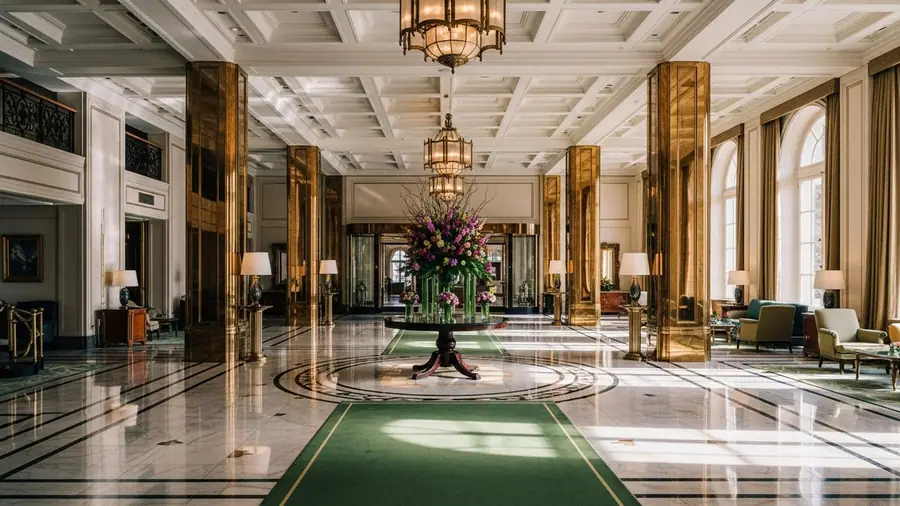
Opening image The inviting lobby of a new Alpine address, blending rich textures and soft lighting. Amorielli studio image
Courchevel 1850 occupies a singular space in the global imagination of luxury travel. It is a destination synonymous with a particular brand of Alpine glamour, where the snow is as meticulously groomed as the clientele’s expectations. For decades, the resort has cultivated an image of unapologetic exclusivity, a place where grand chalets and five-star hotels compete in a silent, high-stakes game of discreet opulence. Into this established landscape, Maisons Pariente, a French family-run hotel group, is introducing its latest offering: Saint Roch, set to open its doors this winter.
This isn’t just another new hotel opening in a crowded market; it’s a statement. Maisons Pariente, known for infusing its properties with a strong sense of place and personal history, is taking on Courchevel with a design philosophy that, on paper, feels both audacious and remarkably intimate. Saint Roch is described as an ‘alpine refuge’ that seeks to offer ‘a different way to experience the mountains,’ where the ‘intensity of the landscape gives way to the calm of the interiors.’ It’s a vision that leans heavily into a narrative of feeling and memory, rather than simply showcasing the peaks outside. This winter, as the first guests arrive, the industry will be watching to see if this particular blend of heritage, craft, and unexpected global influences can carve out a new niche in a market that rarely tolerates anything less than perfection.
The stakes are high, not just for Maisons Pariente, but for the wider luxury hospitality sector. As discerning travellers increasingly seek experiences that transcend mere comfort, pushing towards authenticity and a genuine sense of connection, Saint Roch’s approach offers a compelling case study. It’s a test of whether a deeply personal, almost domestic, design narrative can truly thrive in a destination traditionally defined by its outward display of wealth and status.
A New Address in the Alps: Courchevel’s Enduring Allure
Courchevel 1850, nestled within France’s vast Trois Vallées ski area, has long held an almost mythical status among the world’s most affluent skiers and winter sports enthusiasts. It is not merely a ski resort; it is a micro-economy of high-end retail, Michelin-starred dining, and properties where nightly rates can easily rival a month’s rent in many major cities. The allure is multifaceted: unparalleled ski access to one of the largest interconnected ski areas in the world, a meticulously maintained infrastructure, and a social scene that attracts royalty, celebrities, and titans of industry.
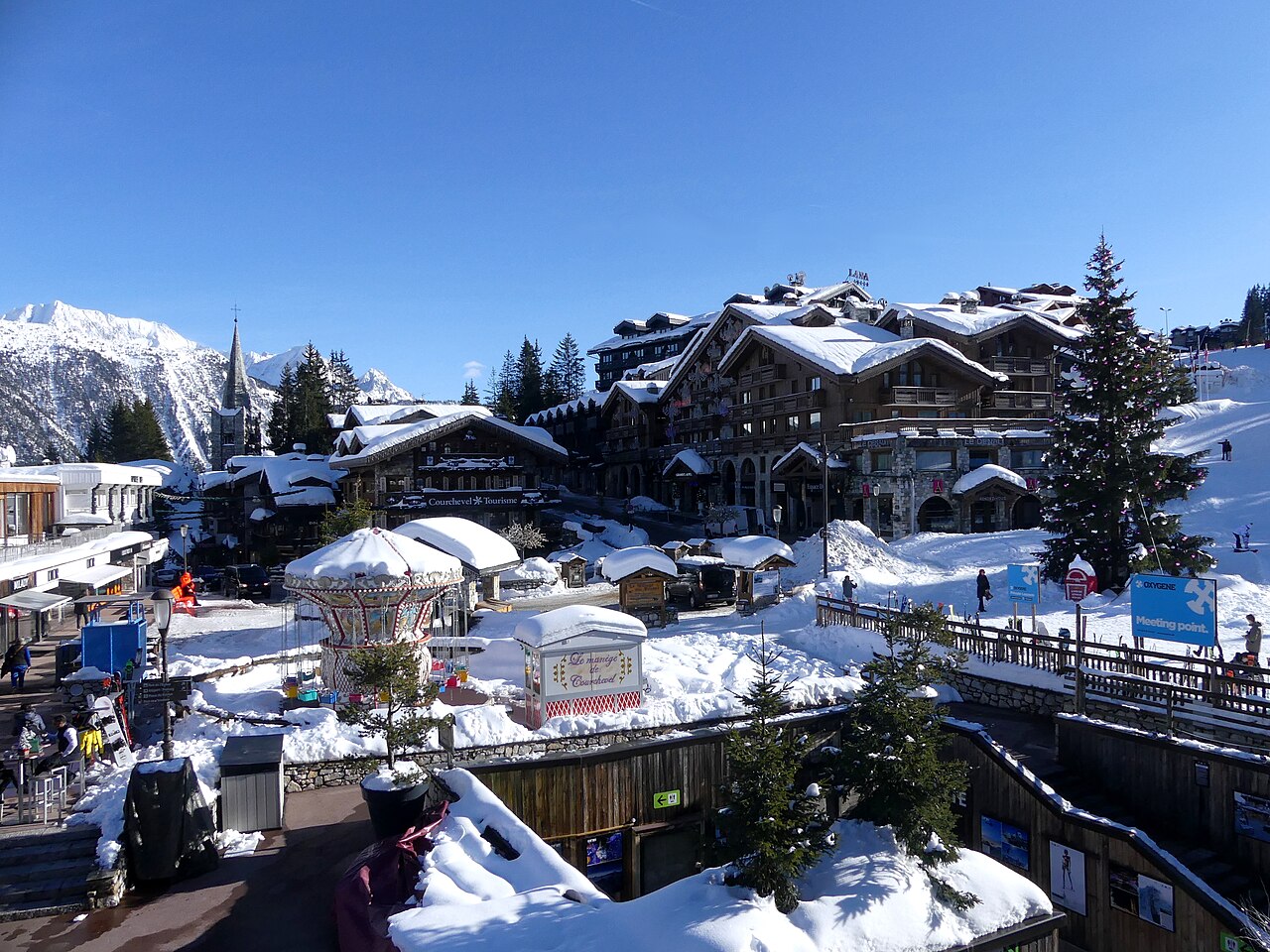
For a hotel group to enter this market, particularly with a new build or a significant reimagining of an existing institution, requires not only substantial capital but also a clear, differentiating vision. Maisons Pariente, with Saint Roch, is making its fifth address in France and its second in the Alps, following Le Coucou in Méribel. This expansion signals a confident trajectory for the brand, which has steadily built a portfolio of properties that aim to feel less like hotels and more like private homes. Their existing properties, including Lou Pinet in Saint-Tropez, Crillon le Brave in Provence, and Le Grand Mazarin in Paris, all share this common thread: a sensitive approach to design, deeply rooted in their surroundings, yet imbued with a distinct personality. It is a deliberate strategy to create places that resonate on an emotional level, rather than simply providing a bed for the night.
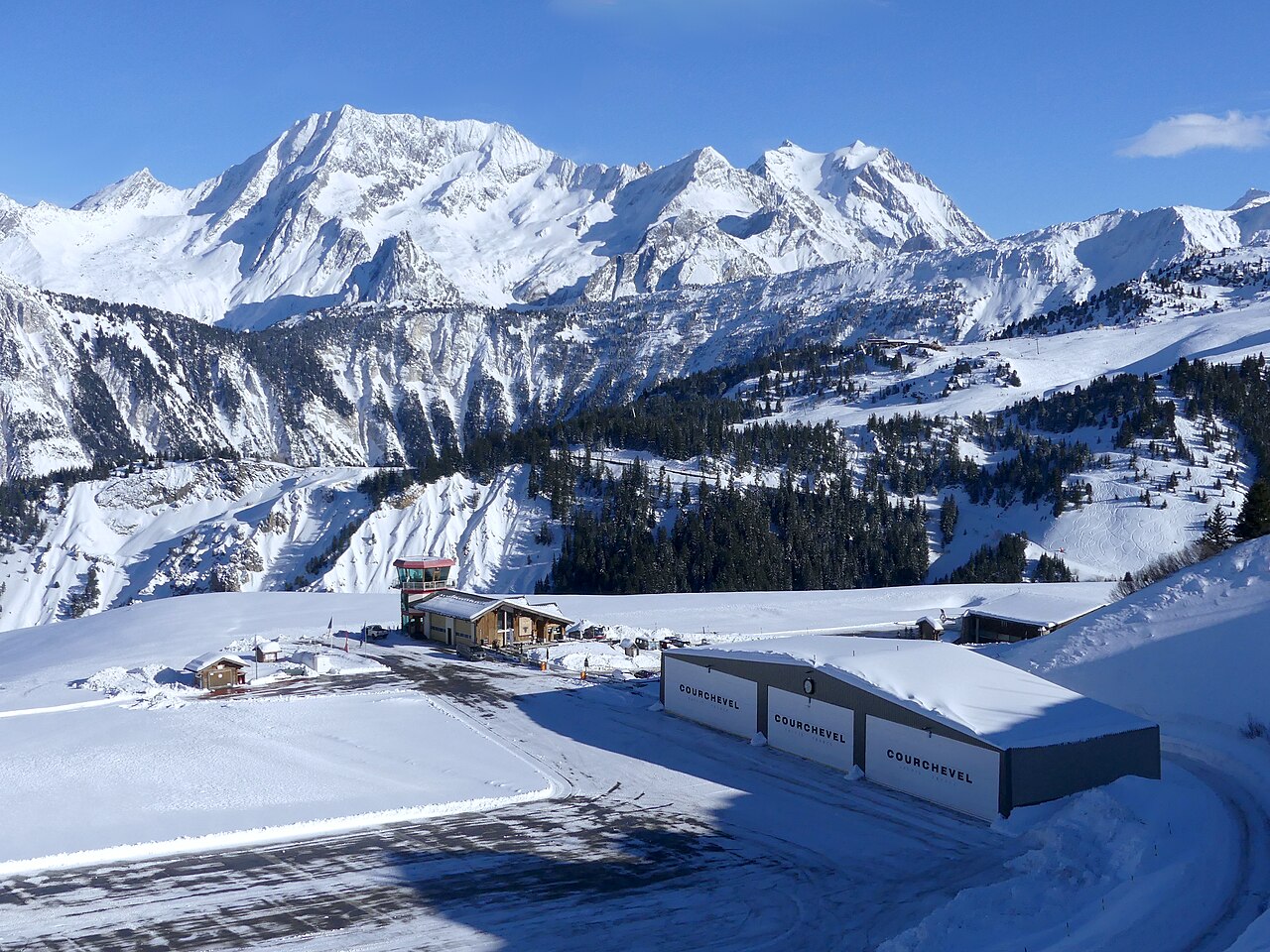
Saint Roch’s location is, predictably, prime. According to the company, it is ‘perched on the Bellecôte piste at the foot of the slopes and steps from the village centre.’ This direct ski-in/ski-out access is a non-negotiable for many high-end Courchevel visitors, offering the ultimate convenience. Beyond the immediate practicalities, the location also places guests at the heart of the resort’s social and retail ecosystem, allowing for easy access to the village’s array of boutiques, restaurants, and entertainment. The journey to Courchevel itself is presented as part of the escape: roughly 90 minutes from Geneva International Airport, with other regional airports like Lyon, Chambéry, Grenoble, and Annecy also close by. The final stretch can involve a scenic drive, a train to Moûtiers, or, for the ultimate statement of arrival, a private helicopter gliding into the Courchevel Altiport, just minutes from the hotel’s door. This emphasis on accessibility, combined with the promise of effortless transitions, underscores the understanding of the luxury traveller’s desire for seamless experiences from door to piste.
Designing a Lived-In Legacy: Friedmann & Versace’s Vision
The core of Saint Roch’s identity, and indeed its most intriguing proposition, lies in its design. Maisons Pariente has entrusted the architecture and interiors to studio Friedmann & Versace, helmed by Virginie Friedmann and Delphine Versace. Their approach, as described, is built on ‘a subtle dialogue between heritage, craft and contemporary design,’ aiming for ‘a lived-in interior where the architecture recedes just enough to make room for feeling.’ This declaration immediately sets Saint Roch apart from the more overtly grand or starkly minimalist trends that have sometimes dominated luxury hospitality design. It suggests a focus on the guest’s experience and emotional connection to the space, rather than on the architecture as a standalone spectacle.
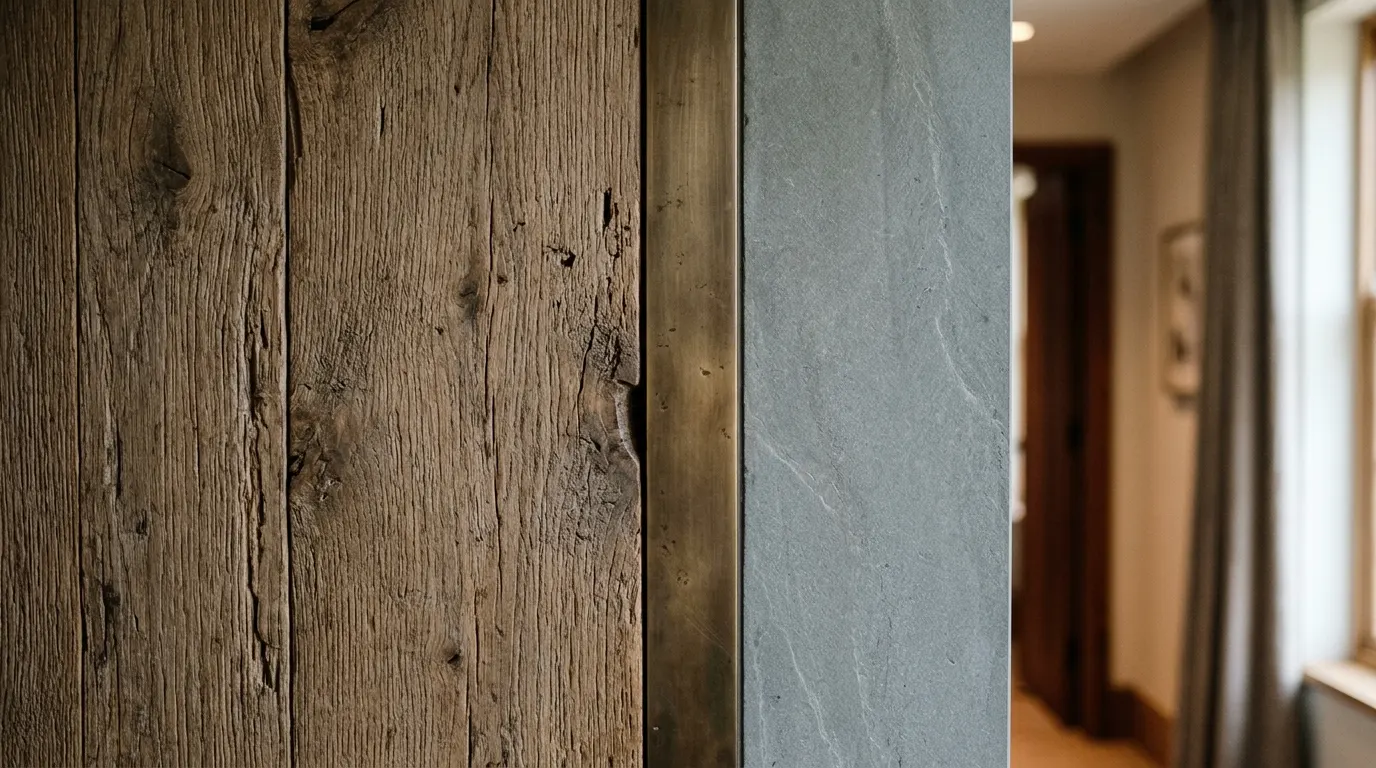
The material palette chosen by Friedmann & Versace is fundamental to achieving this ‘lived-in’ atmosphere. Wood, selected for the ‘full richness of its textures,’ forms a foundational element, playing against stone, textiles, and touches of bronze. This combination speaks to a desire for tactile warmth and authenticity, moving away from cold, polished surfaces towards something more organic and inviting. The design philosophy is not about putting the mountain ‘on display,’ but rather about creating an environment where it is ‘lived differently.’ This implies an interiority, a sanctuary that provides a counterpoint to the dramatic Alpine landscape outside. Soft light is employed to reveal surfaces and draw out finer details, suggesting an emphasis on craftsmanship and subtle textures over bold, immediate statements.
The concept of Saint Roch as a ‘true winter home in the mountains’ is central to Maisons Pariente’s brand. Sisters Leslie Kouhana and Kimberley Cohen, co-founders of the group, reportedly shaped every detail based on their own childhood memories of mountain holidays. This personal touch is a hallmark of the Maisons Pariente collection, aiming to imbue each property with a sense of genuine history and warmth. The designers echo this sentiment, stating, “We imagined this place as the home of an aesthete: a setting at once elegant, warm and filled with memories.” This vision positions Saint Roch not just as a place to stay, but as a repository of experiences, a backdrop for new memories to be created, informed by a rich, imagined past.
The emphasis on ‘folklore giving way to emotion’ and references being ‘sensed more than shown’ further elaborates on this design philosophy. It suggests a departure from overt thematic decoration, opting instead for an atmosphere that subtly evokes travel memories and cultural narratives. The interior is conceived as a ‘warm, deeply lived-in décor where nothing is merely decorative,’ with each piece ‘gathered from around the world for what it evokes, not what it proves.’ This curatorial approach aims for a harmonious blend of influences, where cultures ‘meet quietly rather than announce themselves,’ creating a ‘world within a world.’ It is a sophisticated play on authenticity, crafting an environment that feels collected and evolved over time, rather than designed in a single stroke.
From Dachas to Deserts: An Unexpected Narrative
Perhaps the most striking aspect of Saint Roch’s design narrative is its eclectic and seemingly disparate inspirations. The interiors, according to the designers, unfold in a ‘hushed atmosphere’ inspired by ‘Slavic dachas and ancient Persian kingdoms.’ This is further elaborated as drawing from ‘the Mongolian steppes, the splendor of Russian dachas and the poetry of Persia.’ In Courchevel, a resort more typically associated with sleek modernism or rustic-chic Alpine traditions, this blend of Eastern European and Middle Eastern influences is, to say the least, unconventional. It is a bold move that seeks to transport guests not just to a different mountain, but to a different world entirely.
The execution of this vision relies heavily on a rich tapestry of materials and artisanal craftsmanship. The designers specify ‘patinated surfaces, velvet and handcrafted objects,’ alongside a palette of ‘sensual, precious materials’ including onyx, moiré, agate, wood marquetry, ceramic, and mohair velvet. These choices are designed to ‘sculpt an enveloping atmosphere,’ reinforcing the idea of a ‘protective sanctuary.’ The ‘marks of time and travel are everywhere,’ evident in specific artistic commissions: agate-stained glass by Atelier Toporkoff, mosaic frescoes by Pierre Mesguich, and ceramics made by French artisans. These elements are not merely decorative additions; they are integral to the storytelling, designed to evoke the ‘ancient caravan routes between the East and the mountains’ in the spa, for example.
The art collection, guided by Amélie Maison d’Art, further reinforces this cross-cultural, timeless aesthetic. It features ‘twentieth century works beside contemporary pieces, bronze bas-reliefs alongside Persian glazed vases,’ transforming Saint Roch into a ‘habitable gallery.’ This curation speaks to a desire for intellectual engagement and a visual richness that transcends typical hotel art. It’s about creating an environment where objects have stories, where different eras and origins coexist in a dialogue that is ‘felt’ rather than explicitly stated. The choice of deep hues — tobacco brown, garnet red, moss green, midnight blue — combined with cashmere prints and delicate marquetry, extends this sense of an ‘inner journey,’ creating a visual language that is both warm and evocative, bridging the gap between an Alpine refuge and a ‘dreamed-of dacha.’
Rooms as Collector’s Homes: Intimacy and Scale
Saint Roch features 37 rooms and suites, a relatively intimate number for a luxury hotel in a major resort, allowing for a greater degree of personalisation and attention to detail. The design philosophy extends seamlessly from the public areas into these private sanctuaries, with each space conceived as a ‘true place to live,’ inviting guests to ‘settle in rather than simply stay.’ This is a crucial distinction in the luxury market, where the transient nature of hotel stays is increasingly being challenged by a desire for a more rooted, residential experience. From the entry-level Superior room to the expansive Penthouse, the hotel aims for a consistent design language that prioritises warmth, subtle lighting, and enveloping textures.
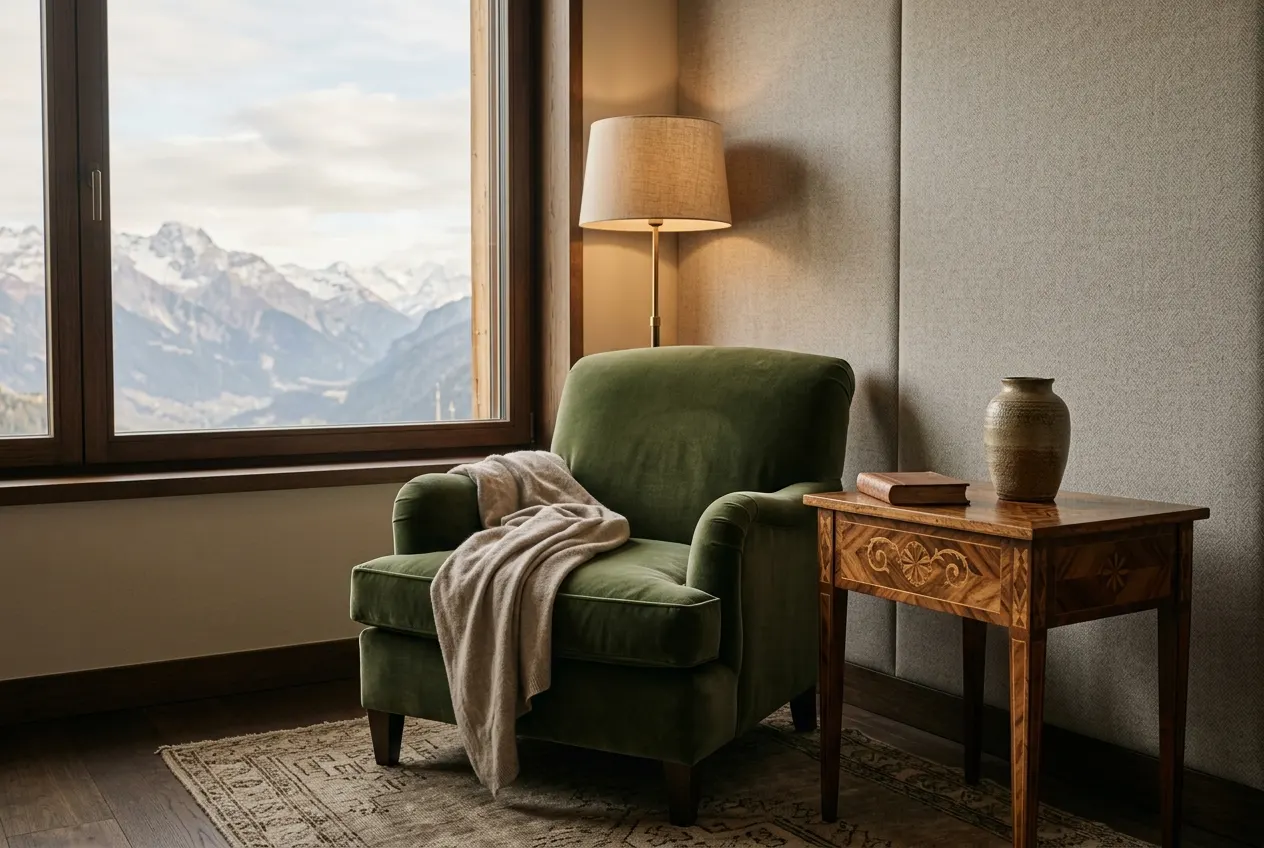
The material choices within the rooms echo those found throughout the property: wood, velvet, and silk set a soft tone, contributing to an atmosphere described as ‘intimate and timeless.’ The furniture is a thoughtful blend of bespoke designs and collected pieces, reinforcing the idea of a ‘collector’s home,’ a space that has evolved over time rather than being furnished all at once. The deep hues — tobacco brown, garnet red, moss green, and midnight blue — are carried into the private spaces, combined with cashmere prints and delicate marquetry. This rich palette, far from being oppressive, is intended to extend the ‘sense of inner journey,’ creating a cocoon-like environment that bridges the Alpine refuge with the imagined dacha.
The range of accommodations caters to various needs, from individual travellers to large families or groups seeking a private retreat. The Superior, Deluxe, and Prestige rooms offer progressively wider volumes and more sculptural pieces, with mountain views that ‘accompany without ever seeking effect.’ This subtle integration of the landscape into the room experience is consistent with the overall design ethos of interiority. The suites elevate the offering further, opening into full living spaces. The Junior Suite introduces a ‘first proper salon,’ while the Deluxe Suite boasts ‘generous proportions,’ designed to adapt to a couple, a family, or even an extended winter stay. This flexibility is key in a market where guests may be planning stays of several weeks or even months.
At the pinnacle of the accommodation offering are the two Prestige Suites on the fifth floor, each approximately 750 square feet. These can be booked individually, their interconnecting spaces framing the mountain through every window, or combined with three adjoining rooms to form the Penthouse. This entire top floor is reserved for a single family or group, creating ‘a true mountain home of its own.’ This Penthouse concept is a direct and smart response to the high-end private chalet market in Courchevel, offering the exclusivity and space of a private residence with the full services and amenities of a luxury hotel. It allows Maisons Pariente to compete directly with the most coveted private rental options, providing a compelling alternative for those who desire both privacy and impeccable service without the complexities of managing a standalone chalet.
The Social Heart of the House: Gathering Spaces
Beyond the private rooms, Saint Roch places significant emphasis on its communal areas, designing them as extensions of the ‘home’ concept where guests can naturally gather and connect. The living room is presented as the ‘heart of the home,’ a space with deep sofas and a roaring fire, inviting guests to linger, take their time, and let conversation stretch on over a hot chocolate. This is a deliberate cultivation of a convivial atmosphere, reminiscent of the ‘great travellers’ houses of the past,’ where connections form easily between guests from different worlds who share a common curiosity and appreciation for beautiful things. It’s a subtle nod to the social aspect of luxury travel, where shared experiences and serendipitous encounters can be as valuable as the amenities themselves.
The restaurant, too, is designed for unhurried enjoyment. With low light and generously spaced tables, it is a room ‘made to linger in, and to return to.’ This focus on comfort and a relaxed pace contrasts with the sometimes-frenetic energy of high-end dining, suggesting a more intimate and personal culinary experience. While the announcement does not detail the specific cuisine, the atmosphere points towards a focus on quality, comfort, and an environment conducive to extended meals and meaningful conversation. It’s a space where guests can truly unwind after a day on the slopes, allowing the cold to recede and warmth to envelop them.
In the rarefied air of Courchevel, Saint Roch is a quiet assertion that luxury can be found not just in what is seen, but in what is deeply felt.
The bar at Saint Roch is envisioned as the perfect transition space, bridging the exhilarating hours on the slopes with the anticipation of dinner. Guests are encouraged to ‘arrive without a plan and stay longer than intended,’ drawn in by ‘warm, golden light, deep seating and cocktails built for balance rather than show.’ This description speaks to a sophisticated approach to mixology, prioritising thoughtful composition over ostentatious presentation. It’s a space for relaxation, reflection, and casual socialising, embodying the spirit of après-ski without the typical boisterousness, offering instead a refined and intimate setting for unwinding.
Maisons Pariente also demonstrates an understanding of the diverse needs of its clientele by considering its youngest guests. The Kids Club is a dedicated space designed to welcome children into ‘a world of their own,’ allowing them to ‘feel at home, with their own places to discover, their own rhythm, their own freedom.’ This inclusion is crucial for families, who represent a significant segment of the luxury travel market. By providing a thoughtfully designed and dedicated space for children, Saint Roch ensures that parents can enjoy the adult amenities with peace of mind, knowing their children are engaged and well-cared for. This holistic approach to hospitality, catering to all ages, reinforces the idea of the hotel as a true family home, albeit one with impeccable service and design.
A Sanctuary Within the Sanctuary: The Spa
In the world of luxury hospitality, a spa is no longer merely an amenity; it is often a destination in itself, a crucial component of the overall guest experience. At Saint Roch, the spa is conceived as ‘its own retreat,’ a ‘refuge within the refuge,’ offering a profound sense of escape and rejuvenation. True to the hotel’s overarching design philosophy, the spa draws inspiration from unexpected sources, specifically ‘Ottoman hammams and Caucasian palaces.’ This choice immediately distinguishes it from the more common Alpine spa aesthetics, which often lean into minimalist Scandinavian design or rustic mountain themes.
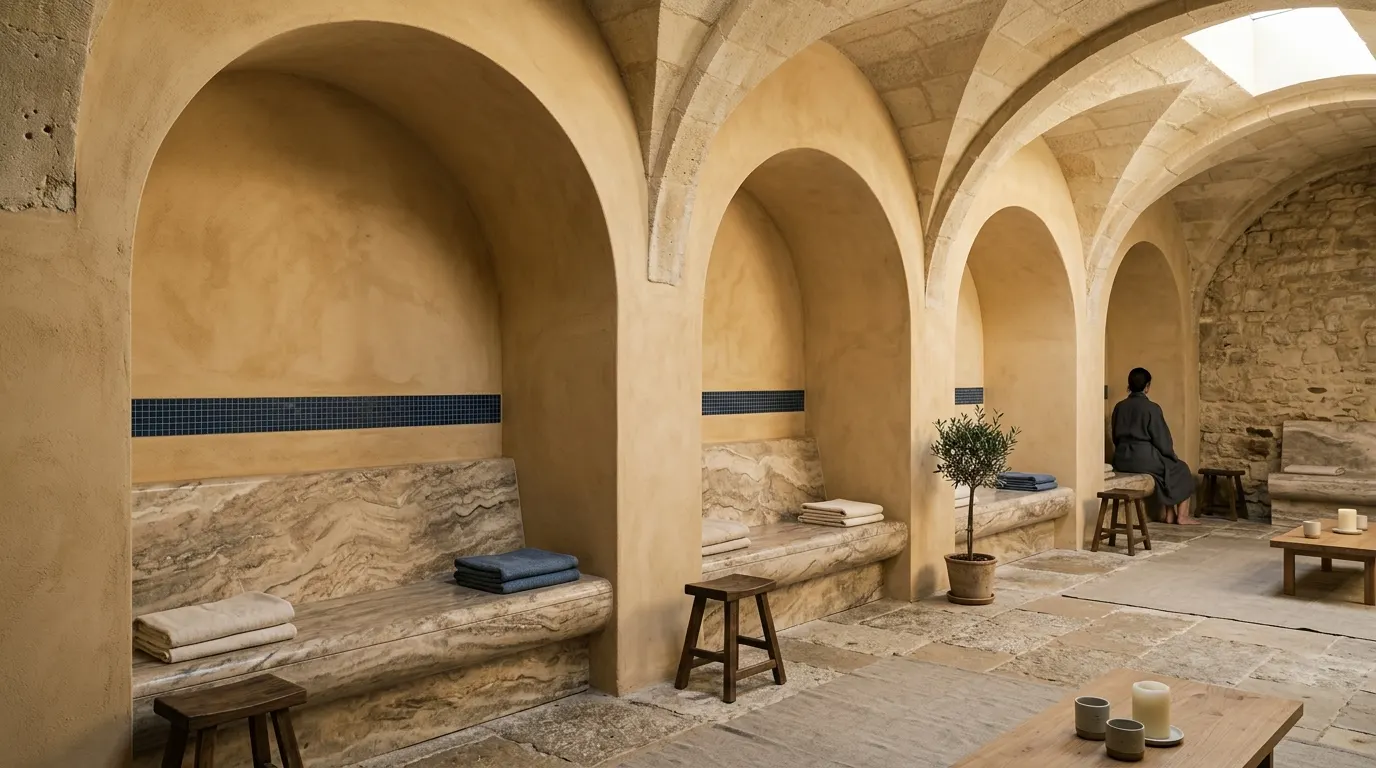
The atmosphere within the spa is crafted through a combination of architectural elements and a rich material palette. Soft arches, richly veined marble, and a colour scheme dominated by shades of ochre, rust, and midnight blue create an environment that feels both exotic and deeply calming. Mosaics and vaulted stone evoke a sense of history and journey, specifically referencing the ‘old caravan routes between the East and the mountains.’ This narrative positions the spa as a ‘precious stop along a long journey,’ an ‘imagined East carried up to altitude in search of something more inward.’ It’s a space designed for introspection and profound relaxation, a deliberate contrast to the exhilarating, outward-focused activities of the ski slopes.
The treatments offered at Saint Roch’s spa are from Tata Harper, an American house known for its ‘high-performance natural skincare.’ The brand’s ‘botanically precise formulas’ are designed to work deeply to ‘release tension and warm the body,’ aligning with the spa’s overall ethos of natural healing and holistic well-being. This partnership with a respected, ethically-minded brand further elevates the spa’s credibility and appeal, particularly to guests who prioritise clean beauty and sustainable practices in their wellness routines.
At the heart of the spa lies the indoor pool, a central feature designed for both relaxation and aesthetic appreciation. Its most striking detail is the shower, clad in a marble mosaic by Pierre Mesguich. This intricate artwork is highlighted as demonstrating ‘rare, painstaking craftsmanship in which every fragment of stone plays its part.’ Such a detail underscores the hotel’s commitment to artisanal excellence and its belief that even functional elements can be elevated to works of art. Completing the wellness offering is a ‘light-filled fitness space,’ described as ‘a quiet room of its own before or after a day on the mountain.’ This thoughtful inclusion allows guests to maintain their fitness routines in a serene environment, further enhancing the sense of a comprehensive, well-rounded retreat.
Beyond the Slopes: The Courchevel Experience
While Saint Roch’s interiors offer a deliberate retreat from the external world, the hotel fully embraces its setting within Courchevel 1850 and the vast opportunities it presents. The resort, long considered the ‘most coveted address in the French Alps,’ is presented as a destination that ‘rewards the journey and makes it effortless.’ This duality – a sense of grand adventure combined with seamless execution – is central to the luxury Courchevel experience.
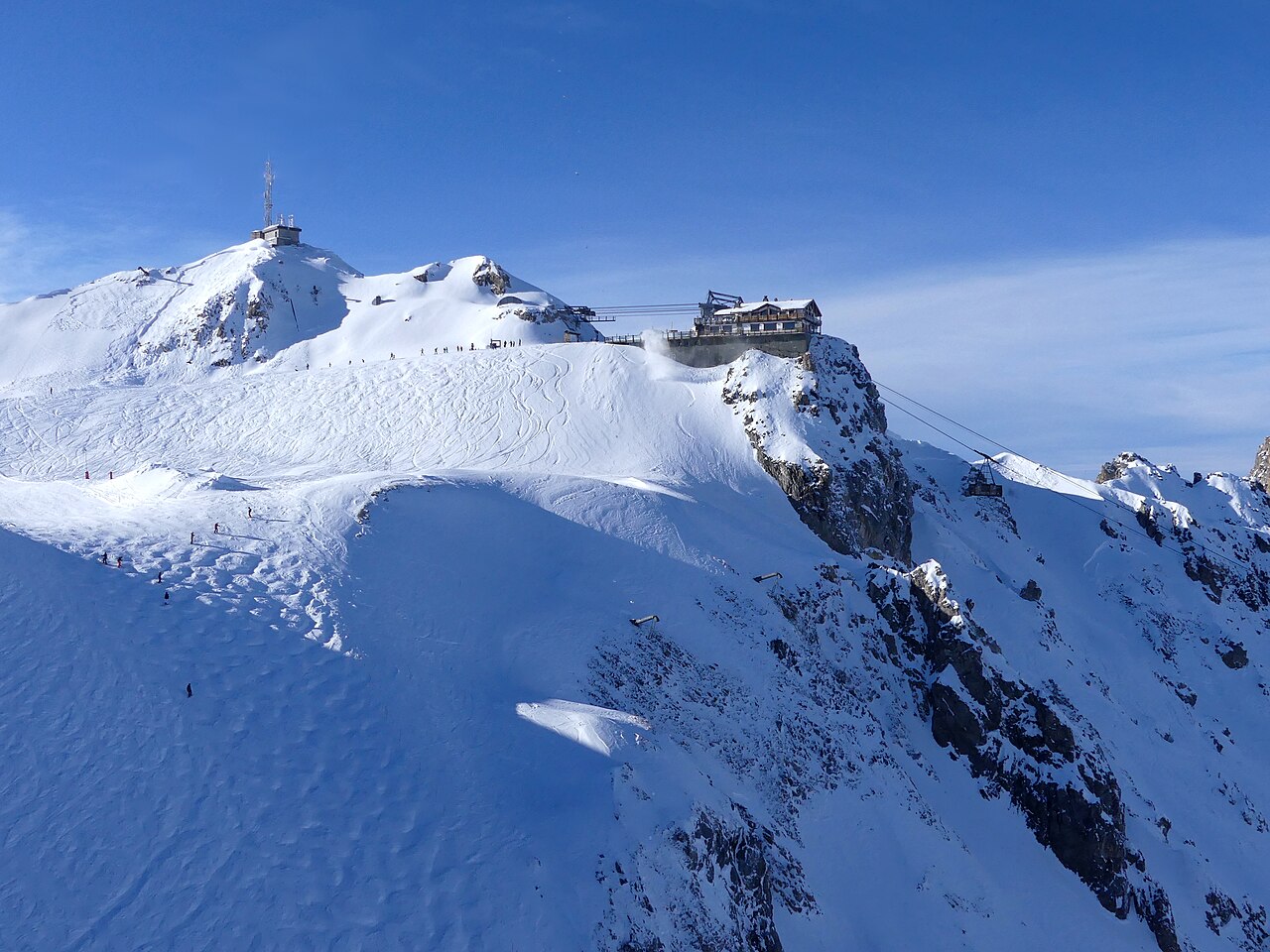
The primary draw, of course, is the skiing. Situated ‘directly on the Bellecôte slope,’ Saint Roch offers ‘privileged access to the famed 3 Vallées,’ one of the largest ski areas in the world. This direct access means guests can literally step out of the hotel and onto the pistes, a convenience that is highly prized. An on-site ski shop further streamlines the process, handling equipment and fittings in-house, ensuring that each departure and return is as effortless as possible. This attention to practical detail ensures that the core reason for visiting Courchevel – the skiing – is maximised and made utterly frictionless.
Beyond the extensive ski opportunities, Saint Roch’s concierge service is designed to curate bespoke experiences that delve deeper into French mountain living. This goes beyond simple bookings, aiming to shape days around each guest’s preferences. Offerings include the classic Alpine adventures: dog-sledding through the pristine forest, exhilarating snowmobiling after dark, or a breathtaking helicopter flight over the majestic peaks. For those seeking a more culinary or social experience, the concierge can arrange dinner served high on the mountain, providing an unforgettable backdrop to a gourmet meal. Whether guests come to ‘ski hard or simply to experience French mountain living,’ Saint Roch aims to arrange their escape around them, tailoring every aspect to individual desires.
This commitment to personalised service and curated experiences aligns perfectly with the broader philosophy of Maisons Pariente. As Leslie Kouhana, President and co-founder, states, “Saint Roch was born of our childhood memories, of mountain holidays, of the joy of a cup of hot chocolate by the fire, and of that wonderful feeling of not wanting to be anywhere else.” This deeply personal origin story is echoed in Kimberley Cohen’s, Artistic Director and co-founder, sentiment: “A place inspired by travel, where the encounters, the bond you form with a place and the memories you create there are what give hospitality its meaning.” Ultimately, the brand aims for a profound impact, where ‘the finest memory of a stay isn’t only a run through fresh snow, but the feeling of having found a place guests leave already wanting to return.’ This aspiration speaks to a desire to create not just a temporary residence, but a lasting emotional connection, a true sense of belonging in a place that feels like home.
What it means for where you stay
For the luxury traveller, Saint Roch represents a compelling new proposition in a market that, for all its grandeur, can sometimes feel homogenous. If the execution lives up to the promise, it offers a refreshing alternative to the traditional Alpine chalet or the more overtly minimalist hotel. This is a property for those who seek a deeper, more evocative experience, where the design tells a story and the atmosphere feels genuinely collected and personal. It’s for the traveller who appreciates craftsmanship, global influences, and an understated sense of belonging over ostentatious displays. The Penthouse, in particular, offers a sophisticated answer to the desire for private, residential-style stays without sacrificing hotel services, blurring the lines between a high-end rental and a full-service luxury hotel. It suggests that even in Courchevel, there is a growing appetite for luxury that is felt rather than merely seen, for experiences that resonate on an emotional level long after the fresh snow has melted.
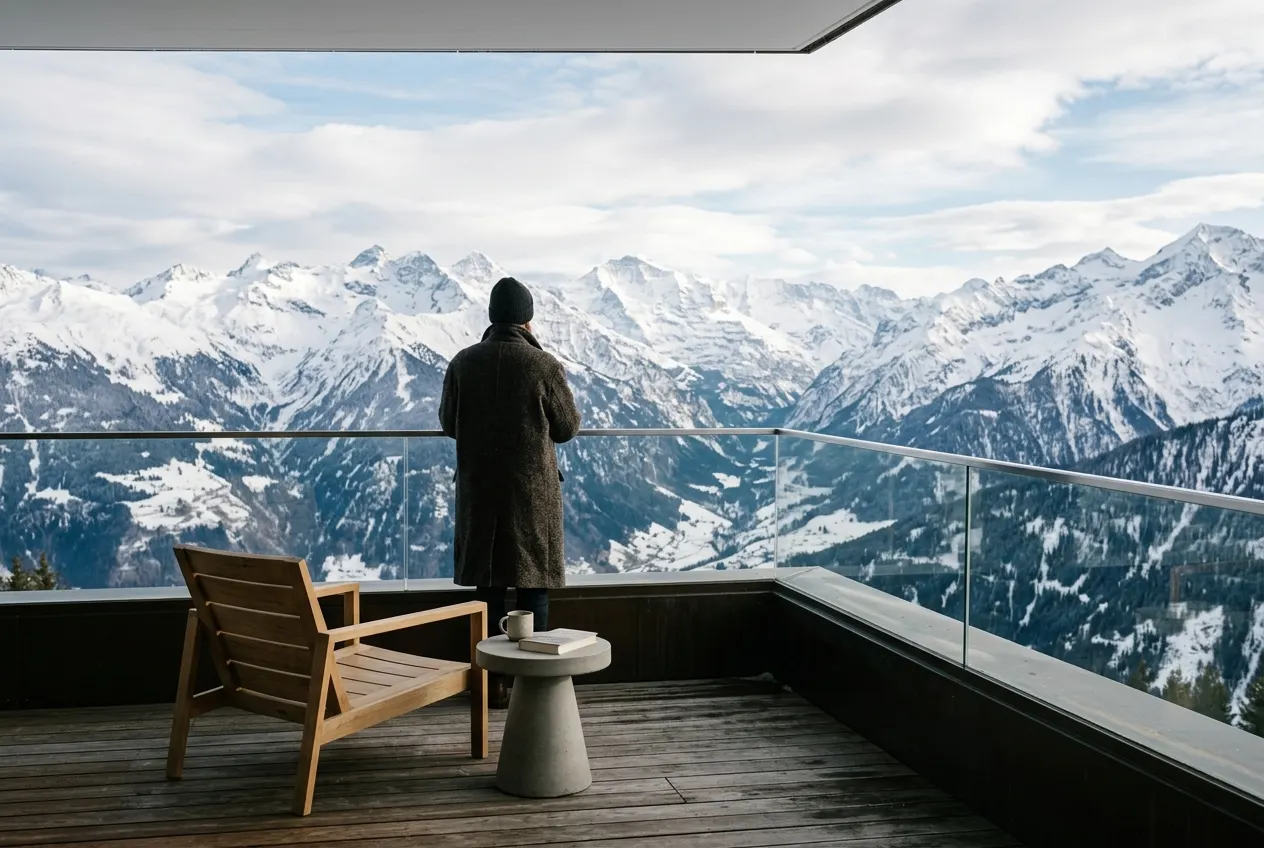
For owners and developers in the luxury hospitality sector, Saint Roch offers a powerful case study in differentiation through narrative and design. It underscores the increasing importance of creating properties with a distinct point of view and a compelling story, rather than relying solely on location or amenities. The Maisons Pariente model, with its emphasis on ‘homes’ rooted in personal memories and a ‘genuinely human’ approach to hospitality, demonstrates how a strong brand identity can translate across diverse destinations. The integration of global design influences into a traditional Alpine setting, while risky, signals a willingness to challenge established norms and cater to an increasingly sophisticated and globally-minded clientele. This opening suggests that future success in the high-end market will increasingly depend on crafting unique, emotionally resonant experiences that make guests feel not just accommodated, but truly at home, wherever their travels may take them.
Source
Hotel Designs — reported 9 September 2026. Read by the Amorielli news desk.
Report an error in this story · Corrections policy and log
Pictures marked “Amorielli studio image” are illustrative scenes made for this story, not photographs of any property, company or person named. Pictures credited to a photographer are real photographs from Wikimedia Commons, used under the licence named beside each one; each caption says what the photograph shows. Details can change after publication; confirm specifics with the property or source. Like this? Get the newsletter.
Comments