The short version
- Knives
- A chef's knife, a bread knife and a paring knife, kept sharp, with two boards: one only for raw meat
- Pans
- Enough for the number the house sleeps, with a lid for every pan
- Coffee
- Two ways at least: a machine, and a kettle or a stovetop pot
- The fridge
- 40°F (4°C) or below, the freezer at 0°F (-18°C), a thermometer in each
- On arrival
- Milk, butter, eggs, fruit and water, or a list the guests send ahead
- The grill
- Two pairs of tongs, two platters and a food thermometer
The first thing a guest who cooks does in a rented house is open the drawers. They are looking for a knife that will cut a tomato, a pan big enough for pasta for eight, and some way of making coffee before anyone else is up. Timothy, who stayed at The Cerulean on St. Croix in February, put a well-kept kitchen in one line: “the best stocked kitchen we’ve ever had in a rented house.”
Getting there is mostly a matter of attention, and it starts with a test any owner can run. Cook a full dinner in the house for the number it sleeps, then breakfast the next morning, and write down everything you reached for and could not find. This guide works through the kitchen in the order a guest uses it, with examples from houses in Amorielli’s Collection.
Knives and boards
Three knives cover almost everything a guest will cook: a chef’s knife with a blade long enough to halve a pineapple, a serrated bread knife, and a small paring knife for limes and garlic. Keep them sharp; a steel or a simple sharpener in the drawer, used at each changeover, keeps an edge on them between professional sharpenings. Store them in a block or on a magnetic strip rather than loose in a drawer.
Sea Sun Maui, a renovated two-bedroom condo on Maui’s south shore, makes the point on its own website: everything a guest needs is already in the drawers, “down to the good knives and the spices.” The listing photographs of Dragonfly Villa, in the hills of St. Croix’s East End, show its knives on a magnetic strip on the wall by the hob, in sight and within reach of whoever is cooking.
Boards need the same thought, and the U.S. Department of Agriculture’s food safety service is specific about them. Wood and nonporous boards are both acceptable, but it suggests one board for fresh produce and bread and a separate one for raw meat, poultry and seafood, so that juices from raw food never reach food that will not be cooked. Two colours make the rule obvious without a note on the fridge. Boards should be washed in hot, soapy water after each use; plastic and solid wood boards can go in a dishwasher, while laminated boards may crack and split. When a board is so worn that its grooves will not come clean, the USDA’s advice is to throw it away.
In a house that takes families with toddlers, the childproofing advice of the CPSC, the U.S. federal agency for consumer product safety, puts knives and other sharp objects behind safety latches, alongside cleaners and medicines.
Pans, the oven and the hob
Stock pans for the number the house sleeps. For eight or more that means a stockpot big enough for pasta for everyone, two large frying pans, a sauté pan, two or three saucepans, a heavy casserole that can go from hob to oven, a roasting tin, two baking sheets and an ovenproof dish, plus a colander, mixing bowls, measuring cups, a grater, a jug and a set of kitchen scales. Give every pan a lid that fits. The U.S. Fire Administration, which counts cooking as by far the leading cause of home fires and home fire injuries, advises keeping a pan lid or a baking sheet nearby to cover a pan that has caught fire.
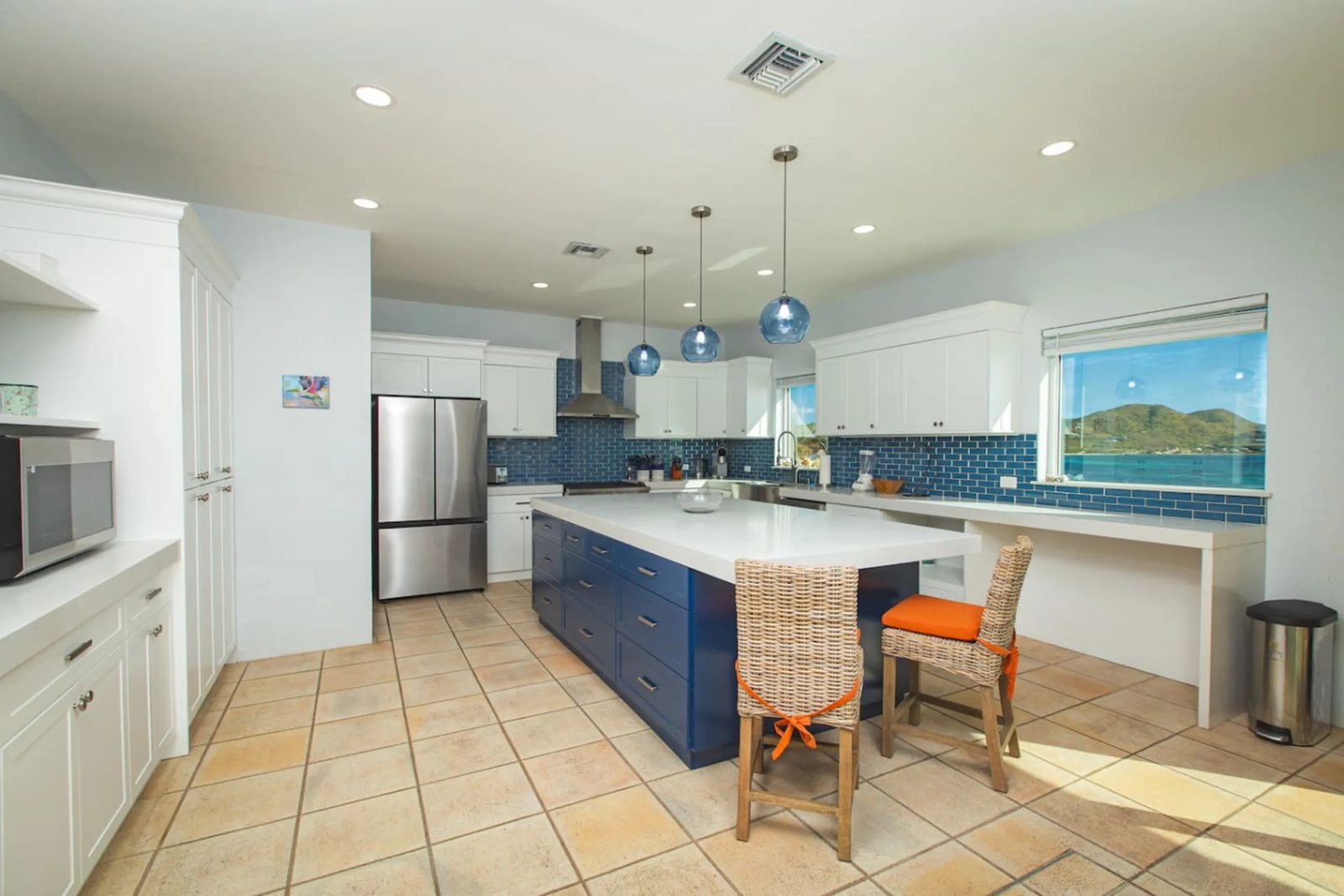
The listing for Dragonfly Villa shows how to describe all this. It names the All-Clad and cast-iron pans, the Dutch oven, the pizza stone, the Vitamix blender, the Instant Pot and the waffle maker, then the small things that are so often missing: mixing bowls, zesters, garlic presses, rolling pins and muffin pans. A cook who reads that knows what to pack and what to leave at home. The Cerulean’s owners publish a list in the same spirit, from the Thor stove and oven to the electric kettle, the blender, and the pots, pans and bakeware.
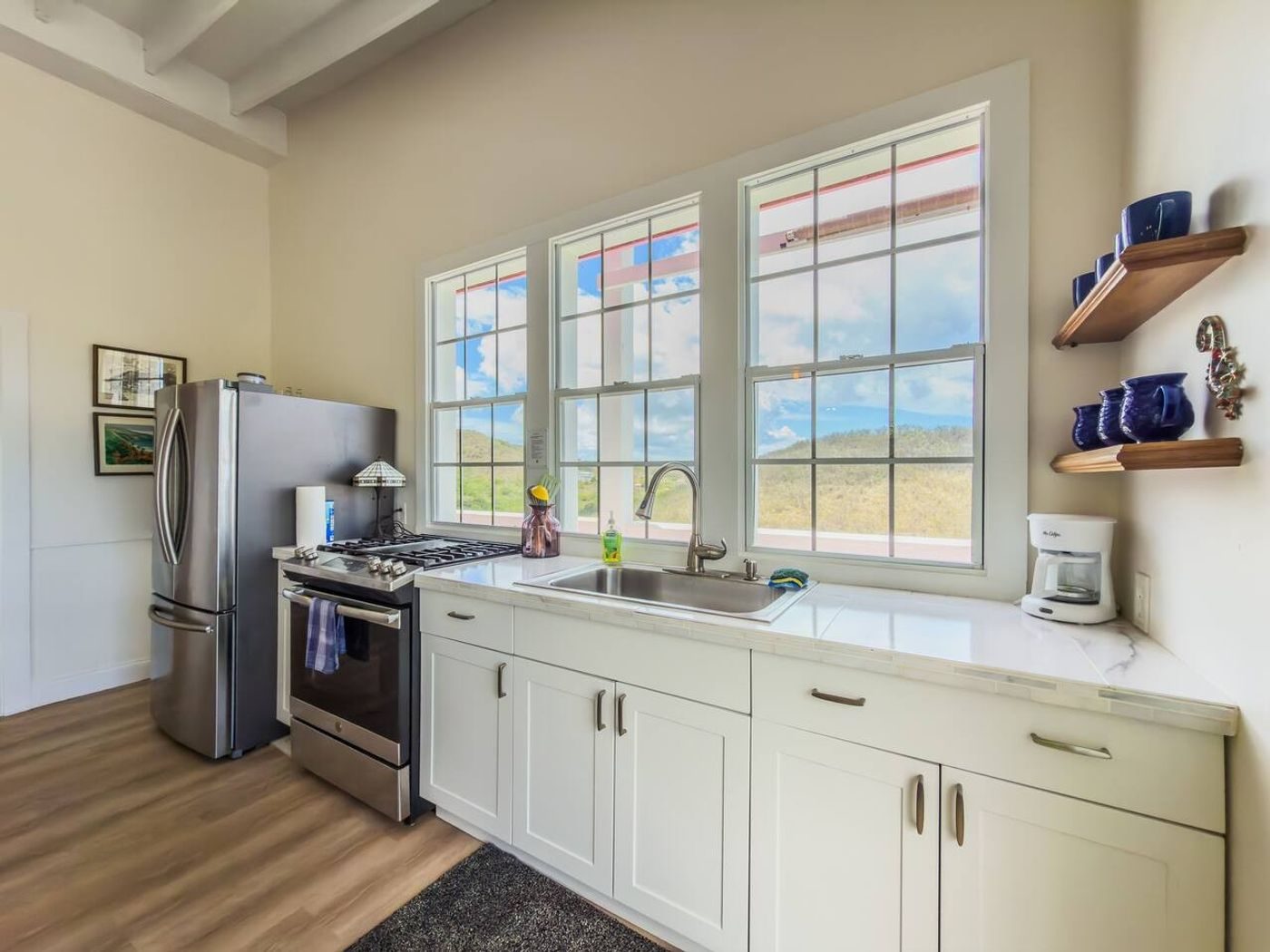
The oven and the hob each need a few lines in the house manual. Say whether the oven runs hot, which setting is the fan and how the timer works. With gas, say how to light the burners and where the shut-off is. With induction, say which pans work on it and keep only those in the cupboard. If the range stands free, check that it has its anti-tip bracket, which CPSC recommends to prevent scalding and crushing injuries.
Coffee, more than one way
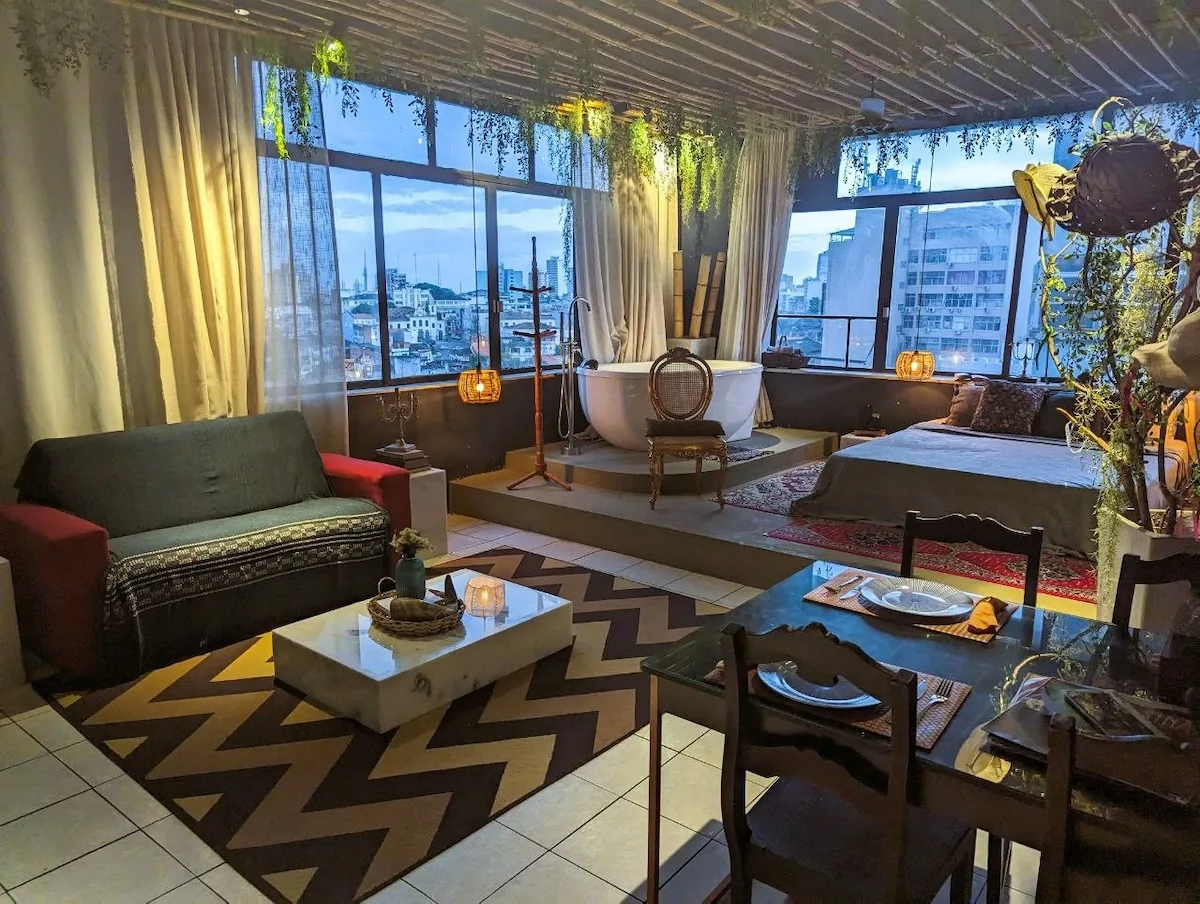
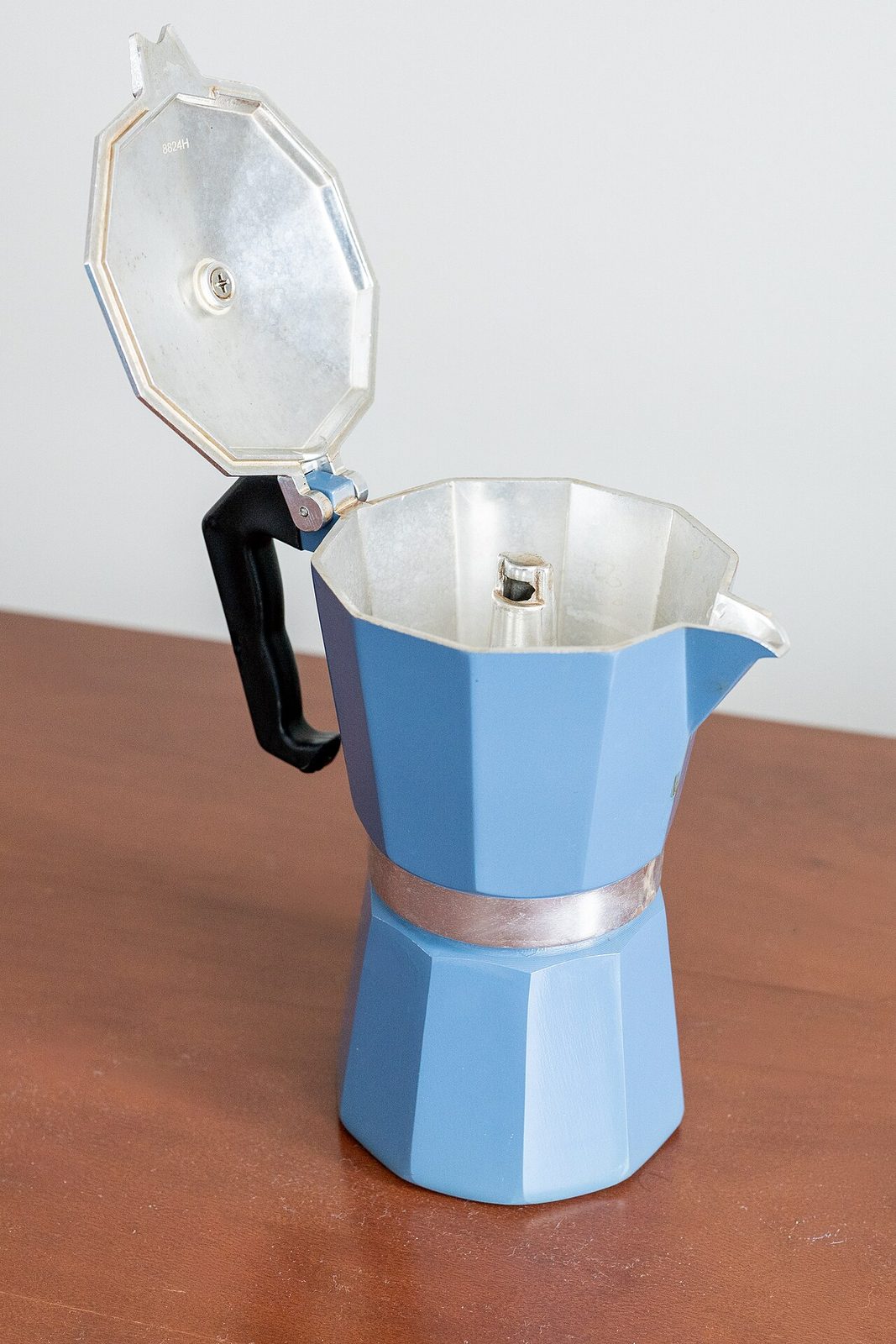
The first cup of the day is made by whoever wakes first, often before anyone has worked out the machine. Two ways of making coffee cover most guests and most mornings. One is a machine: a drip coffee maker, a pod machine or an espresso machine. The other is simple enough to need no instructions: a stovetop moka pot, or a French press or pour-over cone with a kettle. Art de Vivre’s São Conrado Beach View Villa in Rio, which sleeps twelve, has both a traditional coffee machine and a Nespresso machine. In Salvador, Via Avantgarde’s Penthouse Jacuzzi, Suite Colonial and Vista Elevador & Mar each have a drip coffee maker. The Cerulean’s owners list an electric kettle beside the coffee and tea maker, which looks after the tea drinkers as well.
Leave what each method needs: filters for the drip machine, the right pods for the pod machine, a grinder if you leave beans, sugar, and good tea for the guest who does not drink coffee. Buy coffee for each stay rather than leaving one large tin open for months. The USDA’s FoodKeeper puts opened ground coffee at about two weeks in the cupboard, and whole beans at three to five months. Guests notice. Timothy, a guest at Sea Sun Maui in August 2024, wrote: “The thoughtful touches, like fresh coffee and local recommendations, made the experience feel special.”
The cupboard and the fridge
The basics are the things nobody wants to buy a whole bottle of for one week: olive oil and a neutral oil, salt, pepper, sugar, vinegar, a few dried herbs and spices, flour and stock cubes. Then the things that make a kitchen run: washing-up liquid, dishwasher tablets, sponges, paper towels, foil, cling film, food bags, bin bags and baking paper. Several of the St. Croix houses list spices in their kitchens, The Cerulean, Shoy’s Beach House and Toes in the Sand Beach House among them. Marco, a guest at Sea Sun Maui in April 2026 who came with his family of four, wrote that what impressed him most was “how well-stocked the condo was with everything we could have wanted or needed: for the beach, bathroom soap, kitchen supplies and spices.”
What to leave in the fridge depends on how guests arrive. After a flight, the useful things are breakfast and a cold drink: milk, butter, eggs, fruit and water, with bread on the counter. The USDA’s FoodKeeper gives eggs in their shells three to five weeks in the refrigerator, butter one to two months and a carton of orange juice seven to ten days once opened; milk keeps until the date on the carton. Leftovers keep three to four days in the refrigerator, by the USDA’s count, which is worth a line in the house manual. Date anything opened that you leave for the next guests, or clear it at the changeover.
Some owners go further and stock the kitchen before guests land. SP Vacations, which manages The Cerulean and the other St. Croix houses in this guide, will put the basics in the kitchen ahead of arrival if guests send a list, and The Cerulean’s own website describes the kitchen “stocked before you land and topped up as you go.” At Sea Sun Maui, Christopher, a guest in February 2025, arrived late and found that the owner had “even met our grocery delivery early to get some food put away since we arrived so late.”
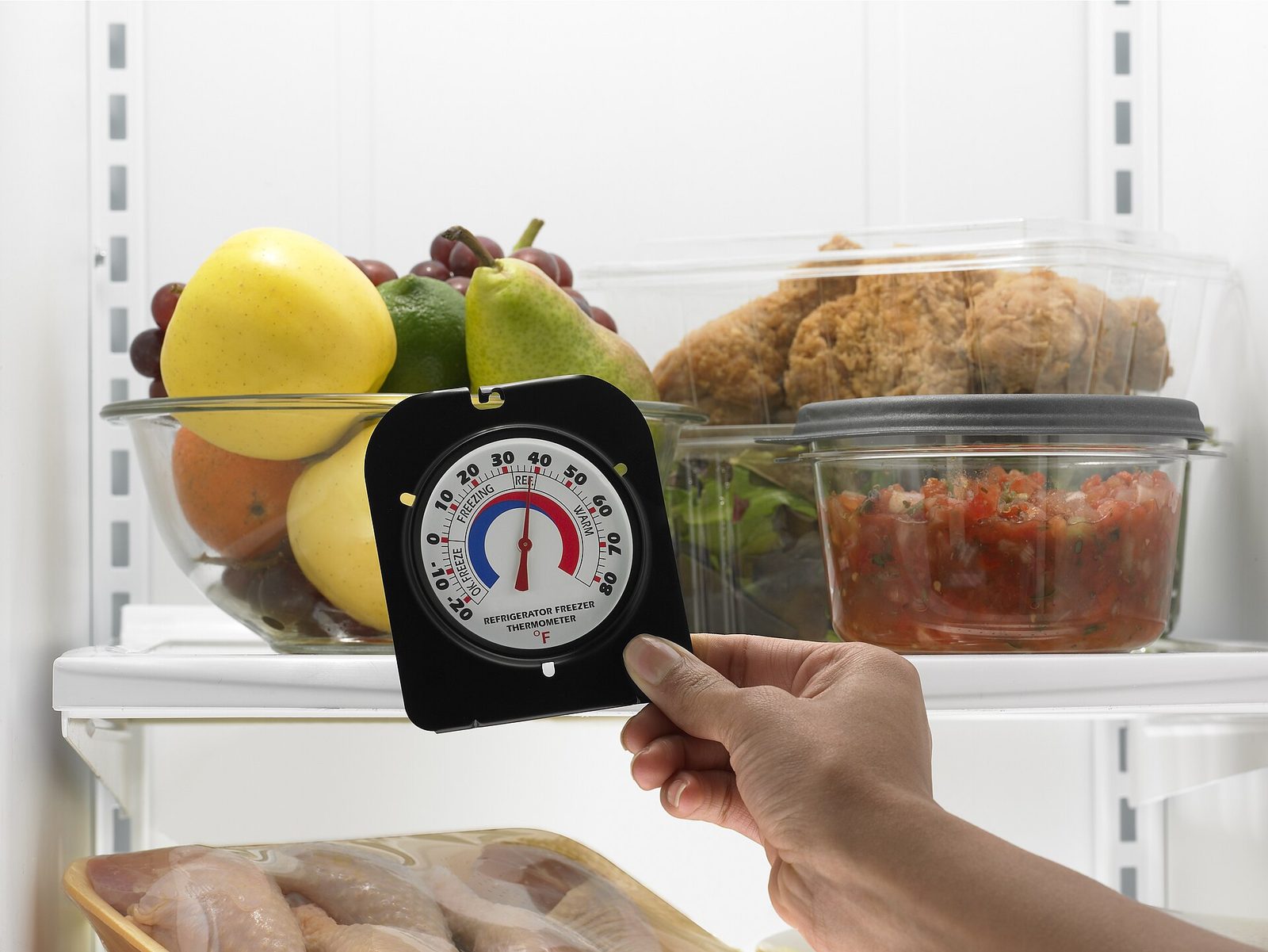
The U.S. Food and Drug Administration asks for the refrigerator at or below 40°F (4°C) and the freezer at 0°F (-18°C), and recommends an appliance thermometer in each, at the front where it is easy to read, checked at least once a week. In a rental, check it at every changeover. Do not pack the shelves so tightly that air cannot move. Food that needs refrigeration should not sit out for more than two hours, or one hour when the air is above 90°F, which on a hot arrival day means putting the shopping away before the bags go to the bedrooms.
Power cuts are the other reason to know these numbers. FDA guidance is that an unopened refrigerator keeps food cold for about four hours, and that a full freezer holds its temperature for about 48 hours, or 24 if it is half full. Refrigerated perishables that have been above 40°F for four hours or more should be thrown away. Put this in the house manual, with what the house itself does when the power goes: The Cerulean has a whole-house backup generator; Dragonfly Villa and Moko Vista run on solar power with battery backup; and Bananaquit Bungalow, a one-bedroom cottage that is fully off the grid, asks guests to go easy on power after dark and in cloudy weather so that the batteries last.
Washing up
A dishwasher that guests can trust saves the last hour of every evening. Leave enough tablets for the stay, a bottle of rinse aid and a short note on what stays out of it: the good knives, the cast iron, laminated boards and anything with a wooden handle. Leave a drying rack and a pile of clean tea towels for those, and two sponges, so that the one used on raw meat juices is not the one used on the glasses.
Count place settings and glasses for the full house and then some, because the dishwasher is often running when the next meal starts. The Cerulean’s own website lists service and place settings for twelve or more, for a villa that sleeps twelve. Its owners also keep two sets of glasses, one for indoors and one for the pool deck, which is worth copying.
The grill
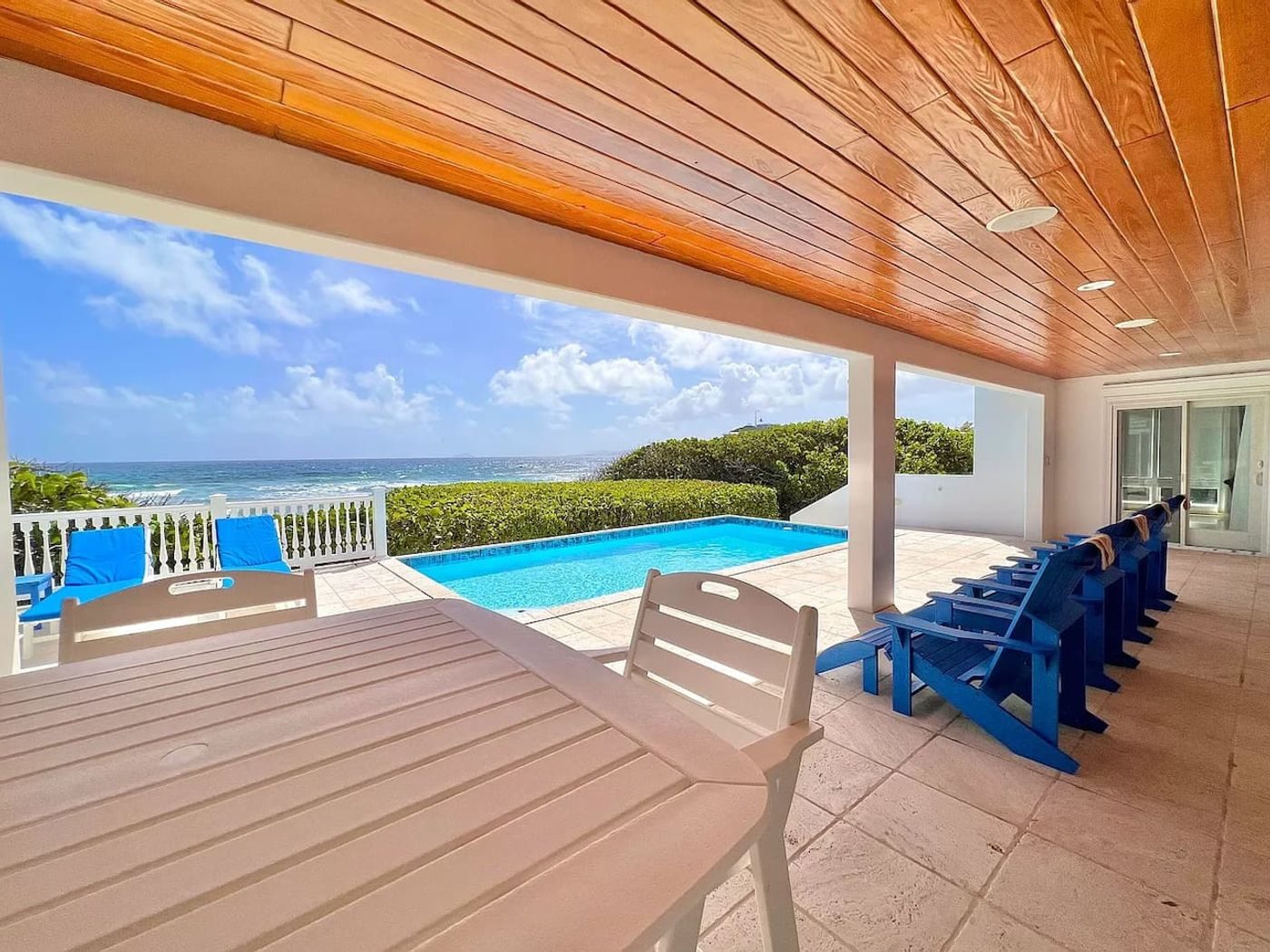
The Cerulean has an outdoor kitchen with a built-in grill under a louvred pergola beside the pool, and its owners list an outdoor wine fridge and a lighted pergola. Shoy’s Beach House has a flat-top grill; Jennifer, a guest there in March 2026, wrote: “Grill and Blackstone spotless.” Dragonfly Villa’s listing mentions a large barbecue and barbecue utensils.
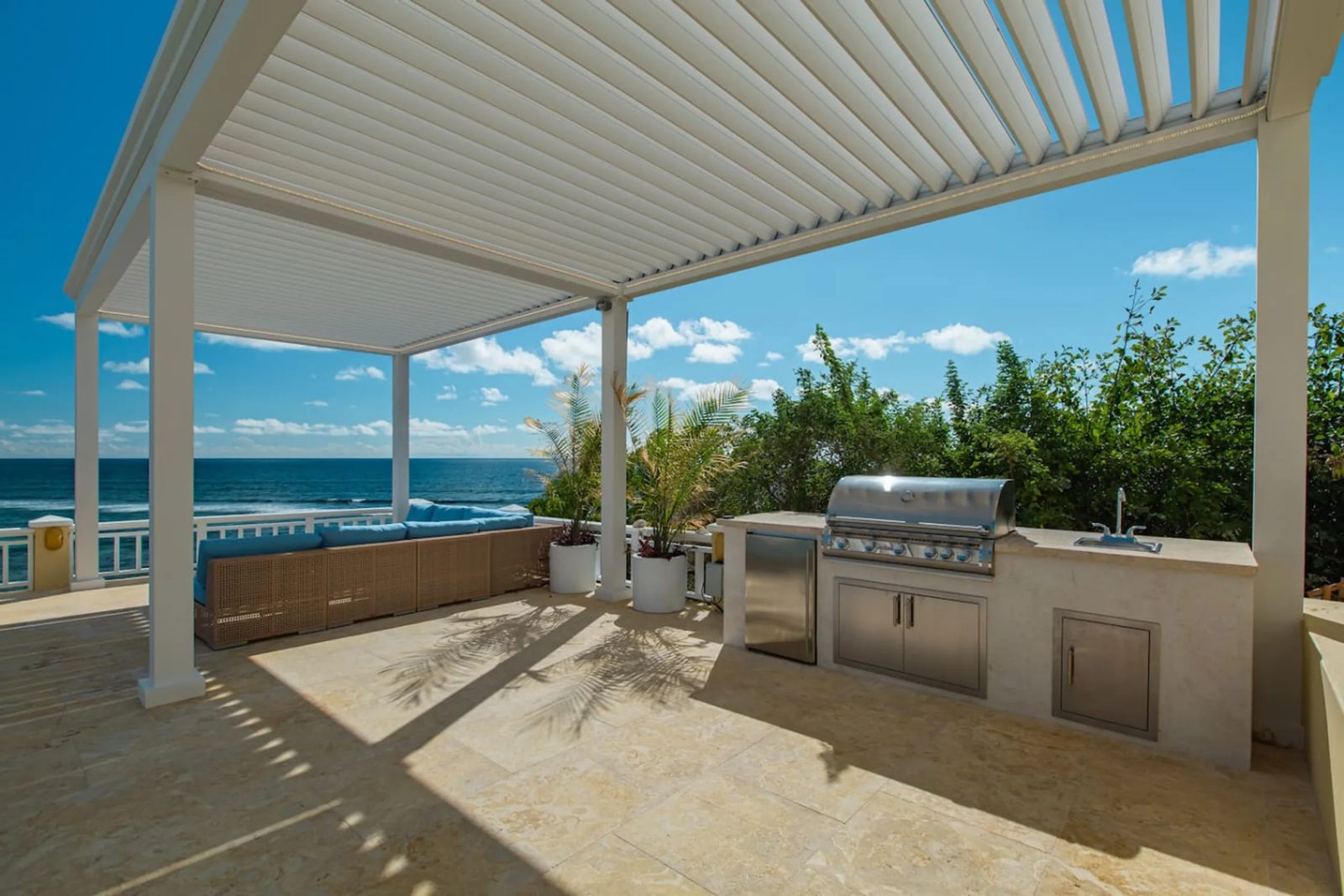
The tools make it usable. Leave two pairs of long tongs and two platters, one for raw food and one for cooked; the USDA’s grilling guidance is never to use the same platter, board or utensils for both. Leave a food thermometer too, because meat on a grill browns quickly on the outside, whatever is happening inside. The USDA’s safe minimum temperatures are 145°F (63°C) for steaks, chops and roasts of beef, pork, lamb and veal, with a three-minute rest; 160°F (71°C) for burgers and other ground meat; 165°F (74°C) for chicken and all poultry; and 145°F for fish. Write those four numbers on a card and keep it with the thermometer.
Think about the brush. CDC has reported injuries from wire bristles that came off grill-cleaning brushes and ended up in food; its advice is to examine the grill surface carefully before cooking and to consider other cleaning methods. Keep a spare gas bottle, or say where to buy one, and a lighter that works. For a picnic or a day at the beach, the USDA’s grilling guidance suggests packing drinks in one cooler and perishables in another, so that the one opened all afternoon is not the one keeping the food cold.
Cooking for twelve, cooking for two
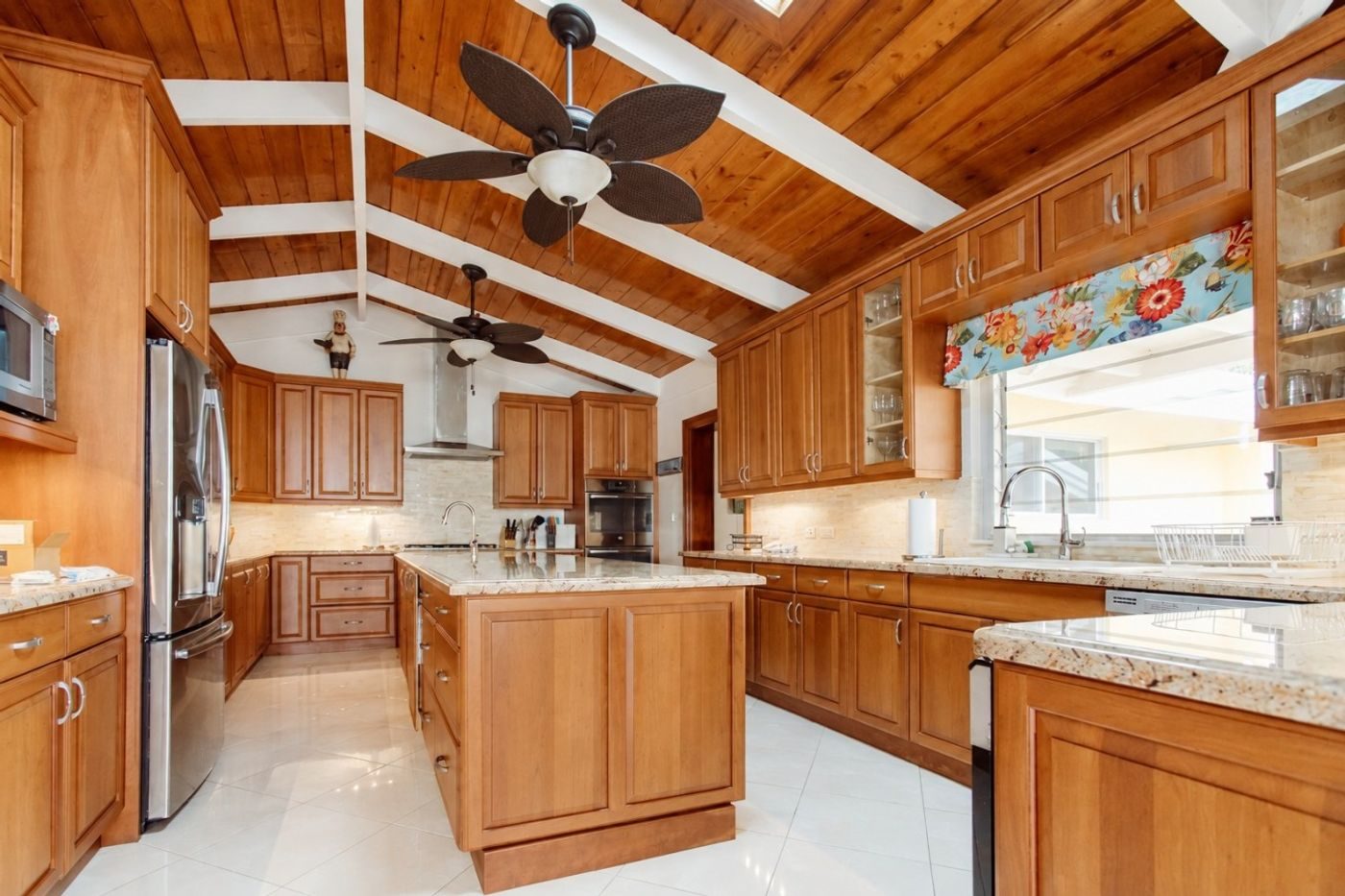
A house that sleeps twelve needs a kitchen planned for twelve, and the best examples double the things that run out. The Cerulean has a full second kitchen in its guest cottage, with a second full-size refrigerator, as well as an ice maker and a poolside drinks refrigerator. The Buck Island Overlook, which also sleeps twelve, has a second kitchen whose extra refrigerator, counter, sink and preparation space its listing calls “particularly convenient when hosting a larger group.” The São Conrado villa has two refrigerators and two industrial ovens. Shoy’s Beach House has an ice maker and generous counters, and Kevin, a guest in June 2026, listed “modern appliances, ice maker, flat grill, large washer/dryer” among the things that make it work for “large/multiple families.”
The Cerulean’s indoor table seats ten, with room for a large group to eat outside on the pool deck. Art de Vivre’s Copacabana Penthouse, which sleeps ten, has a dining table for twelve, and there a housekeeper prepares breakfast every day. For a big group, a chef for one evening, or for every evening, changes the week; SP Vacations can arrange an arrival dinner, a week of dinners or a single celebration meal.
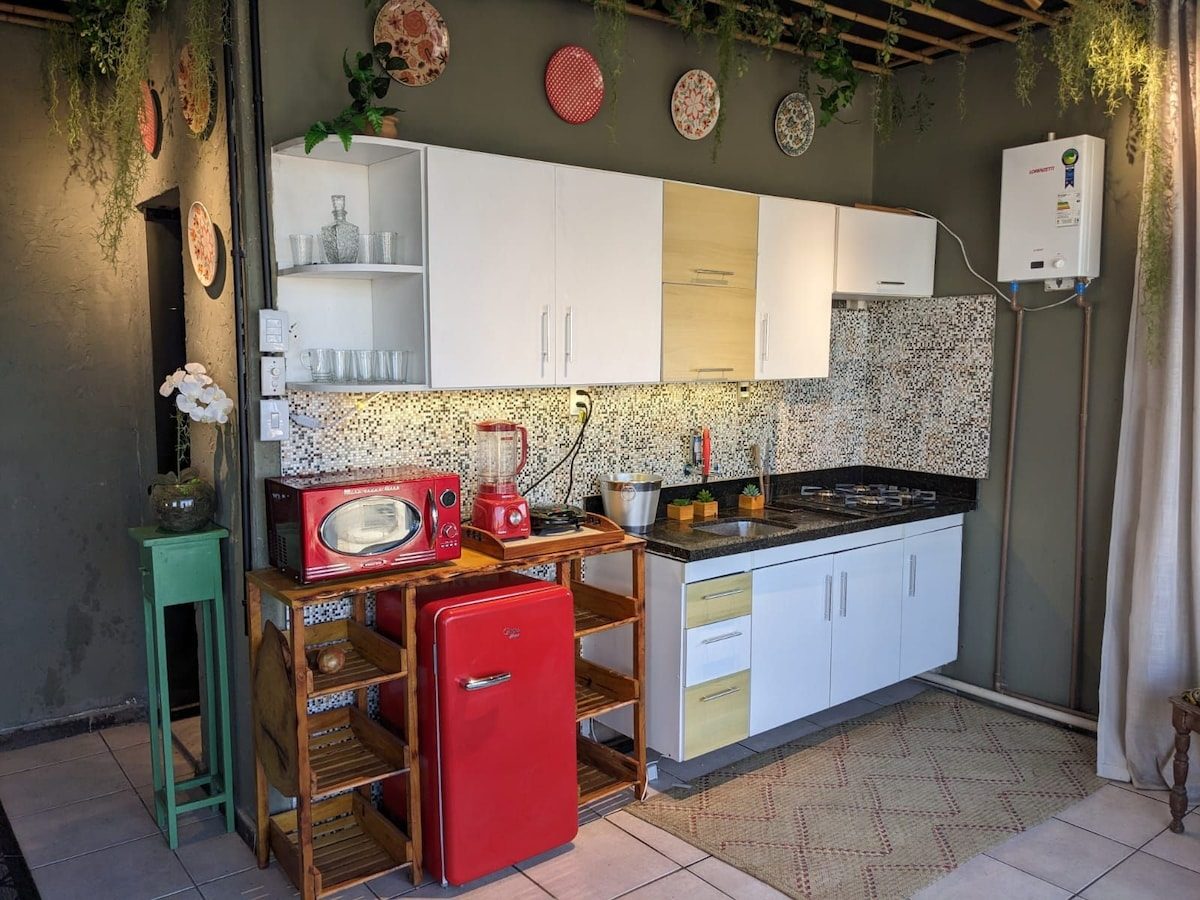
A kitchen for two is a different job, and it is easy to overfill. Vista Elevador & Mar has a compact corner with a gas stove, a mini fridge, a microwave, a blender and a drip coffee maker, enough for breakfast and a simple supper. The Suite Colonial keeps its glassware and jars on open shelves above a small hob. Lux Vidigal, an apartment for two halfway up the hillside in Rio’s Vidigal, has a full kitchen with a five-burner gas range, and Scott, a guest in February 2025, called the apartment “a perfect home base for a couple who wants to cook, eat and chill between visits to the beaches, downtown Rio, and the streets of Vidigal.” For two, one very good frying pan, a small pot, one sharp knife, a board, two good wine glasses and a way to make coffee are worth more than a drawer of gadgets.
Whatever the size of the house, run the dinner test again whenever something changes, and ask departing guests one question: what did you go out to buy? The answer is the next thing to put in the drawer.
The kitchen checklist
- A chef’s knife, a bread knife and a paring knife, sharpened at each changeover.
- Two cutting boards, one kept only for raw meat, poultry and seafood.
- Pans for the full house, with a lid for every pan.
- Two ways to make coffee, and coffee bought fresh for each stay.
- An appliance thermometer in the fridge and the freezer: 40°F (4°C) and 0°F (-18°C).
- Milk, butter, eggs, fruit and water on arrival, or a list the guests send ahead.
- Two pairs of tongs, two platters and a food thermometer at the grill.
- Place settings and glasses for everyone the house sleeps, and a set for the pool.
- A note on the oven, the hob, the dishwasher and what to do in a power cut.
Questions owners ask
What kitchen equipment should a holiday rental have?
Enough for the number the house sleeps: a sharp chef's knife, a bread knife and a paring knife; two cutting boards, one kept for raw meat; a large stockpot, frying pans and saucepans with lids; a roasting tin and baking sheets; mixing bowls, a colander and measuring cups; two ways to make coffee; and place settings and glasses for everyone. The simplest test is to cook dinner and breakfast for a full house and note what was missing.
What should I leave in the fridge for guests arriving?
Breakfast and a cold drink: milk, butter, eggs, fruit and water, with bread on the counter. The USDA's FoodKeeper gives eggs in their shells three to five weeks in the refrigerator and butter one to two months, and milk keeps until the date on the carton. Many owners also offer to stock the kitchen from a list the guests send before they arrive.
What temperature should a rental's fridge and freezer be?
The FDA recommends 40°F (4°C) or below in the refrigerator and 0°F (-18°C) in the freezer. Keep an appliance thermometer in each, at the front where it is easy to read, and check it at least once a week; in a rental, check it at every changeover. Do not crowd the shelves so tightly that air cannot circulate.
How long does food stay safe in the fridge during a power cut?
According to the FDA, an unopened refrigerator keeps food cold for about four hours, and a full freezer holds its temperature for about 48 hours, or 24 if it is half full. Keep the doors closed. Refrigerated perishables that have been above 40°F for four hours or more should be thrown away.
What grill tools should a holiday home provide?
Two pairs of long tongs and two platters, one for raw food and one for cooked, a spatula, a food thermometer and a way to clean the grill. The USDA advises never using the same platter, board or utensils for raw and cooked food. CDC advises checking the grill surface for loose wire bristles from cleaning brushes before cooking.
How many place settings should a rental kitchen have?
At least one for everyone the house sleeps, and a few more, because the dishwasher is often running when the next meal starts. The Cerulean on St. Croix, which sleeps twelve, lists service and place settings for twelve or more, and keeps a separate set of glasses for the pool deck.
Sources
- U.S. Food and Drug Administration, refrigerator and freezer temperatures, appliance thermometers and the two-hour rule: fda.gov (Are You Storing Food Safely?); power cuts: fda.gov (Food and Water Safety During Power Outages)
- USDA Food Safety and Inspection Service, safe minimum internal temperatures, grilling, cutting boards and leftovers: temperature chart, grilling, cutting boards, leftovers
- USDA FoodKeeper storage times for eggs, butter, milk, juice and coffee: foodsafety.gov (FoodKeeper)
- U.S. Fire Administration, cooking fire safety: usfa.fema.gov
- CDC, Morbidity and Mortality Weekly Report, injuries from wire bristles from grill-cleaning brushes (2012): cdc.gov
- U.S. Consumer Product Safety Commission, childproofing the home, safety latches and anti-tip brackets for ranges: cpsc.gov
- The Cerulean, the owners’ amenity list and the villa’s own website: theceruleanstcroix.com
- SP Vacations, listings and concierge pages for Dragonfly Villa, Bananaquit Bungalow, Shoy’s Beach House, Toes in the Sand Beach House, The Buck Island Overlook and Moko Vista, and guest reviews quoted as written: spvacationsvi.com
- Sea Sun Maui, the kitchen description and guest reviews quoted as written: mauibeachvacationrentals.com
- Art de Vivre, São Conrado Beach View Villa and Copacabana Penthouse: artdevivre.com.br
- Via Avantgarde, the Salvador suites: viaavantgarde.com
- Lux Vidigal, the apartment and its guest reviews: luxvidigal.com