The short version
- Layers
- Ambient, task and accent light in every room, each on its own switch
- Colour
- Warm white indoors, 2,700 to 3,000 K, and one colour in each room
- Brightness
- Buy by lumens: about 800 to replace a 60-watt bulb; a CRI of 90 or more
- Dimmers
- Bulbs marked dimmable, matched to the dimmer switch
- At night
- Lit stairs with a switch at each floor, and a dim light on the way to the bathroom
- Outside
- Shielded, low, warm and on timers, with outdoor-rated fittings and cords
At nine in the evening, with dinner over and the sea gone dark, a holiday house shows how well it is lit. Guests cook, eat on the terrace, read in bed and get up in the night in a house they do not know, and each of those needs a different kind of light. A house lit only by a grid of ceiling downlights is bright enough, and still hard to live in after dark.
This guide covers the layers of light a room needs, the colour and brightness of the bulbs, dimmers and lamps, the stairs and paths guests use at night, and the terraces, pools and gardens outside, with examples from houses in the Collection and the advice of the bodies that set lighting and electrical standards.
Three layers of light
Lighting designers work in three layers. Ambient light fills a room so you can move around it. Task light falls where you work: on the kitchen counter, the dining table, the page of a book. Accent light picks out what you want seen, such as a painting, a wall of plants or a tree in the garden. A room with all three, each on its own switch, can be bright for cooking and low for dinner without anyone changing a bulb.
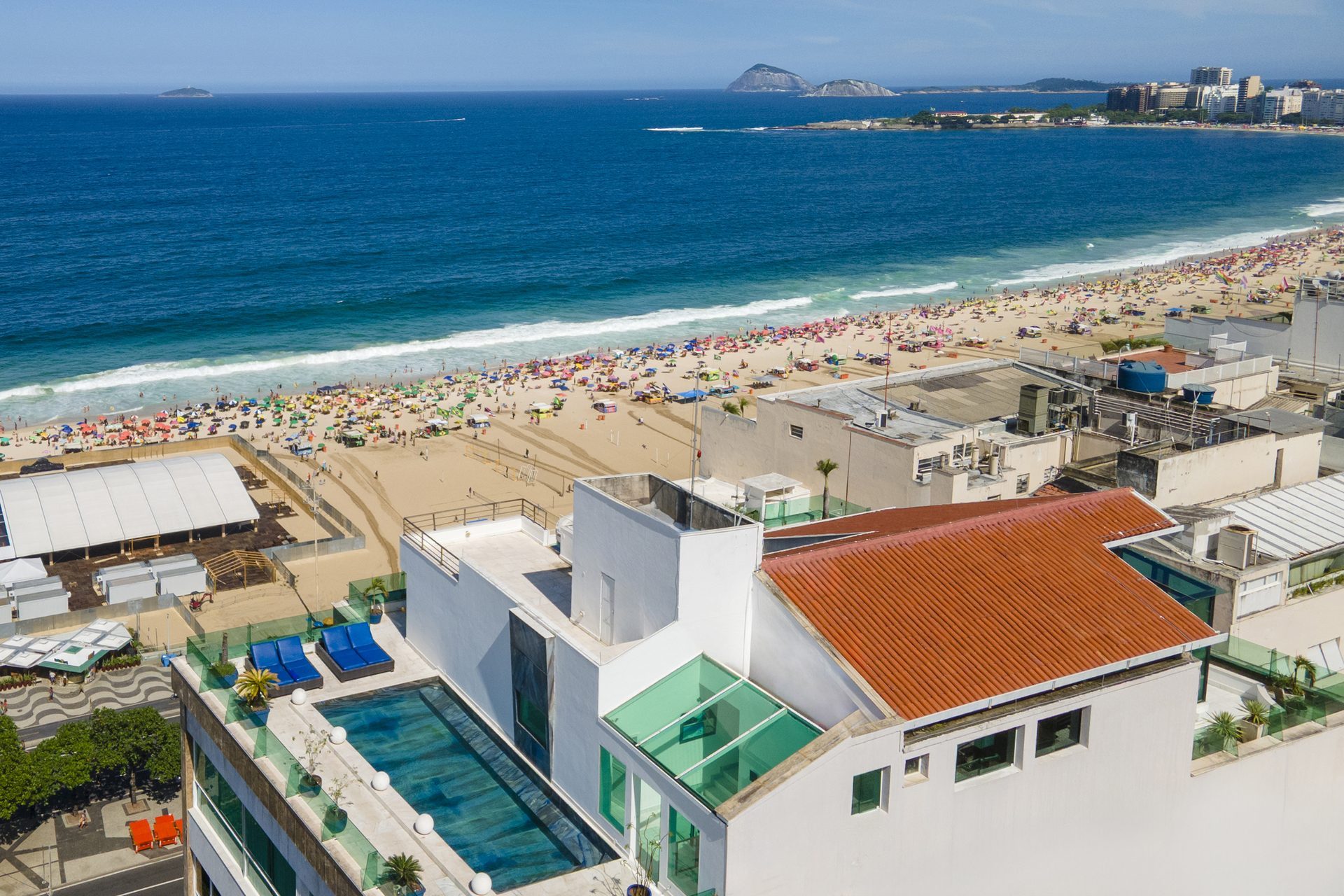
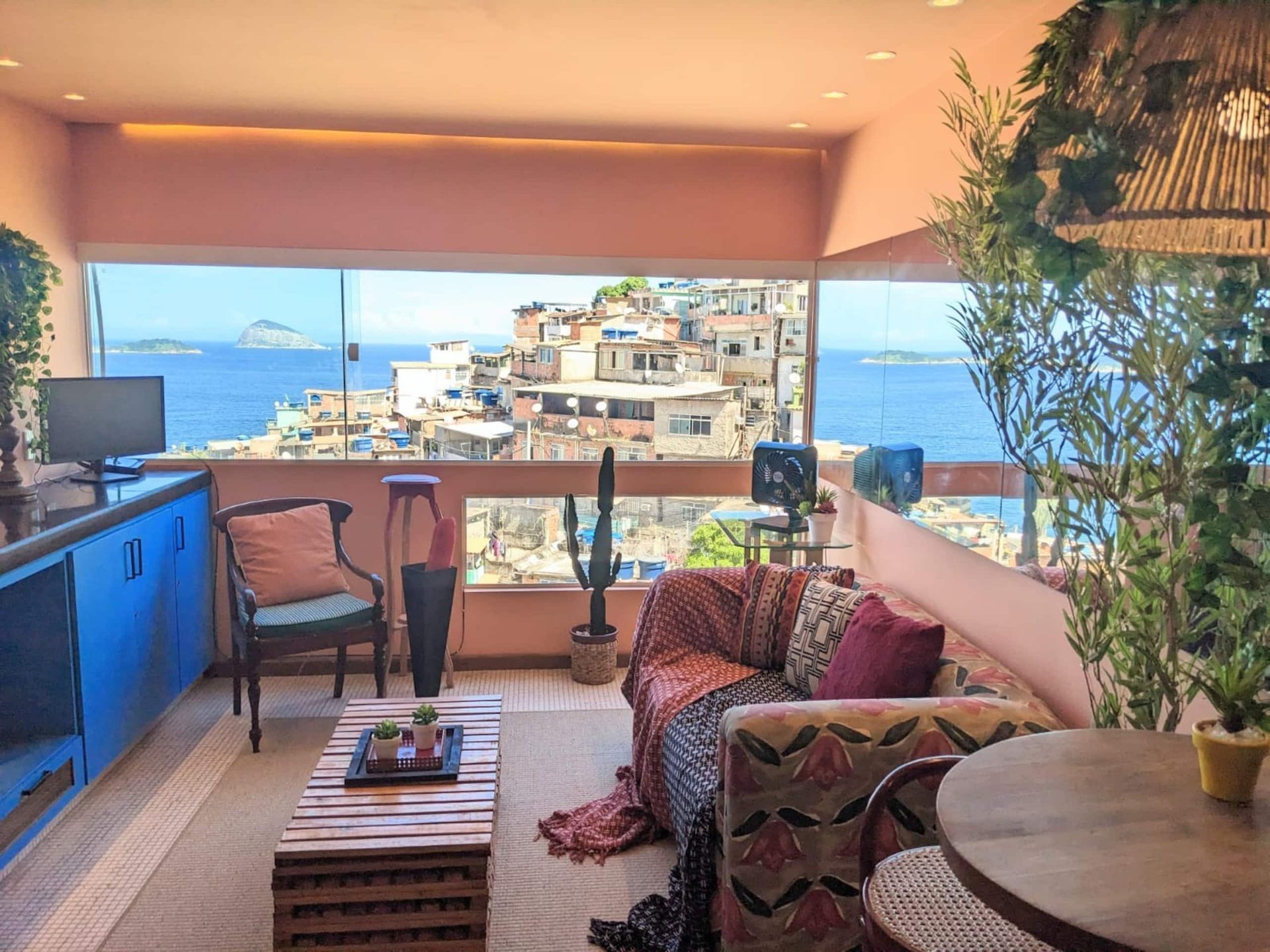
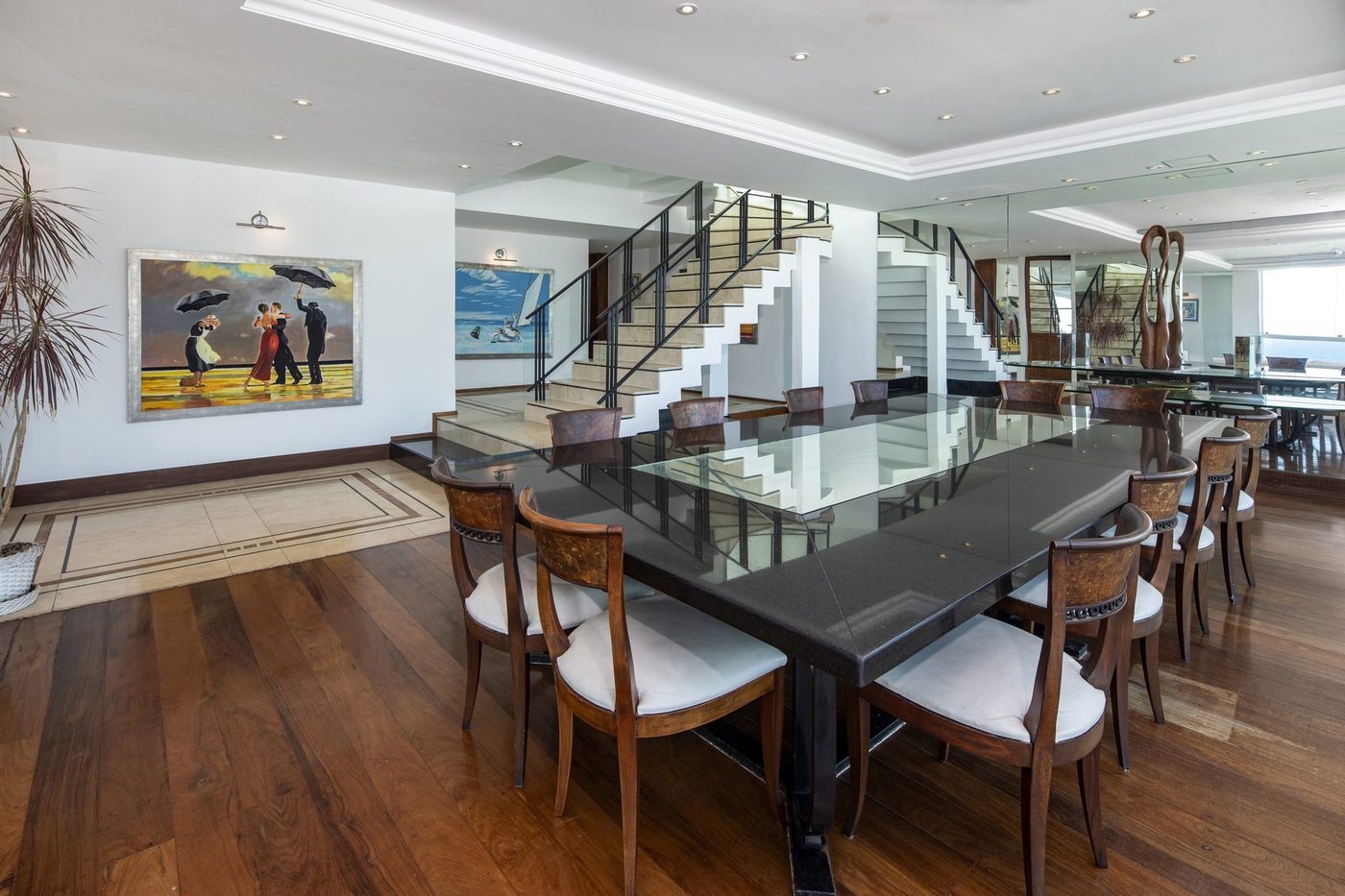
Downlights have their place, as ambient light in a kitchen or a hall. On their own they are poor company: they light the tops of heads, put shadows under the eyes and, set into a ceiling beside a window, bounce straight back off the glass at night. Put them on a dimmer and give the room lamps as well. In the dining room of the Copacabana Penthouse in Rio, the downlights in the ceiling are joined by a small picture light over each painting, which is accent light at its simplest.
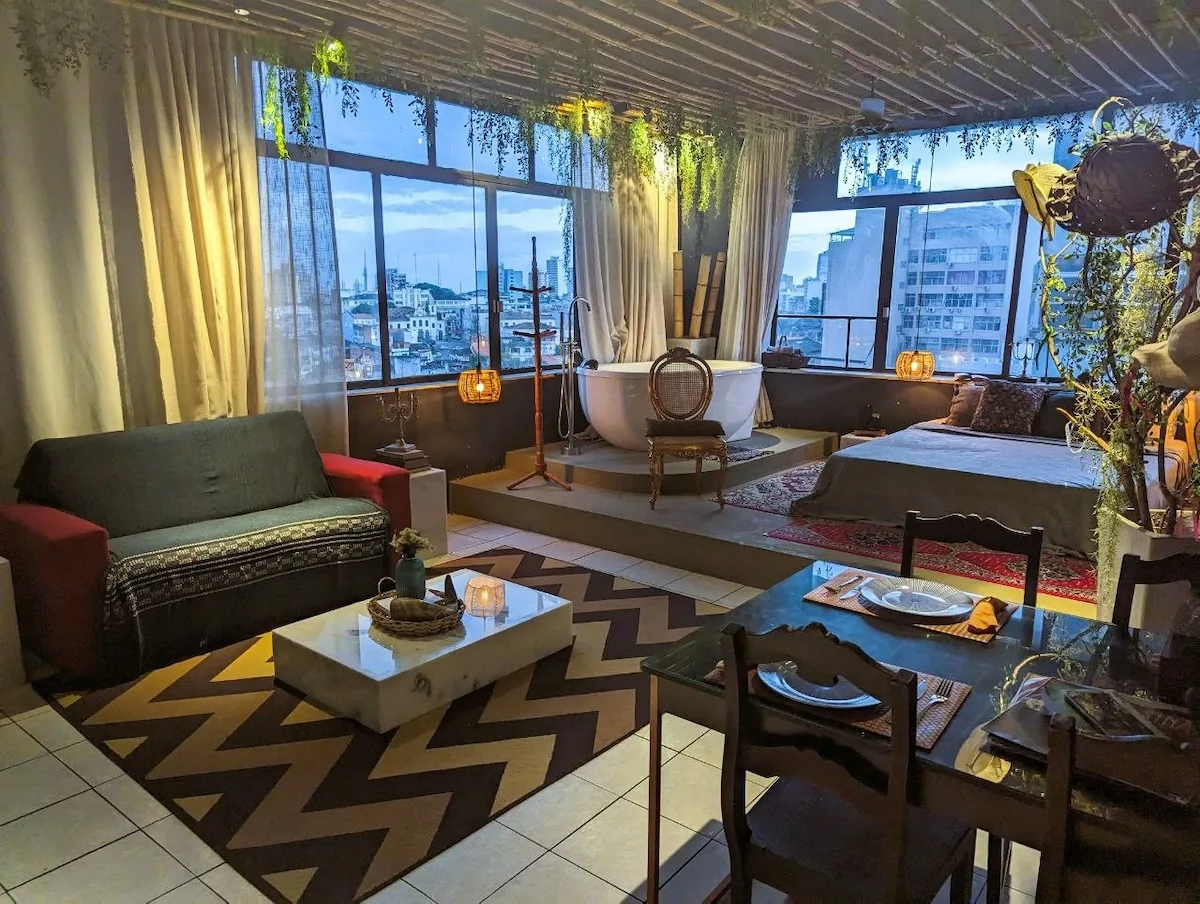
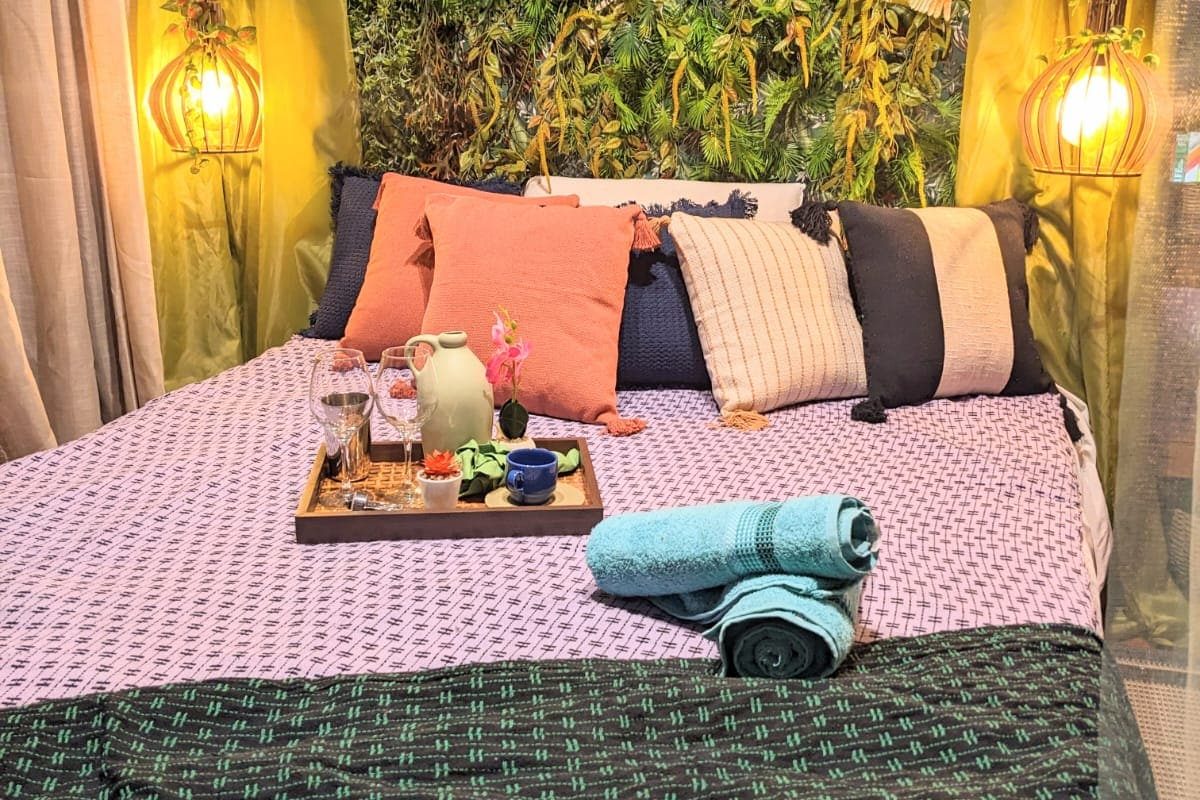
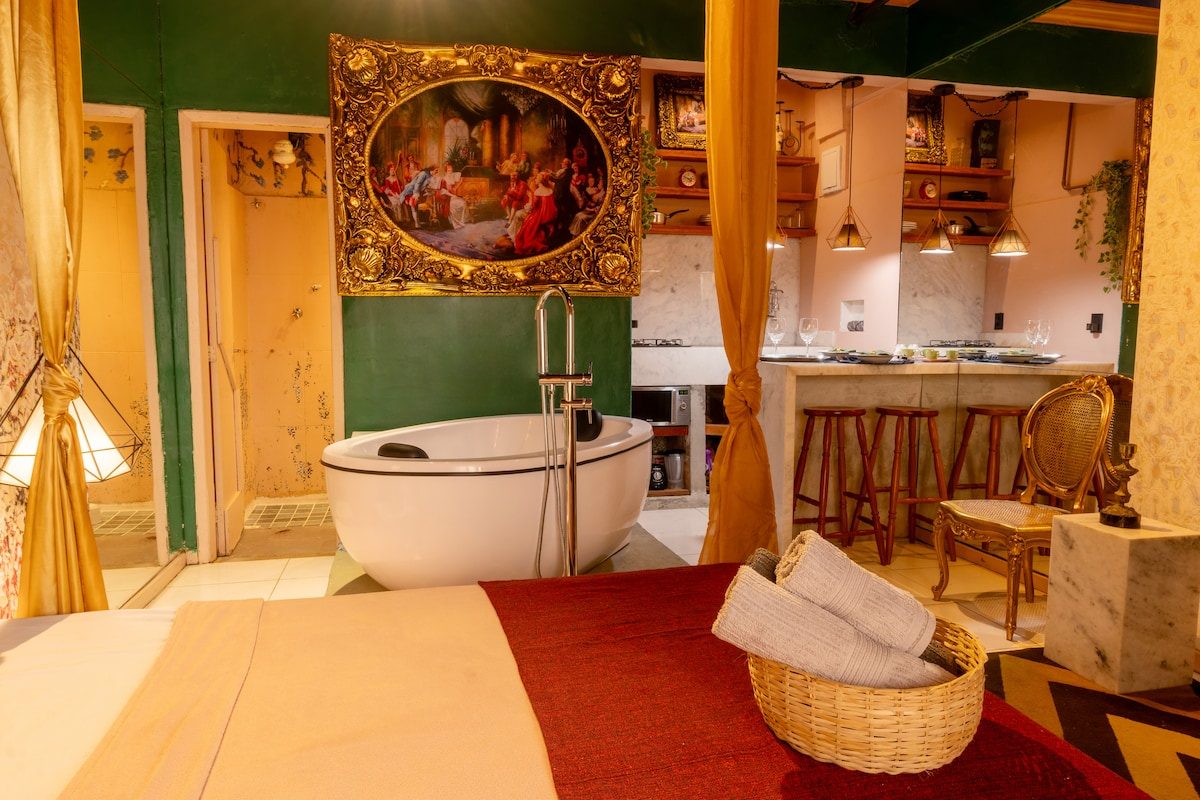
The Loft Histórico, the smallest of Via Avantgarde’s four suites in Salvador’s upper town, shows the idea in a single room. Three pendants hang low over the kitchen bar, another lamp stands by the bed, and the gilt-framed painting above the tub catches the warm light. Via Avantgarde describes the lighting in its Penthouse Jacuzzi as theatrical LED lighting. The lesson of the Loft is many small sources at different heights, so the room never depends on one bright light in the middle of the ceiling.
Colour and brightness
Bulbs are sold by colour as well as brightness, and the colour is given in kelvin. The U.S. Department of Energy explains that lower numbers mean warmer, yellower light and higher numbers cooler, bluer light, and that warm light is the closest to the old incandescent bulb. ENERGY STAR, the U.S. Environmental Protection Agency’s efficiency programme, describes soft and warm white, from 2,200 to 3,000 K, as ideal for most indoor uses; neutral and cool white, 3,500 to 4,100 K, as good for kitchens and work spaces; and daylight, 5,000 to 6,500 K, as good for reading.
For a holiday house, warm white is right almost everywhere. The California Lighting Technology Center at the University of California, Davis, gives 2,700 to 3,000 K as the range for homes. Keep living rooms, bedrooms and terraces at the warm end, and keep one colour temperature in each room, because a cool bulb beside a warm one makes both look wrong. A kitchen counter can take 3,000 K or a little more for the cook. Keep daylight bulbs for a desk.
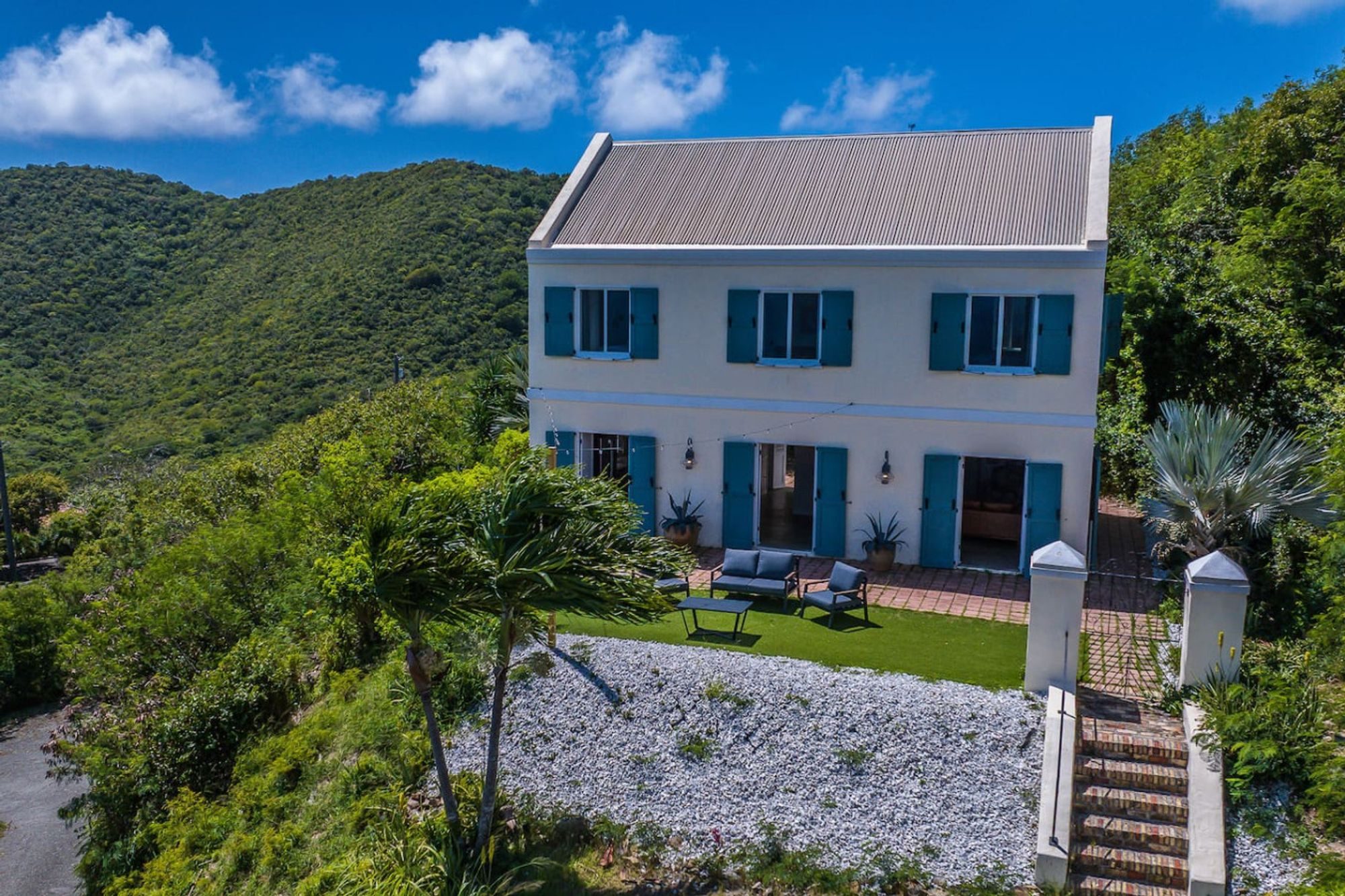
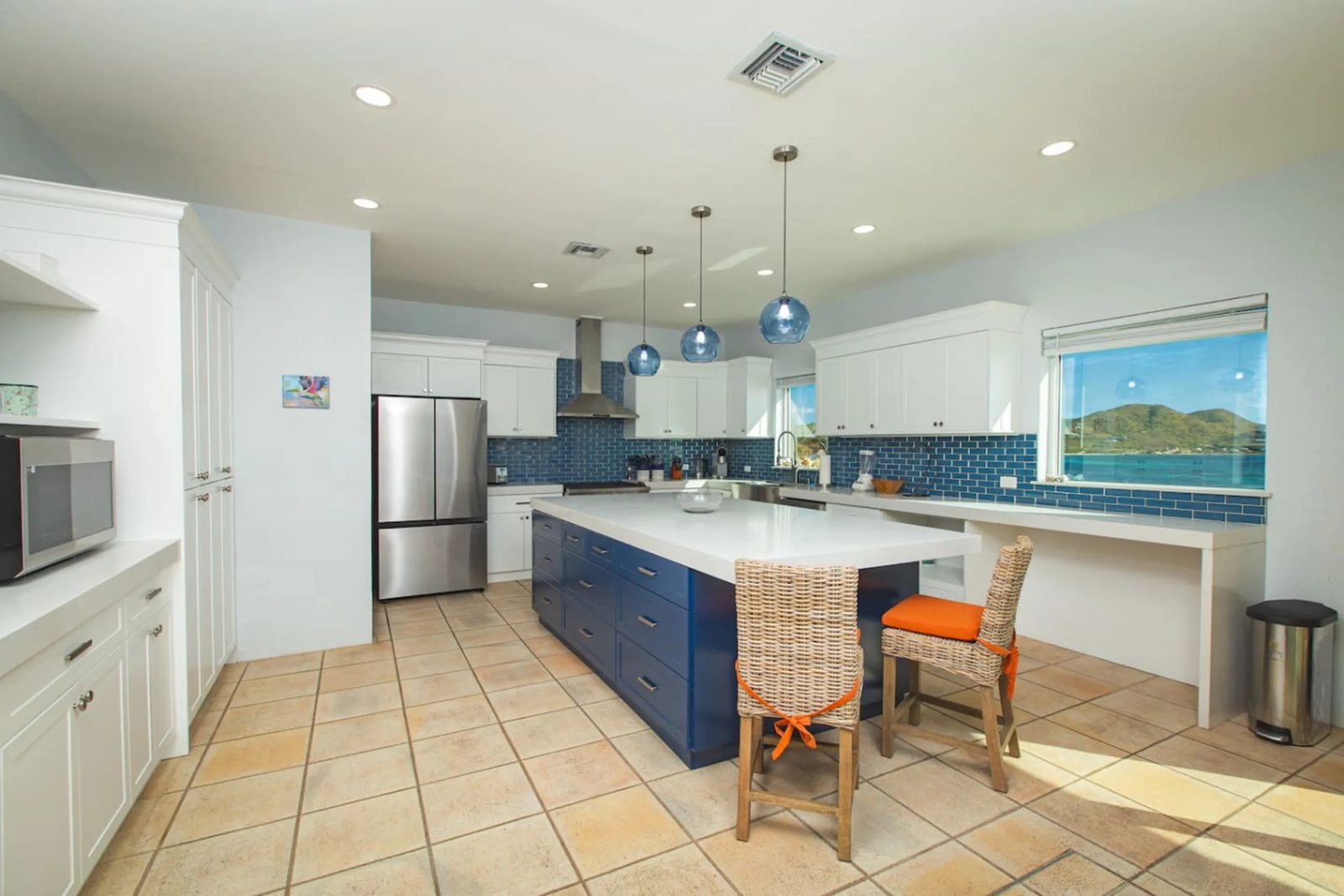
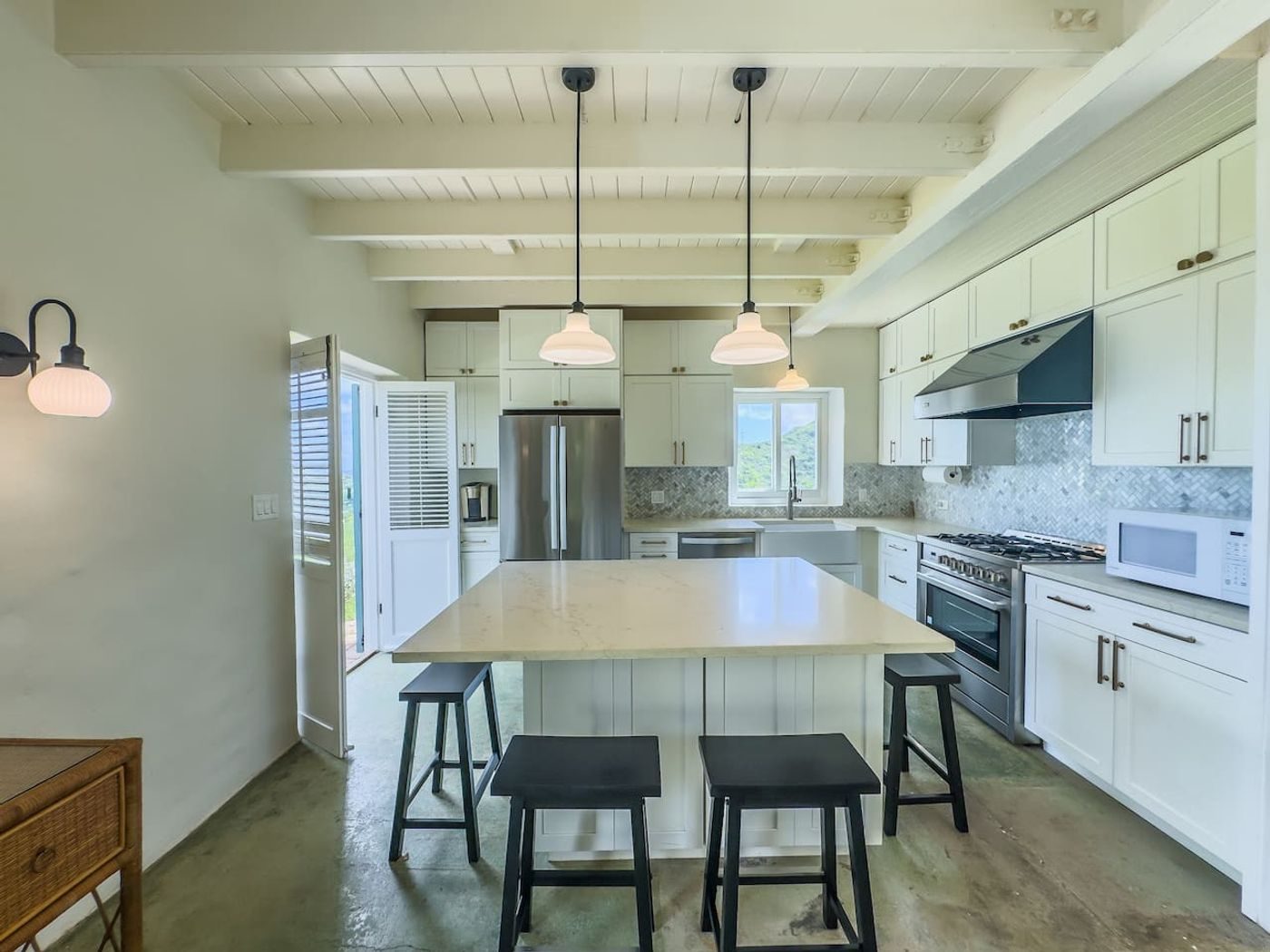
Two more figures on the box matter. Brightness is measured in lumens, not watts: the ENERGY STAR guide puts the equivalent of a 60-watt bulb at 800 lumens and of a 100-watt bulb at 1,600, and the Department of Energy suggests a 1,100-lumen LED to replace a 75-watt bulb. Colour rendering, shown on the box as CRI, describes how true colours look under a light, and the UC Davis centre advises 90 or more. Under a high-CRI bulb, food, wood and fabric look the colour they are, which matters in a well-furnished house. Placement matters as much as lumens: pendants hung low over a kitchen island put the light on the counter, where the cook needs it. At Moko Vista on St. Croix, two hang over the island and a third over the sink by the window.
Keep a box of the right bulbs in the house, labelled by room and fitting, so that whoever replaces one in a hurry does not put a cool white bulb in a bedside lamp.
Dimmers and lamps
A dimmer is the cheapest way to make one room work from breakfast to midnight. The Department of Energy’s advice is to dim lights whenever full light is not needed, and it notes that most LED bulbs can be dimmed. Not all can, and bulb and switch have to suit each other: ENERGY STAR tells buyers to look for bulbs marked dimmable, and the UC Davis centre to choose bulbs that are compatible with the dimmers in the house. A mismatched pair can flicker or hum, and guests notice.
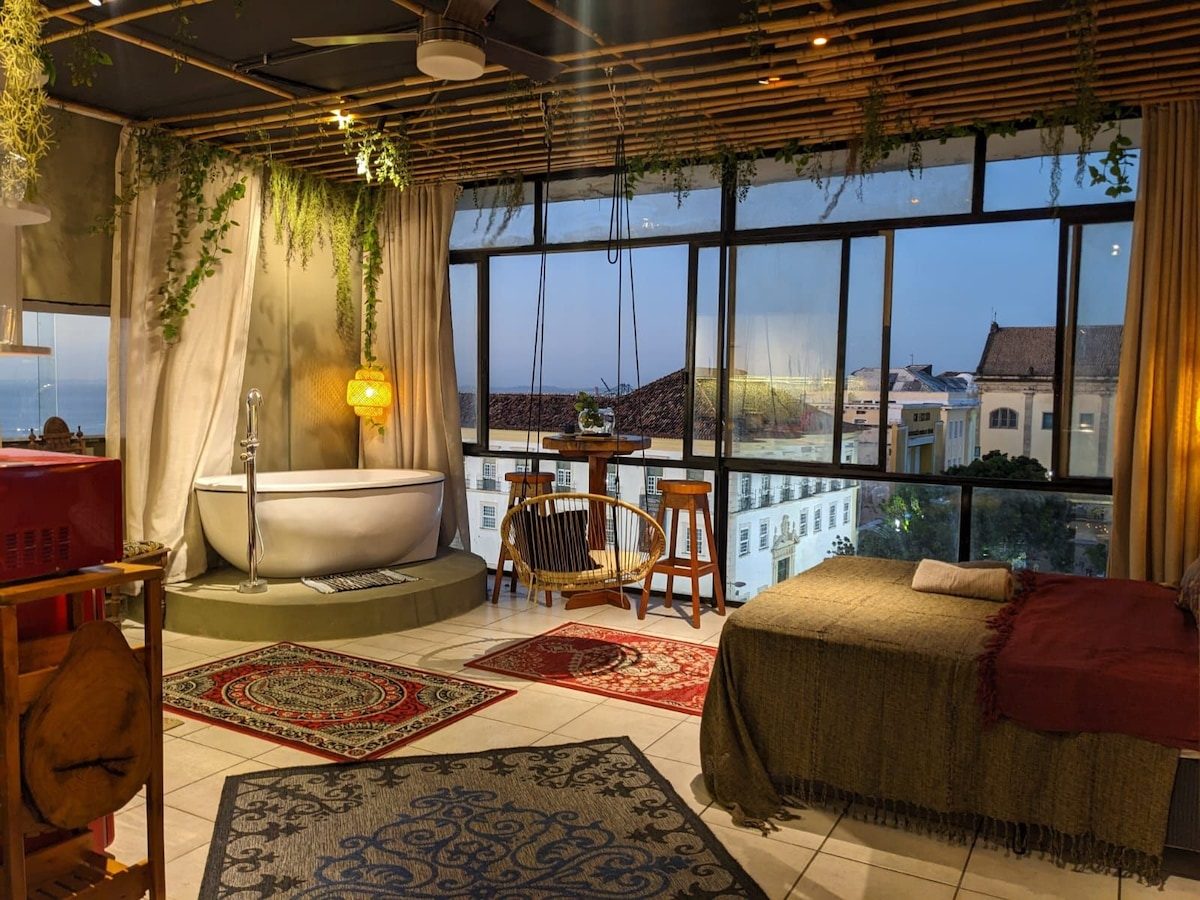
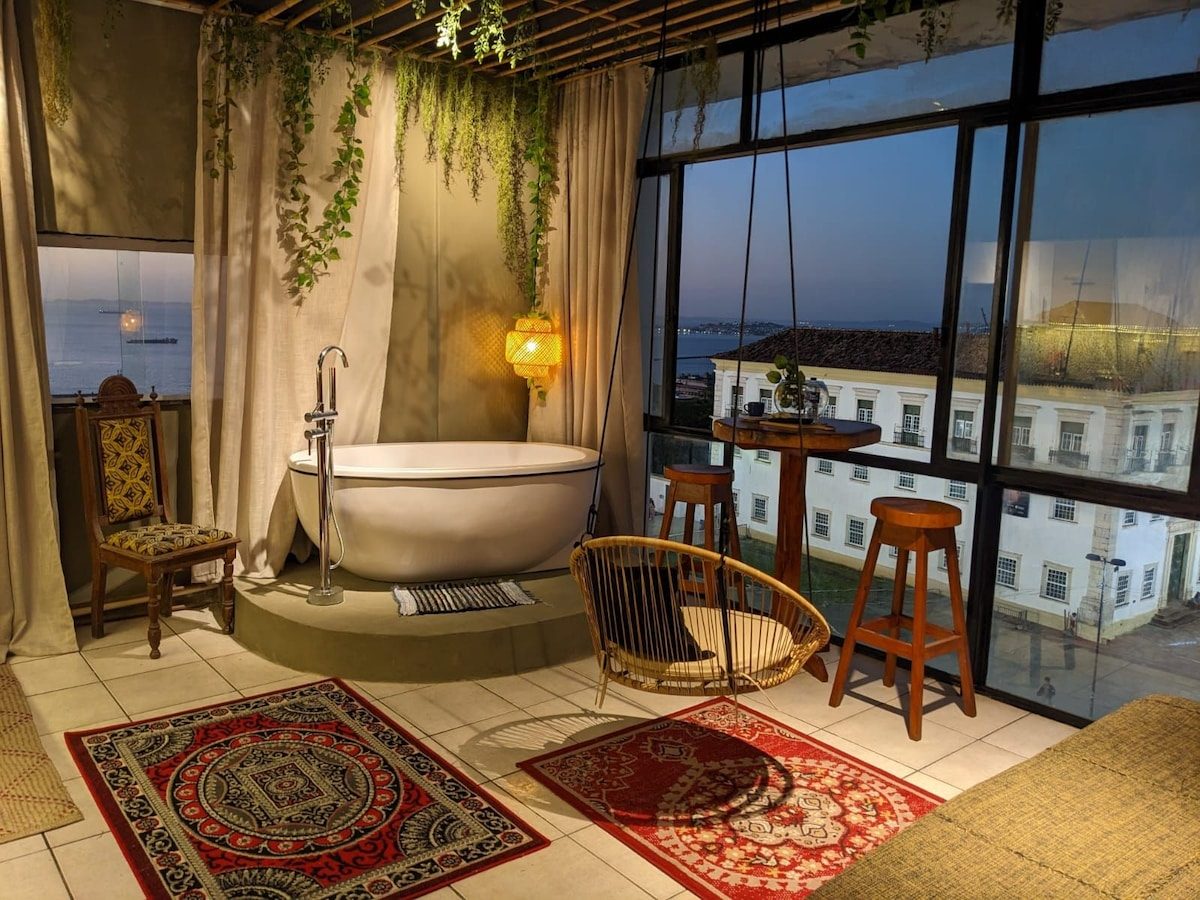
Lamps do what a ceiling cannot. A table or floor lamp at sitting height puts light where faces and books are, leaves the ceiling dark and the corners soft, and can be moved. Vista Elevador & Mar is the Via Avantgarde suite built around its view of the Lacerda Elevator and the Bay of All Saints. In the photograph below, taken at dusk, a woven lantern on the wall beside the tub lights the room, and the old town and the bay stay visible through the glass.
Late in the evening the light should come down. The American Academy of Sleep Medicine advises limiting exposure to bright light in the evening, and the U.S. National Heart, Lung, and Blood Institute suggests avoiding bright screens in the hour before bed. A house that guests can dim, room by room, helps them sleep.
Stairs, halls and the way to the bathroom
At night a guest walks through a house they do not know, half awake and often barefoot. Light the routes they will take before you light anything else.
Stairs come first. The International Residential Code, the model building code for American homes, requires a light that illuminates the treads and landings of every indoor stair, with a wall switch at each floor where the stair has six or more risers, and a light at the top landing of outdoor stairs. Check your stairs against that, whatever the age of the house. In its advice on preventing falls, the U.S. Centers for Disease Control and Prevention adds railings on both sides of stairs and more light throughout the home.
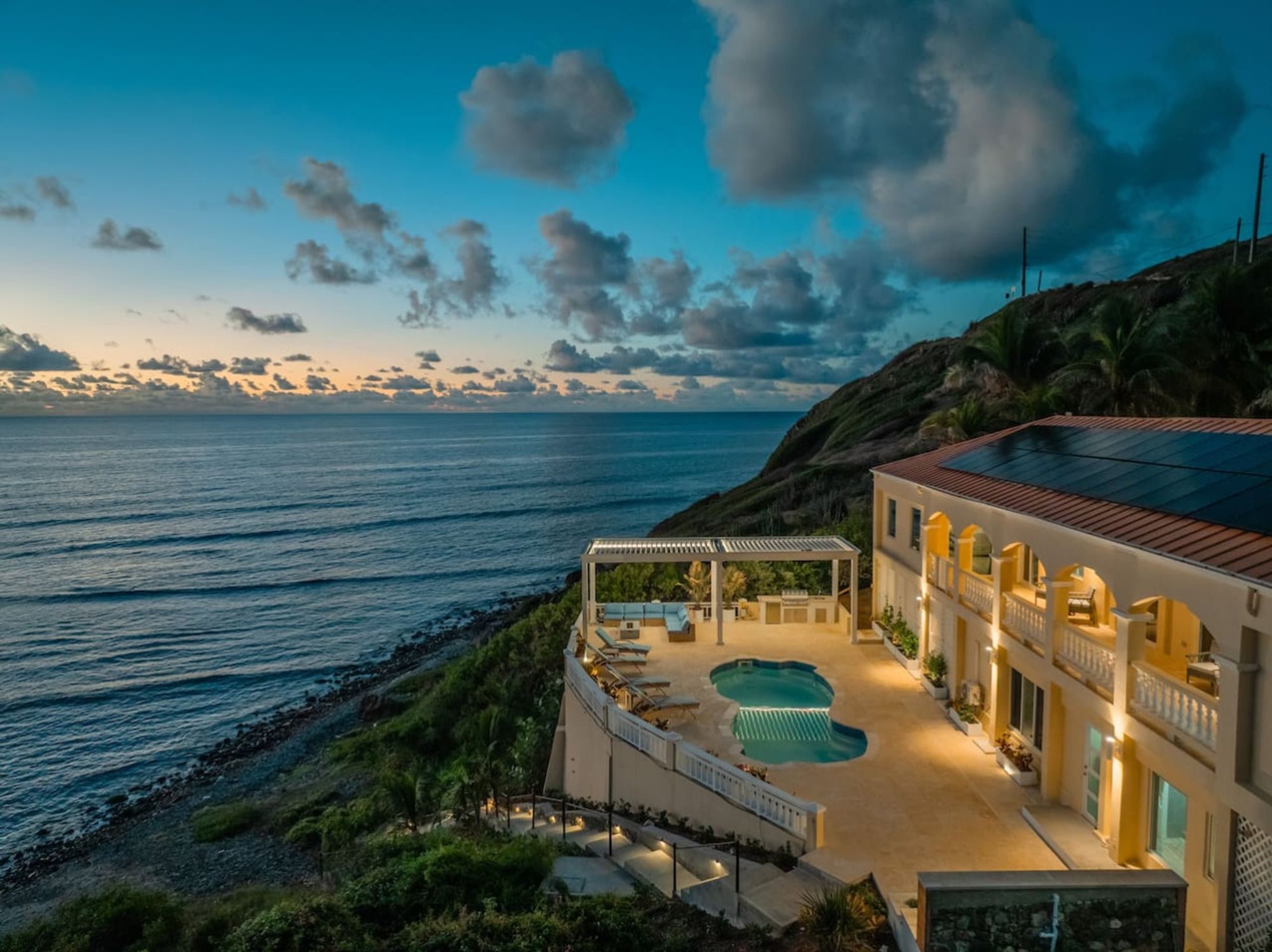
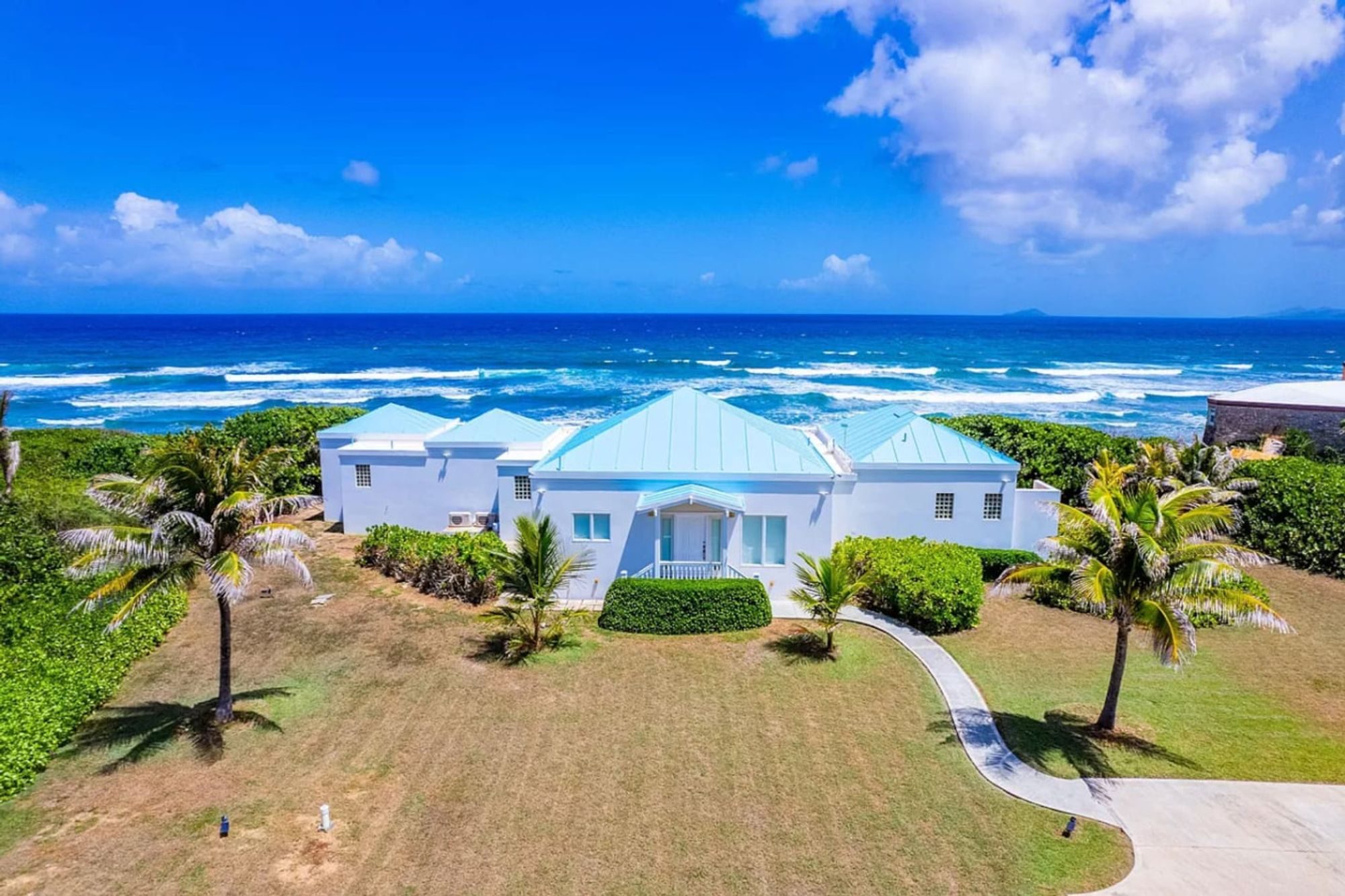
Houses on more than one level need this most. The Cerulean, on St. Croix’s East End, has an inside staircase between its two floors and a stepped path from the pool deck down to the shore, and its own site describes landscape lighting that runs all the way down to the sea after dark. At Lux Vidigal in Rio the bedroom is up an interior staircase, and the Copacabana Penthouse is a duplex joined by a marble staircase.
Then the route from bed to bathroom. The National Heart, Lung, and Blood Institute says a dim night light is fine if one is needed. Put a low one in the hall or the bathroom, ideally one that comes on by itself at dusk or when someone moves, and choose a warm colour. A step light near the floor shows the way across a hall without lighting the bedroom.
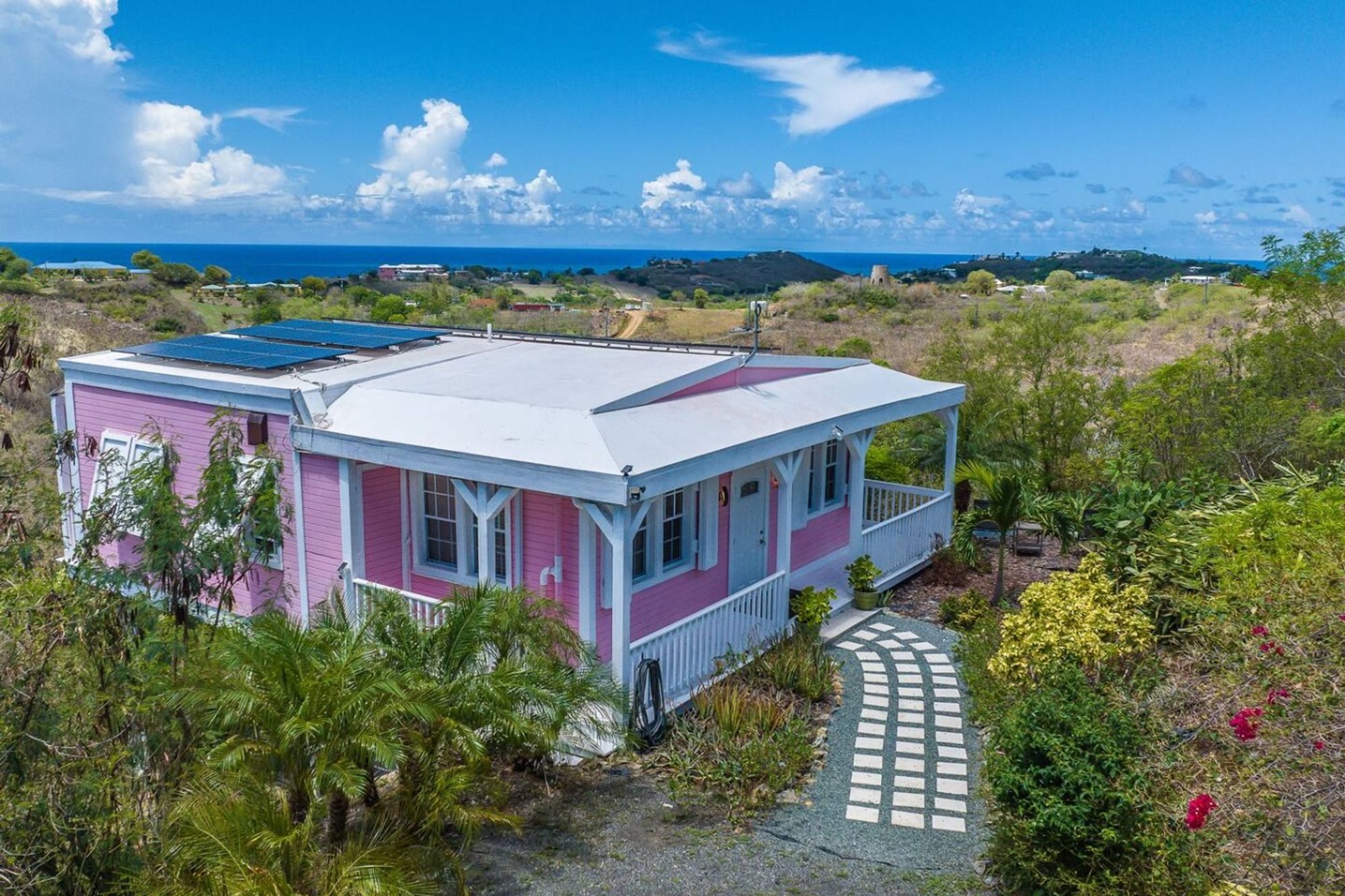
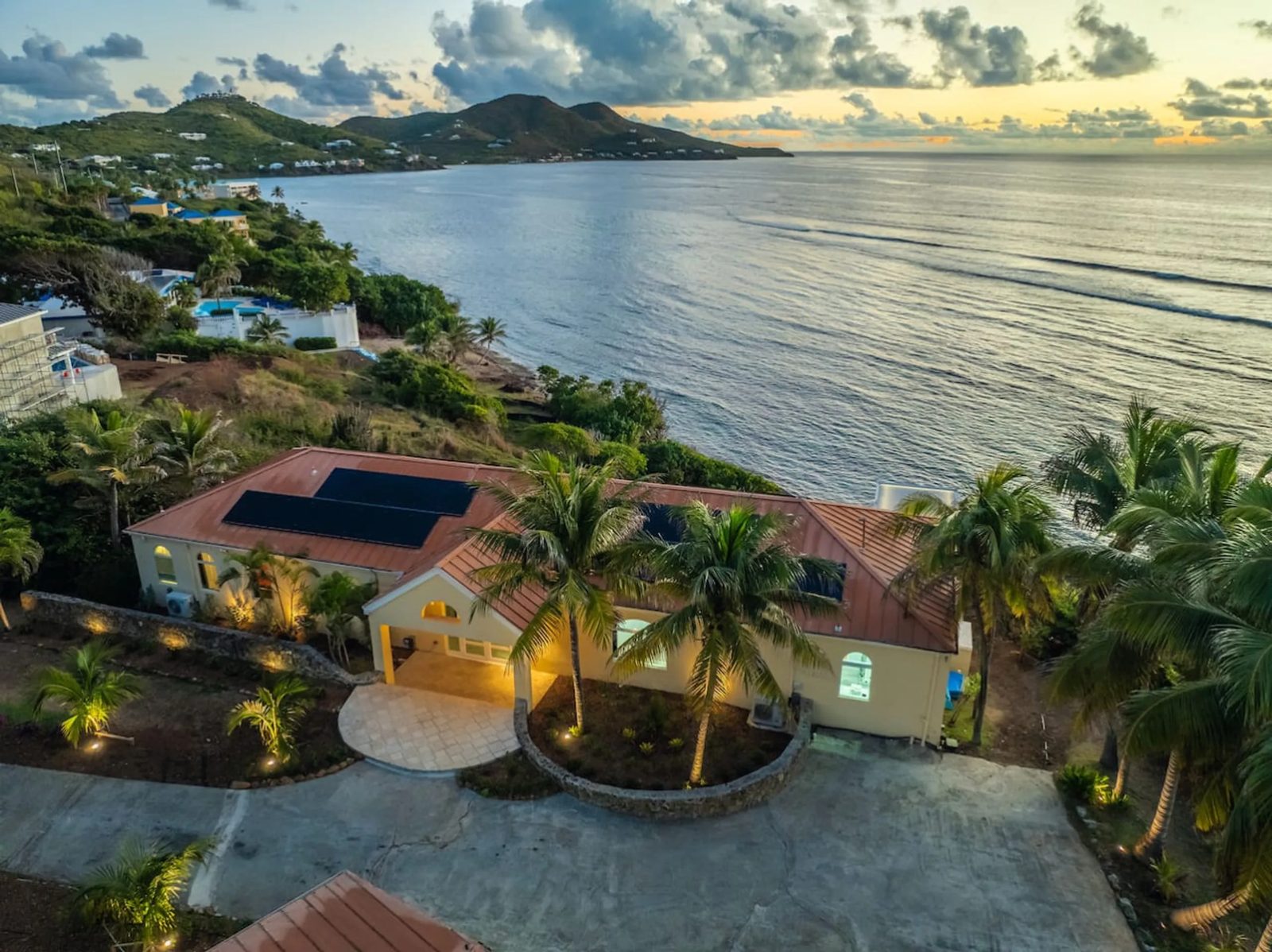
Plan for power cuts too. The National Fire Protection Association’s safety sheet for holiday rentals tells guests to make sure a house has batteries and lanterns in case the power goes. The Cerulean runs on grid and solar power with batteries and a whole-house backup generator. Bananaquit Bungalow runs on solar panels and batteries alone, and its listing warns that heavy use after dark can drain them. A rechargeable torch by every bed and a lantern in the kitchen cover both cases.
Terraces, pools and gardens
Outdoors, the best guide is the Five Principles for Responsible Outdoor Lighting, published jointly by DarkSky International and the Illuminating Engineering Society. Light should be useful, with a clear purpose; targeted, shielded and aimed downward so it falls only where it is needed; low, no brighter than necessary; controlled, with timers or motion sensors so it is dimmed or off when no one needs it; and warm in colour, with as little blue-violet light as possible.
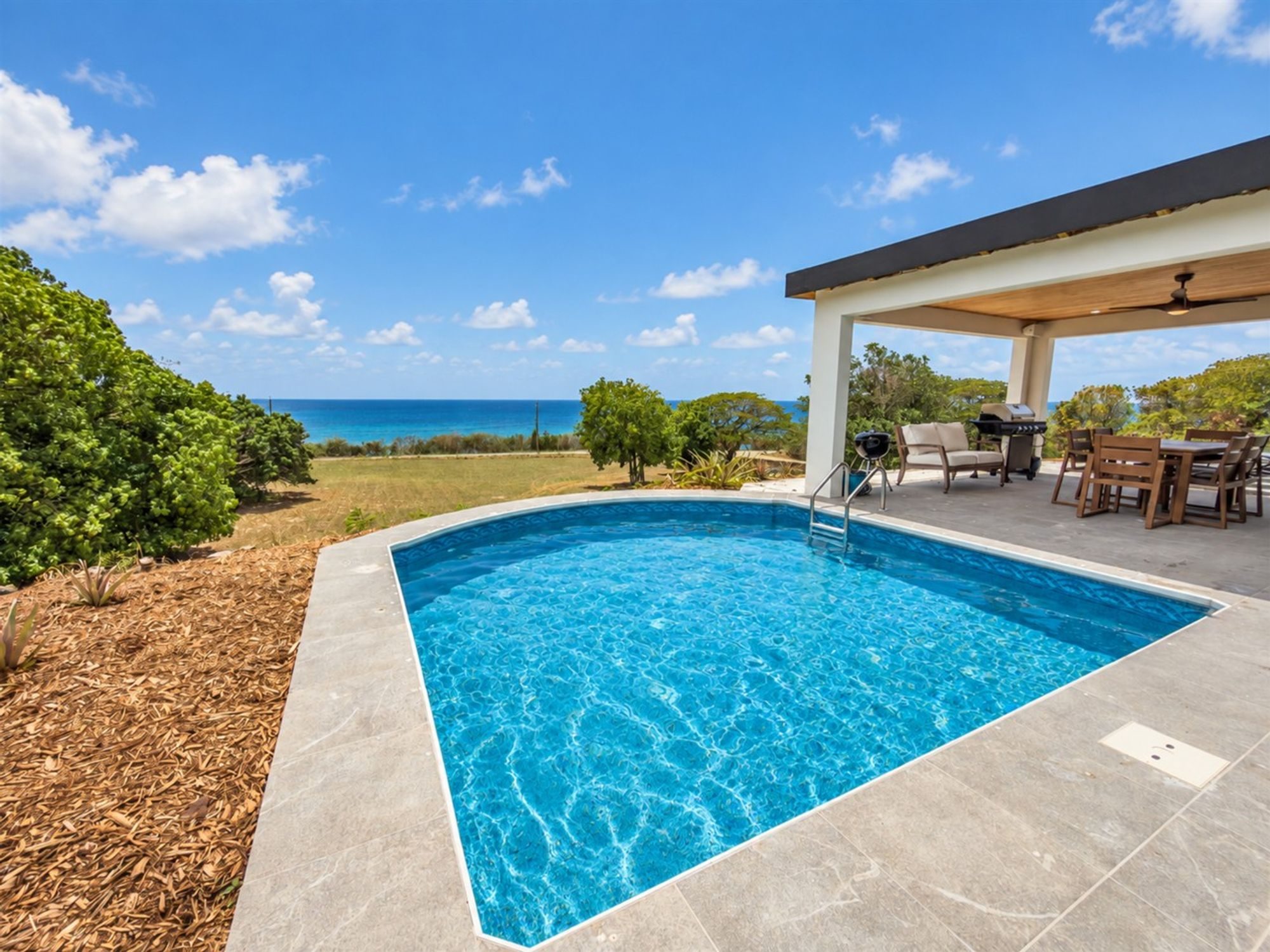
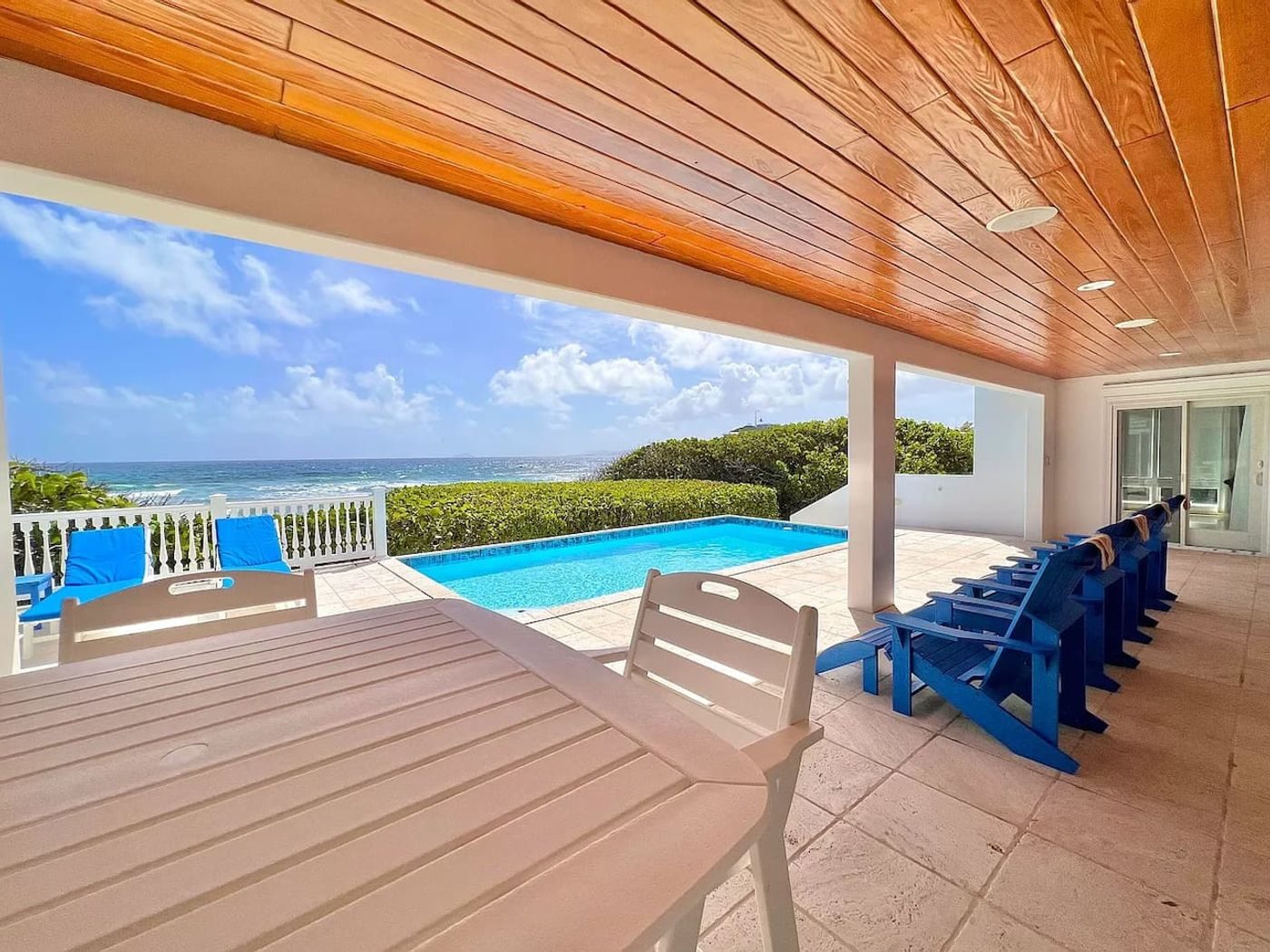
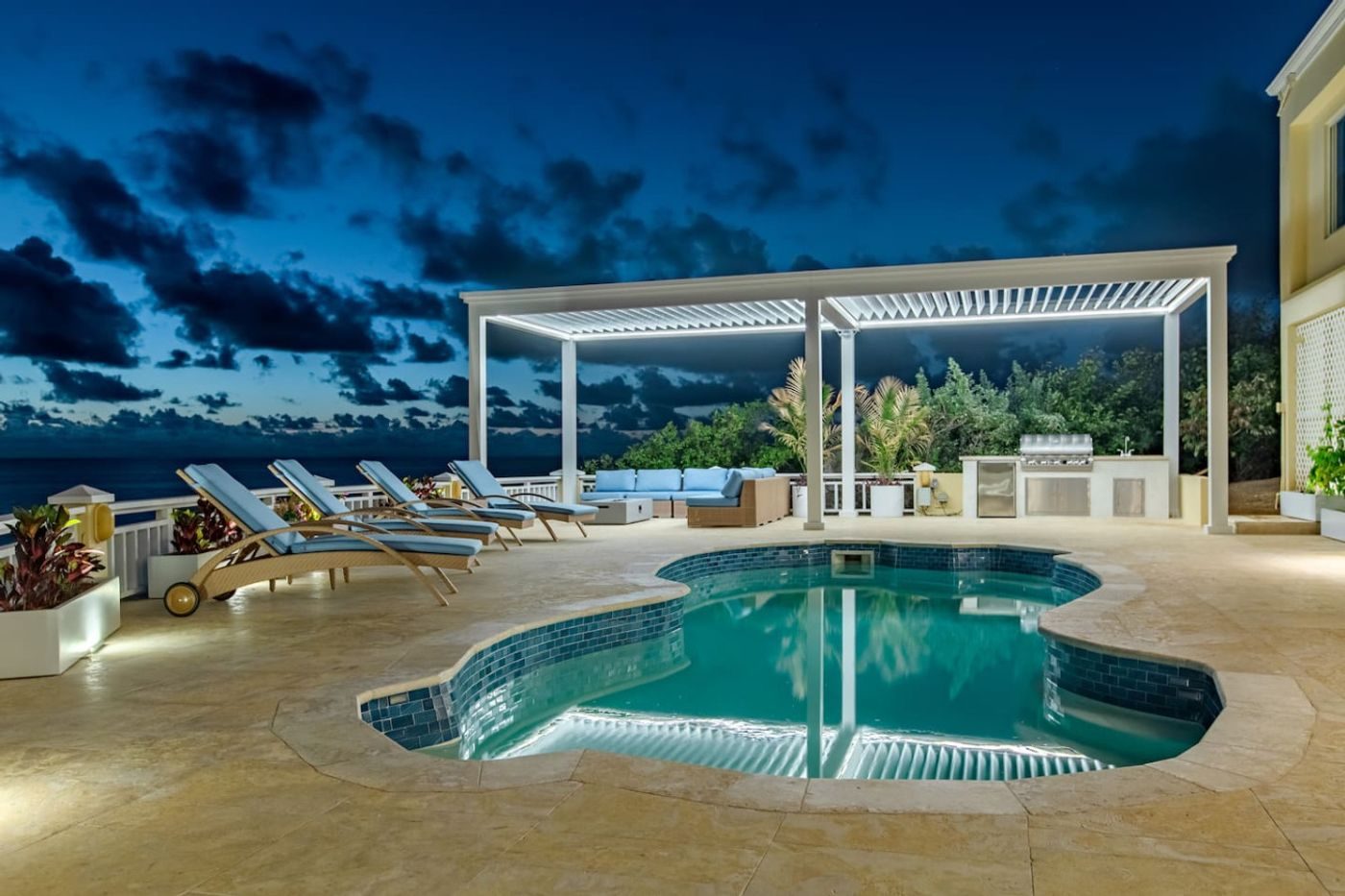
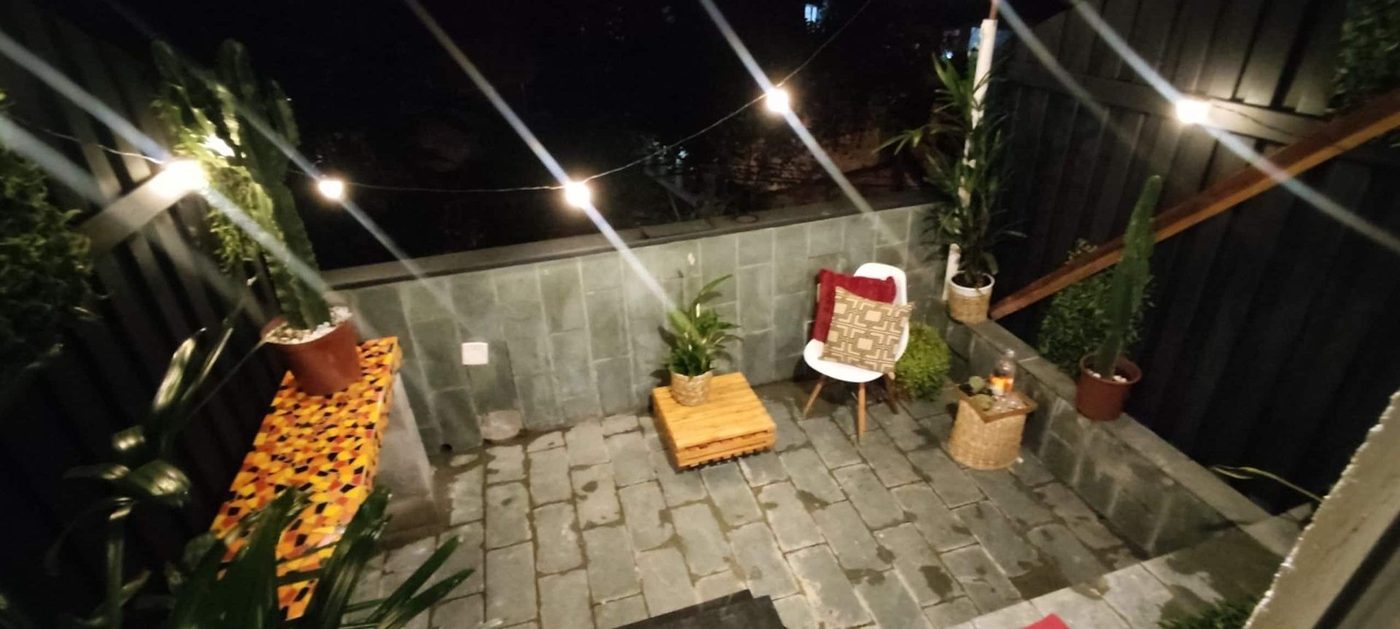
On a terrace that means low lights at steps and edges, a warm lamp or two where people sit, light on the table at dinner, and nothing shining into the sky or across the water. On the upper deck of The Buck Island Overlook, small lamps sit on top of the railing posts, low lights that mark the edge of the deck. At Lux Vidigal a string of bulbs crosses the terrace and a standing lamp is kept out there for the evenings. The Cerulean’s pool deck after dark shows the other pieces: lights in the pool, a line of light along the pergola and small lights at the foot of the planters.
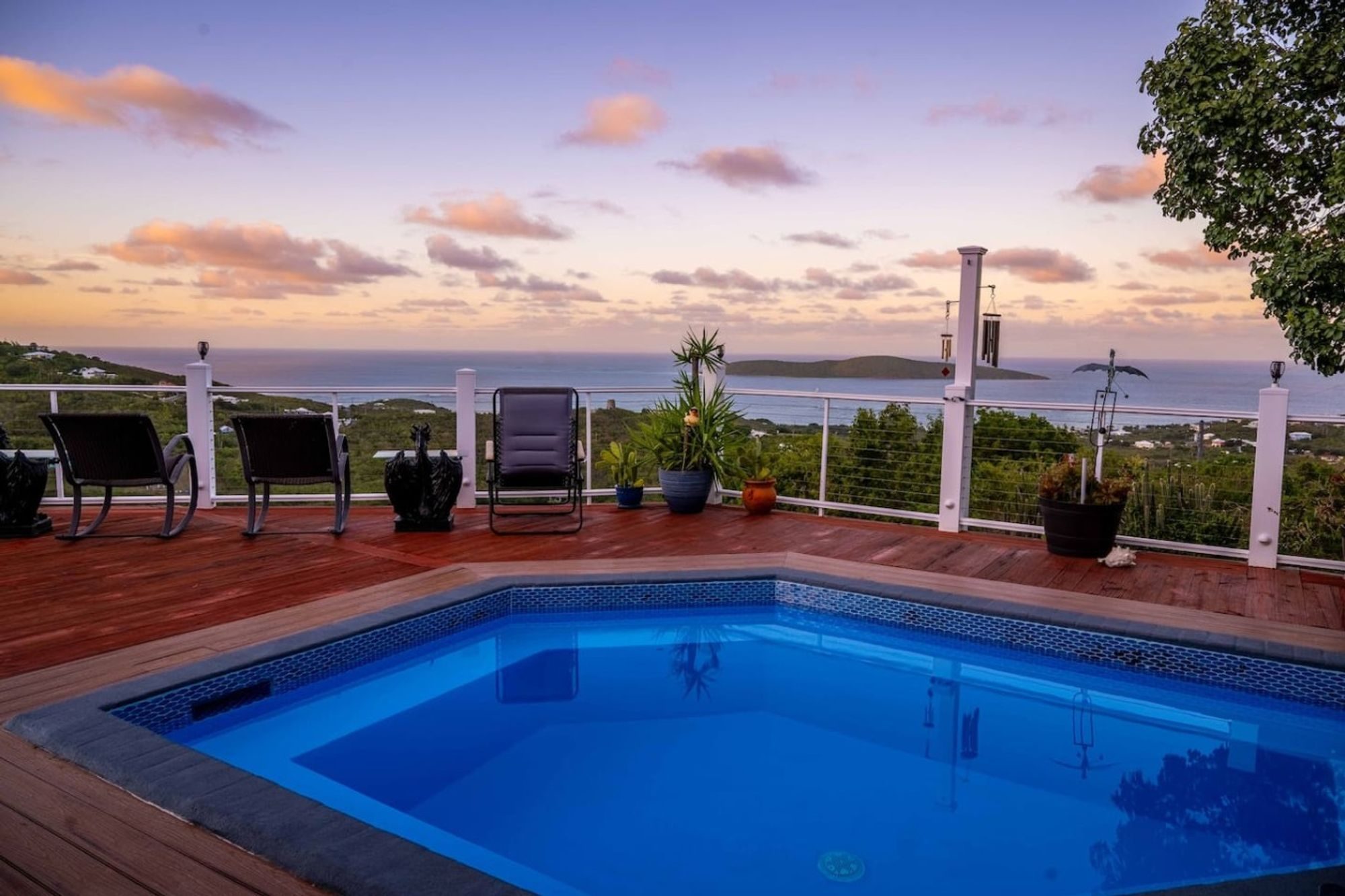
Leave the sky dark where you can. At Hook ’em on Paradise, a telescope stands by the living-room glass for the night sky, which is reason enough to keep the terrace lights low and on a switch guests can find.
Outdoor fittings take rain, salt and insects, so they must be made for it. The Electrical Safety Foundation International, in a booklet published with the CPSC, the U.S. consumer product safety agency, says to use only weather-resistant products outdoors and only extension cords marked for outdoor use, never to plug one extension cord into another, and to keep outdoor sockets under weather-protecting covers. Near water the rules are stricter: ground-fault protection, the GFCI, for underwater pool lights, for hot-tub circuits and for sockets within 20 feet (6 metres) of a pool, as the U.S. National Electrical Code requires. String lights by a pool are a job for an electrician.
The light that never goes off is the one to fix. A bulkhead light left on all night lights the bedroom windows above it and draws insects to the door. Put terrace lights on timers or motion sensors, and give guests one switch by the door that turns the whole terrace off.
Keeping the view after dark
A sea view disappears at night for a simple reason: glass reflects a lit room. With bright light inside and darkness outside, a wall of windows becomes a mirror, and guests see themselves at dinner instead of the bay.
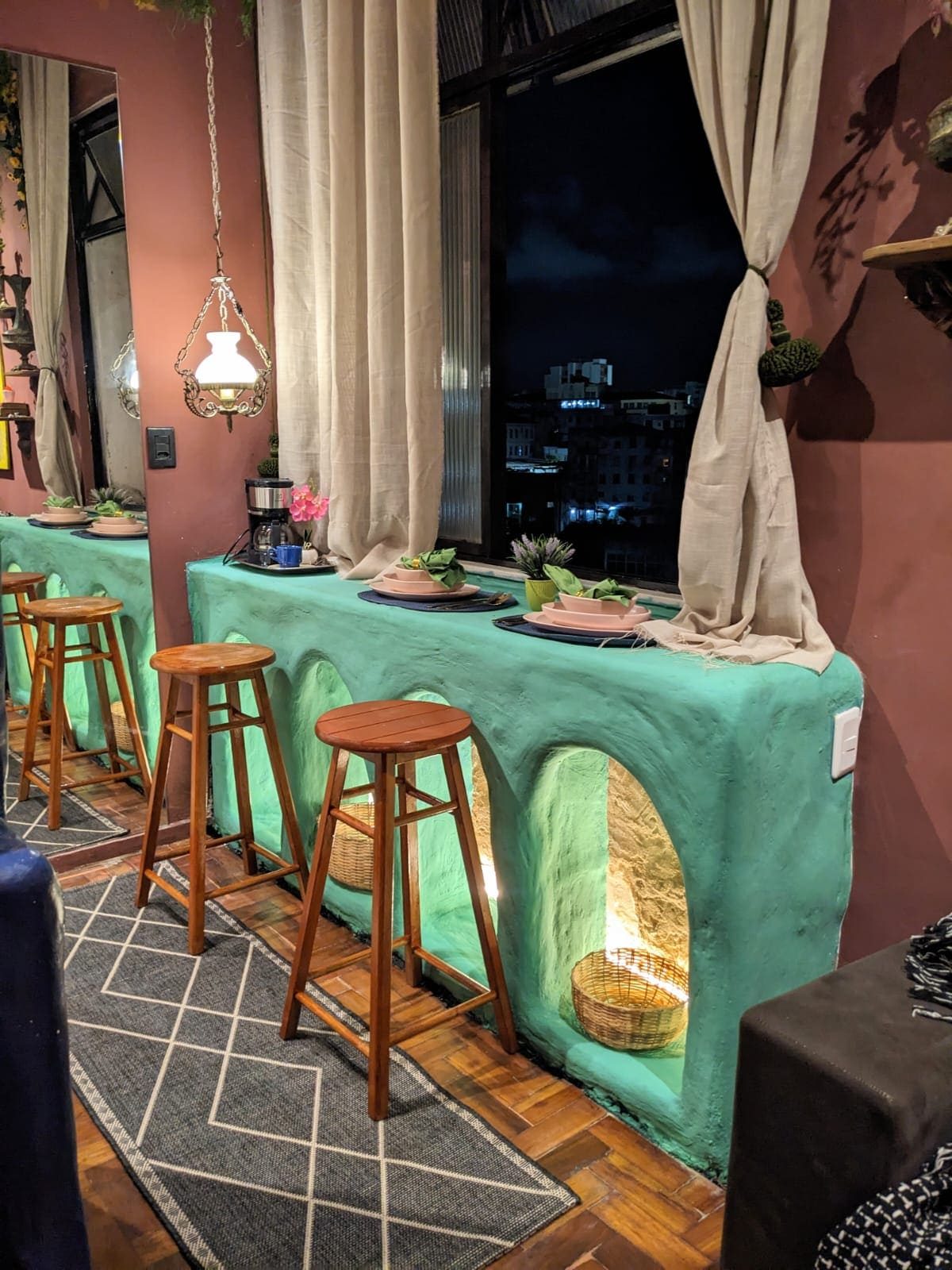
Three things bring the view back. Keep the light inside low near the windows, from lamps below eye level rather than ceiling lights. Put a little light outside, on the terrace or the planting, so the eye has something to see beyond the glass. And keep a corner by the window where someone can sit with the lights behind them. The Suite Colonial in Salvador does it with a hanging lamp over its window counter and small lights set low in the arched niches beneath, so the city still shows through the glass at night.
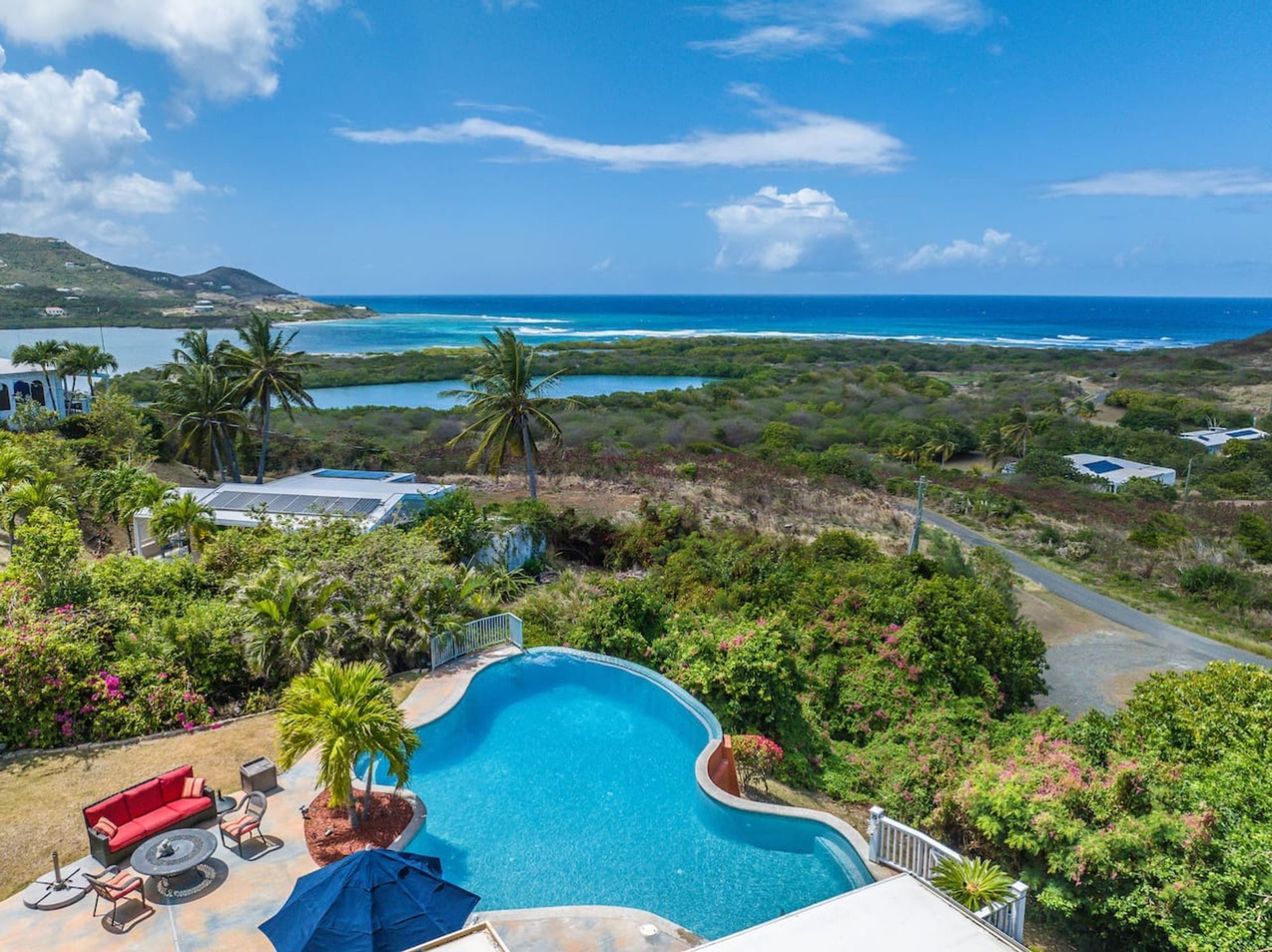
Beaches add a reason that has nothing to do with the view. Sea turtles nest on some of these shores, and DarkSky International explains that hatchlings find the sea by heading for the brighter horizon over the ocean, so artificial lights can lead them inland instead. A July 2025 guest at Toes in the Sand Beach House on St. Croix’s north shore wrote of “a fantastic beach where turtles were laying their eggs,” and on the island’s West End, within reach of Sunset Sea-Clusion, the Sandy Point National Wildlife Refuge closes from April to August for nesting leatherbacks. A house on a nesting beach should use the turtle-friendly fittings DarkSky describes, aimed down and limited in their spectrum, switch off what is not needed, and draw the curtains at night in the season.
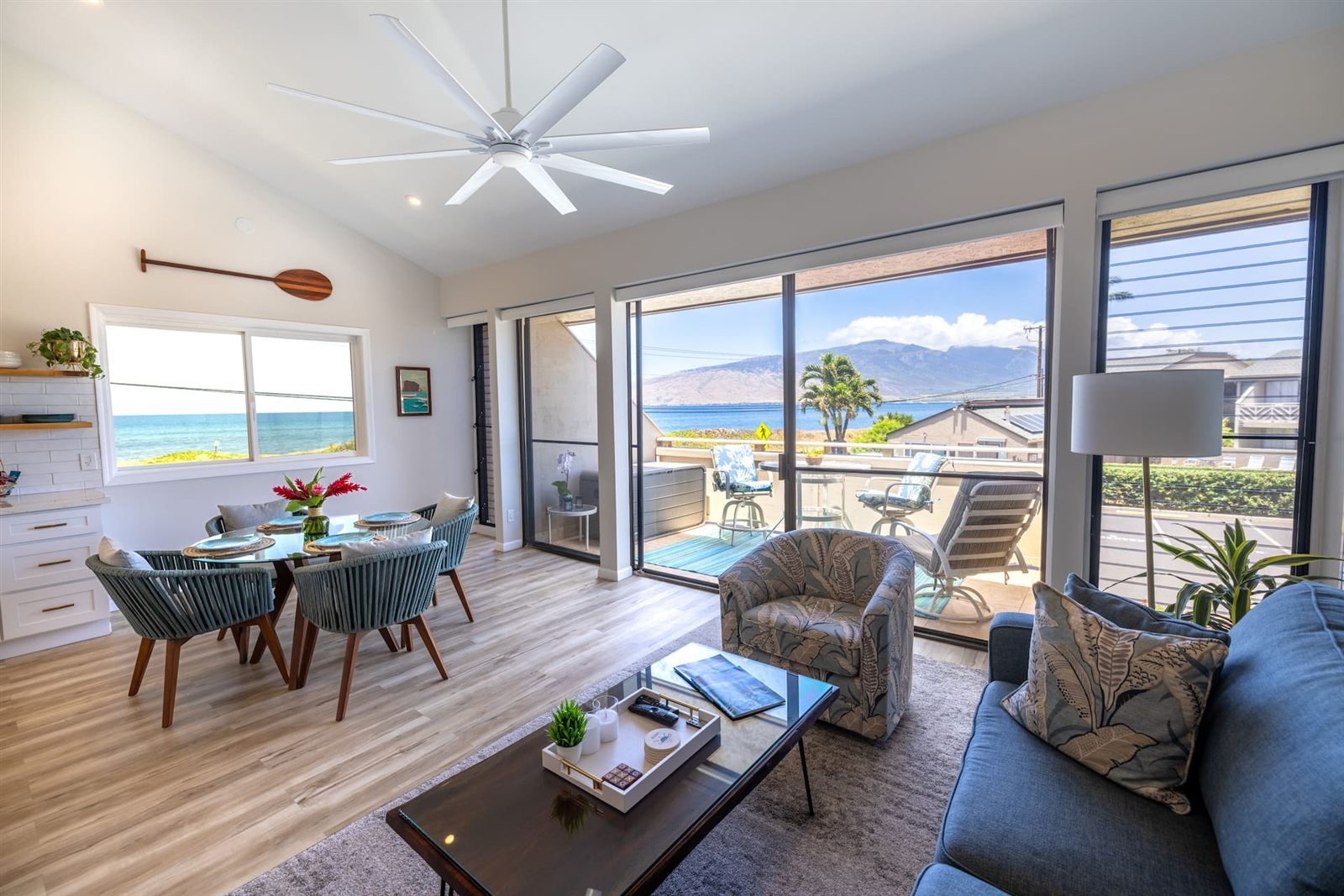
Last, let the evening light do its work before switching anything on. At Sea Sun Maui, the owners write that the light over the West Maui Mountains turns the whole north end of Kihei gold in the evening, and Vista Elevador & Mar was designed to catch the afternoon light and the sunset over the bay. Leave the lamps off until it has gone.

A lighting check, after dark
- Walk every room at night using only the switches a guest would find.
- Check the colour of every bulb, and replace cool or daylight bulbs in living rooms and bedrooms.
- Run each dimmer from high to low, and watch for flicker or listen for a hum.
- Switch the stair lights on and off from the top and from the bottom.
- Walk from each bed to its bathroom with the main lights off.
- Stand on the terrace and look for bare bulbs and light spilling into the sky or across the water.
- Press the test button on every GFCI socket outside and by the pool.
- Put a torch by every bed and a lantern where guests will find it.
- Sit by the window with the evening lights on and check that you can still see out.
Questions owners ask
What colour temperature is best for a holiday home?
Warm white. The California Lighting Technology Center at UC Davis gives 2,700 to 3,000 K as the range for homes, and ENERGY STAR describes soft and warm white bulbs, 2,200 to 3,000 K, as ideal for most indoor uses. Neutral white, 3,500 to 4,100 K, suits a kitchen counter. Keep one colour temperature in each room.
How many lumens do I need to replace an old bulb?
Look at lumens, not watts. ENERGY STAR puts the equivalent of a 60-watt bulb at 800 lumens and of a 100-watt bulb at 1,600, and the U.S. Department of Energy suggests a 1,100-lumen LED to replace a 75-watt bulb. For colours that look true, the UC Davis lighting centre advises a colour rendering index (CRI) of 90 or more.
Can LED bulbs be used with dimmers?
Most can, the U.S. Department of Energy says, but not all. Buy bulbs marked dimmable, as ENERGY STAR advises, and check that they are compatible with the dimmer switches in the house, as the UC Davis lighting centre recommends. A mismatched bulb and dimmer can flicker or hum.
How should stairs be lit in a holiday house?
The International Residential Code requires a light that illuminates the treads and landings of indoor stairs, with a wall switch at each floor where a stair has six or more risers, and a light at the top landing of outdoor stairs. Add railings on both sides, as the CDC advises, and a dim night light on the way to the bathroom.
How do I light a terrace without spoiling the view or the stars?
Follow the Five Principles for Responsible Outdoor Lighting from DarkSky International and the Illuminating Engineering Society: light only what has a purpose, shield it and aim it down, keep it low, put it on timers or sensors, and use warm colours. Inside, keep the lights low near the windows so the glass does not turn into a mirror.
Is it safe to use string lights by a pool?
Only with the right equipment and installation. The Electrical Safety Foundation International says to use weather-resistant products and extension cords marked for outdoor use outside, and the U.S. National Electrical Code requires ground-fault (GFCI) protection for sockets within 20 feet (6 metres) of a pool. Have an electrician install lighting by the water.
Sources
- DarkSky International and the Illuminating Engineering Society, Five Principles for Responsible Outdoor Lighting: darksky.org; DarkSky International, sea turtle conservation: darksky.org
- ENERGY STAR (U.S. Environmental Protection Agency), LED bulb purchasing guide (2020): energystar.gov (PDF); bulb purchasing checklist: energystar.gov (PDF)
- U.S. Department of Energy, consumer guide to energy-efficient lighting (2021): energy.gov (PDF)
- California Lighting Technology Center, University of California, Davis, how to choose the right light (2017): cltc.ucdavis.edu
- 2021 International Residential Code, sections R303.7 and R303.8 (stairway illumination), as set out in MyBuildingPermit.com’s basic stairs tip sheet (2024): mybuildingpermit.com (PDF)
- U.S. Centers for Disease Control and Prevention, preventing falls: cdc.gov; National Heart, Lung, and Blood Institute, healthy sleep habits: nhlbi.nih.gov; American Academy of Sleep Medicine: sleepeducation.org
- National Fire Protection Association, fire safety at your home away from home (holiday rentals): nfpa.org
- Electrical Safety Foundation International with the U.S. Consumer Product Safety Commission, outdoor electrical safety check: esfi.org (PDF)
- The houses, from their own descriptions and photographs, read 8 and 9 October 2026: The Cerulean, theceruleanstcroix.com; the Via Avantgarde suites, viaavantgarde.com; Lux Vidigal, luxvidigal.com; Sea Sun Maui, mauibeachvacationrentals.com; the SP Vacations houses on St. Croix, spvacationsvi.com; the Copacabana Penthouse, artdevivre.com.br
- Guest review quoted as written, a five-star review: spvacationsvi.com/reviews