The short version
- Bed size
- At least a queen for a couple: 60 by 80 inches (152 by 203 cm) in the United States
- Under the sheet
- A zipped encasement on the mattress, then a washable protector
- Dark and cool
- Curtains that overlap the window, cordless where children stay, and air conditioning the guest controls
- Each side of the bed
- A lamp with its own switch, a table and a charger
- For the suitcase
- A luggage rack, empty drawers, matching hangers and a chair
- Safety
- A smoke alarm in every bedroom, tested monthly; the water heater at 120°F (49°C)
A guest judges a bedroom twice: when they first wheel a suitcase through the door, and again at three in the morning. The first time, they look for somewhere to open the case, a drawer to empty it into and a bed that matches the photographs. The second time, they want the room dark, the bathroom easy to find and the pillow right. Little of this costs much, and guests notice all of it.
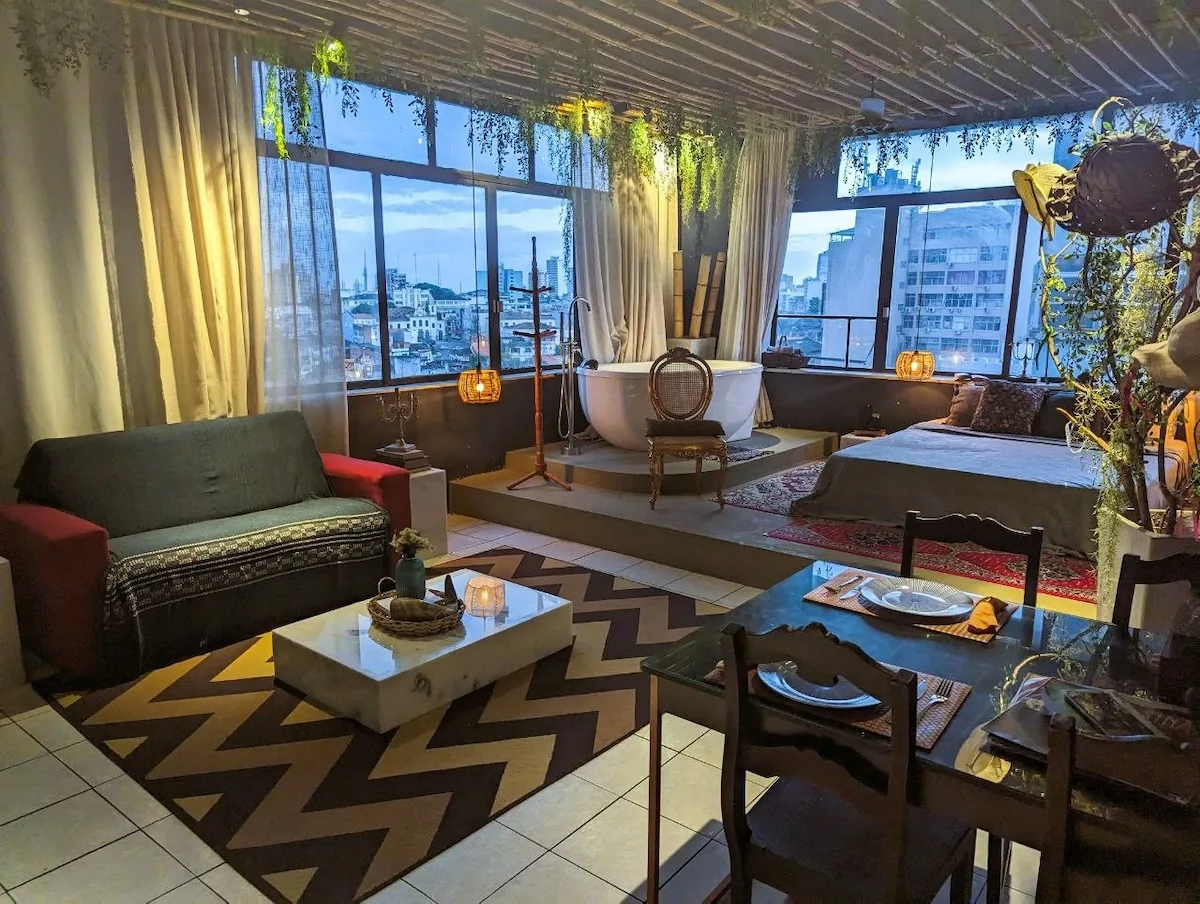
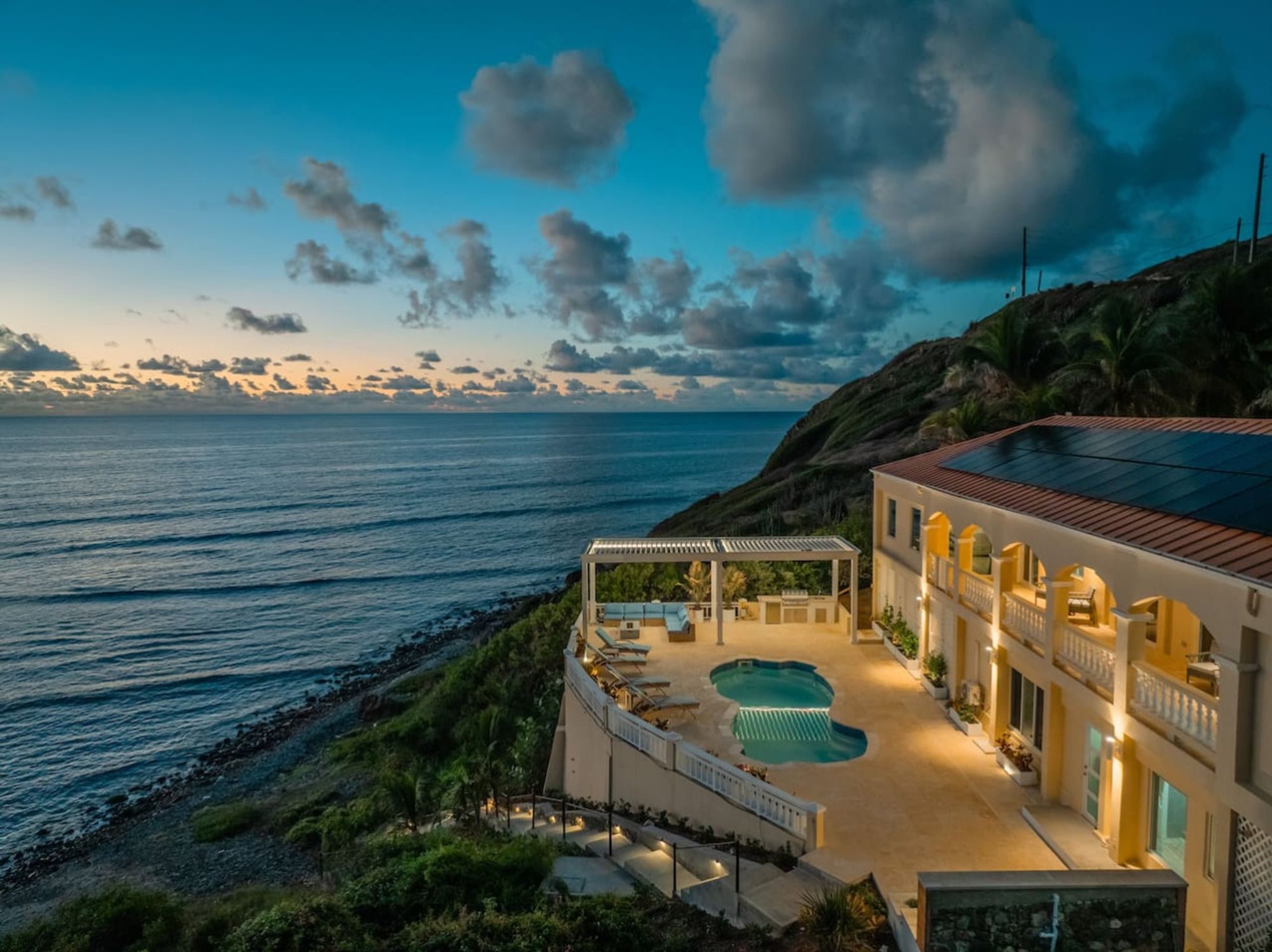
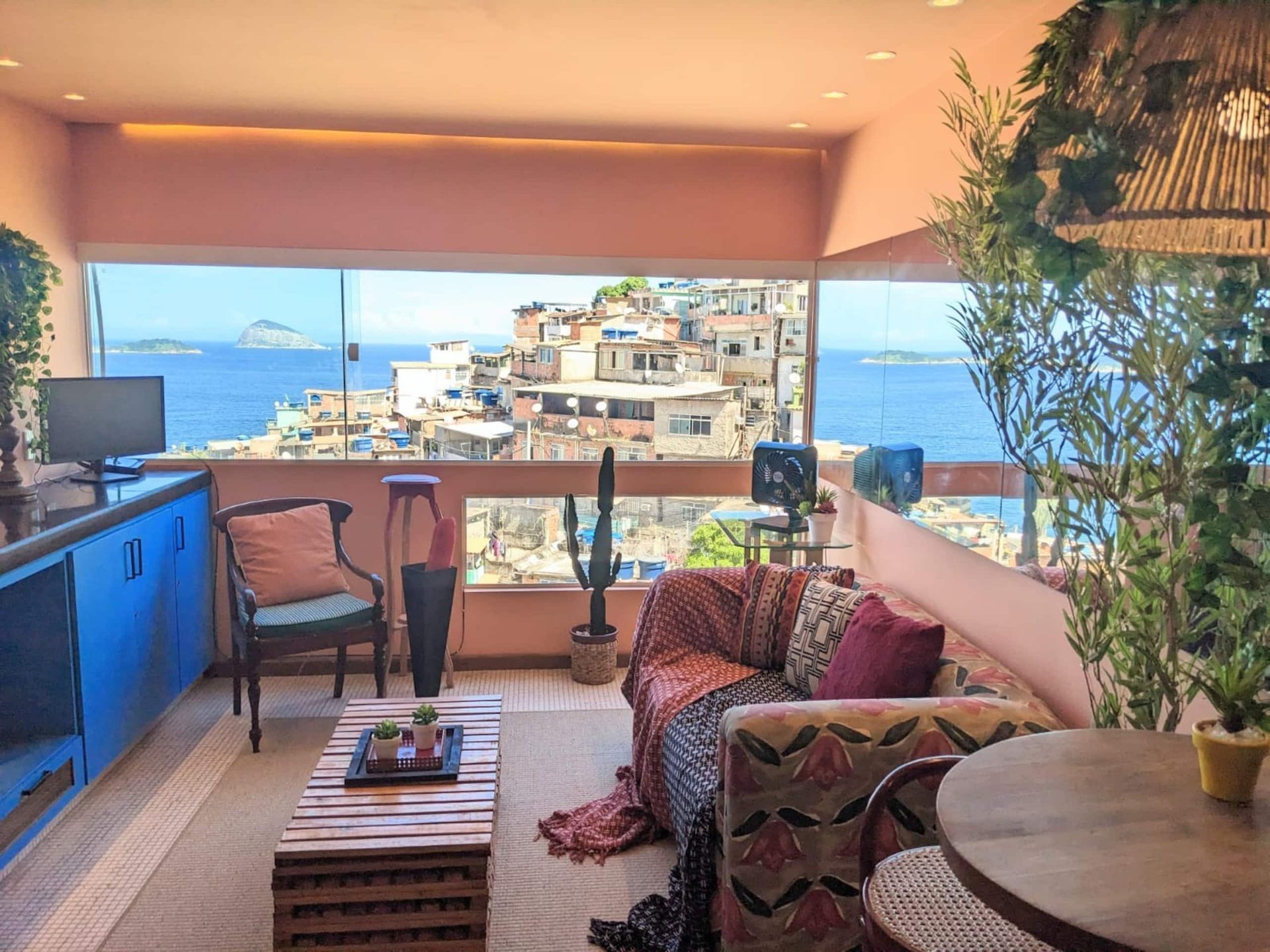
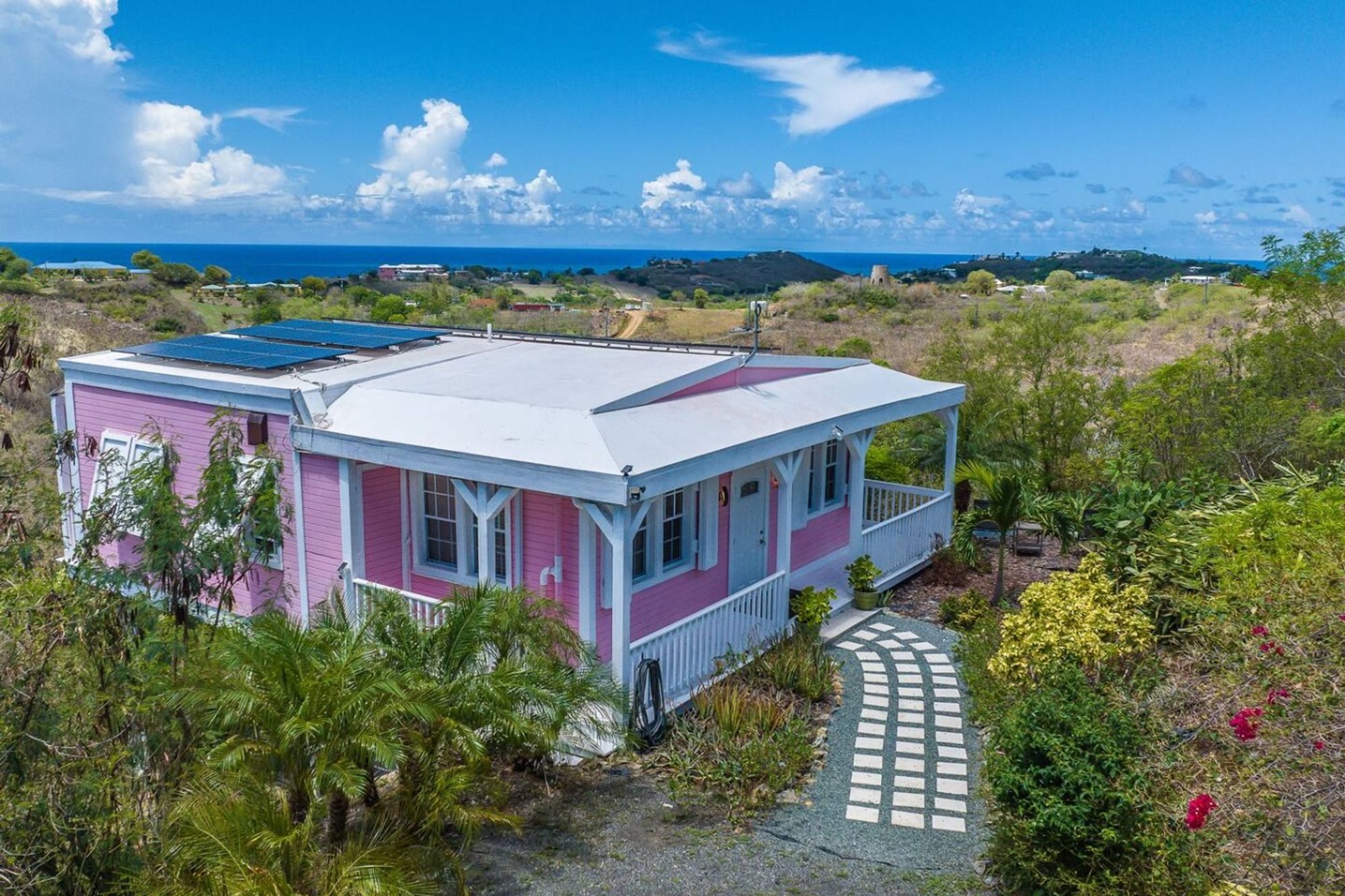
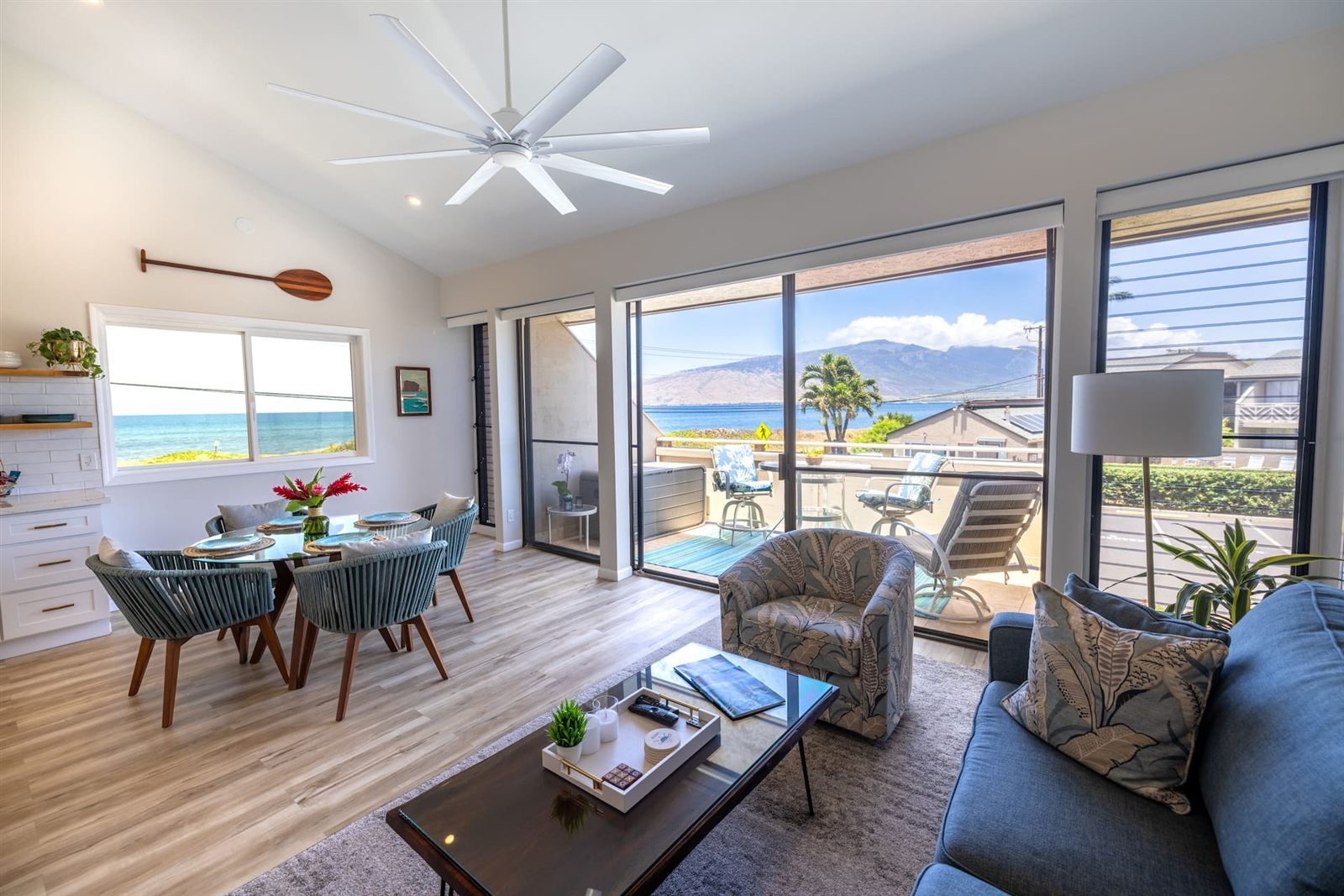
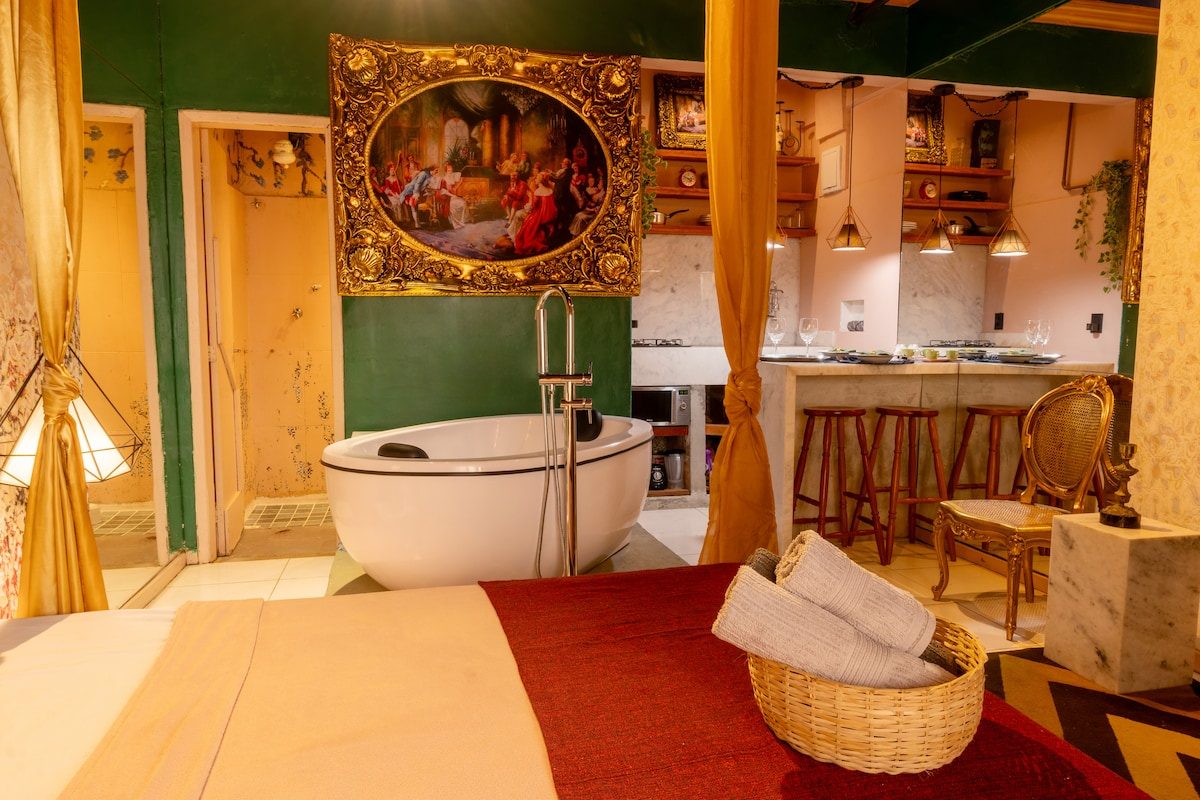
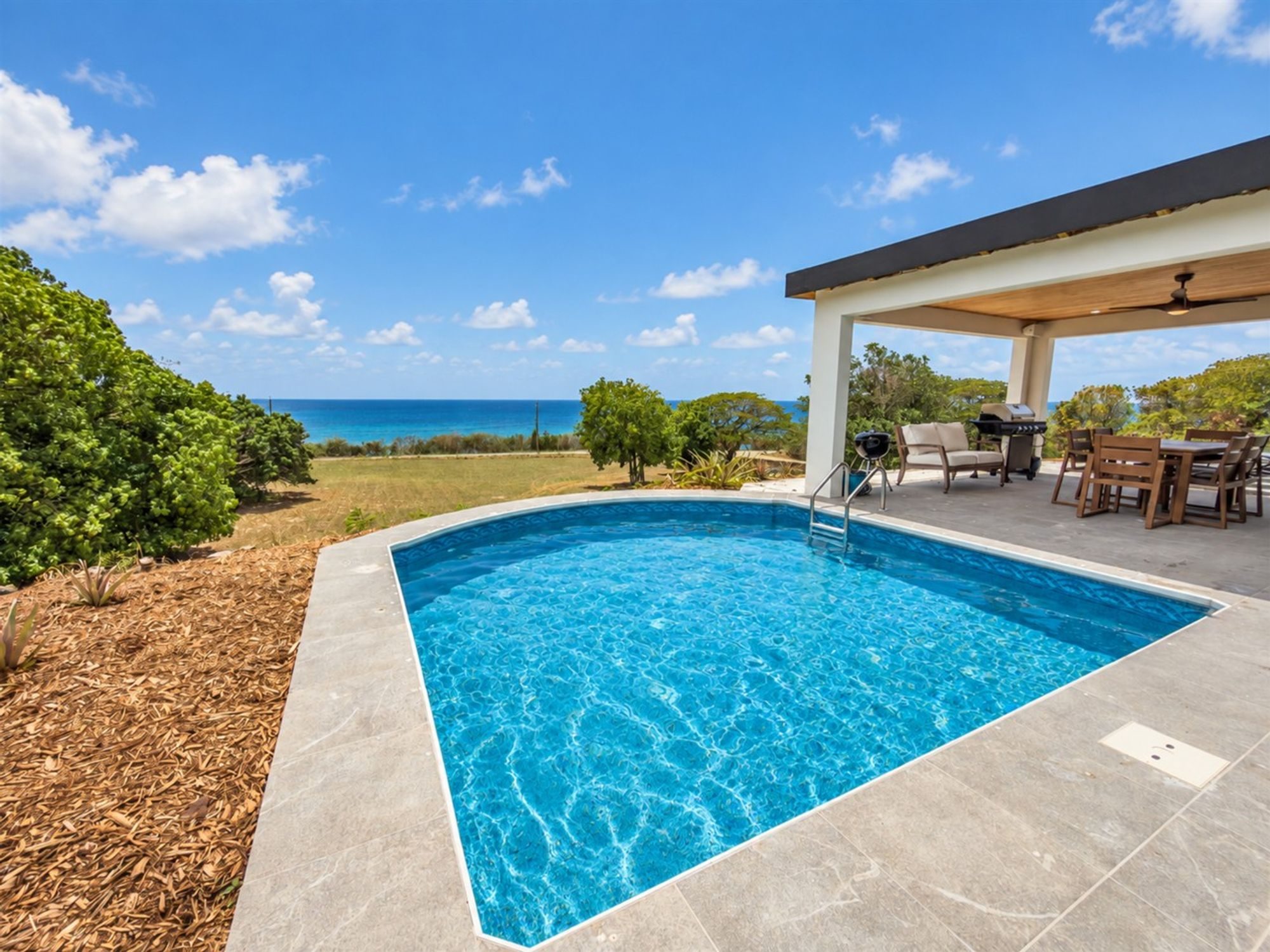
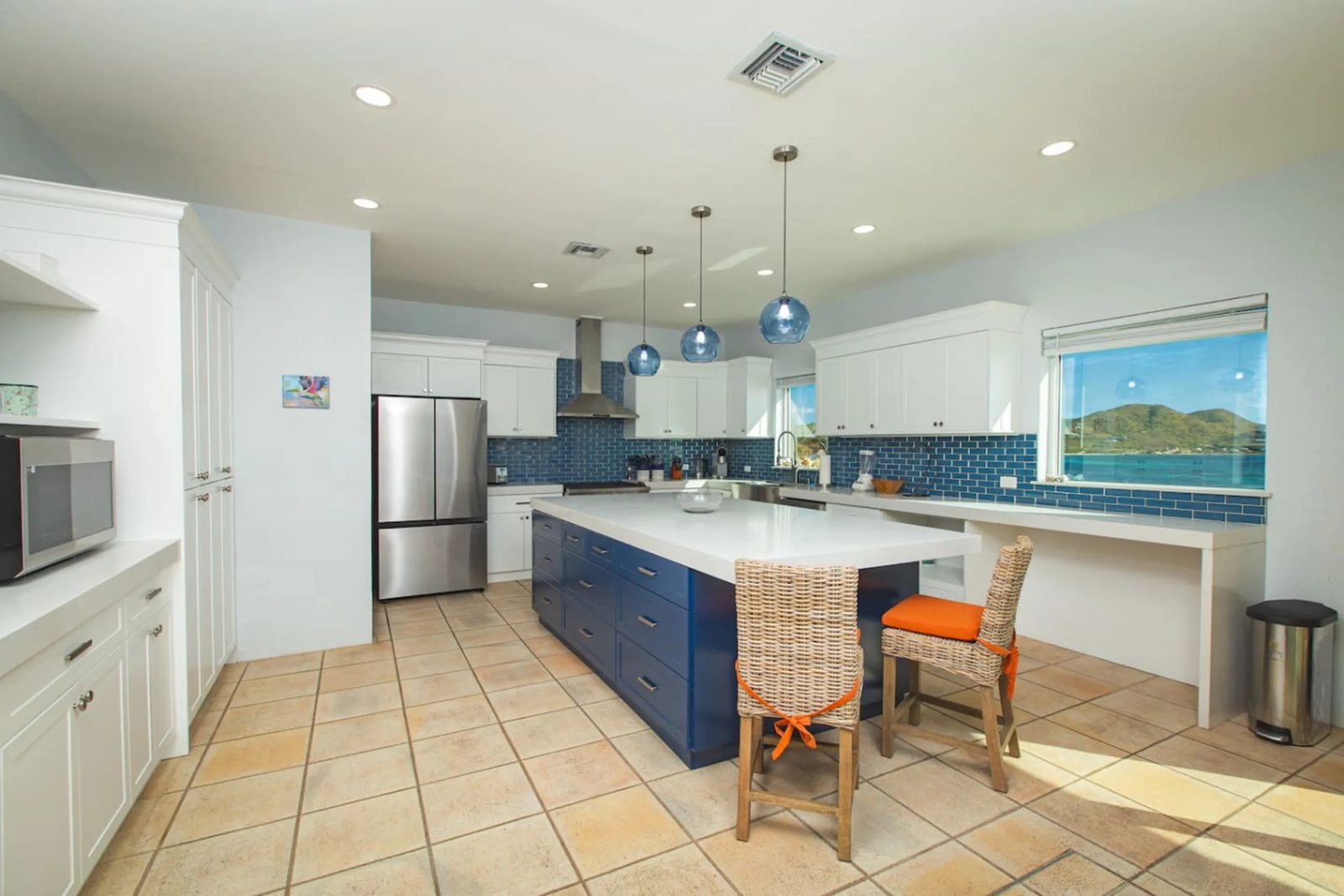
This guide works through the room from the bed outwards, with examples from houses in the Collection on St. Croix, in Salvador, in Rio and on Maui, and with the safety points that belong in every bedroom.
The bed
Start with the bed, because every guest spends the night in it. Size first. In the United States the standard mattress sizes, width by length, are 38 by 75 inches for a twin, 54 by 75 for a full, 60 by 80 for a queen, 76 by 80 for a king and 72 by 84 for a California king. In centimetres a queen is about 152 by 203 and a king about 193 by 203. The Sleep Foundation’s advice is that couples will likely want at least a queen, and the arithmetic explains why: a full gives each of two sleepers 27 inches (69 cm) of width, a queen 30 inches (76 cm) and a king 38 inches (97 cm), which is the width of a whole twin mattress for each person.
Bed names vary from country to country, so give the measurements in the listing and in the house manual, and buy sheets to the measurements of the mattress. Guests from abroad will thank you for it, and so will whoever does the laundry.
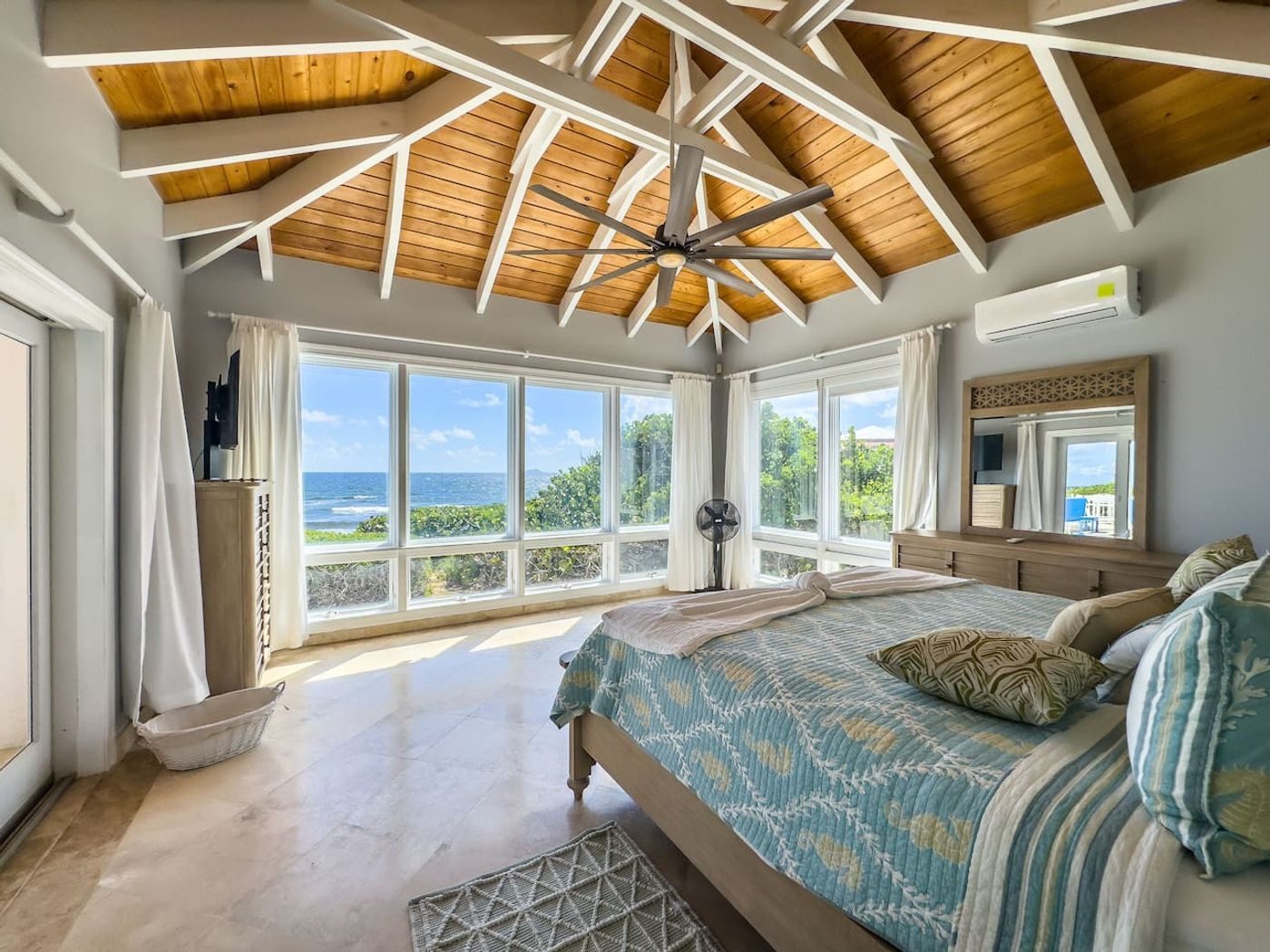
Then the mattress itself. Sleep on every bed in the house for a night before guests do, and again each season: a dip you can feel in the middle is a dip every guest will feel. Turn or rotate mattresses as the maker advises, and replace one when it starts to sag. Under the sheet, use two layers. The U.S. Environmental Protection Agency recommends a protective cover that fully encases the mattress and box spring, which removes many of the places bed bugs hide; the cover’s pale colour makes any bugs easier to spot, and the agency advises buying one that resists tearing and checking it for holes. A washable protector on top of the encasement takes the spills.
Guests notice good beds and say so. “The bedrooms are large with very comfortable beds,” wrote Jessica, who stayed at Toes in the Sand Beach House on St. Croix in January 2025. At Shoy’s Beach House, Jennifer listed “very comfortable beds and rooms” in March 2026, in the same breath as the kitchen. In Salvador, Via Avantgarde names the mattress in its description of the Penthouse Jacuzzi: a queen bed with an orthopaedic mattress. Naming it tells a guest that someone chose it.
Pillows, linen and towels
Pillows are personal, so give guests a choice: two pillows for each sleeper on the bed, one firmer and one softer, and spare pillows and a blanket in the wardrobe for anyone who wants more. The Cerulean, a five-bedroom villa on St. Croix’s East End, lists extra pillows and blankets among its amenities.
Sheets and towels are where an owner’s care shows. The Cerulean’s owners write that they went on a mission to find the right towels and bed sheets, “testing them for a few months first,” before they bought for the house, and their list now names extra-soft bamboo bedroom linens and plush hydrocotton towels. The lesson is the testing. Sleep in a set of sheets, put it through the wash many times, and see how it feels and looks before you buy for every bed.
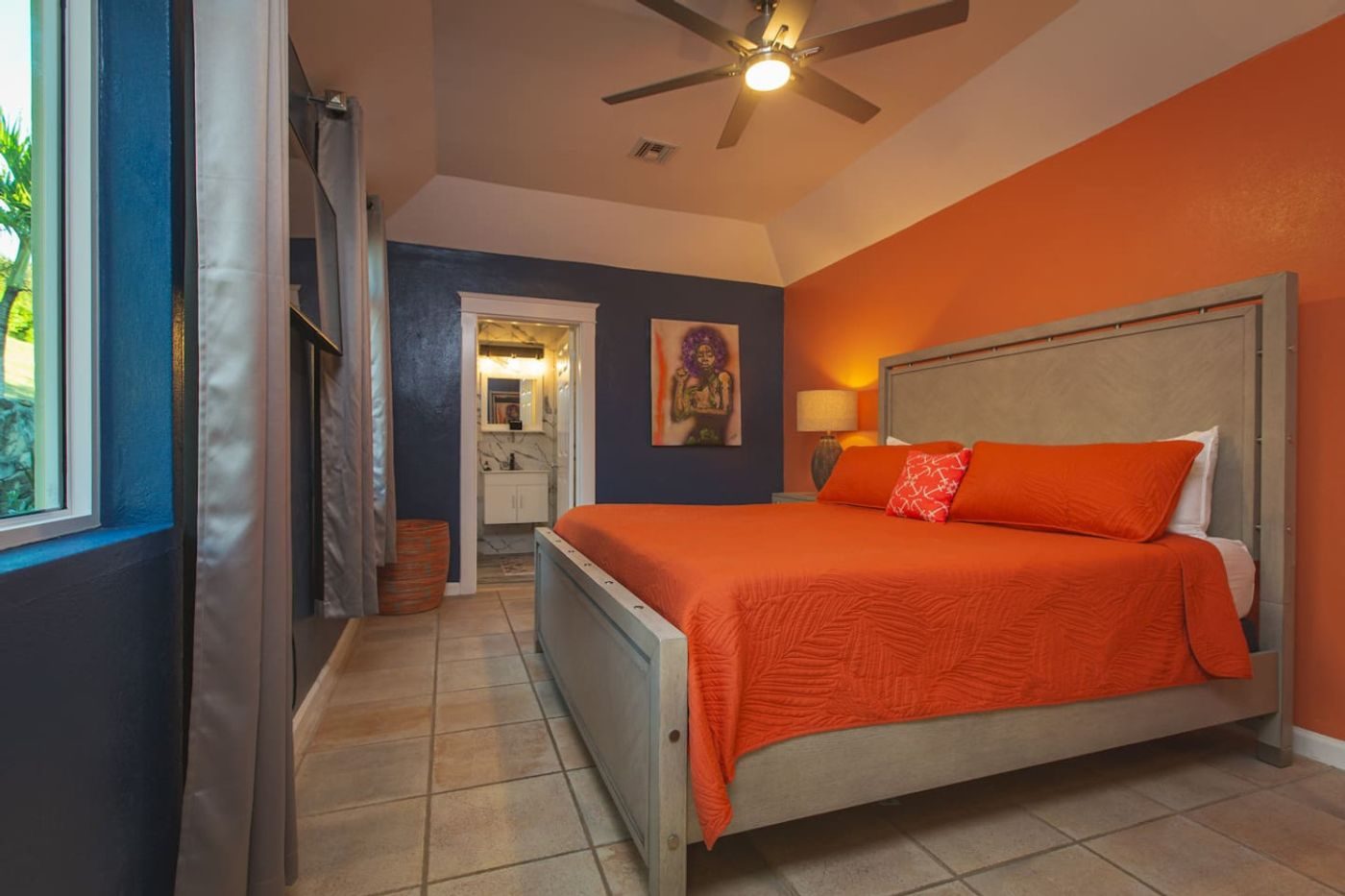
Buy enough linen that one set is on the bed, one is in the laundry and one is on the shelf, and keep a protector under every pillowcase. White and pale linen shows at a glance that it is clean; throws and cushions can carry the colour. A light blanket or quilt folded at the foot of the bed earns its place in an air-conditioned room.
Towels follow the same logic. Give each guest a bath towel, a hand towel and a face cloth in the bathroom, and keep a separate stack of pool and beach towels outside, in a different colour, so the bathroom towels stay in the bathroom. The Cerulean keeps beach towels for ten people, and Lux Vidigal, a two-storey apartment on the Vidigal hillside in Rio, provides bathrobes for the deck in the morning.
A dark, quiet, cool room
The U.S. National Heart, Lung, and Blood Institute gives the advice in a line: “Keep your bedroom quiet, cool, and dark.” The American Academy of Sleep Medicine adds a comfortable, cool temperature and less bright light in the evening. In a holiday house by the sea, each of the three takes some work.
Dark first. The Cerulean faces east, so the sun comes up over the sea in front of the house, and a guest who arrived on a late flight will want curtains that keep it out until they are ready. Lined curtains or blackout blinds should overlap the window on every side and meet in the middle, because the light that leaks round the edges is what wakes people. Lux Vidigal lists blackout curtains for its bedroom, where the bed stands against floor-to-ceiling windows. On St. Croix, the bedrooms at Caribbean Blue Hideaway and Beach-Access Condo have room-darkening shades. Where small children may stay, the CPSC, the U.S. government agency for consumer product safety, says the safest window coverings are cordless; where cords remain, keep the pull cords as short as possible and move beds and cots away from the window.
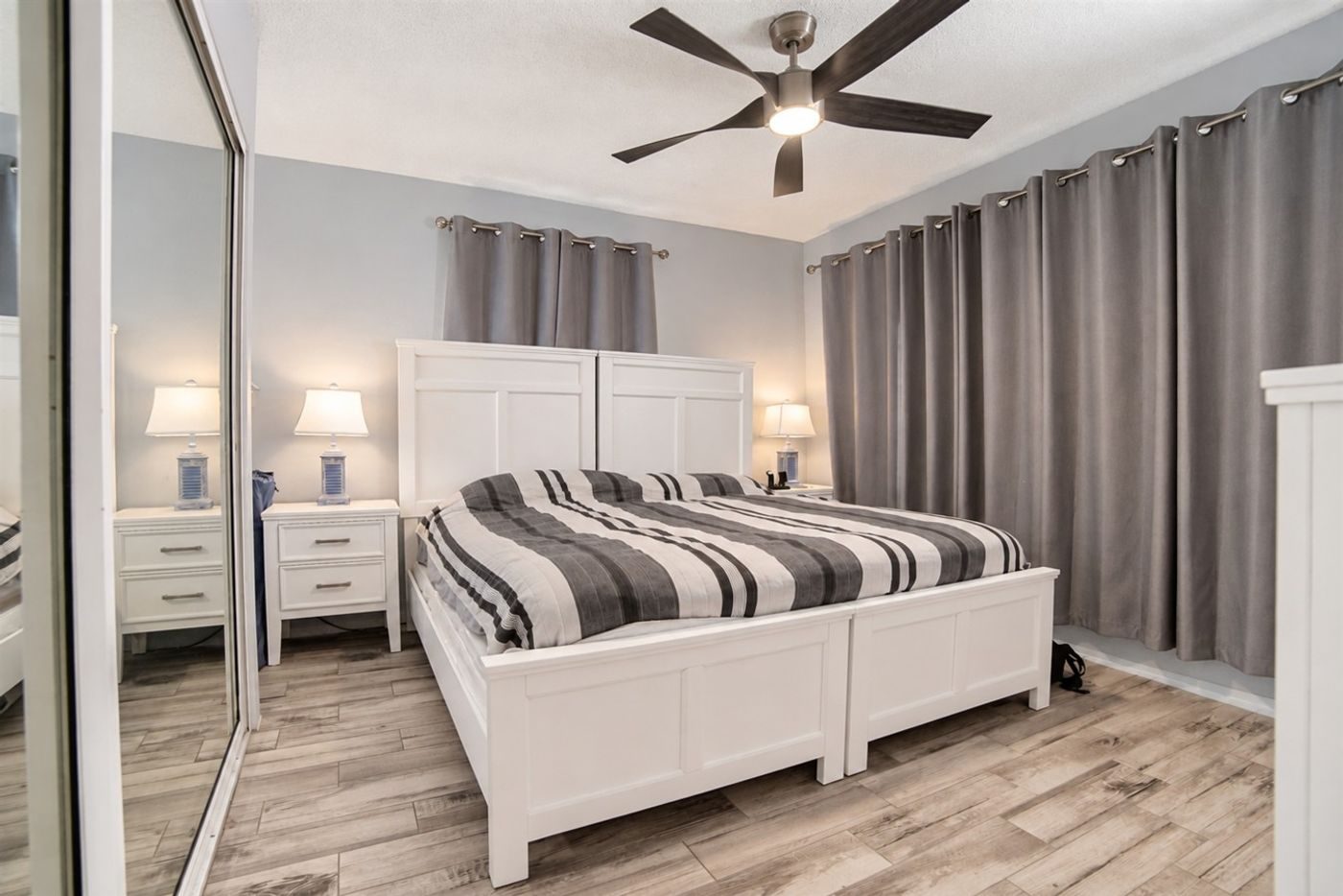
Cool comes next. A bedroom needs its own controls: an air conditioner the guest can set without going into the hall, a ceiling fan, and a window that opens for anyone who prefers the breeze. Each bedroom at Hook ’em on Paradise has its own air-conditioning unit, and The Cerulean’s owners air-condition every room in the house. At Moko Vista, an East End house built to catch the trade winds, a March guest found the breeze cool enough to leave the air conditioning off, unless the sound of the wind bothered them. Leave the remote on the bedside table with a short card that explains the modes.
If the house cannot keep a bedroom cold all night, say so before guests book. Bananaquit Bungalow, a cottage in the St. Croix hills that runs entirely on solar power and batteries, tells guests plainly that it does not suit anyone who needs continuous low-temperature air conditioning.
Quiet is the one owners overlook, because they stop hearing their own house. Spend a night in each bedroom and listen: a pool pump under the window, an ice maker through the wall, a gate that bangs in the wind. Most of it can be moved, padded or put on a timer.
A light and a table on each side
Every sleeper needs the same three things within reach of the pillow: a light they can switch on and off without getting up, a surface for a glass of water, glasses, a phone and a book, and a socket or a charger. Couples often go to bed at different times, and a single light over the middle of the bed leaves one of them reading in the other’s shadow.
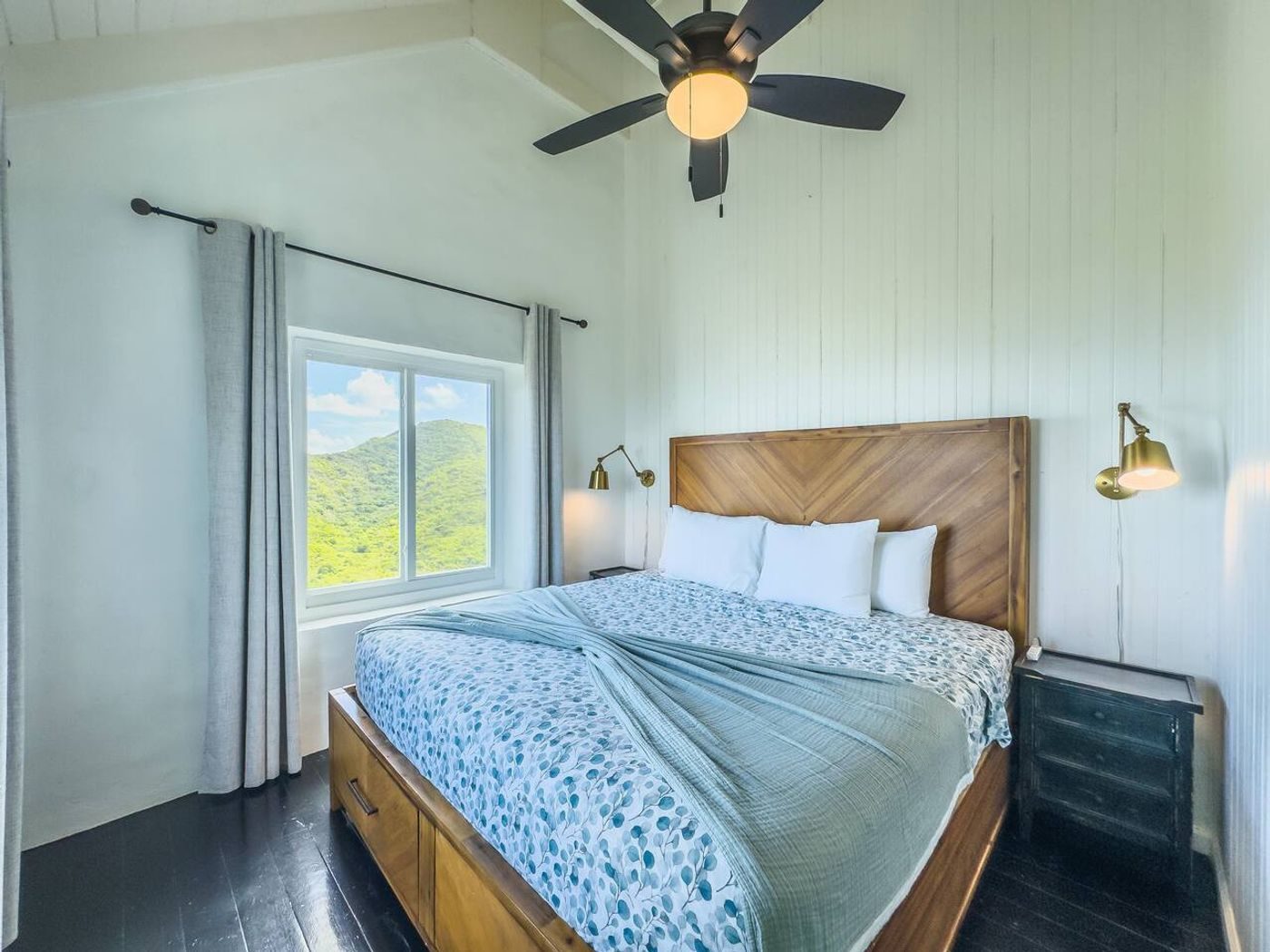
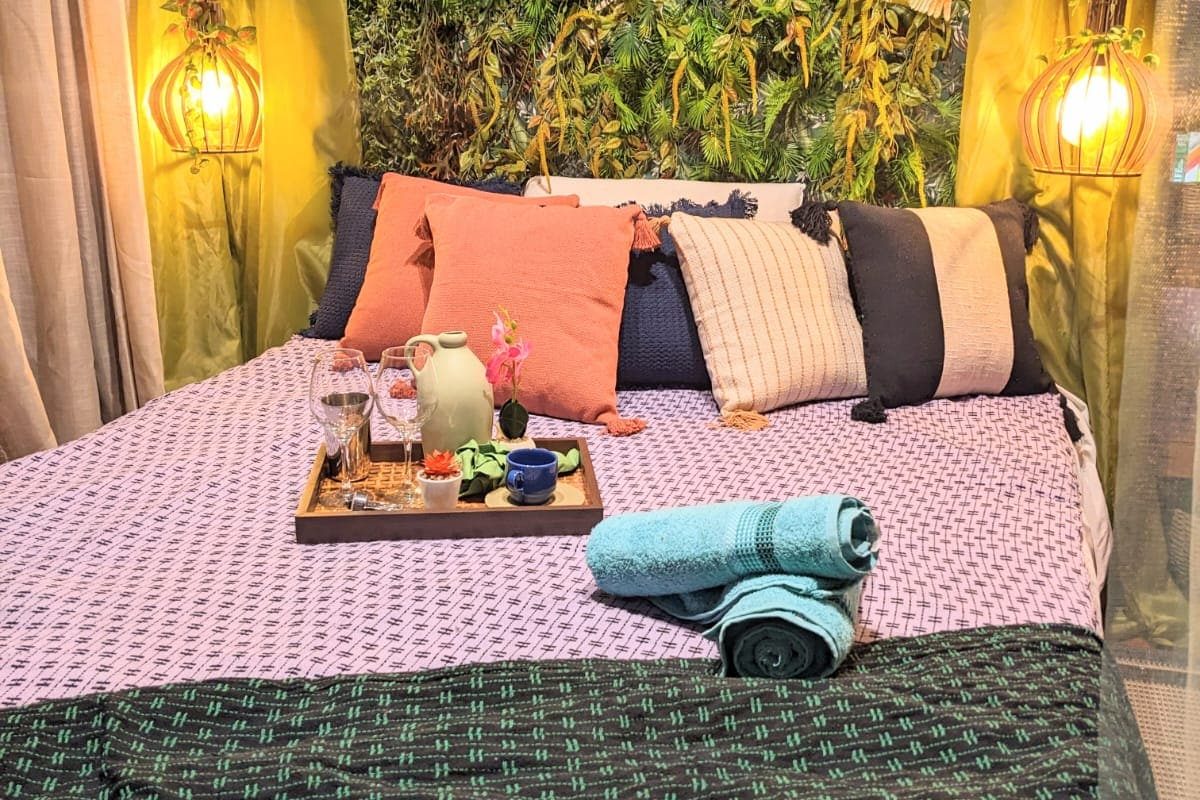
Wall lamps with a swing arm free the table and put the light where the book is. Moko Vista has a brass swing-arm lamp on the wall at each side of the bed. The Suite Colonial, one of Via Avantgarde’s four suites in Salvador’s upper town, hangs a woven lamp at each side of its bed, under a wall of plants. The Cerulean’s owners put electronics chargers on every bedside table, which saves a guest from hunting for a free socket behind the furniture.
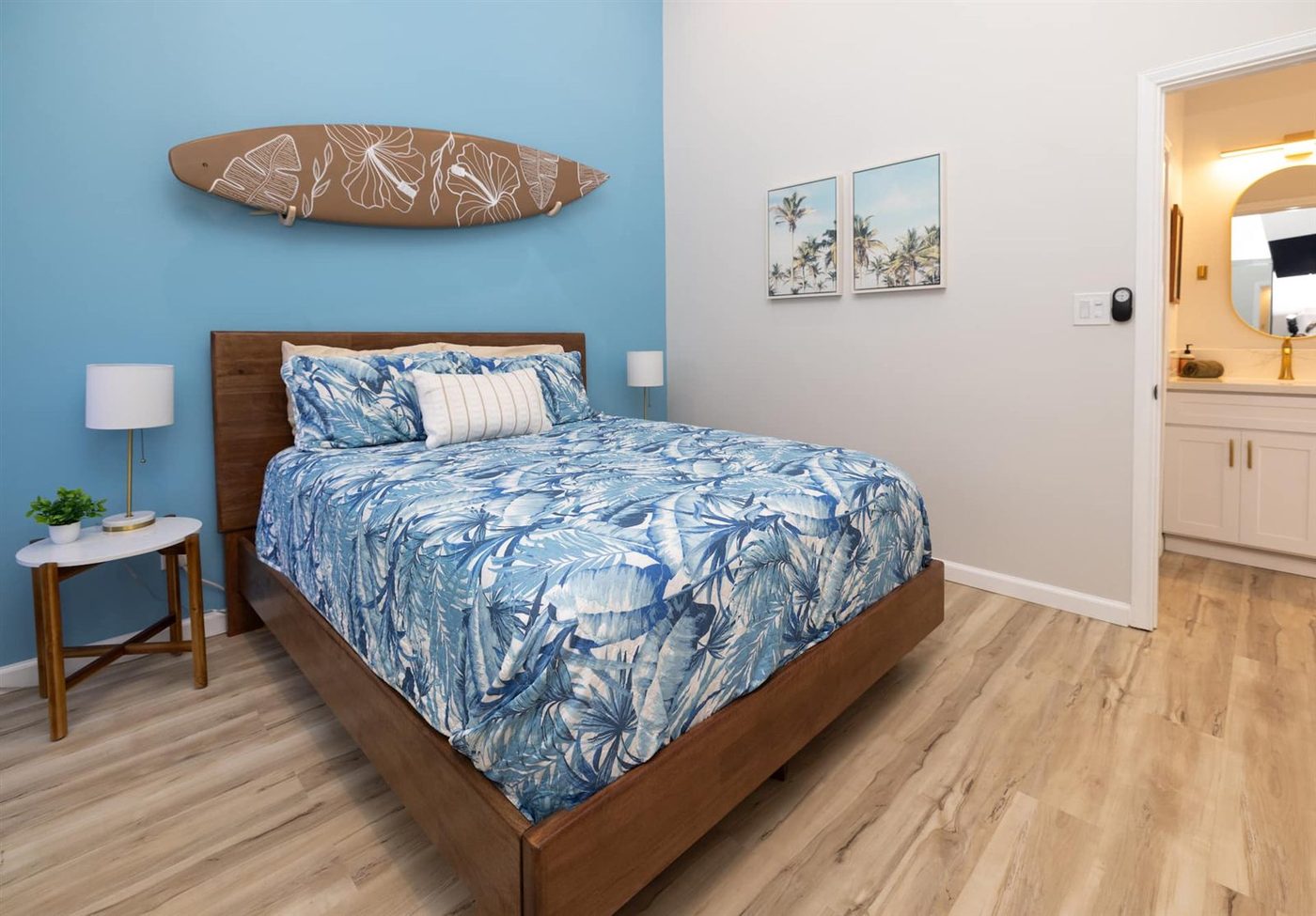
Fit a switch for the main light within reach of the bed, or a two-way switch, so nobody has to cross a dark room to turn it off. Use warm bulbs at the bedside: the California Lighting Technology Center at the University of California, Davis, gives 2,700 to 3,000 K as the range for homes. For the walk to the bathroom at night, the National Heart, Lung, and Blood Institute says a dim night light is fine if one is needed; put it low, in the hall or the bathroom, so it lights the floor and not the bed. And leave something to read. The Penthouse Jacuzzi and the Suite Colonial both keep books for guests.
Somewhere for the suitcase and the clothes
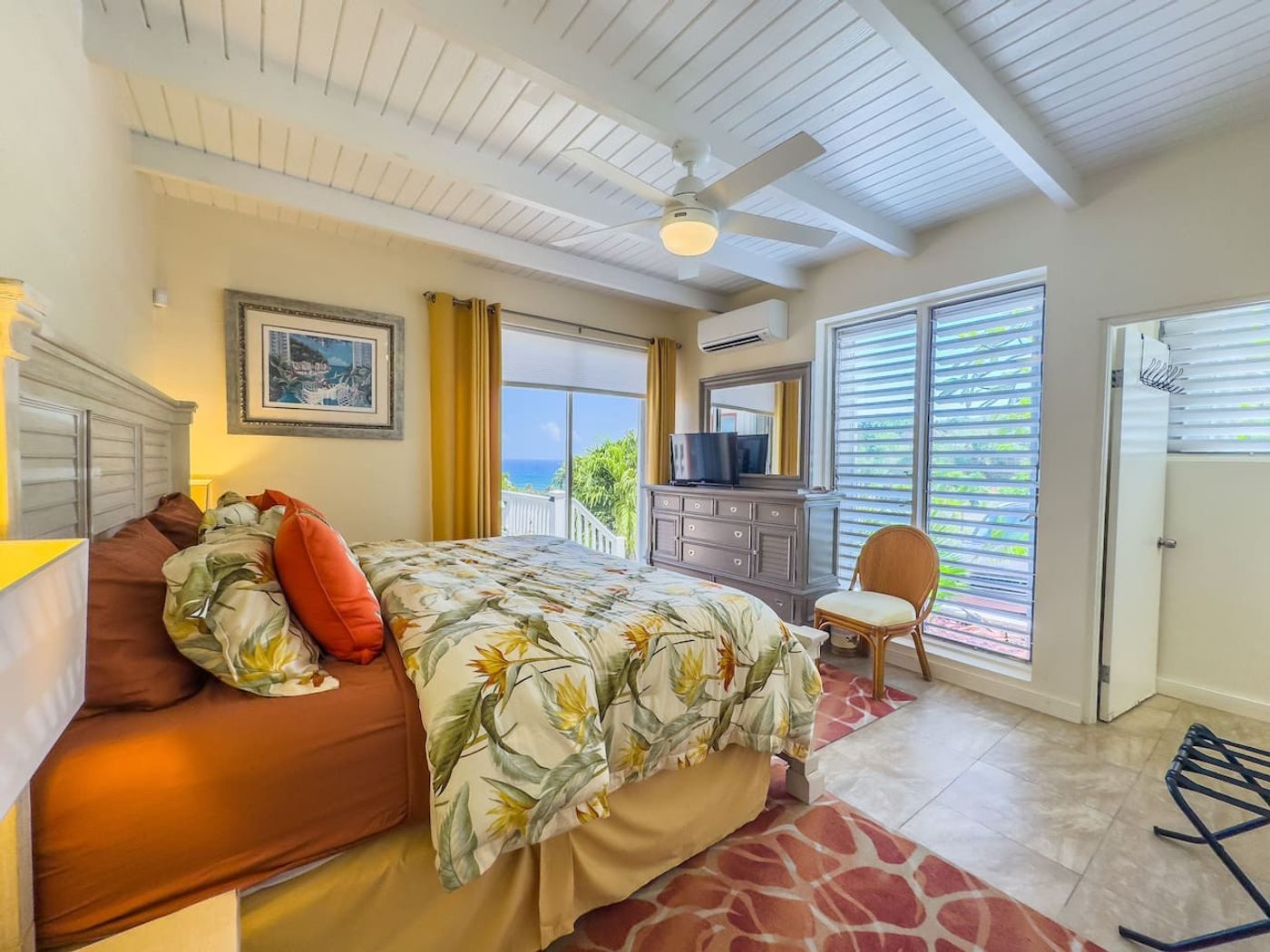
A suitcase open on the bed is a sign the room is missing something. Give every bedroom a folding luggage rack or a low bench, a chair, empty drawers, and a wardrobe or rail with matching hangers, enough for a week of clothes for two people. The bedroom pictured below, at Hook ’em on Paradise, has most of it: a black folding rack by the door, a cane chair, a chest of drawers and a row of hooks on the back of the door.
Guests notice storage when it is there. “Bedrooms are a good size and provide plenty of dresser and closet space,” wrote Nicholas, who stayed at Toes in the Sand Beach House with a family of four in May 2026. Sea Sun Maui’s owners describe its main bedroom with a closet and a dresser, and the Loft Histórico in Salvador, the smallest of the Via Avantgarde suites, lists an iron and a hair dryer.
Two practical points. A luggage rack is easy to check: the Environmental Protection Agency notes that bed bugs travel in luggage and tells travellers to inspect the luggage rack in their room, so a bare metal frame is a sensible choice. And anchor the furniture. The CPSC asks owners to anchor televisions and furniture such as bookcases and dressers securely to the wall, and estimates that a child is treated for a tip-over injury every 53 minutes in the United States.
A full-length mirror, a couple of hooks on the back of the door, a hair dryer in a drawer and a small waste bin finish the room.
The bathroom
Groups notice when every bedroom has its own bathroom, and they write about it. Lisa, who came to The Cerulean with a large party in February 2026, wrote that the house “gave everyone their own space and bathrooms.” At Shoy’s Beach House, Kirk wrote in December 2025 that the layout, “five private bedroom suites and a courtyard,” “gave each couple in our group privacy and quiet when needed.”
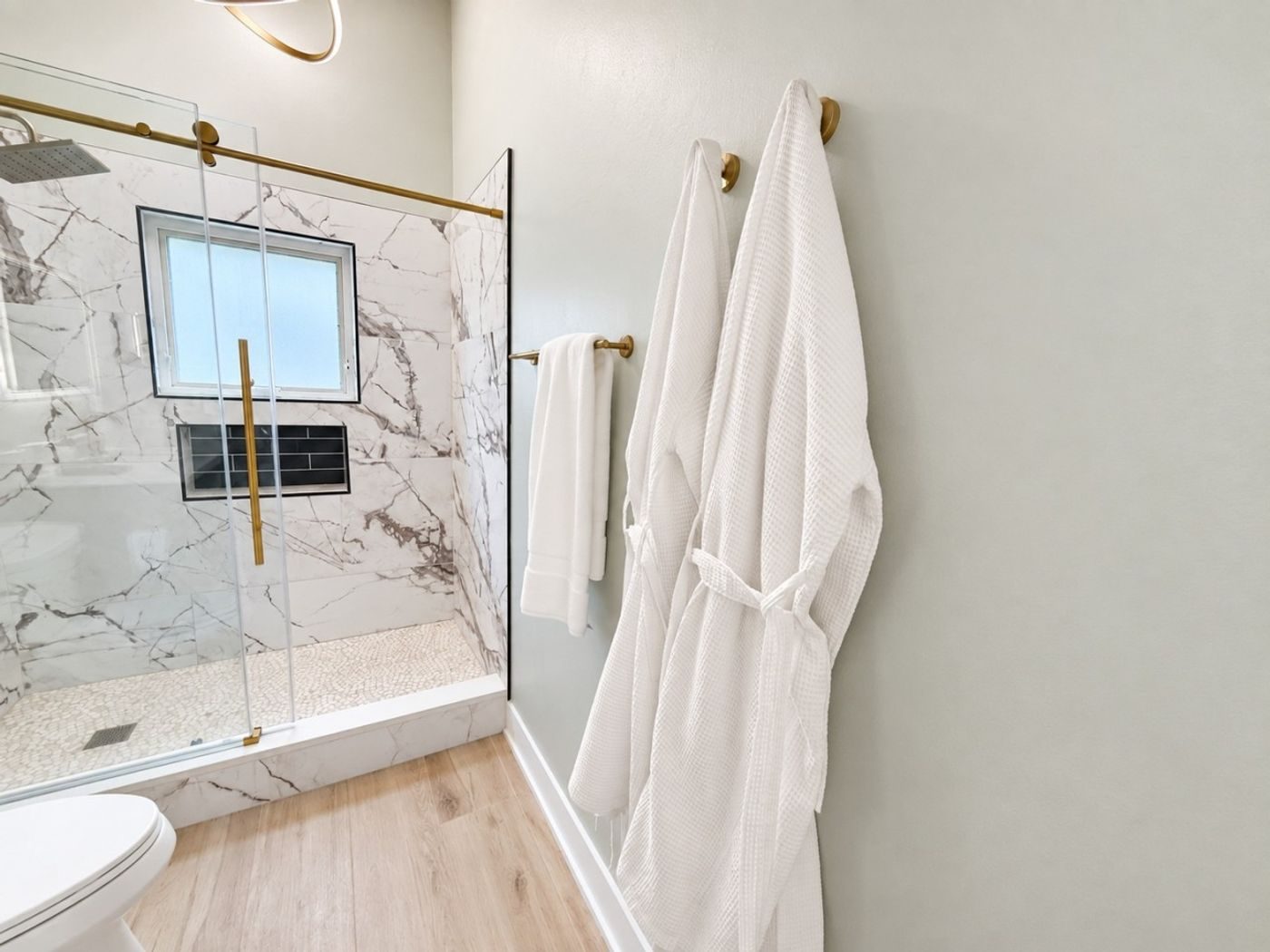
Then the details. Two hooks by the shower for wet towels and robes, a shelf or niche wide enough for two washbags, light at the mirror that falls on the face from the front, a non-slip mat, and a bin with a lid. Sunset Sea-Clusion, a remodelled two-bedroom villa on St. Croix’s West End, hangs two robes on hooks beside a walk-in shower with a tiled niche. Sea Sun Maui’s rebuilt bathroom has a glass walk-in rain shower over a pebble-stone floor, and at Lux Vidigal a walk-in shower stands separate from the soaking tub.
A walk-in shower is easier than a bath with a high side for a guest with stiff knees. The Cerulean has a walk-in shower in every bathroom, with a clawfoot tub in the main suite for those who want one. For older guests, the U.S. Centers for Disease Control and Prevention recommends grab bars inside and outside the tub or shower and next to the toilet; choose ones that match the other fittings and they read as part of the design.
Then the water. The CPSC urges setting water heaters to 120°F (49°C). At 150°F, it says, most adults will suffer third-degree burns in two seconds, and even at 120°F an exposure of five minutes could burn. Set the heater, then check the temperature at the tap with a thermometer, because guests do not know your taps.
Stock the small things guests forget: a hair dryer, toiletries and spare toilet rolls where they can be seen. The Cerulean’s owners provide body soap, shampoo, conditioner, shower gel and hair dryers.
Alarms and a way out
Every bedroom needs a working smoke alarm. The National Fire Protection Association advises smoke alarms in every sleeping room, outside each separate sleeping area and on every level of the home, interconnected where possible so that when one sounds they all sound. Test them once a month and replace them every ten years. Carbon monoxide alarms, the association advises, belong in a central place outside each sleeping area and on every level of the home.
Its fire-safety sheet for holiday rentals asks for more. Everyone staying should know two ways out of every room; windows too small to climb through do not count; any security bars need quick-release catches that open without keys or tools; and the owner should post a floor plan showing the exits, with emergency contacts and the address of the house. A card on the back of each bedroom door covers it in a minute’s reading.
Before the next guest, in every bedroom
- Lie on the bed: no dips, no squeaks, two pillows for each sleeper and a spare blanket in the wardrobe.
- Check the encasement and the mattress protector for tears, and replace any that are worn.
- Draw the curtains at midday and look for light at the edges.
- Set the air conditioner, and leave the remote and a short card by the bed.
- Switch each bedside light on and off from the pillow.
- Empty the drawers, count the hangers and put out the luggage rack.
- Run the hot tap and check the temperature with a thermometer.
- Press the test button on the smoke alarm.
- Walk from the bed to the bathroom with the main lights off.
Questions owners ask
What size bed should a guest bedroom have?
For a couple, at least a queen, which in the United States measures 60 by 80 inches (152 by 203 cm); the Sleep Foundation says couples will likely want at least that size. A king, 76 by 80 inches (193 by 203 cm), gives each sleeper the width of a twin mattress. Bed names vary between countries, so give the measurements in the listing and the house manual.
How do I make a guest bedroom dark enough to sleep in?
Hang lined or blackout curtains, or fit blinds, that overlap the window on every side and meet in the middle, because light leaking round the edges is what wakes people. Rooms that face the sunrise need it most. Where young children may stay, the CPSC, the U.S. agency for consumer product safety, says cordless window coverings are the safest choice.
What should be on a guest's bedside table?
On both sides of the bed: a lamp with its own switch, room for a glass of water, glasses, a phone and a book, and a socket or a charger. Warm bulbs in the 2,700 to 3,000 K range suit a bedroom, and a dim night light in the hall or bathroom helps guests find their way at night.
Where should guests put their suitcases?
On a folding luggage rack or a low bench, with empty drawers, matching hangers and a chair beside it. A bare metal rack is easy to check, which matters because, as the U.S. Environmental Protection Agency notes, bed bugs travel in luggage, and it tells travellers to inspect the luggage rack in their room.
Does every guest bedroom need a smoke alarm?
Yes. The National Fire Protection Association advises a smoke alarm in every sleeping room, outside each separate sleeping area and on every level of the home, interconnected where possible. Test them once a month and replace them every ten years. Carbon monoxide alarms go in a central place outside each sleeping area and on every level.
How hot should the water be in a holiday home?
The CPSC, the U.S. agency for consumer product safety, urges setting water heaters to 120°F (49°C). At 150°F, it says, most adults suffer third-degree burns in two seconds. Check the temperature at the tap with a thermometer after setting the heater, because guests do not know your taps.
Sources
- Sleep Foundation, mattress sizes and dimensions chart (Logan Foley, updated 11 July 2025), read 9 October 2026: sleepfoundation.org
- U.S. Environmental Protection Agency, protecting your home from bed bugs (encasements, luggage racks): epa.gov
- National Heart, Lung, and Blood Institute, healthy sleep habits: nhlbi.nih.gov; American Academy of Sleep Medicine, healthy sleep habits: sleepeducation.org
- U.S. Consumer Product Safety Commission, window covering cords: cpsc.gov/gocordless; anchoring TVs and furniture, release of 5 February 2026: cpsc.gov; avoiding tap water scalds, publication 5098: cpsc.gov (PDF)
- U.S. Centers for Disease Control and Prevention, preventing falls (grab bars, light, railings): cdc.gov
- California Lighting Technology Center, University of California, Davis, how to choose the right light (2017): cltc.ucdavis.edu
- National Fire Protection Association, smoke alarms: nfpa.org; carbon monoxide: nfpa.org; fire safety at your home away from home (holiday rentals): nfpa.org
- The houses, from their own descriptions and photographs, read 8 and 9 October 2026: The Cerulean’s amenities and owners’ story, theceruleanstcroix.com; Lux Vidigal, luxvidigal.com; Sea Sun Maui, mauibeachvacationrentals.com; the Via Avantgarde suites, viaavantgarde.com; the SP Vacations houses on St. Croix, spvacationsvi.com
- Guest reviews quoted as written, four- and five-star reviews only, from the SP Vacations and The Cerulean review pages: spvacationsvi.com/reviews