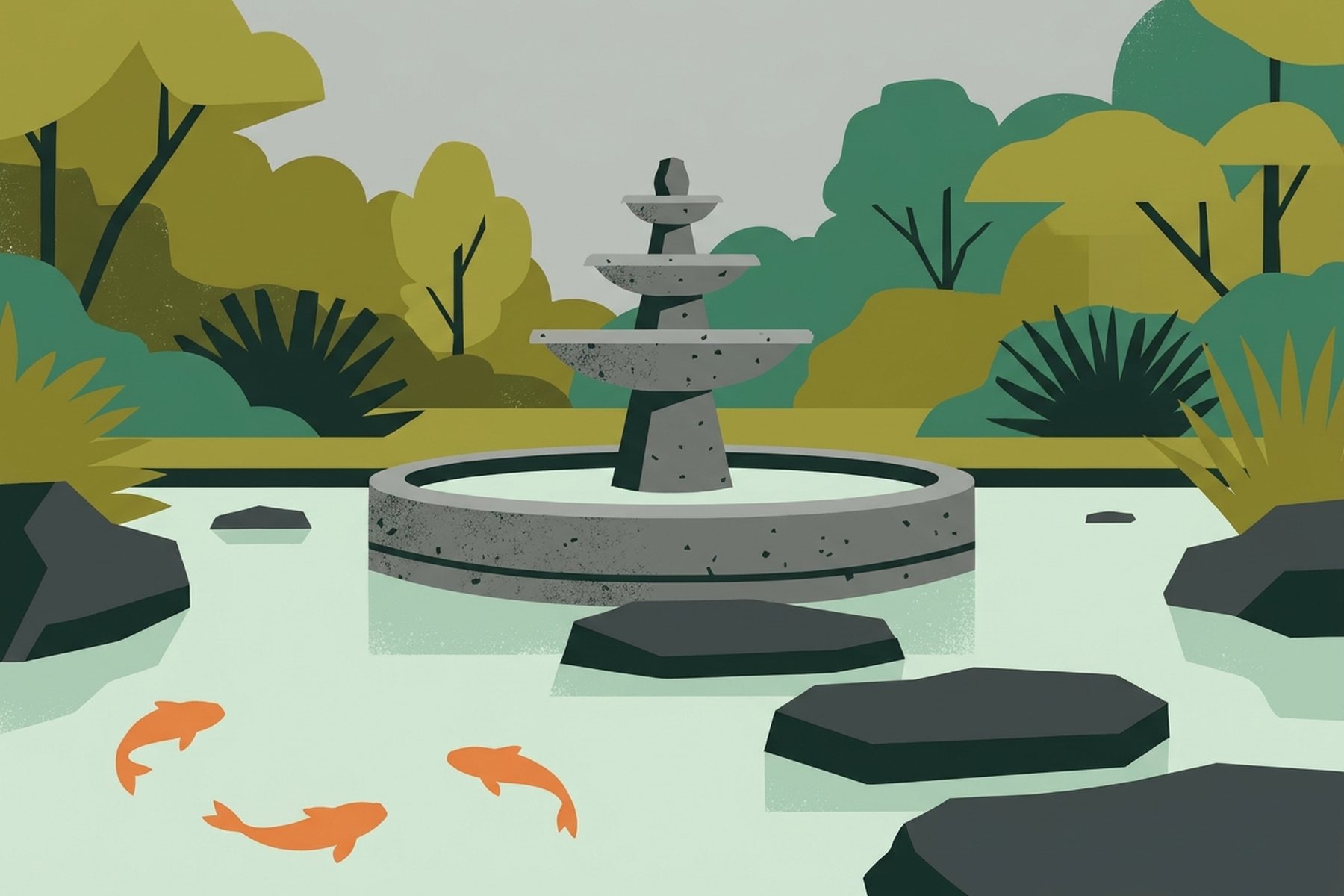
Drawing the Stone Pools of East Bali
Why our picture desk chose volcanic stone and royal water gardens rather than hotel renders for an East Bali resort opening.
A jar of Payne’s grey sits next to the ink slab, clouded from washing out the flat hog-bristle brushes. Our picture desk maintains a firm rule when covering accommodation news. We never draw architectural elevations, rendered guest suites, or marketing perspectives of a named resort. If an opening is set for 1 October 2026, as The Kayon Gangga Resort is in the village of Ababi, sketching the resort itself produces nothing more than promotional material. We do not copy developer brochures, and we do not invent bedroom joinery before guests arrive.
Instead, our practice is to draw the landscape and physical heritage that frame the report. The Kayon Hotels & Resorts is a family-owned business expanding beyond Ubud, where its earlier properties—The Kayon Resort, The Kayon Jungle Resort, and The Kayon Valley Resort—stand above river ravines and rice fields. For this venture into Karangasem in East Bali, the context changes completely. The drive out from Ngurah Rai International Airport is longer, the roads grow narrower, and the bustle of southern hubs like Seminyak and Canggu gives way to black sand beaches, terraced hills, and the sacred bulk of Mount Agung.
When the news desk filed the piece, my decision was which singular subject should represent this shift eastward. The resort’s announcement directly cites the Tirta Gangga water palace as its nearby landmark. That former royal palace holds the history of East Bali far better than any hotel terrace could. Its tiered fountains, intricate stone carvings, and clear spring reservoirs demonstrate what sets Karangasem apart from the rest of the island, including its spiritual foundation near the grand Besakih Temple.
I framed the composition around the carved stone fountain and the octagonal stepping stones set across the water. In Karangasem, historical masonry relies on dark volcanic stone, which gives the structures a heavy, solemn quality against the water. Where Ubud is defined by soft river silt and steep palm valleys, this part of Bali has the sharp architecture of an old royal kingdom. The drawing conveys the slower, older cadence of the regency, grounding the report in the physical matter of the place.
The colour scheme remains restrained. I mixed an olive green wash for the surrounding foliage, laid deep charcoal across the volcanic masonry, and used diluted sepia for the calm surface of the pond. Three orange carp break the reflection beneath the carved fountain basin, drawn with two quick dabs of cadmium red and yellow gouache. There is no need to add fictional details when the local masonry and spring water offer such clean lines.
The wash has dried now, flat and chalky on the rough watercolour block. A mechanical pencil, an eraser shaved down to a grey wedge, and a steel ruler sit lined up across the wooden edge of the drawing board.
From Vol. 2 · No. 10 · October 2026. This column draws on a story from The Wire. Details change; confirm specifics with the property before you travel.
More drawings
-
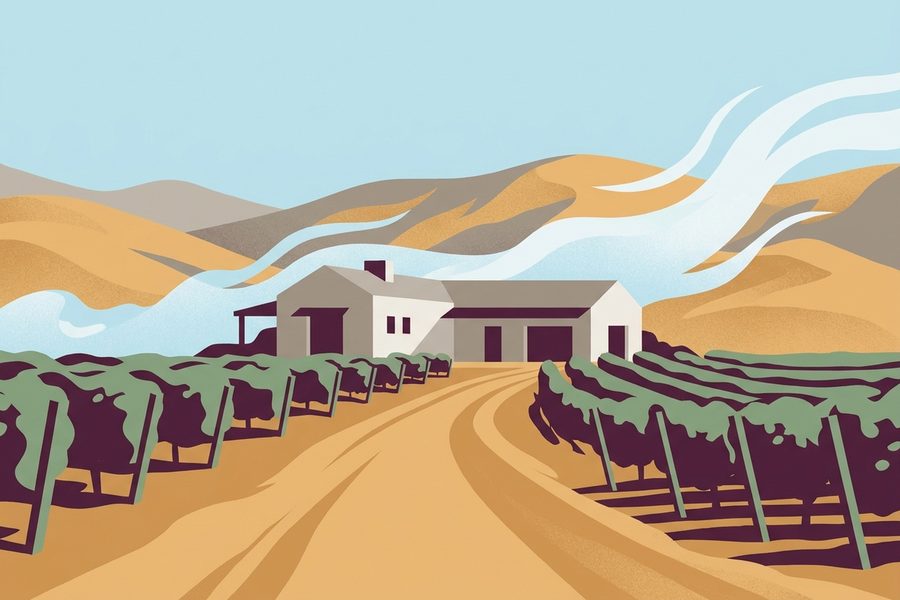 Valle de Guadalupe · 15 September 2026 · Vol. 2 · No. 09
Valle de Guadalupe: Colours of a Dry Valley
I am working on a drawing of a winery guesthouse in Valle de Guadalupe, focusing on the unique light and earthy palette of the region.
Valle de Guadalupe · 15 September 2026 · Vol. 2 · No. 09
Valle de Guadalupe: Colours of a Dry Valley
I am working on a drawing of a winery guesthouse in Valle de Guadalupe, focusing on the unique light and earthy palette of the region.
-
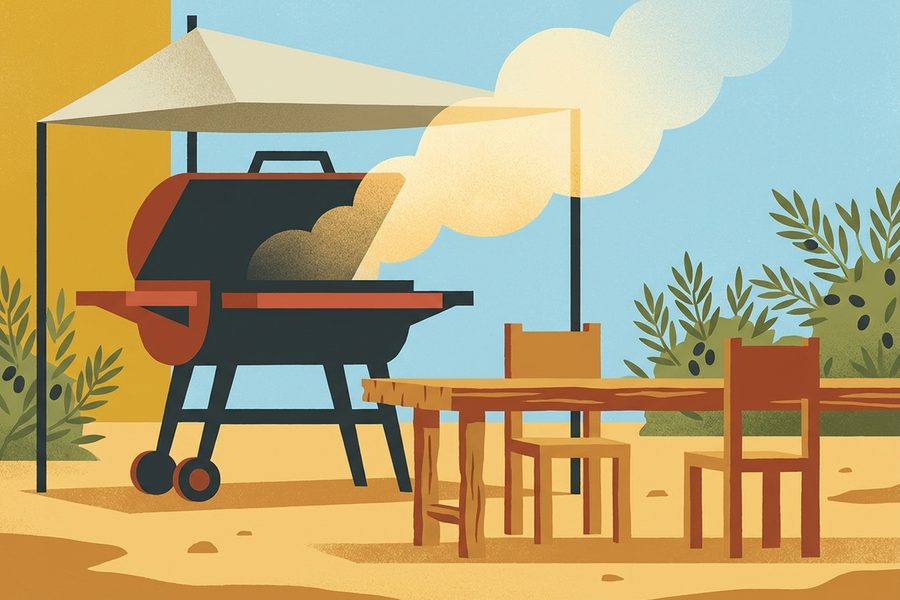 Valle de Guadalupe · 5 September 2026 · Vol. 2 · No. 09
Valle de Guadalupe Cover and Companion
The September cover for Valle de Guadalupe needed a single image to carry the issue, and the decisions behind it were about distillation and mood.
Valle de Guadalupe · 5 September 2026 · Vol. 2 · No. 09
Valle de Guadalupe Cover and Companion
The September cover for Valle de Guadalupe needed a single image to carry the issue, and the decisions behind it were about distillation and mood.
The columns, every month.
One considered letter when a new issue lands: the cover story, the columns, the drawings and the month's news.