Drawing the Transit to Kuda Huraa
Why drawing a new naturopathy island means turning away from resort architecture and focusing on a wooden boat.
A cake of cobalt gouache sits dissolved into a grey-blue pool in the porcelain well on my desk. When our news desk reported that Four Seasons Resort Maldives at Kuda Huraa was opening ŪRJĀ Naturopathy Island, the immediate editorial question was what to put on the page. Commercial resort operators spend considerable sums producing smooth, sunlit photographs, and readers sometimes expect an illustrator to trace those images. We maintain a strict boundary against that practice at the magazine. We never draw a likeness of a named hotel facade, and we do not replicate promotional stills. A magazine drawing should not double as an architectural sales pitch. If we try to render a private villa or a branded reception pavilion, the image turns stiff and lifeless, little better than an advertisement.
Our task instead is to identify an authentic object, a working process, or a physical gesture that carries the reality of the place. The Kuda Huraa venture is an ambitious undertaking. ŪRJĀ takes its name from the Sanskrit word for vitality, setting out to encourage enduring habits rather than brief spa treatments. The programme draws on AION A, a mineral found in an ancient Roman quarry in Würenlos, Switzerland, by the Swiss naturopathic researcher Emma Kunz, who lived from 1892 to 1963. The resort uses Kunz’s geometric drawings across its treatment menus, combining them with fasting, acupuncture, and over-water treatment suites designed around the rhythms of the Indian Ocean. Trying to force Swiss mineral quarries, geometric diagrams, and medical therapies into one frame would result in a muddle.
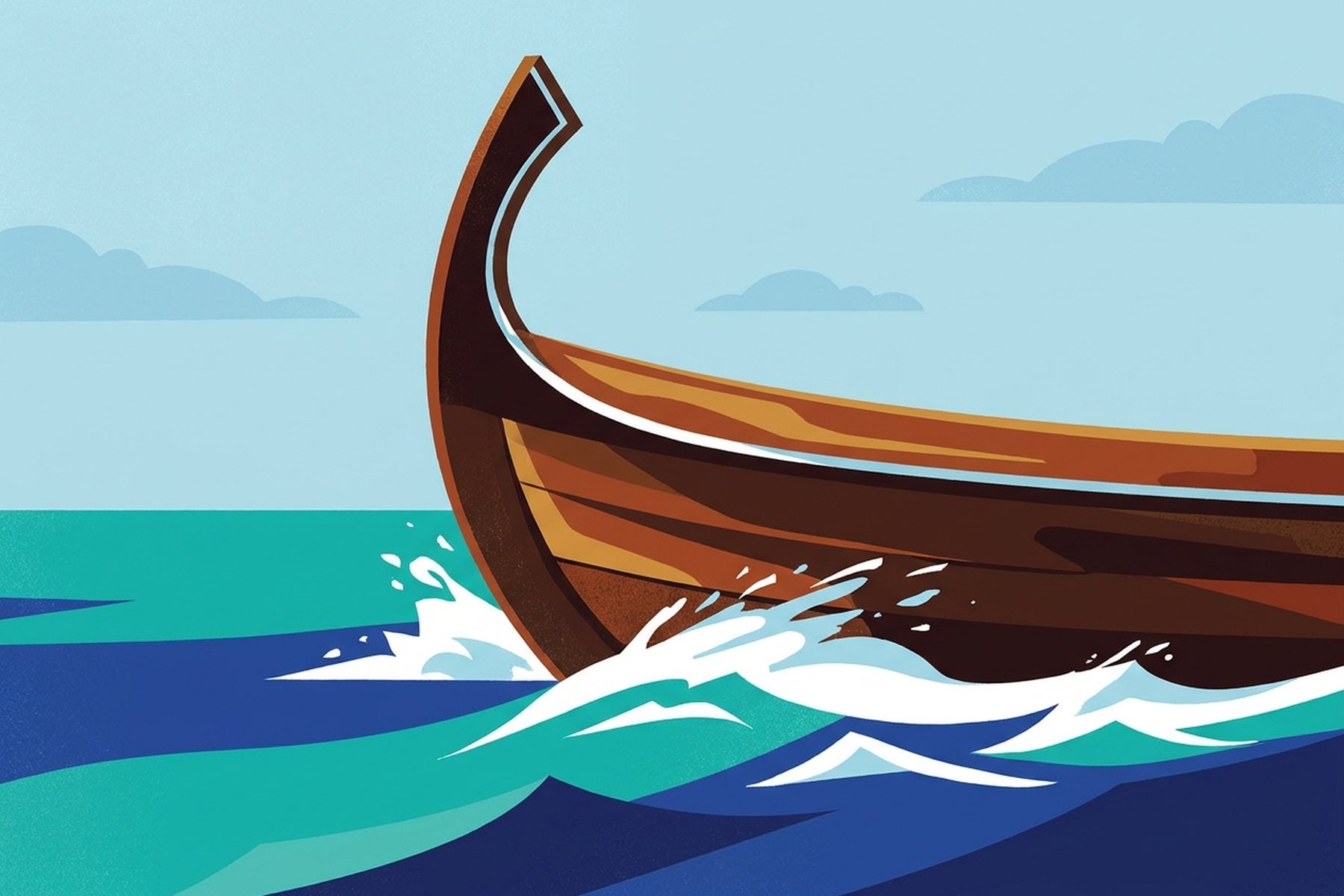
The single operational detail that gave me my footing was the crossing. Our report notes that visitors reach ŪRJĀ by a small Maldivian dhoni from the main jetty. That wooden boat offered a clear, reliable subject. A dhoni is not a proprietary invention of a brand; it is a traditional vessel shaped by centuries of local navigation, with a curved timber bow and sturdy ribs made to ride open water. By focusing on the craft itself, I could root the story in the geography of the archipelago without drawing private real estate. The boat belongs to the sea, not to a hotel chain.
I kept the composition low and close to the hull. The palette relies on raw umber and burnt sienna for the weathered planking, with French ultramarine, viridian, and zinc white worked wet into wet for the surrounding water. I removed every sign of resort livery, cushions, and passengers. The drawing conveys the physical act of leaving dry boards behind and pushing out into the swell.
I rinsed the ferrule of my flat wash brush in the glass jar and placed the wet sheet on the drying rack beside the window. A strip of brown gummed paper, a brass pencil sharpener, and two sticks of vine charcoal remain on the cutting mat.
From Vol. 2 · No. 11 · November 2026. This column draws on a story from The Wire.
More drawings
-
 St. Croix · 15 October 2026 · Vol. 2 · No. 10
The Yellow Fort at Christiansted
Elio Marchetti mixes five colours to draw the Danish masonry and calm harbour water of St. Croix.
-
 The picture desk · 1 October 2026 · Vol. 2 · No. 10
Drawing the Stone Pools of East Bali
Why our picture desk chose volcanic stone and royal water gardens rather than hotel renders for an East Bali resort opening.
The conversation