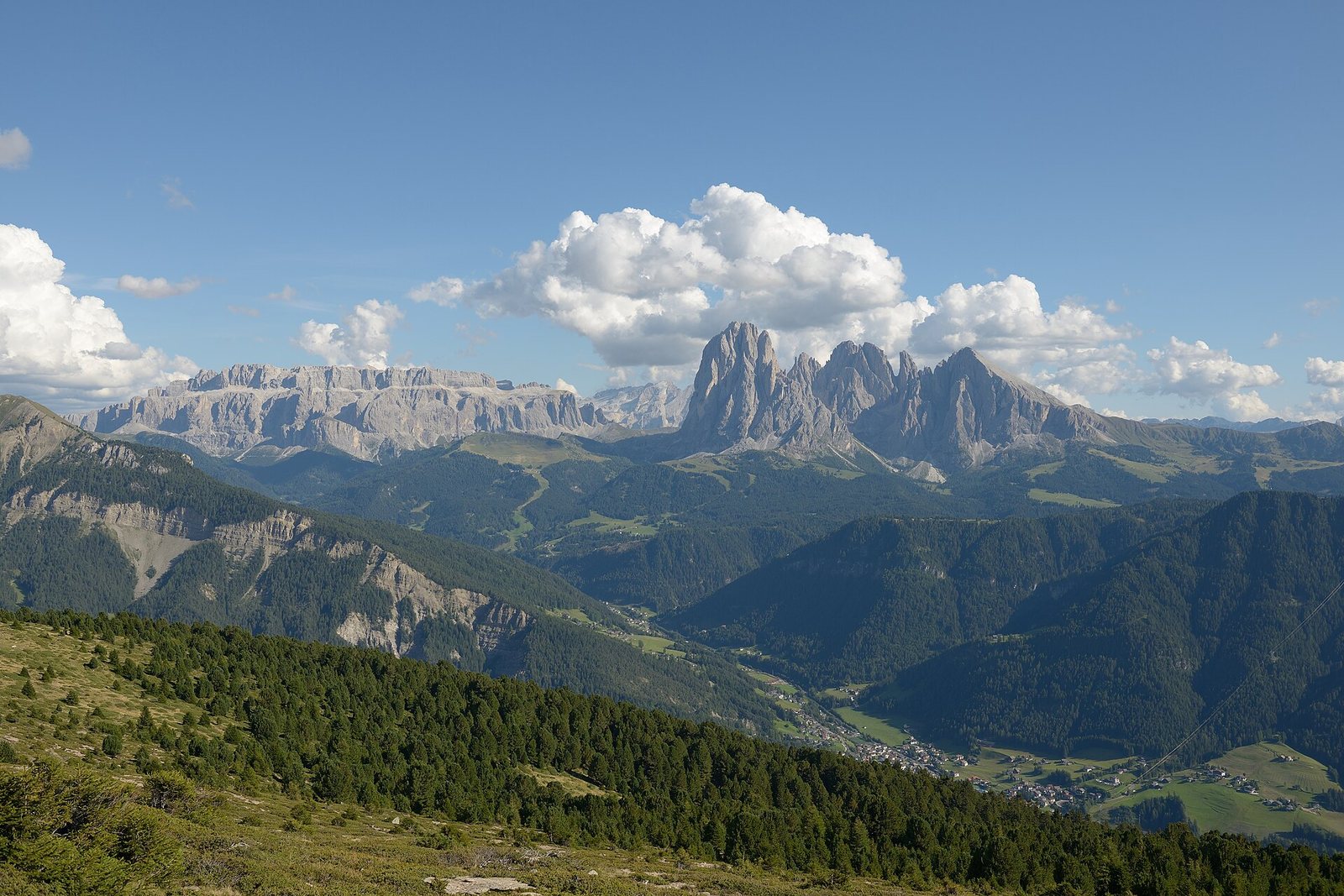
Val Gardena with Sella and Saslonch from Resciesa · Wolfgang Moroder · CC BY-SA 3.0 · cropped
Mountain Cooking Two Tongues
The food of the Dolomites reflects its dual heritage, best enjoyed simply in a mountain hut after a morning walk.
The cooking in these valleys sits squarely on the line between Italy and the Tyrol, a direct reflection of the land itself. Across the Dolomites’ three provinces—South Tyrol, Trentino, and Belluno in the Veneto—one hears German first in the northern valleys, Italian second, and in a handful of them, Ladin. This Rhaeto-Romance language is still spoken in Val Gardena, Alta Badia, and a few neighbouring valleys. Menus, place names, and road signs often carry two or three versions of everything; Ortisei is also Sankt Ulrich and Urtijëi. This blend of cultures translates directly to the plate, offering a robust mountain cuisine that is both familiar and distinctly local.
Expect to find canederli, the bread dumplings known to the north as Knödel, served alongside a hearty barley soup. Plates of thinly sliced speck, the cured ham of the region, are a staple, as are spätzle, small egg noodles often tossed with cheese or butter. For something sweet, strudel is ubiquitous, a warm slice with coffee after a meal. This is food designed to sustain, simple and satisfying, and it is best eaten where it is made, high in the mountains.
The best place for this kind of meal is a rifugio, one of the hundreds of mountain huts scattered across the range. These vary from small stone refuges on remote cols to larger, almost hotel-like houses reachable by cable car. Most are run privately or by the Italian Alpine Club, and crucially, most serve hot lunches to day walkers who simply arrive at the door. There is no need for a reservation for lunch; simply find a table, often outdoors with a view of the pale rock, and order from the daily offerings. These huts are a crucial part of the Dolomites’ appeal, making multi-day walking possible without a tent, but they are equally valuable for a single mid-day stop.
August is the warmest and busiest month, with everything open and Italian and German families taking their main holiday around Ferragosto, the mid-month public holiday on the fifteenth. While popular sights like Lago di Braies or the Tre Cime fill by late morning, the rifugi remain a practical option for a hot meal. The single most useful habit in August is to walk early, not only to reach the honeypots before the crowds do, but also to be off exposed ground before the regular afternoon thunderstorms arrive. A morning walk followed by a rifugio lunch is a rhythm that works well.
For those considering a longer stay, many rifugi also offer beds and an evening meal, typically half board for around sixty to ninety euros a person, covering dinner and breakfast. Sleeping in one, even for a single night, changes the trip completely, offering quiet hours after the last lift down and a dawn start onto briefly empty ground. However, these overnight stays require booking months ahead for July and August. For a simpler day trip, arriving at the door for lunch remains the most straightforward approach, offering a taste of mountain cooking without the need for advance planning.
From Vol. 0 · No. 08 · August 2024, The Mountain-Summer Issue. The cover story is The Dolomites. Details change; confirm specifics with the property before you travel.
More from the column
-
 St. Croix · Vol. 2 · No. 10 · October 2026
Crucian Cooking, Johnnycakes and Chicken
On St. Croix, the local rhythm of meals features fried bread, savoury pâtés, and the island's celebrated spit-roast chicken.
St. Croix · Vol. 2 · No. 10 · October 2026
Crucian Cooking, Johnnycakes and Chicken
On St. Croix, the local rhythm of meals features fried bread, savoury pâtés, and the island's celebrated spit-roast chicken.
-
 Rio de Janeiro · Vol. 2 · No. 09 · September 2026
Rio Eating: Boteco, Feijoada, Beach
Learn Rio's rhythm of meals, from corner bars and Saturday stews to beach vendors and late dinners in Botafogo.
Rio de Janeiro · Vol. 2 · No. 09 · September 2026
Rio Eating: Boteco, Feijoada, Beach
Learn Rio's rhythm of meals, from corner bars and Saturday stews to beach vendors and late dinners in Botafogo.
-
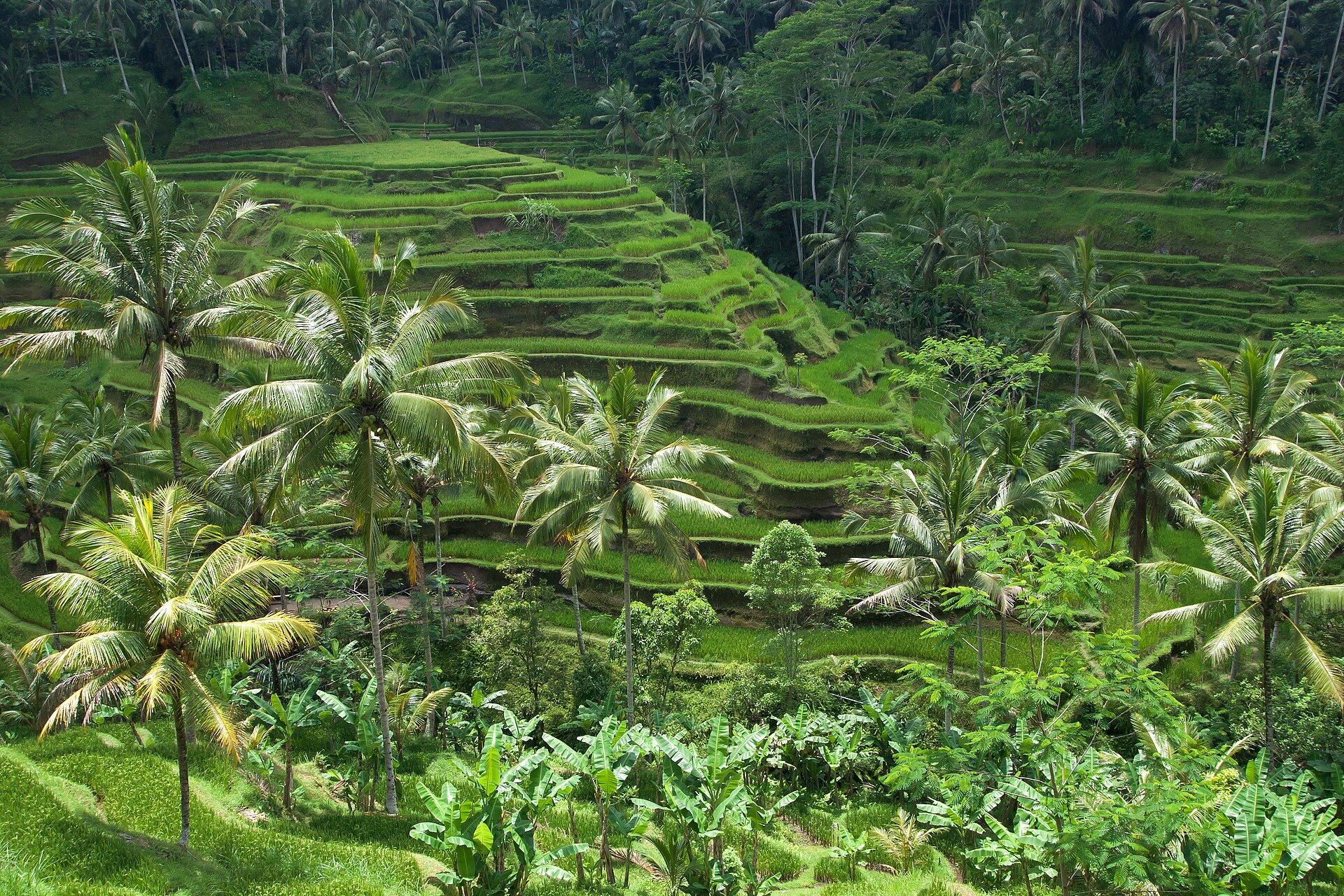 Rice terraces, Bali · Vyacheslav Argenberg · CC BY 4.0 · cropped
Bali · Vol. 2 · No. 06 · June 2026
Eating Bali: Warung to Cliff
Experience the island's diverse dining, from affordable family-run warungs to dramatic cliff-edge restaurants on the Bukit Peninsula.
Rice terraces, Bali · Vyacheslav Argenberg · CC BY 4.0 · cropped
Bali · Vol. 2 · No. 06 · June 2026
Eating Bali: Warung to Cliff
Experience the island's diverse dining, from affordable family-run warungs to dramatic cliff-edge restaurants on the Bukit Peninsula.
-
 Playa de Comporta, Portugal, 2021-09-12, DD 15-26 PAN · Diego Delso · CC BY-SA 4.0 · cropped
Comporta · Vol. 2 · No. 05 · May 2026
Comporta Meals Shack and Pine
The Comporta coast offers two distinct dining experiences: barefoot beach lunches and quiet, lantern-lit dinners among the pines.
Playa de Comporta, Portugal, 2021-09-12, DD 15-26 PAN · Diego Delso · CC BY-SA 4.0 · cropped
Comporta · Vol. 2 · No. 05 · May 2026
Comporta Meals Shack and Pine
The Comporta coast offers two distinct dining experiences: barefoot beach lunches and quiet, lantern-lit dinners among the pines.
The columns, every month.
One considered letter when a new issue lands: the cover story, the four columns, and the month's news.
Comments