Bali, for all its undeniable magnetism, has long presented a curious paradox to the discerning traveller. The island’s natural beauty and spiritual allure are legendary, yet its hospitality landscape, particularly in the mid-range and even luxury villa sector, can often feel caught between an idealised rustic charm and a well-meaning but ultimately generic interpretation of tropical living. For every truly innovative design statement, there are dozens of properties that lean heavily on a familiar palette of local stone, dark wood, and open-air pavilions, often resulting in a pleasant but rarely truly memorable experience. To stand out in this saturated market requires not just capital, but a clear, confident vision – a design philosophy so singular it compels attention.
Enter The Huntley Villas Bali, a new opening in Canggu that arrived in late 2025 with a proposition as bold as it is unexpected: to blend Balinese hospitality with a distinctly Californian aesthetic. This isn’t a subtle nod or a fleeting influence; according to its developers, Tess Keddie and Tim Dugdale, The Huntley was conceived to feel like “somewhere else entirely.” In an era where authenticity and a sense of place are often held up as the paramount virtues of luxury travel, this deliberate embrace of an imported sensibility signals a fascinating evolution in how operators are thinking about escapism, design, and what it truly means to transport a guest.
Canggu’s Evolving Canvas
To understand The Huntley, one must first understand Canggu. A decade ago, this stretch of Bali’s southwest coast was a relatively sleepy collection of rice paddies and black sand beaches, known primarily to surfers and a handful of intrepid backpackers. Its charm lay in its unpolished, bohemian spirit, a stark contrast to the more developed and polished enclaves of Seminyak and Legian further south. But Canggu has matured with astonishing speed. The digital nomad phenomenon found a spiritual home here, drawn by its burgeoning café culture, co-working spaces, and a relaxed, come-as-you-are atmosphere. This influx brought with it a demand for accommodation that transcended the basic surf shack, gradually pushing the market towards more refined villas and boutique hotels.
Today, Canggu is a vibrant, often frenetic hub where organic eateries sit alongside high-end boutiques, and wellness studios are as ubiquitous as scooter rentals. The infrastructure, while still distinctly Balinese in its improvisational nature, has struggled to keep pace with the explosion of interest. This rapid development has created a highly competitive hospitality market, particularly for villas. Many properties, while comfortable, often fall into a predictable design language, relying on locally sourced materials for economy and ease of procurement. The result, as The Huntley’s developers have observed, is a “fairly homogenous look across the market.” This isn’t necessarily a criticism of those properties, many of which offer genuine comfort and a pleasant stay. However, in an increasingly globalised and visually sophisticated travel landscape, the demand for distinctive, narrative-driven design has grown exponentially. Guests are no longer simply seeking a bed and a pool; they are seeking a curated experience, a backdrop for their own stories, and a visual identity that resonates with their personal aesthetic.
The Californian Dream, Bali Edition
Tess Keddie and Tim Dugdale are not new to this particular corner of the market. The Huntley represents their second Bali project, following the success of The Cali Villas, which opened in 2022. That debut property, according to reports, drew on the mid-century modern aesthetic of Palm Springs, characterised by its bold colours and warm finishes. The Huntley, however, pushes this concept further, offering a “considered, design-led villa experience” that the founders felt was missing from the island’s offerings. This deliberate choice to import a specific, non-native design language is central to The Huntley’s identity and its commercial strategy.
The Californian aesthetic, particularly its mid-century iterations, carries with it a potent mythology. It evokes images of sun-drenched days, effortless glamour, and a particular brand of cool modernism that feels both timeless and aspirational. From the desert modernism of Palm Springs to the understated elegance of West Hollywood, Californian design is characterised by clean lines, a strong connection to the outdoors, and a palette that often mirrors the natural landscape – warm earth tones, sandy neutrals, and the occasional pop of vibrant colour. It’s a style that speaks of leisure, sophistication, and a certain optimistic futurism. To graft this aesthetic onto the Balinese landscape is, on the surface, an audacious move. Bali’s vernacular architecture, with its intricate carvings, open-air living spaces, and deep connection to Hindu spiritual traditions, is a world away from the rectilinear forms and desert-inspired palettes of California. Yet, in this juxtaposition, The Huntley finds its unique voice, aiming to offer an immersive departure from the island’s more conventional design idioms.
The Anatomy of an Escape
The commitment to this Californian vision is evident from the moment one encounters The Huntley’s architecture. Working with their “long-time collaborators” Herbert & Howes, Keddie and Dugdale have crafted an aesthetic that the source material describes as “the California desert meeting West Hollywood.” This translates into a striking visual language dominated by sweeping arches, a signature element of mid-century Californian architecture that softens rigid lines and creates a sense of fluid movement. These architectural forms are complemented by a material palette that further grounds the property in its chosen aesthetic: terrazzo and marble surfaces lend a cool, sophisticated texture, reminiscent of classic Californian homes and public spaces, while a “restrained mid-century sensibility” ensures elegance without overt kitsch.
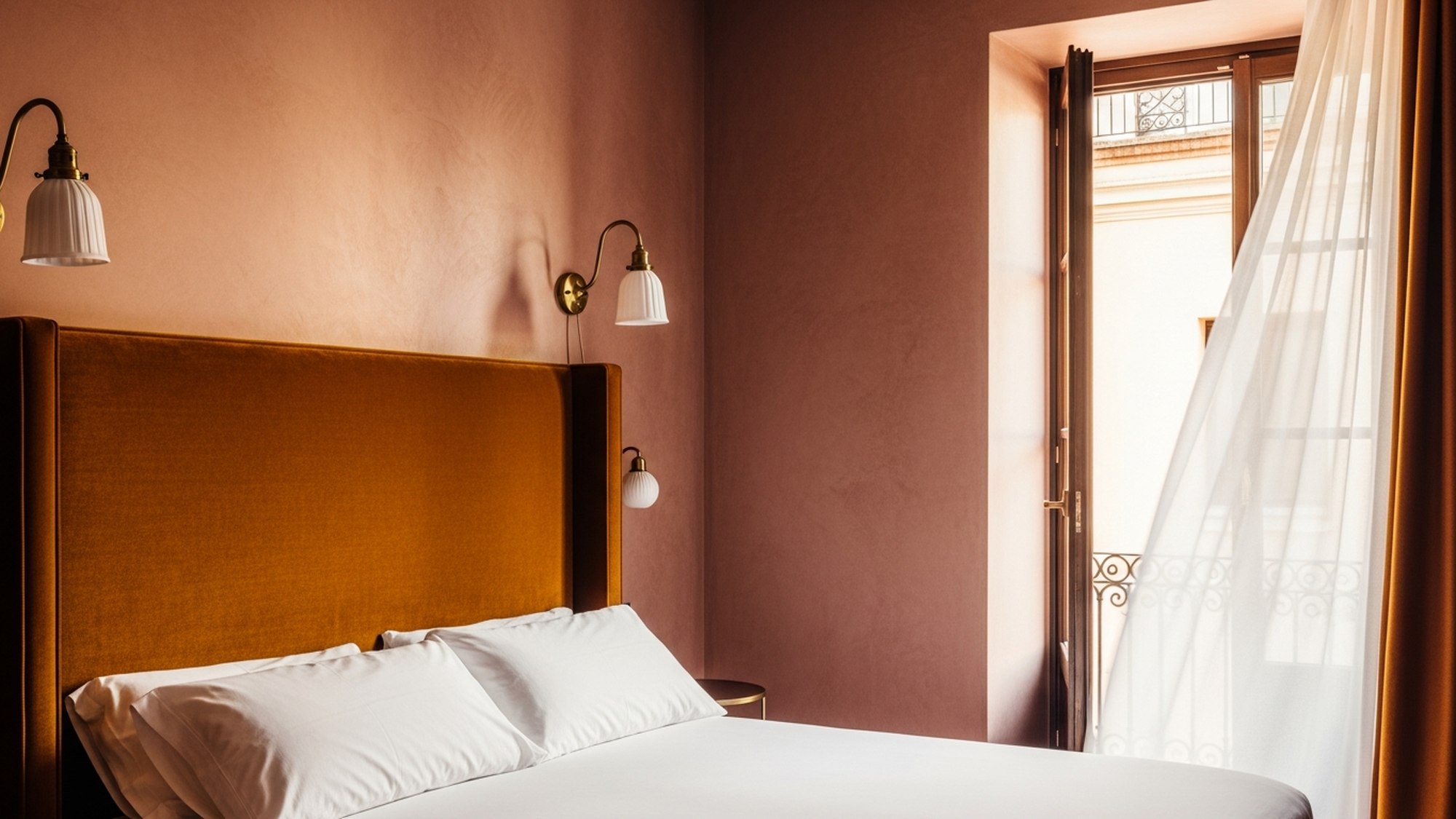
The interior design, led by Tess Keddie herself across much of the couple’s development portfolio, meticulously carries this atmosphere into every space. Neutral foundations provide a calming backdrop, allowing accents of “burnt orange and chocolate brown” to introduce warmth and depth without overwhelming the serene base palette. This careful balance of colour and texture is crucial to achieving the intended emotional effect – a sense of calm and retreat. Crucially, the finer details are not overlooked. The selection of ABI’s Kingsley Collection, specified in brushed brass for all bathrooms and kitchens, highlights a commitment to quality and consistency. According to the developers, the subtle detailing and “elegant, traditional influences” of these fixtures act as a grounding element, adding sophistication and depth. This choice speaks volumes about the meticulous approach to design, understanding that the tactile experience of a tap or a cabinet pull contributes significantly to the overall perception of luxury and thoughtful curation. It is in these details that the “immersive departure” truly takes hold, creating a cohesive and considered environment.
Beyond the Walls: A Hybrid Hospitality Model
The Huntley Villas, while offering a distinct design aesthetic, also represents a broader trend in luxury hospitality: the blurring of lines between private vacation rentals and full-service hotels. The property comprises 13 private villas, available in one- to four-bedroom configurations, each thoughtfully designed with its own pool and courtyard. This emphasis on privacy and personal space is a hallmark of the high-end villa market, appealing to guests who desire the comforts of a home-away-from-home without the perceived impersonality of a large hotel. However, The Huntley doesn’t stop there. It operates, the developers state, “within a hotel-style model supported by reception, housekeeping and dedicated hospitality services.”
This hybrid approach is increasingly popular with a certain segment of affluent travellers. They seek the independence and spaciousness of a private villa, but also expect the seamless service, security, and amenities typically associated with a luxury hotel. The convenience of a dedicated reception, regular housekeeping, and on-demand hospitality services – whether it’s arranging transport, booking excursions, or simply ordering a meal – significantly elevates the guest experience beyond what a typical standalone Airbnb or Vrbo rental might offer. It mitigates the potential downsides of private rentals, such as inconsistent service or the lack of immediate assistance, while retaining the coveted sense of seclusion. Furthermore, wellness facilities are woven into the fabric of the property, not merely tacked on as an afterthought. A fitness facility, a jacuzzi, and rooftop wellness spaces extend the “indoor-outdoor logic” of the villas, ensuring that the sense of retreat and rejuvenation is not confined to the individual living quarters but permeates the entire guest experience. This holistic integration of services and amenities underscores The Huntley’s ambition to deliver a comprehensive luxury stay.
In an increasingly globalised and visually sophisticated travel landscape, the demand for distinctive, narrative-driven design has grown exponentially.
The Commercial Calculus of Curves and Brass
The decision to invest heavily in a specific design aesthetic, down to the choice of bathroom fixtures, is not merely an artistic whim; it is, as Tess Keddie explicitly states, “a commercial decision as much as a creative one.” In the fiercely competitive luxury hospitality market, design is no longer just about making a space look appealing; it is a strategic asset, a quantifiable contributor to a property’s bottom line. The additional upfront cost of high-calibre fixtures, meticulous architectural detailing, and a coherent interior vision, she argues, “pays off through stronger marketing appeal and occupancy.” This insight is crucial for understanding the contemporary luxury travel market.
In an age dominated by visual platforms like Instagram and Pinterest, a property’s aesthetic is its primary marketing tool. A distinctive, highly photographable design generates buzz, attracts media attention, and creates a powerful narrative that cuts through the noise. Travellers are increasingly making booking decisions based on the visual promise of a unique experience, and properties like The Huntley are designed to deliver precisely that. The investment in elements like ABI’s Kingsley Collection in brushed brass, while seemingly minor, communicates a commitment to quality and attention to detail that resonates with luxury consumers. It suggests a property that has considered every element of the guest experience, from the sweeping arches to the tactile feel of the tapware. This perceived quality translates directly into higher perceived value, allowing operators to command premium rates and achieve higher occupancy levels, even in a crowded market. It’s a compelling argument that “good design and good business are rarely at odds in hospitality,” a mantra that appears to guide Keddie and Dugdale’s development pattern, as evidenced by their plans to specify the Kingsley Collection again for a new home currently under construction, this time in brushed nickel.
“By fully committing to an aesthetic borrowed from elsewhere, The Huntley achieves what the most memorable hospitality experiences do best: transporting guests to unexpected places.”
The Enduring Appeal of Specificity
The Huntley Villas is more than just a collection of stylish rooms; it is a testament to the enduring appeal of specificity in a world that often feels homogenised. In an era where global brands often deliver a predictable, albeit high-quality, experience, travellers are increasingly gravitating towards properties with a distinct point of view. This isn’t necessarily about overt novelty, but about a deep commitment to a particular aesthetic, a consistent narrative, or a unique sense of place – even if that ‘place’ is an imagined California transported to Bali.
This trend extends beyond design to the very operational model of properties. The hybrid approach, blending the privacy of a villa with the services of a hotel, speaks to a desire for bespoke experiences that cater to individual preferences. Guests want the freedom to self-cater or order room service, to socialise or retreat into solitude, all within an environment that feels thoughtfully curated. The developers’ assertion that guests remember “how a place makes them feel” is at the heart of this shift. Emotion, rather than just function, has become the ultimate metric of a successful hospitality experience. The Huntley’s success, therefore, hinges not just on its visual appeal, but on its ability to evoke a particular mood, a sense of effortless cool, and a feeling of being in a truly special, unexpected place. This commitment to a borrowed aesthetic, rather than being a limitation, becomes its superpower, allowing it to carve out a distinct niche in a competitive market by delivering on the promise of a truly transportive stay.
What it means for where you stay
For the luxury traveller, The Huntley Villas Bali signals a fascinating shift in the landscape of high-end stays. If you’re someone who appreciates a strong, coherent design narrative, even one that deliberately eschews local conventions, then properties like The Huntley offer a refreshing alternative to the more traditional Balinese villa experience. It means you can expect a meticulously designed environment where every detail, from the architecture to the tapware, contributes to a specific mood and aesthetic. It suggests a growing market for curated, almost cinematic, travel experiences where the destination itself is less about deep cultural immersion and more about inhabiting a perfectly crafted vision. Look for properties that are explicit about their design philosophy and the specific mood they aim to evoke, as these are often the ones delivering truly distinctive stays.
For owners and hosts, The Huntley provides a clear blueprint for differentiation in a crowded market. The lesson is simple but profound: generic is no longer good enough. Investing in a strong, unique design identity is not an expense, but a strategic investment that can drive marketing appeal, command higher rates, and ensure robust occupancy. The success of The Cali Villas and now The Huntley underscores the commercial power of a cohesive aesthetic, even if it means importing influences from afar. Consider how a hybrid model, blending the privacy of a villa with hotel-style services, can significantly enhance your offering. And, crucially, understand that consistent quality in every detail – from major architectural forms to the smallest fixture – is what truly elevates a property in the eyes of the discerning, design-conscious guest. The market is rewarding those who dare to be different, provided that difference is executed with uncompromising quality and a clear vision.
Source
Hotel Designs — reported 17 August 2026. Read by the Amorielli news desk.