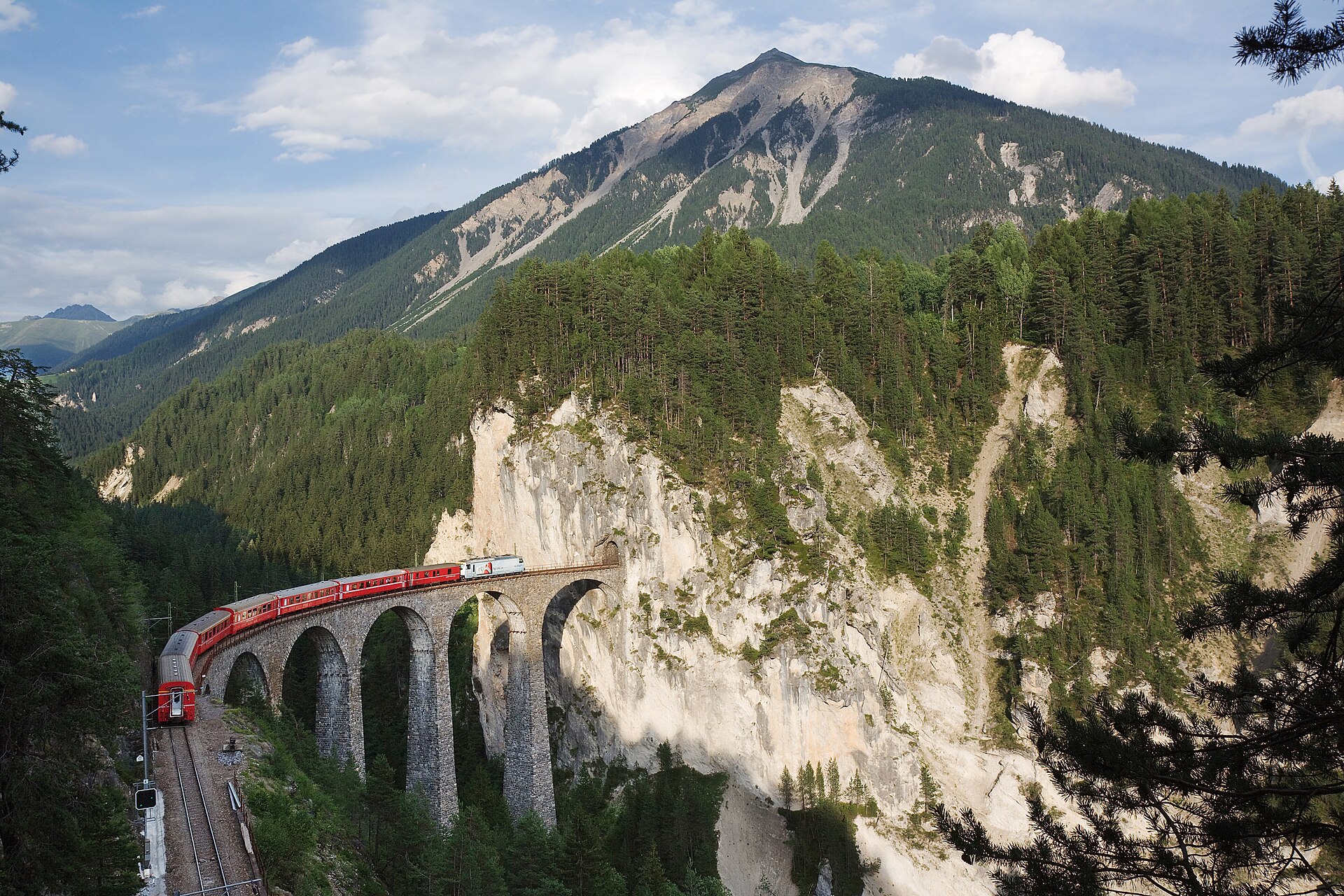
Landwasserviadukt · Ikiwaner · CC BY-SA 3.0 · cropped
Into Engadin Over The Pass
Flying to Zurich is one way to reach St. Moritz, but the Rhaetian Railway offers a UNESCO-listed journey into the Engadin valley.
The journey into the Upper Engadin often begins by air into Zurich, followed by a three-hour drive over the Julier Pass. That road is kept open through winter, but it is not the only way in, nor the most memorable. The Rhaetian Railway, with its distinctive red carriages, offers a slower, more considered approach, and for many it is a reason to make the trip itself. The Albula line, which carries the train from Chur into the valley, has been a UNESCO World Heritage site since 2008, a testament to the engineering that carries the track through the mountains. It is a route to be taken with time, ideally sitting on the right side of the carriage for the views.
From Zurich, the process involves a change at Chur, or sometimes Landquart, onto the narrow-gauge Rhaetian Railway. This final leg, from Chur to St. Moritz, takes a little under two hours. The line crosses the Landwasser Viaduct, a curving limestone structure that seems to float over the valley floor, and winds through spirals and tunnels as it gains altitude. It is a journey that delivers you to the middle of town, rather than to a car park. The total time from Zurich by rail is usually around three and a quarter to three and a half hours.
For those coming from the south, the Bernina Express offers another UNESCO-listed approach, climbing from Tirano, in Italy, over the open Bernina Pass and into the Engadin. The Albula and Bernina lines together form the World Heritage site, recognised for the way they navigate the high Alpine terrain. The valley itself, at close to 1,800 metres, provides a cold, dry, and unusually sunny climate, with snow that tends to stay from mid-December into spring. This altitude and light are what first drew people here.
Once in St. Moritz, the town divides into two parts. St. Moritz Dorf, at around 1,856 metres, is the historic centre on the hillside, home to shops and grand hotels like Badrutt’s Palace and Kulm Hotel St. Moritz. It is where the funicular to Corviglia begins. A little lower, at around 1,774 metres, St. Moritz Bad sits by the lake, closer to the cross-country trails and the mineral springs. The Grand Hotel des Bains Kempinski, for example, is located here. The choice between Dorf and Bad depends on whether you prefer to step out into activity or a calmer quarter near the water.
Beyond St. Moritz itself, the Engadin offers other villages, each with its own character. Celerina provides quick access to the Corviglia slopes. Pontresina is good for walkers and cross-country skiers, while Sils Maria, at the far end of the lakes, is the calmest base. Samedan, the working capital, offers public mineral baths and a central hub for the Rhaetian Railway. Consider these if your preference runs to quiet streets. Many hotels provide a guest card that covers local buses, making a car optional. For peak weeks, booking early is advisable.
From Vol. 1 · No. 01 · January 2025, The Winter Issue. The cover story is Where to Stay in St. Moritz. Details change; confirm specifics with the property before you travel.
More from the column
-
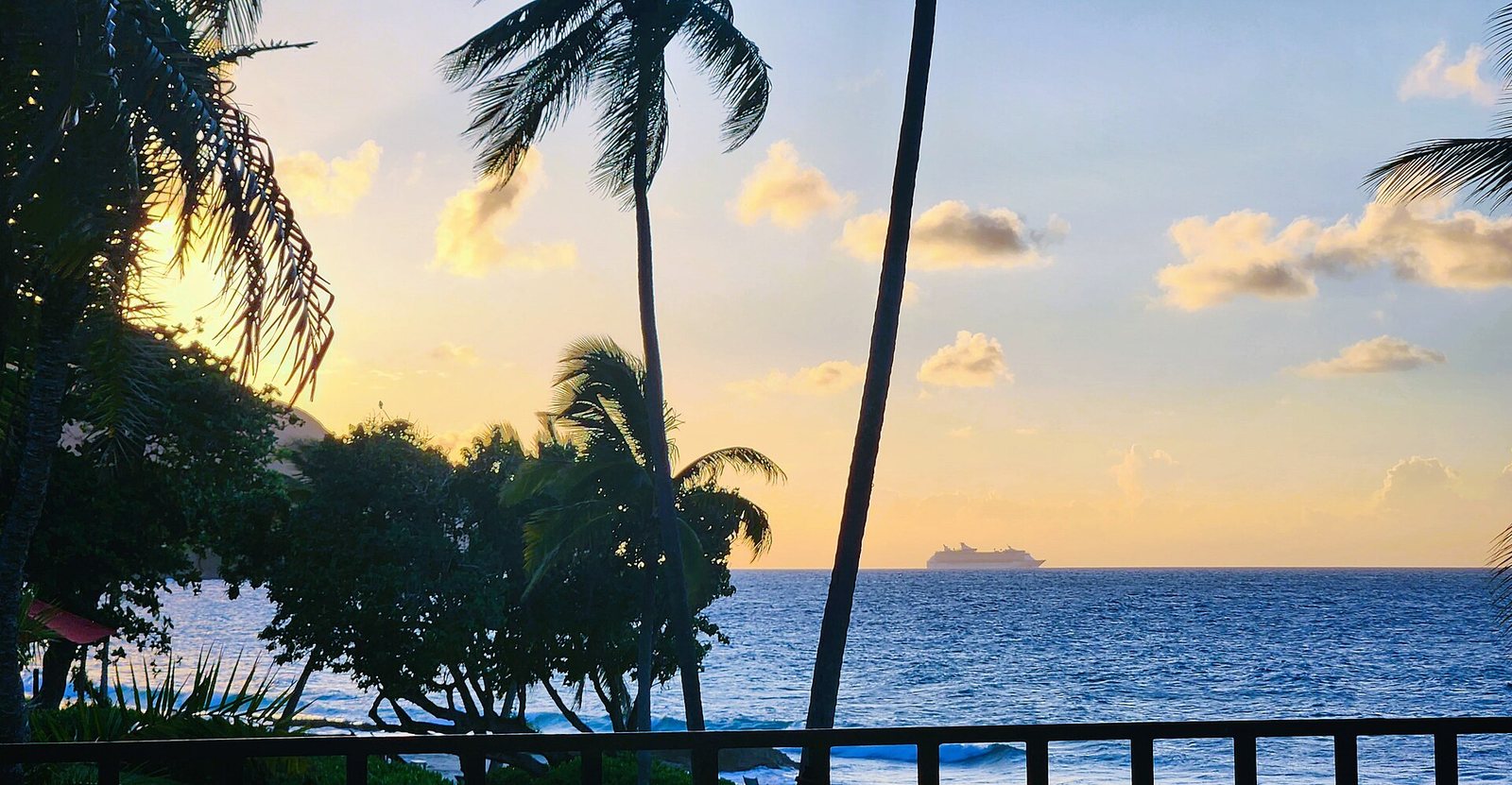 CruiseDeparts20230926 175523 · CaptJayRuffins · CC BY-SA 4.0 · cropped
St. Croix · Vol. 2 · No. 10 · October 2026
St. Croix Arrivals and Roads
Getting to St. Croix is simple for U.S. citizens, but navigating the island requires a rental car and an understanding of its unique driving rules.
CruiseDeparts20230926 175523 · CaptJayRuffins · CC BY-SA 4.0 · cropped
St. Croix · Vol. 2 · No. 10 · October 2026
St. Croix Arrivals and Roads
Getting to St. Croix is simple for U.S. citizens, but navigating the island requires a rental car and an understanding of its unique driving rules.
-
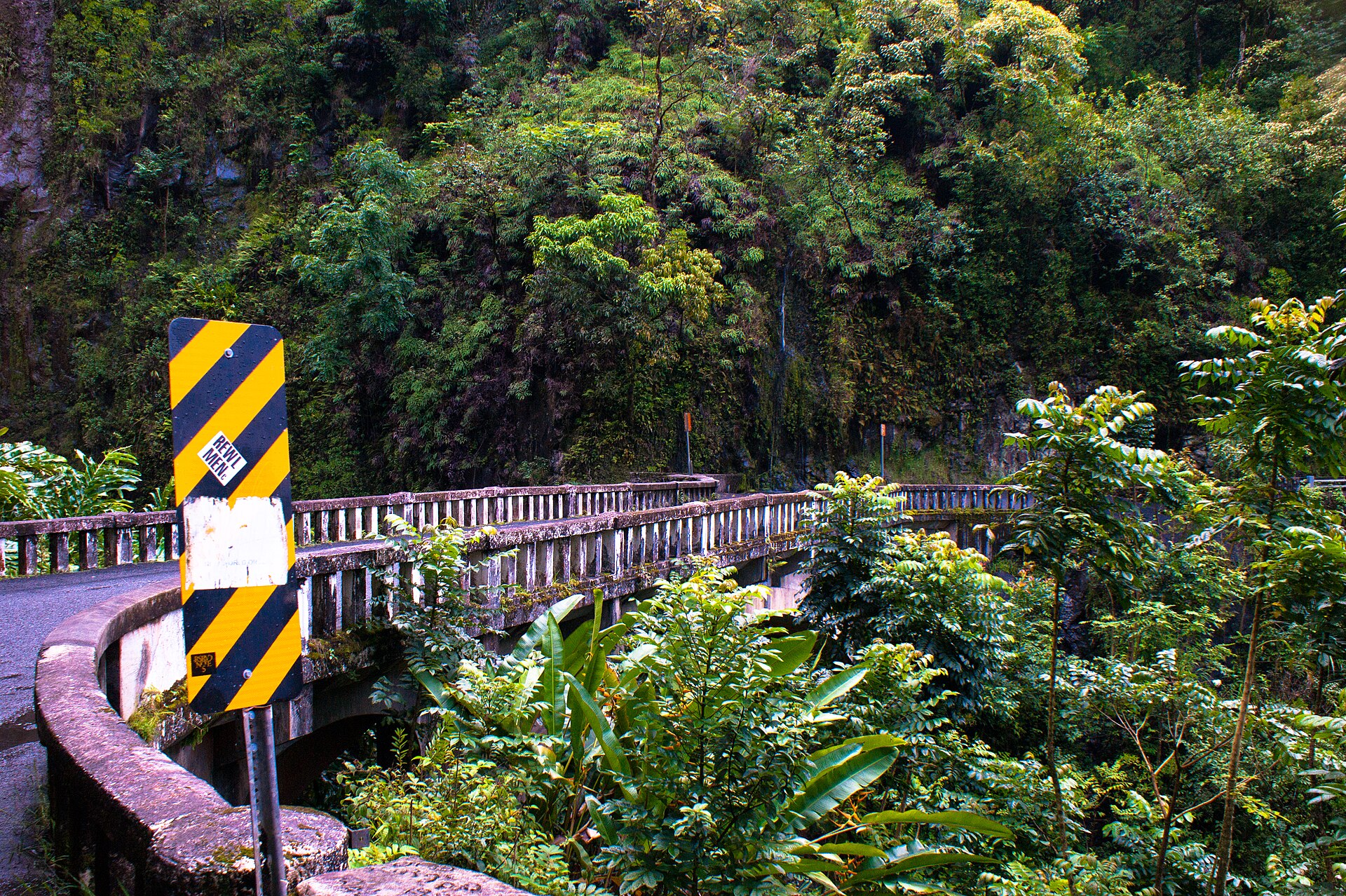 Bridge on Hana Highway · Jonathanking · CC BY-SA 3.0 · cropped
Maui · Vol. 2 · No. 08 · August 2026
Maui: Kahului, Then a Car
Arriving on Maui means a flight to Kahului, followed by an essential rental car for getting around the island.
Bridge on Hana Highway · Jonathanking · CC BY-SA 3.0 · cropped
Maui · Vol. 2 · No. 08 · August 2026
Maui: Kahului, Then a Car
Arriving on Maui means a flight to Kahului, followed by an essential rental car for getting around the island.
-
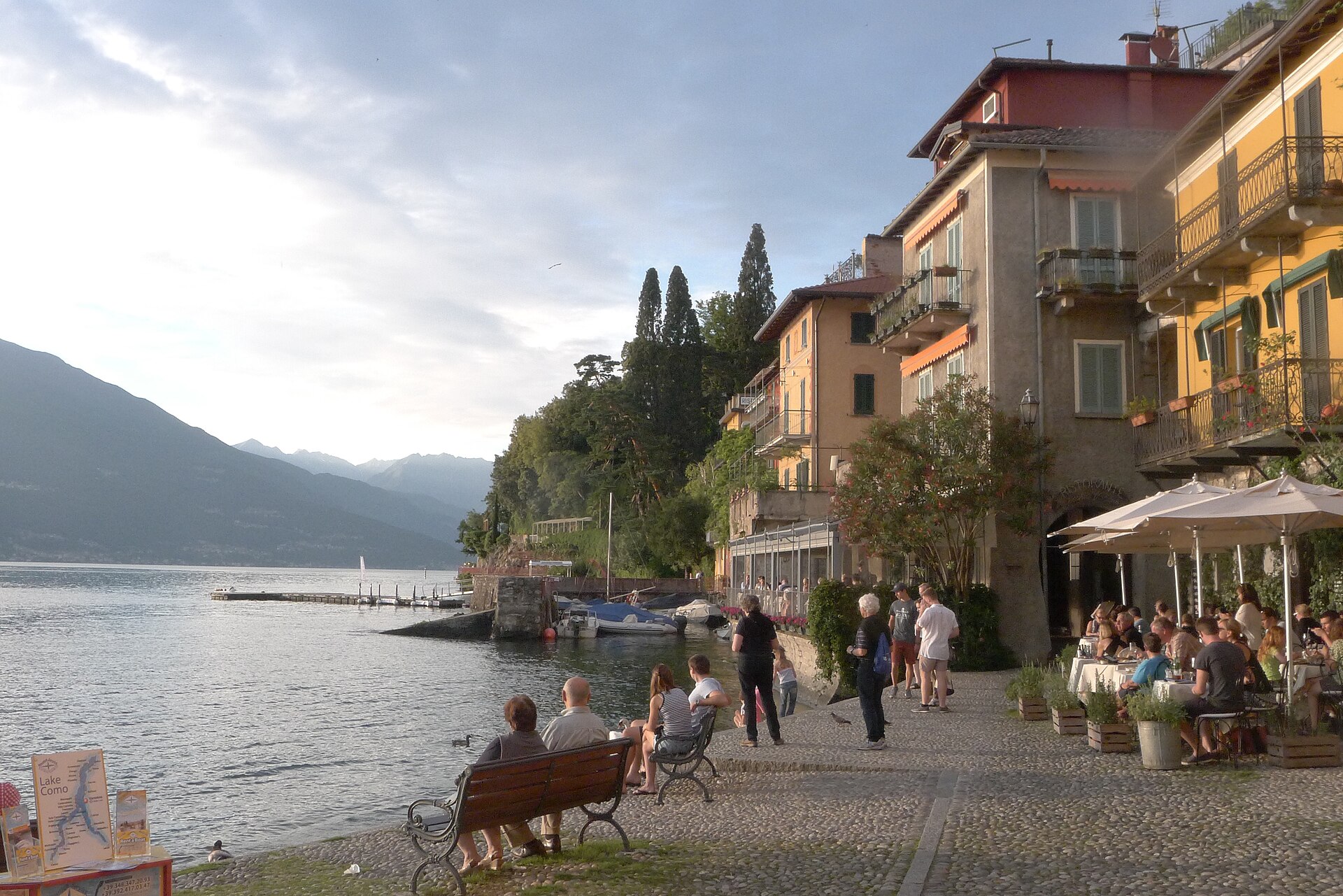 Varenna Italy, waterfront at sunset · Jmatazzoni · CC BY-SA 4.0 · cropped
Lake Como · Vol. 2 · No. 07 · July 2026
Getting Around Lake Como by Boat
Forget the narrow roads; basing in the mid-lake and using the frequent car and passenger ferries turns travel into pleasure.
Varenna Italy, waterfront at sunset · Jmatazzoni · CC BY-SA 4.0 · cropped
Lake Como · Vol. 2 · No. 07 · July 2026
Getting Around Lake Como by Boat
Forget the narrow roads; basing in the mid-lake and using the frequent car and passenger ferries turns travel into pleasure.
-
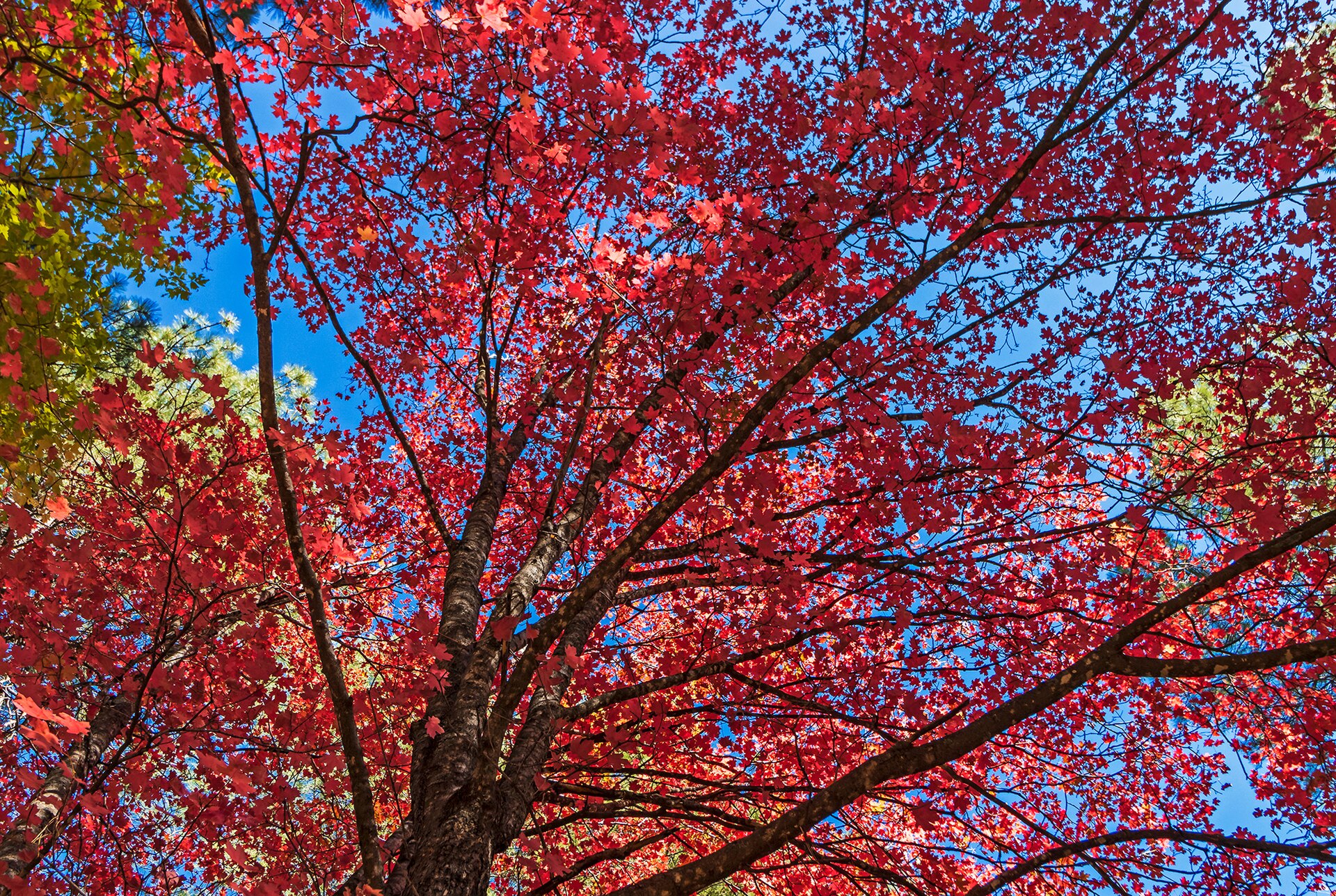 Vibrant Fall Colors In Oak Creek Canyon · Ray Redstone · CC BY-SA 4.0 · cropped
Sedona · Vol. 2 · No. 04 · April 2026
Phoenix, Car, Shuttle to Sedona
Most visitors fly into Phoenix Sky Harbor, rent a car, and then navigate Sedona's trailheads with a mix of driving and the free city shuttle.
Vibrant Fall Colors In Oak Creek Canyon · Ray Redstone · CC BY-SA 4.0 · cropped
Sedona · Vol. 2 · No. 04 · April 2026
Phoenix, Car, Shuttle to Sedona
Most visitors fly into Phoenix Sky Harbor, rent a car, and then navigate Sedona's trailheads with a mix of driving and the free city shuttle.
The columns, every month.
One considered letter when a new issue lands: the cover story, the four columns, and the month's news.
Comments