At a glance
- Foreign tourists in the city of Rio, 2025
- 2.1 million, up 44.8% on 2024, by the city’s count
- New compact apartments in Ipanema, Leblon and Copacabana
- About a third sold to foreign buyers, by one brokerage’s and the builders’ union’s figures; no official count exists
- Asking price in Leblon
- R$ 28,837 per square metre in September 2026 (FipeZap)
- Short-term rental listings in Ipanema
- 1,168 per square kilometre in June 2026 (Inside Airbnb)
- Buildings and short stays
- A court ruled in May 2026 that one residential building could require a two-thirds vote of owners; a national rule is pending
- Art de Vivre
- A brokerage and rental company in Ipanema, founded in 2011 by Charles Jonas
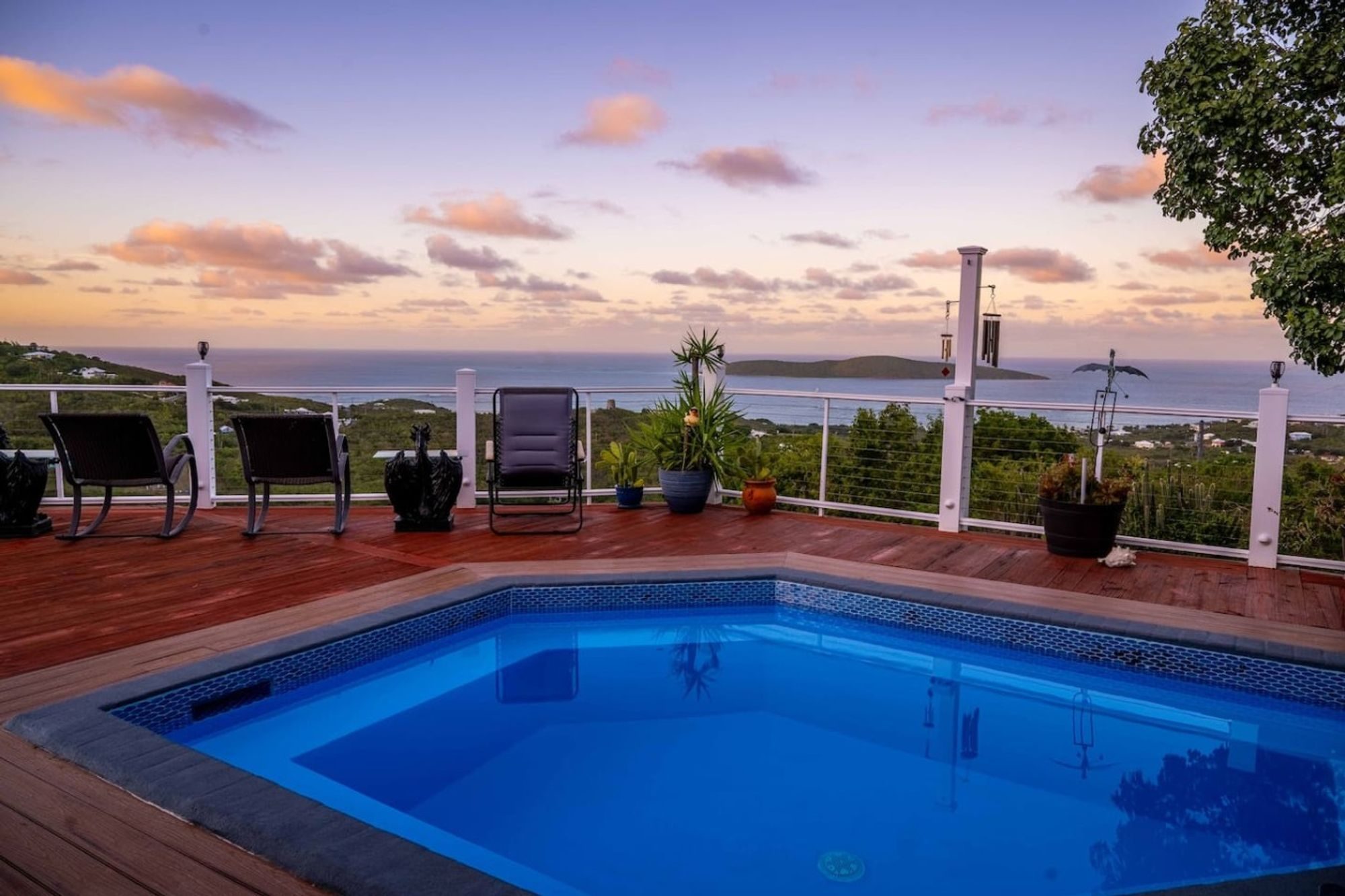
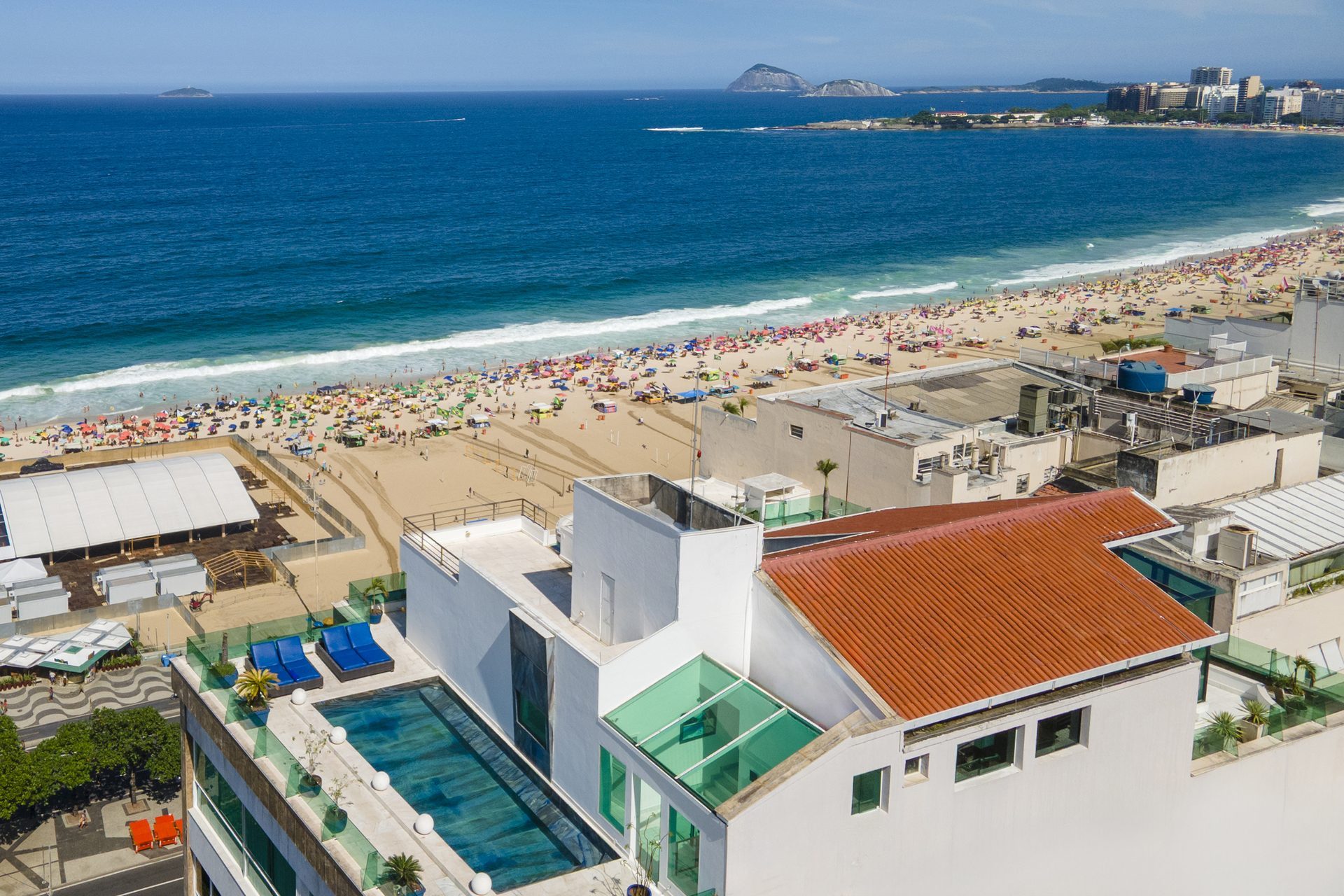
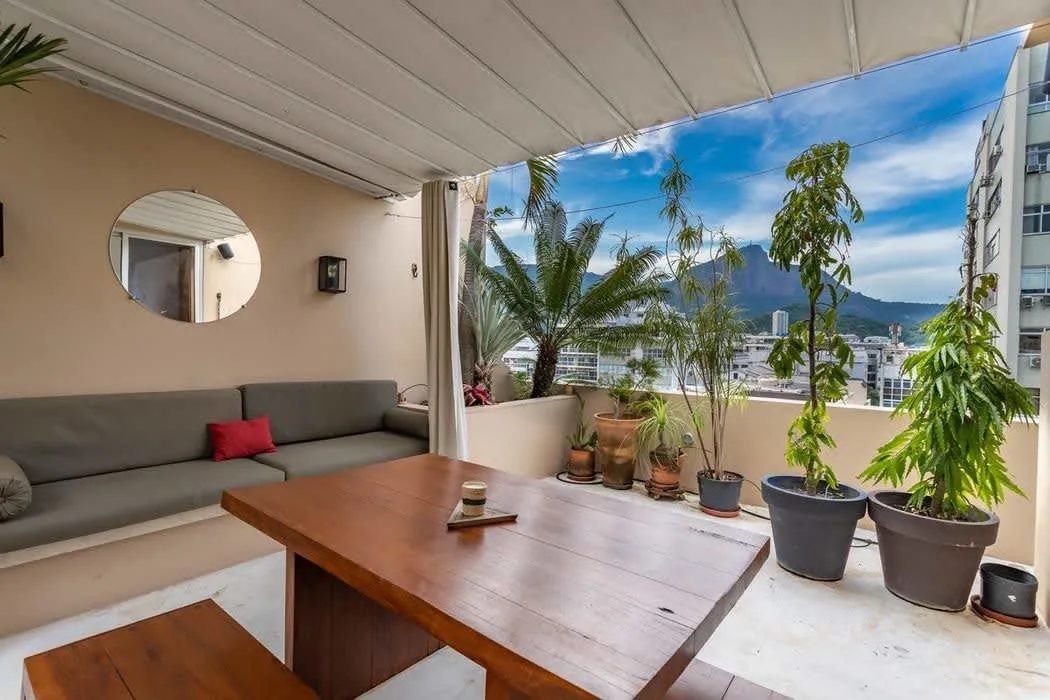
On the roof of an apartment building near Ipanema beach there is a covered terrace with a built-in sofa, a long wooden table with two benches, a round mirror on the wall and a row of potted trees along the parapet. Past the pots, over the neighbouring rooftops, a mountain that appears to be Corcovado stands against the sky. A few wooden steps lead up to a plunge pool lined in blue-green tile. The apartment has two bedrooms, each with its own bathroom, and sleeps four. It is one of seven homes that a Rio brokerage called Art de Vivre lets by the night, and for the length of a stay its guests live in one of the two most expensive neighbourhoods in Brazil, by asking price, in a building with a doorman and rules of its own.
More of those guests each year arrive on foreign passports. The city of Rio counted 2.1 million tourists from abroad in 2025, 44.8% more than the year before. Some of them do not stop at a week. About a third of the new compact apartments sold in Ipanema, Leblon and Copacabana are going to foreign buyers, according to figures from one Rio brokerage and the builders’ union. There is no official count of foreign buyers in Rio. The figures that exist come from individual brokers and developers, and they run from one buyer in six to about one in three, all for new studios near the beach.
This is an account of those neighbourhoods as the arrivals are changing them, and of one firm that houses foreigners twice, first as guests and later, sometimes, as owners. It matters to a traveller who has no intention of buying anything. Who owns the apartment, what kind of building it is in, what the neighbours have voted for and what the rent next door has done all shape the week.
The broker in Ipanema
Art de Vivre is a licensed brokerage with its headquarters in Ipanema, founded in 2011 by Charles Jonas, who is still its principal broker. Its press page lists four lines of business: brokerage of sales and leases, short-stay rentals, rental management and concierge services. On October 11, 2026, its website showed 14 properties for sale and seven let by the night. The home page explains the name: ADV stands for Art de Vivre, which the firm translates as lifestyle.
The site refers to its founder by his first name. “Charlie founded Art de Vivre in 2011 and still runs it,” the About page says, and it adds that he answers WhatsApp messages himself and walks through every apartment the brokerage takes on. The firm says it answers in English, Portuguese, French and Italian. The website runs in six languages, with prices that switch between reais, dollars and euros.
That website is recent. Art de Vivre announced it in a press release dated June 2, 2026, and the release quotes Jonas on whom it was built for. “The site is the one I wanted my own clients to find,” he says there. The release goes on to describe a foreign family that has never bought in Brazil and should not need four blogs, two visa forums and a brokers’ licensing directory to work out what its first ten days in Rio will look like. The client it imagines lives abroad and arrives as a visitor.
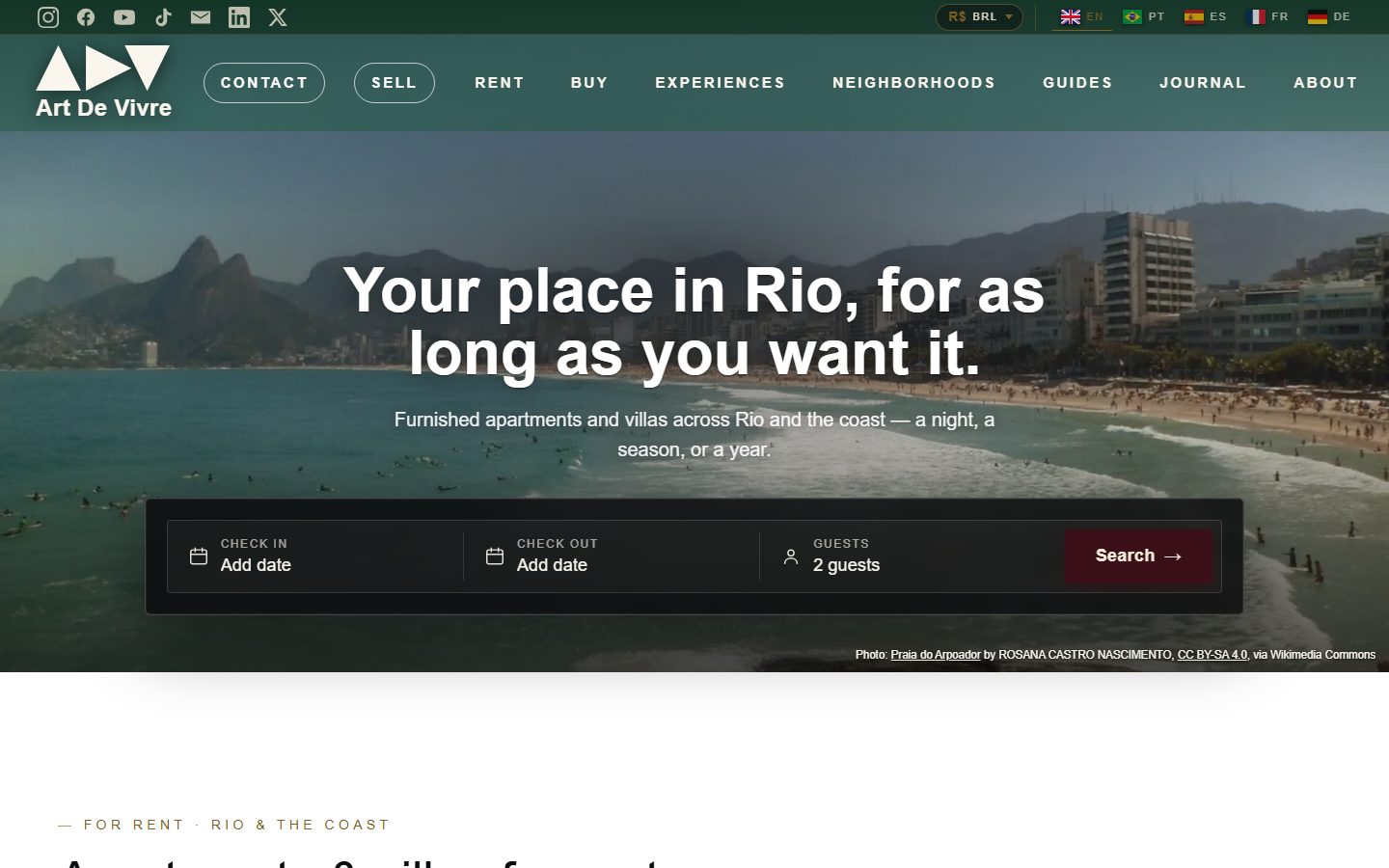
The firm calls itself a boutique brokerage, and its values page says it does not want to become a different kind of company: “we don’t plan to scale that into something else”. The same page lists work it declines, including listings its brokers have not seen in person and what it calls party rentals.
It is one of several Rio firms that now court foreign clients. Okre Imóveis told the newspaper Correio da Manhã in August 2026 that it had put together a team of brokers who work in English and French. Lobie, which manages studios for short stays, has about 8,000 of them in operation or under construction, according to a Folhapress report of June 2026. Art de Vivre is the case followed here because both halves of the story, the guest and the buyer, pass through the same firm.
Who is arriving
The city of Rio de Janeiro received 12.5 million tourists in 2025, a record, according to City Hall. Of those, 2.1 million came from abroad, 44.8% more than in 2024, InvestNews reported from the city’s survey. The foreign visitors spent an average of R$ 3,657 each, about US$ 733 at the Central Bank’s rate of October 9, 2026, by figures from Riotur, the city’s tourism company, in the same report.
The state keeps its own count, credited to Embratur, the federal tourism agency, and it should not be mixed with the city’s. By that series the state of Rio received 1,337,950 international tourists between January and June 2026, 15.64% more than in the same months of 2025. Argentina sent the most, 472,336, followed by Chile with 216,103, the United States with 125,809, Uruguay with 52,969 and France with 48,695. About 90% of them came by air. The trade publication Brasilturis, which reported the figures in July, said 18,301 international flights to the state were scheduled for 2026, against 16,273 in 2025.
The airport shows the same curve. Galeão handled 17.5 million passengers in 2025, the most in any year since the civil aviation agency’s series began in 2000, Folhapress reported. Nationally, Brazil received 9.2 million foreign visitors in 2025 and 4.9 million in the first five months of 2026, Deutsche Welle reported, in a piece that G1 carried and that Registro de Imóveis do Brasil, the property registrars’ news site, summarised. The same report said the foreign share of guests had gone from under 10% in 2021 to more than 20% in 2025.
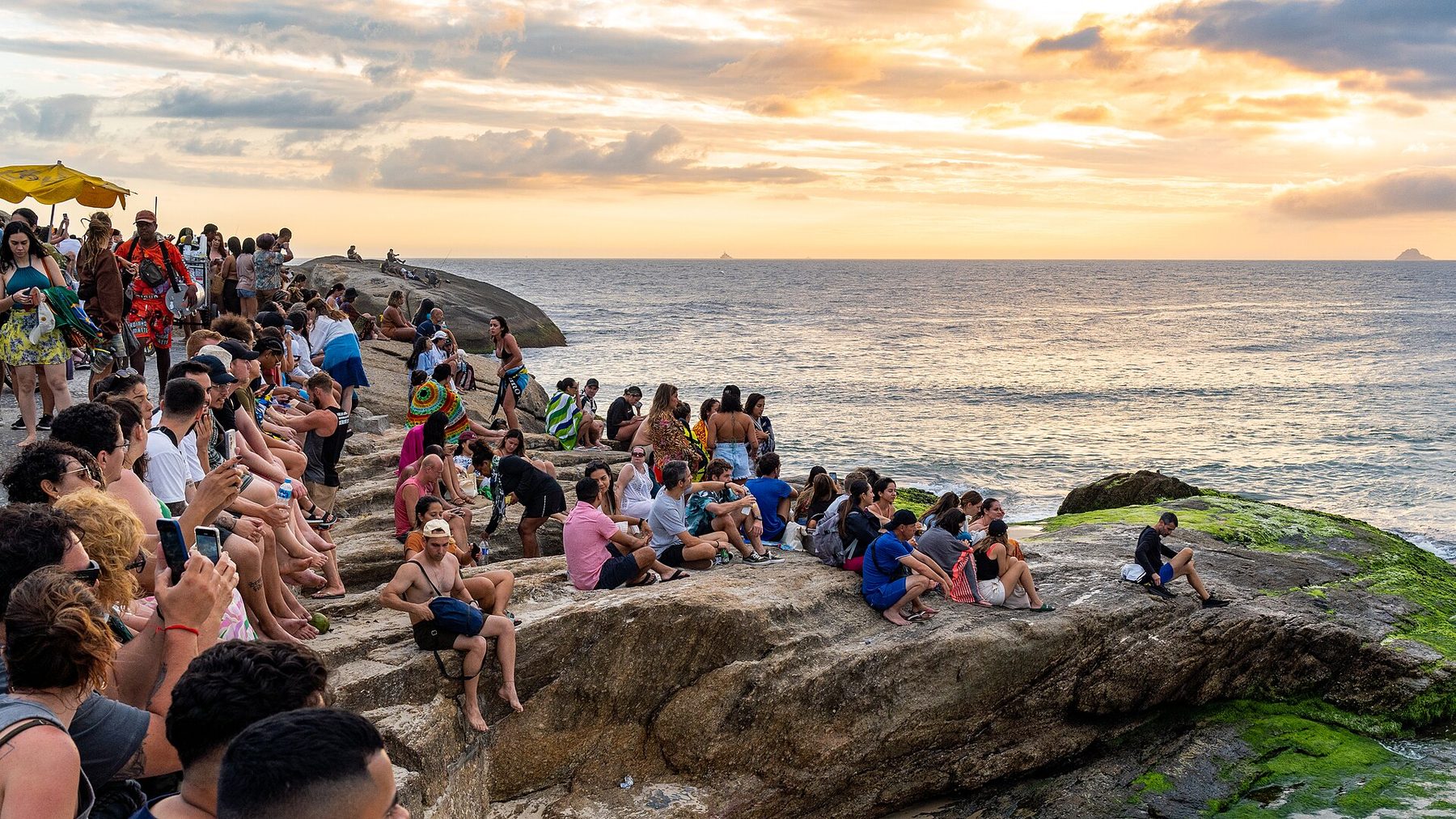
Pôr-do-sol na Pedra do Arpoador 2014 11 17 · Tet · CC BY 4.0 · cropped
Americans are the third-largest group in the state’s figures even though citizens of the United States, Canada and Australia have needed a visa to enter Brazil as tourists since April 10, 2025. Brazil’s consulate in Miami describes it as an electronic visa, applied for online.
For a traveller the practical effect is company. On those figures about one in six of the city’s tourists last year came from another country, and the flight schedules assume that more will follow. Rooms near the beach are being sought by more visitors than in any year the city has measured.
Two neighbourhoods between a lagoon and the sea
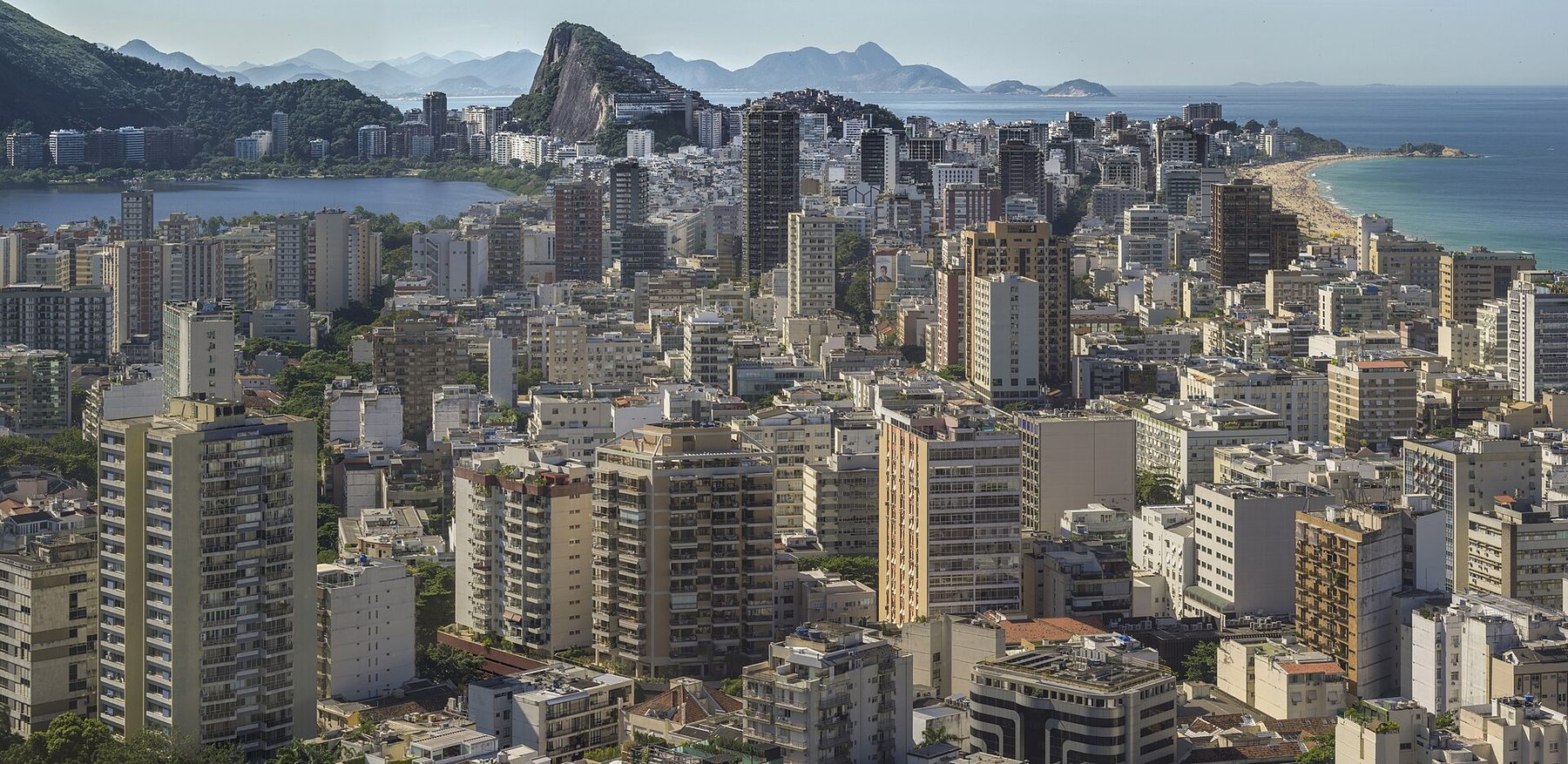
Ipanema and Leblon share one strip of flat land. On one side is the Atlantic and a single run of sand that carries both names. On the other is the Lagoa Rodrigo de Freitas, a lagoon ringed by parkland and apartment buildings. At the east end the rock of Arpoador separates Ipanema from Copacabana. At the west end, beyond Leblon, stand the twin peaks of Dois Irmãos. Seen from that mountain, the two neighbourhoods are a dense field of apartment towers with water on both sides and very little open ground between them.
The streets that matter to a visitor are few enough to list. Avenida Vieira Souto runs along the beach in Ipanema, with a stone pavement in a black and white pattern of its own. Praça General Osório, a square under large trees, fills on Sundays with a craft market known as the Feira Hippie, its stalls hung with leather bags, baskets and printed cloth. In Leblon the main commercial street is Avenida Ataulfo de Paiva.
One measure of how many people want to be on that strip is what a square metre of it costs. The FipeZap index, which tracks asking prices in property listings, put Leblon at R$ 28,837 per square metre in September 2026, about US$ 5,780, up 13.2% in twelve months. Ipanema stood at R$ 26,996, or US$ 5,411, up 10.3%. Lagoa, on the far shore of the lagoon, was R$ 17,519. Copacabana, one beach to the east, was R$ 13,811, about half the Ipanema figure. The average for the whole city was R$ 11,302. These are prices asked, not prices paid. In February, InfoMoney reported from the same index that Leblon had the most expensive square metre in the country and Ipanema the second, both well above upmarket districts of São Paulo such as Itaim Bibi.
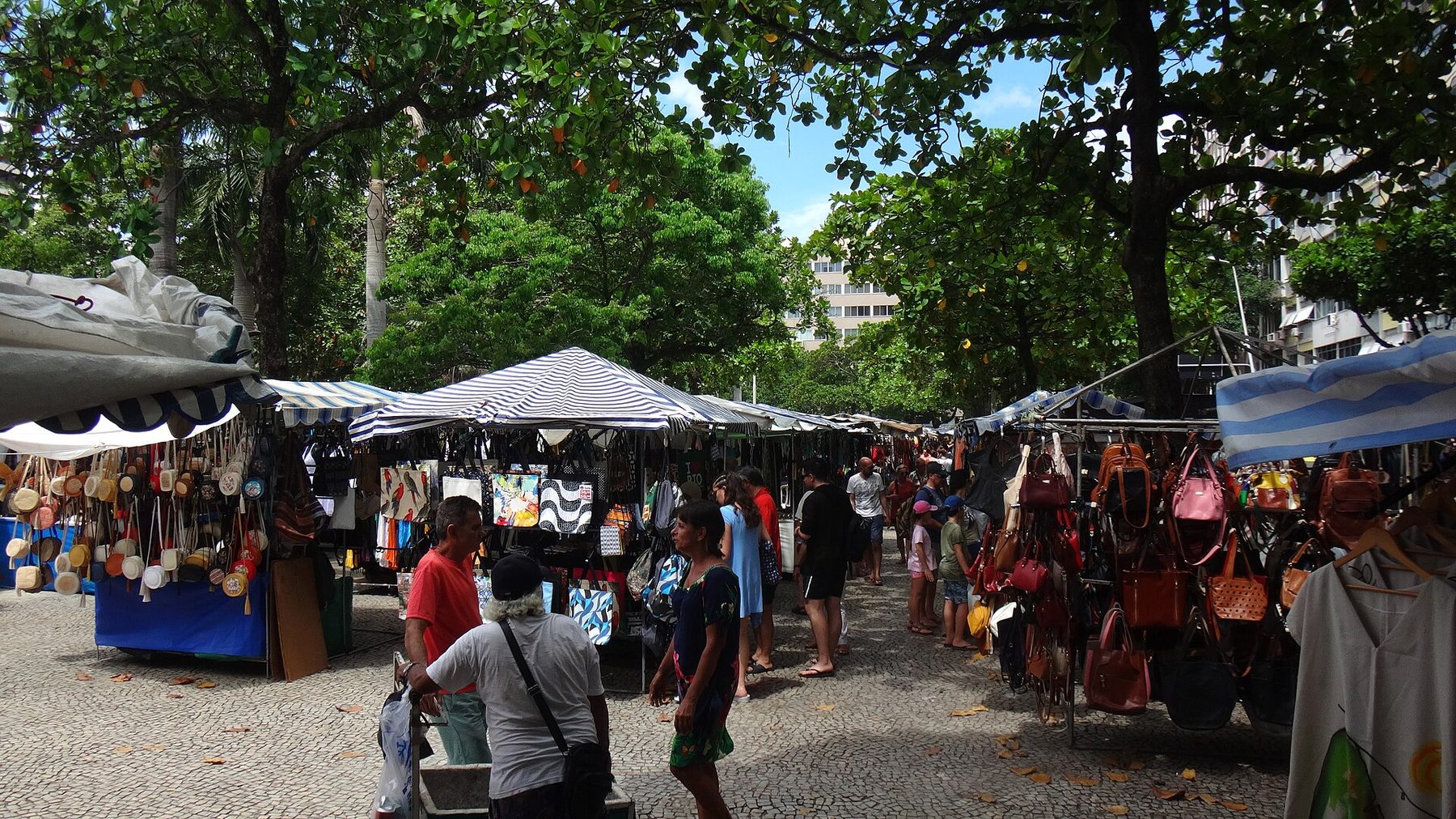
Ipanema-Praça2 · Fulviusbsas · CC BY-SA 4.0 · cropped
There is almost no land left to add to. Marcelo Naidich, a manager at Opportunity’s property arm, told InvestNews in February that the South Zone is so short of sites that developers have to assemble plots one negotiation at a time, and that several of the group’s projects began with the purchase and demolition of an older building. When a new building does go up, it is often divided into small apartments. Of 24 residential buildings put up in Leblon since 2020, ten favour compact units, according to the builders’ union, Sinduscon. That is where most of the documented foreign buying takes place.
The visitors who buy
Because nobody keeps an official count, each figure is true only of the firm that supplied it. The most precise comes from Patrimóvel, a brokerage. Diário do Rio reported in May 2026 that buyers from outside Brazil accounted for 32% of the 54 compact apartments the firm sold in Copacabana, Ipanema and Leblon between November 2025 and April 2026. Argentines led the list, and the firm also named buyers from Spain, Romania, Switzerland, France, England and New Zealand.
Sinduscon-Rio says foreigners recently bought a third of the compact units launched in Ipanema and Leblon, without giving a period. Folhapress found that in some developments close to Ipanema beach foreigners had taken 20% to 30% of the units, and one developer, RJDI, told it that foreigners had gone from one studio buyer in eight to one in six. Lobie says foreign owners rose from 2% to 18% of its portfolio in three years.
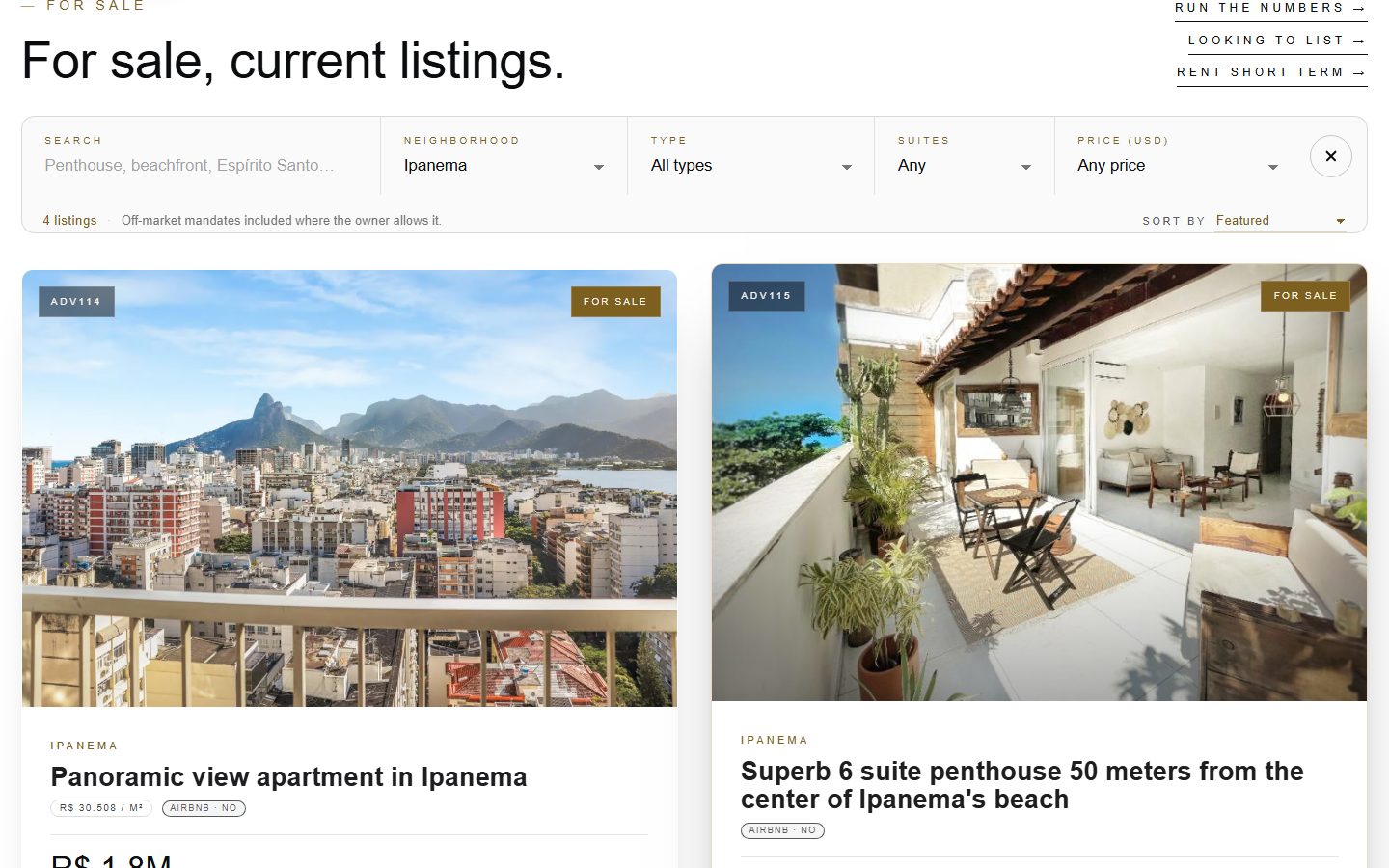
The only government figures cover a narrower group: foreigners who buy property in order to apply for residence. Brazil offers a residence permit to an investor who buys at least R$ 1 million of urban property in the Southeast, about US$ 200,000. Rio de Janeiro state had 50 such authorisations in 2024, more than any other state, and 221 since 2019, Paraíba Business reported from migration data. Between January and September 2024 the applicants invested R$ 125.2 million in property in the state, and nationally the largest sums came from citizens of the United States, France and Italy. Fifty permits in a year is a small number beside the brokers’ percentages, and the two measure different things. The permit count leaves out every buyer who does not apply to live in Brazil.
Why they buy is described in similar terms by everyone selling. Vitor Moura, Patrimóvel’s president, told Diário do Rio that foreigners see liquidity, the prospect of appreciation and a rare combination of location, tourism and quality of life. Paulo Dornelle, the chief executive of Okre, said foreign clients had stopped being occasional and become part of the firm’s routine. Folhapress added two practical reasons given by the trade: the growth of tourism since the pandemic, and the ease of completing a purchase from a distance.
Art de Vivre says it has been brokering Rio property to foreign buyers since it opened, and its Journal describes the nationalities arriving in waves: Russians early in the last decade, Argentines around the World Cup and the Olympics, Portuguese and Italians in the early 2020s, Americans throughout. That is the firm’s own account, not a count. What its site does show is individual buyers. Among the reviews it reproduces from its Google profile, one client thanks the firm for his “first purchase in Rio”, and another, who bought in Leblon, writes that the team knew “what the paperwork involves for a foreign buyer”.
Studios built for short stays
The apartment most of these buyers choose is a studio of about 30 square metres in a new building. Rio came late to the type. Ernesto Otero, the chief executive of Lobie, told InvestNews that the city went decades without planning rules that allowed small apartments at scale, and changed them ten years after São Paulo did. Between 2020 and 2025 Rio launched 7,410 compact units while São Paulo launched more than 50,000, Folhapress reported.
In the beach neighbourhoods they are not cheap. Folhapress put new studios in Ipanema and Leblon at between R$ 45,000 and R$ 50,000 a square metre, which brings a unit of 30 square metres to between R$ 1.4 million and R$ 1.5 million, roughly US$ 281,000 to US$ 301,000. In Copacabana the figure was up to R$ 30,000 per square metre. Opportunity’s ten compact developments in Ipanema and Copacabana had sold 83% of their units on average, InvestNews reported.
These buildings are designed with visitors in mind, and InvestNews set out the case for them: a studio rented for short stays, at rates below those of conventional hotels, lets a tourist stay in a neighbourhood that used to be out of reach. The supply is now very large. The Inside Airbnb survey found 48,193 short-term rentals actively listed in Rio in June 2026, 11% more than a year earlier, according to a report by Portas that credits G1. Copacabana alone had 13,174 of them, which the survey called the highest density of such listings in the world. Ipanema had 1,168 listings per square kilometre, Leme 888 and Leblon 866. Other trackers count differently. AirDNA puts Rio at about 60,000.
A traveller searching for a week in Ipanema will therefore meet the same room many times over: new, compact and in a building planned for short stays. It is a different stay from an older apartment in a residential building, and it helps to know which of the two a listing is.
The older apartments
The three Art de Vivre homes described here are the second kind. The two-suite apartment in Ipanema measures 96 square metres, about three times the size of a typical new studio, and its listing describes the building as entirely residential, with a doorman on duty around the clock. The same listing is specific about access: one of the building’s two elevators, then a small staircase to the apartment’s own door. It asks guests to respect the building’s rules, particularly on quiet.
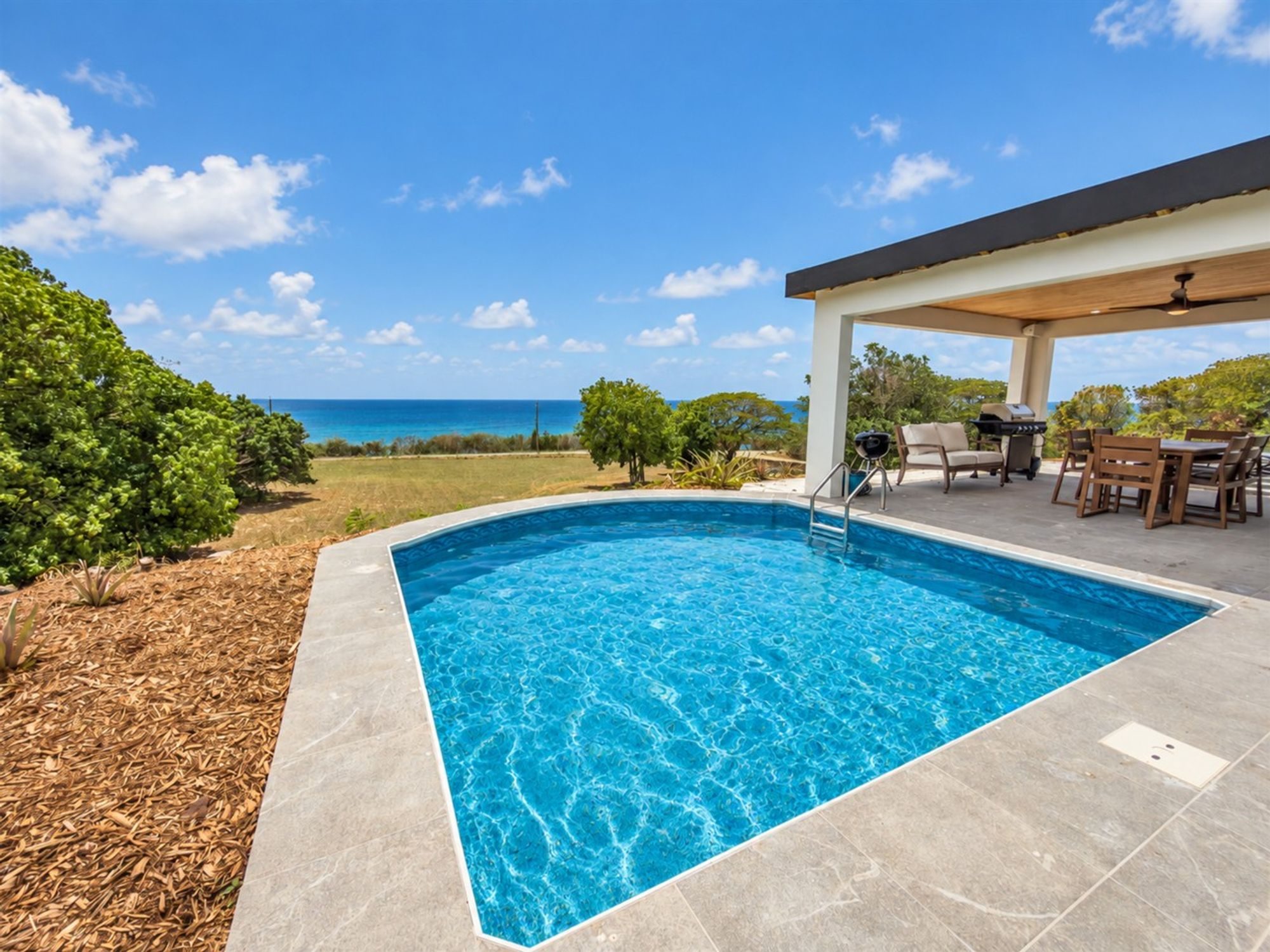
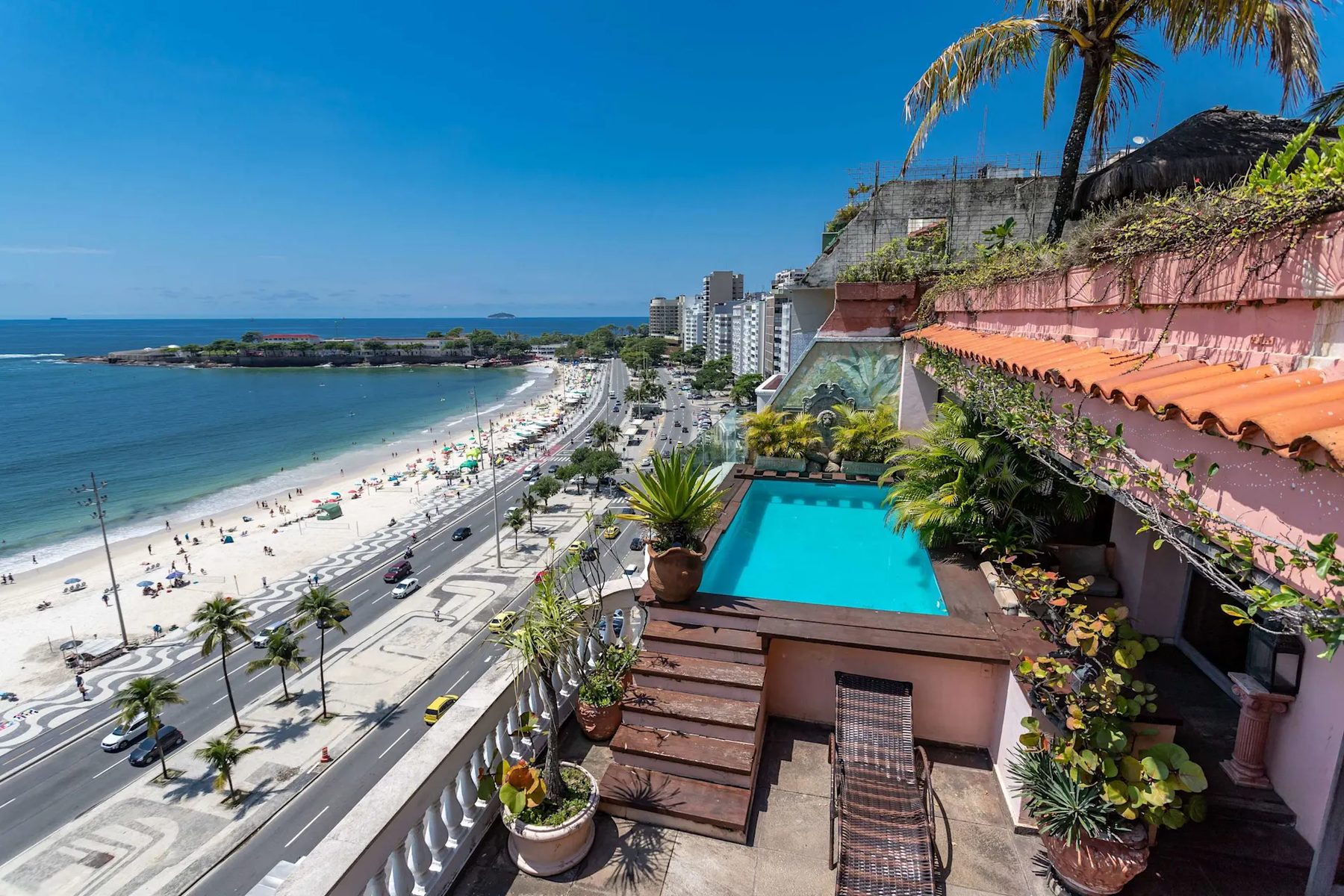
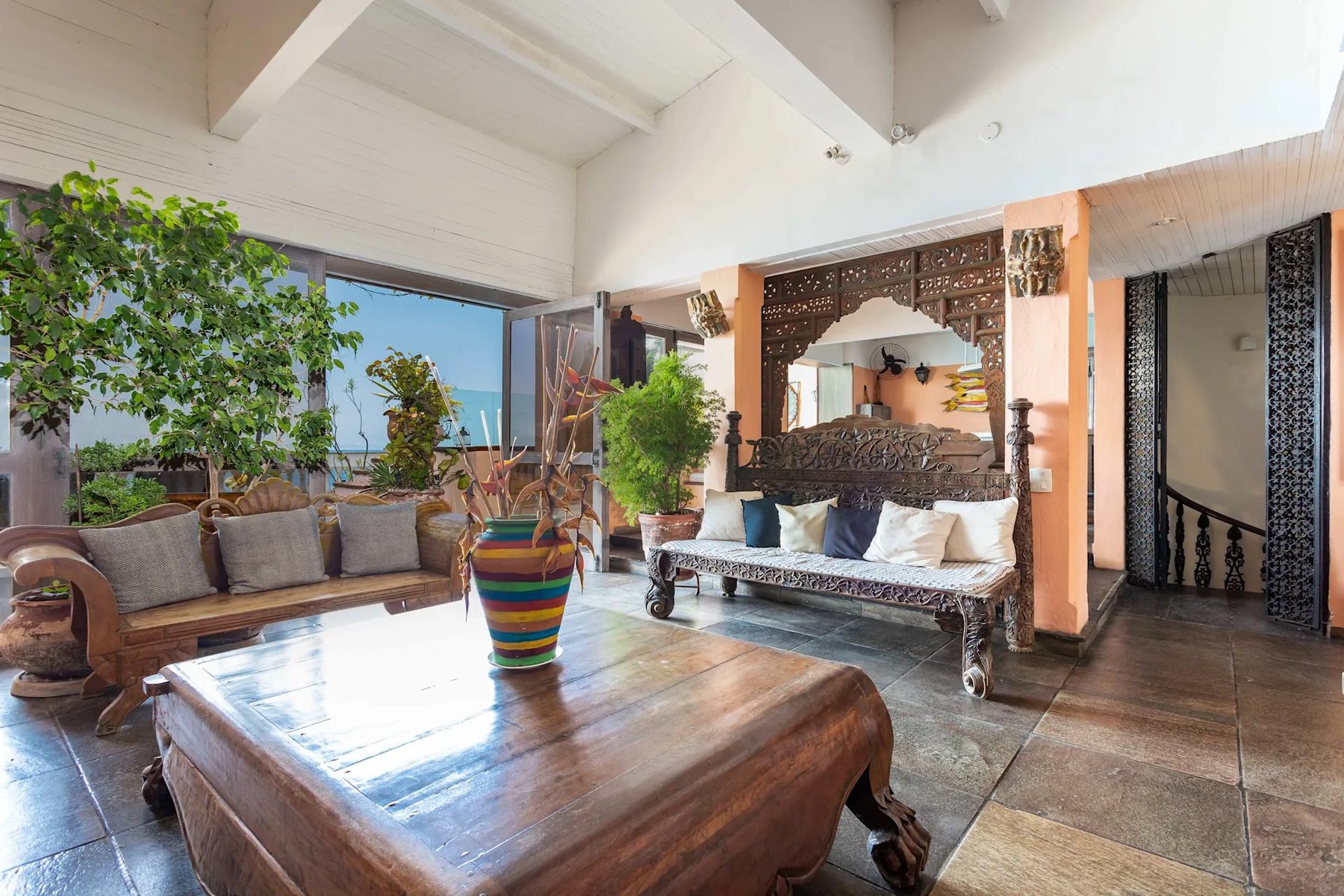
In Copacabana the firm lets a three-bedroom apartment of 372 square metres on the beachfront, for six guests. Its listing says the bedrooms are furnished with pieces imported from Bali, and the photographs of the living room show carved wooden benches and screens, a stone floor and a white beamed ceiling. Outside, a small pool is set in a wooden deck above Avenida Atlântica.
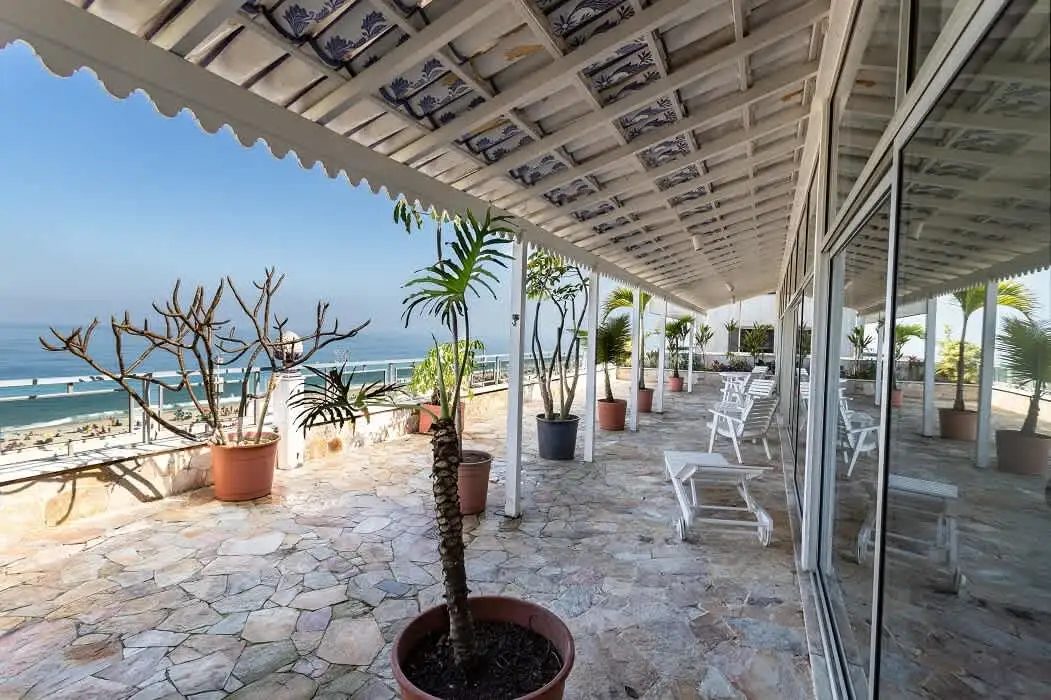
The third, on the Ipanema beachfront, has four bedrooms and sleeps eight. A long terrace paved in irregular stone runs along the front of it above Avenida Vieira Souto, with the beach running west to Dois Irmãos. This magazine described that apartment in an earlier feature.
None of this makes the older apartment the better choice. A terrace over Ipanema can come with a last flight of stairs, a building full of residents and rules about noise.
Staying first
A stay with the firm starts as a request. The property page takes dates, the number of guests and the type of group, and says plainly that nothing is charged yet. Art de Vivre then wants every guest named in full, a word on why the group is travelling and a photograph of each identity document or passport, and only the people named may stay. “Charles reviews every request personally,” the page says, and a payment link follows only after he has confirmed the group and approved the final price.
The limit of that method is speed. A traveller who wants a confirmed reservation within a minute will not get one here, and a group unwilling to send passports in advance will not get one at all. The screening is deliberate. The firm’s values page says the homes it lets by the night are meant for people who want a week of living in Rio, and that it screens out parties.
After that the arrangements move to the phone. The firm’s web app installs from a page on its site, without an app store, and stores what a guest needs on arrival. It promises that “your door code, wifi and arrival directions are one tap away, even offline”, and the app page gives the example of landing at Galeão with no roaming.
For some guests the week is a rehearsal. Art de Vivre’s residency pages say a growing share of its buyers want a route to living in Brazil along with the apartment, and its About page lists introductions to immigration lawyers and bankers among its services. The firm states that it is a brokerage and gives no legal or tax advice. Its guides say a foreigner can buy while in the country as a tourist, that the median purchase takes three months from first contact to keys, and that the buyer need be present only to sign the deed. Those are the firm’s descriptions of its own practice. A buyer would want a Brazilian lawyer to confirm each step, including how the money is brought in through a bank exchange contract and which papers to keep.
The building decides
Whether an apartment may be let to visitors at all is increasingly a question for the building. On May 7, 2026, the Second Section of the Superior Tribunal de Justiça (STJ), which is a high court but not the Supreme Court, decided by five votes to four that where a building’s convention reserves it for residential use, an owner needs the agreement of two-thirds of the owners before offering a flat to short-stay guests on a platform. ConJur, a legal news site, reported the vote and named Justice Nancy Andrighi as the author of the winning opinion.
The ruling settled one case. The wider question has been registered as Tema 1.443 of the court’s repetitive appeals, which will produce the binding rule, and on September 17, 2026, the court suspended pending lawsuits nationwide on whether a residential-use clause alone is enough to bar short lets, until it fixes a rule. The suspension does not stop anyone from letting. Airbnb’s answer, given to InfoMoney, is that the May decision deals with one case and is not the last word, and that a ban or a restriction on short lets offends the property right the constitution gives an owner.
The city has no short-let law of its own. A bill led by councillor Salvino Oliveira went through six months of debate and 12 public hearings. In the version Portas reported in September 2025, hosts and their guests are entered in a city register, no business licence is needed, each condominium decides by a two-thirds majority and an unregistered host can be fined as much as R$ 10,000, or about US$ 2,000. An earlier proposal to ban short lets in seafront buildings was dropped. The bill has not become law. One building manager quoted in the coverage described an apartment of 38 square metres that had received eight guests.
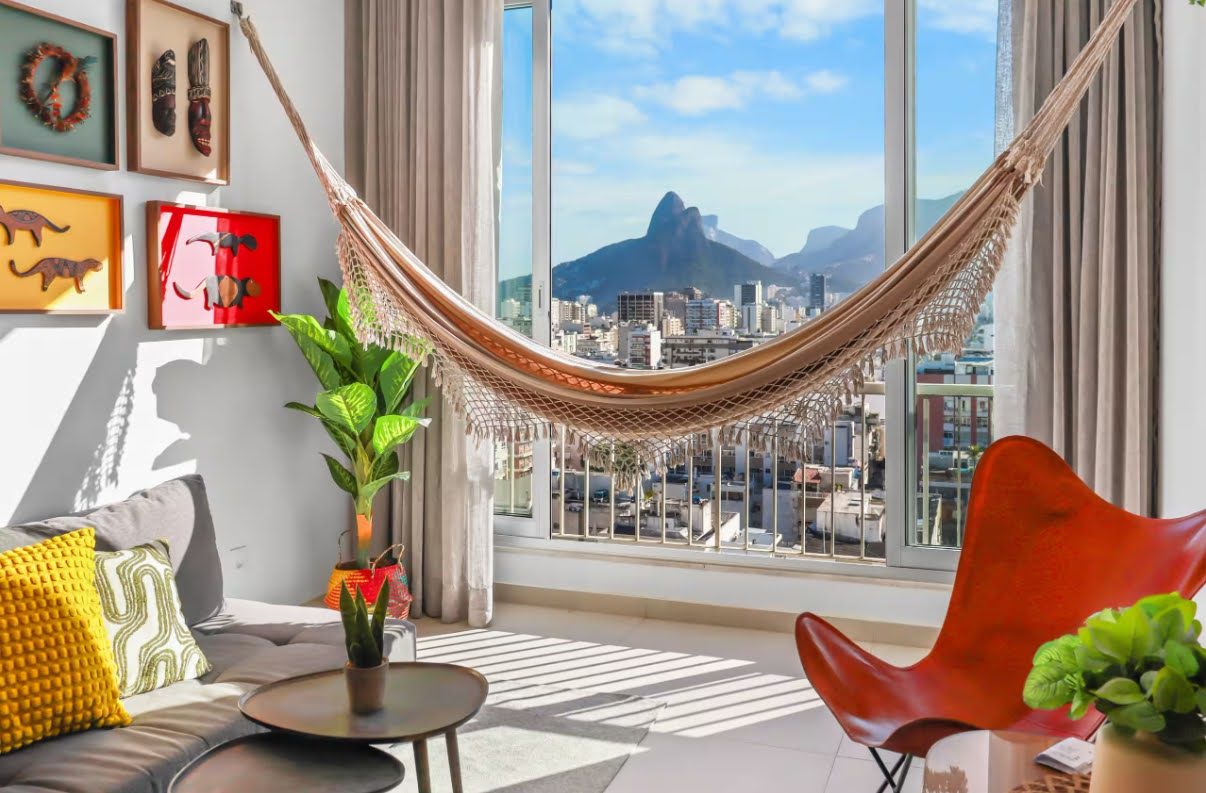
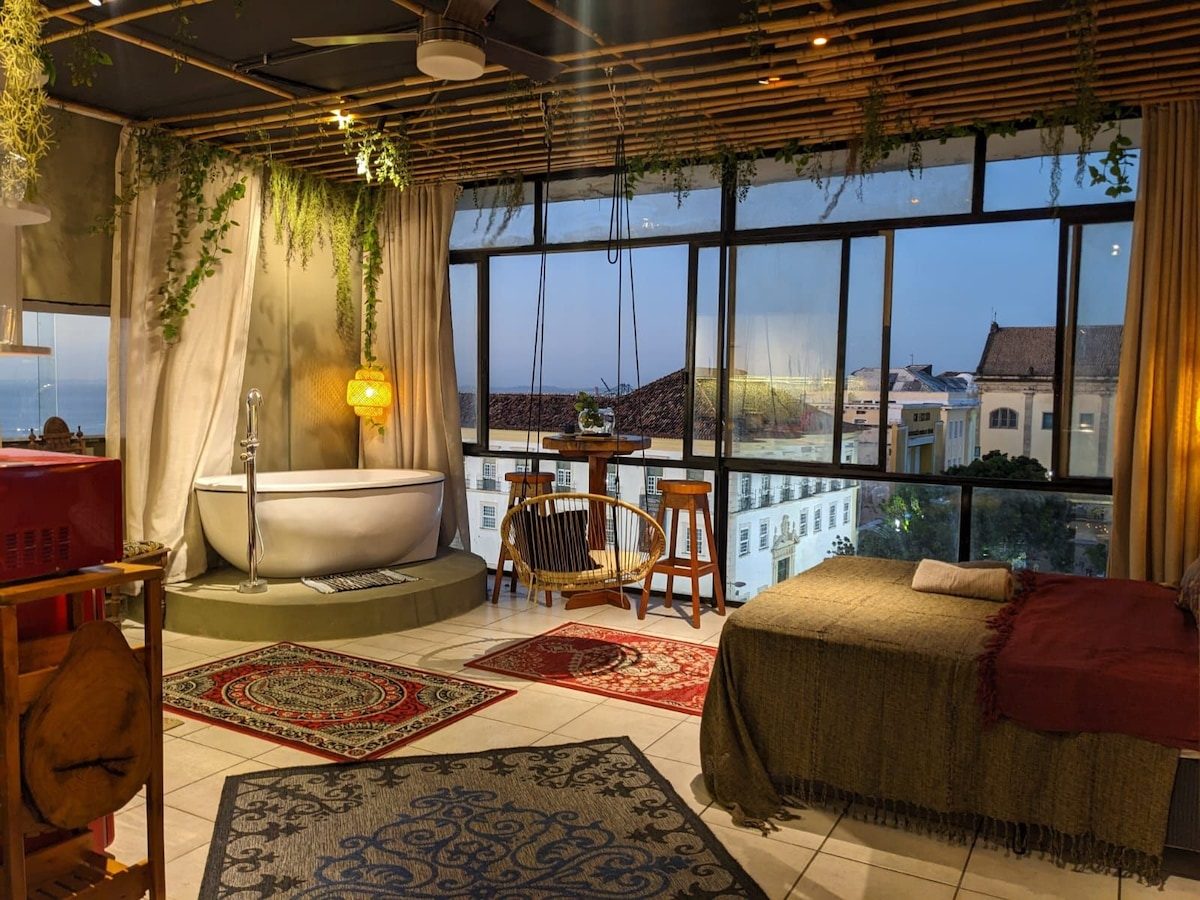
The market has started to label itself accordingly. Each for-sale listing on Art de Vivre’s site carries a tag for short lets, and the 14th-floor apartment in Ipanema with a hammock slung across its living-room window is tagged no. It is offered for sale or on a furnished lease of six months or more. The firm also publishes profiles of 50 Rio buildings that record, among other things, each one’s short-stay rules. For a visitor the consequence is hard to see from a listing: two apartments on the same street can stand on different sides of a vote.
What the neighbours pay
The people who live in these neighbourhoods all year have watched rents climb as the arrivals have grown. FipeZap’s rental index for August 2026 put the average asking rent in the city at R$ 61.40 per square metre a month, 14.18% higher than a year before. In Ipanema it was R$ 119.4, up 14.5%. In Copacabana it was R$ 77.6, up 21.9%, and in Leblon R$ 124.1, up 7.8%. The five-year comparison is steeper. Citing the same index, Correio da Manhã reported that a square metre asking R$ 35 a month in Copacabana in 2021 was asking R$ 74 in 2026. Ipanema went from R$ 55 to R$ 117, and Leblon from R$ 57 to R$ 122.
Supply has moved the other way. The stock of homes offered on conventional long leases fell 31.8% between 2023 and 2026, Portas reported, crediting G1. Loft, a property platform, found average rents in Rio up 7% in the six months to April 2026, with Jardim Botânico up nearly 40%, according to The Rio Times. In the Portas report Aline Cruvinel, a researcher at the Federal University of Rio de Janeiro and a director of Inside Airbnb, said the predominance of whole homes and of hosts with several listings shows a market that has become professional. The Deutsche Welle report tied the search for property to let to rising rents.
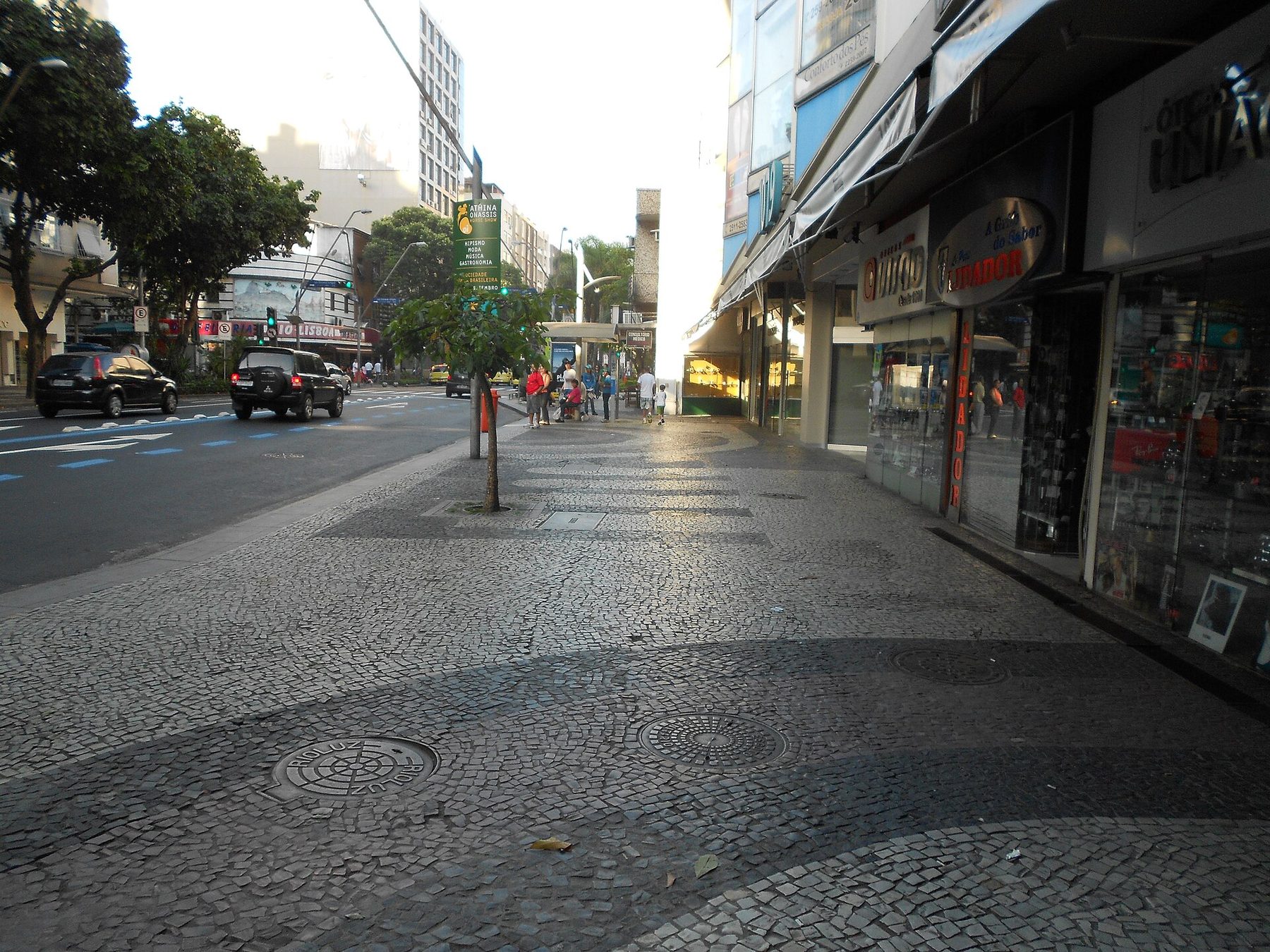
Avenida Ataulfo de Paiva · Eduardo P · CC BY-SA 3.0 · cropped
The other side has numbers too. A study that Airbnb commissioned from Fundação Getulio Vargas and published itself estimated that the platform’s activity moved more than R$ 12 billion through the city’s economy in 2025 and supported more than 73,000 jobs. City Hall told Folhapress it is working to widen the housing supply through new planning rules.
A guest in Ipanema is a participant in this argument, like it or not. The rules a building sets about noise, visitors and the front door are the residents’ side of the bargain, and since May they have a court’s arithmetic behind them.
The exchange rate and the official advice
Two more things bear on the decision, and neither appears in a listing. The first is the currency. Reports of foreign buying often mention a strong dollar, and over a long view that holds. The Central Bank’s reference rate was R$ 2.39 to the dollar in October 2014 and R$ 4.99 on October 9, 2026. Over the short view it has reversed. The rate was R$ 6.19 at the end of December 2024 and R$ 5.35 in October 2025. A visitor paying in dollars gets fewer reais for them than a year ago, and considerably fewer than at the end of 2024. Art de Vivre’s own Journal lists a strengthening real among the risks for a foreign buyer.
The second is safety, on which this magazine quotes governments and makes no claims of its own. The UK Foreign, Commonwealth and Development Office, in advice updated on September 29, 2026, says the most common incidents affecting British nationals in Rio are thefts and pickpocketing around Copacabana beach, Ipanema beach, Lapa and Santa Teresa, and that thieves target mobile phones “particularly between 4pm and 9pm”. On where to stay it is specific. It tells travellers to “avoid all favelas”, and it extends that to tours and to any accommodation, restaurant or bar advertised as being inside one. That matters to anyone searching by map and price, because the Inside Airbnb survey found listings in 134 of the city’s favelas.
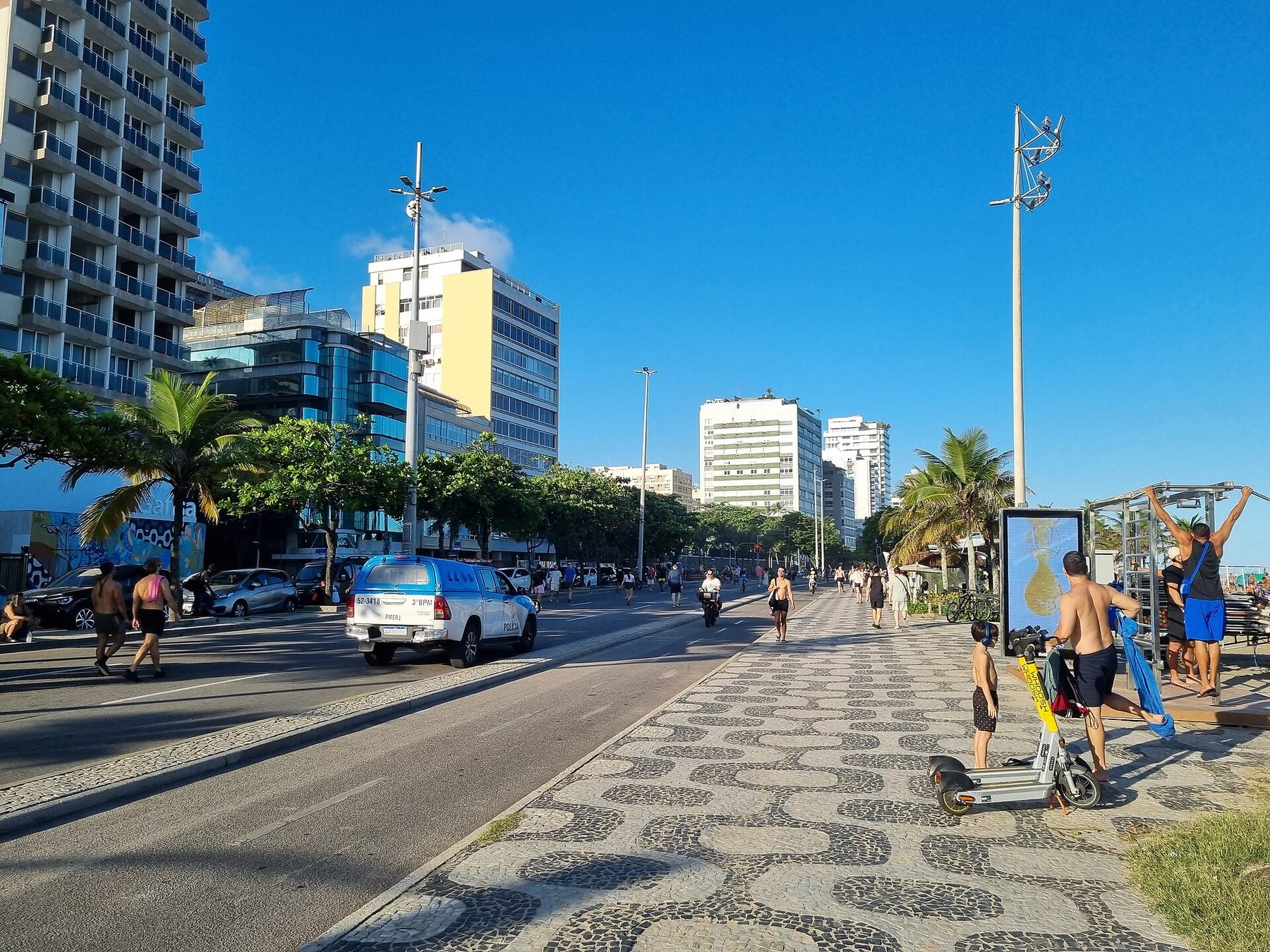
Avenida Vieira Souto, Ipanema, Rio de Janeiro, maio de 2025 (1) · Fronteira · CC BY-SA 4.0 · cropped
The state’s own crime statistics moved in both directions in the first half of 2026. The state recorded 24,697 street robberies, a fall of 20%, and 1,778 violent deaths, a fall of 9.9%. Robberies of vehicles went up by 14.5%. Correio da Manhã published the figures in July. Those numbers cover the whole state, not the South Zone.
What it means for where you stay
The foreigners who visit Ipanema and stay have changed what is on offer to the ones who visit and leave. There are more places to rent than there were, most of the new ones are small, and the rules that govern all of them are being rewritten by a court and argued over at City Hall. A few conclusions follow for a traveller.
First, find out what kind of apartment a listing is. A new studio in a building of studios and an older apartment in a residential building are both reasonable choices, but they differ in size, in neighbours and in what the building expects of a guest. Second, ask whether the building permits short stays. Until the Superior Tribunal de Justiça fixes its national rule, that is a matter for each building’s convention and its owners, and a host or an agency should be able to answer. Third, expect to be asked who you are. A request for names and passports before payment is screening, and it is slower than an instant confirmation.
Fourth, do the sums in today’s reais, because the dollar buys fewer of them than it did in late 2024. Fifth, read your own government’s advice before choosing an address, and check that the address is not inside a favela.
Questions to ask before renting in Ipanema or Leblon
- Is this a studio in a new building or an apartment in an older residential one, and how many square metres is it?
- Does the building’s convention allow short stays, and have the owners voted on it?
- What does the host need from each guest before arrival, and when is payment taken?
- How is the apartment reached: a lift to the door, or stairs for the last flight?
- How do you get the door code and directions if your phone has no signal on landing?
- With a United States, Canadian or Australian passport, have you applied for the electronic visa?
If a week turns into a search, as it has for some, the facts to start from are modest. There is no official count of foreign buyers. The best figures point to about a third of new compact apartments near the beach, at one brokerage and by the builders’ union’s estimate. The residence route starts at R$ 1 million of urban property in this part of Brazil. Everything after that is a matter for a Brazilian lawyer.
Art de Vivre’s listings, its guides for foreign buyers and its building profiles are on its own website, artdevivre.com.br.
Sources
- Art de Vivre, About, values, press, reviews, app, residency and listing pages (read 11 October 2026)
- Art de Vivre, Press release on the launch of its website, with the quotation from Charles Jonas (2 June 2026)
- City of Rio de Janeiro, Record tourism in 2025 and the sector's tax revenue (9 March 2026)
- InvestNews, Studios for short stays in Rio's South Zone (foreign visitors and their spending, Opportunity, Lobie, Leblon's new buildings) (16 February 2026)
- Brasilturis, International tourism in the state of Rio de Janeiro, January to June 2026 (Embratur figures) (29 July 2026)
- Registro de Imóveis do Brasil, Foreigners are buying more property in Brazil (summary of reporting by Deutsche Welle, G1 and Portas) (24 July 2026)
- Folhapress, as published by O Tempo, Foreigners buy more apartments in Rio with an eye on tourism and Airbnb (14 June 2026)
- Diário do Rio, Foreigners buy 32% of the studios sold in Copacabana, Ipanema and Leblon (Patrimóvel figures) (9 May 2026)
- Fipe, FipeZap index, residential sale prices, September 2026 report (September 2026)
- Fipe, FipeZap index, residential rents, August 2026 report (August 2026)
- InfoMoney, Leblon has the most expensive square metre in the country (3 February 2026)
- Portas, Copacabana has the highest density of short-term rentals in the world (Inside Airbnb survey, reported by G1) (29 July 2026)
- Portas, Rio's city council sets out rules for Airbnb and short-term rentals (30 September 2025, updated 4 August 2026)
- Correio da Manhã, Demand for South Zone property and the five-year rise in rents (Okre Imóveis, FipeZap) (1 August 2026)
- Correio da Manhã, Street robberies and violent deaths fall in the state (January to June 2026) (17 July 2026)
- Paraíba Business, Brazil's investor residence permits by state, 2019 to 2024 (30 March 2025)
- Paraíba Business, Immigrants' property investment in Brazil, January to September 2024 (4 December 2024)
- ConJur, Short-term letting is possible only if expressly authorised (the Superior Tribunal de Justiça ruling of 7 May 2026) (7 May 2026)
- InfoMoney, The court ruling on short-term lets and condominiums, with Airbnb's response (15 May 2026)
- Movimento Econômico, The court suspends lawsuits and will set a rule for short-term rentals (17 September 2026)
- The Rio Times, Foreign buyers, studios and the rise in Rio rents (Loft figures) (20 June 2026)
- Airbnb Newsroom, Airbnb's economic impact in Rio de Janeiro in 2025 (study by Fundação Getulio Vargas) (8 July 2026)
- Banco Central do Brasil, PTAX closing exchange rates, 2014 to 9 October 2026 (read 11 October 2026)
- UK Foreign, Commonwealth and Development Office, Brazil travel advice: safety and security, regional risks (updated 29 September 2026)
- Consulate General of Brazil in Miami, The electronic visitor visa for citizens of the United States, Canada and Australia (read 11 October 2026)