The three homes
- Copacabana Penthouse
- Sleeps ten in five bedrooms, each with its own bathroom; a rooftop pool and a sauna
- Ipanema Beach Linear Penthouse
- Sleeps eight in four bedrooms, two of them suites; a terrace over the beach; a housekeeper every day
- São Conrado Beach View Villa
- Sleeps ten, or twelve with a fifth bedroom; four suites; a mosaic infinity pool
- Minimum stay
- Three nights at all three
- From the airport
- About 40 minutes to an hour from Galeão, by the homes' own estimates
- Book
- Direct with Art de Vivre
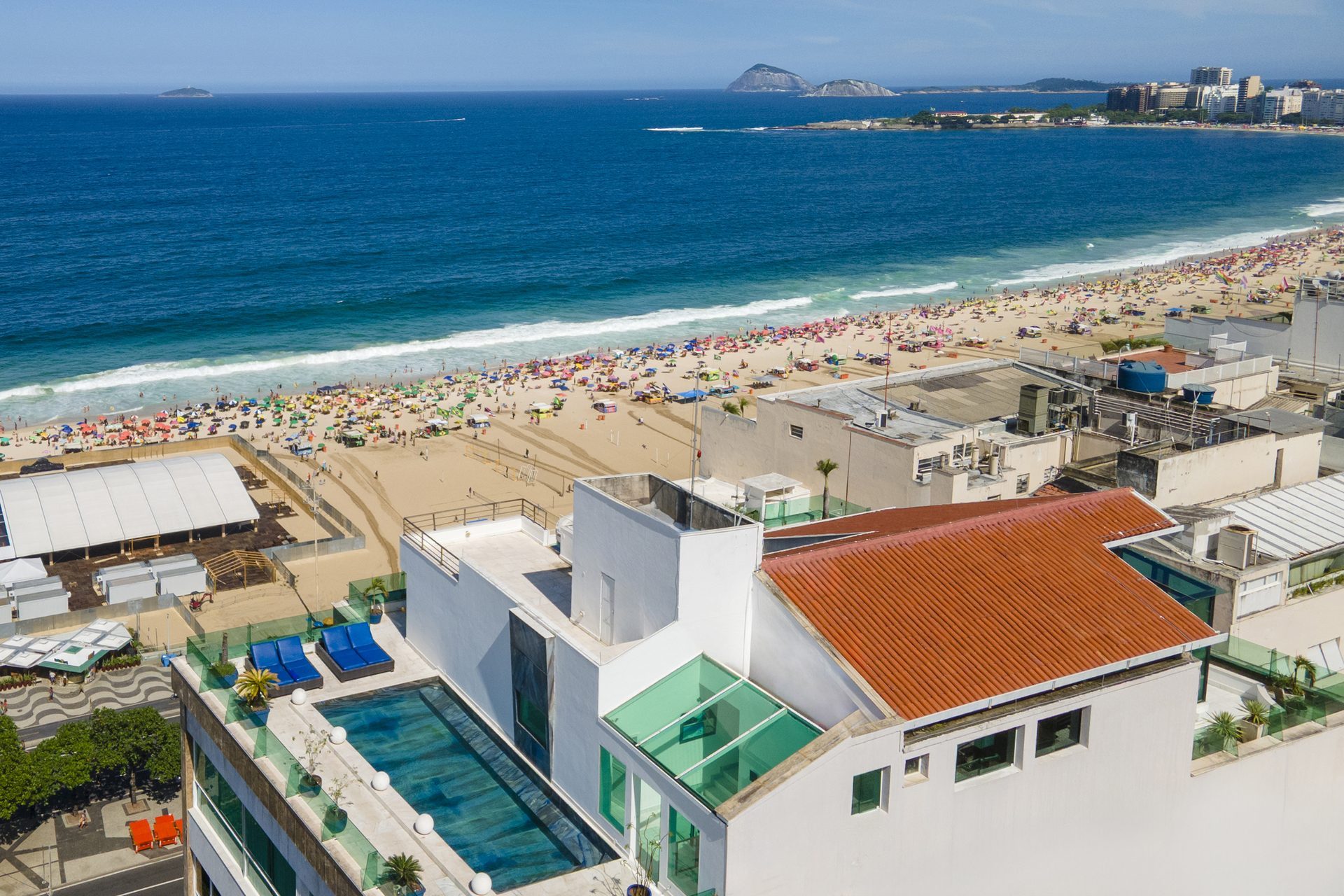
Thirteen floors above Avenida Atlântica, a long pool runs across the roof of an apartment building, with Copacabana beach directly below and the statue of Christ the Redeemer on its mountain behind. It belongs to the Copacabana Penthouse, one of three homes on Rio de Janeiro’s beaches let by Art de Vivre, a Rio agency that sells and manages houses and flats. The other two are further west: the Ipanema Beach Linear Penthouse, which faces the beach at Ipanema, and the São Conrado Beach View Villa, a glass house in the forest under Pedra da Gávea. Each suits a different party.
The beaches run in a chain, with a rock or a mountain between each one and the next: Copacabana, then Ipanema and Leblon beyond the rocks of Arpoador, then São Conrado beyond the twin peaks of Dois Irmãos. Here is how the three homes compare, who each one suits, and how to spend a week in the city from any of them.
The penthouse above Copacabana
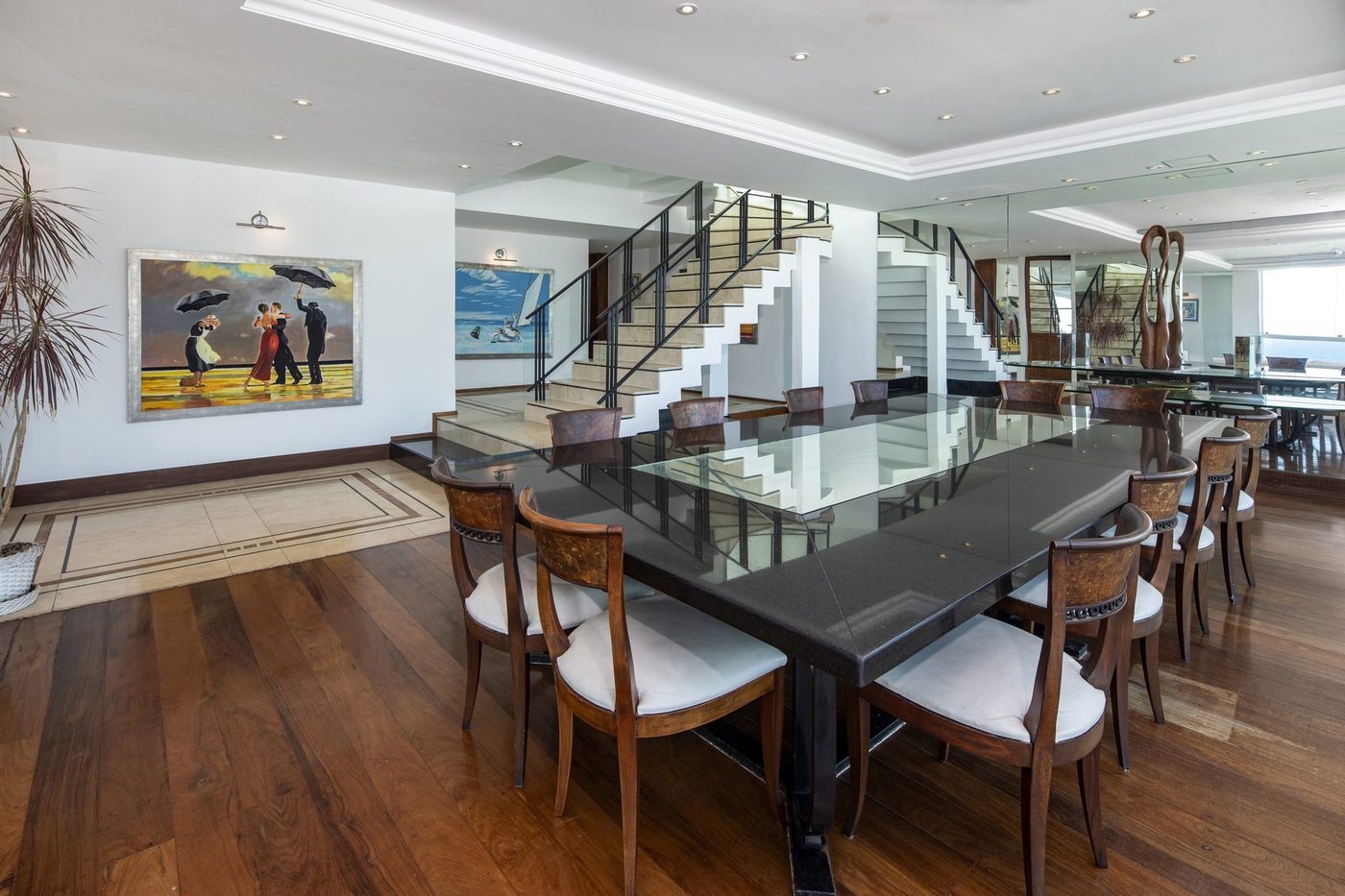
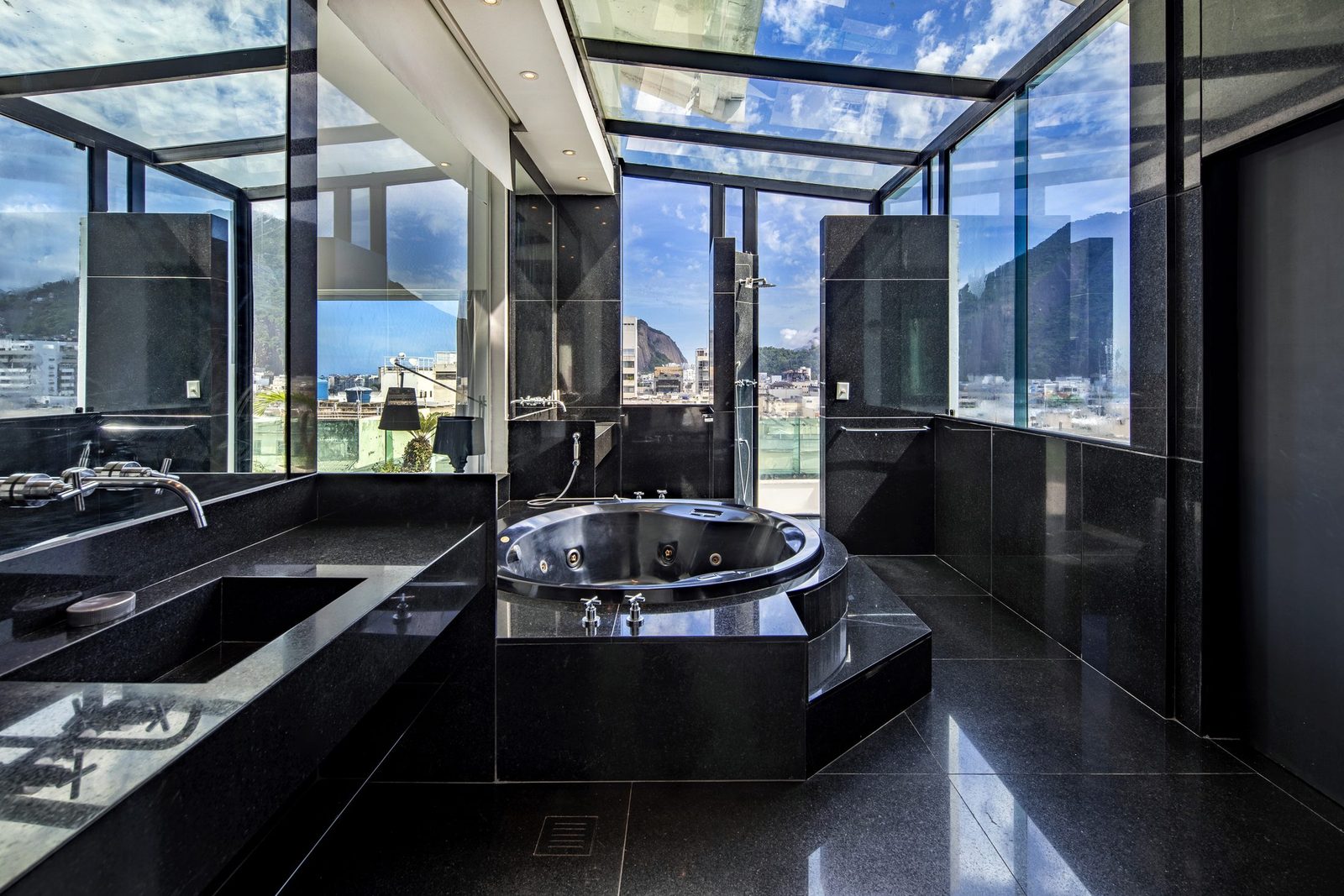
The Copacabana Penthouse is a duplex on the thirteenth floor of a building on Avenida Atlântica, the avenue along the beach, and its own website gives it 848 square metres. The lower floor is the social one: a living room with a wall of glass onto the beach, a television lounge, the kitchen, and a long dining table beside the marble staircase that climbs through the middle of the flat. Four of the five bedrooms are on this floor, each with its own bathroom; one has two single beds. Upstairs is the presidential suite, with a black marble bathroom, a jacuzzi and, according to the listing, a shower with a view of Christ the Redeemer and Copacabana beach.
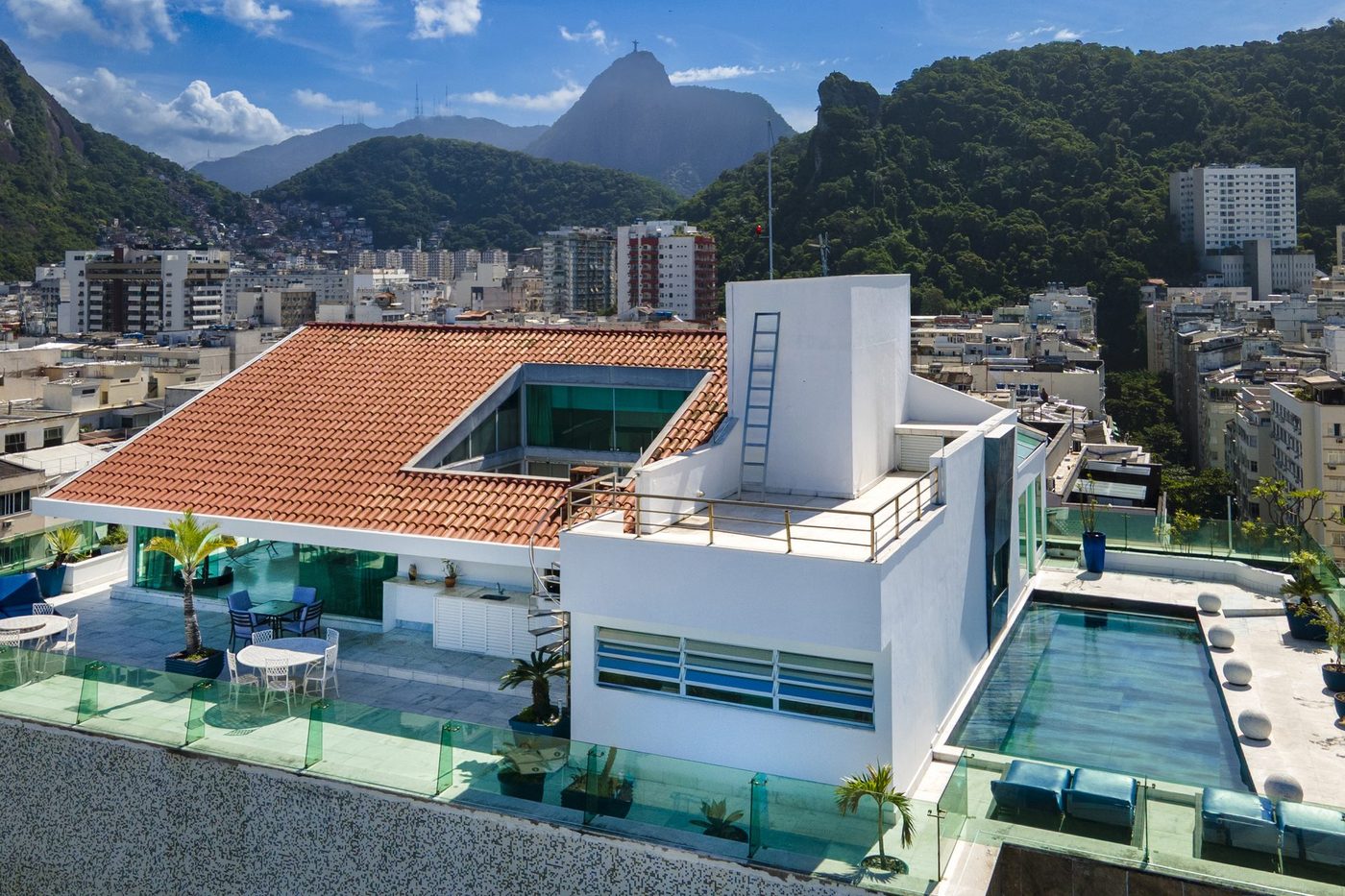
The roof is the best of it. On the upper terrace the pool runs along a glass balustrade above the beach, with loungers beside it, and Art de Vivre’s page calls it one of the largest private pools in Copacabana. The penthouse also has a sauna, a barbecue and room to eat outside. The listing promises views of Christ the Redeemer, Sugarloaf and Dois Irmãos as well as the beach. In the photographs, the statue stands on its mountain above the rooftops behind, and in front the sand runs away to the point at the far end of the beach.
A housekeeper comes with the penthouse. The listing says she has worked for the owner for years, stays during the booking in a room behind the kitchen, makes breakfast and cleans the bedrooms and bathrooms every day. Guests mention her by name. Kevin, who stayed in January 2026, wrote: “Julia was incredible — she looked after us so well, kept everything spotless, cooked for us, and genuinely made our stay feel effortless and comfortable.” Christian, who came with a group in March, wrote: “You really can’t beat the location or the convenience.”
From the moment we arrived, we were welcomed with open arms and made to feel completely at home.Madison, a guest in February 2026
The penthouse sleeps ten, and the listing pitches it at families or couples travelling with friends. The building’s rules are strict. Art de Vivre needs a copy of every guest’s identity document for the list at the front door; friends coming for lunch, dinner or drinks must be announced at least 48 hours before check-in and show identification, and nobody else may stay the night. There are no parties and no loud music after 10 pm, and nobody walks into the building without a shirt. These are rules for long dinners on the roof, for a group that keeps the volume down.
Copacabana’s promenade
Thirteen floors down is the promenade, which is part of a World Heritage site. UNESCO inscribed Rio in 2012 as Rio de Janeiro: Carioca Landscapes between the Mountain and the Sea, including the designed landscapes on land reclaimed along Copacabana Bay, and it names Roberto Burle Marx’s redesign of Copacabana beach among landscape designs that “still confer high social benefits to the city.”
Burle Marx’s promenade dates from 1970. It was built on reclaimed land along Avenida Atlântica in Portuguese stone, planted with native plants, and runs for about four and a half kilometres, according to a study in the journal Revista UFG. Its pavement is the black and white wave pattern that the penthouse’s listing calls one of Rio’s symbols. The listing describes runners, cyclists and games of frescobol, the Brazilian beach paddle game, in the morning, and musicians and street vendors in the evening, and recommends the view from Copacabana Fort, at the far end of the beach.
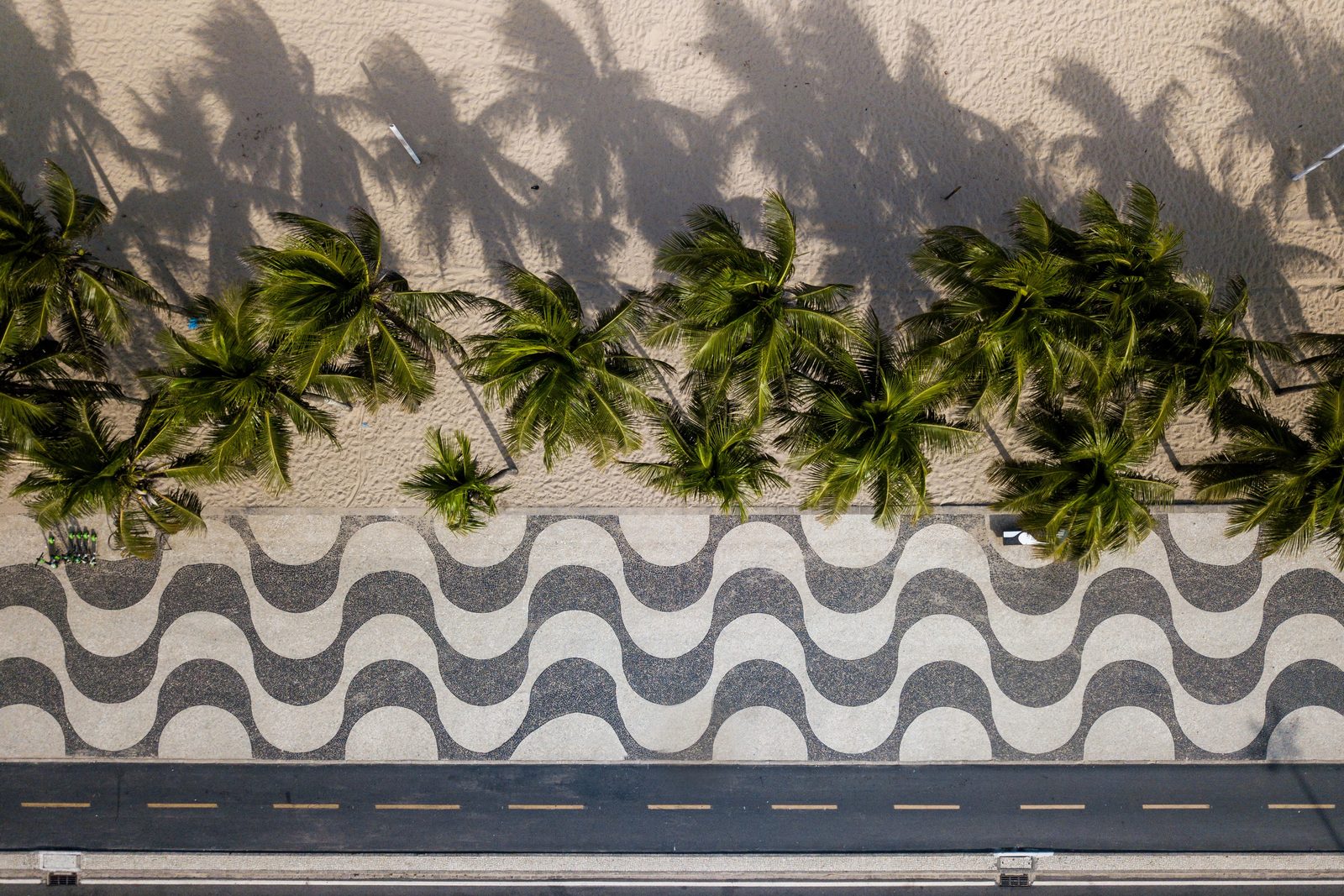
Top Down View of Copacabana Mosaic and Palm Trees 1 · Donatas Dabravolskas · CC BY-SA 4.0 · cropped
The penthouse facing Ipanema
Ipanema is the next beach west, past the rocks of Arpoador, and the Ipanema Beach Linear Penthouse is on its front line, facing the sand. The listing puts it 50 metres from the beach and two minutes’ walk from the metro, with three balconies and a large terrace. The photographs show a covered stretch under a tiled pergola, set with plants in terracotta pots, and an open stretch paved in stone behind a glass balustrade, with the beach below. The listing describes a 180-degree view from Arpoador to Dois Irmãos, and the terrace photographs show both ends of it.

Inside, it is laid out for a family. There are four bedrooms, two of them suites, and three and a half bathrooms; a large living room with a blue sectional sofa and floral wing chairs; a winter garden that opens onto the terrace; a dining room for eight; and a full kitchen. The master suite adjoins the terrace. The floors are wood, there are wooden chests and a carved wooden bed, and botanical prints hang on the walls. A housekeeper lives in an annex and cleans every day, and the listing includes a cot.
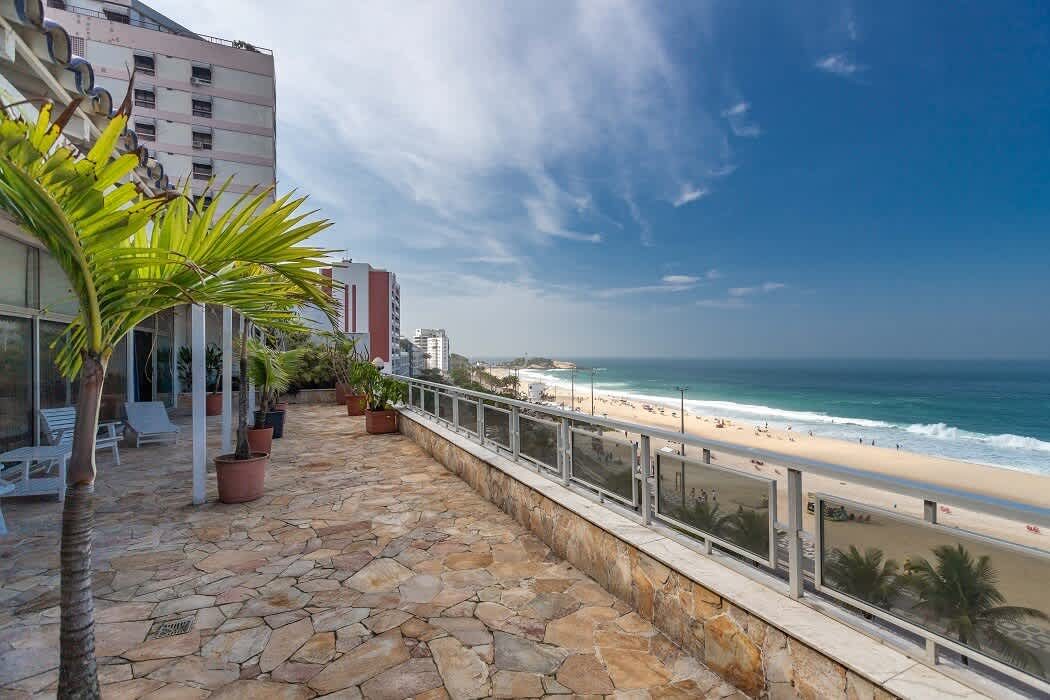
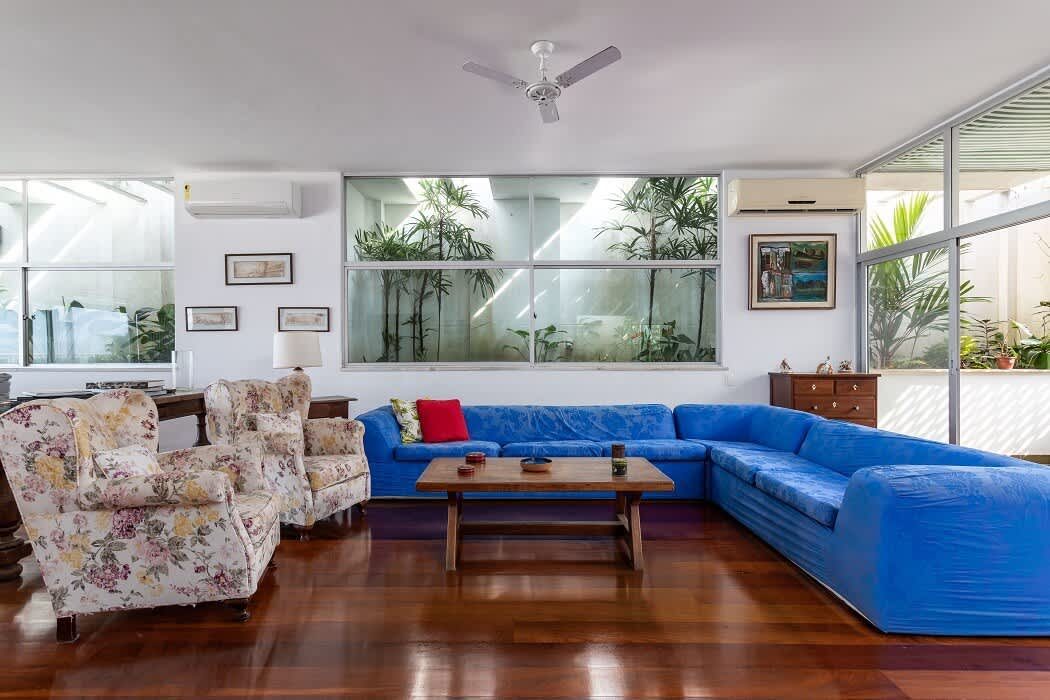
The building’s rules are close to Copacabana’s. The agency asks how many men, women and children are in the party and for every guest’s identity document; visitors need notice, nobody else stays overnight, and there are no parties, no loud music after 10 pm and no smoking indoors.
Ipanema, Arpoador and Dois Irmãos
Ipanema’s beach runs between two landmarks. At its east end is Arpoador, the rocky point between Ipanema and Copacabana and a place to watch the sun go down over the far end of the beach. At its west end, past Leblon, are the twin peaks of Dois Irmãos, the Two Brothers. According to UNESCO, IPHAN, Brazil’s national heritage institute, protects Dois Irmãos and Pedra da Gávea, and “the urban landscape of Leme, Copacabana, Ipanema and Leblon beaches.”
The penthouse’s listing says that from here you can do everything on foot, and names the beach kiosks with live music and restaurants of every kind. Ipanema has two metro stations, General Osório and Nossa Senhora da Paz, on a network that runs east to Copacabana and west through Leblon to São Conrado.
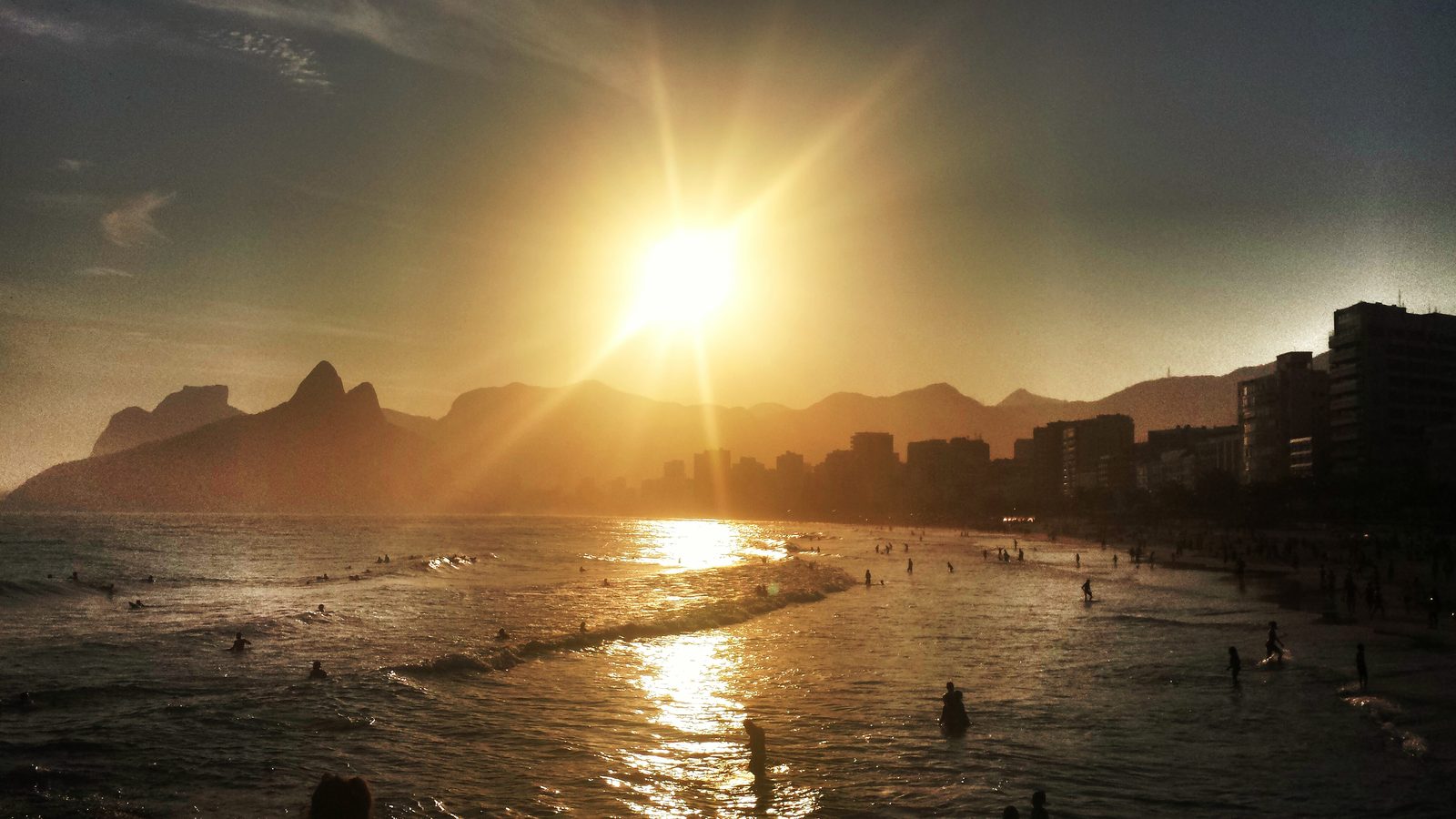
Pedra do Arpoador RJ 03 · Deniltonlima · CC BY-SA 3.0 · cropped
The villa above São Conrado
West of Dois Irmãos the city changes. São Conrado is a beach backed by apartment towers, a golf course and forest, with Pedra da Gávea rising behind, and the São Conrado Beach View Villa sits in a gated condominium on the slope above it, in the trees. Art de Vivre’s listing credits the design to the architects Bernardes and Jacobsen. The house is a long pavilion of glass and dark steel, its glass roof shaded with fabric, with the living room and the dining table in one long space, glass doors onto the terrace and the pool along the front. Behind it the forest climbs to the granite face of Pedra da Gávea.
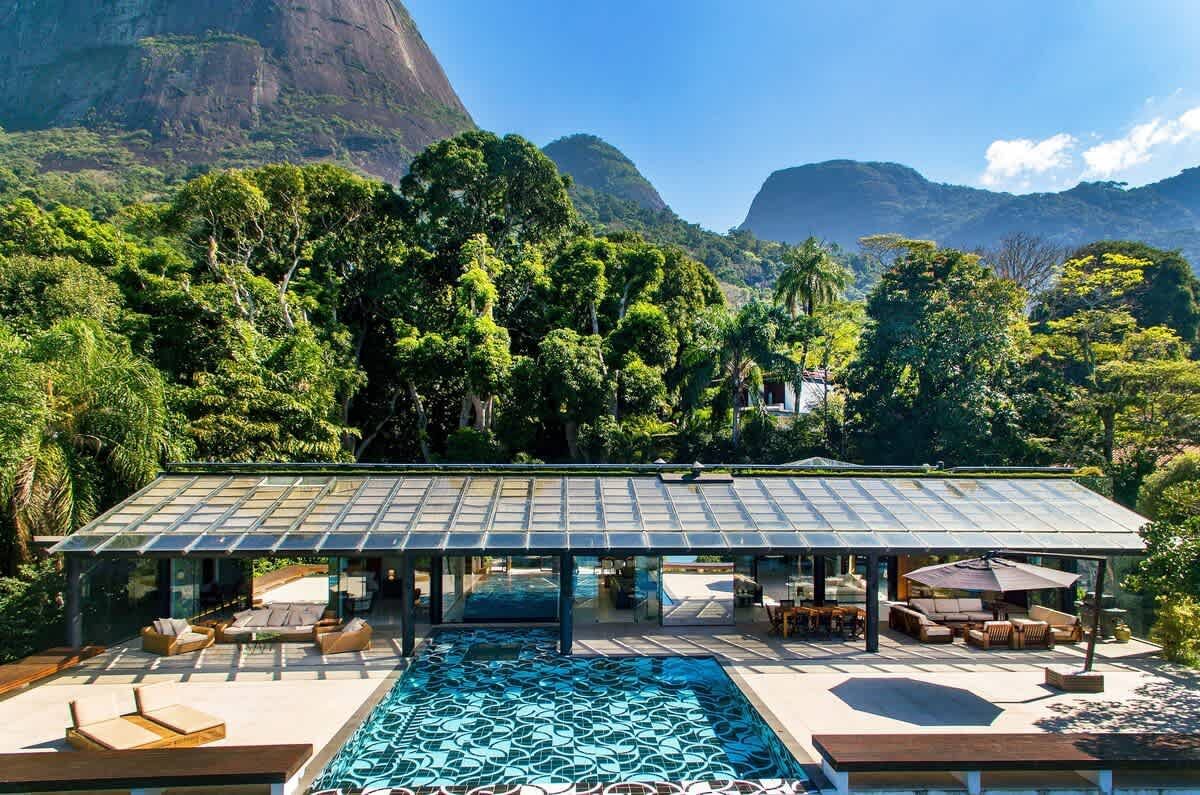
There are four suites, each with a large bathroom, and the master suite has large sliding glass doors onto the ocean and the pool. A fifth bedroom, with three single beds, takes the house from ten guests to twelve. The listing describes an infinity pool tiled in graphic patterns; the photographs show blue, black and white curves running to the edge of the deck, with the Atlantic and its islands beyond. The kitchen has two refrigerators, two industrial ovens and a water filter, and a Bluetooth sound system runs through the house.
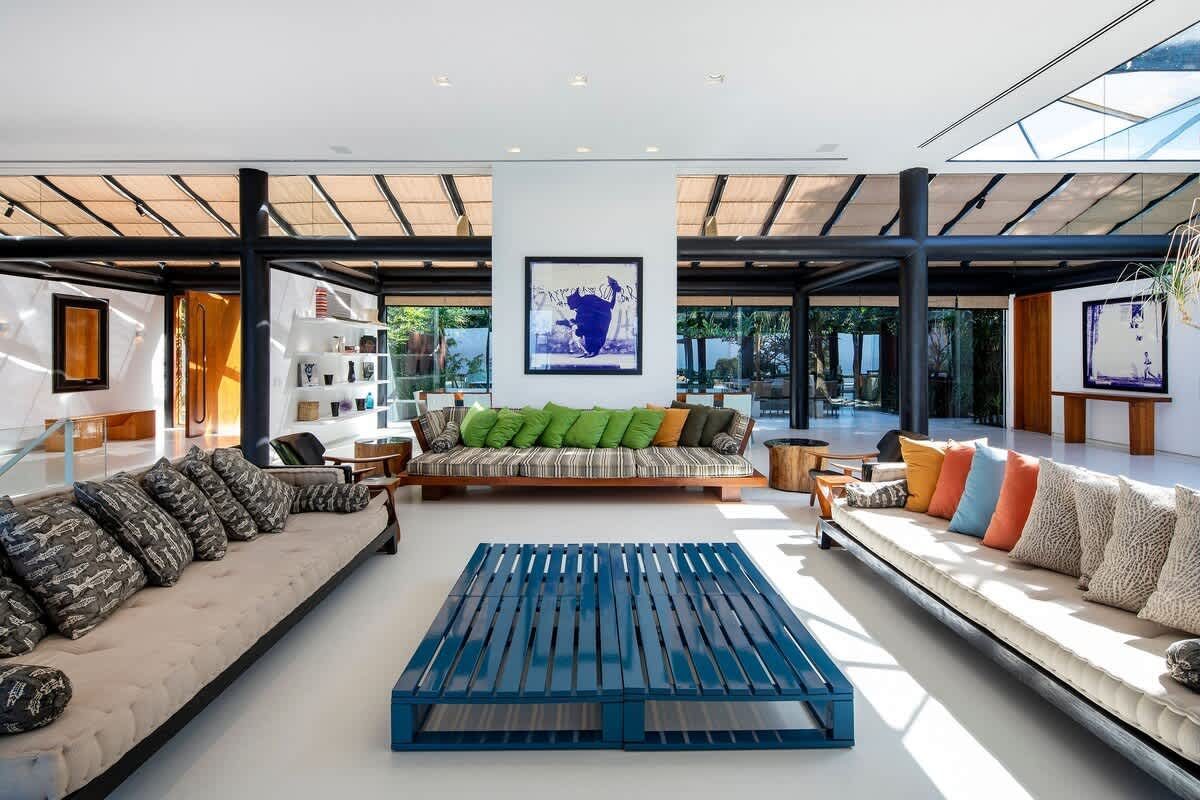
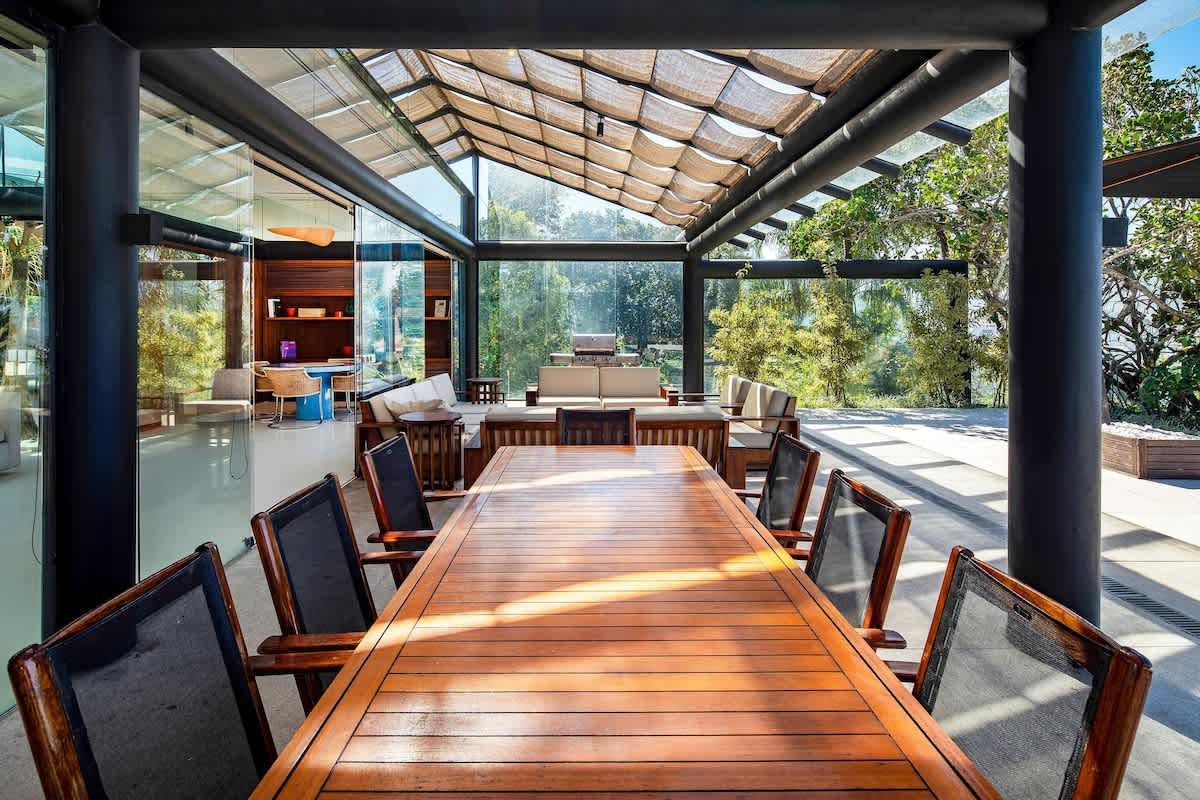
Housekeeping comes once a week. For more, Art de Vivre offers what it calls a premium package with house staff: a private chef, an assistant, a housekeeper and a bartender. The villa’s own site adds airport pick-ups and a driver on call. For a big birthday or a family reunion, that is the way to use the house, with dinner on the terrace and nobody cooking.
The listing presents São Conrado as a quieter beach than Copacabana or Ipanema, popular with surfers. The villa’s site puts Leblon and Ipanema about fifteen minutes east along the coast and the beach a few minutes downhill from the gate, and the neighbourhood has a metro station and the Fashion Mall, which the listing mentions for its shops and restaurants. For evenings out, plan on the driver.
Pedra da Gávea and the hang-gliders
The mountain behind the villa belongs to Tijuca National Park, managed by the federal conservation agency ICMBio. The park describes Pedra da Gávea as more than 800 metres high and the largest seaside monolith in the world. Its trail is for fit, experienced walkers: the park rates it difficult, about five hours on average, with more than 800 metres of climbing and exposed vertical sections where accidents and deaths have been recorded, and advises going with a guide or an experienced hiker, with a rope and safety equipment. Nobody may start up after 2 pm.
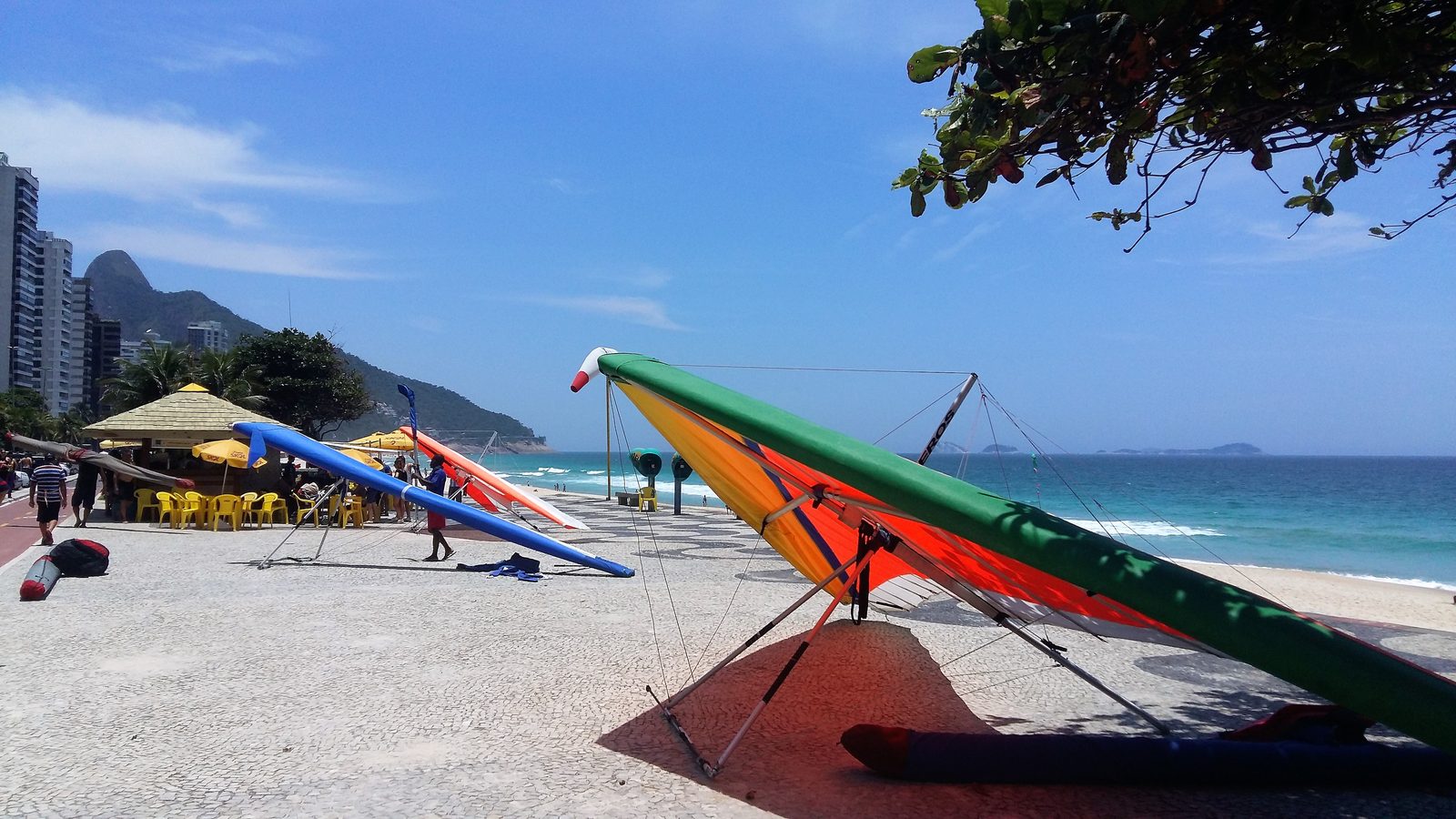
Pedra Bonita, next to it, is the easy one, a walk of about twenty minutes to a view over São Conrado, part of the South Zone and Barra da Tijuca. It is also where the hang-gliders fly from. The park describes two launch ramps 517 metres up, one for hang-gliders and one for paragliders, and calls it one of the most famous and busiest free-flight ramps in the world. The flights come down on the beach at São Conrado, as the villa’s listing points out, and the listing says you can watch the gliders from the villa’s terrace. The park advises beginners to fly only with an experienced instructor, found through the Clube São Conrado de Voo Livre, which lists accredited instructors.
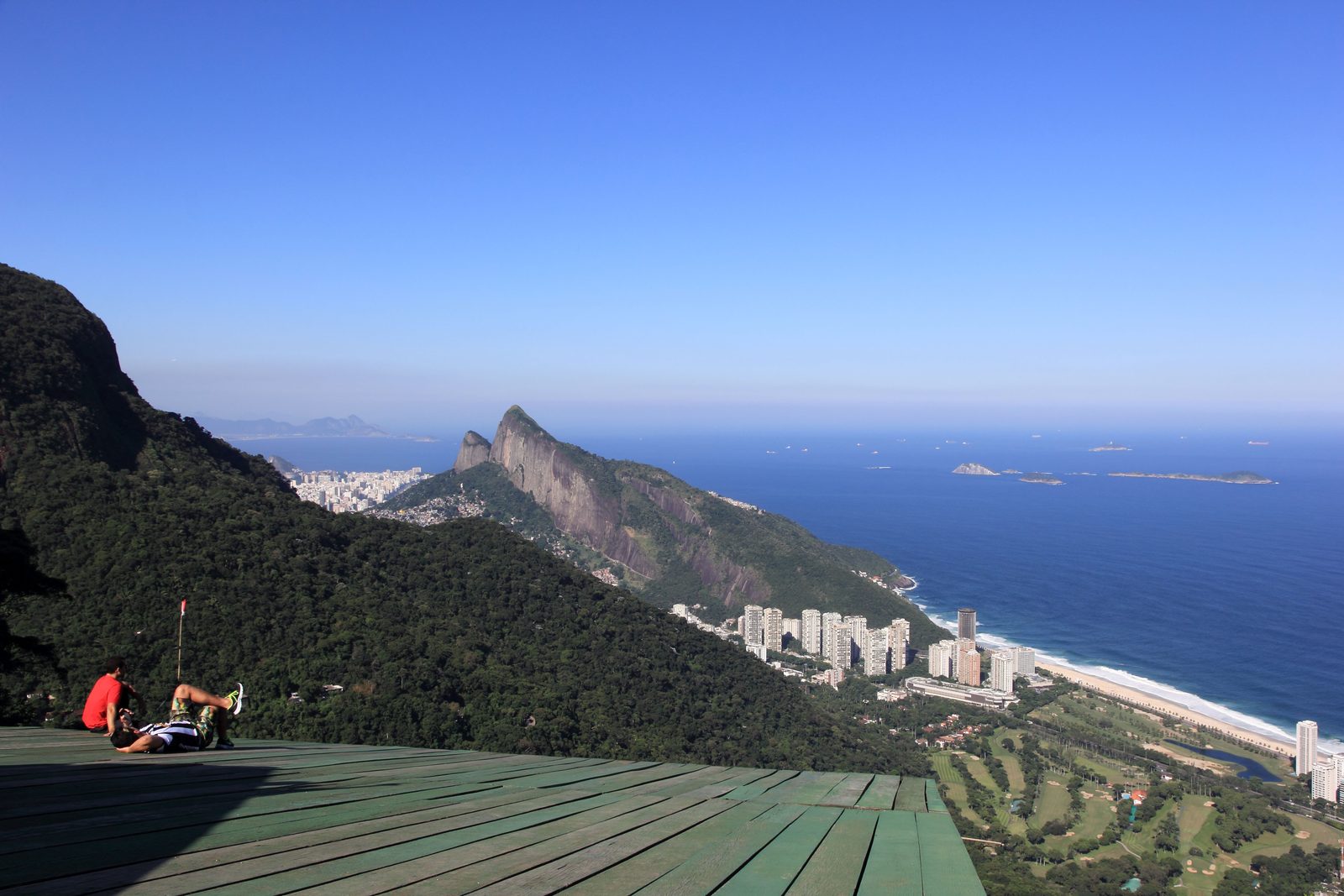
Rampa de voo-livre da Pedra Bonita · Halley Pacheco de Oliveira · CC BY-SA 3.0 · cropped
São Conrado II - Rio · VinnyWiki · CC BY-SA 4.0 · cropped
Which home suits which party
For a family with young children, the Ipanema penthouse is the easy choice. Its listing mentions no pool, which removes the biggest worry with toddlers; it has a cot, a housekeeper every day and a lift; and the beach, the metro and the restaurants are on foot. Two of its four bedrooms have their own bathrooms, which suits two generations, or two families who know each other well.
For friends travelling together, or three or four couples, the Copacabana Penthouse is the one. Every bedroom has its own bathroom, the roof gives the group a pool and a table outside, and the beach is at the door. There are no parties, and the presidential suite and the pool are up the marble staircase, which matters if anyone in the party finds stairs hard.
For a large family, three generations together or a celebration, the São Conrado villa has the most room and the most privacy: twelve places to sleep, a pool deck, a long table, staff on request and forest all around. It suits a group that would rather stay in, with a chef on the terrace and a driver for evenings out. At both houses with pools, plan on an adult at the pool whenever small children are near it; neither listing mentions a fence.
Couples on their own are the hard case, since all three are houses for a party. Two couples travelling together fit the Ipanema penthouse well, one in each suite.
Getting there from Galeão
International flights land at RIOgaleão, the Antonio Carlos Jobim international airport on the Ilha do Governador, north of the centre; Santos Dumont, the small airport on the bay downtown, handles mostly domestic flights. Check the entry rules first. Brazil’s consulate in Miami says that citizens of the United States, Canada and Australia have needed a visa for tourism since 10 April 2025, applied for online through the official e-visa portal. The UK government says British visitors need no visa for stays of up to 90 days, with passports valid for at least six months after arrival, and that a child travelling without both parents needs their authorisation and the original or a notarised copy of the birth certificate.
From Galeão to the beaches takes 40 minutes to an hour by road, depending on traffic, by the homes’ own estimates. Both property sites say Art de Vivre will send a driver to meet the flight, and the agency meets every guest in person at the building. Otherwise, the airport’s regular and executive taxi desks are by doors A and B on the arrivals floor of Terminal 2, and taxis can be booked on the airport’s website. The UK government advises using authorised taxi booths and never hailing a taxi in the street, and, with ride-hailing apps, booking through the official app and checking that the car and the driver match it.
When to go
The UK government gives Rio’s rainy season as November to March, which takes in the southern summer, and warns that flash floods and landslides are common where mountains are close to the coast, as they are in Rio; follow local warnings in heavy rain. The year’s two big events are New Year’s Eve and Carnival.
Réveillon, New Year’s Eve, happens on the beach below the Copacabana Penthouse. On 31 December 2025, Riotur, the city’s tourism company, counted 2.6 million people on Copacabana and more than 5.1 million at 13 stages across the city, and the fireworks lasted 12 minutes, fired from 19 barges along the shore. That night the city stopped cars entering Copacabana from 7 pm, letting through only buses and taxis, and closed every way in from 9 pm, and the metro ran a special service that needed a Réveillon pass. Guests at the penthouse should be home by early evening.

Feliz 2013 (8332275903) · Leandro Neumann Ciuffo · CC BY 2.0 · cropped
Carnival comes in February. The samba schools of the Special Group parade at the Sambadrome on Sunday 7, Monday 8 and Tuesday 9 February 2027, according to LIESA, the league that runs the parades, with the champions back on the Saturday after; LIESA sells the tickets through Ticketmaster. The UK government notes that criminals target big celebrations such as Carnival.
A week from the beach
A week is long enough to see Rio without hurrying, from any of the three. Keep the first evening for the promenade or the terrace, and the next morning for the beach, early, with nothing on you that you would mind losing; in the late afternoon, walk to the fort at the end of Copacabana, or to Arpoador for the sunset.
Give a morning to Christ the Redeemer. The national park lists four ways up Corcovado, the 704-metre mountain the statue has stood on since 1931: the railway, which opened in 1884, the Paineiras-Corcovado vans, a guide, or on foot. Take the train or a van; tourists have reported armed robberies on the walking trail, according to the UK government.
Spend a day in the west, on Pedra Bonita or in the air above it, with lunch at a kiosk by the beach where the gliders land, and another on the water: both property sites list boat days along the coast that Art de Vivre arranges. Keep a day for the Botanical Garden, founded in 1808 and part of the World Heritage site, and one for the pool or the terrace and nothing else.
Safety on the beach and in the city
Copacabana and Ipanema are crowded public beaches, and the UK government’s advice about them is specific. The Foreign, Commonwealth and Development Office lists Copacabana beach and Ipanema beach, with Lapa and Santa Teresa, as the places in Rio where British visitors most often report thefts and pickpocketing. It says thefts are particularly common on public beaches, including arrastões, “where large groups of thieves run through an area of the beach grabbing possessions,” and advises: “Keep your belongings close and avoid taking valuables to the beach. Do not go on to city beaches after dark.” It adds that thieves target mobile phones, particularly between 4pm and 9pm.
The same office advises against entering any favela, including on tours marketed to tourists, and suggests checking that GPS directions do not lead into one. If threatened, it says, hand over valuables and do not resist. It advises buying your own drinks and keeping them in sight, and taking care with spirits after deaths from drinks containing methanol. In the sea, it warns of strong currents off some beaches; watch the warning flags and where the lifeguards are.
How booking works
All three homes are booked direct with Art de Vivre, through the calendar on each home’s page on its website. A booking starts as a request, with no payment taken. The agency then asks for the full name of every guest, the type of group and the purpose of the stay, and a photo of each guest’s identity document or passport; only guests named on the reservation may stay. Its principal broker, Charles Jonas, whom guests call Charlie, checks each request himself before sending a secure link to pay, and the agency replies in Portuguese, English and French. Yejide, in a Google review of the agency, wrote: “Our host Charlie was there every step of the way to help me with anything I needed before I even arrived in Rio and during the trip.”
Check-in is from 3 pm and check-out by 11 am, both with the agency, and the minimum stay is three nights. At Copacabana and São Conrado, sheets and towels are changed weekly; bring beach towels, and leave tinted sunscreen and self-tanner at home, because the linen is white.
Before you book, in Rio
- Match the party to the house: ten at Copacabana, eight at Ipanema, ten or twelve at São Conrado.
- Send every guest’s identity document early, and announce friends coming for a meal at least 48 hours before check-in.
- With a U.S., Canadian or Australian passport, apply for the e-visa online before you fly.
- Ask Art de Vivre for a driver at Galeão, or use the official taxi desks in Terminal 2.
- For New Year’s Eve at Copacabana, be in before the roads close in the early evening.
- Take nothing to the beach you would mind losing, and stay off city beaches after dark.
- Fly from Pedra Bonita only with an accredited instructor, and leave Pedra da Gávea to fit walkers with a guide.
The Copacabana Penthouse sleeps ten, the Ipanema Beach Linear Penthouse eight and the São Conrado Beach View Villa ten, or twelve with its fifth bedroom. All three are booked direct with Art de Vivre.
Sources
- Art de Vivre, its pages and listings for the three homes (Copacabana Penthouse, São Conrado Beach View Villa, Ipanema Beach Linear Penthouse), read 8 October 2026: ADV 001, ADV 004, ADV 005
- The Copacabana Penthouse’s own site, its rooms, amenities and airport guide, and guest reviews from Airbnb, quoted as written; five-star reviews, a selection: copacabanapenthouse.com
- The São Conrado villa’s own site, its services and what is nearby: saoconradorio.com
- Art de Vivre’s Google reviews, quoted as written: Google
- UNESCO World Heritage Centre, Rio de Janeiro: Carioca Landscapes between the Mountain and the Sea (inscribed 2012): whc.unesco.org
- Julia Rey Pérez, O passeio de Copacabana como patrimônio e paisagem cultural, Revista UFG (the promenade of 1970, its stone and its length): revistas.ufg.br
- Parque Nacional da Tijuca (ICMBio), Pedra da Gávea, Pedra Bonita, free flight and Corcovado: Pedra da Gávea, Pedra Bonita, free flight, Corcovado
- Riotur, the Réveillon figures for 31 December 2025, published 1 January 2026: riotur.rio; City of Rio de Janeiro, the operational plan for that night, 26 December 2025: prefeitura.rio
- LIESA, the Rio Carnaval 2027 parade calendar and ticket sales: liesa.org.br
- MetrôRio, stations: metrorio.com.br; RIOgaleão, taxis: riogaleao.com
- Consulate General of Brazil in Miami, the electronic visitor visa for citizens of the United States, Canada and Australia: gov.br
- UK Foreign, Commonwealth and Development Office, Brazil travel advice (safety and security, regional risks, entry requirements), updated 7 October 2026: gov.uk