Kihei and Wailea in figures
- The Kihei case
- Maui Beachside Bungalows: three two-bedroom condos at Kihei Holiday and a studio at Kihei Bay Surf
- The hosts
- Megan and Bryan, hosting in Kihei since 2012
- Wailea hotels, August 2026
- $733.54 average daily rate at 73.6% occupancy (DBEDT)
- Wailea and Kihei rentals, August 2026
- $438.48 average daily rate, fees included, at 42.8% occupancy (DBEDT)
- Tax on a stay in 2026
- 11% state, 3% county and up to 4.712% general excise tax
- How the condos are reserved
- Through Airbnb, from buttons on the hosts’ site
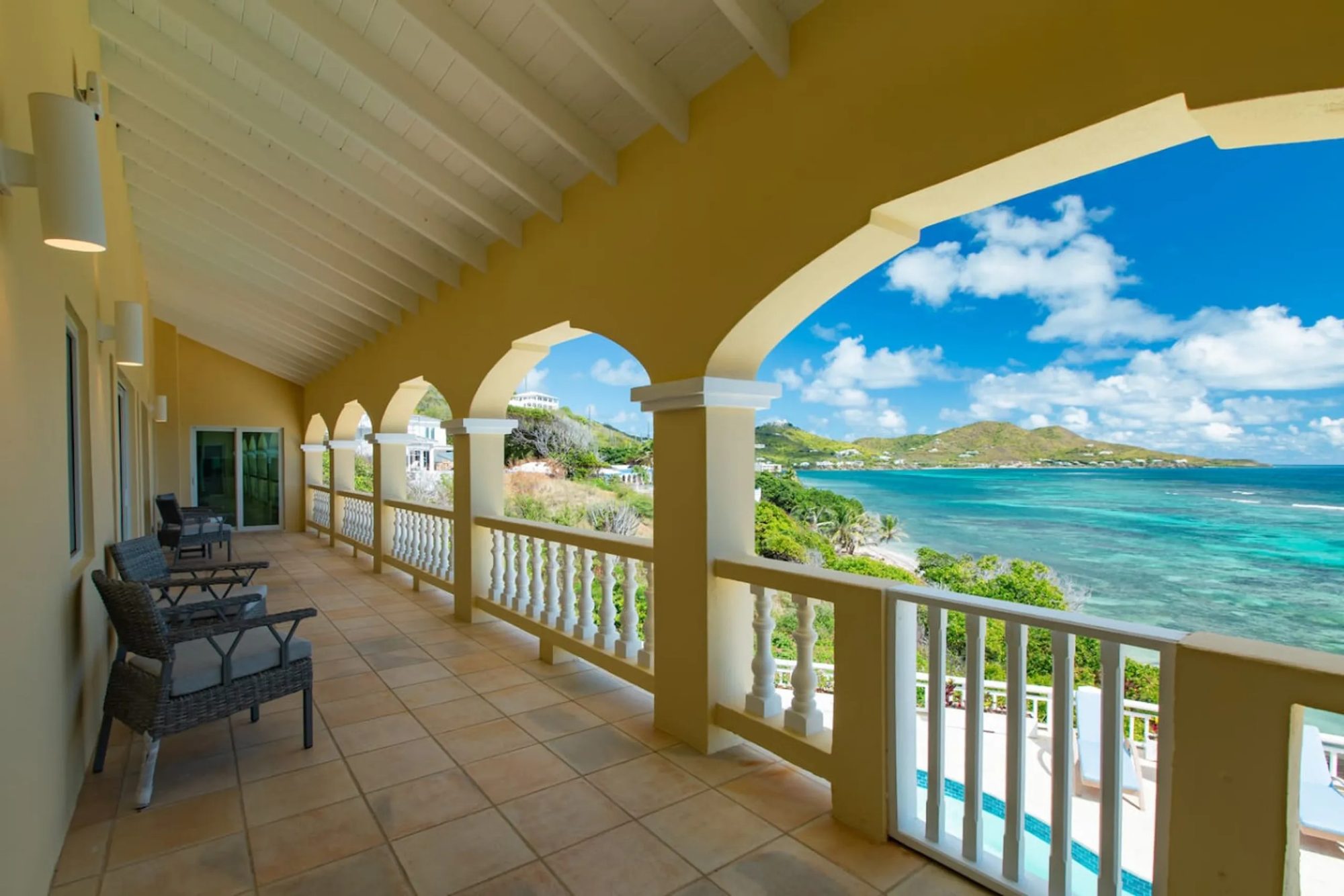
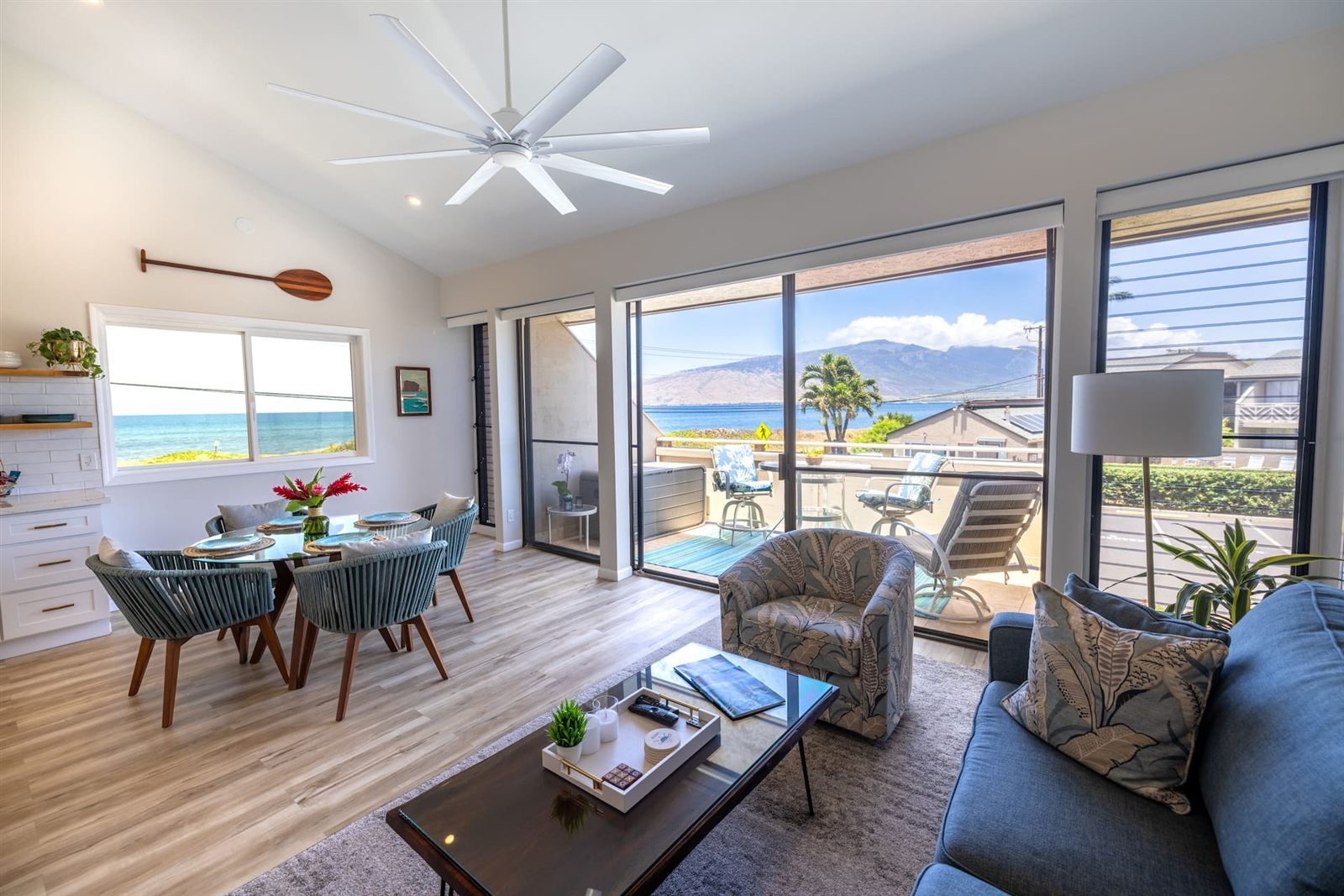
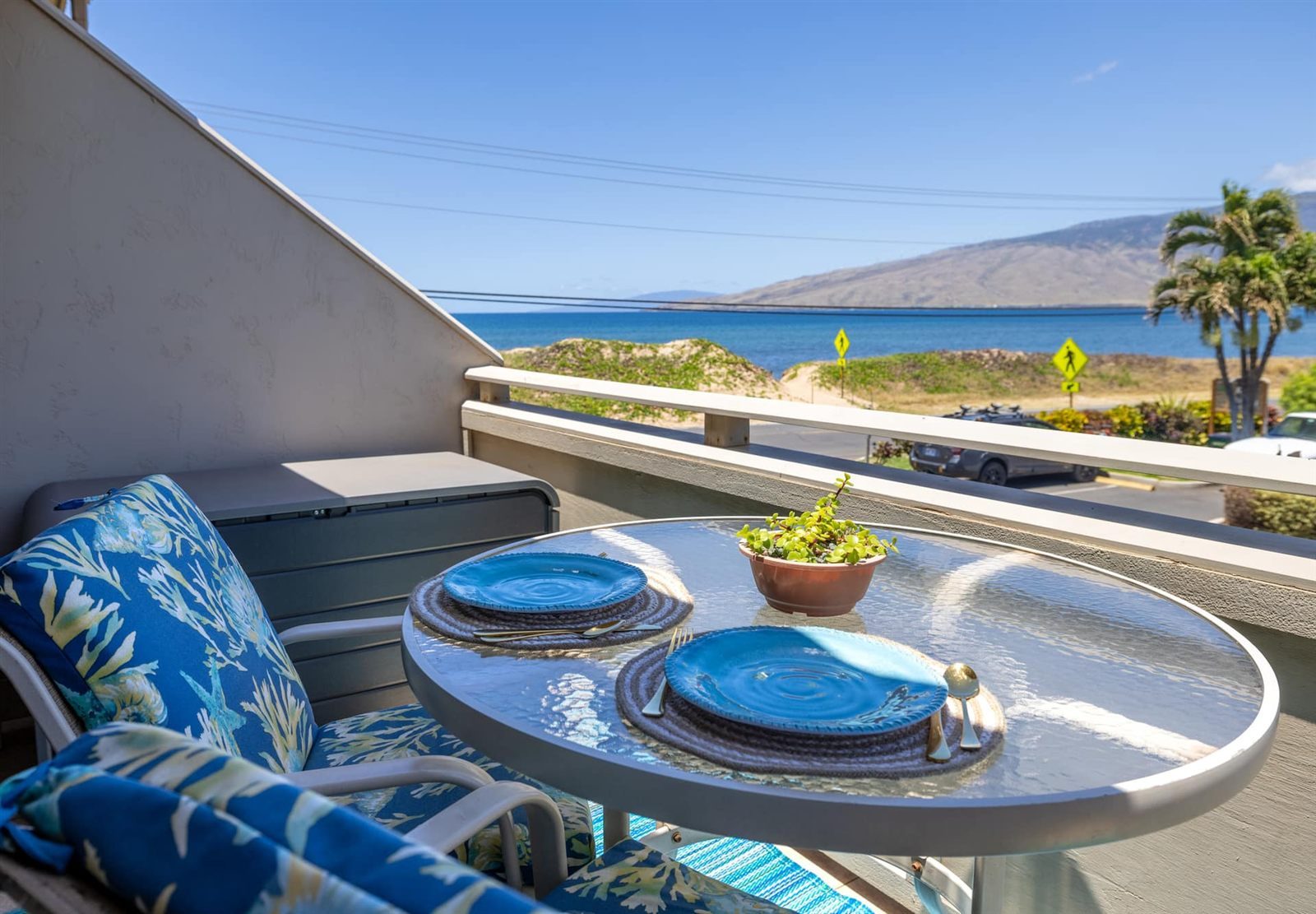
The photograph that Megan and Bryan use to show the view from the condo they call Best Ocean Views was taken on an upper lanai at the north end of Kihei, and it shows what lies between the table and the water. There is a railing, then South Kihei Road, and then a low dune covered in green vine. Beyond the dune is Ma’alaea Bay, and across the bay is the long brown slope of West Maui.
Most of what a traveller has to decide on this coast is in that frame. Fifteen to twenty minutes’ drive to the south, by the hosts’ own estimates, the same shore becomes Wailea, where the large hotels stand directly behind the beaches. In August 2026 the State of Hawai’i’s hotel report put the average daily rate of a Wailea hotel room at $733.54. The state’s vacation rental report for the same month put the average for rentals in Wailea and Kihei together at $438.48. The two numbers are built in different ways and are not one price list, but the gap between them frames the choice: what the extra money buys, what the cheaper bed leaves out, and what an older low-rise condominium is like to stay in once an owner has stripped a unit to its frame and started again.
Maui Beachside Bungalows is the Kihei case in this article. It consists of four condos, in two complexes that stand on South Kihei Road. The hosts are Megan and Bryan, who began hosting in Kihei in 2012 and say they live five minutes from the units. Three are two-bedroom condos at Kihei Holiday. The fourth is a studio at Kihei Bay Surf, on the same road. An earlier feature in this magazine followed a week spent in them; this one is about the decision that comes first.
One coast, two kinds of stay
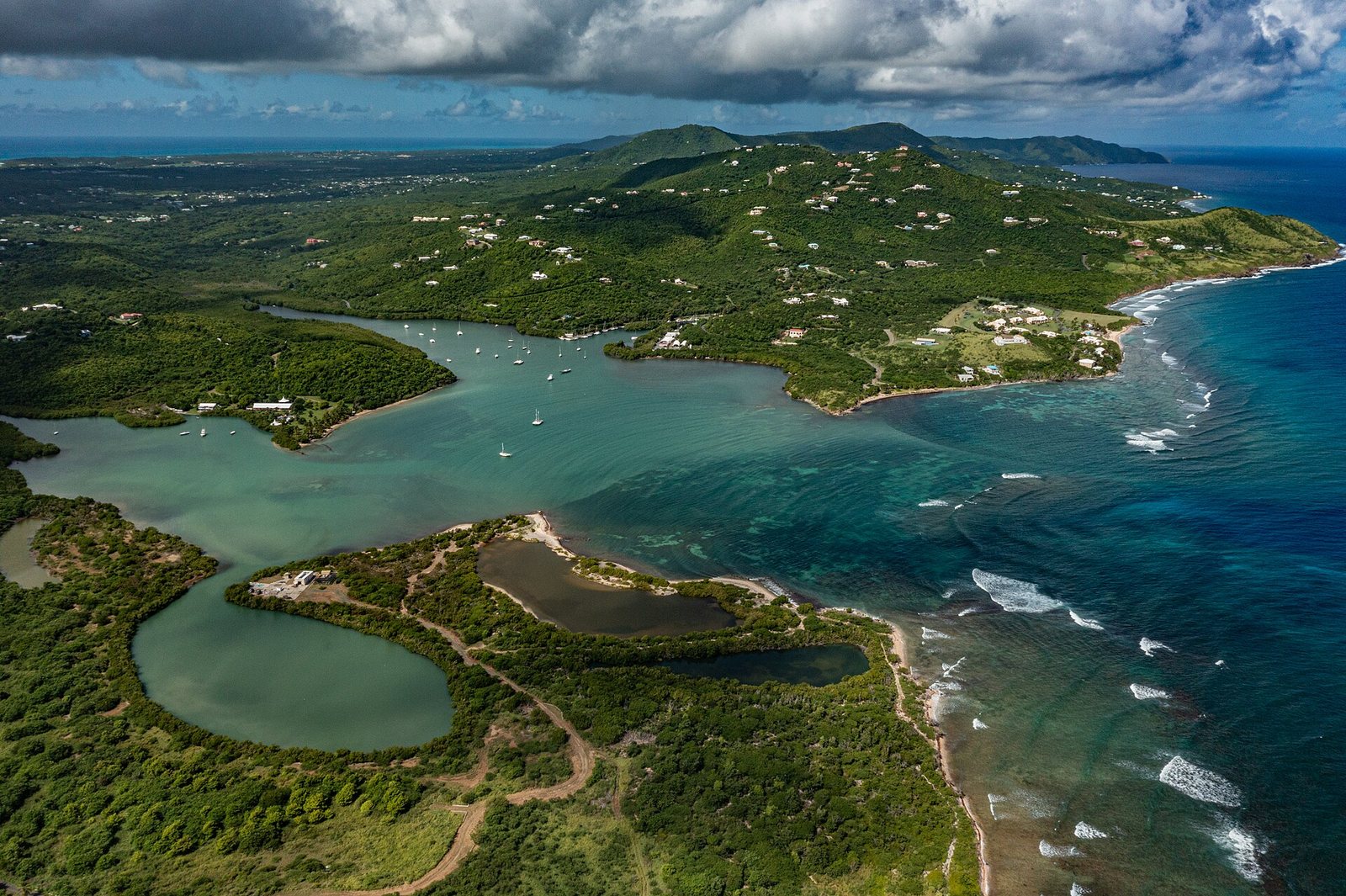
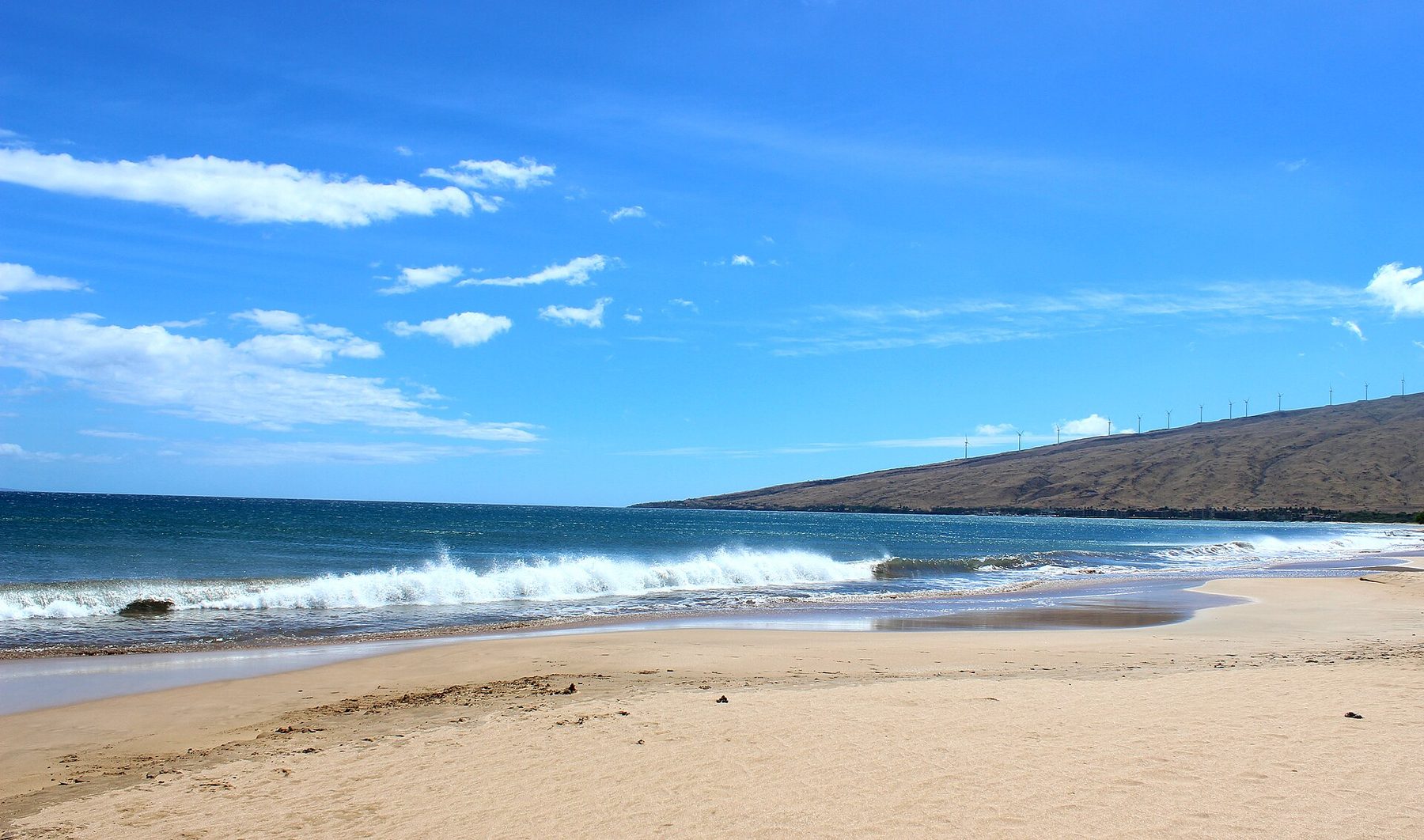
South Maui’s visitor coast reads from north to south like a list. At the top is Ma’alaea, with its harbor on Ma’alaea Bay. Between Ma’alaea and Kihei lies Kealia Pond National Wildlife Refuge, a coastal wetland. North Kihei, where the four condos are, faces the bay. The town continues south to Keawakapu Beach, which sits next to Wailea. Wailea is the resort area, and south of it is Makena State Park.
The two halves work differently, and the plainest account of the difference comes from people with a stake in it. In a comparison published on their site in July 2026, Megan and Bryan open with a declaration: “Full disclosure before a single word of comparison: we host in North Kihei, so we have a horse in this race.” They go on to call their own town “a real beach town that happens to host visitors” and Wailea “a master-planned resort strip that does luxury exceptionally well”, a place they sum up as “manicured, hushed, valet-parked, and priced accordingly.”
Their list for Kihei is plate-lunch counters, food trucks and county beach parks in a row, with condos and cottages at what they call “half the resort rate”. Their closing line is the one a reader is likely to remember: “A week in Kihei costs what four days in Wailea does, and the ocean does not know the difference.” Both statements are a host’s judgment, offered as such.

What the state’s figures say about price
Hawai’i’s Department of Business, Economic Development and Tourism, known as DBEDT, issues two monthly reports that bear on the choice. Its hotel performance report, which uses data from STR, treats Wailea as a region of its own. In August 2026 Wailea’s hotels were 73.6 percent occupied at an average daily rate of $733.54. Hotels across Maui County stood at 62.4 percent and $525.74. The report’s luxury class for Maui County averaged $935.05.
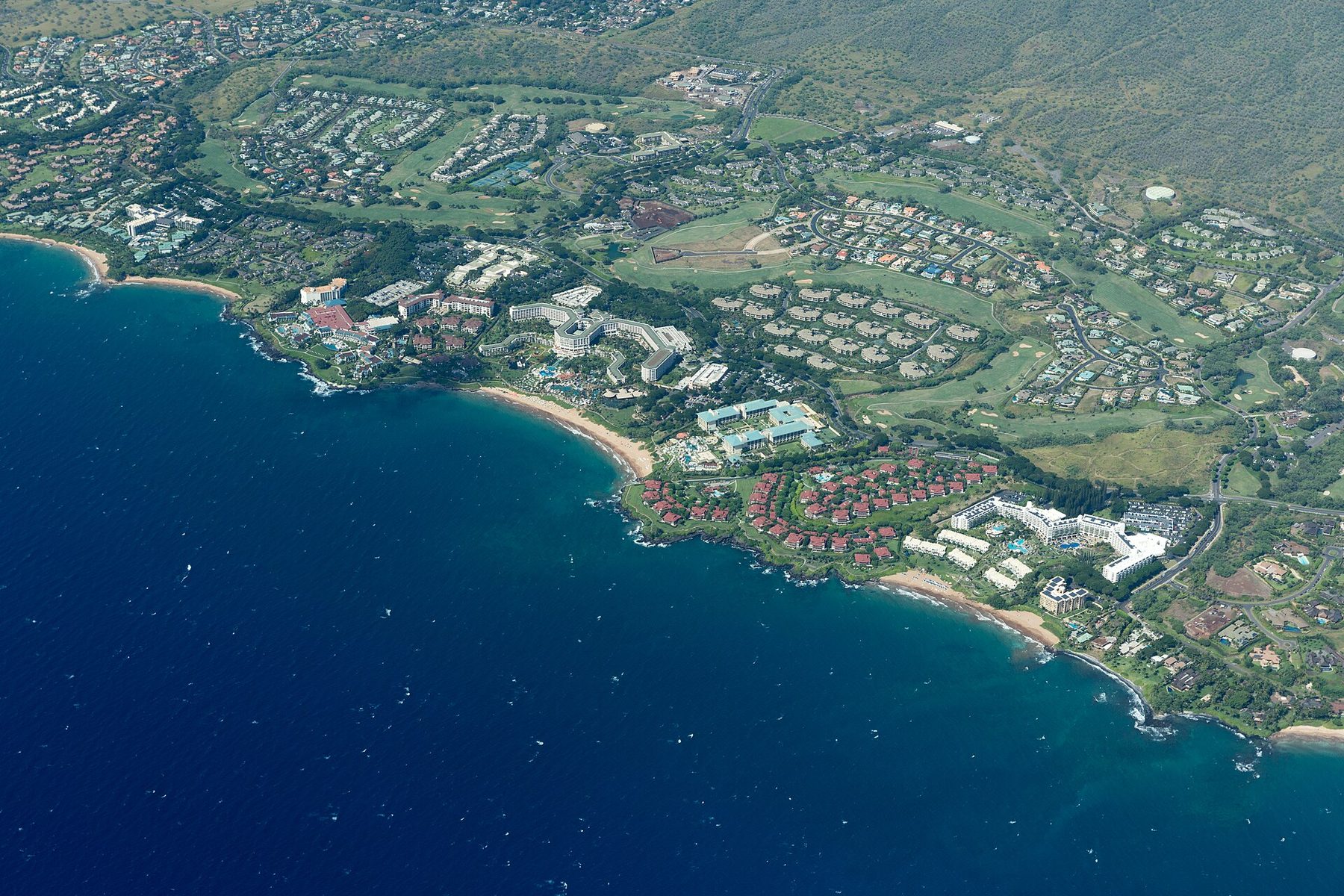
Wailea, HI · Ekrem Canli · CC BY-SA 4.0 · cropped
The vacation rental report draws on Lighthouse Intelligence data for listings on Airbnb, Booking.com, Vrbo and TripAdvisor. It does not divide the coast in two. Its region is Wailea and Kihei combined, one market. In August 2026 rentals in that market were 42.8 percent occupied at an average daily rate of $438.48, up 7.5 percent on August 2025. The plain difference between the Wailea hotel rate and the combined rental rate in August was $295.06 a day.
Several cautions travel with those numbers, and DBEDT prints all of them. The rental average is what the report calls a total rate, with cleaning and service fees folded into one price; a hotel’s average daily rate is a room rate. The report says it “does not determine or differentiate between units that are permitted or unpermitted”, and its reservation data reaches 31.5 percent of Maui County. It also cautions that a rental unit, unlike a hotel room, may not be on the market all year, which bears on how a rental occupancy figure should be read beside a hotel’s. In July 2026 the data supplier changed the way it removes duplicate listings and restated its history.
What the figures support is narrower than a slogan and still useful. In August the average Wailea hotel room cost about $295 a day more than the average rental across the combined market. That rental average includes Wailea’s own condos, so it says nothing direct about a North Kihei unit, and it is not the rate of the four condos in this article. The hotels were also much fuller: nearly three rooms in four were taken in a month when fewer than half the rental unit nights in the combined market were sold.
The condo years
Much of the condo stock on Maui comes from one building period. The clearest public measure of its age is a June 2024 paper by economists at the University of Hawai’i Economic Research Organization, UHERO. Among the 6,172 Maui vacation-rental condos the paper covered, the median unit was built in 1977 and measured 838 square feet.
The two complexes in this article are low-rise buildings of that generation. The hosts describe Kihei Holiday as a community of 45 units on nearly two acres, facing the ocean, and Kihei Bay Surf as a low-rise set across the street from the sand. Each complex has a pool and barbecue grills. Kihei Bay Surf adds a tennis court and a hot tub, and the hosts’ photographs show a hot tub beside the Kihei Holiday pool too.
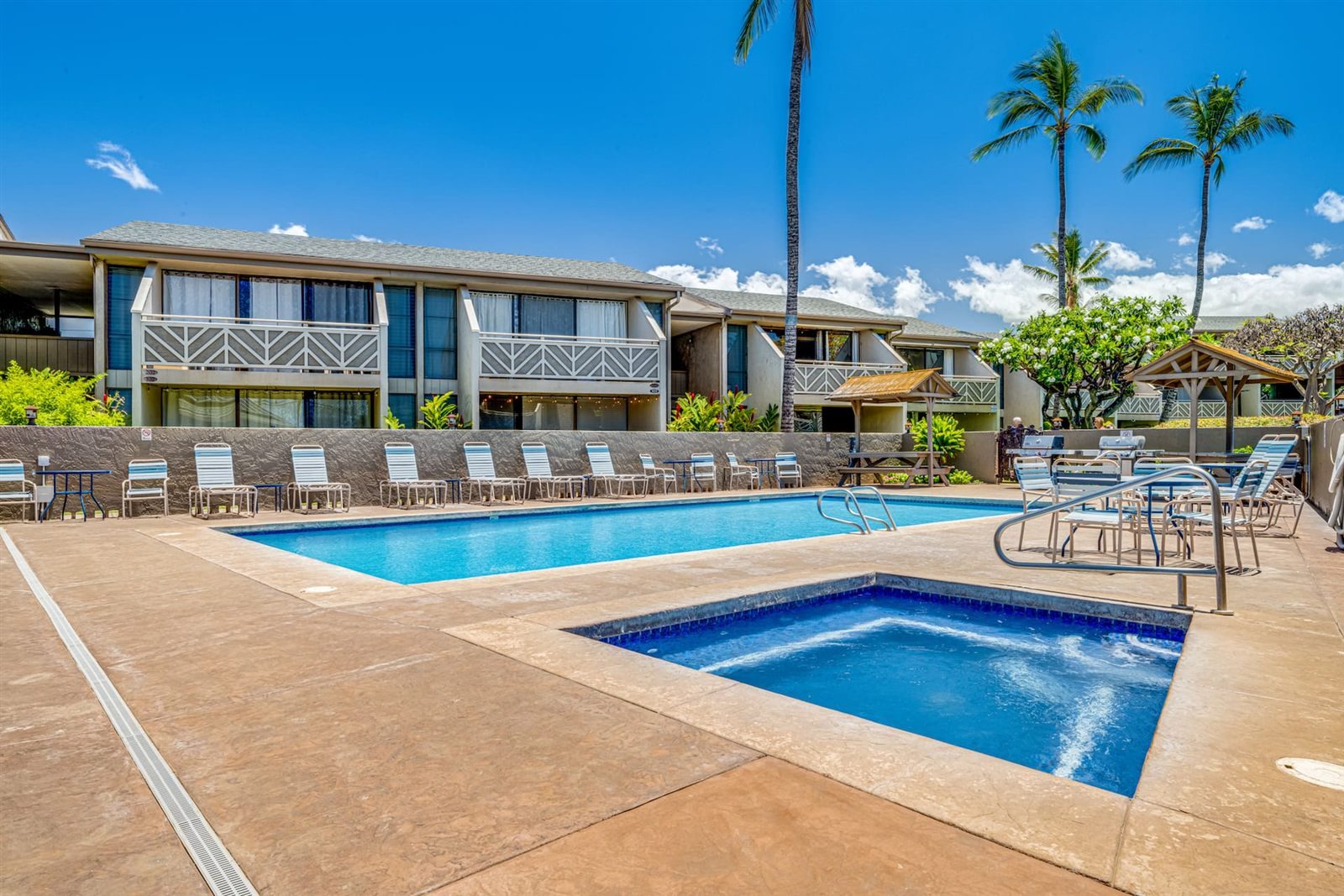
Those photographs show the architecture of the period as it is: low blocks with shingled roofs and balcony railings in a chevron pattern, set around a concrete pool deck with white loungers, a barbecue shelter and tall palms. The outside of a condominium belongs to all its owners together, which is why one owner’s renovation stops at the front door.
For a traveller the age of the buildings has practical consequences. The buildings are low, so a sea view is a view across a road, with no tower to lift it. Each of the four units here has one bathroom, including the three with two bedrooms. And the buildings stand where their builders put them, across South Kihei Road from the beach and not on the sand.
A condo rebuilt from the studs out
The inside is another matter. The hosts say they renovated Best Ocean Views, a two-bedroom at Kihei Holiday, from the studs out, which in a building of this age means taking a unit back to its framing. In their photographs the main room has a vaulted ceiling painted white, ten feet high by the hosts’ measure, with one large white fan. The kitchen runs along the back wall, also in white: a French-door refrigerator and a gas double-oven range, quartz counters, brass handles and a brass tap, white subway tile, and open wooden shelves where a run of upper cabinets might have been. A narrow wall painted sky blue carries a carved surfboard. A round glass table with four blue woven chairs stands under the window, and the window holds the sea.
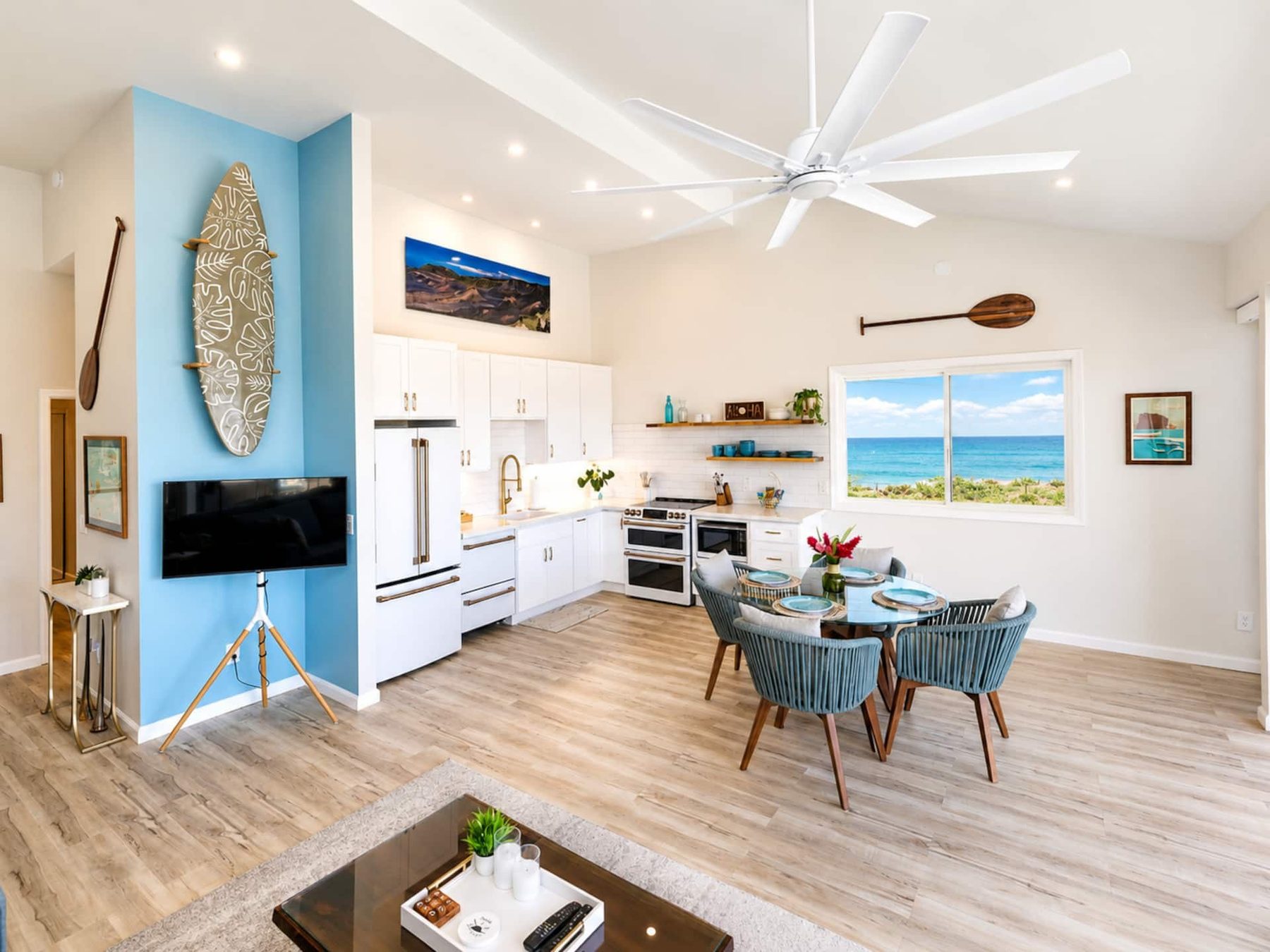
The reasoning is legible in the room. The space is not large, so nearly every fixed surface is white, the pale wide-plank floor runs through without a break, and color is held to a few blues. The window is of ordinary size and works because the table is set against it, so a person eating is looking at water.
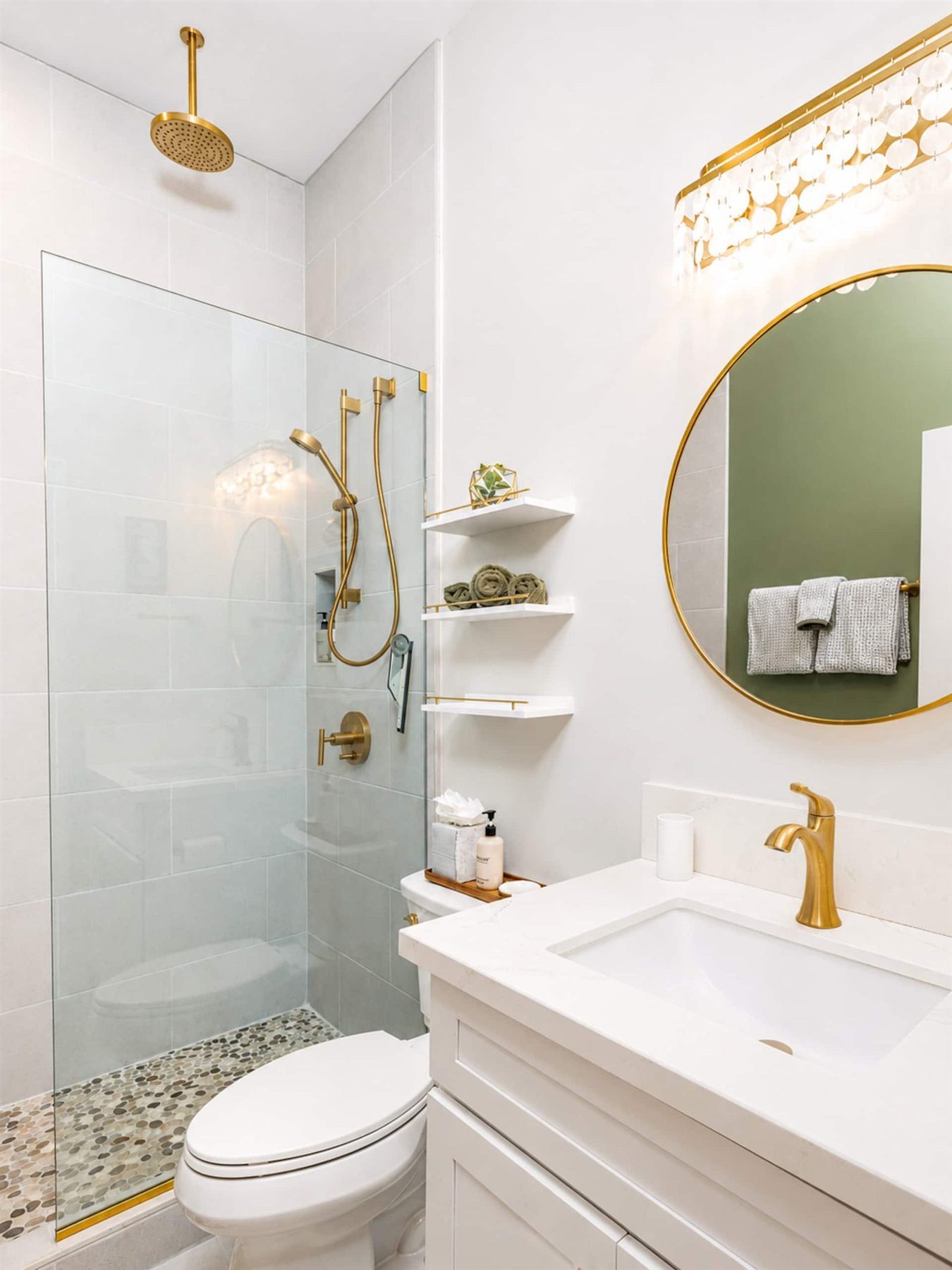
The bathroom makes the same case in less space: a glass-walled walk-in shower with a brass rain head over a pebble-stone floor, a white vanity, a round mirror in a brass frame and a light made of shell discs. It is the only bathroom, shared by two bedrooms with a queen bed in each, and the condo sleeps four. The hosts list central air conditioning.
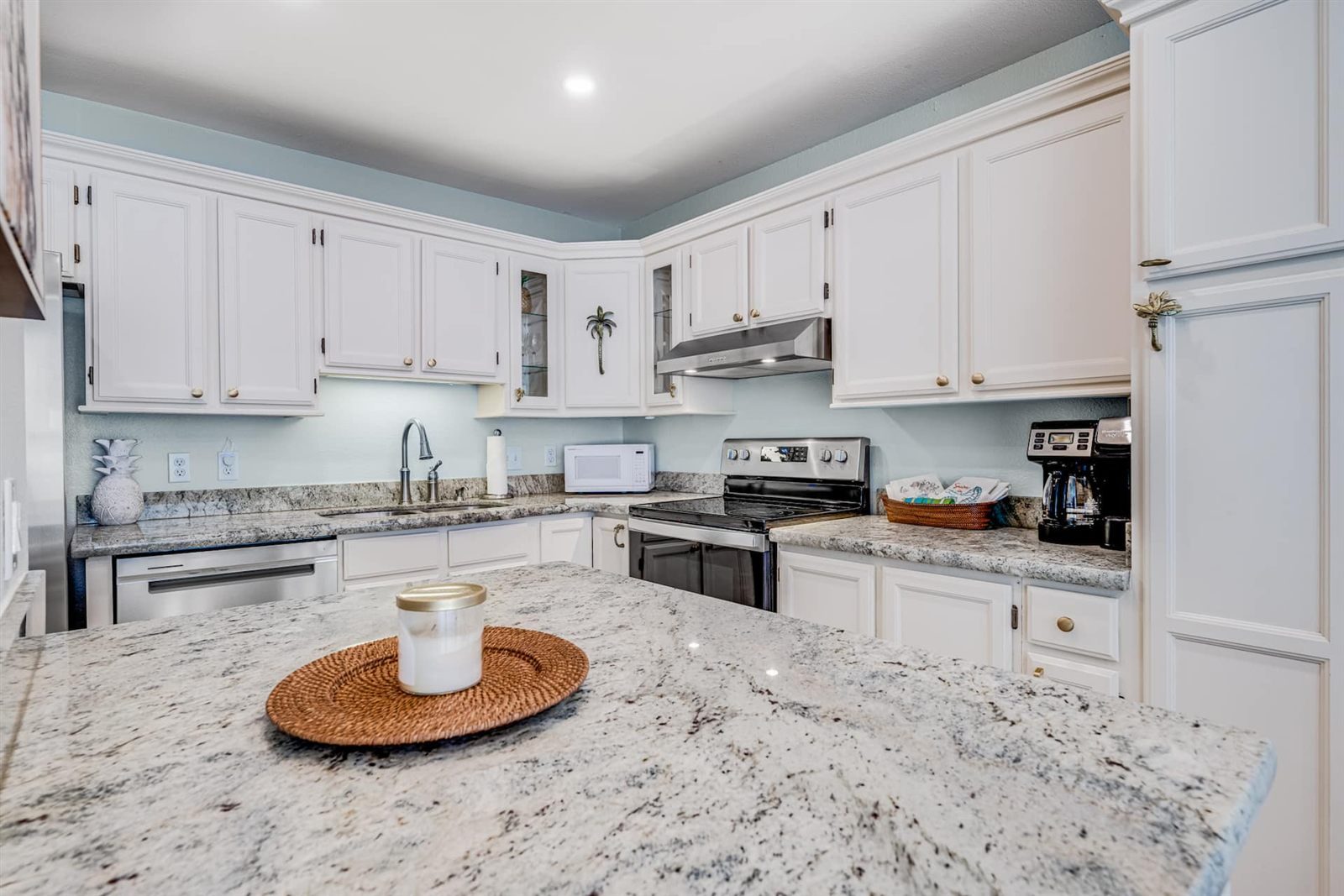
The other three units vary the formula. The Modern Ocean View, also at Kihei Holiday, is by the hosts’ account their most recent rebuild. Its kitchen has white raised-panel cabinets, speckled granite and a stainless range against pale blue walls, with a breakfast bar; two bedrooms hold three queen beds between them, and the condo sleeps four. The Family Favorite, on the top floor of the same complex, has a kitchen of honey-colored wood cabinets and granite with a pass-through window, and makes its statement in the living room, where a green wall is painted with large white leaf outlines under a vaulted ceiling. It sleeps five across a king, a queen and a sofa bed. The studio at Kihei Bay Surf, which the hosts call the Couples Getaway, is on the ground floor: one room with a queen bed and a sofa, a galley kitchen with gray cabinets and a quartz peninsula, and a private lanai that faces a lawn and the tennis court.
What a renovation cannot change is in the same pictures. The lanais at Kihei Holiday look across the road to the dunes and the bay. Two bedrooms share one bathroom in each of the larger units. Anyone who finds stairs difficult should ask about the climb to a top-floor unit before choosing it; the studio is at ground level, and its outlook is a garden. These are the ordinary terms of a condominium of that era, and they are the terms a resort is designed to remove.
What a condo includes and what a resort adds
Some of the case for a condo is arithmetic that never shows in an average daily rate. All four of these units have full kitchens. The Family Favorite and the Modern Ocean View list their own washer and dryer, and a stacked pair is visible in the hosts’ photographs of Best Ocean Views. Parking is free. Guests let themselves in with a keypad or smart lock from 3 pm and leave by 11 am. The closets are stocked: the hosts mention snorkel gear and tennis racquets in the studio, binoculars in the Family Favorite, and a portable crib there on request.
In a post on what a week on Maui costs, published in June 2026, the hosts name the expense they think visitors overlook. Their phrase for it is “The leak to watch: gear rental drip.” They continue: “Daily snorkel-set and boogie-board rentals for a family quietly total real money across a week”. Their second warning is about transport: “Book the car EARLY; on Maui the car, not the flight, is the availability crunch.” A stay in North Kihei assumes that car. The hosts put Kihei’s restaurants and shops five to ten minutes away, Maui Ocean Center and Ma’alaea Harbor about ten, and Kahului Airport about forty.
What a resort adds is people. Maui County’s real property tax classes give an unsentimental definition: among properties let for short stays, the Hotel and Resort class is for those with at least eight units that “employ more than twenty full time persons.” Staff, and a position on the sand, are much of what a guest in Wailea is paying for. A condo has a keypad and, in this case, hosts who say they live five minutes away. Questions before a stay go to them by Instagram message, which is the contact route their site gives.
The hosts’ own advice concedes Wailea’s strengths instead of disputing them: “Stay in Kihei; visit Wailea like a museum.” The opposite choice is as easy to defend. A traveller on a short trip who wants no driving, no cooking and a beach below the room is buying something that a condo across a road does not sell, and Wailea’s occupancy figures show how many people want it.
Wailea from a Kihei base
The two places are close enough that the choice of bed does not settle the choice of beach. The hosts give the drive from their condos to Wailea as fifteen to twenty minutes. On the way, at the south end of Kihei, is Keawakapu Beach, where the sun goes down into open sea. Beyond Wailea’s hotels is Makena State Park and Big Beach, a very wide strand with a lifeguard tower.
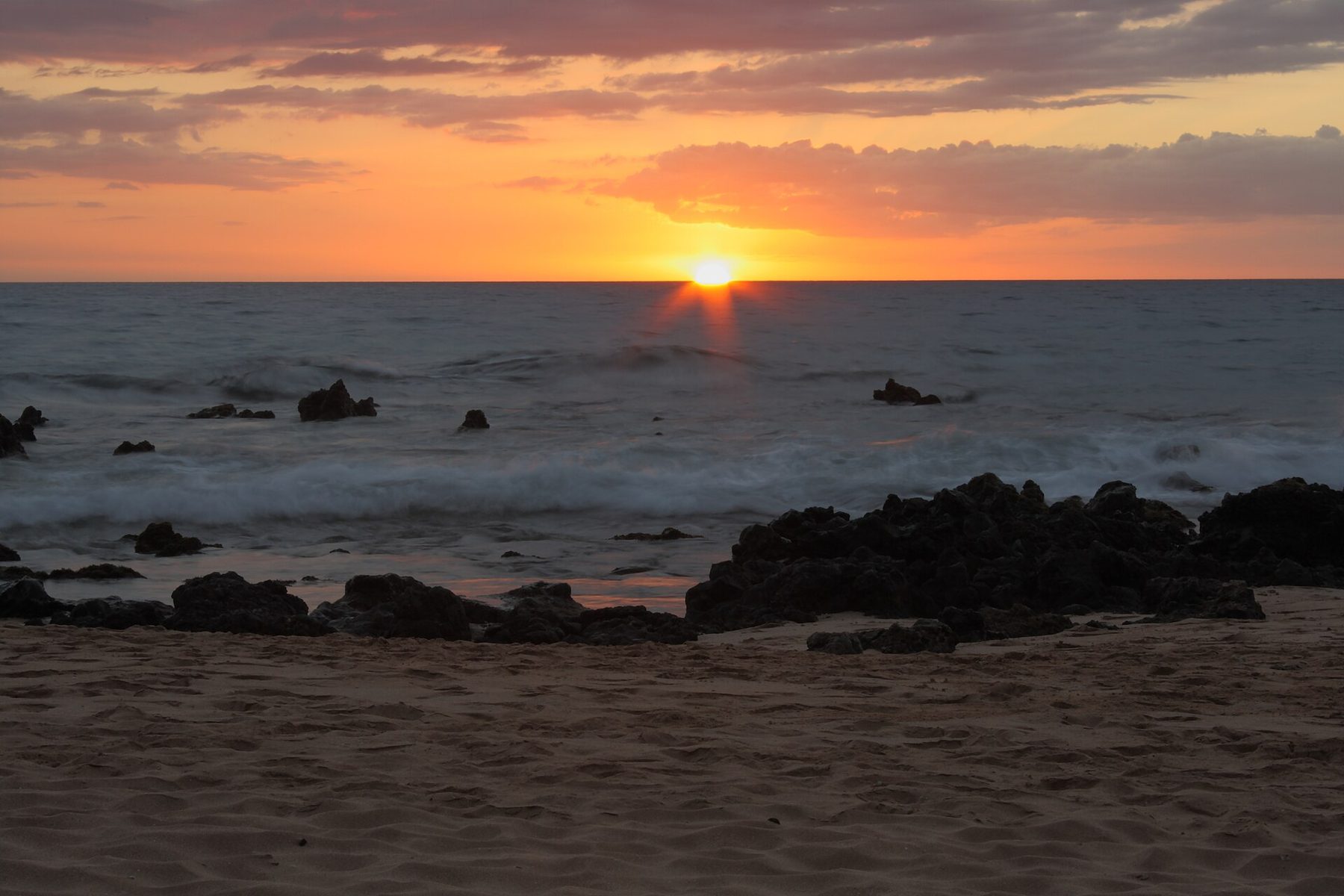
Keawakapu Beach sunset long exposure · Viriditas · CC BY-SA 3.0 · cropped
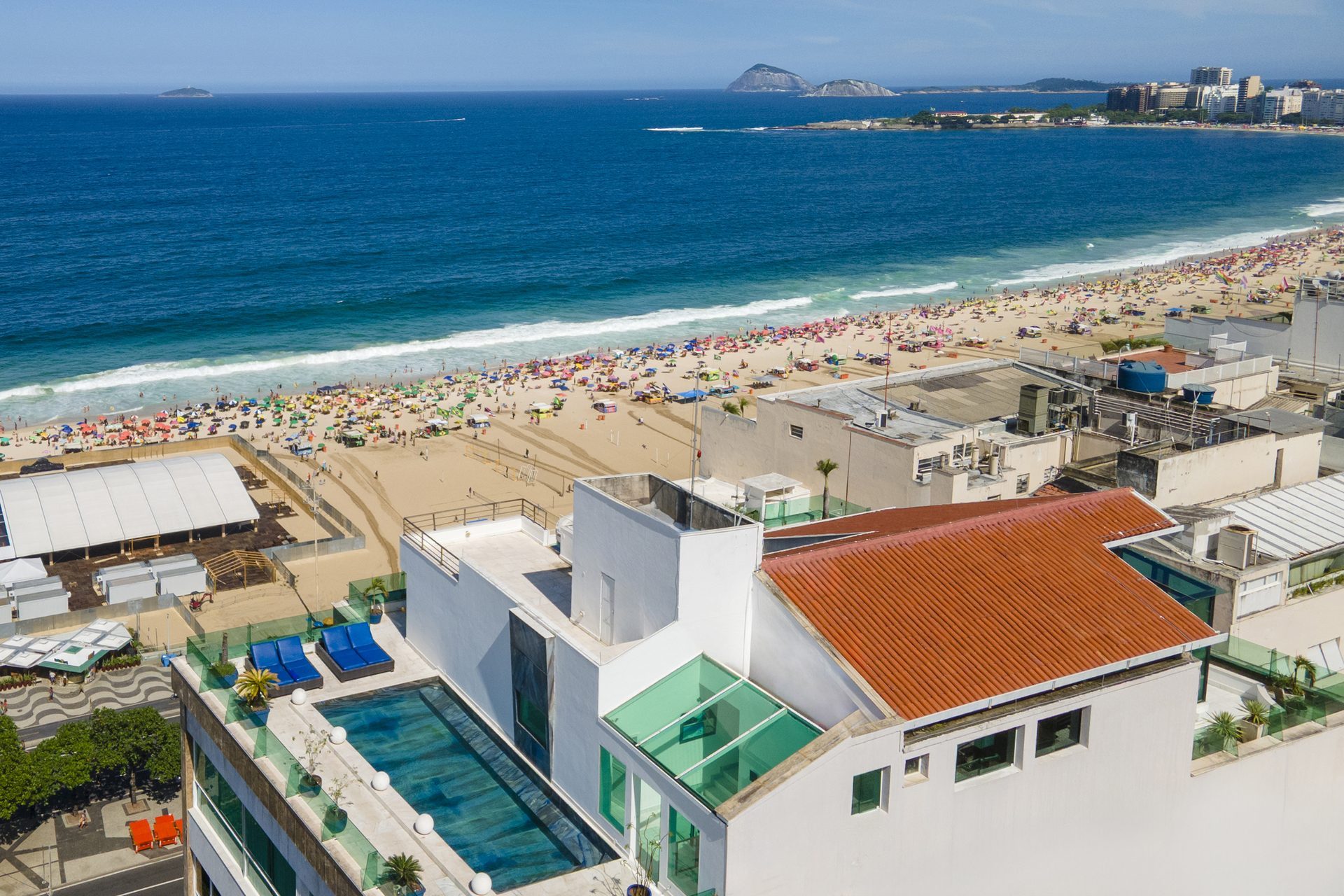
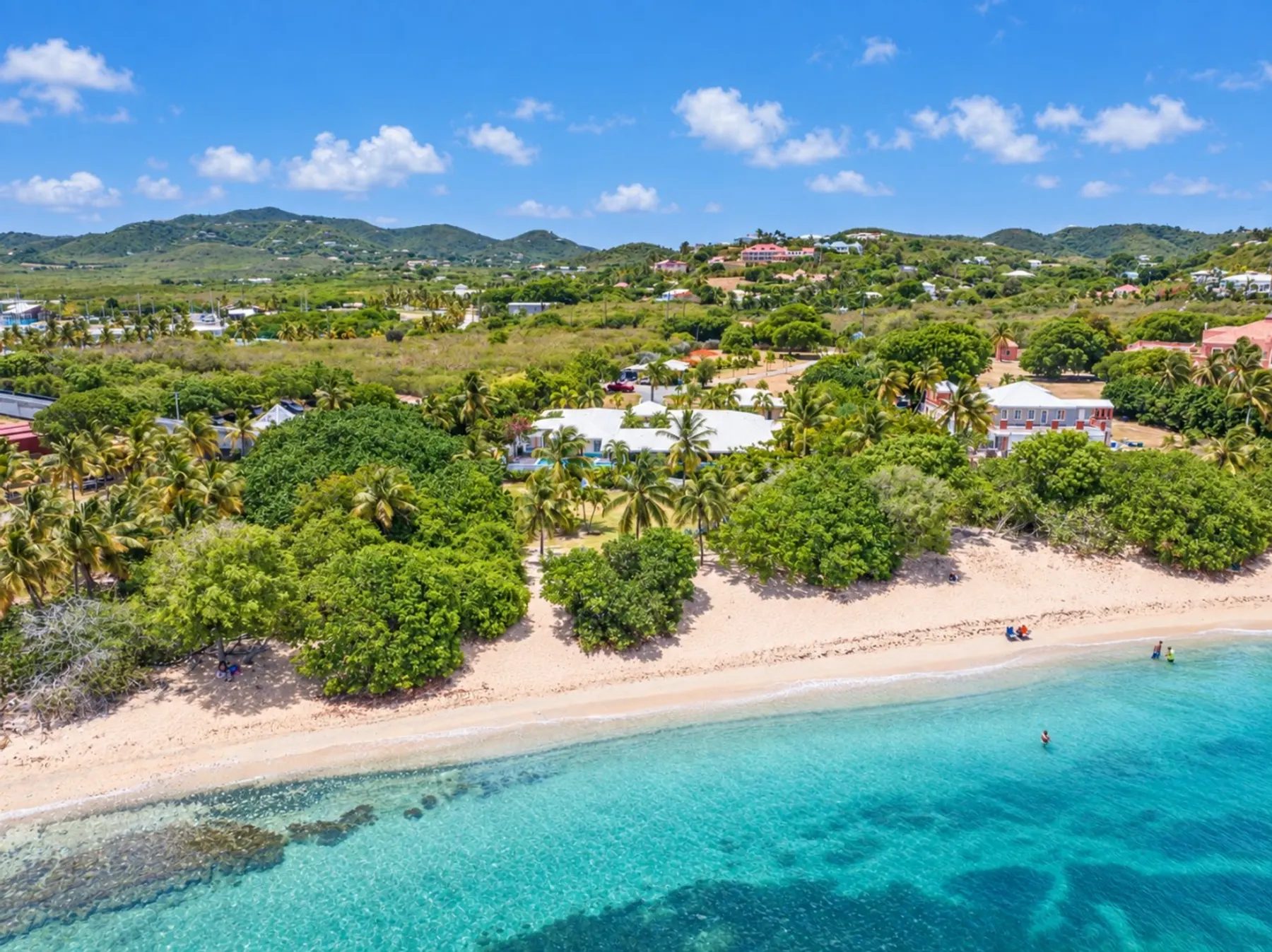
Wailea is open to a visitor who is not sleeping there. A paved path of about a mile and a half, the Wailea Coastal Walk, runs along the resort shore past five beaches, and Hawai’i Magazine’s account of it counts five public beach access areas, each with parking. The hosts make the same point in their comparison, where they write that every Wailea beach is public. Wailea Beach is the crescent at the center of the aerial photograph above.
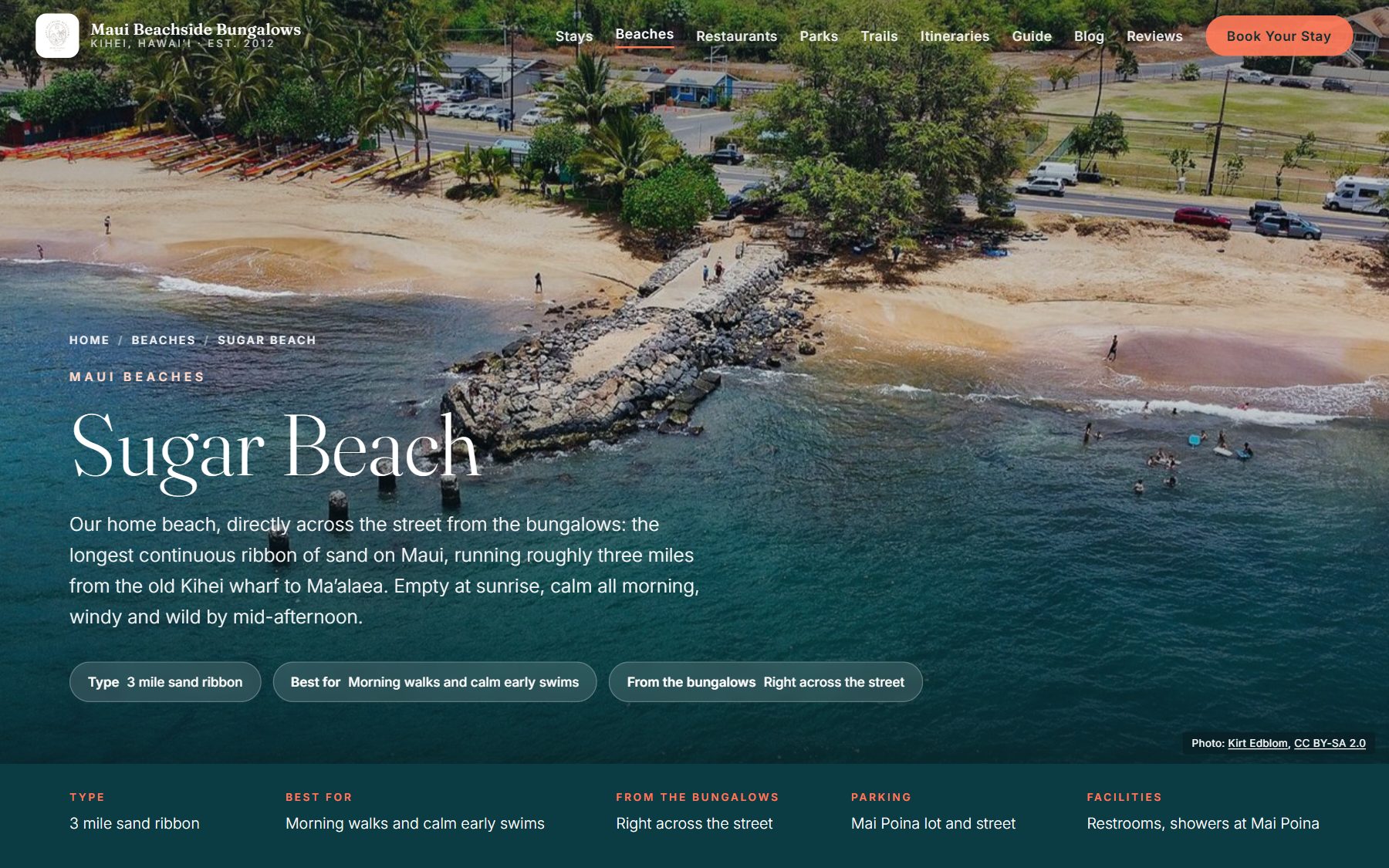
The reverse trip, from a Wailea hotel to a Kihei food truck or county beach park, is as short. What changes with the bed is the first and last hour of each day. In North Kihei that hour is a walk across the road to a long beach on Ma’alaea Bay, which the hosts call Sugar Beach and describe as their home beach. In Wailea it is a walk from a hotel room down to a crescent of sand.
The hosts’ site runs to 92 pages, and four of them describe the condos. The rest include 12 beach guides, 12 restaurant pages, five itineraries and ten blog posts, among them the comparison quoted here. It is a guidebook written by people who gain when a reader chooses their side of the coast, and they say so.
What is on the bill in 2026
Whichever half of the coast a traveller picks, the tax line grew this year. Hawai’i’s Department of Taxation announced in June 2025 that Act 96 would lift the state’s transient accommodations tax, or TAT, from 10.25 percent to 11 percent on January 1, 2026. The added three-quarters of a point is the so-called Green Fee, which Spectrum News Hawai’i reported in December 2025 was expected to bring in $100 million a year for climate and stewardship work.
Maui County adds its own transient accommodations tax of 3 percent, in effect since November 1, 2021. The county’s tax page says it comes in addition to the state tax and the general excise tax, and that a host may show it to the guest as its own line. The general excise tax on Maui is 4.5 percent, which includes a half-point county surcharge that runs through 2030, and the state lets a business pass it on at up to 4.712 percent. Eleven plus 3 plus 4.712 comes to 18.712 percent of the rent if a guest is charged all three. These taxes fall on hotel rooms and rentals alike, so they do not tilt the choice between the two; they raise the price of both.
The platform is the other line on the bill. All four condos are reserved through Airbnb. Each unit page on the hosts’ site has a button that opens that unit’s Airbnb listing, and the calendar, the price and the checkout are there. Airbnb’s help pages say the company is shifting home hosts onto one service fee, under which most hosts pay 15.5 percent. Under the older split arrangement most hosts pay 3 percent and guests pay between 14.1 and 16.5 percent of the booking subtotal as a service fee. Either way, the figure worth comparing is the total at checkout, with fees and taxes in it.
Checking that a rental is lawful, and what 2029 and 2031 mean
The larger change on Maui is a zoning law. On December 15, 2025, the Maui County Council passed Bill 9 by five votes to three, and Mayor Richard Bissen, who had introduced it in May 2024, signed it the same day. Now Ordinance 5909, it ends transient vacation renting, in stages, in the county’s two apartment zoning districts, A-1 and A-2. The deadline is January 1, 2029, in West Maui and January 1, 2031, everywhere else in the county, which includes South Maui. The law does not touch hotels, timeshares, bed-and-breakfasts or vacation rentals in zones where they are permitted. On signing it the mayor said it would make more housing available to residents, Maui Now reported.
The properties concerned appear on a county list of apartment-district buildings that may be let for short stays. Its edition of June 27, 2024, names 104 properties with 7,167 units. The county’s finance department counted 6,208 of those units operating as short-term rentals in May 2024, and the mayor’s office said when the bill was signed that upward of 2,700 South Maui vacation rentals are unaffected.
Three things follow for a traveller. The first is that a rental on the list is lawful today and stays lawful until its deadline, so a stay anywhere in the county in 2026, 2027 or 2028 falls before either date. The second is that the dates may not be final. Owners filed two lawsuits against the county in December 2025, one of them seeking class-action status. The council has since created two hotel zoning districts, in effect from June 2026, into which apartment-district complexes can be moved one by one, Maui Now reported. On September 22, 2026, the Maui Planning Commission recommended that change for five properties with 397 units, the Honolulu Star-Advertiser reported, and the council has the last word on the rest.
The third is that the debate has two sides, and both are documented. UHERO estimated in March 2025 that ending these rentals could add as many as 6,127 units to Maui’s long-term housing stock, an increase of 13 percent. The same analysis projected that visitor accommodations could fall by 25 percent and visitor spending by $900 million a year. Visitors who value the condo and residents who need a home are on opposite sides of that ledger.
Checking any rental takes a few minutes. Operators of transient accommodations must be registered with the state for the tax, and the county says it keeps no register of its own: its tax account is built on the state number, known as a TA number. The hosts in this article print their TA numbers at the foot of every page of their site, which is the place to look on any host’s site. For the district a building stands in, the county’s list is public, and it carries its own warning: the list may contain errors, and the Department of Planning is the authority on whether any one property may be let for short stays. Someone reserving a condo for 2029 or later in West Maui, or for 2031 or later elsewhere, has good reason to ask the host which district the building is in and what the host expects. For a stay before then, the registration number is the practical check.
The west side, three years on
The hosts put the Lahaina side of the island about 35 minutes from their condos, and no account of where to stay on Maui in 2026 is complete without it. The wildfires of August 8, 2023, killed 102 people, destroyed more than 2,200 structures and left nearly 13,000 people displaced, Honolulu Civil Beat reported in its third-anniversary coverage. The Honolulu Star-Advertiser reported that two people remain unaccounted for.
Beach @ Kealia Nature Preserve, Maui, Hawaii - panoramio · Aaron Zhu · CC BY-SA 3.0 · cropped
Recovery is measured in homes. By early August 2026, according to Maui County data cited by the Star-Advertiser, Lahaina had 577 residential units rebuilt or newly built, with 315 more homes under construction. As of late July, 702 households still relied on temporary housing help from the Federal Emergency Management Agency. In the town’s commercial district, Civil Beat reported, lots have been cleared but businesses have not yet been rebuilt.
Megan and Bryan publish a guide to visiting Lahaina, last updated in July 2026, and it is written from the position of neighbors. They write: “We live over here in Kihei, on the south shore, and we have hosted through the hardest chapter this island has known.” Their guidance is that “Lahaina itself is still a community in recovery, not a stop on a sightseeing loop”, and their summary is short: “come, but come with care.” They also argue against staying away, on the ground that much of West Maui earns its living from visitors and that the collapse of tourism after the fire cost jobs among those who had already lost the most.
The guide’s status list, as of that update, is practical. West Maui’s resorts did not burn and are open. Boat tours returned to Lahaina Harbor in December 2025, which Civil Beat also reports. The Old Lahaina Luau was rebuilt and reopened in 2024, and Front Street was due to reopen to traffic on August 1, 2026. Conditions in the town change from month to month, so the list is a starting point and not a substitute for checking shortly before a visit.
The state’s figures describe a west side that is open and still recovering. DBEDT’s hotel report for August 2026 notes that the county’s hotels were still feeling the effect of the 2023 wildfires, though their high rates kept Maui first among the counties in revenue per available room. In the state’s rental report, vacation rentals in the wider west side region averaged $858.33 on the total-rate basis, up 29.9 percent on a year earlier. A base in South Maui puts the west side within a day’s visit, made on the terms its residents ask for.
A soft August and three storms
The season matters to the choice as well. DBEDT’s release of September 30, 2026, counted 201,789 visitors to Maui in August, down 5.5 percent from 213,639 in August 2025. The average daily census, a count of the visitors present on a given day, fell 20.2 percent to 40,885. The average stay shortened to 6.28 days from 7.44. The year as a whole points the other way: from January through August, 1,819,840 people visited Maui, up 6.0 percent, and their spending rose 8.1 percent to $4.30 billion.
Weather explains some of August. The department records that Hurricane Lala tracked south of the island chain from August 14 to 16, bringing floods, landslides, damage and power outages statewide. Tropical Storm Moke followed from August 22 to 24 with heavy rain and wind for East Maui and parts of Hawai’i island, and Hurricane Lowell reached Kaua’i, Ni’ihau and some of O’ahu on September 7 and 8. Alaska and Hawaiian Airlines reported more than 120 canceled flights during Lala, and Southwest more than 80. The department’s director said the two August storms had worsened a summer season in which arrivals were already weak.
Gentle waves in the sunset (8599856993) · Angelo DeSantis · CC BY 2.0 · cropped
For a traveller the lesson is modest. Late summer in 2026 brought fewer visitors and three named storms in under four weeks. A visitor on Maui in August spent an average of $328.90 a day, 13.3 percent more than a year earlier, so a quieter island was not a cheaper one. Anyone reserving for August or September should read the cancellation terms of the hotel or the listing before paying.
What it means for where you stay
The state’s figures put a scale on the choice. In August about $295 a day lay between the average Wailea hotel room and the average rental across both towns, and both carried the same 18.712 percent in taxes where all three are charged.
A Wailea hotel suits a short stay, a traveller who wants staff, and anyone for whom the beach must be in front of the room. A Kihei condo suits a week or longer, a family or two couples who will use a kitchen and a washer, and a traveller who accepts a rental car, a road to cross and an older low-rise building.
On dates, a stay before 2029 falls ahead of both of Maui’s phase-out deadlines wherever it is, and the practical check for any rental is the host’s state TA number. On the west side, the hosts’ advice holds for guests of hotels and condos alike: go, and go with care. The hosts’ own pages, including the unit pages, the cost post and the Kihei and Wailea comparison quoted here, are at mauibeachvacationrentals.com.
Before you choose between Kihei and Wailea
- Compare totals. The state’s rental average includes cleaning and service fees; a hotel’s average daily rate is a room rate.
- Add tax: 11 percent state, 3 percent county and up to 4.712 percent general excise tax in 2026.
- Reserve the rental car early, as the hosts advise. North Kihei assumes one.
- Count bathrooms and stairs as well as beds. Each of these four condos has one bathroom.
- Confirm air conditioning for the specific unit before choosing it.
- Ask any rental host for a Hawai’i TA number. For a condo stay in 2029 or later, ask which zoning district the building is in.
- Visit Lahaina on the terms its residents ask for, and check what is open shortly before going.
The ocean, as the hosts say, does not know the difference. The road, the kitchen, the staff and the bill do differ, and those are the things to decide on.
Sources
- Maui Beachside Bungalows, Home page, the four unit pages and guest questions (read 11 October 2026)
- Maui Beachside Bungalows, Kihei and Wailea compared (blog post) (2 July 2026)
- Maui Beachside Bungalows, What a Week on Maui Costs (blog post) (24 June 2026)
- Maui Beachside Bungalows, Visiting Lahaina (guide) (updated 18 July 2026)
- Hawai’i Department of Business, Economic Development and Tourism, August 2026 Hawai’i Hotel Performance Report (August 2026 data)
- Hawai’i Department of Business, Economic Development and Tourism, August 2026 Hawai’i Vacation Rental Performance Report (August 2026 data)
- Hawai’i Department of Business, Economic Development and Tourism, August 2026 Visitor Spending and Arrivals Declined (news release) (30 September 2026)
- Hawai’i Department of Taxation, Announcement No. 2025-03, Act 96 and the transient accommodations tax (9 June 2025)
- Hawai’i Department of Taxation, Announcement No. 2023-05, Maui County Surcharge on General Excise Tax and Rate of Tax Visibly Passed on to Customers (25 September 2023)
- Spectrum News Hawai’i, Green Fee to take effect on Jan. 1 (24 December 2025)
- County of Maui, Transient Accommodations Tax (MCTAT) page and questions (read 11 October 2026)
- County of Maui, Real Property Tax Rates and class definitions (read 11 October 2026)
- County of Maui, Apartment District Properties Allowed to be Used for Short-Term Occupancy (27 June 2024)
- Maui Now, Mayor Bissen signs Bill 9 into law; says it will restore housing availability for residents (15 December 2025)
- Maui Now, As expected, Bill 9 challenged in court; lawsuits seek to block short-term rental phaseout (2 January 2026)
- Maui Now, Maui Council refers 32 shoreline condo complexes’ hotel-rezoning to Maui Planning Commission (30 September 2026)
- Honolulu Star-Advertiser, Maui Planning Commission rebuffs exemptions to vacation rental ban (23 September 2026)
- Honolulu Star-Advertiser, Three years later, many Lahaina fire survivors are still waiting for a home (2 August 2026)
- Honolulu Civil Beat, Maui Wildfires 3 Years Later: The Recovery In Photos (7 August 2026)
- University of Hawai’i News, Maui transient vacation rental phaseout: more housing, fewer jobs (31 March 2025)
- UHERO, University of Hawai’i, Maui Short-Term Rentals, the Minatoya List, and Housing Supply (25 June 2024)
- Airbnb Help Center, Airbnb service fees (read 11 October 2026)
- Hawai’i Magazine, Taking a stroll on Maui’s Wailea Coastal Walk (28 December 2009)