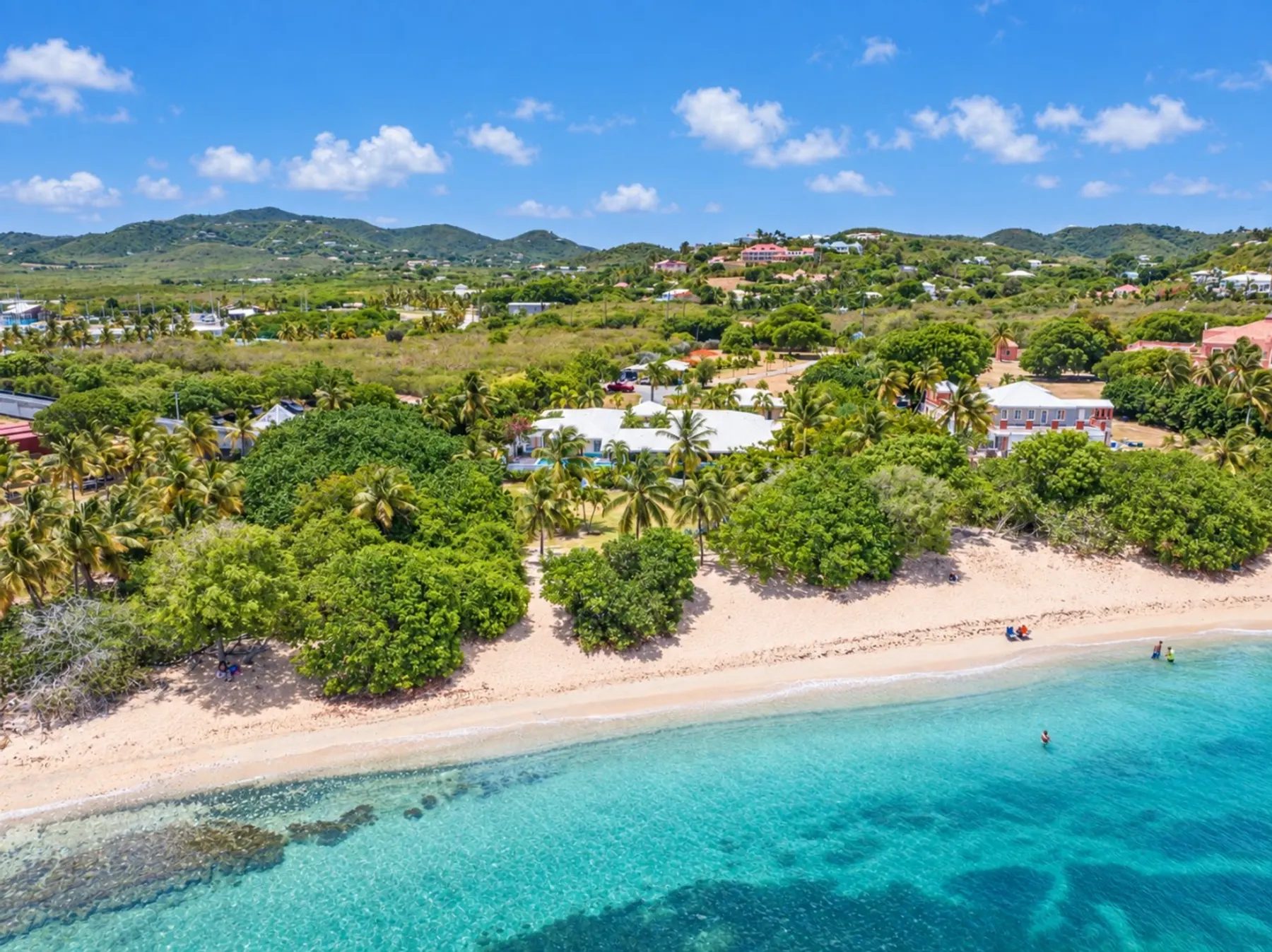
The three islands in figures
- Air arrivals, 2025
- St. Thomas and St. John 723,563; St. Croix 185,349 (Bureau of Economic Research)
- Cruise passengers, 2025
- St. Thomas and St. John 1,553,170; St. Croix 241,612
- Residents, 2020 Census
- St. Thomas 42,261; St. Croix 41,004; St. John 3,881
- St. Croix to St. Thomas
- One ferry, 2 hours 10 minutes, six days a week
- St. Thomas to St. John
- Ferry from Red Hook to Cruz Bay, about 20 minutes, hourly
- The St. Croix guide
- SP Vacations, Christiansted: 13 homes, all on St. Croix, on October 11, 2026
On Saturday, October 31, a United Airlines 737 is scheduled to leave Newark at 9:03 in the morning and land on St. Croix at 1:20 in the afternoon. The route was announced in June by the airline and the territory’s Department of Tourism, and local reporting at the time traced the last nonstop between Newark and the island to Continental, in October 1994. For thirty-two years a traveler from the New York area who wanted the largest of the U.S. Virgin Islands changed planes on the way.
The flight reopens an old question for anyone planning a week in a rented house: which island. Three of them take visitors, under one flag and one set of entry rules, and they are less alike than the shared name suggests. St. Thomas has the capital, the cruise docks and most of the air traffic. St. John, a short boat ride from it, has no airport and has more than half its land inside a national park. St. Croix lies well to the south of both, two hours and ten minutes away by ferry, with two towns of its own and about one in five of the territory’s air arrivals.
The guide to the quiet one in this article is SP Vacations, the vacation-rental side of Sterling Point Real Estate, which has its office on King Street in Christiansted. Sterling Point is a St. Croix brokerage that already describes itself as serving all three islands. SP Vacations belongs to a firm whose rental side has, so far, stayed on St. Croix: on October 11, 2026, its website listed 13 homes, every one of them on that island. Why a company can serve buyers across a territory and look after guests’ houses on one part of it says a good deal about how the three islands differ for a guest.
Three islands under one flag
What the islands share is the part that makes any of them easy. Denmark sold them to the United States for $25 million in gold, and the transfer took effect on March 31, 1917. They have been U.S. territory since, which settles the paperwork. U.S. Customs and Border Protection states the rule in one sentence: “U.S. citizens traveling directly from a U.S. territory are not considered to have left the country and do not need to present a passport.” The currency is the dollar and the wall sockets carry the mainland’s 120 volts. The clocks stay on Atlantic Standard Time all year, which matches the East Coast in summer and runs an hour ahead of it in winter.
Two habits surprise first-time visitors on all three. Traffic keeps to the left, in cars built for the right: the National Park Service notes that the driver sits on the left, as on the mainland, while vehicles hold to the left side of the road. And there is a customs stop on the way home. Before boarding a flight to the mainland, passengers answer to a Customs and Border Protection officer at the island airport, and a returning resident may bring back $1,600 of goods free of duty, twice the usual allowance. Ride-hailing apps were not permitted in the territory as of local reporting in November 2025, so a rented car or a taxi is the way around on any of the three.
After that the likeness thins. St. Croix is the largest, about 84 square miles by the U.S. Geological Survey’s measure and 21 miles from end to end. The Department of Tourism gives St. Thomas 32 square miles. St. John is the smallest, an island the Park Service counts at 12,500 acres. The 2020 Census found 42,261 residents on St. Thomas, 41,004 on St. Croix and 3,881 on St. John. What separates the two large islands, nearly equal in residents, is how many visitors arrive on top of them.
How many people go to each island
The territory’s Bureau of Economic Research counts visitors in two groups, St. Thomas with St. John and St. Croix alone, because nearly everyone bound for St. John passes through St. Thomas. Its air arrivals table dated March 9, 2026, records 723,563 air arrivals for St. Thomas and St. John in 2025 and 185,349 for St. Croix. The bureau publishes all of its tables subject to revision.
The gap is wider by sea. In the bureau’s cruise table for December 2025 there are 1,553,170 passengers for St. Thomas and St. John across the year and 241,612 for St. Croix. The St. Croix figure was up 42.8 percent on the 169,228 of 2024, so the smaller number is also the one moving faster, and it remains a fraction of the other. For someone renting a house, the cruise count is a rough measure of how much company to expect in the port town at midday.
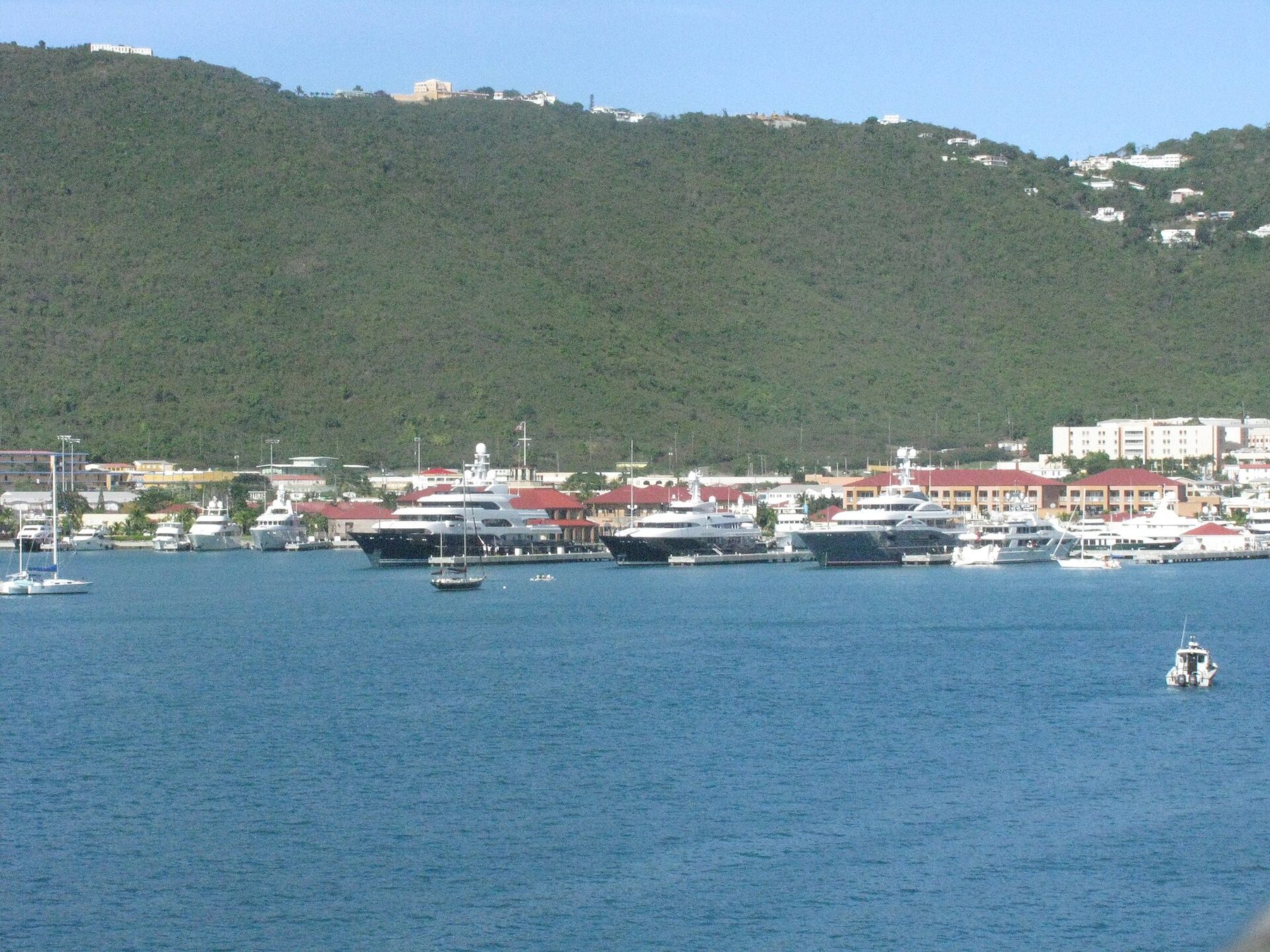
St. Thomas Harbour 1 · Captain-tucker · CC BY-SA 3.0 · cropped
Hotels tell the same story from the inside. In Table 1 of the bureau’s monthly hotel occupancy report for December 2025, dated March 9, 2026, visitor accommodations on St. Thomas and St. John reported 1,025,854 room nights available and 61.3 percent occupancy. St. Croix reported 369,949 room nights and 51.6 percent; a separate one-page sheet from the bureau prints 50.3 percent for the same year. The same report shows who comes. Of St. Croix’s 145,704 hotel guests, 74.9 percent were from the U.S. mainland, and among the bureau’s U.S. sales regions Miami led with 29.4 percent, ahead of New York at 20.1 percent. Among the 637,440 hotel guests on St. Thomas and St. John, the New York region led with 29.2 percent.
None of these tables counts villas. The bureau tracks hotels, small hotels and condominiums, and no government count of private rental houses by island was found for this article. The nearest substitute is listing data gathered by private vendors, which should be read as estimates. One of them, AirROI, in pages updated in September 2026, put the average daily rate of a rental around Christiansted at $323, on the East End of St. Thomas at $444 and around Cruz Bay on St. John at $746. Its areas do not cover whole islands, and other vendors’ counts differ. The order holds in every estimate found: a rental on St. Thomas or St. John is priced above one on St. Croix.
St. Thomas, the gateway
This magazine did not inspect rental houses on St. Thomas or St. John for this article, so what follows is what official sources say about each island as the setting for one. St. Thomas is where most trips to the territory begin, including those that end on St. John. Cyril E. King Airport lies two miles west of Charlotte Amalie, and the Virgin Islands Port Authority, which runs it, calls it “one of the busiest airports in the eastern Caribbean”. Charlotte Amalie is the capital and, in the Department of Tourism’s description, the territory’s largest city. The Port Authority’s list of what it operates on the island reads like the inventory of a transport hub: the airport, a seaplane terminal, a cruise terminal, a cargo port and several ferry docks.
A villa on St. Thomas involves the shortest transfer of the three, with no ferry and no second flight. The island’s 32 square miles hold about as many residents as St. Croix’s 84, and with St. John it takes most of the territory’s hotel room nights and cruise passengers, so by each of the bureau’s measures it is the busier side of the territory. Magens Bay, on the north side, is a public park run by the Magens Bay Authority, open every day from 7 a.m. to 5:30 p.m., with a bar and grill on the beach. The listing estimates place more rentals on the East End, the side the hourly St. John ferries leave from, than in the vendor’s other three areas of the island combined.
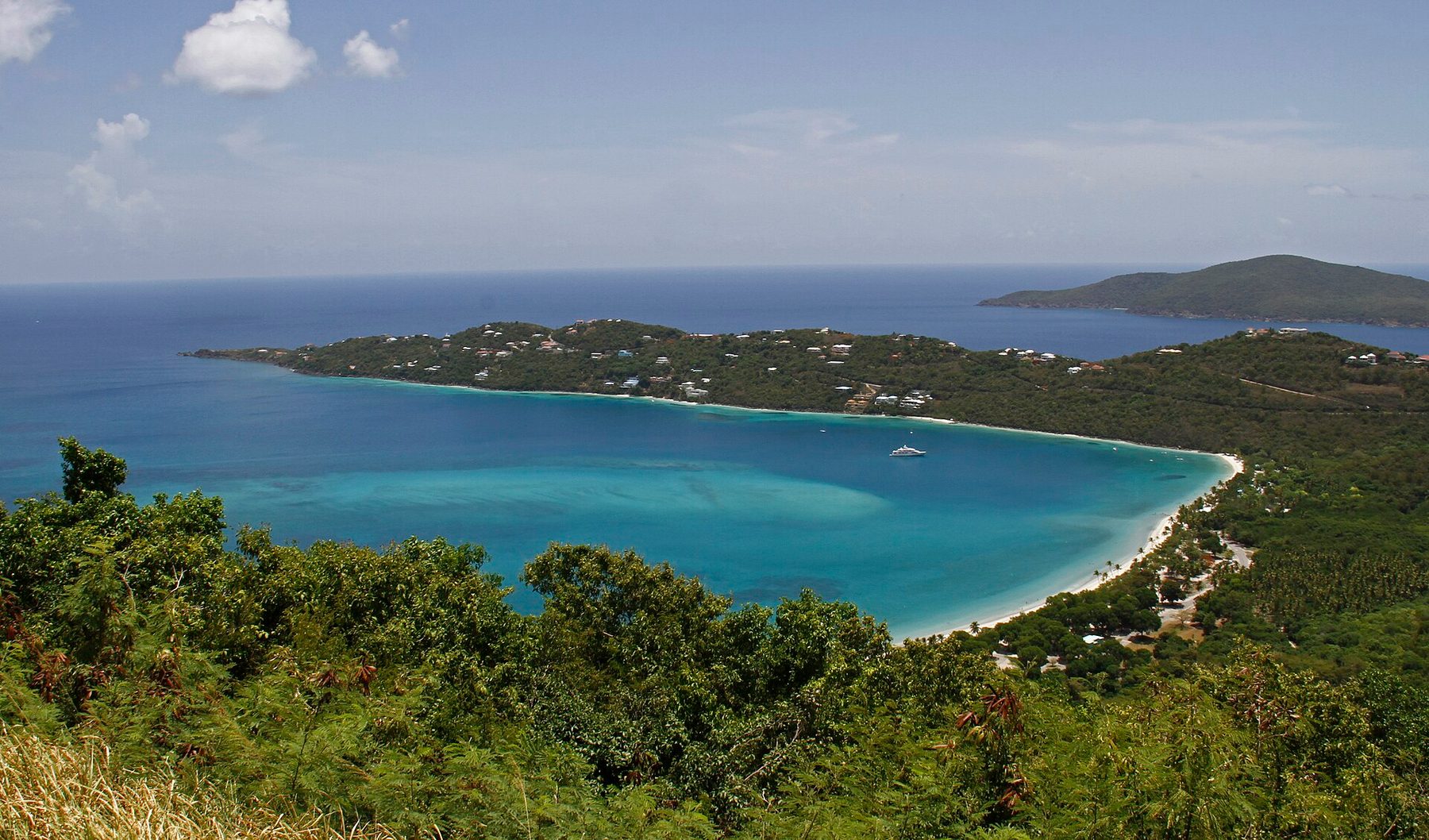
Magens Bay, St. Thomas, USVI · dbking · CC BY 2.0 · cropped
The figures cannot say how one road or one beach feels on a given afternoon. They do say that St. Thomas, with St. John, receives several times as many visitors as St. Croix, on less land. A traveler who wants shops, restaurants and day trips close by will read that as the argument for the island, and one who wants an empty road will read it the other way.
St. John, the park island
St. John is reached by boat. “There are no airports on St. John so you must fly to St. Thomas Cyril E. King Airport (code STT) and travel from there,” the Park Service tells visitors. The Department of Tourism’s directions describe a taxi ride of about 30 minutes from the airport to Red Hook, at the east end of St. Thomas, and then a passenger ferry of about 20 minutes to Cruz Bay, leaving every hour from 5:30 a.m. to 11:30 p.m. at $8.15 one way for an adult, with a charge for each bag. A second ferry runs from Charlotte Amalie three times a day. The department warns that schedules and fares change.
The reason to make the crossing is the park. By the Park Service’s account, Laurance Rockefeller sailed along the coast of St. John in 1952, and over the next four years he and the Jackson Hole Preserve bought about 5,000 of the island’s 12,500 acres and turned the deeds over to the federal government. Congress passed the law establishing Virgin Islands National Park on August 2, 1956, and it opened to the public that December 1. It now holds 7,259 acres of land, which one Park Service page puts at 56.7 percent of the island and another at about 60 percent, and 5,650 acres of offshore water added in 1962.
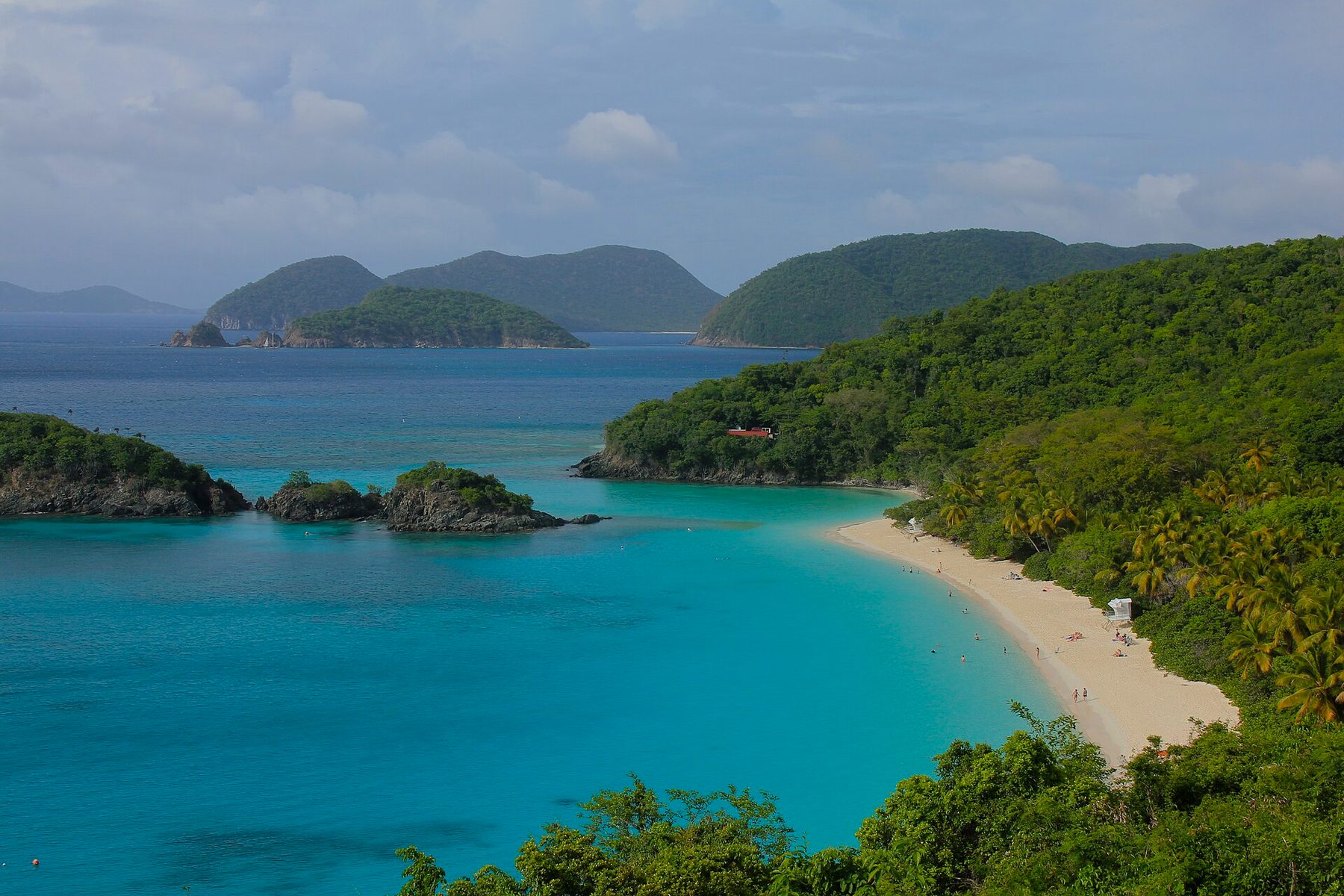
Trunk Bay, St. John USVI · Navin75 · CC BY-SA 2.0 · cropped
The park is free to enter. “An entrance pass is not required to access Virgin Islands National Park,” its fees page says. The exception is Trunk Bay, the beach with an underwater snorkeling trail, which charges $5 a person aged 16 and over between sunrise and sunset. The same page, updated at the end of September 2026, says the beach now takes cards and mobile payments only. The park’s own list of popular snorkeling spots is Trunk Bay, Maho, Waterlemon Cay and Salt Pond.
A rented house on St. John therefore comes with conditions the other two islands do not impose. Every arrival and departure includes a ferry and its timetable. The island has 3,881 residents and one main ferry town. With more than half of the land inside the park, the ground left for houses is limited. That is this writer’s reading, and not an official finding, of why the listing estimates put Cruz Bay’s average daily rate above every other area in the territory, and of why the same vendor counted 72 active listings there against 438 around Christiansted. For a party without a car, the Park Service suggests a taxi or the hourly bus along Centerline Road.
St. Croix, the quiet one
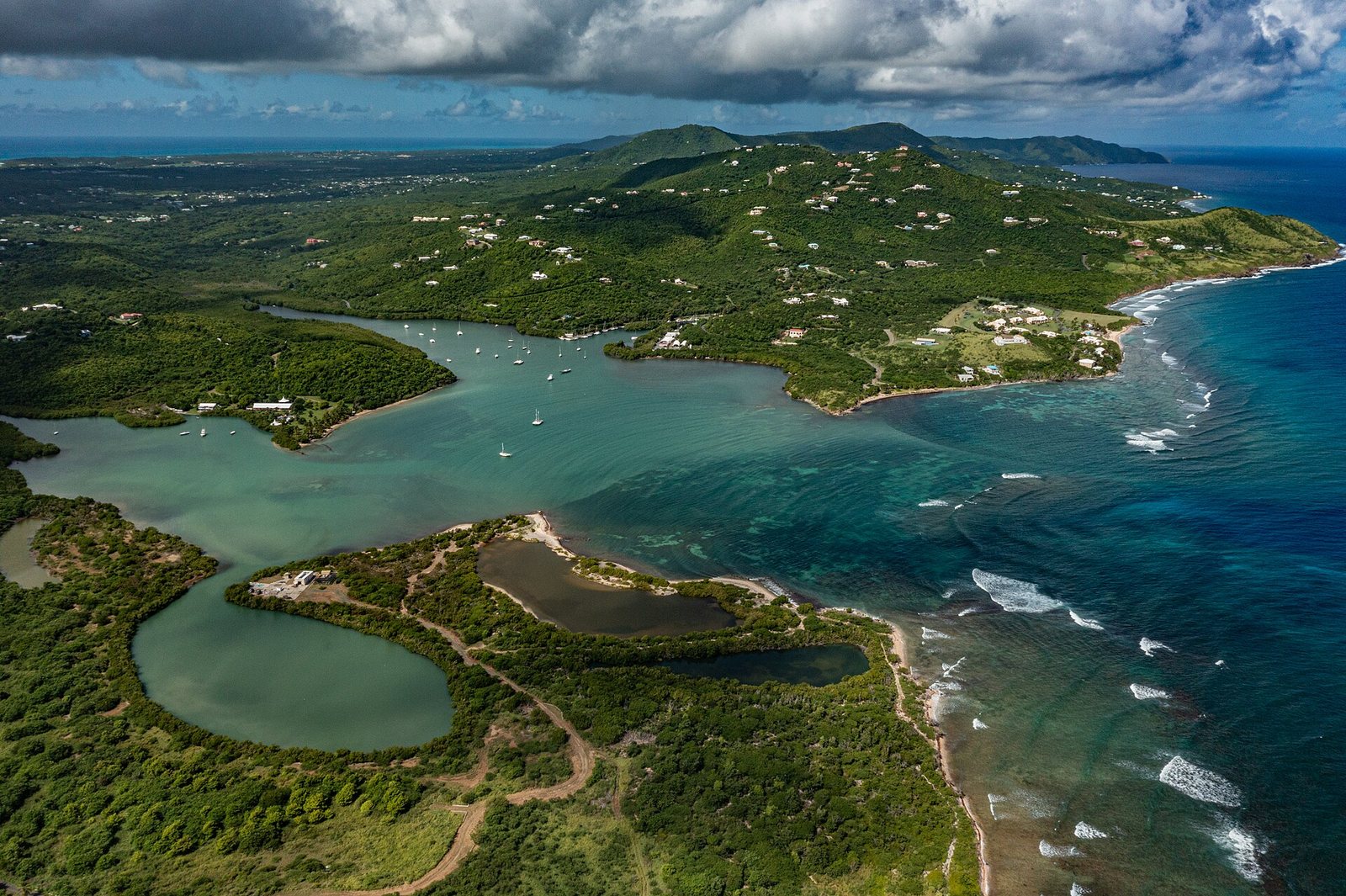
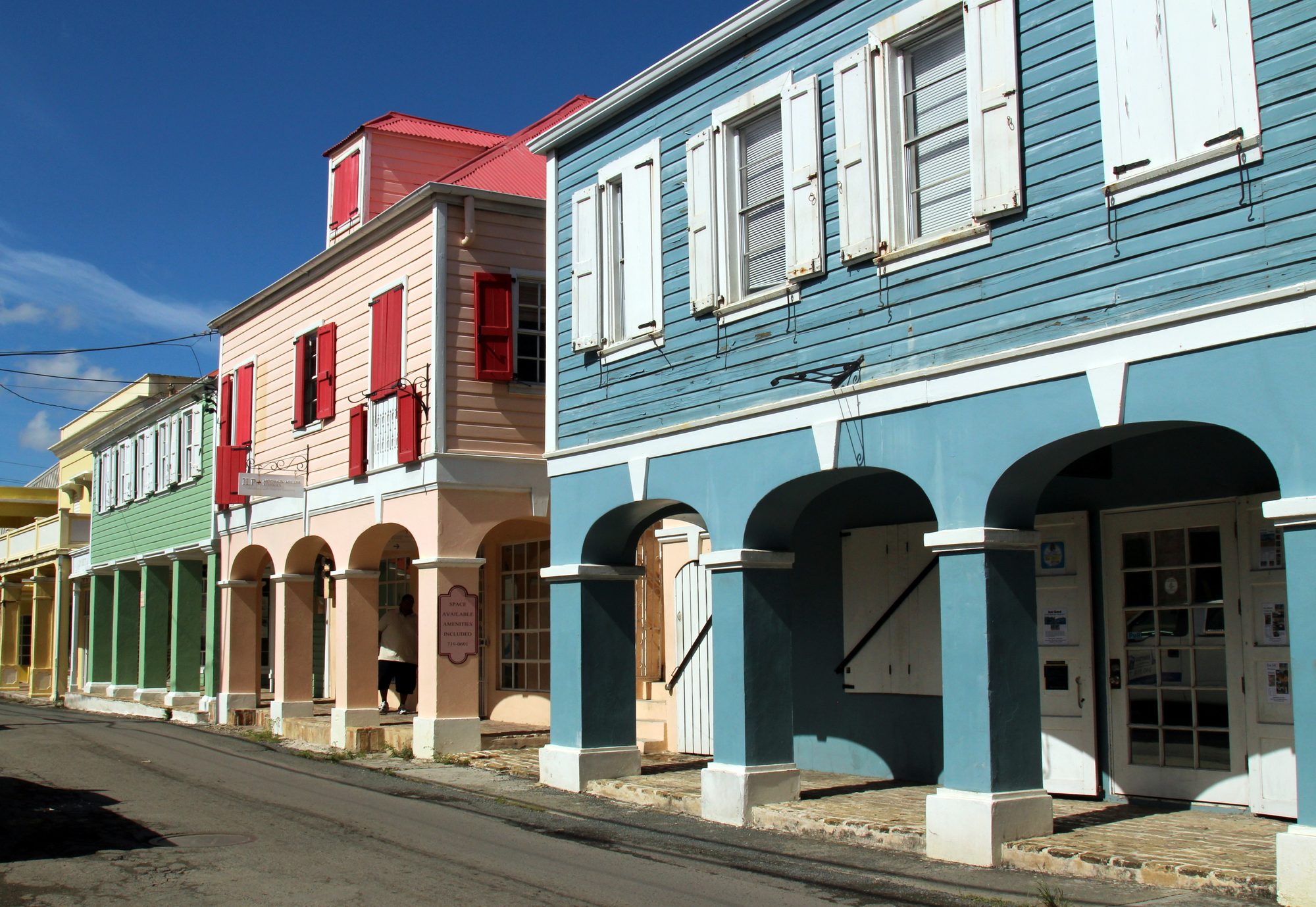
St. Croix depends on neither of the others. It has its own airport, Henry E. Rohlsen, about six miles southwest of Christiansted, with a 10,004-foot runway and ten gates. It has its own nonstop flights from the mainland: American from Miami every day of the year, winter service from Charlotte, Atlanta and Chicago in the airline schedules read on October 8, and from the end of this month United’s Saturday flight from Newark. It has two towns, Christiansted on the north shore and Frederiksted on the west. And it has federal parkland on a smaller scale than St. John’s. The Park Service runs Christiansted National Historic Site in the middle of the older town and Buck Island Reef National Monument offshore, which it describes as a 5.5-mile sail from Christiansted and reachable only by boat.
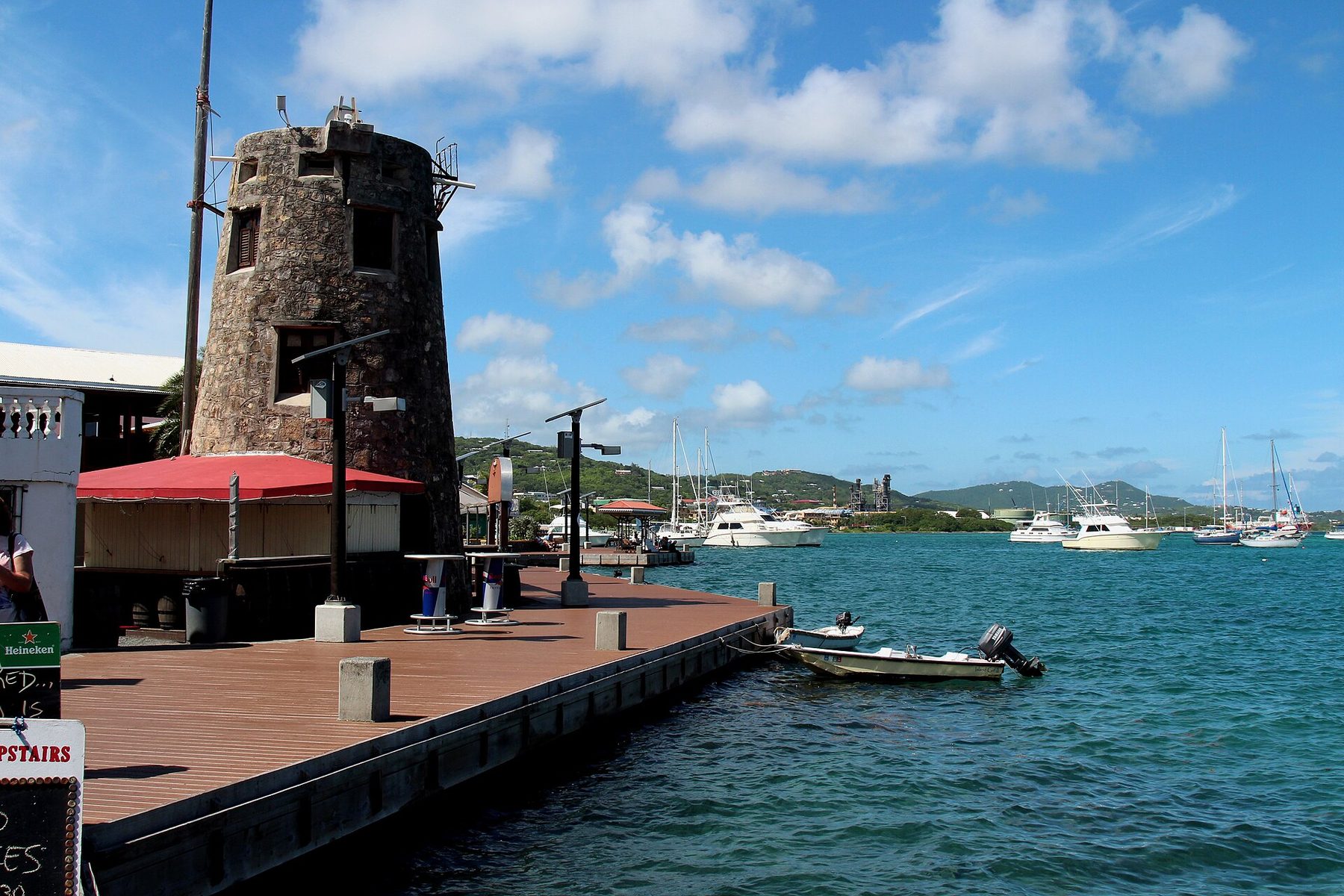
The Boardwalk (22811647953) · Prayitno · CC BY 2.0 · cropped
The earlier figures describe what that independence feels like. The island is the largest of the three and receives about a fifth of the air arrivals and a smaller share still of the cruise passengers. Its hotels were about half full across 2025, and its reported supply of rooms fell 5.7 percent that year while the other islands’ rose 3.1 percent. A Geological Survey report of 1989 puts its highest point, Mount Eagle, at 1,165 feet. St. Croix has no waterfalls and no tall peaks, and its East End is dry country of scrub and cactus.
The quiet has costs, and a guest should know them. Governor Juan F. Luis Hospital has operated out of modular buildings, an interim complex, since March 2023, with emergency care around the clock; the Office of Disaster Recovery signed the contract for a permanent rebuild in March 2026 and estimated about five years of construction after a year of preparation. September is the slow month: 5,868 people arrived by air in September 2025, against 22,464 that January. And the distance from the other two islands means that a week on St. Croix is spent on St. Croix.
What a St. Croix house is like
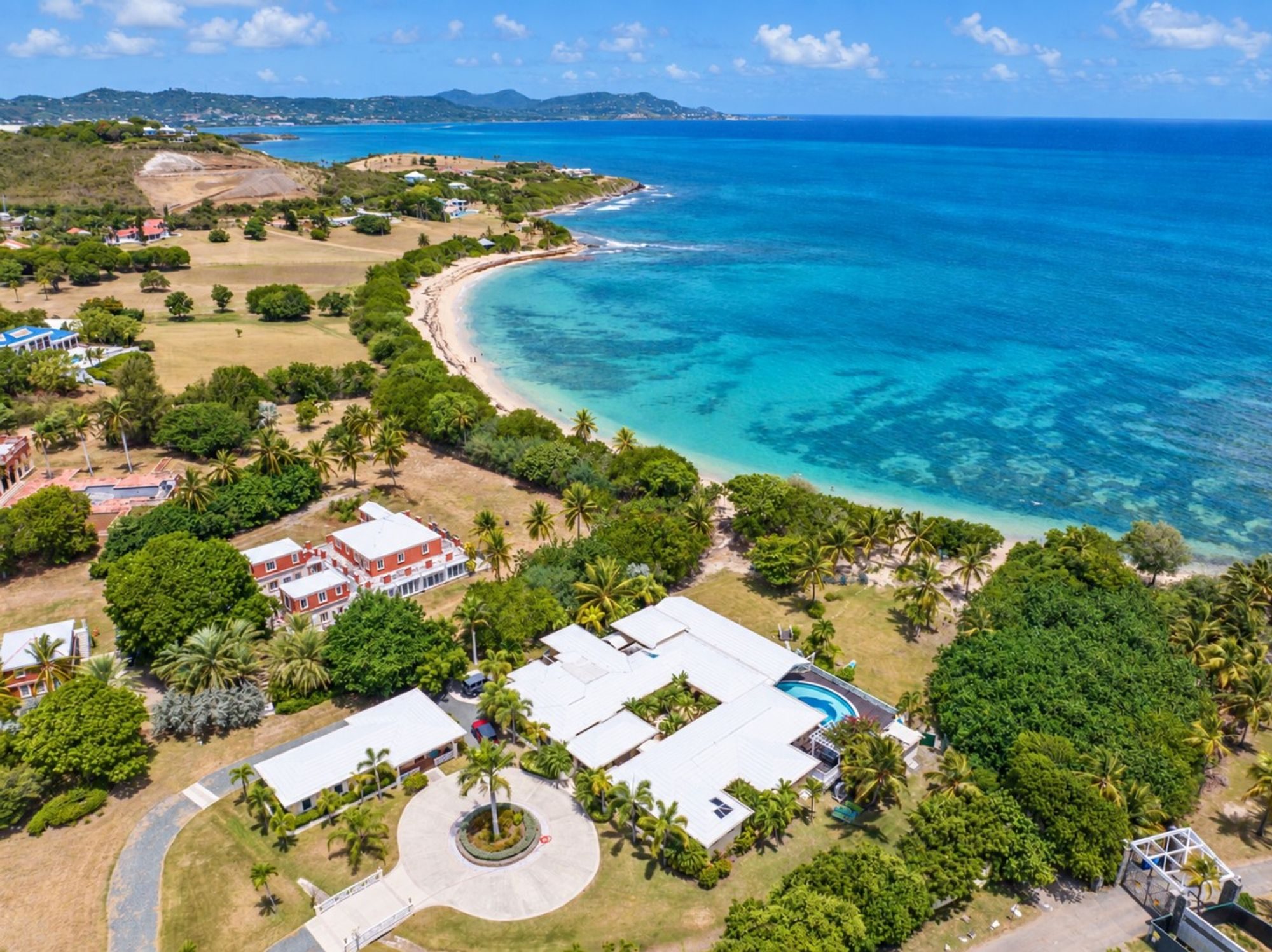
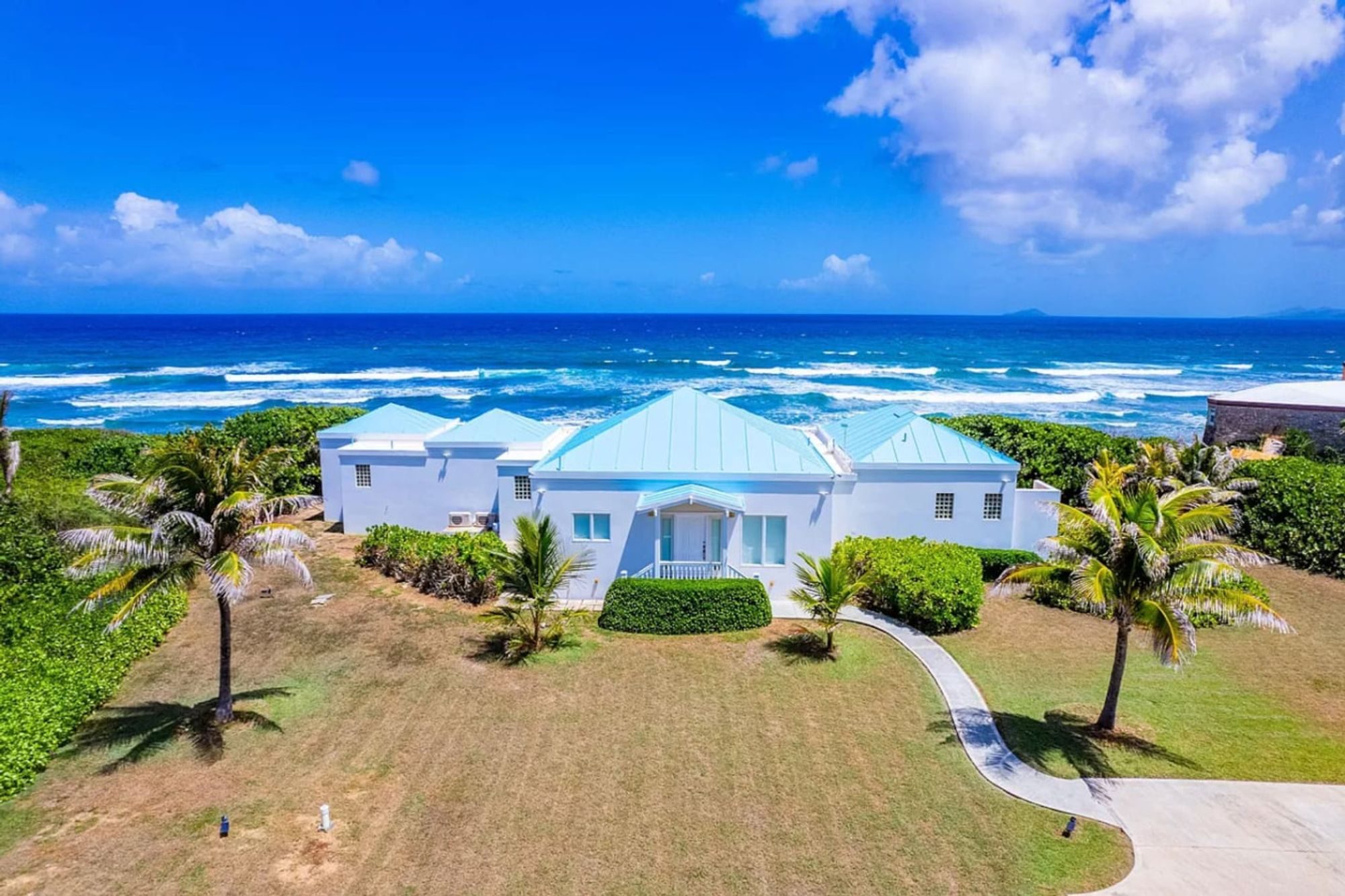
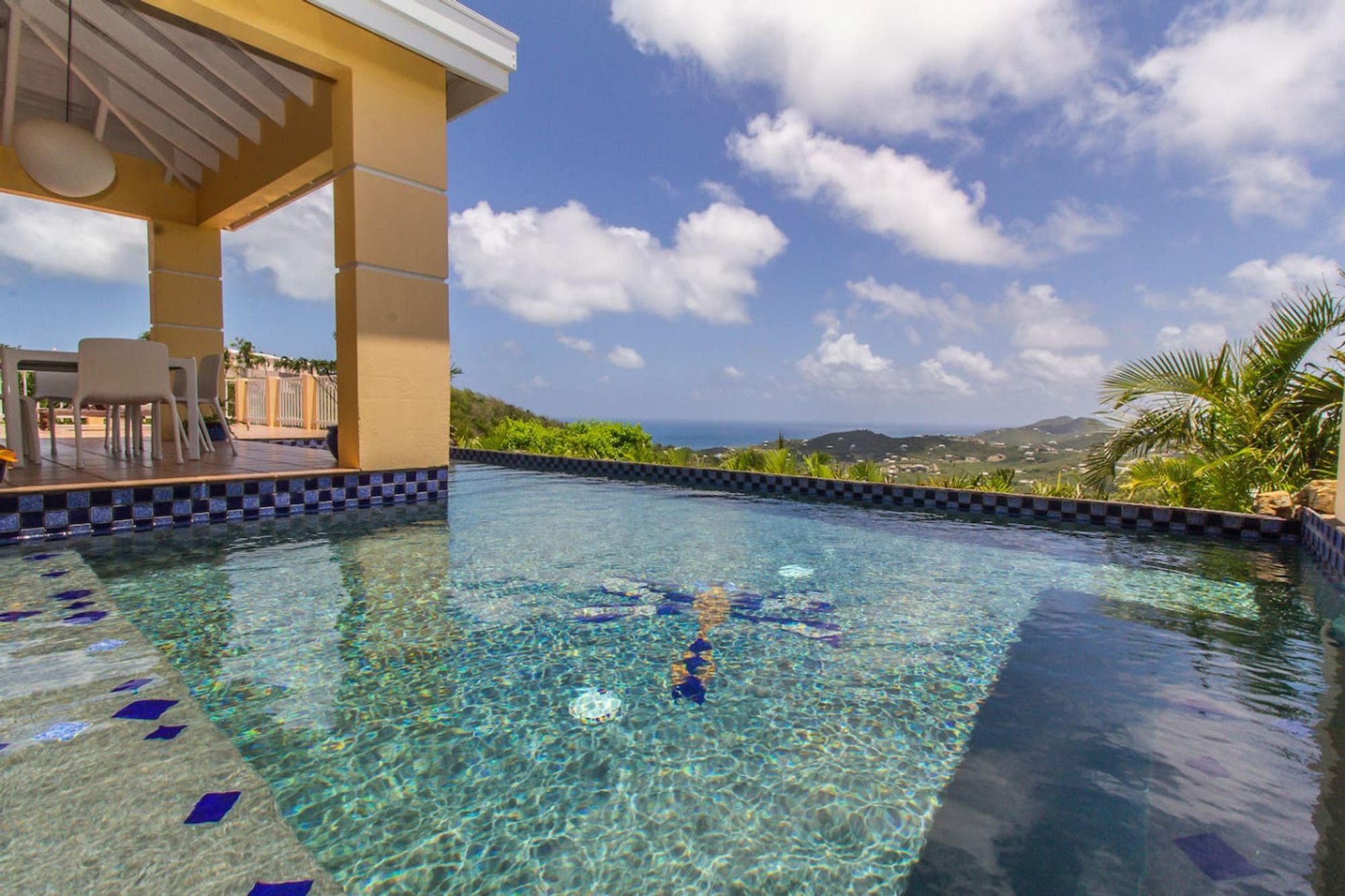
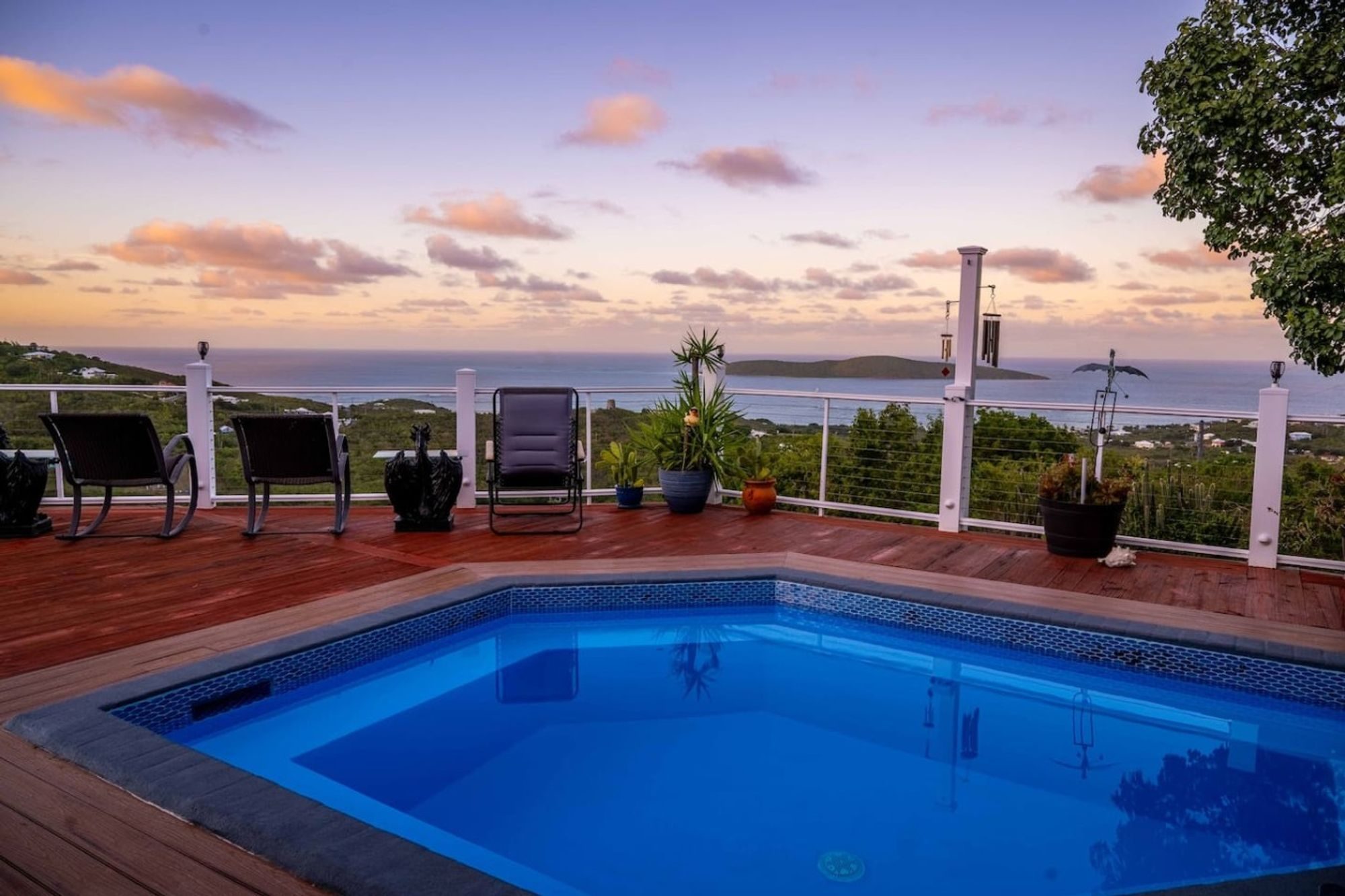
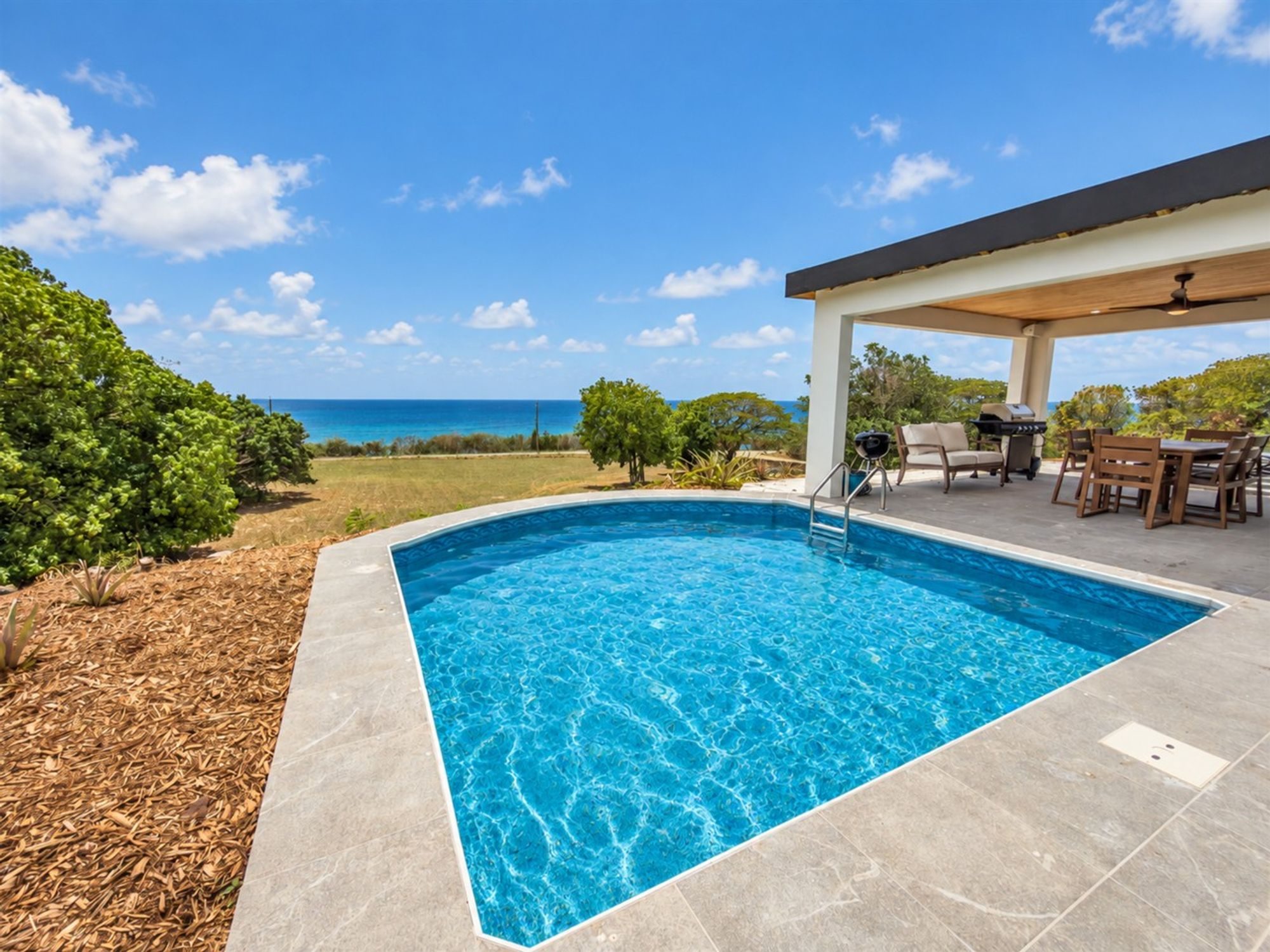
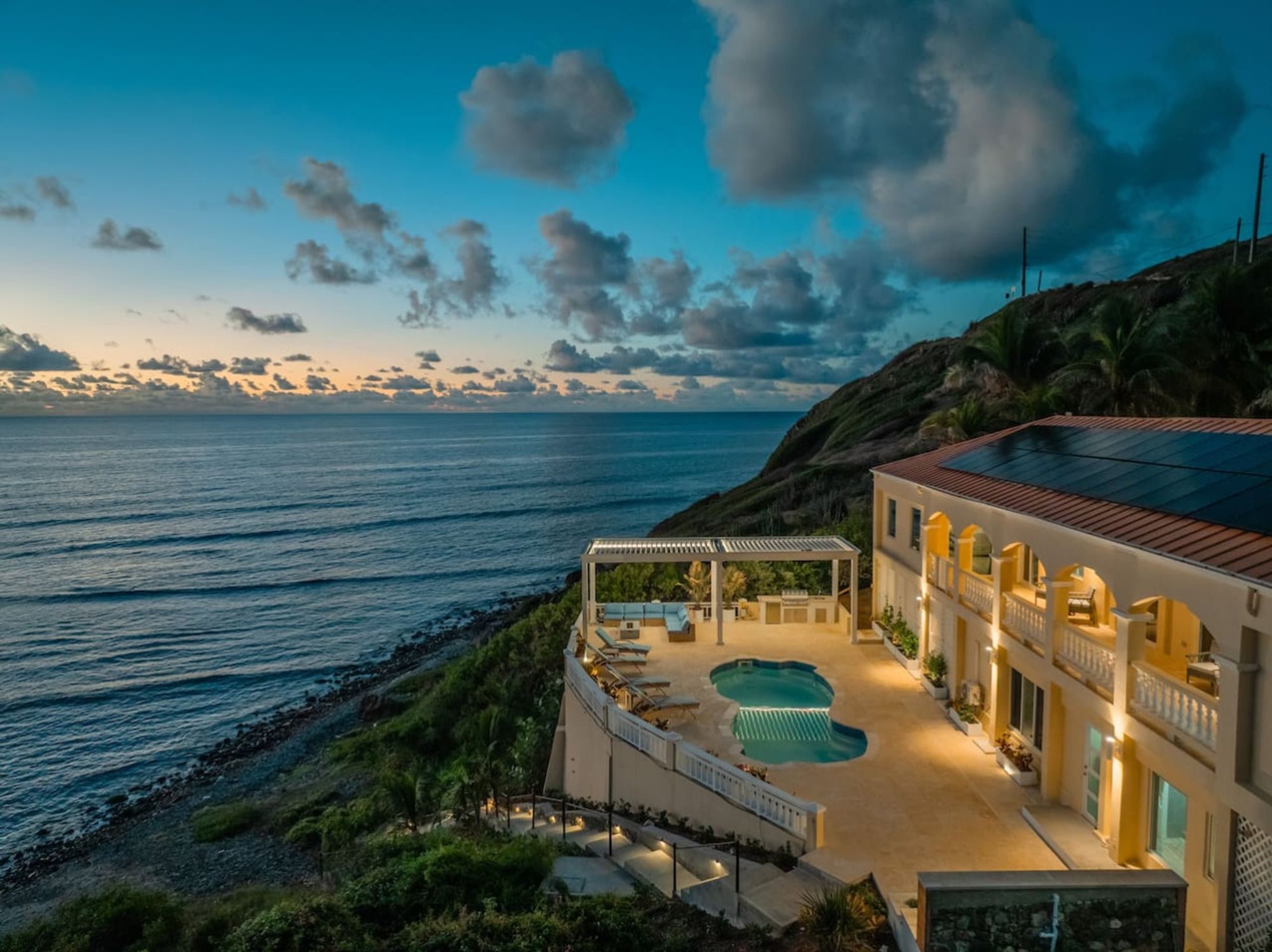
The 13 homes on SP Vacations’ site on October 11 give a fair cross-section of what the island rents. By the company’s own count five are on the beach and eight have a private pool, and they sleep from two guests to twelve. All but one stand around Christiansted or out toward the East End; the exception is on the west coast north of Frederiksted.
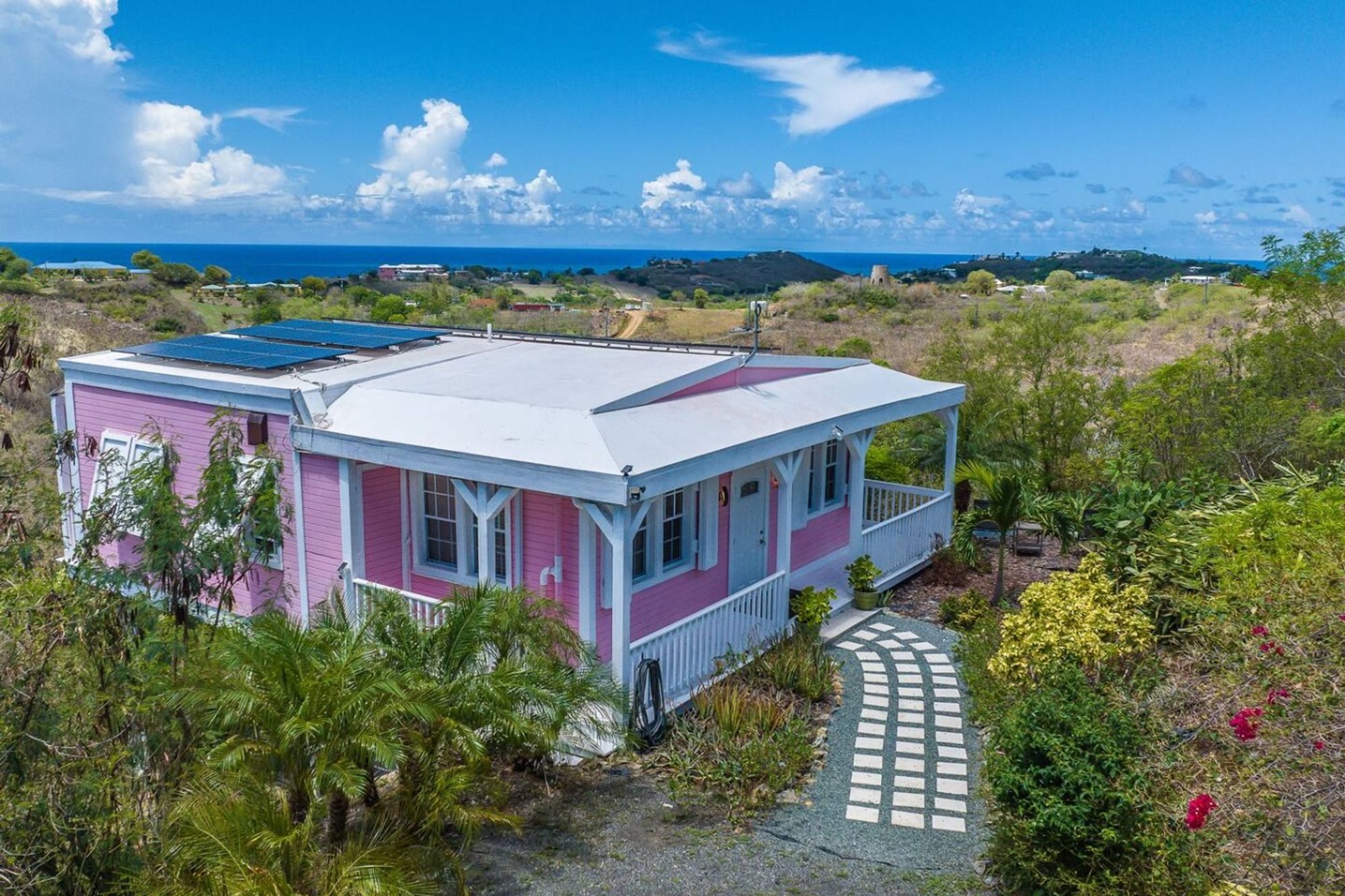
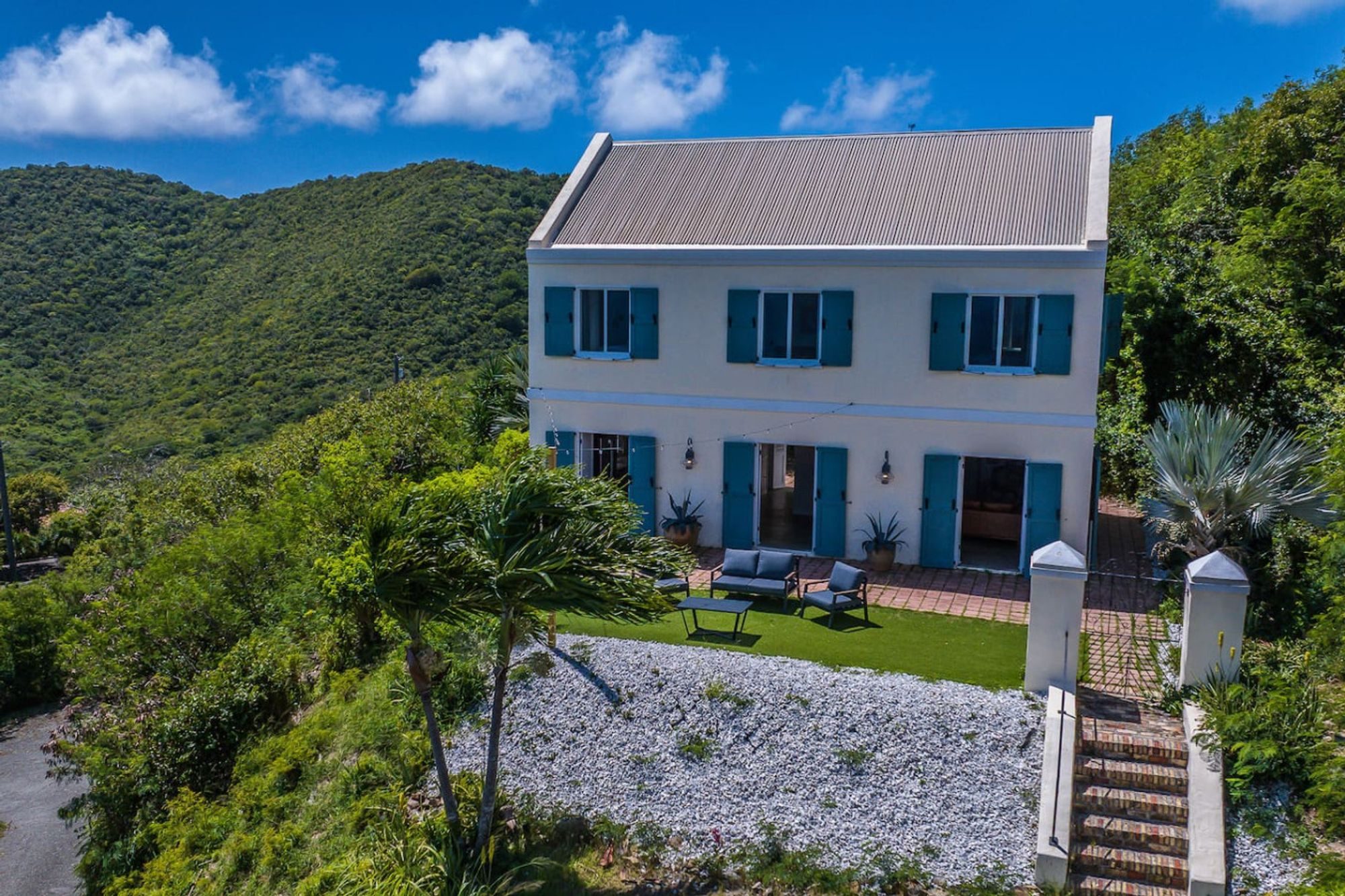
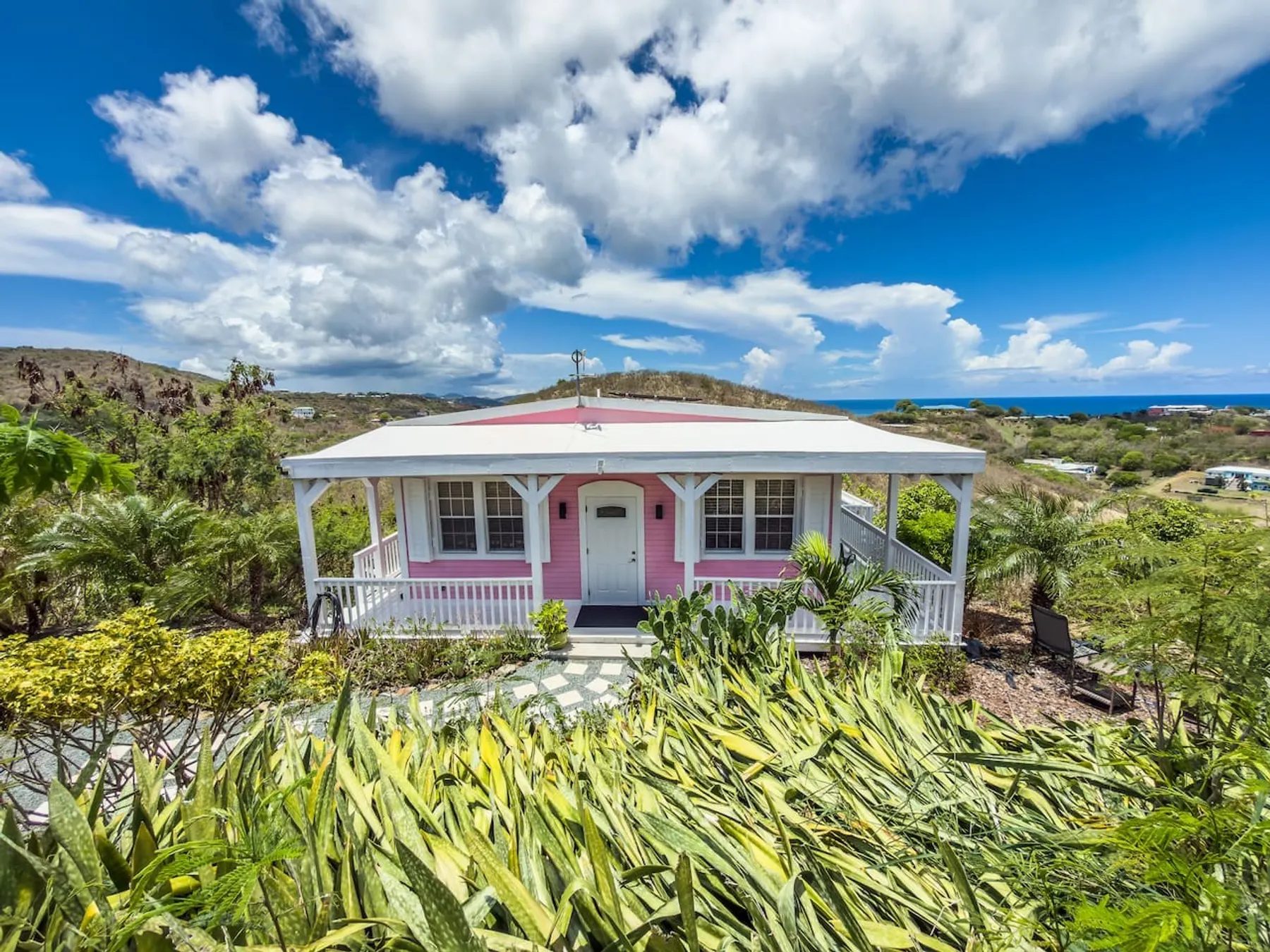
What separates them from a mainland beach rental is, first, infrastructure. Many island houses supply their own water and some of their own power, and the listings say so. The company’s page on buying property explains that a cistern fed by rain off the roof supplies many St. Croix houses, and that plenty of owners back up the utility’s power with solar panels, batteries or a generator. Dragonfly Villa, on a gated hilltop on the East End, lists solar power with battery backup. So does Moko Vista, a two-bedroom hilltop house with blue shutters. Bananaquit Bungalow, a pink cottage with one bedroom in the hills outside Christiansted, goes the whole way. Its listing describes it as fully off-grid, running on solar panels, batteries and rain cisterns, asks guests to conserve power and water, and says the cottage “is not suitable for guests who require continuous low temperature air conditioning or guaranteed uninterrupted electrical service.”
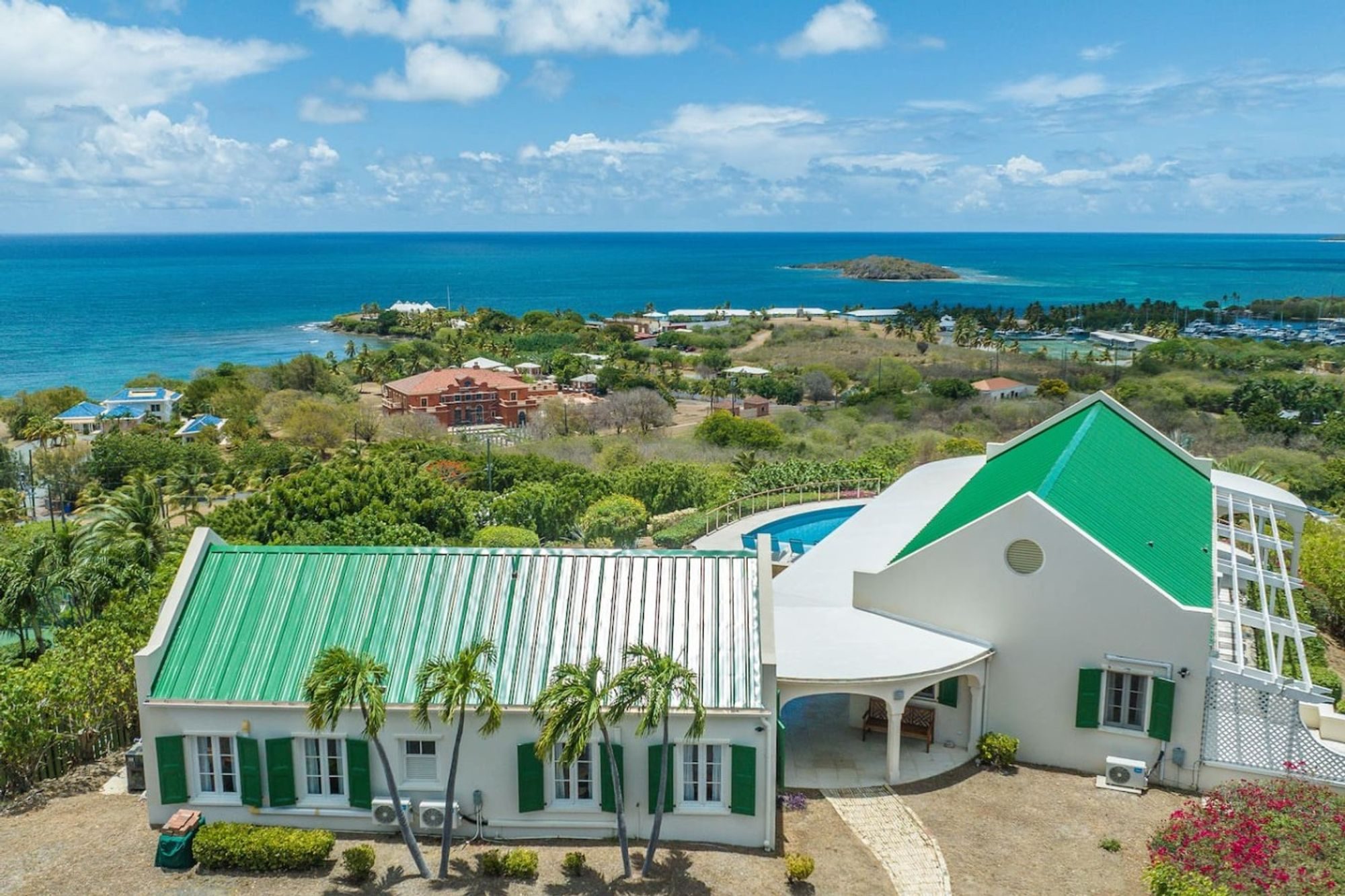
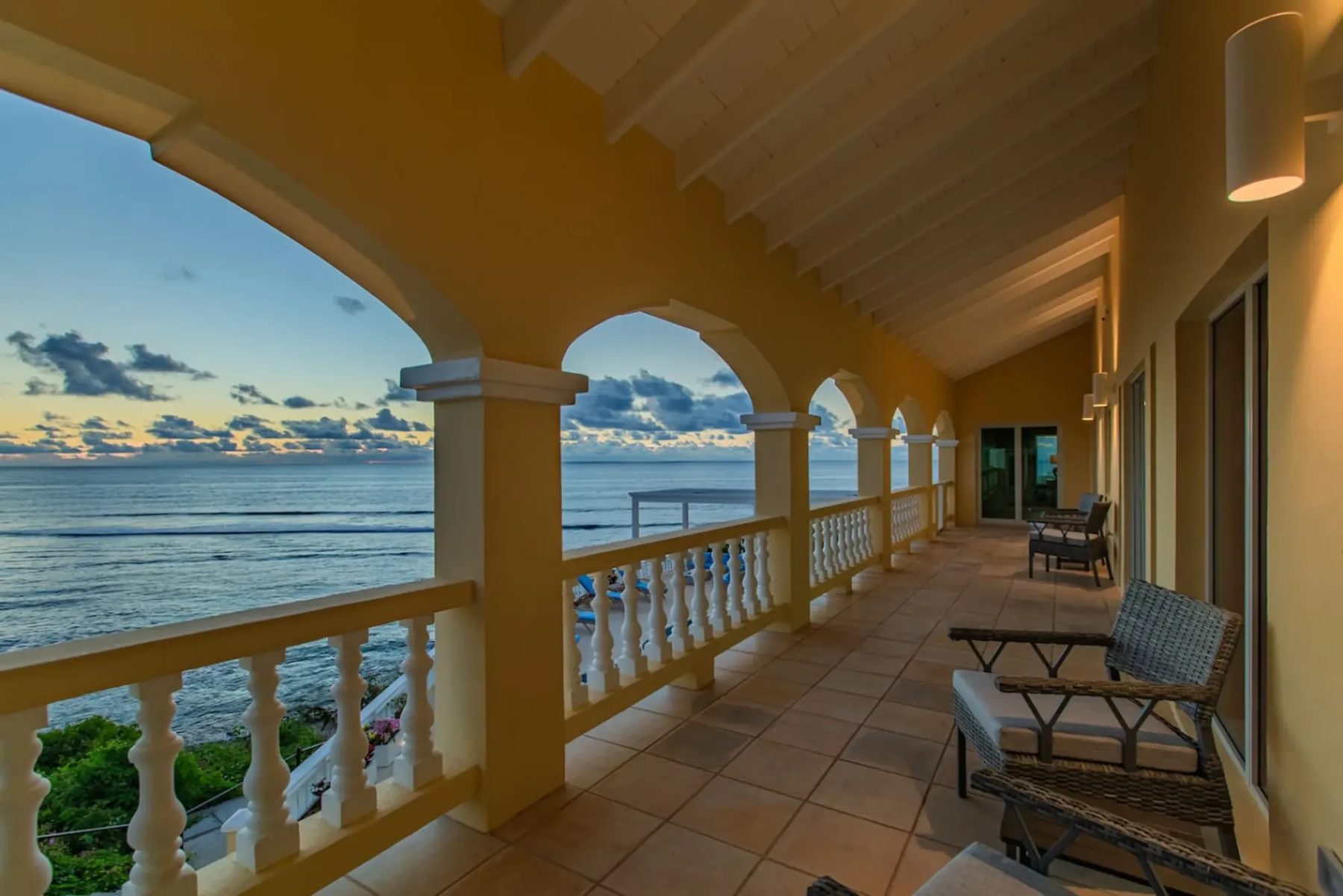
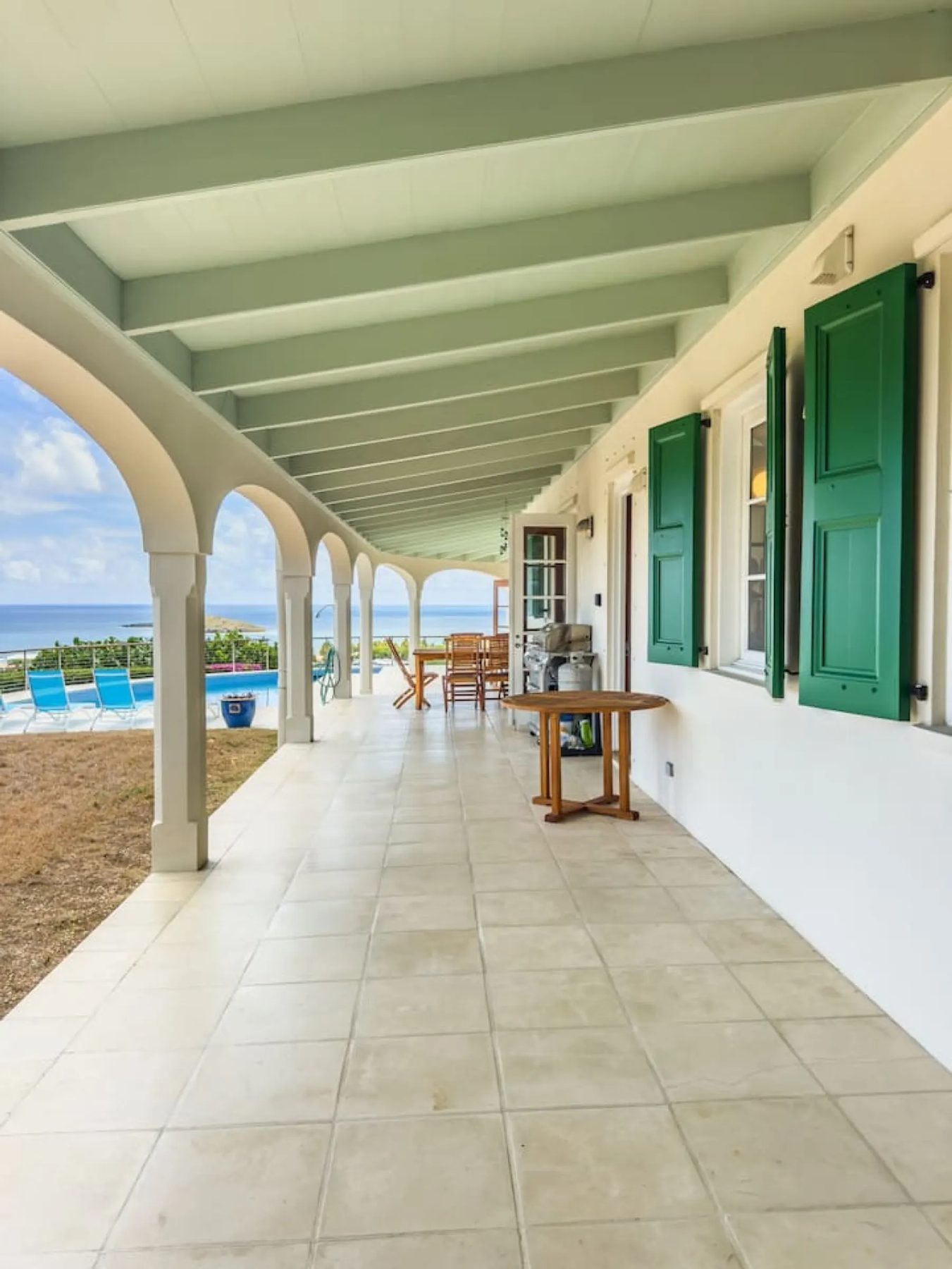
The second difference is plan. These are houses arranged so that air moves through them and people can get out of one another’s way. At Buck Island Views, on a hillside east of Christiansted, an arched gallery with green shutters runs the length of the main house, and two of the three bedrooms are detached suites reached by covered walkways. At Shoy’s Beach House, five bedroom suites open onto a central courtyard with a stone fountain, and a separate cottage can be added to the booking. The hill houses pay for their views in other ways: a guest at Moko Vista reported in March 2026 that the house had Wi-Fi and no mobile signal.
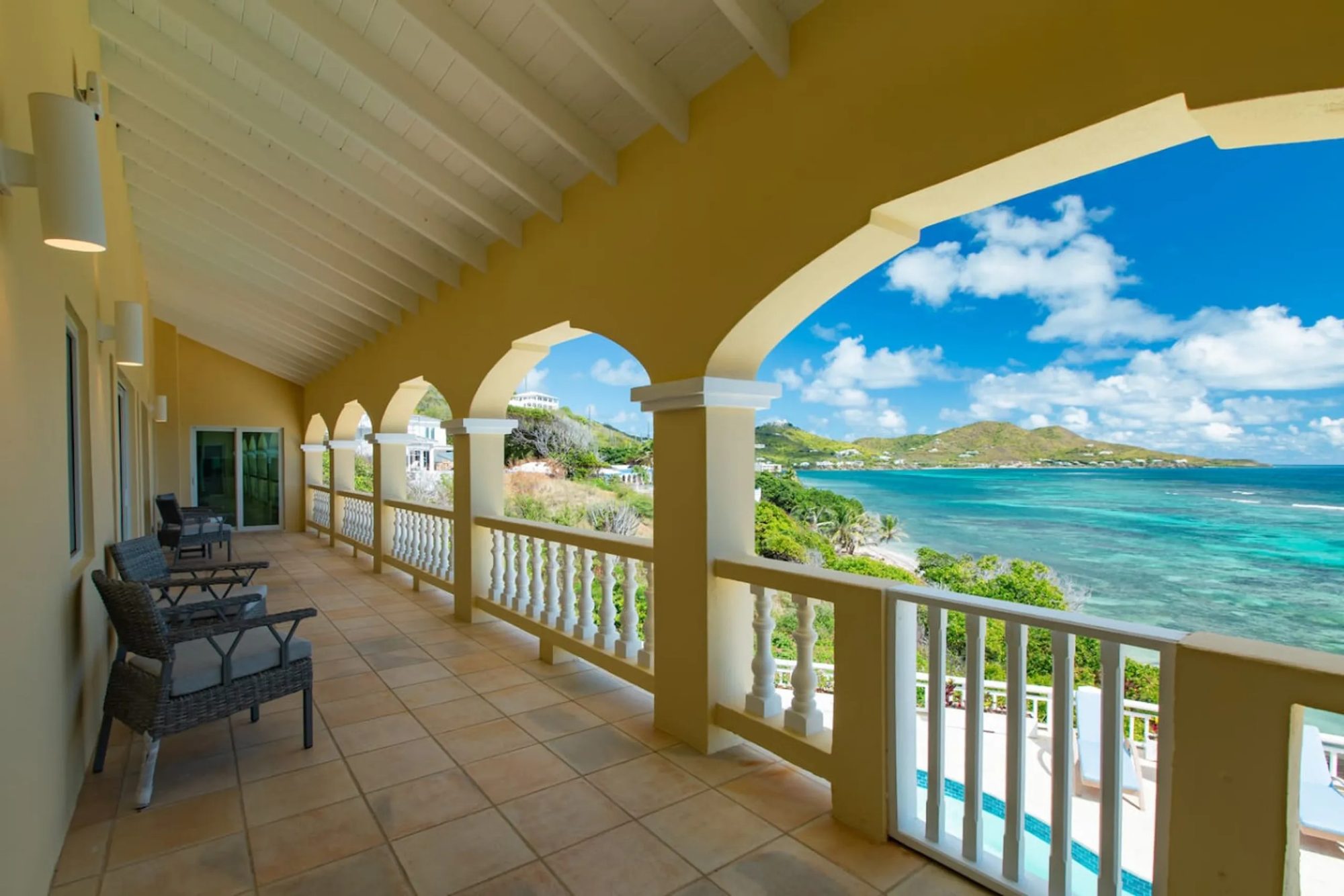
The third difference is the shore, and here a listing needs careful reading. A house on the beach on St. Croix does not always come with a beach for swimming. Toes in the Sand Beach House stands directly behind the sand on the north shore, west of Christiansted, and the company’s own page for it says the beach in front is for walking rather than swimming, because of rocks and coral. Shoy’s Beach House reaches its bay through the back garden, and the beach is shared with the gated community around it. At both, the private pool is where a swim is certain.
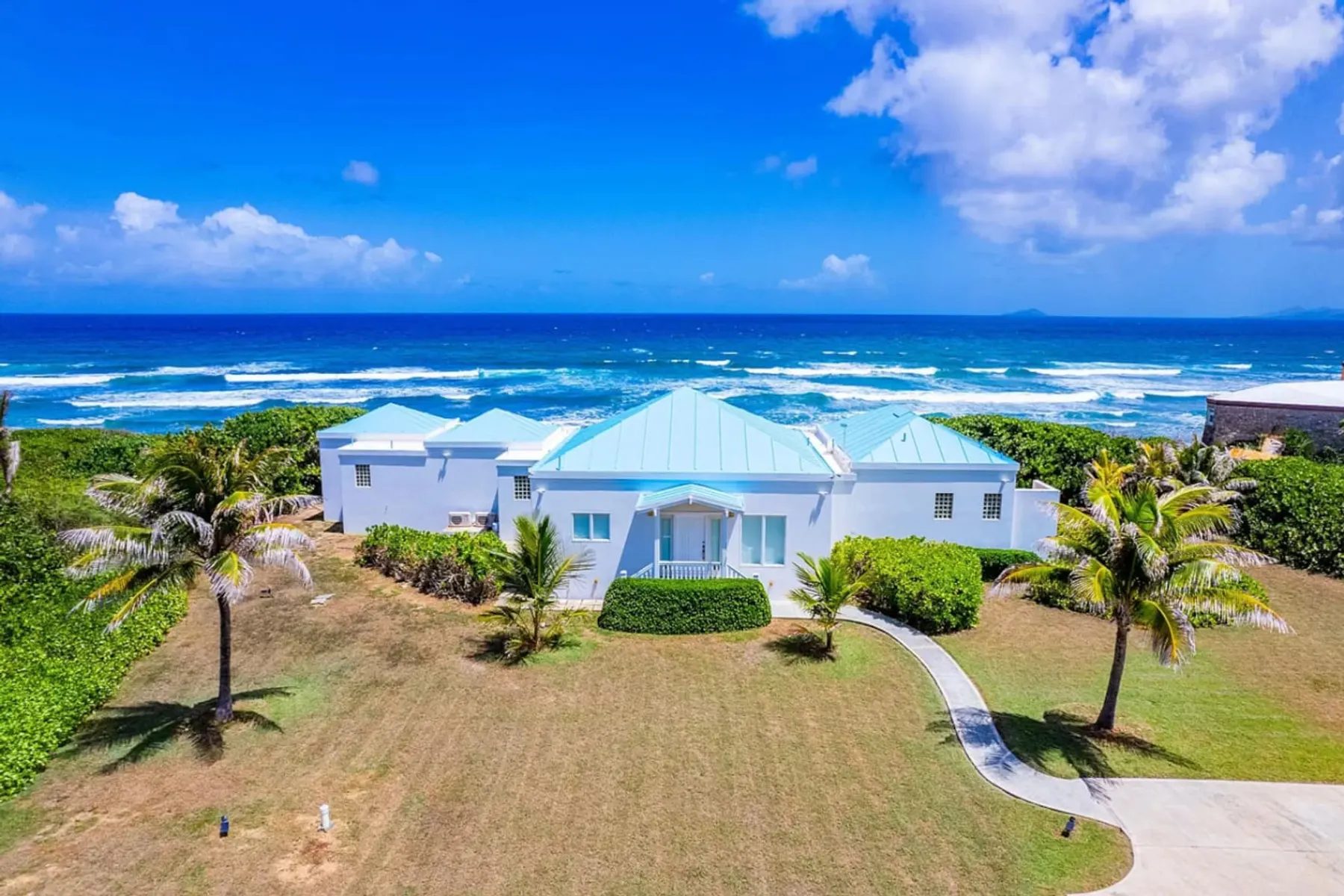
One recent guest wrote about the quiet. Jennifer, who booked Toes in the Sand directly and stayed in September 2026, wrote in a review published on the company’s site: “The home was warm and welcoming. A very quiet and relaxing atmosphere and a great family-oriented neighborhood. Will again and also recommend to others.”
Getting between the islands
One passenger ferry links St. Croix to the rest of the territory. The QE IV leaves the Gallows Bay dock, which the Port Authority places about a mile from downtown Christiansted, at 8:00 in the morning and ties up at the Blyden terminal on St. Thomas at 10:10. It starts back at 3:00 in the afternoon and is in at 5:10. The operator’s site, read on October 11, lists sailings six days a week and none on Tuesday, at $85 each way, and notes that the “Coast Guard requires ID or birth papers for all passengers including children”. A St. Croix travel guide that carries the timetable adds that bad weather can cut or cancel a day’s sailings. The Port Authority also lists a seaplane terminal in Christiansted, with daily service to downtown Charlotte Amalie; the current timetable is the operator’s to confirm.
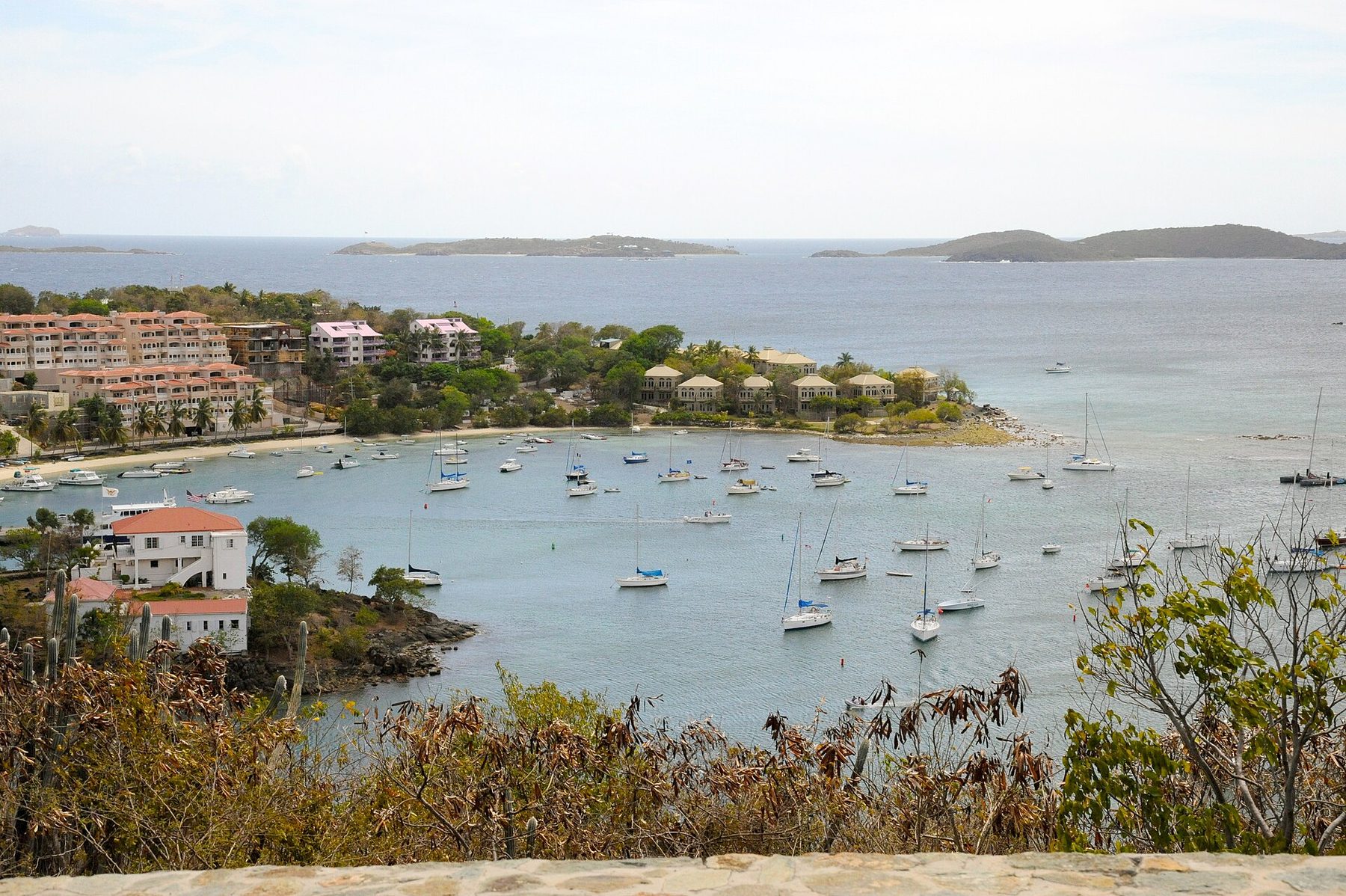
St John Cruz Bay 3 · Fred Hsu · CC BY-SA 3.0 · cropped
The timetable sets the limits of a day trip. A St. Croix guest who takes the morning boat has four hours and fifty minutes on St. Thomas before the only boat home. St. John is harder. The QE IV docks at 10:10, ten minutes after the morning ferry from Charlotte Amalie to Cruz Bay is scheduled to leave, and the Department of Tourism’s page shows the next one from Charlotte Amalie at 3:00, the minute the St. Croix boat departs. The hourly ferry from Red Hook is the alternative, at the other end of St. Thomas by taxi. On the published times, St. John from St. Croix is better planned as an overnight trip.
Between St. Thomas and St. John the arithmetic is different, and a house on either island can treat the other as a day out. For a renter, that is the working map of the territory: two islands that function as a pair, and a third that stands alone.
Moving between the islands
- St. Croix to St. Thomas: the QE IV ferry from Gallows Bay, out at 8:00 a.m. and back at 3:00 p.m., about 2 hours 10 minutes each way, no Tuesday sailings (operator’s site, October 2026).
- St. Thomas to St. John: Red Hook to Cruz Bay in about 20 minutes, hourly from 5:30 a.m. to 11:30 p.m. (Department of Tourism).
- Carry photo identification on the St. Croix ferry; the operator asks for ID or birth papers for every passenger, children included.
- Trunk Bay on St. John charges $5 for visitors aged 16 and over and no longer takes cash.
- Confirm every time and fare with the operator before you travel.
What is changing on St. Croix
The Newark flight is one of several changes. The bureau’s arrivals table for August 2026 , dated September 24, shows the year so far. From January through August St. Croix logged 145,499 air arrivals, 6.7 percent ahead of the same stretch of 2025; the count for St. Thomas and St. John was 587,606, a rise of 9.8 percent. St. Croix began the year badly, with January down 25.7 percent, and was up in every month after it; June, July and August rose 14.8, 8.8 and 26.2 percent. On St. Thomas and St. John the same three months were down 4.2, 2.1 and 3.5 percent after five rising months. Spirit Airlines, which had flown between Fort Lauderdale and St. Croix, ceased all operations on May 2. The tables do not say what part that played on either side, and three months are a short run.
The largest single change is at Davis Bay, on the island’s northwest coast. On June 15, 2026, Club Med and the property company VICI said that VICI had acquired the Carambola Beach Resort there, with Club Med as its long-term tenant. The plan is for 150 keys, building work from the summer of 2026, about 200 direct jobs and doors open again in the last quarter of 2027 if the target holds. Ground was broken in July. Carambola is an existing resort, so until it reopens its rooms are out of use on an island whose reported supply of rooms fell last year.
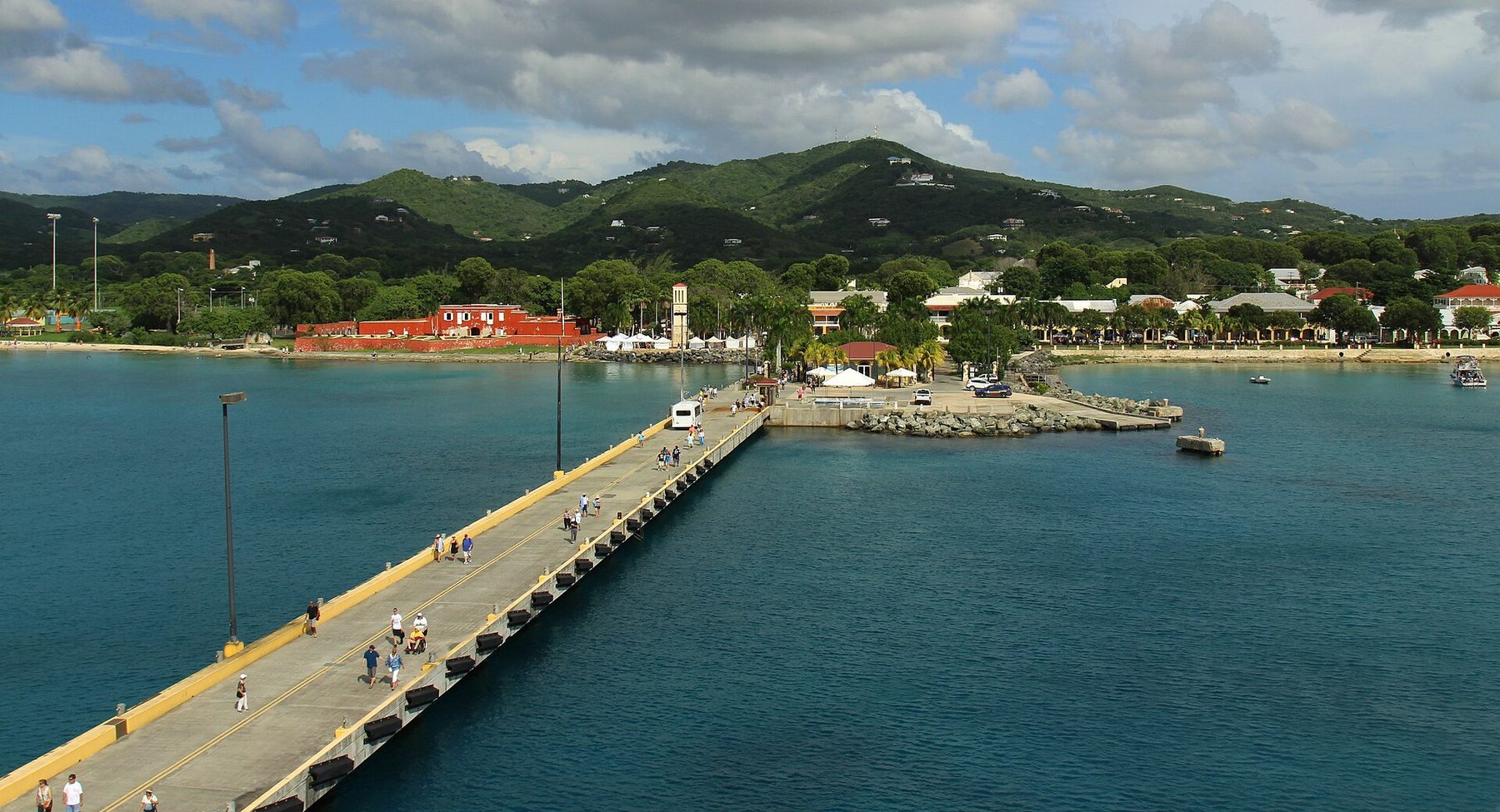
Frederiksted Pier (22910031253) · Prayitno · CC BY 2.0 · cropped
What that means for someone renting a house nearby is not settled, and one of the more cautious readings on record comes from Sterling Point itself. In a post on its blog in August the brokerage wrote, against the assumption that rental owners nearby gain from the resort, that a large all-inclusive competing for the same beach travelers “can cut demand as easily as it adds it”, and noted that the area is reached by a single road system. For a traveler the open question is whether the island that drew a fifth of the territory’s air arrivals stays as uncrowded once a resort with an international name and a New York-area flight are both in place.
One further change has been proposed and not made. A villa, condominium or residence let for less than 90 days carries the territory’s 12.5 percent hotel room tax on all three islands, under the Bureau of Internal Revenue’s form for it. Governor Albert Bryan Jr., in March 2025, asked for a 20 percent tax on Airbnb-type rentals while saying, in VI Consortium’s report of his remarks, that villas ought to be spared the higher rate. The proposal was not passed: no bill or vote on it was found for this article, and 12.5 percent is the rate in force. The pressure behind the idea shows in the bureau’s own writing: its report on 2024 attributed a fall in condominium occupancy to “ongoing competition from Airbnb and other short-term rental services”.
When to go
The calendar is the same on all three islands and matters most on the quiet one. Hurricane season in the Atlantic is June 1 through November 30, and the National Hurricane Center is specific about its shape: “The peak of the Atlantic hurricane season is September 10, with most activity occurring between mid-August and mid-October.” The bureau’s report on 2024 found February the fullest month for the territory’s hotels, at 77.9 percent occupancy, and September the emptiest, at 38.3 percent. In the bureau’s hotel occupancy rates sheet published in July 2026, St. Croix’s hotels were 61.6 percent occupied in the first quarter of the year, against 76.0 percent on the other two islands. The Department of Tourism, for its part, points to summer for the lowest prices.
Villas follow the same curve, as far as one company’s calendar can show it. On October 11 the search on SP Vacations’ site, asked for a week for two guests, showed 4 of the 13 homes as available for February 6 to 13, 2027, 5 for the week beginning December 26, 9 for a week in mid-March and all 13 for September 11 to 18, 2027. A home missing from the results may be reserved, kept back by its owner or shut to that arrival day by a minimum-stay rule, so these are not occupancy figures. They do show where the choice narrows first, four months ahead. AirROI’s estimate for rentals around Christiansted is an average booking lead time of 74 days and a stay of about seven nights.
A brokerage for three islands, with rentals on one
Sterling Point’s website describes the company as “a trusted real estate brokerage rooted on St. Croix proudly serving buyers, sellers, and property owners throughout the U.S. Virgin Islands”. It names St. Croix, St. Thomas and St. John as its areas of expertise, and it carries a property search page for each of the three. The company belongs to Nadja Boulger-Watrous, the principal broker and co-owner, and to Rich Watrous, a co-owner who runs property management.
The rental side draws its map more tightly. The owners’ page of SP Vacations gives its management area as “Christiansted, the East End and The Shoys, and the west end near Frederiksted”, and a panel beside the text counts one island team. The page explains the reason in a sentence addressed to homeowners: “When you list with us, the person who answers a prospective guest’s question is the same one who meets the plumber and checks the home after a storm.”

That sentence marks the difference between the two kinds of work. A sale can be arranged from one office with documents, viewings and a closing. A guest’s house cannot be looked after from across the water. With one ferry a day, six days a week, and under five hours ashore, a team in Christiansted could not send a cleaner or an electrician to St. Thomas and back between one party’s departure and the next one’s arrival. A rental operation on another island would need its own people living there. That is the writer’s reasoning from the timetable and from the company’s account of its own service; its published pages say nothing further on the subject.
For a traveler the meaning is plain. Sterling Point presents itself to buyers on any of the three islands, and SP Vacations hands a guest the keys only on St. Croix. A reader set on St. Thomas or St. John will need a manager based there, and the test to apply is the one the St. Croix company sets for itself: who answers the telephone, and whether that person is on the same island as the house.
What it means for where you stay
Choose St. Thomas for the shortest journey and the most to do within a short drive, and accept company: with St. John it takes most of the territory’s air arrivals, hotel guests and cruise passengers. Choose St. John for the national park and plan the week around the ferry. Expect the highest rates of the three in the listing estimates, and the fewest houses to choose among.
Choose St. Croix for room. This winter it has nonstop flights from five mainland cities, houses ranging from a cottage for two that runs off the grid to a beach house with six bedrooms, and the fewest visitors for its size. Its limits are the ones set out above: surf and rock on parts of the north shore, a hospital in temporary buildings, a September when few visitors come, and a ferry ride of more than two hours to anywhere else.
The islands are not interchangeable, and only St. Thomas and St. John combine easily. The sensible plan is to pick one and stay on it. For anyone weighing St. Croix, the Newark flight and the Club Med reopening are the two dates to watch, the first for how to get there and the second for how busy the northwest coast becomes.
SP Vacations publishes its homes, their calendars and its guests’ reviews on its own pages at spvacationsvi.com, and they cover St. Croix only. For St. Thomas and St. John the official starting points are the Department of Tourism and, for the park, the National Park Service, both listed in the sources below.
Sources
- USVI Bureau of Economic Research, Air visitor arrivals, 2025 full year by island (A26-JAN) (March 2026)
- USVI Bureau of Economic Research, Air visitor arrivals, January to August 2026 (A26-AUG) (September 2026)
- USVI Bureau of Economic Research, Cruise passenger arrivals, December 2025 (CP25-DEC) (February 2026)
- USVI Bureau of Economic Research, Monthly Hotel Occupancy Report 2025, December and year to date, Tables 1 to 4 (TABLE25-DEC) (March 2026)
- USVI Bureau of Economic Research, Hotel Occupancy Rates, January 2025 to June 2026 (H26-JUN) (July 2026)
- USVI Bureau of Economic Research, USVI Tourism Accommodation 2024 Report (August 2025)
- National Park Service, Virgin Islands National Park: Fees and passes (updated September 29, 2026)
- National Park Service, Virgin Islands National Park: Directions (updated March 2022)
- National Park Service, Virgin Islands National Park: Introduction to the park (history and acreage) (updated November 2024)
- National Park Service, Virgin Islands National Park: Basic information (updated November 2021)
- National Park Service, Virgin Islands National Park: Frequently asked questions (updated December 2024)
- National Park Service, Virgin Islands National Park: Driving (left-hand traffic) (updated October 2016)
- National Park Service, Buck Island Reef National Monument: Basic information (updated 2026)
- National Park Service, Christiansted National Historic Site (updated July 2025)
- USVI Department of Tourism, Getting to St. John via St. Thomas (read October 11, 2026)
- USVI Department of Tourism, St. Thomas island page (read October 11, 2026)
- USVI Department of Tourism, Travel tips and frequently asked questions (currency, power, time zone, summer prices) (read October 8, 2026)
- Virgin Islands Port Authority, Cyril E. King Airport, St. Thomas (read October 11, 2026)
- Virgin Islands Port Authority, Henry E. Rohlsen Airport, St. Croix (read October 11, 2026)
- Virgin Islands Port Authority, Gallows Bay Marine Facility, Christiansted (read October 11, 2026)
- Virgin Islands Port Authority, Svend Aage Ovesen Jr. Seaplane Terminal, Christiansted (read October 11, 2026)
- Virgin Islands Port Authority, Facilities on St. Thomas, St. John and St. Croix (read October 11, 2026)
- QE IV Ferry, St. Croix to St. Thomas ferry: schedule, fares and passenger rules (read October 11, 2026)
- GoToStCroix, QE IV ferry (weather note) (read October 11, 2026)
- Magens Bay Authority, Magens Bay Park, St. Thomas: hours and amenities (read October 11, 2026)
- U.S. Customs and Border Protection, Western Hemisphere Travel Initiative FAQs (territories and passports) (May 2025)
- U.S. Customs and Border Protection, Types of exemptions ($1,600 from the U.S. Virgin Islands) (March 2024)
- U.S. Customs and Border Protection, CBP implements Virgin Islands air passenger pilot program (September 2015)
- U.S. Department of State, Office of the Historian, Transfer of the Danish West Indies, 1917 (April 1917)
- U.S. Census Bureau, 2020 Census of the U.S. Virgin Islands, population by island and town (October 2021)
- U.S. Geological Survey, Geology and hydrology of dam sites on the island of St. Croix, Virgin Islands (Open-File Report 52-98) (1952)
- U.S. Geological Survey, Open-File Report 89-563 (highest points of St. Thomas, St. John and St. Croix) (1989)
- USVI Department of Tourism and United Airlines, United Airlines announces new nonstop service linking St. Croix to Newark/New York (June 1, 2026)
- VI Consortium, United to Resume Newark-St. Croix Flights After 32-Year Absence, Expanding Travel Options and MileagePlus Access (May 29, 2026)
- VI Consortium, Businesses and Governor Press for Uber-Style Ride Apps in USVI, Urge Legislature to Act (November 1, 2025)
- Google Flights, Nonstop schedules to St. Croix (STX) from Miami, Charlotte, Atlanta, Chicago and Newark (read October 8, 2026)
- OPB / NPR, Spirit Airlines ceases operations after escalating financial struggles (May 2, 2026)
- Hotel Online, VICI Properties and Club Med announce acquisition and redevelopment of Carambola Beach Resort in St. Croix (June 15, 2026)
- VI Consortium, Watch: Club Med Breaks Ground on $75 Million St. Croix Resort Redevelopment (July 16, 2026)
- Sterling Point Real Estate, How Club Med St. Croix Could Affect Davis Bay Property (company blog) (August 20, 2026)
- USVI Office of Disaster Recovery, ODR and JFL execute contract for new hospital construction (March 26, 2026)
- V.I. Bureau of Internal Revenue, Form 722 V.I., hotel room tax return and instructions (revised May 2017)
- VI Consortium, Bryan Proposes 20 Percent Airbnb Tax to Tackle USVI Housing Shortage and Boost Hotel Occupancy (March 23, 2025)
- National Hurricane Center, Tropical cyclone climatology (read October 2026)
- AirROI, Short-term rental estimates for St. Croix, St. Thomas and St. John (updated September 12, 2026)
- SP Vacations, About, owners, real estate, book-direct, villa and search pages (read October 11, 2026)
- Sterling Point Real Estate, Home page and islands page (read October 11, 2026)